Dairy Farming & Forage Management Series
Round Balers in Dairy Farming:
How They Support Silage Production Year-Round
A practical knowledge guide covering how round baler technology integrates into year-round dairy forage systems, what manufacturing features matter most for silage applications, and which models best match the demands of modern Korean and Asian dairy operations.
1. Why Dairy Farms Depend on Round Balers for Year-Round Silage Supply
Dairy cattle require a consistent, high-quality forage supply every day of the year, regardless of growing season, weather events, or market fluctuations. In temperate and continental climates such as South Korea’s, where pasture growth is concentrated in a relatively short spring-through-autumn window and winter outdoor grazing is impossible, the ability to capture and preserve large volumes of forage during peak growth periods is the central challenge of dairy farm management. Round balers are the practical answer to that challenge for a very large proportion of the world’s dairy farms.
A round baler machine compresses cut and wilted forage into dense cylindrical bales that, when wrapped in stretch film, become an oxygen-free anaerobic environment suitable for lactic acid fermentation. The resulting baled silage can be stored for twelve months or longer without meaningful nutritional loss, stacked efficiently in outdoor clamp sites, and fed to cows throughout the winter period without requiring a covered bunker silo or specialized unloading equipment. For Korean dairy operations — which typically operate on small to medium acreage, rely heavily on Italian ryegrass as a primary forage crop, and face significant labor constraints — the round baler and bale wrapper combination represents the most flexible and cost-effective silage system available.
This article examines the manufacturing structures, material systems, and operational practices that determine how well a round baler performs in a continuous dairy farm forage system, and identifies the specific machine characteristics that separate adequate performance from genuine operational reliability across a full production year.
2. The Dairy Silage Calendar: When Round Balers Work Hardest
Understanding the year-round silage demand cycle helps dairy farmers plan their round baler use strategically rather than reactively. In South Korea, the typical forage calendar for a dairy operation centered on Italian ryegrass and mixed grass swards follows a predictable but compressed rhythm. First-cut ryegrass in central Korea occurs from late April to mid-May, at late boot stage when water-soluble carbohydrate content peaks and fiber digestibility is highest. This is the highest-value cut of the year — the silage made in this window determines the nutritional floor of the winter feeding ration.
A second grass cut is typically possible from late August to early September, depending on regrowth rates and summer rainfall. In some Korean regions, a late October cut of autumn-seeded cereals or ryegrass provides a third opportunity. Between these grass harvests, whole-crop maize silage — harvested from late August through September at milk-dough stage — provides a complementary high-energy forage that balances the protein-rich grass silage in winter rations. Each of these crops has slightly different optimal baling conditions, and a round baler machine that handles all of them without reconfiguration saves significant time and cost across the full calendar.
Korean winters run from approximately November through March, with dairy cows fully indoors and dependent entirely on stored forage. A 50-cow dairy herd consuming an average of 12 kg DM per cow per day requires approximately 18 tonnes of silage DM per month during the housing period, or roughly 90 tonnes across a five-month winter. At a typical baled silage density of 150 kg DM/m³ and a bale diameter of 1.3 m × width 1.4 m, that volume requires approximately 400–450 bales. Planning backward from this winter demand figure tells the dairy farmer exactly how many bales need to be produced across the spring and summer harvest windows — and therefore how critical machine reliability and throughput rate truly are.
3. Manufacturing Structure: What Makes a Dairy-Suited Round Baler
Not every round baler machine is equally well-suited to the demands of a high-output dairy farm silage operation. Dairy silage applications differ from dry hay applications in several ways that place specific demands on baler design. Silage crops are harvested at moisture contents of 55–70%, making them significantly heavier than dry hay, more resistant to compaction, and far more corrosive to metal surfaces due to the organic acids released during fermentation. A machine designed primarily for dry cereal straw will struggle with these conditions — the drive chain will stretch faster, the hydraulic tailgate cylinder will work harder, and the compression rollers will face higher sustained loads per cycle.
The frame structure of a dairy-capable round baler must be engineered to tolerate repeated high-load cycles across a season of several hundred to several thousand bales. High-strength structural steel (S355 or equivalent) throughout the main chassis, with reinforced gussets at the tailgate pivot points and pickup header mounting brackets, provides the necessary fatigue resistance. The tailgate mechanism itself is a critical reliability point: it opens and closes under full load on every single bale cycle, and a buffer hydraulic cylinder in the closing circuit — which cushions the final closing movement and prevents shock loading on the latch mechanism — extends tailgate service life significantly in high-output dairy operations.
The compression roller arrangement matters considerably for silage crops. The 9YG series uses 18 compression rollers of φ222 mm diameter in the baling chamber, with dual-sided heavy-duty chain drive (20A series chain in the rear chamber) providing the torque to compress wet, dense silage material to bale densities of 100–200 kg/m³. This is the density range within which silage fermentation proceeds reliably — below 100 kg/m³, air pockets within the bale compromise the anaerobic environment; above 200 kg/m³, the bale can become difficult to penetrate by the starter inoculant bacteria if these are applied during harvesting.
The pickup header design is the first contact point between machine and crop. For silage operations where grass has been wilted on the field, the pickup must gather material cleanly without soil contamination — soil-contaminated silage carries clostridial bacteria that can drive a fermentation pathway toward butyric acid rather than lactic acid, producing poor silage unacceptable for dairy feeding. Spring-tine pickup headers with the correct tine angle and ground clearance minimize soil pickup while maintaining high crop recovery rates. The 2,240 mm working width of the standard 9YG series pickup header matches the windrow widths produced by typical Korean mower-conditioner equipment, allowing full-width clean-up in a single baler pass.
Manufacturing Specification Comparison: Dairy-Focused Round Balers
| Model | Bale Size (mm) | Rollers | Power (kW) | Output (bales/h) | Machine Wt. (kg) | عرض الالتقاط |
|---|---|---|---|---|---|---|
| 9YG-2.24D S9000 | φ1,300×1,400 | 18 | 55–100 | 40–100 | 4,262 | 2,240 mm |
| 9YG-2.24D Classic | φ1,300×1,400 | 18 | 55–100 | 40–100 | 4,312 | 2,240 mm |
| 9YG-2.24D Transcend | φ1,300×1,400 | 18 | 55–100 | 40–100 | 4,570 | 2,240 mm |
| 9YG-1.25 (Double) | 1,200×1,250 | 18 | ≥88.2 | 40–80 | 4,558 | 2,240 mm |
| 9YG-1.25A | φ1,300×1,250 | 18 | ≥75 | 40–100 | 4,472 | 2,150 mm |
| 9YG-1.0 | φ1,100×1,000 | 16 | 48–80 | 40–100 | 2,640 | 1,900 mm |
| 9YG-1.0C | φ1,000×1,250 | 16 | ≥69.8 | 40–80 | 3,198 | 2,400 mm |
4. Material System: Corrosion Resistance and Durability for Silage Environments
Silage production places more aggressive demands on machine materials than dry hay harvesting does. When fresh grass or whole-crop maize is baled at 55–70% moisture content, plant juices — rich in lactic acid, acetic acid, and various enzyme systems — saturate every surface that contacts the crop. Over time, these fluids attack bare steel, corrode chain pins and bushes, degrade rubber seals, and cause the early deterioration of fasteners and mounting hardware that would survive for years in a dry-crop application. Dairy farmers who use their round baler machine primarily for silage therefore have a genuine interest in the corrosion protection system applied by the manufacturer.
High-quality commercial round balers apply a multi-stage surface treatment process to external steel components. Laser-cut structural parts are typically shot-blasted to remove mill scale and surface contamination before priming. An epoxy primer coat is applied first, followed by a topcoat of polyurethane or polyester powder coat in the machine’s finished color. This dual-layer system provides substantially better long-term corrosion resistance than single-coat paints, and the powder coat surface is harder and more impact-resistant than conventional liquid paint, resisting the chipping and peeling that expose bare metal to crop juice attack.
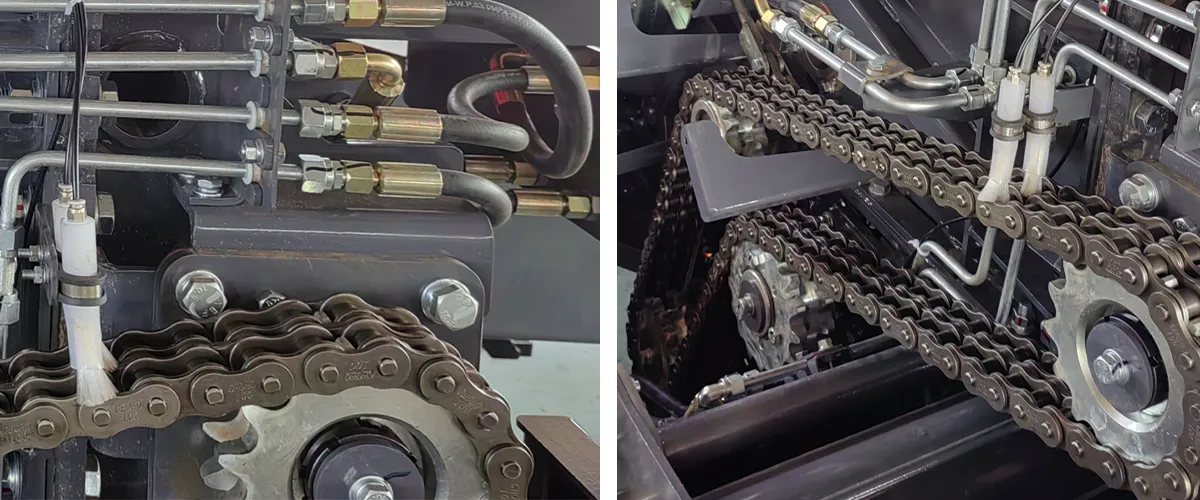
Internal components — rollers, chain guides, feeder rotor, and pickup tine holders — receive separate treatment appropriate to their function and exposure. Compression roller surfaces are case-hardened or hard-chrome coated to resist the abrasive action of crop material at high rotational speeds. Drive chains are typically pre-lubricated at assembly with a penetrating chain oil compatible with the expected operating temperature range. Chain material itself in the 9YG series rear compression circuit uses 20A series heavy-duty roller chain with hardened pins and bushes, offering substantially extended service life over the standard 16A chain found in machines designed for lower-intensity dry-hay applications.
The net-wrap dispenser housing and knife assembly deserve specific attention in silage operations. Crop juice from fresh grass contains proteins and sugars that form a sticky residue on any surface exposed to it. This residue can cause net to stick at the dispensing point, leading to mis-wraps or jam events. Dispenser components in better-quality machines are fabricated from stainless steel or receive a low-friction surface treatment, and the knife edge is hardened to maintain sharpness through multiple seasons without resharpening.
5. Round Baler Models for Dairy Farm Silage Operations
The models below cover the full range from large-output commercial dairy round balers to compact machines suited to smaller Korean family dairy operations. Each is engineered with silage-compatible construction, variable-chamber compression for consistent bale density, automatic net wrap, and sensor-monitored bale formation.
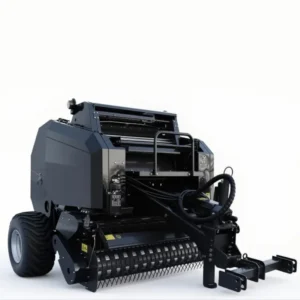
9YG-1.0 Round Baler (Small Round Baler)
48–80 kW · Bale φ1,100×1,000 mm · 2,640 kg · 16 rollers · Suited to small round baler for 40 hp tractor class
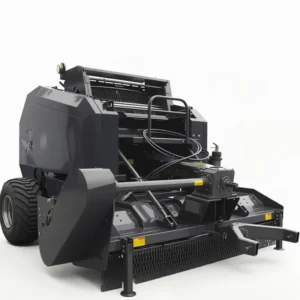
مكبس بالات دائرية 9YG-1.0C
Hammer-claw pickup · Dual-side 16A heavy chain · ≥69.8 kW · Bale φ1,000×1,250 mm · 3,198 kg
6. Silage Quality: Why Bale Density Is the Critical Variable for Dairy Feeding
Dairy nutritionists consistently identify silage quality as one of the top three drivers of milk production efficiency, alongside genetics and cow comfort. Silage quality for dairy purposes means several things simultaneously: high metabolizable energy (ME) content per kilogram of dry matter, low butyric acid content (a marker of clostridial fermentation and reduced palatability), stable aerobic stability when the bale face is opened for feeding, and consistent dry matter content from bale to bale to allow accurate ration formulation.
All four of these quality parameters are influenced by bale density. When a round baler machine achieves consistently high bale density across the full cylinder — from core to outer surface — the anaerobic conditions inside the bale are established faster and more completely after wrapping. Lactic acid bacteria dominate the fermentation, producing lactic acid rapidly, dropping the silage pH below 4.5 within three to five days of wrapping, and suppressing the clostridial and enteric bacteria that cause butyric fermentation and protein degradation. The silage that results from this rapid acidification has measurably higher ME values, lower ammonia-nitrogen levels (a marker of protein breakdown), and better dry matter recovery through the storage period.
In practical dairy feeding terms, the difference between well-fermented, high-density baled silage and poorly fermented, loose-core baled silage can translate to 1–2 litres of milk per cow per day during peak lactation — a production difference that compounds significantly over a 305-day lactation and across a herd of 50–100 cows. For Korean dairy farmers managing tight margins, this performance gap has real financial meaning that justifies investment in round baler machinery capable of delivering the density necessary for good fermentation outcomes.
7. Round Baler Gearbox Performance in High-Duty Dairy Operations
A dairy farm round baler works harder than most hay-only machines. Multiple harvests across spring, summer, and autumn — potentially covering 200–400 hectares total across all crops in a year — impose a cumulative load on the gearbox and drive train that exceeds the assumptions built into machines designed for less intensive single-crop hay operations. Understanding what the round baler gearbox does and what keeps it reliable is therefore directly relevant to dairy farm equipment planning.
The gearbox in a PTO-driven round baler machine reduces the 540 or 720 rpm input from the tractor’s power take-off to the working speeds required by the pickup header (typically 130–180 rpm), the feeder rotor (typically 200–350 rpm), and the compression roller assembly. This speed reduction delivers torque multiplication: the relatively low-torque, high-speed PTO input is converted to the high-torque, moderate-speed output needed to compress dense silage material against the resistance of 18 spring-loaded or hydraulically-tensioned compression rollers. The gearbox bears most of the shock loading that occurs when a thick wad of grass enters the chamber suddenly — a load event that can be several times the steady-state running torque.
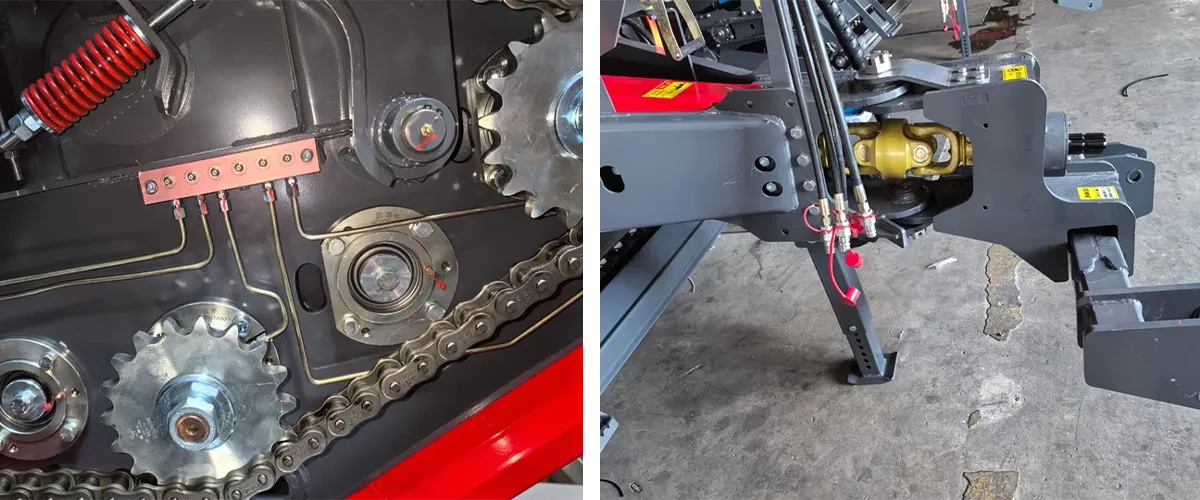
The dual-joint gearbox in the 9YG-2.24D Transcend model addresses a problem specific to dairy farm operations on Korean irregular terrain: the inability to maintain full PTO power delivery during tight headland turns without stopping. By using a twin cross-joint (double Cardan joint) driveshaft that can articulate 90 degrees left and right from center and 30 degrees vertically, this design allows continuous baling through turns without disengaging PTO or risking driveshaft damage on steep side-slopes. For a dairy farmer baling on hillside paddocks common across Korean agricultural terrain, this feature directly translates into fewer stops per hour and lower fuel consumption per bale produced.
Gearbox maintenance in dairy applications should be scheduled more frequently than in dry-hay applications because the combination of high dust loading, acid vapor exposure, and sustained high-torque operation depletes oil quality faster. Most manufacturers specify oil changes at 200–250 operating hours; for dairy silage operations running 60–80 hours per week during peak season, this interval arrives within a few weeks. Marking the oil change in the farm maintenance schedule and pre-ordering the correct grade oil before the season begins avoids the situation of running degraded gear oil simply because a replacement supply was not on hand.
8. Bale Storage and Feeding Logistics on the Dairy Farm
The round baler machine is only the first link in the silage production chain. The storage and feeding stages that follow must be planned with equal care if the quality invested at harvest is to reach the dairy cow’s rumen intact. Baled silage from a round baler has specific logistical characteristics that differ from bunker silo silage, and understanding these differences helps dairy farmers use their baled silage system as effectively as possible through the feeding season.
Wrapped bales should be stored on a firm, well-drained surface — not on bare soil, which can wick moisture into the bale bottom and compromise the anaerobic seal at the ground contact point. A gravel pad, concrete yard, or firm track is ideal. Bales should be stored with their flat ends touching in a single row, or stacked no more than two bales high if ground conditions and bale integrity permit. The curved cylindrical surface of round bales concentrates load at contact points, and stacking too high creates point-loading forces that can deform the lower bales and breach the stretch film seal.
When bales are opened for feeding, the exposed bale face should be managed to minimize aerobic deterioration. Dairy cows are sensitive to aerobically spoiled silage — they will refuse to eat it, and even small quantities of mold-contaminated material can cause digestive disturbance, reduced dry matter intake, and milk production drops that take several days to recover from. Daily bale face management — keeping the feeding face clean, removing spoiled material, and not opening more bales than will be fully consumed within 24 hours — is the feeding management practice that most directly protects the investment made at harvest.
Round bales produced at the larger 1.3 m × 1.4 m specification of the 9YG-2.24D series contain approximately 350–700 kg of fresh material depending on moisture content and density, representing 1–3 days’ feeding for a 20-cow unit. This makes the logistics of moving and presenting bales very manageable at the dairy farm scale — one or two bale movements per day are typically sufficient for herds up to 80–100 cows, keeping the daily labor input associated with baled silage feeding modest and predictable.
9. Regulatory Requirements: Compliance for Dairy Farm Round Balers
Agricultural machinery compliance is a practical purchasing consideration for dairy farm operators, not only because non-compliant machines cannot be legally sold or used in regulated markets, but because compliance certification is often a prerequisite for government purchase subsidy programs that substantially reduce the effective acquisition cost of new equipment.
كوريا الجنوبية
In South Korea, round balers and related silage harvesting equipment are governed by the Act on the Promotion of Agricultural Mechanization (농업기계화 촉진법). For a machine to qualify under the government’s agricultural machinery purchase support program administered by the Ministry of Agriculture, Food and Rural Affairs (농림축산식품부 — MAFRA), it must pass performance evaluation through the National Institute of Agricultural Sciences (농촌진흥청 — Rural Development Administration) and be registered on the approved subsidy list. PTO-driven machines including round balers must comply with the Industrial Safety and Health Act (산업안전보건법) regarding mandatory guarding of rotating drive components, with specific reference to the PTO shaft and the machine’s intake zones.
European Union
Round balers exported to EU member states require CE marking under Machinery Directive 2006/42/EC, which transitions to Machinery Regulation EU 2023/1230 in January 2027. The applicable harmonized standards include EN ISO 4254-7 (safety for harvesting machinery), EN 12965 (PTO drive shafts), and EN ISO 11684 (safety signs and hazard pictograms). Gearbox and hydraulic system fluid specifications for CE-compliant machines operating in European dairy farming environments reference ISO VG 150 gear oil for gearbox lubrication and ISO 46 hydraulic fluid for the tailgate and wrapper circuits, with biodegradable alternatives increasingly specified by environmentally sensitive operators near watercourses.
United States
ASABE standards S318 (agricultural equipment safety) and EP455 (PTO guarding) define the safety engineering requirements for round baler machines sold in the United States. OSHA 29 CFR Part 1928 applies specifically to employed farm labor and mandates point-of-operation guarding on PTO-driven implements. State-level right-to-repair legislation, increasingly enacted across US agricultural states, also affects how round baler parts availability and service documentation are structured in the US market.
Russia and Kazakhstan
Agricultural machinery operating in Russia and Kazakhstan must comply with Technical Regulations of the Eurasian Economic Union (TR EAEU 010/2011 — machinery safety). The EAC conformity mark is required for lawful market entry. Gearbox oil specifications in these markets reference GOST 23652 (gear oils for agricultural machinery). In agricultural regions of Kazakhstan, where silage production for cattle feeding is expanding alongside the dairy herd modernization programs, demand for capable round baler machines has grown substantially in recent years.
Japan
Japanese agricultural machinery safety is governed by the Agricultural Machinery Safety Standards maintained by the Ministry of Agriculture, Forestry and Fisheries. PTO-driven machines must comply with JASO (Japan Automobile Standards Organization) standards for drive shaft safety, and import duties on agricultural machinery are structured under the WTO-bound tariff schedule with specific headings for hay and silage equipment. Korean dairy farmers sourcing equipment through Japan-linked trade channels should verify compliance status with relevant Japanese import requirements where cross-border purchasing is considered.
10. Seasonal Maintenance: Keeping the Round Baler Reliable Across Multiple Dairy Harvests
For a dairy farm using a round baler machine across three or more silage harvests per year, maintenance is a continuous program rather than an annual event. The daily service routine during each harvest period should include chain lubrication on all drive circuits, inspection of pickup tine integrity (tines broken on field debris are the most common cause of gaps in crop recovery and uneven bale filling), and a check of all hydraulic connections for weeping. Silage crop juice is corrosive and will worsen any existing seal weep into a full leak within a few days if not addressed immediately.
Between harvests — typically a period of four to eight weeks — a mid-season service should include chain tension adjustment across all circuits, inspection of the net-wrap knife edge and counter-blade for sharpness, checking compression roller bearing temperature after a full working period (excessive heat indicates a bearing approaching failure), and reviewing the bale density sensor calibration against an independently measured bale. Sensors can drift over a season’s operation, causing the machine to consistently over- or under-fill bales without triggering an alert — a problem that only becomes apparent when bales are opened and found to be abnormally light or difficult to eject.
The pre-winter service, performed after the final harvest of the year, is the opportunity to address issues that were managed around during harvest rather than properly repaired. This service should include a full chain replacement if any circuit shows elongation beyond the manufacturer’s maximum, a complete hydraulic fluid flush and filter change, gearbox oil drain and refill, and inspection of the main frame welds at high-stress points for any cracks that developed during the season. Round baler parts inventory for the following season should be compiled at this point, with critical items — pickup tines, net-wrap knives, chain master links, hydraulic seal kits — ordered well in advance of the next spring harvest.
11. Choosing the Right Round Baler for a Korean Dairy Farm
Selecting the most appropriate round baler machine for a dairy farm involves matching the machine’s capabilities to the specific farm’s tractor power, annual bale volume target, primary crop types, field characteristics, and budget envelope. There is no single correct answer — a 200-cow commercial dairy producing 2,000 bales per year from 150 hectares has different requirements than a 30-cow family dairy producing 500 bales from 40 hectares, even if both are in the same Korean province.
Small dairy — under 50 cows
The 9YG-1.0 or 9YG-1.0C models suit farms with 48–80 kW tractors and moderate annual bale volumes. The 9YG-1.0’s patent-pending axial-flow feeder mechanism reduces blockage risk and increases per-hour throughput relative to conventional small round baler designs of comparable machine weight.
Medium dairy — 50 to 100 cows
The 9YG-1.25A or 9YG-1.25 Double models with 75–88 kW tractor compatibility and output of 40–100 bales per hour provide the throughput necessary to complete spring and autumn cuts within tight weather windows without running multiple harvest shifts.
Large dairy or contractor — 100+ cows
The 9YG-2.24D series — S9000, Classic, or Transcend — delivers maximum bale output and the heaviest-duty construction for sustained high-volume operation. The Transcend model’s dual-joint gearbox is specifically valuable for contractors working across multiple farms with varied terrain.
Frequently Asked Questions
المحرر: PXY