What mushroom cultivation facilities in Korea actually require from their rice straw bale suppliers — covering density thresholds, moisture limits, contamination standards, bale geometry, and which round baler configurations produce substrate-grade bales consistently.
South Korea’s mushroom cultivation industry is among the most technically demanding agricultural sectors in the country, producing shiitake, oyster, king oyster (Pleurotus eryngii), and various specialty varieties for both domestic consumption and export to Japan, Southeast Asia, and the Middle East. What is less visible to those outside this supply chain is the central role that rice straw plays as a cultivation substrate — and how exacting the quality requirements are for the straw that enters a mushroom facility compared to straw purchased for livestock bedding or biomass fuel.
For a round baler operator supplying straw to Korean mushroom cultivation buyers, understanding these requirements is not optional — it is the difference between a consistent, premium-priced supply contract and a rejected load that costs both the buyer’s production schedule and the seller’s relationship with that customer. This guide covers what mushroom substrate buyers in Korea are actually specifying when they issue purchase requirements for rice straw, how those specifications translate into round baler operating parameters, and which machine configurations are capable of meeting substrate-grade bale quality reliably across a full autumn harvest season.
1. The Mushroom Substrate Market in Korea: Context for Straw Buyers
Korean mushroom cultivation accounts for a substantial share of the country’s vegetable production value. The industry operates across both large-scale commercial facilities — particularly in North Chungcheong, South Chungcheong, and Gyeonggi provinces — and smaller rural operations that serve local wholesale markets. Commercial shiitake cultivation has traditionally relied on oak logs, but the shift toward sawdust and supplemented substrate formats over the past two decades has opened a parallel demand for agricultural crop residues including rice straw, wheat straw, and cotton husks as substrate base materials.
Rice straw is particularly valued in oyster mushroom cultivation. Pleurotus ostreatus (oyster mushroom) and Pleurotus eryngii (king oyster mushroom) both grow on lignocellulosic substrates, and rice straw’s composition — with a cellulose content typically in the range of 35–45% and a lignin content of 12–18% depending on variety — falls within the acceptable range for these species without requiring significant supplementation. Korean mushroom facilities that use rice straw as their primary or supplementary substrate material are therefore active buyers in the post-harvest straw market, typically purchasing in quantities ranging from tens to hundreds of tonnes per season depending on facility scale.
What distinguishes this buyer segment from livestock farmers or biomass fuel buyers is the precision of their quality requirements. A livestock farmer buying round hay baler output for bedding has limited quality sensitivity — the straw needs to be dry and uncontaminated but density variation within a load is generally acceptable. A mushroom cultivation facility treating straw as a production input faces a different situation entirely: inconsistent substrate quality directly affects mycelium colonization rates, mushroom yield, and the predictability of the harvest calendar that determines facility revenue. This is why substrate buyers specify bale parameters rather than simply purchasing straw by weight.
2. Key Buyer Requirements: What Mushroom Facilities Specify
Korean mushroom cultivation facilities purchasing rice straw as substrate material typically issue written purchase specifications that cover the following parameters, either as formal written requirements or as informal but consistent expectations that experienced straw suppliers learn to meet. Understanding each of these parameters — and how they map to round baler operating choices — allows a straw producer to position themselves as a reliable substrate-grade supplier rather than a commodity straw seller.
The main parameters specified by Korean mushroom substrate buyers generally include: moisture content at delivery (typically specified as a maximum percentage by weight), bale density expressed as kg/m³ or as a weight range per bale, bale geometry (diameter and width for round bales, which affects how the facility processes and handles the material), soil and agrochemical contamination limits, absence of mold or visible fungal growth at the time of delivery, and net wrap type and condition on delivery. Some larger commercial facilities also specify straw variety — preferring Tongil-type or Hwayong-type Korean japonica varieties known for their substrate performance characteristics.
| Parameter | Typical Buyer Specification | Notes for Straw Supplier |
|---|---|---|
| Moisture content | Below 20% (ideally 12–16%) | High moisture causes mold during storage and disrupts sterilization schedules |
| Bale density | 120–180 kg/m³ for round bales | Too loose means inefficient transport; too dense complicates sterilizer loading |
| Bale geometry | Consistent diameter ±5cm from spec | Facilities with automated handling require dimensional consistency |
| Soil contamination | <1% visible soil by surface area | Soil introduces competing organisms that suppress mycelium colonization |
| Pesticide residue | Within Korean food safety MRL limits | Some buyers require field treatment records or third-party residue testing |
| Mold / visible fungi | Zero tolerance at delivery | Pre-existing mold spores compete directly with cultivation fungi |
| Net wrap condition | Intact, no tears or loose ends | Damaged wrapping signals possible moisture ingress during storage |
| Straw length | Natural combine-cut length preferred | Shorter straw from some combine configurations may reduce substrate porosity |
3. Moisture Content: The Primary Quality Threshold
Of all the parameters that mushroom substrate buyers specify, moisture content is the most frequently cited reason for load rejection. Korean rice straw at the point of baling — in October and November across the main growing regions — varies widely in moisture content depending on weather conditions in the days following combine harvesting. A dry autumn with several days of sunny weather after harvest can produce straw at 12–18% moisture, well within acceptable limits. A wet autumn following typhoon remnants or regional rainfall can push freshly cut straw to 30–40% moisture at harvest time, making direct baling for substrate supply problematic without an intermediate field drying period.
The practical implication for straw producers targeting mushroom substrate buyers is that baling timing must be aligned with straw moisture content, not simply with the harvest calendar. Baling wet straw to meet a delivery deadline produces product that mushroom buyers cannot use — or more precisely, cannot sterilize correctly. Substrate sterilization schedules in commercial oyster mushroom facilities are designed around a specific starting moisture range in the substrate. If delivered straw is at 25% moisture instead of 15%, the sterilization thermal penetration is altered, which can result in incomplete sterilization — leaving viable competing organisms in the substrate that then suppress or outcompete the desired cultivation fungi, causing partial or total crop failure in the inoculated bags or blocks.
A round baler cannot reduce straw moisture — it compresses whatever moisture is present in the straw into the finished bale. The round baler’s role in moisture management is therefore indirect: it must build bales dense enough that the net wrap holds the bale integrity during the field drying period if straw requires additional time before collection, and the sensor-controlled density system must trigger the wrapping sequence at a threshold that produces a bale capable of surviving rain exposure without structural collapse during the additional field time. Operators who manage the timing and density settings of their round baler in response to field moisture conditions — rather than running at fixed settings regardless of conditions — produce more consistent substrate-grade straw across a variable autumn season.
4. Bale Density Requirements for Substrate Use
Mushroom substrate buyers approach bale density with a narrower target range than livestock feed buyers. Too little density means poor transport efficiency — more vehicle movements per tonne of straw delivered, which increases the buyer’s logistics cost. Too much density creates a different problem: overly compressed straw is difficult to break up and load into the small-format sterilizer bags or blocks used in commercial mushroom production. The straw strands are bonded more tightly under high compression, and breaking them up manually or mechanically requires more labor and energy than loosely compressed straw.
The typical preferred range for Korean mushroom substrate buyers is 120–180 kg/m³ for round bales. The round baler machines in this range are specified to achieve bale densities of 100–200 kg/m³ across the full product lineup, giving operators the ability to target the 120–180 kg/m³ substrate window through appropriate sensor threshold settings. In practice, operators should set their target density at the lower-to-middle portion of the machine’s specified range — not at the maximum — to keep the straw manageable for the substrate processing workflow at the mushroom facility.
Bale weight consistency across a delivered load also matters to substrate buyers. A load of bales where individual weights vary by 30–40% (which can happen when a round baler is operated at inconsistent feed rates or when straw windrow density is uneven) creates workflow problems at the mushroom facility because sterilizer loading is often calculated by bale count rather than weight. The electronic sensor density control system on all models in this range mitigates this by maintaining consistent compression pressure settings regardless of feed rate variation, which produces more uniform bale weights even when windrow density varies across the field.
5. Manufacturing Structure: Chamber Design & Bale Geometry
The bale geometry produced by a round baler — specifically the diameter and width of the finished bale — is a direct output of the compression chamber dimensions. For mushroom substrate buyers who have invested in mechanized bale-handling equipment, dimensional consistency between bale loads is as important as the bale’s physical quality. A buyer whose facility uses a hydraulic bale splitter calibrated for 1300mm diameter bales cannot easily accommodate a mixed load where some bales are 1100mm and others are 1300mm, as the splitter settings must be adjusted between each bale — adding labor and time to the substrate preparation workflow.
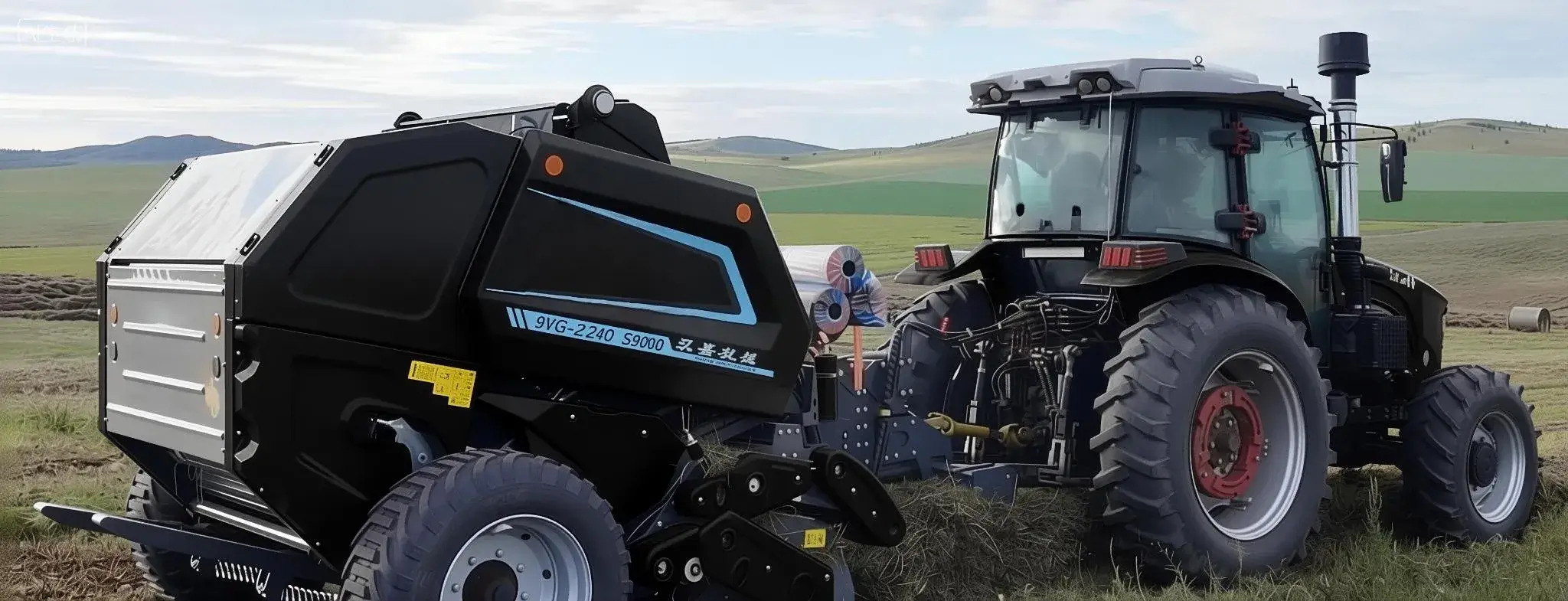
The 9YG-2.24D series produces bales with a finished diameter of 1300mm and width of 1400mm across all variants (standard, S9000 Classic, S9000 Beyond, and Transcend). This dimensional consistency is a design feature of the fixed-geometry roller arrangement — 18 rollers of 222mm diameter arranged in a fixed arc that determines the maximum bale diameter. The chamber continues compressing beyond this point only by increasing internal pressure, not by expanding diameter. This means that once the bale has reached full diameter, additional roller time increases density within a fixed external envelope, which is the behavior substrate buyers need: predictable geometry with variable density control through the sensor threshold setting.
For mushroom facilities that use smaller-format processing equipment — particularly small-batch craft mushroom producers in rural Korean regions — the 9YG-1.0 series produces bales of 1100mm diameter × 1000mm width. This smaller bale format is easier to handle manually and requires less infrastructure to process than the larger 1300×1400mm bale produced by the 2240mm-pickup platform. The 9YG-1.25 series occupies the middle ground, producing bales of 1200–1300mm diameter × 1250mm width depending on variant, covering the mid-range needs of medium-scale mushroom operations. Matching the bale size to the buyer’s substrate processing capacity is as important as matching the bale density and moisture content.
Bale Geometry by Platform
| Platform | Bale Diameter | Bale Width | Target Bale Weight | Best Fit: Mushroom Buyer |
|---|---|---|---|---|
| 9YG-2.24D series | 1300 mm | 1400 mm | 500–1000 kg | Large commercial facility with mechanical handling |
| 9YG-1.25 / 1.25A | 1200–1300 mm | 1250 mm | 350–700 kg | Mid-scale mushroom operation, mixed handling |
| 9YG-1.0 | 1100 mm | 1000 mm | 200–400 kg | Small craft mushroom producer, manual handling |
| 9YG-1.0C | 1000 mm | 1250 mm | 200–400 kg | Small-scale, dual-use rice straw / corn stover |
6. Material Systems: Net Wrap Specification for Substrate-Grade Straw
The net wrap on a substrate-grade bale serves two functions that are specific to mushroom substrate supply, beyond the general transport stability role. First, it must prevent moisture ingress during the field storage and transport period — substrate buyers typically cannot accept a delivery within days of baling and may need the straw to remain in field storage for one to three weeks post-baling while they manage their production schedule and inventory. A bale that absorbs rain during this period and arrives at moisture above specification is as problematic as a bale that was baled wet. Second, the net wrap must be removable cleanly at the mushroom facility without leaving HDPE net fragments in the straw that could contaminate the substrate bag or block.
The round baler range uses net wrap rolls specified as 2000m length per roll across all platforms, with roll widths matched to chamber width: 1.4m rolls on the 9YG-2.24D series, 1.25m rolls on the 9YG-1.25 and 1.0C series, and 1.0m rolls on the 9YG-1.0 series. This full-width matching ensures that the net covers the complete face of the bale without gaps at the edges, which is the primary entry point for moisture if the wrap does not reach the bale face circumference. For substrate supply, operators should apply a minimum of two wrap revolutions at each bale face — not just in the center — to ensure edge coverage that resists moisture ingress during field storage.
Net wrap selection also matters for the removal process at the mushroom facility. Standard agricultural HDPE net wrap is designed to be cut and removed in one piece by running a utility knife along the bale face. Facilities that process large volumes of baled straw prefer net wraps that release cleanly from the compressed straw surface without leaving attached fragments. Net wraps with an open-mesh structure (larger aperture, thinner strands) release more cleanly than dense-mesh wraps that tend to have individual strands caught in the straw surface layer. Straw producers supplying substrate buyers regularly should discuss net wrap specification with their buyers and, if possible, align on a consistent net wrap product that the facility’s handling team has learned to manage efficiently.
7. Contamination Standards: Soil, Chemical & Foreign Material Limits
Soil contamination is the quality parameter that distinguishes a round baler configured for substrate supply from one that is not. A standard round baler pickup working close to the ground surface in post-harvest paddy conditions will inevitably collect some soil material along with the straw — particularly in areas where the combine’s cutting mechanism has disturbed the paddy surface, or where rain before baling has softened the surface layer and allowed clods of clay soil to become attached to the straw. Soil in a mushroom substrate is not merely an aesthetic issue: it introduces bacteria, actinomycetes, and wild fungal spores that compete directly with the inoculated mushroom culture, reducing colonization rates and increasing contamination risk across the entire batch of bags or blocks produced from that substrate lot.
Managing soil contamination starts with pickup height setting. The spring-tooth pickup on the round baler models in this range should be set at the maximum practical height above the ground surface — collecting straw from the top of the windrow rather than scraping the paddy surface. This is the single most effective contamination control measure available to a baler operator, and it costs nothing beyond the time required to adjust the pickup height at the start of the session. The axial-flow feeding system used across this round baler range contributes to contamination management by reducing the ground contact time of each straw section compared to conventional cam-track systems, which have a longer pickup arc that drags individual straw segments across the ground surface before feeding them into the machine.
Chemical contamination — primarily residual agrochemicals from the rice crop’s growing season — is a buyer concern that the baler operator cannot directly control through machine settings. What the operator can control is the information they provide to the buyer: field treatment records showing the dates, products, and application rates of herbicides, fungicides, and insecticides used on the rice crop. Korean mushroom buyers who are supplying organically certified mushroom products may require that the substrate straw comes from fields with limited or no synthetic agrochemical use during the growing season. Operators who maintain accurate field records and can provide these to buyers on request command premium pricing in the substrate straw market and build longer-term supply relationships.
8. Round Baler Gearbox: Consistency Requirements for Substrate Production
A round baler gearbox that maintains consistent roller speed across variable load conditions is a key component of substrate-grade bale production. When the gearbox experiences speed variation — from inadequate torque capacity relative to the load, or from worn components with irregular backlash — the compression rollers rotate at inconsistent speeds within the bale formation cycle. This produces density gradients within the bale: zones where the straw was compressed during a high-speed moment versus zones where the rollers were momentarily slower. These density gradients are invisible from outside the bale but become apparent when the mushroom facility processes the straw — the sterilization and moisture adjustment behavior differs between high-density and low-density zones, which can produce inconsistent substrate moisture distribution in the treated material.
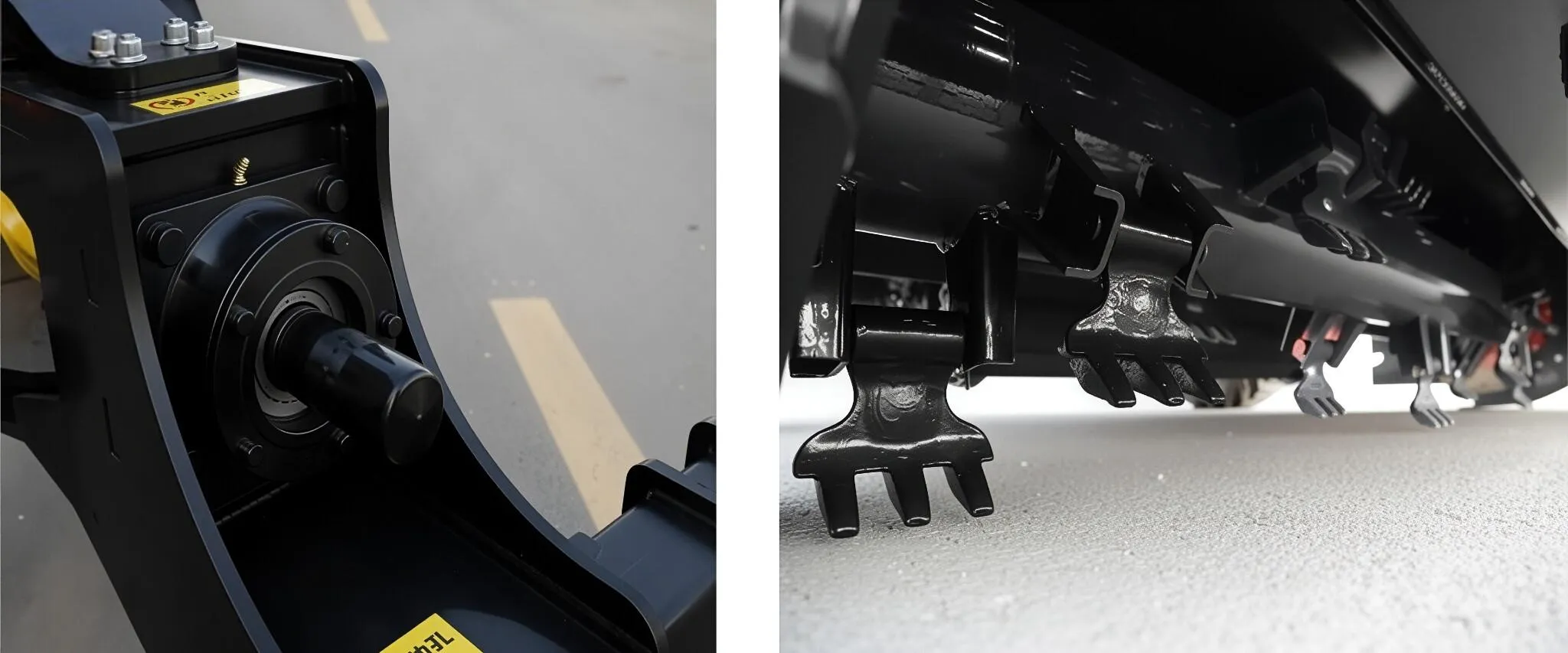
The round baler gearbox on the 9YG-2.24D platform is specified at 720 r/min PTO input with a torque capacity sized to handle the combined roller drive and net wrap mechanism operating simultaneously without speed reduction. The S9000 Beyond variant’s dual-coupled gearbox provides this capability along with the 90-degree lateral rotation feature for tight headland turns. In substrate production contexts, consistent bale density across the full batch is a quality output, and the gearbox specification is the primary mechanical variable that determines whether density consistency can be maintained session after session across the autumn harvest period.
For operators supplying substrate buyers from older Korean tractors running 540 r/min PTO output, the 9YG-1.25A model’s PTO speed compatibility range of 540–1000 r/min makes it the appropriate choice. Operating a baler designed for 720 r/min at 540 r/min reduces roller speed proportionally, which affects the bale formation dynamics and may require adjusting the sensor density threshold to compensate. The 9YG-1.25A’s design accommodates this speed range from the outset, providing reliable density control across the full PTO speed range rather than requiring field workarounds.
9. Complete Bale Specification by Round Baler Model
The following table draws from verified product documentation for all eight models in this range. Parameters relevant to mushroom substrate buyers are highlighted in the context column.
| Model | Pickup (mm) | Chamber W (mm) | Bale D×W (mm) | Density (kg/m³) | Machine Mass (kg) | Power (kW) | Net Roll Width | Substrate Fit |
|---|---|---|---|---|---|---|---|---|
| 9YG-2.24D S9000 Beyond | 2240 | 1400 | 1300×1400 | 100–200 | 4570 | 55–100 | 1.4 m | Large commercial facility |
| 9YG-2.24D S9000 Classic | 2240 | 1400 | 1300×1400 | 100–200 | 4312 | 55–100 | 1.4 m | Large commercial facility |
| 9YG-2.24D Standard | 2240 | 1400 | 1300×1400 | 100–200 | 3922 | 55–100 | 1.4 m | Large commercial facility |
| 9YG-2.24D Transcend | 2240 | 1400 | 1300×1400 | 100–200 | 4262 | 55–100 | 1.4 m | Large commercial facility |
| 9YG-1.25 Rundballenpresse | 2240 | 1250 | 1200×1250 | 115–200 | 4558 | ≥88.2 | 1.25 m | Mid-scale, mixed handling |
| 9YG-1.25A Rundballenpresse | 2150 | 1250 | 1300×1250 | 100–200 | 4472 | ≥75 | 1.25 m | Mid-scale, older tractor PTO |
| 9YG-1.0 Round Baler | 1900 | 1000 | 1100×1000 | 115–200 | 2640 | 48–80 | 1.0 m | Small craft / manual handling |
| 9YG-1.0C Rundballenpresse | 2400 (hammer) | 1250 | 1000×1250 | 115–200 | 3198 | ≥69.8 | 1.25 m | Dual-use, small-scale |
10. Korean & International Regulatory Framework
Agricultural machinery used in rice straw baling for substrate supply, and the mushroom cultivation industry that purchases the straw, both operate within regulatory frameworks that affect purchasing decisions, machine compliance requirements, and food safety obligations.
South Korea
Agricultural Mechanization Promotion Act (농업기계화촉진법): This act governs agricultural machinery type-approval and subsidy eligibility under the MAFRA agricultural machinery purchase support program. Round balers that have completed type-approval testing are eligible for government purchase subsidies covering 30–50% of machine cost. The sensor density control system is evaluated during type-approval testing as part of the machine’s operational specification. Operators purchasing machines for substrate straw production benefit from subsidy support that reduces the capital cost of transitioning to higher-specification equipment capable of meeting mushroom buyer requirements.
Food Sanitation Act (식품위생법) & Agricultural Products Quality Control Act (농산물품질관리법): These acts govern pesticide residue limits in agricultural products including mushrooms produced commercially for sale. While these regulations apply to the mushroom product rather than the substrate straw directly, mushroom cultivation facilities that supply to certified market channels — particularly organic certification under the Government-Certified Organic Agricultural Products scheme — are required to demonstrate that their substrate materials, including rice straw, are free from prohibited substances. This regulatory pressure downstream creates the agrochemical documentation requirements that mushroom buyers impose on their straw suppliers upstream.
Clean Air Conservation Act (대기환경보전법): Open burning restrictions on rice straw make mechanical baling the primary compliant residue management approach. This regulation directly supports the substrate straw supply market by creating a large volume of baled straw that must find a use — and substrate supply is one of the higher-value outlets available to operators with access to quality straw at low agrochemical load.
Korean Industrial Standards (KS) for Agricultural Machinery: KS B 5110 and related KS standards define safety requirements for PTO-driven agricultural machinery sold in Korea. Compliance with these standards is a prerequisite for type-approval and is referenced in the machinery purchase subsidy application process.
European Union
Machinery Regulation EU 2023/1230: Replaces the Machinery Directive 2006/42/EC and sets CE marking requirements for agricultural machinery placed on the EU market. Relevant harmonized standards for round balers include EN ISO 4254-1 (general agricultural machinery safety), EN ISO 11684 (safety signs), and EN 693 (hydraulic press safety, applicable to hydraulic bale ejection systems). CE certification is referenced by Korean importers and procurement organizations as a safety quality benchmark alongside ISO 9001 certification held by the manufacturer of this range.
Organic Farming Regulation EU 2018/848: While applying to EU organic production, this regulation sets a reference standard for substrate material purity requirements that Korean organic mushroom buyers frequently reference when specifying straw purchases. Familiarity with EU organic substrate standards can be useful for straw operators who wish to supply premium-segment mushroom buyers in Korea who export to the EU market.
Japan
Japan’s JAS Organic Certification (Japanese Agricultural Standard for Organic Products) governs substrate material requirements for organically certified mushroom products sold in Japan — a relevant export market for Korean premium mushroom producers. Substrate straw used in JAS-compliant production must come from fields meeting agrochemical use restrictions consistent with JAS organic crop standards. Korean mushroom facilities exporting to Japan may extend these requirements to their straw suppliers, making field treatment documentation from the straw producer a practical necessity for supply relationships in this market segment.
ISO International Standards
ISO 4254-1:2013 (Agricultural machinery — Safety — General requirements) provides the technical baseline applied in multiple national regulatory frameworks. ISO 6336 (Calculation of load capacity of spur and helical gears) and DIN 3990 are the reference standards for round baler gearbox gear strength calculation, applicable to the transmission design used in this machine range. The manufacturer holds ISO 9001 quality management system certification, confirming structured quality control through the full manufacturing cycle.
11. Compatible Round Baler Models for Mushroom Substrate Straw Production
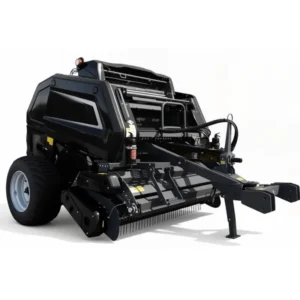
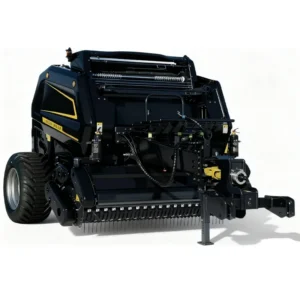
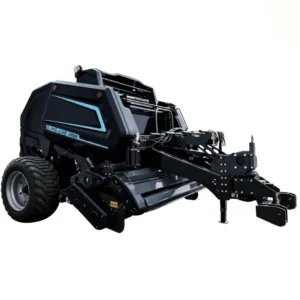
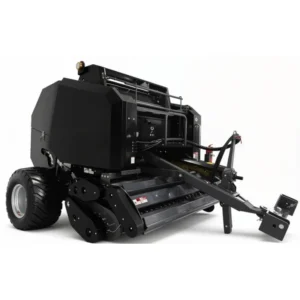
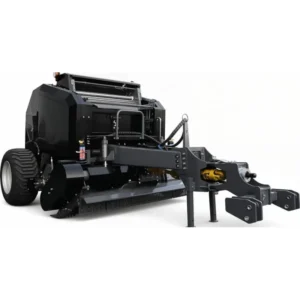
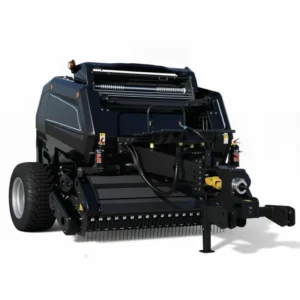
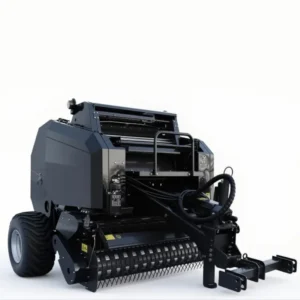
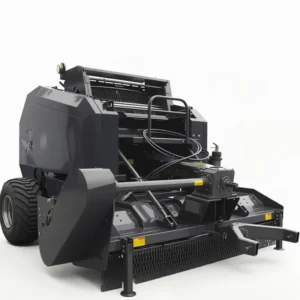
All eight models in this round baler range include electronic sensor density control as standard, making them capable of meeting substrate buyer density specifications when correctly configured. Model selection should be based on tractor power, field size, and the bale geometry your mushroom substrate buyer requires.
12. Related Equipment: Agricultural PTO Shaft & Agricultural Chain
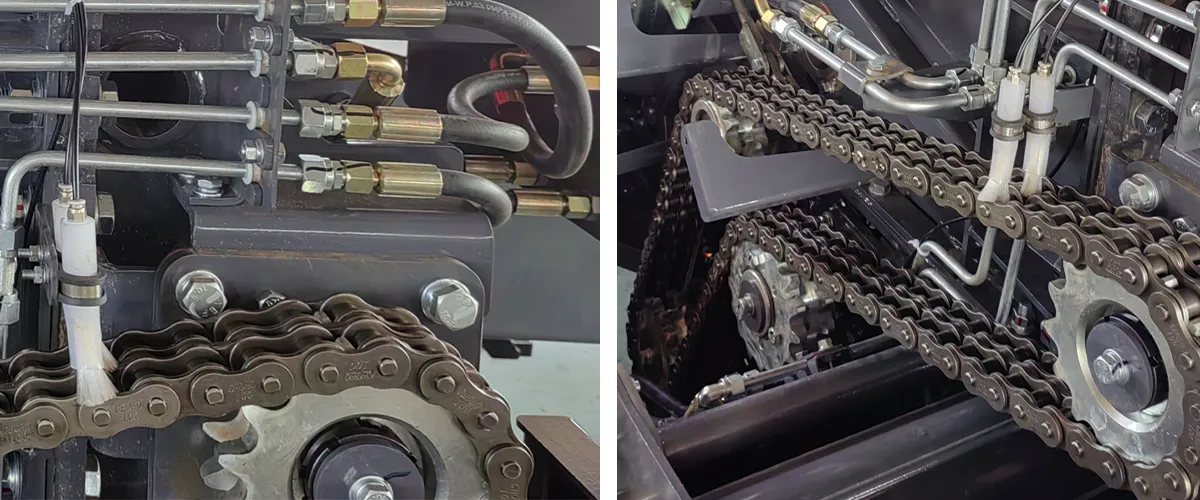
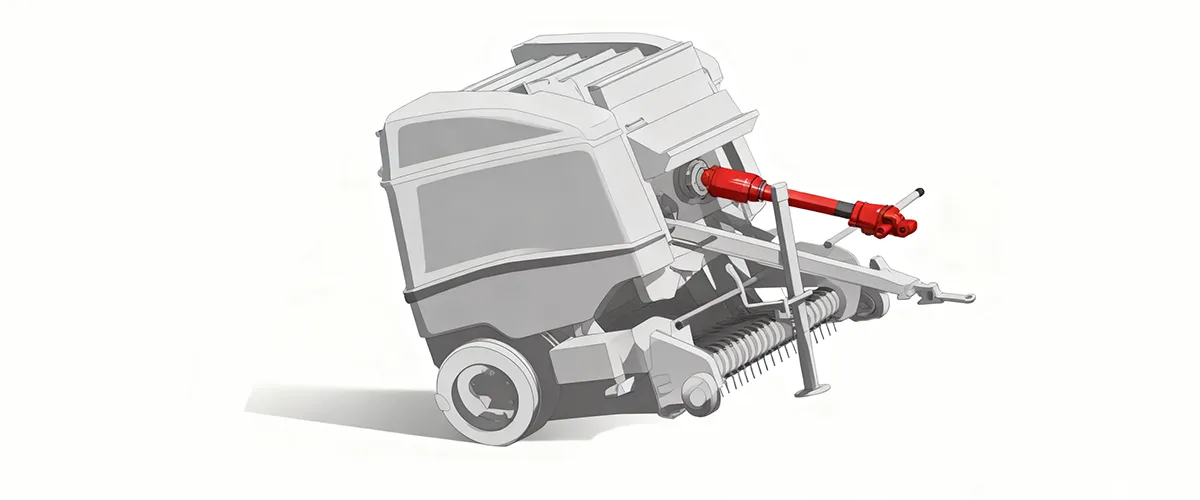
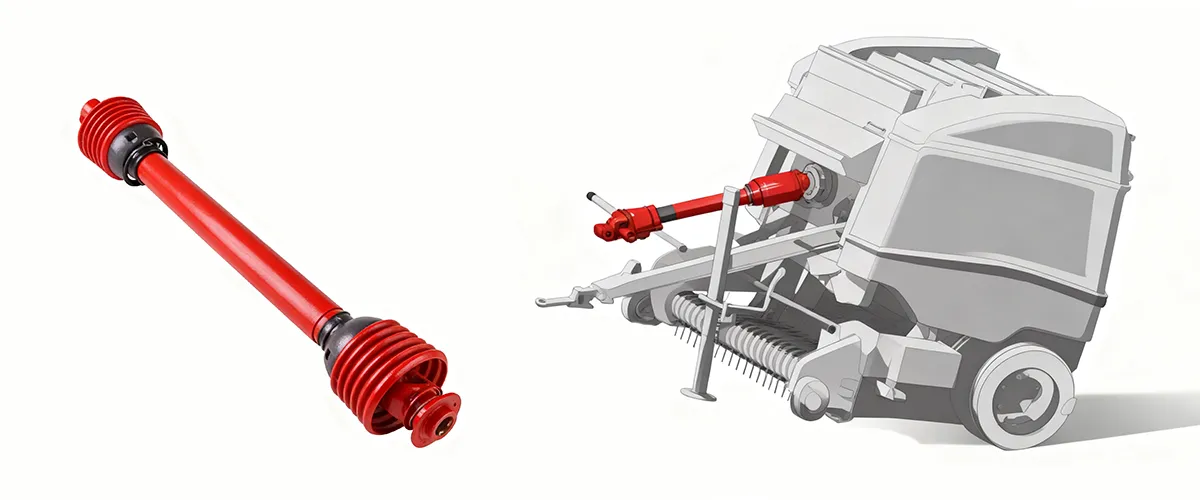
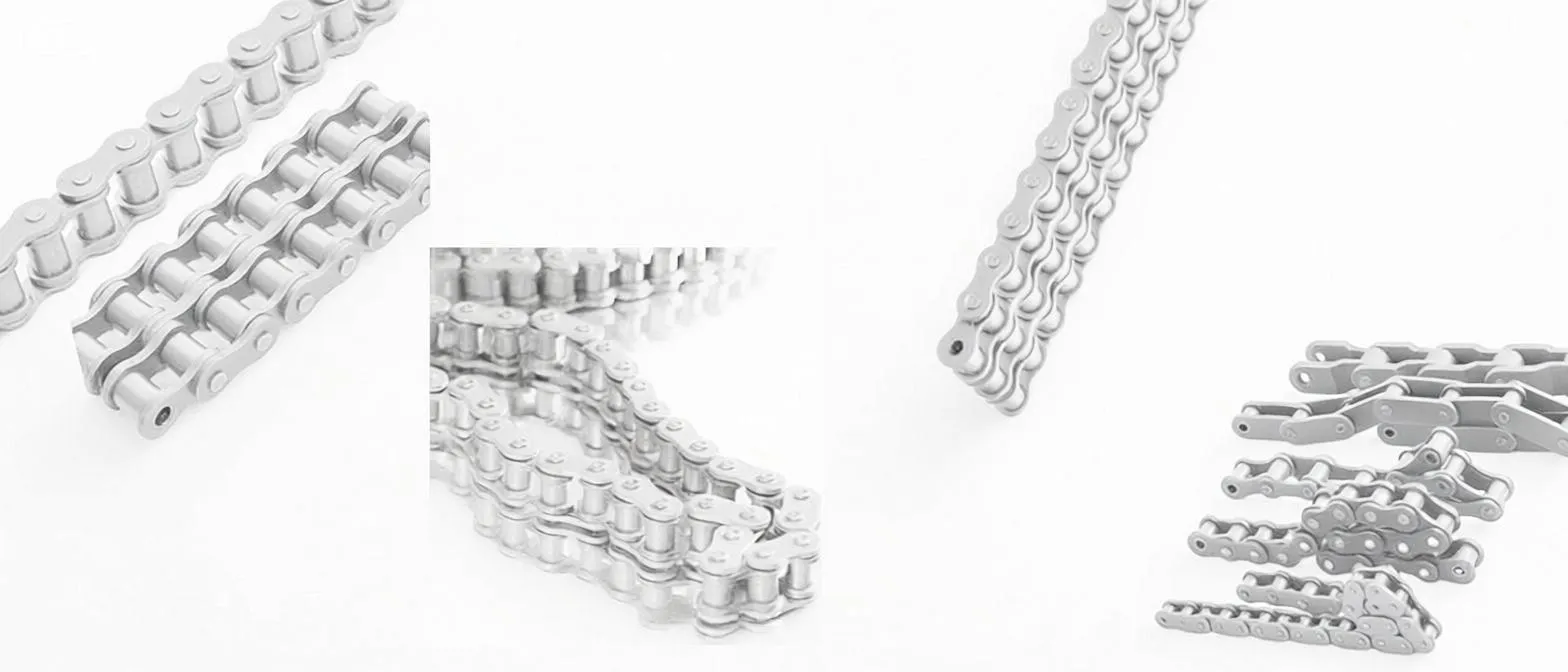
The density consistency that substrate buyers require depends on stable, uninterrupted power delivery from the tractor through the drivetrain to the compression rollers. Two drivetrain components have the greatest influence on this consistency: the PTO shaft connecting the tractor to the round baler gearbox, and the agricultural chain running through the roller drive system inside the machine.
FAQ: Rice Straw Baling for Mushroom Substrate in Korea
Tap each question to expand the answer.
Herausgeber: PXY