Cotton Stalk Baling — Biomass Energy Application Guide
A technical knowledge guide for cotton-growing farmers, agricultural contractors, and biomass energy procurement teams on the exact density, moisture, and physical specification requirements that biomass power plants apply to cotton stalk bales — and how the right round baler selection determines whether your bales consistently meet the grade.

1. Cotton Stalks as a Biomass Feedstock — The Opportunity and the Technical Challenge
Cotton is one of the world’s most significant fibre crops, and the stalks remaining after harvest represent a substantial and largely under-utilised agricultural residue stream. A single hectare of irrigated cotton typically generates 3–6 tonnes of dry stalk material — woody, lignocellulosic, and with a calorific value that positions it well as a solid biomass feedstock for heat and power generation. In major cotton-growing regions of Central Asia, China’s Xinjiang province, India’s Vidarbha belt, and the expanding cotton districts of Korea’s agricultural research zones, the challenge is not stalk availability. The challenge is converting loosely distributed field residue into consistently specified bales that biomass energy facilities will actually accept, purchase, and process efficiently.
Biomass power plants and combined heat and power (CHP) facilities are not passive receivers of agricultural residue. They operate complex fuel handling and combustion systems that are engineered around specific feedstock parameters — particularly bulk density and moisture content. A delivery of cotton stalk bales that fall below the minimum bulk density specification creates volumetric handling inefficiencies at the plant’s intake conveyor, chip or shred preprocessing equipment, and silo storage system. Bales above the maximum moisture threshold cause combustion instability, increased flue gas moisture loading, and potential mould-related quality deterioration during storage. Both failure modes can result in delivery rejection, price discounts, or contract penalties — none of which are recoverable within the same season.
This guide explains precisely what biomass energy plants require from cotton stalk bales, why those specifications exist from an engineering standpoint, how cotton stalk’s physical properties create specific challenges for standard round baler machine configurations, and which baler specifications reliably produce compliant bales across varying field and crop conditions. Whether you are a cotton farm operator, an agricultural contractor building a biomass supply business, or a cooperative procurement team evaluating equipment for a regional collection programme, the specification framework and machine selection guidance here gives you a practical starting point.
2. Cotton Stalk as a Biomass Fuel: Key Physical and Chemical Properties
Before examining what biomass plants require, it helps to understand what cotton stalk actually is as a fuel material. Unlike rice straw or wheat stubble — which are predominantly fine-stemmed graminoids with relatively uniform particle size — cotton stalks are multi-branched woody structures with a main stem diameter of 15–40 mm at the base, tapering to fine lateral branches. After harvest, standing cotton stalks are cut at the base by a cotton stalk puller or mowing attachment, leaving the crop in row-oriented windrows or loose scattered rows depending on the equipment used. The material’s fibrous, branched structure means it does not flow through a round baler pickup with the same consistency as cereals straw — and this has direct implications for which pickup configuration and compression mechanism achieves the required bale density.
The key energy-relevant properties of dry cotton stalk are: gross calorific value (GCV) of approximately 16–18 MJ/kg on a dry basis, which is comparable to medium-quality wood chip and significantly above the GCV of rice straw; ash content of 4–8% (lower than rice straw, which benefits the boiler and slag handling system); and a lignin content of 18–22% that contributes to its woody combustion characteristics. These properties make cotton stalk a genuinely attractive biomass energy feedstock — but only when delivered in bale form that allows efficient handling and compliant combustion operation.
| Property | Cotton Stalk | Rice Straw | Wheat Straw |
|---|---|---|---|
| Gross Calorific Value (dry basis) | 16–18 MJ/kg | 13–15 MJ/kg | 16–17 MJ/kg |
| Ash Content (% DM) | 4–8% | 12–18% | 5–9% |
| Lignin Content (% DM) | 18–22% | 5–8% | 14–18% |
| Typical Field Yield (t DM/ha) | 3–6 t/ha | 4–6 t/ha | 2–4 t/ha |
| Stem Structure | Woody, branched, 15–40 mm base diameter | Fine, hollow, uniform | Fine-medium, semi-hollow |
| Baling Challenge Level | High — woody, entangled branches | Medium — silica accumulation | Low–Medium |
3. What Biomass Energy Plants Actually Require: The Specification Framework
Biomass power plant feedstock specifications for cotton stalk bales are more prescriptive than most agricultural operators expect when they first engage with a plant’s procurement team. The requirements exist for operational rather than arbitrary reasons — each parameter connects directly to a specific aspect of the plant’s fuel handling, preprocessing, combustion, or emissions management systems. Understanding the engineering rationale behind each specification makes compliance more intuitive and helps operators calibrate their round baler settings and harvest timing appropriately.
Bulk density is the most critical specification — typically requiring a minimum of 100 kg/m³ for round bales delivered for direct combustion applications, and 120–150 kg/m³ for facilities using chip or pellet preprocessing where the incoming bale must meet minimum intake conveyor throughput rates. At densities below 100 kg/m³, round bales are physically unstable during mechanical handling — they deform on the intake conveyor, jam the bale cutting or shredding equipment, and create inconsistent fuel flow to the stoker grate or combustion chamber. The round baler’s sensor-controlled density system is the only reliable way to consistently hit and maintain a target density across varying windrow conditions throughout a long baling day.
Moisture content is the second critical axis. Most biomass energy facilities applying the Renewable Energy Certificates (REC) criteria under national biomass energy standards specify a maximum allowable moisture content of 20% at delivery, with preferred ranges of 12–18% for direct combustion. Cotton stalk dries more rapidly than rice straw after cutting due to its lower initial moisture at harvest (cotton is typically harvested in dry autumn conditions) and its woody cell structure, which releases bound moisture faster than grass-type straws. However, operators must be cautious about baling recently cut green stalks — which can carry 30–50% moisture immediately post-defoliation — and must allow an adequate field drying period before baling commences. Operating the round baler machine into still-green cotton stalk generates bales that will decline in mass through moisture loss during storage, creating weight-based delivery shortfalls against contracted bale quantities.
| Specification Parameter | Minimum Threshold | Preferred Range | Engineering Reason |
|---|---|---|---|
| Bulk Density (kg/m³) | 100 kg/m³ | 120–160 kg/m³ | Mechanical handling stability; conveyor throughput consistency |
| Moisture Content at Delivery | ≤ 20% | 12–18% | Combustion stability; flue gas moisture loading; storage mould risk |
| Bale Shape Integrity | Cylindrical; no severe flat spots | Tight, symmetric, hard core | Conveyor and stacking stability; fire risk reduction in storage |
| Ash Content (% DM) | Not applicable (low by nature) | Below 8% | Slag formation and boiler fouling rate |
| Foreign Material (soil, plastic) | Zero plastic; soil <1% gross mass | Zero contamination | Combustion equipment protection; emission permit compliance |
| Net Wrap Type | Polypropylene net wrap acceptable | Biodegradable where available | Some plants require wrap removal before processing; verify with buyer |
| Bale Dimension (standard) | φ1000 mm minimum | φ1100–1300 mm × 1000–1400 mm wide | Intake conveyor sizing; bale handling equipment compatibility |
4. Why Cotton Stalk Baling Is More Demanding Than Cereal Straw
Cotton stalk presents a fundamentally different physical challenge for a round baler machine than any cereal straw application. Where rice straw flows through the pickup as a relatively uniform mat of fine stems, cotton stalks are a tangled three-dimensional structure of rigid woody main stems and brittle lateral branches. When laid in windrows by a cotton stalk puller or row-gathering mower, the material interlocks and bridges — creating an irregular windrow cross-section that does not feed through a conventional spring-tine pickup at consistent rates. The result, with a poorly configured or conventionally designed round baler, is alternating overload events (when a dense bridged section enters the chamber) and underload intervals (when a gap passes through), producing bales with highly variable internal density that fail the homogeneous density requirements of biomass plant specification.
The stem diameter gradient in cotton stalk — from 15–40 mm at the base to fine lateral tips — also creates differential compression behaviour within the bale chamber. The base sections resist compression and tend to form a rigid structure at the bale core, while the branched tip sections compress readily. If the baler’s compression rollers cannot apply consistent radial pressure across this mixed material stream, the resulting bale has a hard outer shell with a less consolidated core — which appears compliant when measured by surface probe but fails weight-based density verification at the biomass facility’s intake. This internal structural non-uniformity is a recognised failure mode in cotton stalk baling with under-specified machines and is one reason why sensor-controlled density systems are particularly valuable in this application.
Field preparation before baling has an outsized effect on output quality in cotton stalk operations. Stalks should be cut and laid in the same operation where possible — many operators use a dedicated cotton stalk puller that cuts the main stem at ground level and lays the row in a defined windrow pattern. Allowing 7–14 days of field drying after cutting brings moisture from initial post-harvest levels of 25–40% down to the 12–18% target range for biomass baling. Secondary raking or row merging before the round baler pass can significantly improve windrow consistency and reduce the bridging frequency that causes compression irregularity. Investing in field preparation time before baling is directly reflected in improved bale density consistency and therefore in higher yield of specification-compliant bales from each hectare of cotton crop area.
5. Manufacturing Structure: What the Round Baler Needs to Handle Cotton Stalk
The mechanical architecture of a round baler intended for cotton stalk biomass baling must address three specific challenges that standard hay-oriented baler designs may not handle adequately: the irregular, interlocking nature of the material at the pickup; the variable compression resistance of mixed stem diameters within the forming chamber; and the high torque demand created by forcing rigid woody stalks into a dense cylindrical bale form. Each of these challenges maps to a specific mechanical component or design choice.
Hammer Claw Pickup for Cotton Stalk Collection
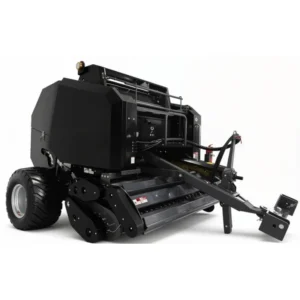
The most significant pickup system adaptation for cotton stalk baling is the use of a hammer claw pickup mechanism, as available on the 9YG-1.0C model. Unlike the spring-tine pickup — which relies on passive tine contact to lift and guide material into the intake — the hammer claw pickup uses positively driven rotating claw elements that physically grasp and pull material into the intake channel. For cotton stalk, where the branched woody structure tends to bridge across a passive spring-tine pickup without being cleanly ingested, the hammer claw’s positive mechanical engagement overcomes the material’s resistance and maintains consistent intake flow even through the dense, interlocked sections of a merged stalk windrow. The 9YG-1.0C model uses 20 hammer claw elements across a 2400 mm pickup width — the widest pickup in the 9YG range — which provides both positive engagement and the intake area needed to handle cotton stalk’s higher bulk volume at equivalent mass compared to cereal straw.
18-Roller Compression Chamber
Achieving the 120–160 kg/m³ density target for biomass plant acceptance requires a compression chamber that can apply sustained, even pressure against the resistance of woody cotton stalk. The 9YG series uses a roller-type forming chamber across all models — 18 rollers in the larger 2.24D models (φ222 mm each) and 16 rollers in the 1.0 and 1.0C compact models. The roller-type chamber has a specific advantage over belt-type chambers for rigid crop materials: the rigid steel roller surfaces maintain their compression geometry under load, while rubber belts can deflect radially under the point-load forces generated by thick cotton stems, creating locally under-compressed zones. The continuous circumferential contact from 16–18 rollers ensures that all sectors of the developing bale receive consistent compression force, addressing the core-vs-shell density differential described above.
Sensor-Controlled Density System
The sensor-controlled density system monitors chamber internal pressure at multiple points and initiates the net-wrap cycle only when the preset target pressure — corresponding to the target bulk density — has been reached across the full bale circumference. For cotton stalk, where material variability makes manual judgement of bale density unreliable, this automated system is the primary mechanism by which consistent specification compliance is achieved across a production day. The operator sets the target density parameter at the start of the session, and the baler manages the bale-eject timing accordingly — producing bales that vary within a narrow density band rather than the wide distribution that manual-timing operation generates.
Automatic Net Wrap and Ejection
Net wrap is the preferred binding method for cotton stalk bales destined for biomass energy use, as it maintains bale shape integrity through handling and storage better than twine. The 9YG series uses automatic net wrap as standard across all models, with the wrap cycle triggered by the density sensor and executed without operator input. For cotton stalk bales that may be stored outdoors for 4–16 weeks before delivery to a biomass facility, two-layer wrap coverage is advisable to provide adequate weather protection against the summer or autumn rainfall periods in Korea and Central Asia. The standard net roll specification — 2000 m × 1.4 m for the 9YG-2.24D series, 2000 m × 1.0 m for the 9YG-1.0 and 1.0C models — provides commercially available consumable compatibility without custom ordering.
6. Material System: Why High-Specification Components Matter in Cotton Stalk Applications
Cotton stalk is mechanically more demanding on baler drivetrain components than almost any cereal crop residue. The woody main stems, when compressed at the biomass-required density of 120–160 kg/m³, generate significantly higher instantaneous compressive forces against the roller surfaces and drive chain system than soft-stemmed straw materials. These force spikes — occurring when a thick base-section stem rotates into the most compressed zone of the forming chamber — are the primary cause of drive chain fatigue, gearbox overload events, and roller surface wear in under-specified machines operating on cotton stalk.
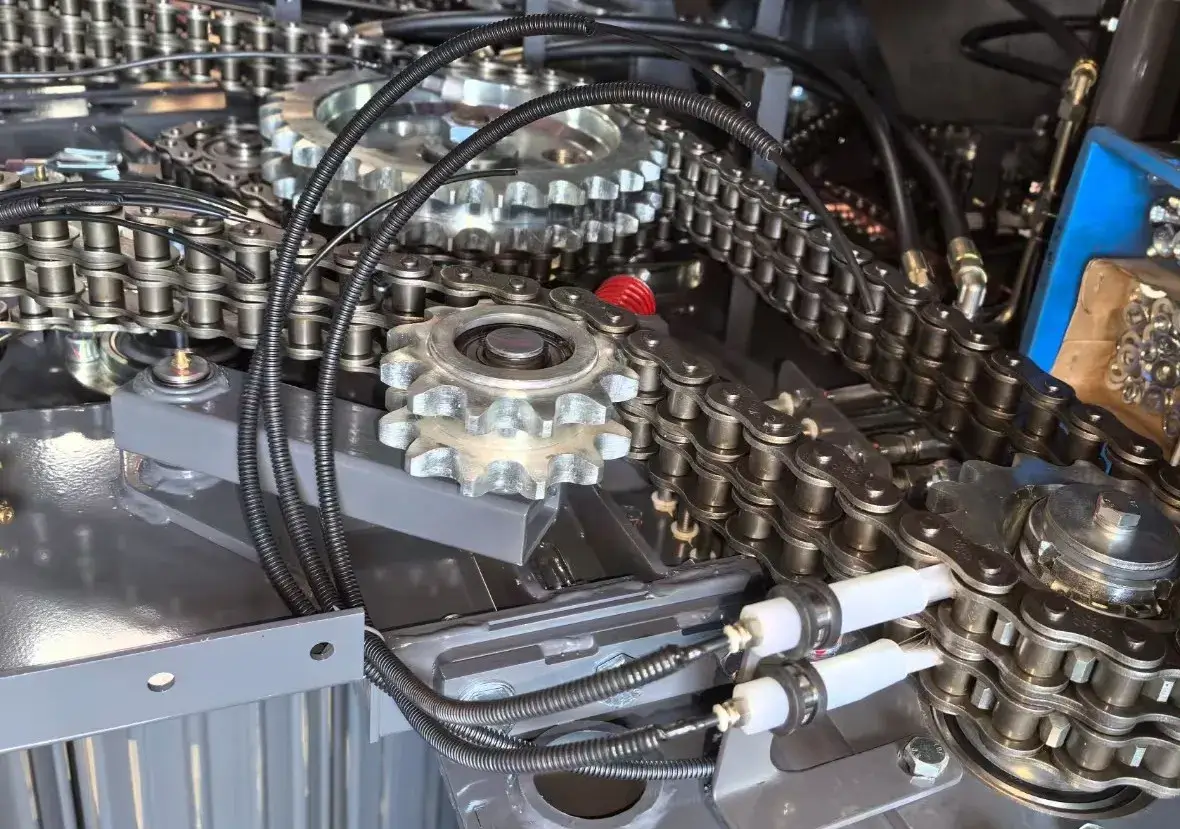
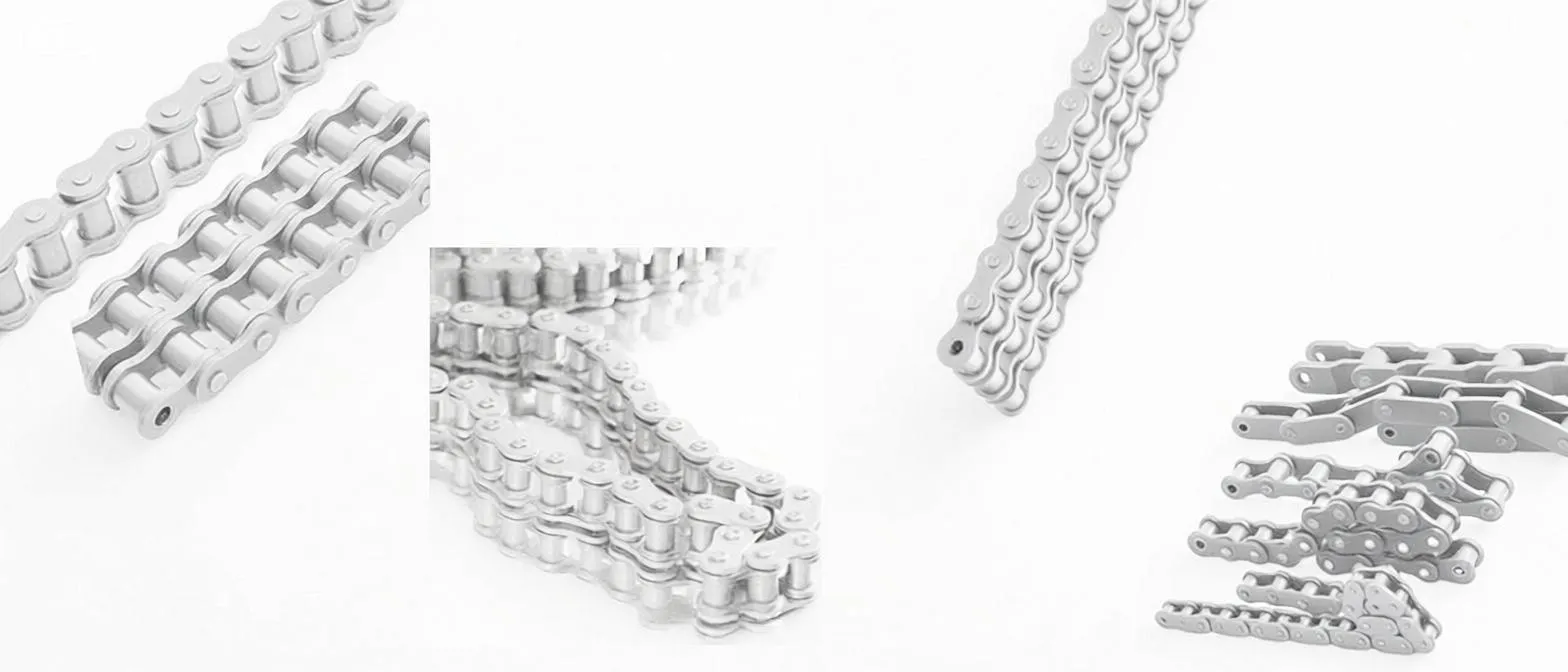
The 9YG-2.24D Classic model uses dual-side 20A heavy-duty roller chain throughout the rear chamber drive — a specification selected specifically because 20A chain’s higher tensile strength and link cross-section provides resistance to the instantaneous peak loads generated by rigid crop materials. In a cotton stalk baling application running at commercial intensity, the elongation differential between 16A and 20A chain over a full season is significant: 16A chain may require tensioner adjustment every 1–2 days and replacement after a single heavy season, while 20A chain in the same application maintains its specification for 3–4 seasons before replacement is required. This difference translates directly into reduced round baler parts cost and reduced downtime over the machine’s operating life.
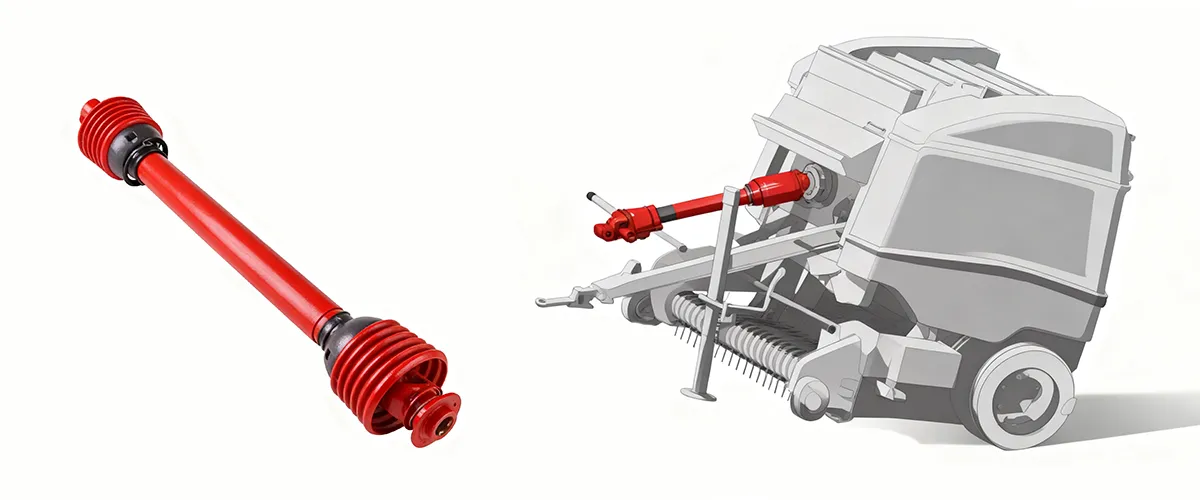
The structural frame specification is equally important for a machine handling cotton stalk’s higher compression forces. CNC laser-cut structural steel sections with automated welding ensure consistent weld quality at all stress concentration points — which is where frame failures originate in machines that are field-welded or manufactured with manual welding processes that introduce weld toe defects. The electrostatic powder coating applied in the manufacturing process creates a chemically bonded protective surface layer that resists the abrasive effect of cotton stem fragments and the soil particles carried into the machine with cotton stalk from fields that are typically more loosely structured than paddy soils. The proprietary dual cross-joint drive shaft with integrated torque limiter is the last line of protection for the gearbox and drivetrain against the overload events that cotton stalk’s variable density generates — the torque limiter engages and disconnects the drive momentarily before force levels reach the gearbox’s structural limit, preventing the costly drivetrain failures that can take a machine out of service during the harvest window.
7. Round Baler Gearbox Requirements for Cotton Stalk Applications and International Standards
The round baler gearbox in a cotton stalk biomass application carries higher torque demands than in grass or cereal straw operations. Cotton stalk’s woody structure and the need to achieve 120–160 kg/m³ target density means the gearbox must transmit higher sustained PTO power to the forming chamber drive without exceeding its rated continuous torque capacity. Selecting a machine whose gearbox is rated only to the minimum required for grass baling is a common source of premature gearbox failure in first-season cotton stalk operations, where operators discover that the machine’s mechanical limits are reached before the biomass plant’s density specification is met.
The standard gearbox configuration on the 9YG-2.24D series transmits PTO power through a bevel gear set at a rated output shaft speed of 720 r/min. The gearbox housing is accessible for oil level checks without major disassembly, and the correct lubricant specification — SAE 90 GL-4 gear oil or equivalent regional-market product — is a standard industrial specification available across the main cotton-growing regions of Asia and the Middle East. Gearbox oil condition monitoring is particularly important in cotton stalk applications because the fine fibrous cotton fragment dust generated during baling can enter the oil if the breather cap is not properly maintained, contaminating the lubricant and accelerating gear surface wear. A sealed gearbox breather filter change at the start of each cotton stalk baling season is a low-cost preventive maintenance action with significant long-term protection value.
The dual gearbox configuration on the 9YG-2.24D Transcend model offers an operational advantage in cotton fields with narrow row spacing or field boundaries requiring sharp turns: the independent ±90° lateral rotation of each gearbox allows the tractor to turn without cutting PTO power, maintaining consistent roller speed and therefore consistent compression force throughout the headland manoeuvre. In a cotton stalk baling operation where bridging events at the pickup are already a throughput variable, additional headland-turn downtime from single-gearbox angular limitations compounds into meaningful daily throughput reductions.
| Region / Market | Key Regulation | Gearbox / Biomass Relevance |
|---|---|---|
| South Korea | Agricultural Mechanisation Promotion Act; Safety Standards for Agricultural Machinery (농업기계 안전기준); Clean Air Conservation Act | PTO shaft guarding mandatory; gearbox certification required for machinery subsidy; cotton stalk burning prohibited in most districts |
| European Union | EU Machinery Regulation 2023/1230 (successor to Machinery Directive 2006/42/EC); EN ISO 11684 safety signage; Renewable Energy Directive (RED III) | CE marking mandatory; gearbox torque rating documented; cotton stalk eligible as RED III solid biomass if sustainability criteria met |
| India | National Policy on Biofuels 2018; Prevention of Air Pollution Acts (state-level); BIS machinery standards | Cotton stalk burning prohibited in Punjab, Haryana, and Maharashtra; biomass REC income via MNRE renewable energy certificates; gearbox BIS conformity for subsidised equipment |
| Uzbekistan / Central Asia | GOST agricultural machinery standards; national burning restriction ordinances in Uzbekistan (Decree No. 5285) | Cotton stalk burning restricted; GOST-compliant gearbox lubrication specification; biomass supply contracts active with CHP facilities in Tashkent and Fergana regions |
| United States | ASABE S331.4 (PTO shaft safety); OSHA 29 CFR 1928.57; EPA Renewable Fuel Standard (RFS) for advanced biofuel | PTO master shield mandatory; gearbox torque rating must match peak tractor output; cotton stalk eligible as advanced biofuel feedstock under RFS with qualifying pathway |
| Turkey | Renewable Energy Law No. 5346 (YEKDEM); Agricultural Machinery Safety Regulation TS EN ISO series | Cotton stalk biomass eligible under YEKDEM feed-in tariff system; agricultural machinery gearbox standards per TS EN ISO equivalents |
8. Round Baler Models for Cotton Stalk Biomass Applications
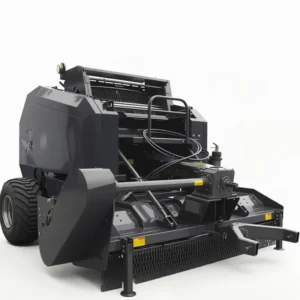
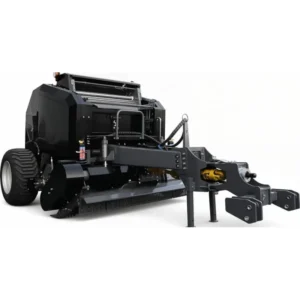
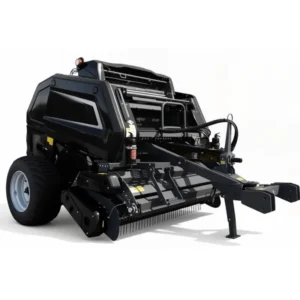
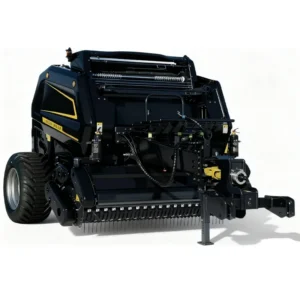
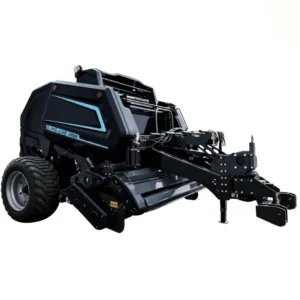
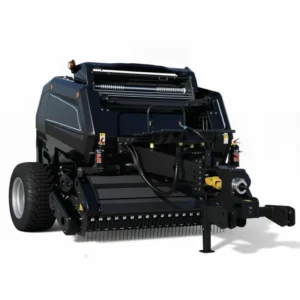
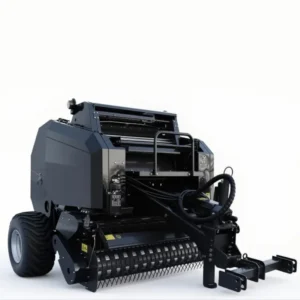
The following models address the range of cotton stalk baling scenarios — from smallholder cotton farms supplying local biomass cooperatives to large-scale contractors running high-volume supply contracts with regional CHP facilities. Model selection should prioritise pickup configuration, chamber compression capacity, and drivetrain specification relative to the biomass plant’s density requirement.
9. Field Preparation and Harvest Timing for Specification-Compliant Cotton Stalk Bales
Achieving consistent biomass plant specification for density and moisture starts in the field before the round baler arrives. The cotton stalk preparation workflow has a greater influence on final bale quality than in most other crop residue applications, because cotton stalk’s physical structure is inherently less conducive to clean baling than uniform cereal straws. The following sequence gives the best results for biomass-grade bale production.
Cotton stalks should be cut at ground level using a stalk cutter or cotton stalk puller attachment within 1–2 weeks of the final harvest pick. Cutting too late — after the woody main stem has become fully desiccated and brittle — increases the risk of stem shattering during cutting and baling, generating excessive fine dust and stem fragment material that accumulates in the baler’s intake system and reduces effective compression. Cutting too early — while residual boll or leaf material is still attached — introduces higher moisture and may include green tissue that extends the field drying time needed before baling.
After cutting, a field drying period of 7–14 days is typically required to bring moisture from the 25–40% range at cutting to the 12–18% range preferred by biomass facilities. During this period, turning or tedding the cut material once or twice significantly accelerates drying by improving air circulation through the stalk rows. The final step before round baler operation is row merging — combining 2–3 cut rows into a single windrow of consistent width and density. Consistent windrow profile is the single most important predictor of consistent bale density from a well-calibrated round baler. Windrows that vary in height by more than 50% from one section to the next generate corresponding density variation in the finished bale, even with sensor control, because the sensor responds to instantaneous chamber pressure and cannot fully compensate for very large step changes in material flow rate.
10. Compatible Systems: PTO Shafts and Agricultural Chain for Cotton Stalk Biomass Operations
Complete drivetrain reliability is especially critical in cotton stalk applications where compression forces are higher than in standard hay baling. Matched PTO shaft and drive chain from the same verified supply source eliminates compatibility-related failure risks that create costly downtime during the short cotton stalk collection window.
Agricultural PTO Shaft — Torque-Rated for Cotton Stalk
In cotton stalk baling, PTO shaft specification matters more than in lighter-duty applications. The instantaneous torque spikes generated when the baler roller chamber engages a thick, woody stalk section can exceed the rated capacity of a standard PTO shaft, causing universal joint failure or shaft shear at the worst possible moment — mid-field, mid-season. Our Agricultural PTO Shaft range for Round Balers is torque-rated for the peak load conditions of woody biomass applications, with cross-joint angles, safety clutch engagement thresholds, and spline specifications matched to the 9YG series. Safety clutch ratings are verified against peak PTO output of common cotton-region tractor models including those in the 70–100 HP range typical of Korean and Central Asian cotton farming operations. Including a correctly matched PTO shaft in the initial procurement gives the full drivetrain — tractor, PTO shaft, gearbox, chamber rollers — a consistent load rating that protects every component from overload cascade failure.
Agricultural Drive Chain — High-Load Specification
Drive chain in a cotton stalk baling operation experiences higher peak tensile loads than in cereal straw applications, making chain specification a genuine performance variable rather than a commodity choice. Our agricultural drive chain supply covers both 16A standard (9YG-1.0 and 1.0C) and 20A heavy-duty (9YG-2.24D Classic dual-side rear chamber). Both specifications use standard sprocket profiles compatible with Korean and Asian-market sprocket suppliers, allowing field-side emergency replacement without specialist parts. Pre-season chain inspection — measuring elongation against the specified new-link pitch — identifies chains approaching replacement threshold before the biomass collection season begins, preventing mid-season failures at the most costly possible time. A pre-ordered spare chain section stored on the machine for the full season costs very little as insurance against the alternative of a 1–2 day supplier wait during the active harvest window. One-stop supply of baler plus matched chain simplifies specification verification and eliminates the risk of installing a chain with subtly different pitch tolerance that changes the chain-sprocket mesh geometry.
Frequently Asked Questions
Herausgeber: PXY