An Extensive Technical Analysis of Automation, Mechanical Architecture, and Operator Wellbeing in Modern Forage Harvesting
The Challenge of Operator Exhaustion in Intense Agricultural Environments
Operating agricultural machinery during peak harvesting seasons demands immense concentration and physical endurance, especially when dealing with heavy crop residues or dense forage. When operators spend twelve to fourteen hours a day inside the tractor cab, fatigue becomes a significant risk factor that directly impacts both harvesting efficiency and field safety across global farming sectors. In traditional manual operations, a standard round baler requires the driver to continuously monitor internal chamber pressure, manually engage the twine tying mechanism using levers or hydraulic remotes, and constantly check over their shoulder to ensure the binding material is wrapping correctly around the bale circumference. This repetitive twisting of the torso, combined with the continuous mental strain of timing the binding cycle perfectly to avoid crop loss or chamber plugging, dramatically accelerates operator exhaustion. By integrating an advanced automatic twine tying system into a modern round baler machine, agricultural engineers have drastically minimized these repetitive manual interventions. The automated system utilizes precision electronic sensors to detect exactly when the compression chamber has reached the optimal pre-set density, seamlessly triggering the dual binding process without requiring the operator to push manual engagement buttons or halt concentration. This technological leap allows the driver to maintain focus primarily on forward steering, precise windrow alignment, and optimal ground speed, ultimately ensuring consistent output and reducing physical strain throughout a grueling workday on South Korean farms or demanding international agricultural environments.
Furthermore, the profound psychological relief provided by an automatic twine tying system cannot be overstated when evaluating long-term operator well-being and daily productivity metrics. Knowing that the round baler is actively monitoring its own wrapping cycle gives the operator the confidence to push the tractor closer to its optimal operating capacity, often reaching field speeds that would be impossible to manage safely with a manual system. When novice operators ask what is round baler efficiency, the answer is largely determined by how much manual input can be successfully eliminated from the repetitive baling cycle. Implementing these smart electronic systems means that the twine arms deploy at the exact optimal moment, applying dual or even quad twine lines across the bale surface with mathematically calculated spacing and consistent tension. This mechanical precision not only secures the biomass tightly for long-distance transport but also drastically reduces the time spent stationary with the tailgate open. For fleet managers and independent contractors evaluating a new round baler application, prioritizing automatic tying mechanisms translates directly to less operator downtime, fewer repetitive strain injuries, and a substantial increase in daily tonnage processed per machine. Whether utilizing a specialized krone round baler, a new holland round baler, a john deere round baler, or exploring robust alternative options, intelligent automation remains a cornerstone feature for any top-tier round baler manufacturer aiming to maximize user comfort and operational safety.
Manufacturing Structure of Automated Twine Delivery Modules
Dual Actuation Arm Geometry
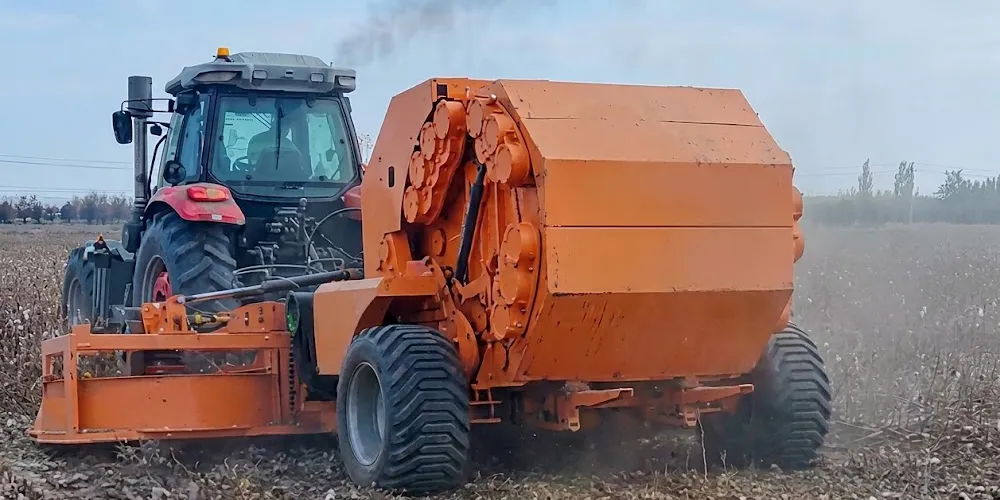
The central manufacturing structure of the automatic tying system relies on dual sweeping actuator arms driven by a synchronized electric or hydraulic motor assembly. Unlike the single-arm mechanisms found on a basic mini hay baler for lawn mower setups, professional-grade machinery utilizes dual arms that start from the center of the bale and sweep outward to the edges simultaneously. This structural design cuts the tying time exactly in half, minimizing the duration the tractor must remain stationary. The arms are mounted on heavy-duty pivot bushings and driven by a direct-linkage cam system, ensuring they never collide during the high-speed deployment phase, which is critical for continuous round baler functionality.
Tensioning and Routing Architecture
Proper tensioning is vital to prevent twine slippage or snapping when baling expanding materials like dry straw or dense sugarcane trash. The structural routing path incorporates adjustable spring-loaded tensioning plates and ceramic-coated routing eyelets. As the twine is pulled from the storage box by the rotating bale inside the chamber, it passes through these tensioners, which apply a constant drag force. The physical architecture of the twine box is also designed to hold multiple oversized spools securely, preventing tangling caused by high-vibration field environments. This meticulous engineering ensures every round baler produces tightly bound, uniform packages ready for intensive stacking and handling.
Integrated Sensor and Cutting Block
The completion of the automated cycle relies on a ruggedized structural cutting block positioned at the home resting position of the twine arms. Once the wrapping cycle reaches the preset number of rotations, the arms sweep back into the housing, pulling the twine across a stationary, ultra-sharp hardened steel blade. Integrated proximity sensors confirm that the arms have returned to their home position and that the twine has been successfully severed before signaling the operator to open the tailgate. This structural integration of sensors and mechanical cutting tools inside the round baler drastically reduces the likelihood of un-tied bales exiting the chamber.
Material System Engineering for Tying Component Longevity
The material system utilized within the automatic twine tying module must withstand constant friction, abrasive crop dust, and significant tension loads. In high-quality round baler parts, the primary routing tubes and guide channels are manufactured from Ultra-High-Molecular-Weight Polyethylene (UHMWPE) or highly polished stainless steel. UHMWPE is selected for its incredibly low coefficient of friction and superior wear resistance, ensuring that highly abrasive synthetic twine glides effortlessly without grooving or sawing through the guides over thousands of operational cycles. Meanwhile, the actual cutting blades are fabricated from forged high-carbon tool steel, subjected to cryogenic heat treatment to maintain a razor-sharp edge even after severing miles of thick sisal or plastic baler twine. This specialized metallurgical approach prevents fraying and guarantees a clean cut every single time, which is an absolute necessity for preventing catastrophic tying failures that lead to severe operator frustration.
Beyond the friction surfaces, the structural housing and pivot brackets of the tying system are constructed from high-strength low-alloy (HSLA) steel, providing exceptional rigidity without adding unnecessary weight to the upper chassis of the round baler. To combat the highly corrosive environments caused by acidic crop juices and atmospheric moisture, these steel components undergo a comprehensive electro-deposition (E-coat) primer process followed by a heavy-duty baked powder coat finish. The springs utilized in the tensioning mechanism are formed from shot-peened silicon-manganese spring steel, ensuring they retain their compressive force properties indefinitely without suffering from metal fatigue. By employing such a rigorous and scientifically advanced material system, operators can trust that their small round baler or industrial high-capacity round baler machine will perform flawlessly through long harvesting days, completely eliminating the need for mid-field mechanical interventions and preserving the driver’s physical energy.
Gearbox Regulatory Compliance and International Safety Laws
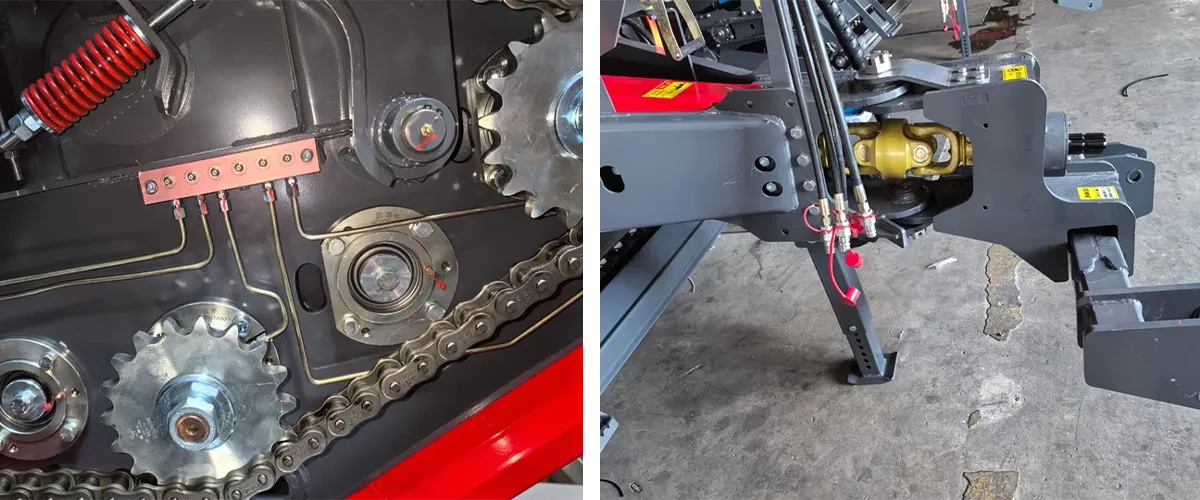
When deploying a round baler in heavily regulated agricultural markets such as South Korea, strict adherence to mechanical safety laws governing power transmission systems and gearboxes is absolutely mandatory. In South Korea, agricultural machinery must fully comply with the rigorous directives established by the Agricultural Machinery Management Act, overseen by the Ministry of Agriculture, Food and Rural Affairs (MAFRA). Specifically, the round baler gearbox and all connecting PTO (Power Take-Off) drive shafts must achieve KC (Korea Certification) safety standards. These strict legal frameworks require that all high-speed rotating components, including the main input gearbox and lateral chain drive sprockets, are completely enclosed by reinforced protective shielding. This is designed to eliminate entanglement hazards, ensuring that operators experiencing physical fatigue at the end of a long baling day are fully protected from accidental contact with moving parts. Furthermore, the round baler gearbox must be equipped with automatic torque-limiting devices, such as integrated shear bolts or friction slip clutches, to instantaneously sever power transmission in the event of a catastrophic chamber blockage, thereby protecting both the tractor engine and the operator from dangerous mechanical shockwaves.
These strict regulatory standards are not limited to South Korea; they mirror stringent global requirements designed to standardize agricultural safety worldwide. For instance, equipment exported to European territories must satisfy the European Union Machinery Directive (2006/42/EC) to earn the CE mark, which dictates strict limits on gearbox noise emissions, vibration dampening, and the mandatory inclusion of freewheel overrun clutches. In North America, OSHA and ASABE standards dictate the exact dimensions and durability testing required for PTO master shields guarding the primary round baler gearbox. Whether an operator is using a farm maxx mini round baler, a specialized caeb mini round baler, or an industrial heavy-duty unit, ensuring total compliance with these global gearbox regulations is a testament to the manufacturer’s commitment to safety. For operators researching round balers for sale near me or investigating round hay baler for sale listings, verifying these safety certifications provides critical peace of mind, knowing the equipment is legally compliant and engineered to minimize dangerous operational risks during exhausted working states.
Featured Automated Baling Equipment Showcase
To demonstrate the practical application of advanced automated tying systems, we highlight two exceptional models from our comprehensive lineup. These high-capacity machines are engineered to drastically reduce operator fatigue through seamless automation, performing exponentially better than a rudimentary small round baler for 40 hp tractor when facing demanding, large-scale forage harvesting operations.
EP Round Baler Φ1220 mm Compression
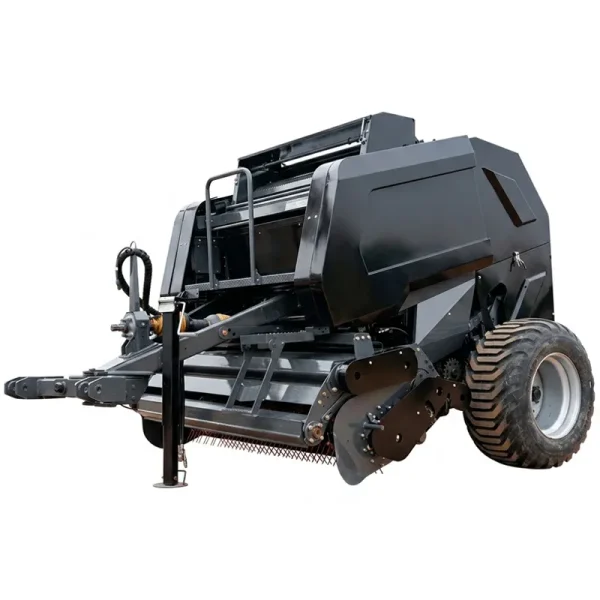
This flagship heavy-duty model features a massive Φ1220 mm compression chamber and an ultra-wide 2240 mm pickup, equipped with an advanced automatic dual-arm twine and net wrapping system. Engineered for tractors ranging from 55 kW to 100 kW, its intelligent sensor array completely eliminates the need for manual wrapping intervention, allowing the operator to bale continuously without experiencing physical exhaustion.
9YG-2.24D Round Baler S9000
The S9000 series is designed for supreme operational efficiency, utilizing a precision camless pickup and a highly responsive automated tying module. The ruggedized gearbox and heavy-duty structural frame ensure flawless operation even when handling wet, dense sugarcane trash or heavy silage. It is the ultimate solution for agricultural contractors demanding minimal downtime and maximum operator comfort.
System Compatibility: Drive Accessories and Components
A high-efficiency round baler operates as a deeply integrated mechanical ecosystem where every single power transmission component must demonstrate flawless mechanical compatibility to ensure uninterrupted automation. The physical connection between the tractor and the baler relies heavily on specialized drive shafts capable of transmitting continuous, high-torque power under dynamic angular misalignment during headland turns. Pairing your machine with a certified Agricultural PTO Shaft equipped with wide-angle constant velocity (CV) universal joints and integrated friction overrun clutches is absolutely vital. This ensures smooth power delivery and protects the automated tying sequence from sudden torsional shockwaves. Furthermore, integrating heavy-duty Agricultural Chains and precision full-series worm gear reducers creates an ultra-reliable, one-stop supply system designed to withstand the harsh realities of modern forage harvesting. We emphasize comprehensive system compatibility to guarantee your round baler parts work in perfect unison.
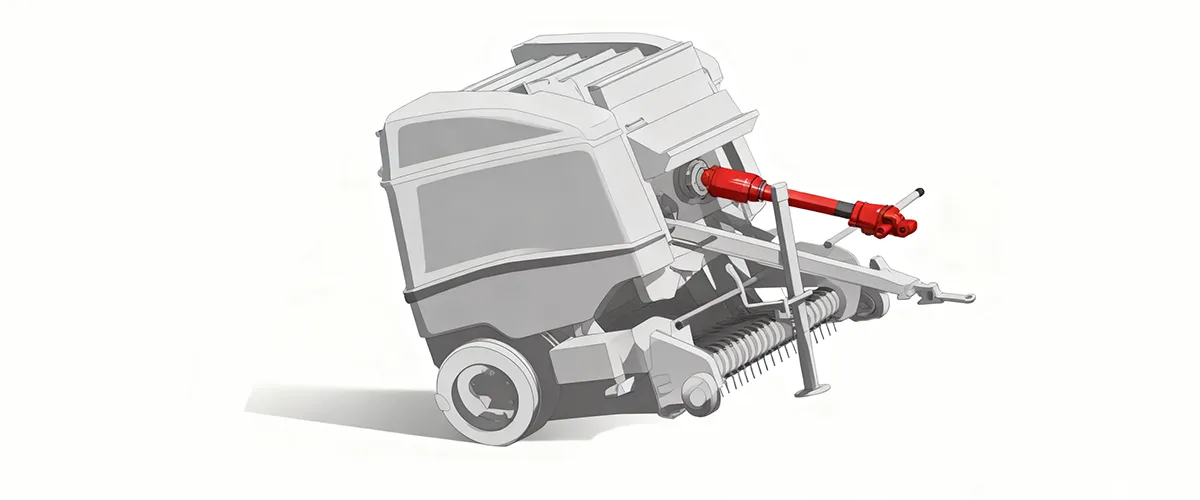
Agricultural PTO Shafts
Engineered with robust double-cardan constant velocity joints, these shafts allow seamless power transfer at tight angles up to 80 degrees, preventing driveline chatter and protecting the primary round baler gearbox from destructive torque spikes during aggressive maneuvers.
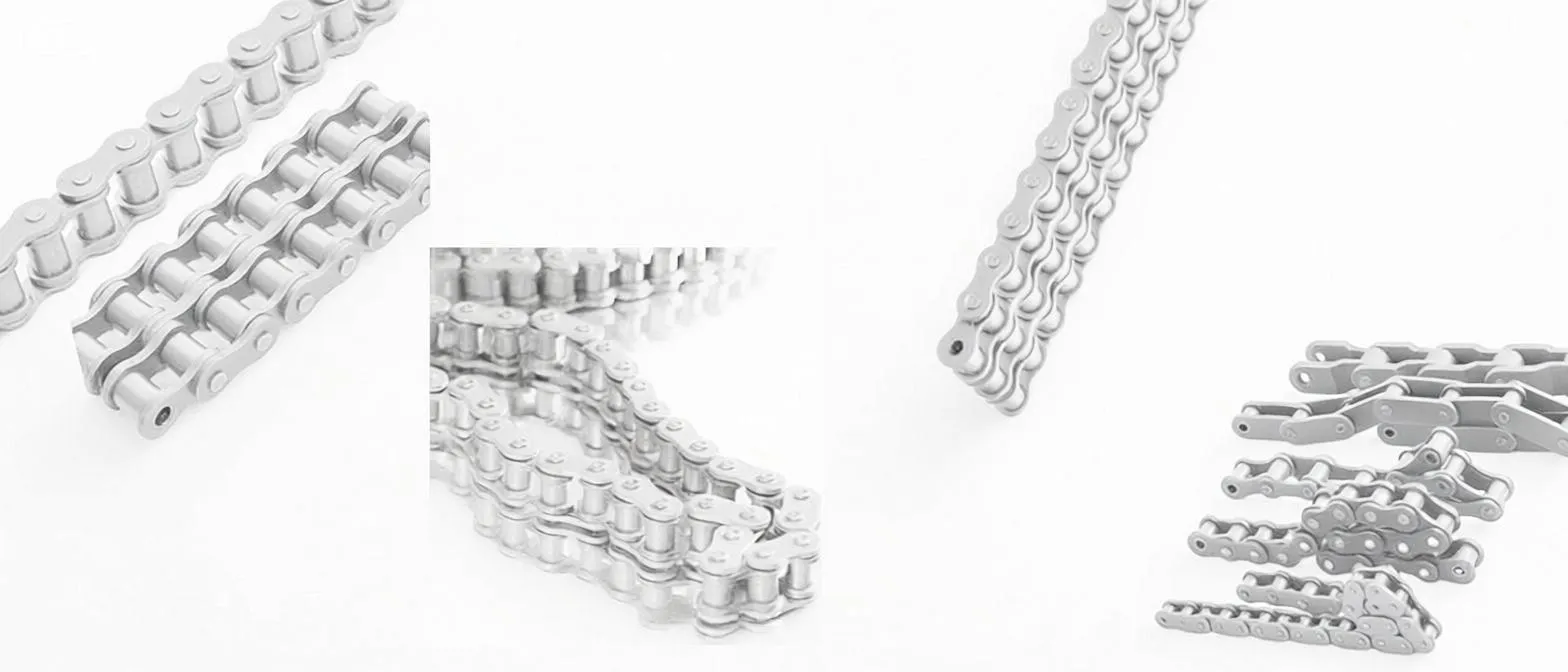
Heavy-Duty Agricultural Chains
Constructed using reinforced side plates and shot-peened solid alloy rollers, these premium chains eliminate stretch and tooth skipping, ensuring the precise mechanical timing required for the automatic twine arms to function perfectly across thousands of bales.
About Our Engineering Heritage and Manufacturing Excellence
Established in 2013, our organization has rapidly evolved into a modern, highly intelligent manufacturing comprehensive enterprise deeply entrenched in the global agriculture and animal husbandry industry. With over a decade of dedicated engineering experience, we focus heavily on the research, development, and production of a vast series of premium agricultural harvesting machinery. Our extensive product lineup includes advanced light and heavy round balers, sophisticated single and double blade mowers, high-speed disc rotary mowers, and precision single and double side rakes. Holding completely independent import and export rights, our expansive manufacturing processes are rigorously certified under the ISO9001 Quality Management System, ensuring every single machine meets exceptional international quality benchmarks before deployment. Whether providing a reliable small round baler for family farms or supplying heavy-duty fleets to large contractors, our commitment to quality remains unyielding.
We strictly adhere to our foundational corporate goal of “building a world-class brand and becoming an undisputed industry leader.” To achieve this, we continuously gather various advantageous technical resources and leverage our robust economic strength to persistently introduce advanced international production equipment into our facilities. Currently, our state-of-the-art manufacturing complex owns and operates more than 60 sets of large-scale, computer-controlled production equipment, encompassing robotic welding stations and high-precision laser cutting centers. This formidable infrastructure provides an impressive annual design production capacity exceeding 2,000 highly complex machinery units.
Häufig gestellte Fragen (FAQ)
How does an automatic twine tying system inside a round baler improve daily harvesting productivity for South Korean agricultural contractors?
By utilizing electronic sensors to instantly trigger the dual twine arms the moment optimal chamber density is achieved, the automatic system entirely eliminates the manual guesswork and physical button-pressing required by the operator. This allows South Korean contractors to maintain higher, consistent ground speeds and drastically reduces the seconds lost during every single tying cycle over a long workday.
What specific mechanical maintenance is required to keep the automatic tying arms operating smoothly during intense autumn forage baling?
To ensure flawless operation, operators must regularly blow out accumulated abrasive crop dust from the tying housing, inspect the UHMWPE routing guides for deep grooving, and routinely lubricate the pivot bushings on the sweeping arms. Additionally, checking the sharpness of the hardened steel cutting blade ensures the twine is severed cleanly without fraying.
Which type of twine material works best with high-speed automated binding systems when processing wet heavy crop residues?
For high-speed automated systems handling wet, expanding residues like heavy bagasse or silage, high-tensile synthetic polypropylene twine is highly recommended. It offers superior knot strength and glides through the ceramic and plastic routing eyelets with minimal friction, preventing the snapping issues commonly associated with natural sisal twine under immense pressure.
Where can operators adjust the automated wrapping density settings on a modern heavy-duty round baler machine for optimal storage?
Adjustments are typically made directly from the digital monitor interface located securely inside the tractor cab. Operators can electronically adjust the hydraulic density pressure thresholds and select the exact number of twine wraps applied to the bale edges and center, allowing them to instantly adapt to changing field moisture conditions without leaving the driver’s seat.
When operating on steep inclines, how does the automated tying sequence prevent bale shape distortion before tailgate ejection?
The automated system maintains constant, active hydraulic pressure on the compression rollers throughout the entire high-speed tying sequence. By locking the bale tightly in place and rapidly applying tensioned twine before the tailgate is unlatched, the machine ensures the heavy biomass cannot shift, expand, or distort, guaranteeing a perfectly symmetrical package even on difficult hilly terrains.
Herausgeber: PXY