Rice Straw Baling | Agricultural Insight
An in-depth technical and practical guide covering machine construction, material science, regional regulations, and equipment selection for paddy straw baling in East Asian rice agriculture.
1. Why Rice Straw Management Has Become a Priority
Across Japan’s paddy landscape — from the Niigata plains to the fields of Kyushu — the question of what to do with rice straw after harvest is no longer a matter left to tradition. Decades ago, farmers burned straw in the field as a matter of routine. Today, that option is largely banned or heavily restricted. The shift has forced both large-scale operations and small family farms to rethink the entire post-harvest workflow, and for many, the answer has come in the form of the small round baler. These machines, compact enough to be pulled by a 40 to 60 horsepower tractor and agile enough to navigate narrow paddy field headlands, have quietly transformed how rice straw is collected, stored, and utilized across the country.
The motivation is partly regulatory, partly economic. Rice straw — or “wara” in Japanese — is no longer viewed purely as a residue. It is a feedstock for livestock bedding, a substrate for mushroom cultivation, a raw material for biomass energy plants, and increasingly, a compostable soil amendment that earns farmers carbon credit points under new agricultural sustainability frameworks. Getting the straw off the field quickly after threshing, before autumn rains degrade it, is critical. A well-specified Rundballenpresse operating alongside a combine harvester or standalone in a follow-up pass can convert loose windrows into weather-resistant round bales within minutes — bales that can be stored outdoors for weeks or transported to processing facilities without significant dry matter loss.

2. The Rice Straw Challenge — Agronomy Meets Engineering
Rice straw presents a handling profile that is fundamentally different from wheat straw or hay. Its silica content is exceptionally high — sometimes above 15% of dry weight — which makes it highly abrasive against steel pickup tines and compression rollers. In harvesting conditions typical to Japan’s harvest season (September through November), straw moisture content can range from 18% in sunny Tohoku weather to over 35% in humid Kyushu or after unseasonal rain. High-moisture straw does not flow through a round baler’s compression chamber the same way dry hay does: it tends to clump around tines, resist rotation inside the chamber, and create uneven bale cores that can collapse during transport.
The paddy field itself adds further complexity. Japanese rice paddies are typically small, often under one hectare per plot, and are separated by narrow irrigation bunds. This means a small round baler must be able to turn within a short headland, ideally with a total machine length under five meters and a turning radius suited to a compact utility tractor. The baler also needs a pickup width wide enough to collect straw that has been laid in slightly irregular windrows by a combine harvester — but not so wide that it cannot clear the bund edges on tight turns. Finding that mechanical balance is what separates purpose-fit machines from repurposed hay balers that struggle in paddy conditions.
Rice straw silica content (10–15% DM) wears pickup tines 3–4× faster than wheat straw. Hardened spring tines and roller surface hardening are essential specification points.
Average Japanese paddy plot is 0.3–1.0 ha with bund-to-bund widths as narrow as 20 m. Baler + tractor total length must stay under 8–9 m for safe headland turns.
Ideal baling moisture is below 20%. In wet harvest years, farmers must either wait and risk further degradation or bale wetter and accept reduced bale shelf life without silage wrap.
Bales are sold at 1,500–4,000 JPY per bale to livestock farms and biomass plants. Transport economics favor compact bale sizes (80–110 cm diameter) for standard flatbed trucks.
3. Manufacturing Structure of Small Round Balers for Rice Straw
A round baler designed or adapted for rice straw is not structurally identical to a standard hay baler. The engineering differences are meaningful, and understanding them is essential for procurement teams evaluating machines for paddy applications. The key structural subsystems — pickup, feeder, compression chamber, wrapping mechanism, and drive train — each require specific engineering treatment to cope with straw’s peculiar characteristics.
Pickup Mechanism
The pickup assembly is the baler’s first point of contact with the crop. On machines designed for paddy straw, the pickup width is typically set between 1,900 mm and 2,400 mm — wide enough to sweep a combine windrow cleanly without double-passing. The tine bars are mounted on a rotating cam-follower or, in more advanced designs, on a camless axial-flow carrier. The camless design, used on models like the 9YG-1.0 series, eliminates the most common wear point in paddy applications: the cam track itself, which gets clogged by silica-laden straw fragments and requires frequent cleaning in high-yield operations. Spring tines made from high-carbon steel with surface hardening extend service life significantly. Some manufacturers offer optional tine sets in stainless or boron-treated steel specifically for high-silica crops.
Feeder and Compression Chamber
After pickup, straw must be channeled into the compression chamber without plugging. Paddy straw’s tendency to tangle and clump means a feeder with active crop control is preferred. The auger-plus-roller feeder system, used in models like the 9YG-1.25 series, combines a helical auger that moves crop laterally toward the center with a set of aggressive feed rollers that push crop into the chamber opening. Fixed-chamber designs with a set of 16–18 steel rollers (diameter around 222 mm each) form the bale by rotating the crop against the chamber walls. The sensor-controlled density monitoring system continuously measures bale growth inside the chamber and signals the operator when the target diameter is reached — typically 1,000–1,300 mm for paddy straw applications in Japan, where smaller bales are preferred for handling and transport.
Drive Train and Gearbox
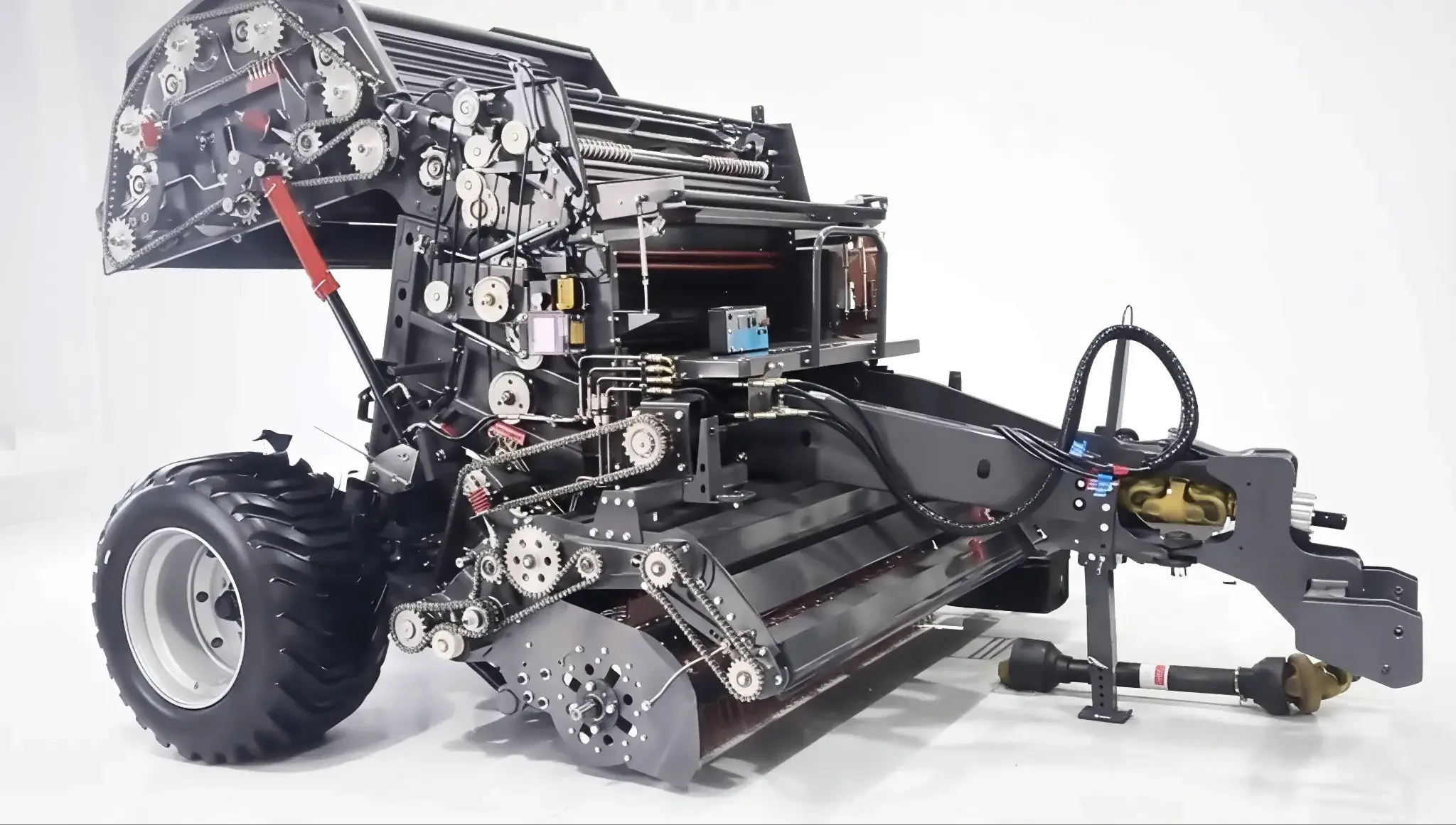
The round baler gearbox is the component most frequently underspecified in budget models and most frequently blamed for field failures. In paddy straw operations, the gearbox must handle repeated shock loads — moments when a clump of wet straw suddenly enters the chamber and creates a torque spike in the drivetrain. Heavy-duty gearboxes rated for 55–100 kW of input power, like those used in the 9YG-2.24D series, are dimensioned with safety factors appropriate for variable-density crop inputs. The twin-axle gearbox design used in some models allows 90-degree rotation to either side, enabling the tractor-baler combination to navigate paddy headlands without disengaging the PTO — a significant operational advantage when every minute counts during a narrow harvest window. Power output shaft speed is typically 540 r/min (matching standard tractor PTO), with some models also supporting 720 r/min for higher throughput.
Net-Wrapping System
Net wrapping is now the standard in Japan over twine for paddy straw, primarily because it creates a tighter, more weather-resistant surface that protects bales stored outdoors between harvest and collection. The automatic net wrapping mechanism winds a pre-set number of net layers around the bale as it rotates — usually 2–3 wraps — before cutting and sealing. Net consumption of around 2,000 meters per bale at 1.0–1.4 meter width corresponds to typical specifications in this class of machines. The wrapping speed affects cycle time between bales significantly: faster wrapping means the tractor can move sooner, important when working against incoming rain.
4. Material System: Structural Steel, Chain, and Surface Treatment
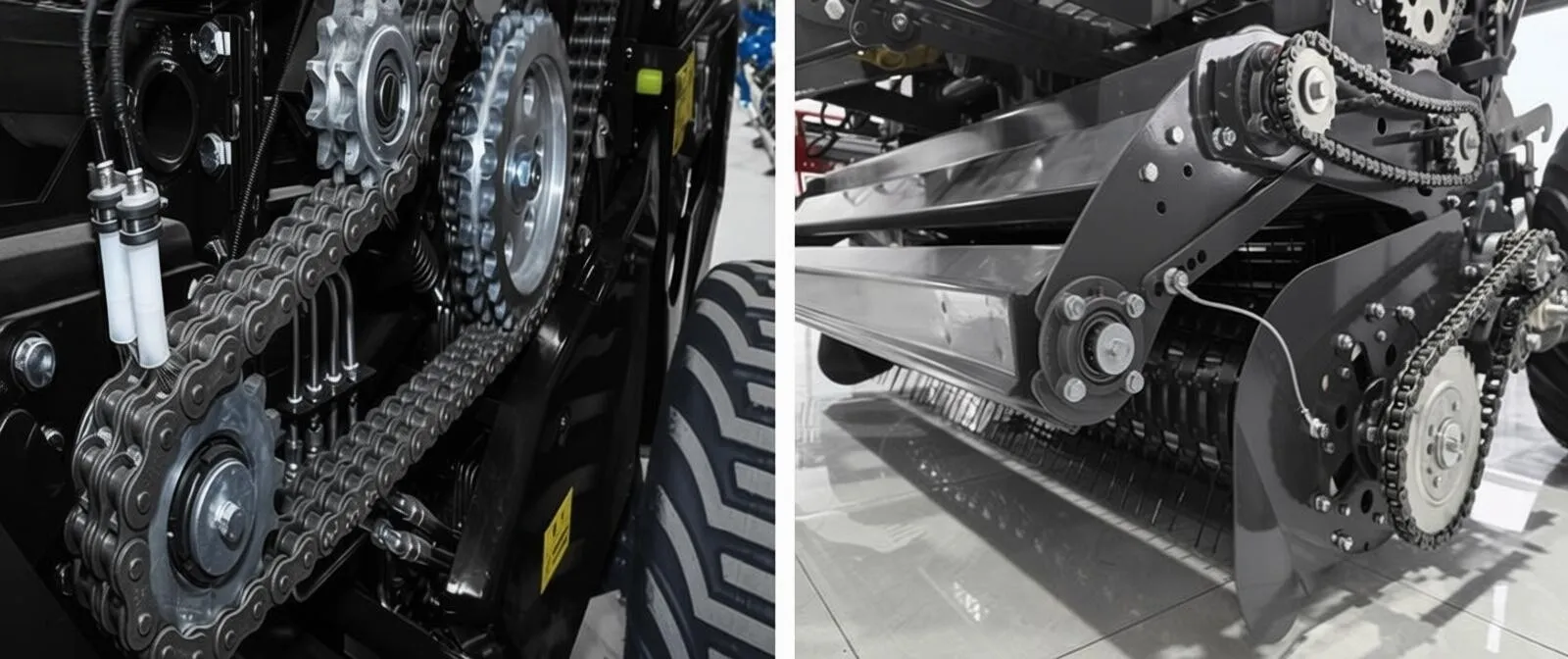
The material choices in a round baler designed for paddy straw are not incidental — they directly determine maintenance intervals, total cost of ownership, and the machine’s ability to withstand Japan’s humid climate between seasons. When procurement specialists or dealers evaluate machines for this application, material quality is one of the first technical questions they should raise with the manufacturer.
Beyond the above, manufacturers producing machines intended for the East Asian agricultural market increasingly apply anti-corrosion treatments to internal chain housings and gearbox mounting brackets. Japan’s coastal farmland in areas like Kochi Prefecture or Saga Prefecture is exposed to salt-laden air that accelerates corrosion on unprotected carbon steel surfaces. Requesting a factory specification sheet that details the surface treatment process — including pre-treatment phosphate wash, primer layer thickness, and topcoat UV resistance — is a reasonable due-diligence step for buyers in these regions.
5. How Japanese Rice Farms Integrate Round Balers in the Post-Harvest Workflow
The typical Japanese rice harvest workflow begins with the combine harvester cutting the standing crop and discharging cut straw behind in a loose windrow. In some combine configurations, the straw is chopped and spread evenly across the field — in which case a rake or tedder is needed to consolidate it into a pickable windrow before the round baler arrives. Once the straw is in a defined windrow, the tractor-baler combination moves through the field at 5–20 km/h depending on straw density and baler capacity, producing bales at a rate of 40–80 bales per hour. The completed bales roll off the rear of the machine and sit on the field surface. A bale transport machine — either a simple bale spear on the tractor front loader or a dedicated bale carrier — then moves bales to the field edge for stacking and eventual truck loading.
The entire post-harvest operation must typically be completed within a two-to-five day window between the combine’s pass and the onset of the next rain event or the preparation for winter cover cropping. This tight scheduling means that the round baler’s throughput, expressed in bales per hour, is not an abstract performance number — it is a direct determinant of whether the straw gets off the field or not. Farms that run two or three plots in different locations often share a single round baler between plots, further compressing the working schedule and making machine reliability (zero unplanned downtime) a primary selection criterion over outright lowest purchase cost.
6. Recommended Round Baler Models for Rice Straw Applications
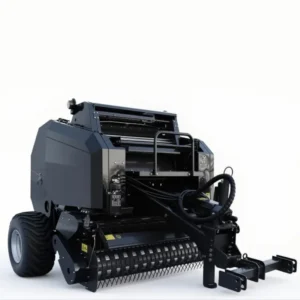
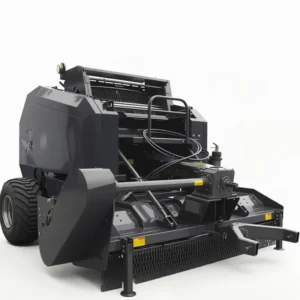
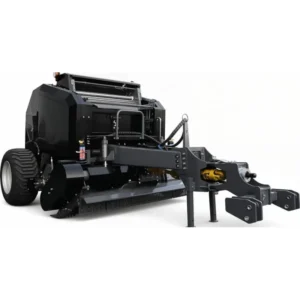
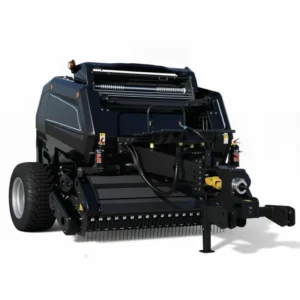
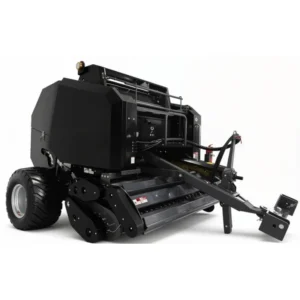
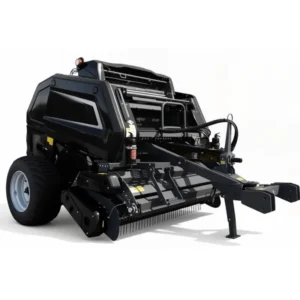
The following models cover the full range from compact small round balers suited to 40 HP tractors to high-capacity units for large paddy operations. All parameters are from the manufacturer’s published product specifications.
7. Regulatory Framework: Japan, South Korea, and Beyond
Understanding the legal and regulatory environment in which paddy straw round balers operate is increasingly important for both farmers and equipment suppliers. The regulatory picture has shifted substantially over the past decade, driven by air quality policy, agricultural mechanization incentive programs, and growing pressure on the agricultural sector to reduce its carbon footprint. The following overview covers the principal regulatory contexts relevant to Japan and South Korea — the two largest rice-producing markets in Northeast Asia where small round balers are most widely adopted — and touches on relevant frameworks in other key regions.
Japan
Open-field burning of rice straw is regulated under Japan’s Air Pollution Control Act and the Waste Management and Public Cleansing Act . While not an absolute blanket ban at the national level, municipal and prefectural governments — particularly in Niigata, Akita, Miyagi, and Fukuoka — have enacted near-total bans on agricultural waste burning. Violations carry fines of up to 300,000 JPY per incident. On the positive side, the Ministry of Agriculture, Forestry and Fisheries (MAFF) operates a direct subsidy program under the “Agri-Innovation Program” that covers a portion of the purchase cost of certified baling machinery when used for residue management and biomass energy supply chains. To qualify, machines typically must be registered in the agricultural machinery database maintained by the Agriculture, Forestry and Fisheries Research Council and meet specified performance thresholds.
South Korea (한국)
South Korea’s rice straw management regulatory environment has tightened significantly since the 농업기계화 촉진법 (Agricultural Mechanization Promotion Act) was last revised. The Environment Ministry’s enforcement of the Clean Air Conservation Act (대기환경보전법) classifies open burning of agricultural residues as a source of fine particulate matter (PM2.5) and has progressively restricted it. Following severe yellow dust and fine dust episodes in the 2010s, authorities in Jeolla, Chungcheong, and Gyeonggi provinces moved to restrict residue burning, particularly during fall harvest season (October–November). Meanwhile, the Rural Development Administration (농촌진흥청, RDA) actively promotes mechanized straw collection through the 농기계 구입자금 융자 program, offering low-interest loans (typically 1.5–2.0% per annum) for qualifying agricultural machinery including round balers. The Korea Agricultural Machinery Industry Cooperative (한국농기계공업협동조합) sets domestic machinery safety and performance standards, and imported machines seeking to qualify for subsidy programs may require third-party certification under Korean Agricultural Machinery Standard (KS B 6007 and related standards).
China
In China, round baler use for paddy straw has expanded rapidly following the national “Straw Comprehensive Utilization” policy framework . National and provincial prohibitions on field burning under the Air Pollution Prevention and Control Action Plan create strong demand for mechanical baling alternatives. Agricultural machines registered in the National Agricultural Machinery Purchase Subsidy Catalog are eligible for direct subsidies of 10–30% of purchase price. The 9YG series machines manufactured under the FASCAR brand are listed in this national catalog, making them accessible to Chinese farmers through the subsidy system.
European Union
EU member states that produce significant rice — primarily Spain (Valencian Community, Ebro Delta), Italy (Po Valley), and Portugal — regulate agricultural machinery safety under Machinery Directive 2006/42/EC. For CE-marked agricultural balers exported into EU markets, compliance with EN ISO 11684 (safety signs), EN 703 (agricultural machinery safety), and UNECE machinery transport regulations applies. Field burning is broadly prohibited across the EU under the Common Agricultural Policy’s Good Agricultural and Environmental Conditions (GAEC) requirements.
Vietnam and Southeast Asia
Vietnam’s Ministry of Agriculture and Rural Development (MARD) has issued guidance under Resolution 01/NQ-CP discouraging straw burning in the Mekong Delta and Red River Delta, where rice is double- or triple-cropped annually. The mechanized baling market here is still early-stage but growing rapidly, driven partly by a domestic biomass energy sector that pays farmers for baled rice straw. Machinery safety requirements in Vietnam fall under TCVN national standards, and imported balers typically pass through technical inspection at the Ministry of Transport testing centers.
8. How to Select the Right Small Round Baler for Paddy Straw
The process of choosing a round baler for rice straw baling is more nuanced than reading a capacity chart. Farms differ in tractor power availability, field geometry, downstream straw use, and whether the machine needs to handle other crops through the rest of the year. The following framework helps procurement teams and farm managers narrow down their selection to the models that will actually deliver value over a five-to-ten year service life.
Match the baler’s minimum power requirement to your available tractor PTO output. Allow a 15–20% headroom — for example, a baler rated at 48 kW minimum should be paired with a 60+ kW tractor in dense paddy conditions. For small round baler applications on 40 HP tractors, the 9YG-1.0 series is specifically engineered for this bracket.
For plots under 0.5 ha with headland widths below 15 m, the 9YG-1.0 and 9YG-1.0C compact models (operating weight 2,640–3,198 kg, total machine length under 4 m) are the practical choice. Larger models are suited to consolidated paddy fields of 1 ha or more where turning is less constrained.
Livestock bedding buyers prefer dense bales (150–200 kg/m³). Biomass plants accept a wider density range but prefer consistent bale dimensions for automated handling. If straw goes to mushroom cultivation substrates, moisture content at baling matters more than density — plan to bale at under 20% moisture and seek models with reliable density sensor control.
If the machine will be used for hay production or corn stalk baling outside of the rice harvest season, select a model with interchangeable pickup systems (spring-tine and hammer-claw), such as the 9YG-1.25 series. This versatility spreads the machine’s capital cost across more annual operating hours, improving payback period significantly.
9. Round Baler Gearbox and Drive System: A Closer Look
Der round baler gearbox deserves dedicated attention because it is both the most mechanically stressed component in the machine and the one most frequently underspecified by budget-tier manufacturers. In paddy straw applications, the gearbox experiences a cyclical pattern of torque: relatively low load during windrow pickup, rising load as the bale core builds, and peak torque during compression of the outer bale layers where material is most densely packed. Superimposed on this cycle are sudden spike loads when the combine leaves an uneven windrow — a thick section creates an instantaneous intake surge that travels through the feeder into the compression chamber and back through the PTO shaft to the gearbox.
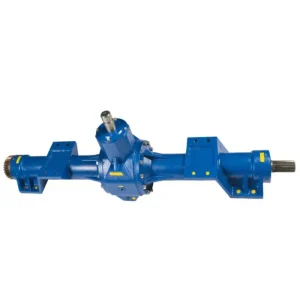
Premium models in this segment use a heavy-duty twin-clutch gearbox design that allows 90-degree lateral rotation of the PTO shaft — the key advantage when navigating narrow paddy headlands at turning radii that would otherwise require the operator to stop, disengage the PTO, and restart after the turn. This continuous-power turning capability is a genuine field-productivity feature, not merely a marketing claim, and it translates directly into fewer bale ejection interruptions per hour. The 9YG-2.24D S9000 series implements this through a dual-axle gearbox rigidly integrated with the drawbar frame — a configuration that avoids the torque-induced drawbar cracking seen on competing designs that mount the gearbox independently.
10. What Happens to the Baled Rice Straw? End-Use Markets
A round baler without a buyer for the bales it produces is only half a solution. Japanese farmers who have successfully integrated small round balers into their operations have done so because viable straw markets exist — and understanding those markets helps configure the baling operation for maximum value capture. The key end markets vary significantly in what they demand from the bales themselves, which in turn affects ideal bale specifications at the point of baling.
11. Maintenance Considerations for Paddy Straw Balers
Paddy straw is harder on baler components than most other crops, and a maintenance approach calibrated to that fact pays dividends over the machine’s service life. The following are the most critical maintenance points for round balers operating in rice straw applications across Japan and Korea’s humid environments.
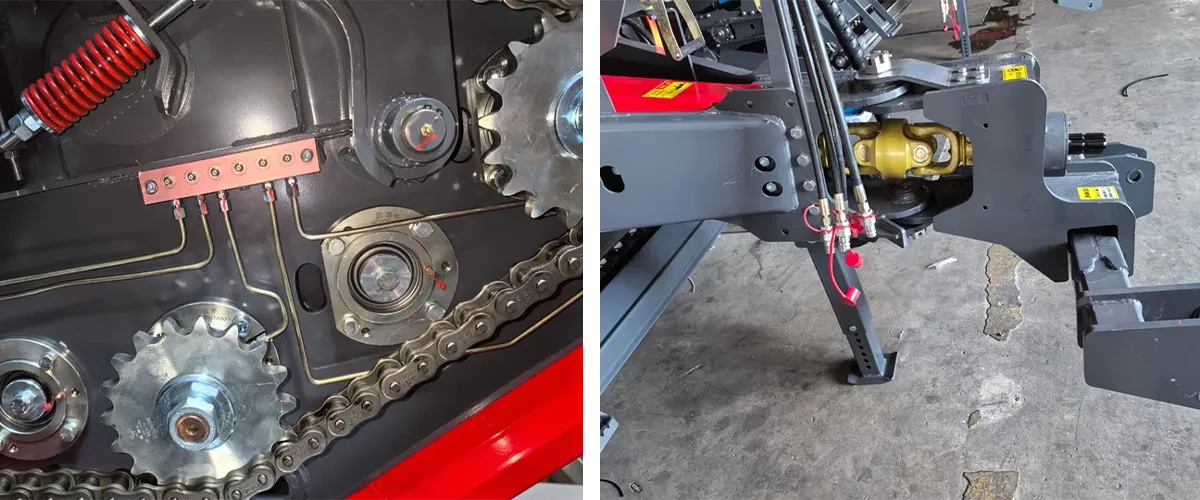
Pickup tine inspection should occur every 50–80 bale-hours of operation during the rice harvest season, with attention to tip wear, tine straightness, and spring tension. In high-silica straw, tine tips wear at rates of 1–2 mm per 100 hours, and a tine set worn below its minimum tip length causes inefficient pickup that increases field losses. Drive chain tension on both the feeder and rear chamber chain sets should be checked after the first 5 hours of seasonal operation and then every 30 hours thereafter. The H-type hydraulic fitting connections on the tailgate cylinder should be inspected for micro-cracks during each pre-season service — these fittings carry the full load of bale ejection thousands of times per season and are subject to fatigue cracking if the machine experiences rough terrain operation.
Gearbox oil level and condition should be checked at the start and end of each harvest season. Use the oil grade specified by the manufacturer — typically GL-4 or GL-5 gear oil at 80W-90 or 85W-140 viscosity. In Japan’s harvest season temperatures (15–25°C), standard mineral oil performs adequately, but operations in warmer climates or with extended daily hours may benefit from a synthetic gear oil that resists viscosity breakdown under sustained load. Finally, clean the entire machine thoroughly with compressed air and water before off-season storage, paying particular attention to the spaces between roller sets where damp straw fragments can accumulate and create rust pockets over winter.
Frequently Asked Questions
Herausgeber: PXY