Rice Straw Management — Field Burning Reduction Guide
A practical knowledge guide for Korean farmers, agricultural contractors, and biomass energy operators on replacing open field burning with mechanised round baler collection — and accessing the subsidy programmes that make it financially viable.
1. The Hidden Cost of Burning Rice Straw — And a Better Path Forward
Every autumn across South Korea’s rice-growing provinces — from Chungnam and Jeonbuk to the broad plains of Gyeonggi — the harvest season ends with a familiar sight: columns of grey smoke rising from thousands of small paddy fields where farmers are burning their leftover rice straw. The practice is understandable from a pure time-management perspective. Straw left on the field delays the next operation, attracts pests, and is genuinely difficult to manage without equipment. For generations, burning was the fastest way to clear the field. But the environmental cost has become untenable, and the regulatory environment has shifted sharply against it.
South Korea’s government has progressively tightened restrictions on field burning since the mid-2010s, driven by the country’s chronic fine dust (초미세먼지, PM2.5) pollution problem. Agricultural residue burning is estimated to contribute between 5 and 12 percent of total autumn particulate emissions across the central and southern regions during peak harvest weeks. The Ministry of Environment has identified this as a priority reduction target, and the enforcement infrastructure — including drone monitoring, satellite detection, and on-ground inspections by regional environmental agencies — has expanded considerably in recent seasons.
What has changed the economic calculation is not just the threat of fines. It is the parallel development of financial support mechanisms — subsidies, direct payments, and biomass energy incentive programmes — that make mechanised rice straw collection genuinely profitable for farms of nearly any scale. A round baler, once an equipment choice available only to large contractors, is now accessible to mid-scale Korean farms through equipment purchase subsidies, cooperative sharing arrangements, and competitive pricing from manufacturers offering direct export. This guide explains the regulatory and financial landscape, the mechanical requirements, and how to use a round baler effectively in the Korean rice straw context.
2. Why Field Burning Is Now Prohibited — The Regulatory Shift
The regulatory framework prohibiting agricultural field burning in South Korea is anchored in the Clean Air Conservation Act (대기환경보전법), which classifies open burning of crop residues as a controlled emission source. Under Article 86 and associated enforcement ordinances, farmers who burn rice straw, corn stalks, or other agricultural by-products in designated areas face fines of up to KRW 1,000,000 per incident. Some provincial governments have adopted stricter local ordinances — Chungcheongnam-do and Gyeonggi-do have introduced notification requirements that place the burden of proof on the farmer to demonstrate that burning did not occur.
Beyond the direct fine, field burning violations are increasingly cross-referenced against agricultural direct payment eligibility. Farmers participating in the Basic Agricultural Income Support Scheme (기본형 공익직불제) must certify compliance with environmental obligations, including the prohibition on field burning. A documented violation during the payment cycle can result in partial or full suspension of direct payment entitlements for that year — a consequence that often exceeds the direct fine in financial terms for farms receiving meaningful direct payment allocations.
The Rural Development Administration (농촌진흥청) has published technical guidance on alternatives to field burning, with mechanised baling consistently listed as the primary recommended method for rice straw removal. This institutional backing matters practically: regional agricultural extension officers (농업기술센터) now actively advise farmers on round baler access options, and some centres coordinate shared-use programmes for equipment that individual farmers cannot justify purchasing independently. Understanding the regulatory obligation is the starting point; understanding the support system that makes compliance financially practical is what turns regulation into an operational opportunity.

3. Biomass Subsidy Programs: How Korean Farmers Get Paid to Bale Straw
South Korea operates several overlapping financial support mechanisms that together make rice straw baling not merely a regulatory obligation but a genuine income opportunity. The most significant for most farmers is the Direct Payment Programme for Preserved Field Fodder (들녘경영체 직불금), administered by the Ministry of Agriculture, Food and Rural Affairs (농림축산식품부). Under this programme, farmers and contractors who deliver certified rice straw bales to registered livestock operations or feed processing centres receive per-bale payments from the government. The exact payment rate varies by year and region, but has consistently represented a meaningful contribution to the economics of straw collection.
The Renewable Energy Certificates (REC) programme, managed by the Korea Energy Agency under the Renewable Portfolio Standard (RPS), creates a parallel demand stream for rice straw as a biomass energy feedstock. Power generation facilities using solid agricultural biomass can earn REC credits, and straw bales meeting the required calorific value, moisture, and contamination specifications qualify as eligible feedstock. Some regional biomass energy facilities in the Chungnam and Jeonbuk regions actively contract with straw baling contractors for guaranteed seasonal supply, creating forward-agreement opportunities that improve the financial planning of equipment investments. A round baler producing at 40–100 bales per hour can generate substantial seasonal throughput for biomass energy contracts within a regional service radius.
Agricultural machinery purchase subsidies administered through the rural cooperative system (농협) and the Ministry of Agriculture’s agricultural mechanisation support programme provide direct financial assistance for equipment purchase. Eligible machinery — which includes round baler models that have passed domestic certification requirements — qualifies for subsidy coverage of 20–50% of purchase cost depending on farm scale, regional priority status, and available annual programme funding. Farmers in designated agricultural promotion zones may receive additional preferential rates. The practical effect is that the net acquisition cost of a round baler machine can be substantially lower than the catalogue price suggests, improving the payback calculation for straw collection operations.
| Programme | Administering Body | Benefit Type | Key Condition |
|---|---|---|---|
| Direct Payment — Preserved Fodder | MAFRA (농림축산식품부) | Per-bale payment | Delivery to registered livestock operator |
| Biomass REC Programme | Korea Energy Agency (KEA) | REC credit revenue via biomass plant | Meets biomass feedstock quality spec |
| Agricultural Machinery Subsidy | MAFRA / 농협 | 20–50% purchase cost subsidy | Certified machinery, farm eligibility check |
| Basic Agricultural Income Support | MAFRA | Annual direct payment retention | Environmental compliance including no-burn |
| Carbon Credit (Korean ETS) | Ministry of Environment | Emission reduction unit revenue | Verified emissions reduction documentation |
4. Round Baler Application: How the Machine Fits into the Rice Straw Workflow
Understanding the round baler’s role in the post-harvest workflow is essential before making any equipment decisions. The complete rice straw handling sequence — from combine discharge to bale delivery — typically involves four stages: field drying, windrow formation, baling, and transportation. The round baler is active in the third stage, but its efficiency is heavily influenced by the quality of the first two.
After the combine harvester passes through the field, rice straw is discharged from the combine’s spreader in a wide, low-density layer across the field surface. This material is too loosely distributed to feed directly into a round baler at effective density. A waiting period of 3–5 days under typical Korean autumn weather conditions allows the straw’s surface moisture to drop from around 50–60% at discharge to the 14–18% target range for quality baling. An indicator rake or tedder pass during this drying window accelerates moisture loss by turning the material and improving airflow. Once moisture is in the target range, a side-delivery rake or tedder gathers the straw into windrows of appropriate width and density for the round baler machine’s pickup system.
The round baler then operates along each windrow at 5–25 km/h depending on windrow density and terrain. For the 9YG-2.24D series, the 2240 mm wide camless pickup collects the windrow cleanly without requiring a tight speed match — the axial-flow feeding mechanism accommodates variations in windrow uniformity that would cause plugging on conventional cam-track pickup systems. This is particularly relevant in Korean paddy fields where windrow density can vary sharply between the headland areas and the centre of the field due to the combine’s discharge pattern over the headland guard rows. Each bale cycle takes 3–8 minutes to complete, after which the bale is ejected onto the field for later collection by a front loader or round bale handler. Operating at 40–100 bales per hour, a single round baler working an 8-hour day can process the entire straw output from 15–40 hectares of paddy depending on straw yield and field conditions — well within the capacity range of most regional rice straw collection contracts.
5. Manufacturing Structure: Inside a Round Baler Built for Rice Straw
The mechanical architecture of a round baler designed for rice straw collection is meaningfully different from one optimised primarily for hay or alfalfa baling. Rice straw’s high silica content, brittleness, and tendency to form interlocked mats places specific demands on the pickup system, the compression chamber mechanics, and the drive transmission components that a buyer must understand before selecting a machine.
Camless Pickup Assembly
The camless (guard-ring-free) pickup mechanism used throughout the 9YG series represents the most significant structural departure from conventional baler design for rice straw applications. In a conventional cam-track pickup, the tine reel rotates within a set of profiled cam tracks that control each tine’s projection and retraction angle. Rice straw — particularly when slightly damp or when containing silica deposits from paddy mud — accumulates on these cam tracks and guard rings within 10–20 minutes of operation, progressively narrowing the effective pickup opening until a full block occurs. Clearing a cam-track pickup block in rice straw typically takes 15–25 minutes and requires partial disassembly of the pickup unit. In a 40–100 bale/hour operation, even two plug events per day represent a material loss of throughput and potentially a missed delivery commitment. The camless design eliminates the obstruction surface entirely — tines pass through a simplified axial geometry with no fixed guards, and rice straw passes through with consistent flow even in damp post-harvest conditions.
Roller Compression Chamber
The compression chamber in the 9YG series uses a roller-based forming system rather than the belt-based chambers common in some European designs. For rice straw specifically, roller systems have the advantage of applying concentrated grip forces at multiple contact points around the bale circumference, which generates higher density at comparable power inputs compared to belt systems when handling light, low-density crop material. The 9YG-2.24D uses 18 compression rollers of φ222 mm diameter arranged within a φ1200 mm chamber diameter. This geometry produces bales of φ1300 × 1400 mm at densities of 100–200 kg/m³ under sensor-controlled pressure. The sensor system monitors chamber pressure continuously and triggers the net-wrap cycle when the preset target is reached — removing the operator’s need to judge bale density by feel or timing, which is the primary source of density variability in manually operated systems.
Net Wrap System and Binding
All models in the 9YG series use automatic net wrap as the standard binding method. The net wrap is fed from a roll stored in the machine’s upper frame section, introduced into the forming chamber during the final rotation of the bale cycle, and wrapped evenly across the bale surface before the rear gate opens and the bale is ejected. For rice straw bales delivered to Korean biomass energy facilities, net wrap is the preferred binding method over twine because it maintains bale structural integrity during open-air storage — critical for biomass contracts where material may be stored for 4–12 weeks before processing. Net roll specifications for the 9YG-2.24D series — 2000 m × 1.4 m — align with the standard Korean net wrap market supply.
6. Material System: Steel Grade, Chain Selection, and Long-Season Durability
Rice straw baling is operationally intensive — the autumn harvest window in Korea runs for 4–6 weeks, during which a contractor’s round baler may run 10–12 hours per day, 6–7 days per week. The cumulative operating hours during this period are equivalent to 2–3 full seasons on a lighter-duty machine. This means the material specification of structural and drivetrain components is not a minor consideration; it determines whether a machine finishes the season operational or requires workshop intervention that terminates the season early.
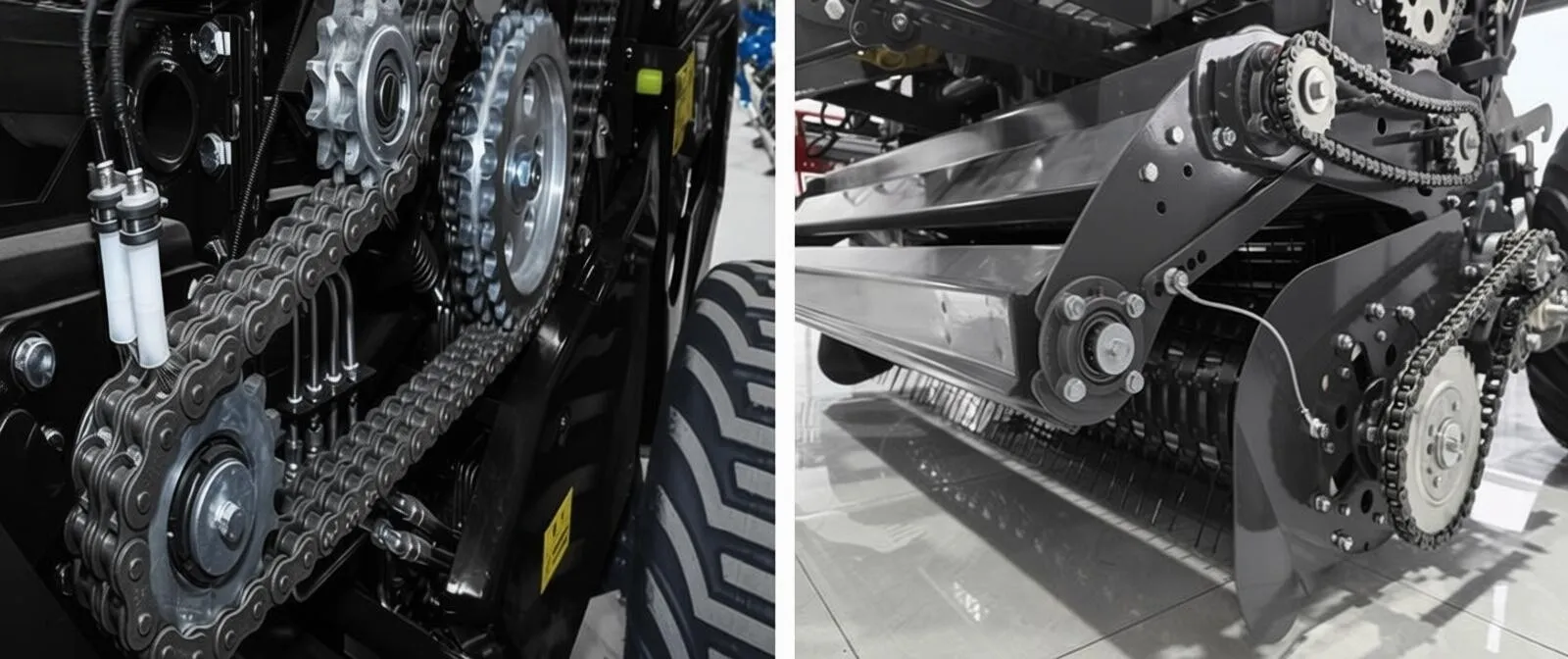
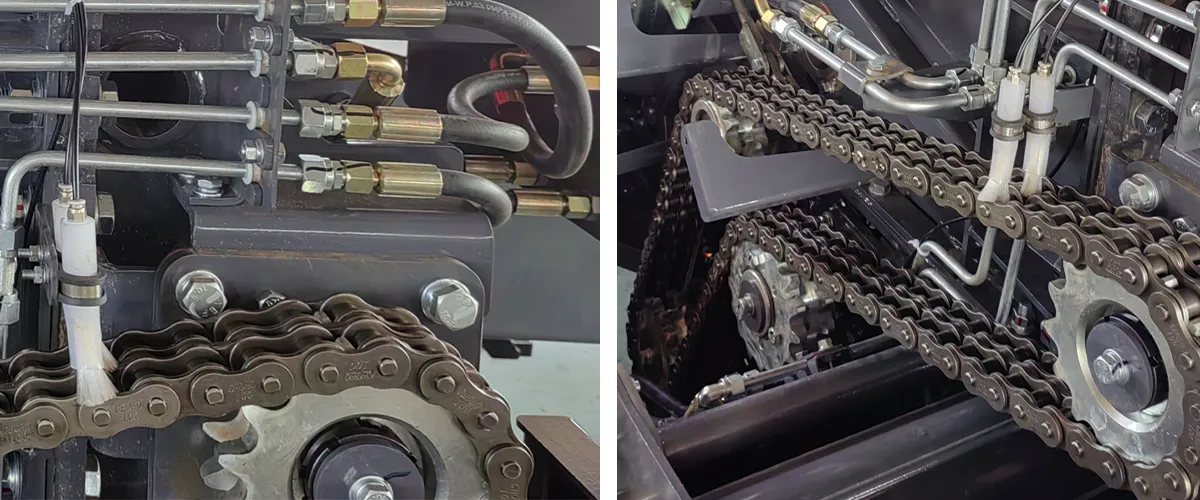
The 9YG-2.24D Classic model uses dual-side 20A heavy-duty roller chain throughout the rear chamber drive — a step up from the 16A chains used on lighter-duty models and from the standard single-side drive used on most comparable machines in this class. The practical significance of this is chain elongation resistance. As chains wear through a high-cycle operation, they elongate fractionally at each link. Accumulated elongation changes the chain-sprocket mesh geometry, introduces micro-impacts at each engagement, and eventually produces audible slack noise that precedes drive component damage. 20A chains tolerate higher radial loads and show slower elongation under the load cycles generated by continuous high-density compression of rice straw — keeping the drive system within specification for the full harvest season without mid-season tensioning adjustments.
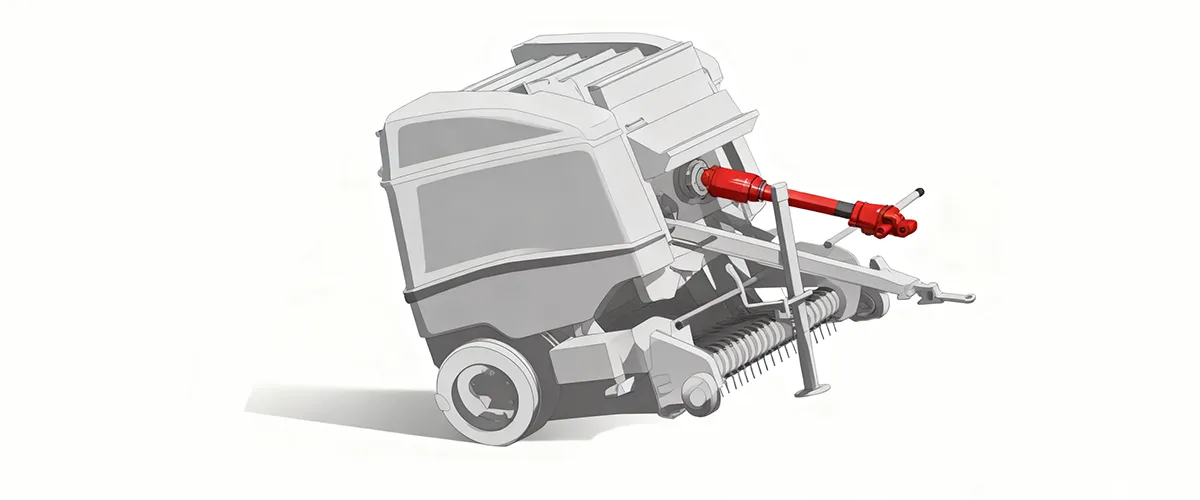
The structural frame on the 9YG-2.24D series is manufactured through a production process combining CNC laser-cut structural steel sections with automated welding lines and electrostatic powder coating. The electrostatic spray finish creates a chemically bonded surface layer that resists the caustic pH environment of paddy mud — which tends to accelerate corrosion on painted surfaces that are merely brush or spray applied. For machines operating regularly through paddy field conditions, this coating system meaningfully extends the service-free frame life compared to conventional painted alternatives. Hitch and drawbar components use the machine’s dual cross-joint PTO shaft with a proprietary-design torque limiter — the limiter engages before component failure when the machine encounters an overload event, preventing the costly drivetrain damage that is the most common cause of mid-season round baler downtime in Korean field conditions.
7. Round Baler Gearbox Design and International Regulatory Compliance
The round baler gearbox is the mechanical node that converts tractor PTO rotation into the multiple internal drive circuits of the baler — the roller drive, pickup drive, net-wrap mechanism, and hydraulic pump. In a rice straw application running at sustained high intensity, gearbox integrity is a primary determinant of machine availability through the harvest window. Two gearbox configurations are relevant across the 9YG product range.
The standard single gearbox configuration used in the 9YG-2.24D, 9YG-1.25, 9YG-1.25A, and 9YG-1.0 models transmits PTO power through a conventional bevel gear set with an output shaft speed of 720 r/min. This design is proven, mechanically simple, and easy to service in field conditions — the gearbox housing is accessible without major disassembly, and the gear oil (SAE 90 GL-4 or equivalent Korean-market product) can be changed at the field site during a 30-minute maintenance stop. The single-gearbox configuration has a fixed geometry relative to the tractor drawbar, which limits the lateral swing angle available for headland turns.
The dual gearbox configuration introduced in the 9YG-2.24D Transcend represents a significant engineering advance for fragmented field conditions. The two gearboxes operate on parallel input shafts, each capable of independent rotation of up to 90° left or right. This means that as the tractor makes a turn at the headland, the PTO shaft’s angular deflection is shared across two joints rather than concentrated at one — substantially reducing the bending stress on the shaft at extreme turn angles and eliminating the PTO shaft binding that causes drive cuts and potential universal joint failure in conventional designs when working on very short headlands. Korean paddy parcels, particularly in hilly Gyeonggi and Chungbuk terrain, frequently have headland widths under 5 metres — precisely the conditions where the dual gearbox configuration provides a measurable operational advantage.
Regulatory Compliance by Region
| Region | Key Regulation | Machinery Requirement | Gearbox / Drive Relevance |
|---|---|---|---|
| South Korea | Agricultural Mechanisation Promotion Act (농업기계화촉진법); Safety Standards for Agricultural Machinery (농업기계 안전기준) | Domestic safety certification for subsidised equipment; PTO shaft guarding required | PTO guard compliance mandatory; gearbox inspection interval documentation required for subsidised machinery |
| European Union | Machinery Directive 2006/42/EC; transitioning to EU Machinery Regulation 2023/1230 | CE marking mandatory; Declaration of Conformity required | Gearbox must meet EN ISO 11684 safety sign requirements; PTO coupler EN 9:2016 |
| Japan | Agricultural Machinery Safety Standards (農業機械安全基準); JAS | Safety inspection certification; JAS conformity mark | PTO shaft cover integrity; gearbox oil type documented |
| United States | ASABE S331.4 (PTO safety); OSHA 29 CFR 1928.57 | PTO guard, master shield; operator manual requirement | Gearbox rated torque must exceed peak PTO output of compatible tractors |
| ASEAN (Vietnam, Thailand) | National agricultural machinery safety standards; burning restriction ordinances | Country-specific import certification; varies by market | Tropical climate oil specification for gearbox (SAE 90 or higher viscosity index recommended) |
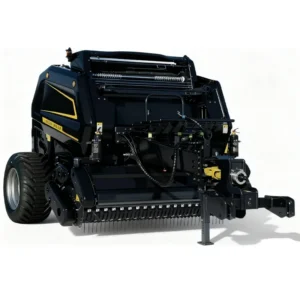
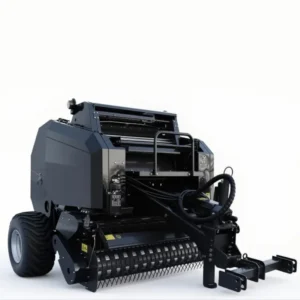
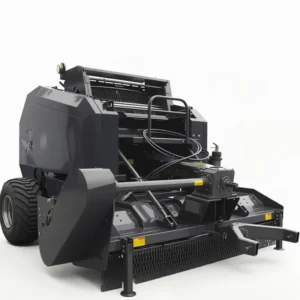
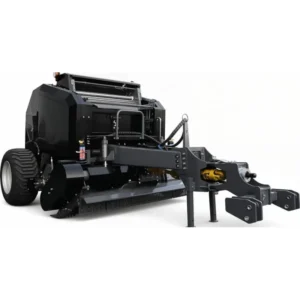
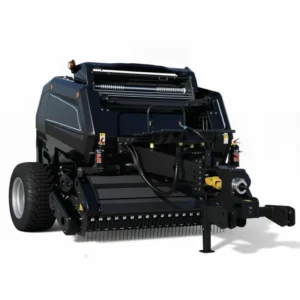
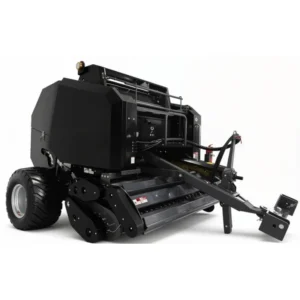
8. Round Baler Models: Matched to Korean Rice Straw Biomass Collection
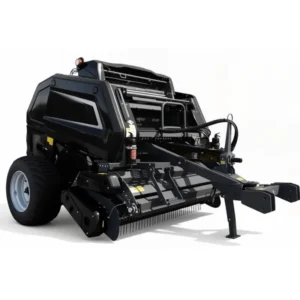
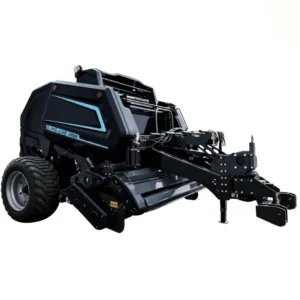
The following models address the range of operational scenarios encountered in Korean rice straw baling for feed and biomass use — from smallholder paddy farms accessing cooperative subsidy programmes to large-scale contractors supplying regional biomass energy facilities under seasonal forward contracts.
9. Building the Economic Case: From Burning to Profitable Baling
For a Korean rice farmer considering the switch from burning to mechanised baling, the financial calculation involves both cost reduction — avoiding fines, retaining direct payment eligibility — and income generation through bale sales and subsidy receipts. The net economic position depends heavily on whether the farmer owns equipment, uses contract baling services, or participates in a cooperative equipment sharing arrangement, and on the volume and type of buyer available for the bales.
A farm operating 10 hectares of rice paddy in Chungnam province, producing approximately 5 tonnes of dry rice straw per hectare (50 tonnes total), would generate roughly 250–350 bales of φ1300×1400 mm format at 130–150 kg per bale using a 9YG-2.24D class machine. If those bales qualify for the direct payment programme at the current rate and are sold to a regional livestock cooperative at market rate, the combined income from subsidy plus bale sale can exceed the cost of contract baling by a meaningful margin. Farms that pool equipment through an agricultural cooperative and share operating costs across 30–50 hectares can further improve the economics, and the addition of a biomass energy supply contract — where a fixed-price seasonal agreement provides price certainty — removes the market price volatility that makes spot bale sales less predictable.
Equipment purchase subsidies of 20–50% reduce the capital investment hurdle for farms that wish to own a small round baler or a mid-range round baler machine rather than relying on contract services. At 50% subsidy, the net capital cost of a 9YG-1.0 or 9YG-1.25A class machine falls to a level that can be recovered through baling services to neighbouring farms within 2–4 harvest seasons in most Korean growing regions — a payback period that compares favourably with other farm capital investments. Regional agricultural extension centres (농업기술센터) can provide area-specific financial modelling based on local subsidy rates, bale market conditions, and typical straw yields, and are a valuable first point of contact for farmers considering the transition.
10. Round Baler Parts: Planning Maintenance for the Korean Harvest Season
The concentrated intensity of the Korean rice straw harvest season — 4–6 weeks of near-continuous operation — means that round baler parts availability is a practical competitive issue, not merely an after-thought. A machine that goes offline during peak harvest because a drive chain, pickup tine set, or net wrap drive component is unavailable can lose a week of billable operation while waiting for parts on order. Planning ahead is the most effective maintenance strategy for Korean contractors.
The highest-turnover round baler parts in a rice straw operation are pickup tines, which experience abrasive wear from silica-coated straw material and soil contact; drive chains (16A and 20A), which elongate through sustained load cycling; and net wrap rolls, which are consumables consumed at approximately one roll per 200–250 bales. The 9YG series uses 16A and 20A chain standards that are stocked by Korean industrial hardware distributors nationwide without special ordering, which is a meaningful advantage over machines using proprietary or European-market chain formats. Pickup tines on the spring-tine models are standard agricultural specifications available through Korean agricultural machinery dealers.
A pre-season inspection protocol for the round baler should cover: chain tension and wear measurement on all drive circuits; roller surface inspection for cracking or deep scoring; net wrap guide roller and brake mechanism function; hydraulic cylinder seal integrity on the rear gate; and gearbox oil level and condition. This inspection, completed 2–3 weeks before the harvest window, allows time to order any needed round baler parts without disruption to the operating season. Many Korean agricultural machinery dealers offer pre-season inspection services for round balers at the start of the autumn period — a service worth using for machines approaching their second or third season of operation.
11. Compatible Systems: PTO Shafts and Drive Chain for Your Round Baler
Reliable biomass baling operations depend on the complete drivetrain — not just the baler itself. Our round baler range is designed for full compatibility with matched PTO shaft and agricultural chain components, delivering a one-stop supply solution that simplifies equipment procurement and ensures system-level performance consistency across the entire power transmission chain.
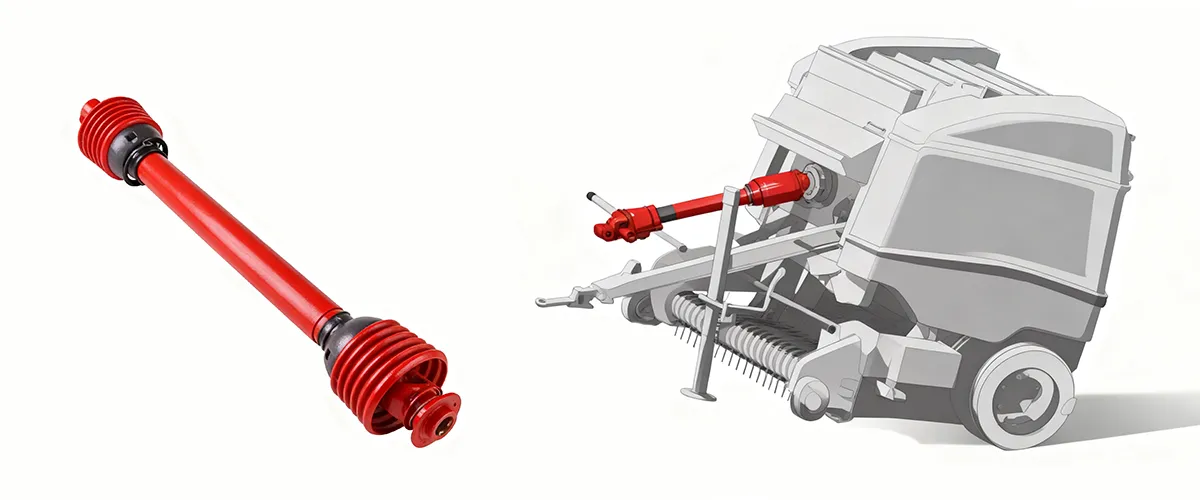
Agricultural PTO Shaft — Round Baler Compatible
A correctly specified PTO shaft is the first and most critical link in the round baler’s power transmission system. Under-rated or mismatched shafts are the leading cause of coupling failure during peak-load rice straw baling — particularly at headland turns where angular deflection adds bending stress to the already high torque transmission load. Our range of Agricultural PTO Shaft for Round Balers is engineered to match the torque ratings and spline specifications of the complete 9YG series, including the dual-gearbox Transcend configuration. Cross-joint angles, safety clutch ratings, and shaft length telescoping range are all verified for compatibility with the most common Korean tractor PTO outputs from brands including LS Mtron, TYM, Kukje, and Branson. The torque limiter integrated into the safety clutch section protects both the tractor PTO and the baler gearbox from overload events — the most common cause of mid-season drivetrain failure in high-intensity rice straw operations.
Agricultural Drive Chain — 16A & 20A Heavy Duty
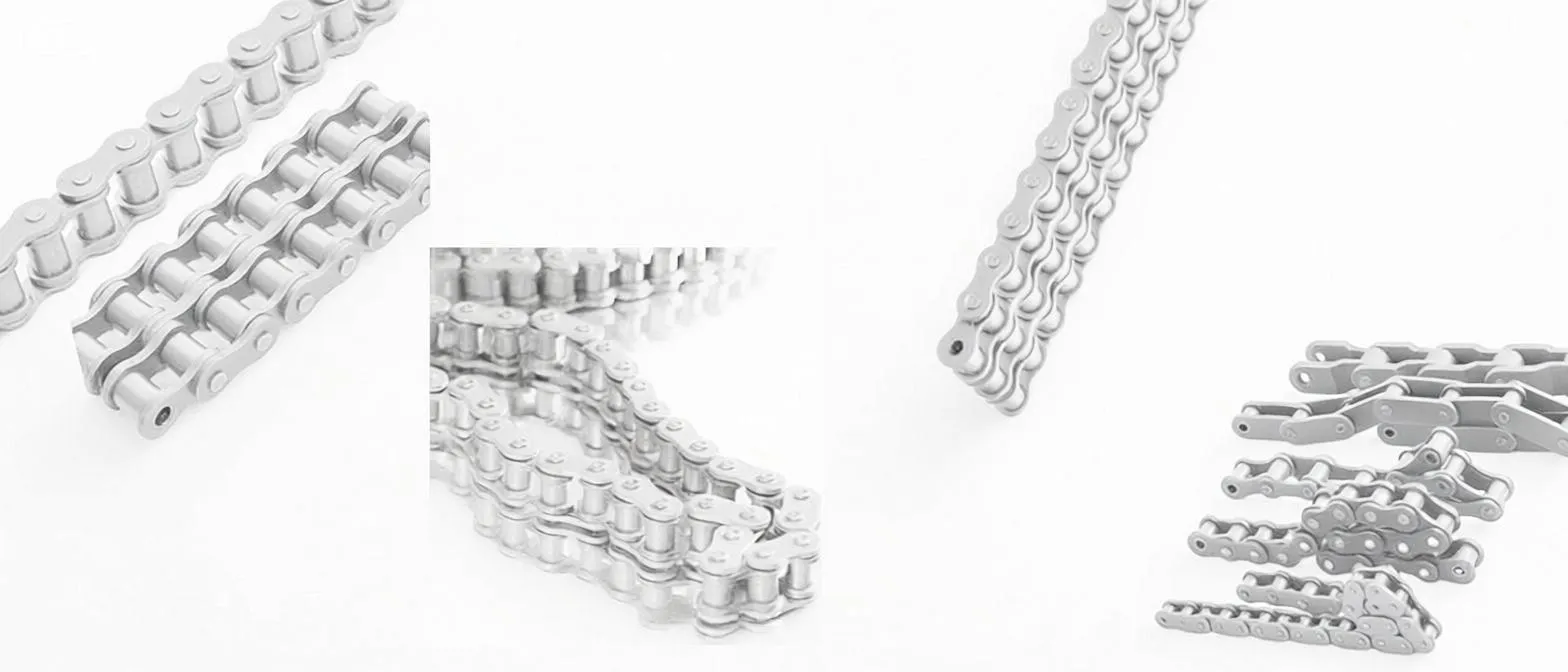
Agricultural roller chain is the mechanical backbone of the round baler’s internal drive system — transmitting rotation from the gearbox output to the compression rollers, pickup reel, and net-wrap mechanism. For rice straw baling at commercial intensity, chain specification is not a cost-saving variable: an under-rated chain that elongates or fails mid-season creates machine downtime at exactly the time when throughput matters most. Our compatible agricultural drive chain selection covers both 16A standard (as used in the 9YG-1.0 and 9YG-1.0C front and rear chambers) and 20A heavy-duty specification (as used in the 9YG-2.24D Classic dual-side rear chamber drive). Both specifications use standard Korean-market sprocket profiles and are replaceable without custom tooling or workshop facilities, keeping field maintenance practical. Chain tensioner adjustment, a routine maintenance item at 50-hour intervals, is accessible without disassembly in all 9YG series models. One-stop supply of baler plus chain ensures specification compatibility across the full drive system — eliminating the risk of installing a domestically sourced chain that differs in pitch tolerance or surface hardness from the manufacturer’s design specification.
Frequently Asked Questions
Herausgeber: PXY