Enhancing fermentation speed and feed uptake efficiency with advanced round baler technology.
Introduction to High-Efficiency Forage Harvesting
In the competitive landscape of modern livestock farming, particularly within the rigorous agricultural sectors of South Korea and Northern Europe, the quality of forage directly dictates the productivity of the herd. The transition from traditional haymaking to high-moisture silage production has necessitated a re-evaluation of harvesting equipment. Specifically, the integration of pre-cutting or chopping attachments into a Rundballenpresse has emerged as a critical innovation. This technology does not merely compress crop material; it physically alters the plant structure before the baling process begins. By reducing the particle length of the forage—whether it be Italian ryegrass, corn stover, or alfalfa—farmers can achieve a significantly higher packing density within the bale chamber. This density is the catalyst for rapid anaerobic fermentation, creating the acidic environment necessary to preserve nutrients and prevent spoilage.
Furthermore, the mechanical maceration of the crop cell walls during the pre-cutting phase increases the surface area available for microbial attack during fermentation. For the end-user, the livestock, this mechanical processing translates to improved digestibility. When animals consume silage that has been pre-processed by a high-quality round hay baler equipped with cutting rotors, the rumen can access the nutrients more efficiently, leading to better feed conversion ratios and higher milk or meat production yields. This article explores the mechanical intricacies of these systems, the material science behind their durability, and the regulatory standards ensuring their safe operation in global markets.
Manufacturing Structure & Material Systems
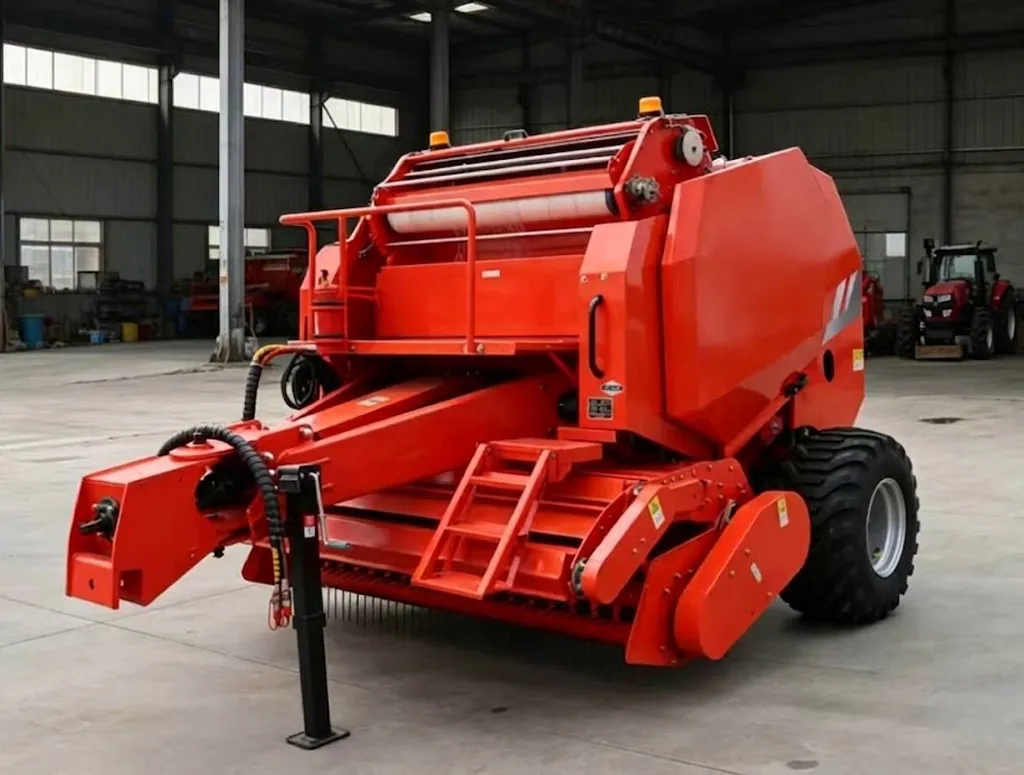
The efficacy of a pre-cutting round baler machine relies heavily on its structural integrity and the materials used in its construction. The harvesting of silage places immense stress on machinery due to the high moisture content and weight of the crop. Consequently, the chassis of these machines is typically fabricated from high-tensile structural steel, often reinforced at critical stress points such as the hitching assembly and the bale chamber pivot points. This robust framework ensures that the machine maintains its geometric alignment even when operating on the uneven terrain often found in hilly regions like Gangwon Province or during heavy-duty operations in large-scale agricultural zones.
Regarding the material体系 (system) of the working components, the cutting rotors and pickup tines are subjected to the most abrasive conditions. Manufacturers utilize hardened steel alloys for the chopping blades to resist wear from soil contamination and silica-rich crop residues. The compression chamber, often a fixed-chamber design utilizing heavy-duty belts or rollers, must be constructed to withstand the radial forces generated during the formation of high-density bales. For instance, models designed for the demanding Korean market often feature dual-side heavy-duty chains or reinforced rollers to ensure that the bale density remains consistent from the core to the outer layer, a crucial factor for preventing spoilage in outdoor storage conditions.
The Mechanics of Pre-Cutting and Fermentation
The integration of a pre-cutting mechanism transforms a standard baler into a forage harvester and baler in a single pass. As the crop enters the machine via the wide-angle pickup, it is drawn into the chopping rotor assembly. Here, a series of hardened knives or flails shear the crop into shorter lengths—typically between 40mm to 90mm depending on the configuration—before it enters the bale chamber. This physical reduction in particle size is the key to accelerated fermentation. Shorter fibers pack tighter, expelling oxygen more effectively than long-stemmed hay. The rapid exclusion of oxygen triggers the shift from aerobic respiration to anaerobic fermentation much faster, allowing Lactic Acid Bacteria (LAB) to dominate the environment and drop the pH level quickly.
This process is vital for preserving the nutritional integrity of high-value crops like corn silage or legume hay. Without pre-cutting, long stems can create air pockets within the bale, leading to heating, mold growth, and nutrient degradation. By utilizing a Rundballenpresse with an integrated cutter, farmers ensure a homogeneous mix that ferments uniformly. This results in a palatable, high-energy feed source that maximizes dry matter intake. The mechanical action also softens the lignin in the plant cell walls, making the forage easier for livestock to chew and digest, thereby reducing energy expenditure during feeding and increasing overall animal performance.
Technical Specifications & Model Comparison
Selecting the correct machine size is paramount for operational efficiency. The following table compares two distinct models suitable for different scales of operation, highlighting the differences in compression capabilities and power requirements essential for handling pre-cut silage.
| Besonderheit | EP-3200 (Heavy Duty) | EP-2050 (Standard) |
|---|---|---|
| Bale Diameter | Φ1000 mm | Φ800 mm |
| Pickup-Breite | 1950 mm | 1250 mm |
| Roller Count | 18 Rollers | 16 Rollers |
| Power Requirement | 36.7 – 110.3 kW | 40.4 – 60 kW |
| Binding System | Automatisches Netzwickelsystem | Rope Wrapping |
Global Regulatory Compliance & Safety Standards
Operating heavy agricultural machinery requires strict adherence to regional safety and environmental standards. In South Korea, the Gesetz zur Förderung der Mechanisierung der Landwirtschaft mandates rigorous safety testing for all machinery, ensuring that PTO shafts and moving parts are adequately guarded to prevent operator injury. Manufacturers must comply with standards set by the Rural Development Administration (RDA) to qualify for government subsidies, which often dictate specific safety interlocks on the bale chamber and hitching mechanisms.
For the European market, compliance with the EU Machinery Directive 2006/42/EC is non-negotiable. This includes specific standards like EN ISO 4254-7 for balers, which covers the safety of the pickup, the compression chamber, and the tying mechanism. Furthermore, the EN 12965 standard governs the safety of PTO drive shafts, requiring specific shielding to protect operators from rotating drivelines. In North America, adherence to ASABE (American Society of Agricultural and Biological Engineers) standards ensures that safety signage and emergency stop mechanisms are present and functional. These regulations ensure that the high-speed chopping and baling processes are contained within a safe operating envelope, protecting both the operator and the surrounding environment.
Drivetrain & Component Compatibility
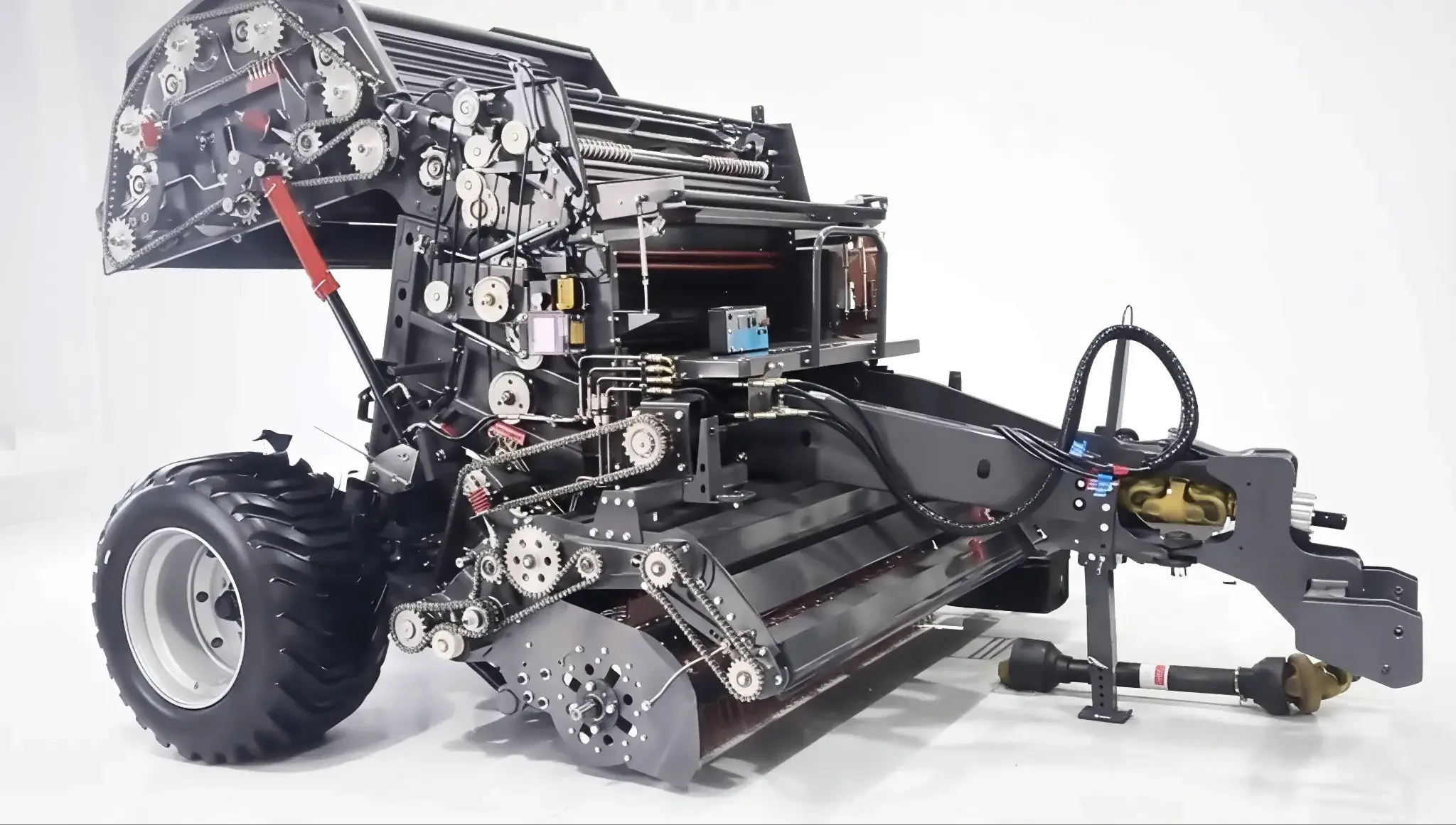
The performance of a pre-cutting Rundballenpresse is heavily dependent on the reliability of its drivetrain components. The immense torque required to chop and compress dense silage places significant strain on the gearbox and PTO shaft. It is crucial to utilize a matched round baler gearbox that is rated for the specific horsepower of the tractor and the load demands of the baler. A mismatched gearbox can lead to premature gear wear or catastrophic failure during peak harvesting windows.
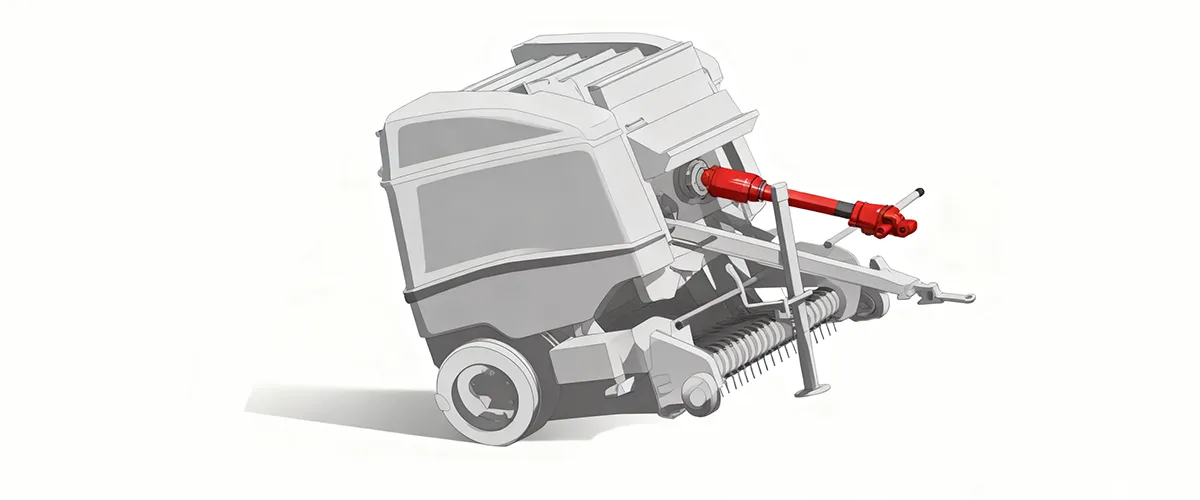
Similarly, the Agricultural PTO Shaft acts as the lifeline of the machine. High-quality shafts with wide-angle joints are essential for maintaining smooth power transmission, especially when navigating uneven terrain or making sharp turns at the headlands. We also supply heavy-duty Agricultural Chain systems designed to withstand the abrasive nature of crop residue. Sourcing these critical wear parts from a single supplier ensures perfect compatibility and simplifies maintenance logistics, ensuring that your operation remains uninterrupted during the critical harvest season.
About Our Expertise
Established in 2013, we have evolved into a comprehensive modern enterprise specializing in the intelligent manufacturing of agricultural and livestock machinery. With a facility spanning over 32,000 square meters and a team of dedicated engineers, we integrate R&D, production, and service to deliver world-class harvesting solutions. Our product line includes a diverse range of round balers, mowers, and rakes, all manufactured under a strict ISO9001 Quality Management System. We are committed to “building a world-class brand,” utilizing advanced CNC laser cutting and automated assembly lines to ensure every machine meets global durability standards.
Need Technical Support?
Our engineering team is ready to assist with parts and specifications.
Frequently Asked Questions
How does a pre-cutting attachment on a round baler improve silage fermentation speed?
A pre-cutting attachment macerates the crop, reducing particle length and allowing for tighter packing. This expels oxygen faster, triggering anaerobic fermentation and pH reduction more rapidly than long-stem baling.
What is the ideal tractor horsepower for operating a heavy-duty round baler in Korea?
For heavy-duty models like the EP-3200, a tractor with 50 to 150 HP (36.7–110.3 kW) is recommended to handle the torque requirements of chopping and compressing dense silage efficiently.
Which round baler parts require the most frequent replacement during harvest season?
The pickup tines and chopping blades are the most susceptible to wear due to ground contact and crop abrasion. Regular inspection of the round baler gearbox oil and belts is also essential.
Where can I find a reliable round baler manufacturer compliant with EU safety standards?
We manufacture round balers for sale globally that comply with EN ISO 4254-7 and CE directives, ensuring safety and quality for operations in the Netherlands, Germany, and the UK.
Herausgeber: PXY