
Wheat Straw Baling — ROI Comparison Series
A structured investment analysis for large wheat farm operators and agricultural contractors in Korea and internationally — comparing round baler and square baler on capital cost, operating economics, maintenance demands, bale handling logistics, and market versatility for wheat straw management.
The Investment Decision
1. What Is a Round Baler and How Does It Differ from a Square Baler in Wheat Farm Economics?
A round baler is a tractor-towed machine that collects cut crop material from windrows and compresses it into cylindrical bales that are then wrapped in net or twine for storage and transport. A square baler — whether the conventional small square type producing bales of roughly 36×46 cm cross-section, or the large square baler producing bales of 80×90 cm or 120×130 cm cross-section — uses a different compression mechanism based on a reciprocating plunger that packs material into a rectangular form as it moves through a fixed channel. Both machine types are commonly deployed on large wheat farms for collecting the straw residue after grain harvest, and both can do the job effectively under the right conditions. The question of which gives better return on investment for a large wheat operation is not a simple one — it depends on the specific economic, logistical, and market context of the farm in question.
For Korean wheat farmers, the ROI comparison takes on a specific character shaped by farm structure, regional infrastructure, and the downstream markets available for wheat straw. Korean wheat production is concentrated in the southern provinces, where farms tend to be smaller in individual plot size but may operate collectively across consolidated areas through cooperatives or contract arrangements. The straw market in Korea includes livestock bedding buyers, compost producers, and biomass energy facilities — buyers who may specify different bale formats with different premium structures. Understanding how these market realities interact with the capital and operating cost differences between round and square balers is the foundation of a sound investment decision.
This guide works through the ROI comparison systematically — from capital acquisition cost and operator requirements through to maintenance demands, bale market versatility, and the specific regulatory considerations that apply in Korea and other wheat-producing regions. The analysis draws on the 9YG round baler series specifications as the reference point for the round baler side of the comparison, since these represent the most relevant options for Korean and Asian wheat farm operators considering a round baler machine investment.
Capital Cost Comparison
2. Round Baler vs Square Baler: Initial Investment and Payback Period on Wheat Straw
Capital cost is the most immediately visible dimension of the ROI comparison, but it is also the most easily misread. Large square balers — particularly the high-density large square baler formats producing bales in the 80×90×250 cm or 120×130×250 cm formats — carry significantly higher purchase costs than comparable-throughput round balers. A large square baler requires a higher-power tractor (typically 130–200 kW or more for full-capacity operation), more complex knotting or bale-tying mechanisms that represent both a maintenance cost and a field downtime risk, and in many cases a separate bale accumulator or stacker system to handle the large bales efficiently in the field. For wheat straw on a large farm where the goal is simply to remove the residue effectively and store it economically, this additional system complexity often does not generate sufficient economic return to justify the capital premium.
A round baler in the 9YG-2.24D class requires a tractor of 55–100 kW — a specification that Korean mid-range tractor owners and contractors can typically meet with existing equipment or a relatively modest tractor upgrade. The machine itself has fewer precision-tolerance moving parts than a large square baler (the plunger, knotters, and tie mechanism on a square baler are mechanically demanding components that require skilled adjustment) and is generally more tolerant of variable operator experience. For a Korean wheat cooperative or farm group making its first mechanized baling investment, this lower entry complexity translates directly into lower-risk capital deployment and faster payback through avoided field labor costs.
Payback period for a round baler on wheat straw is driven primarily by the avoided cost of alternative straw disposal — either manual removal, burning (where allowed), or loose-haul contract costs — plus any revenue from bale sales. For Korean operators who sell net-wrapped round bales of wheat straw to local livestock farms at a per-bale or per-tonne rate, the annual revenue per machine across a 2–4 week wheat straw season at 40–100 bales per hour represents a meaningful return on a capital investment that is typically lower than comparable-throughput large square baler equipment.
Direct Comparison
3. Round Baler vs Square Baler: Head-to-Head on Key ROI Factors for Large Wheat Farms
| Factor | Round Baler (9YG-2.24D series) | Large Square Baler | ROI Advantage |
|---|---|---|---|
| Capital Investment | Lower — competitive entry level; fewer precision components | Significantly higher — complex knotting/tie mechanism; heavy tractor required | Empacadora redonda |
| Tractor Requirement | 55–100 kW — compatible with mid-range Korean tractors | 130–200+ kW for large square baler — significant tractor upgrade for most | Empacadora redonda |
| Field Productivity | 40–100 bales/h at Ø1300×1400 mm per bale | High throughput in ideal conditions; depends on knotter reliability | Comparable — condition-dependent |
| Maintenance Complexity | Moderate — chain, tines, bearings; no precision knotting mechanism | High — knotter timing, needle adjustment, twine routing require skill | Empacadora redonda |
| Bale Handling | Cylinders roll — bale spike or gripper needed for loading | Rectangular bales stack easily on pallet or trailer without rolling risk | Square Baler (handling) |
| Outdoor Storage | Good — cylindrical shape sheds rain; net wrap protects surface | Flat tops accumulate rain; plastic wrap required for extended storage | Empacadora redonda |
| Bale Market Versatility | Broad — livestock feed, bedding, biomass, soil amendment | Premium for export hay and industrial users who specify rectangular format | Context-dependent |
| Operator Skill Requirement | Moderate — sensor system manages density; fewer manual adjustments | High — knotter setup and monitoring is a skilled daily task | Empacadora redonda |
| Downtime Risk | Low — primary failure points are tines and chain; quick field fix | Higher — knotter failures mid-field are common and require skilled diagnosis | Empacadora redonda |
Manufacturing Structure
4. Why Round Baler Manufacturing Structure Favors Lower Lifetime Cost on Large Wheat Farms
The manufacturing structure of a round baler machine is fundamentally simpler than a large square baler in the number of precision-tolerance components required to produce a completed bale. This structural simplicity has direct cost implications across the machine’s lifetime — not only in purchase cost but in spare parts demand, skilled labor requirements for field repairs, and the probability of costly mid-season downtime during the narrow wheat straw harvest window.
CNC Frame and Drum Chamber
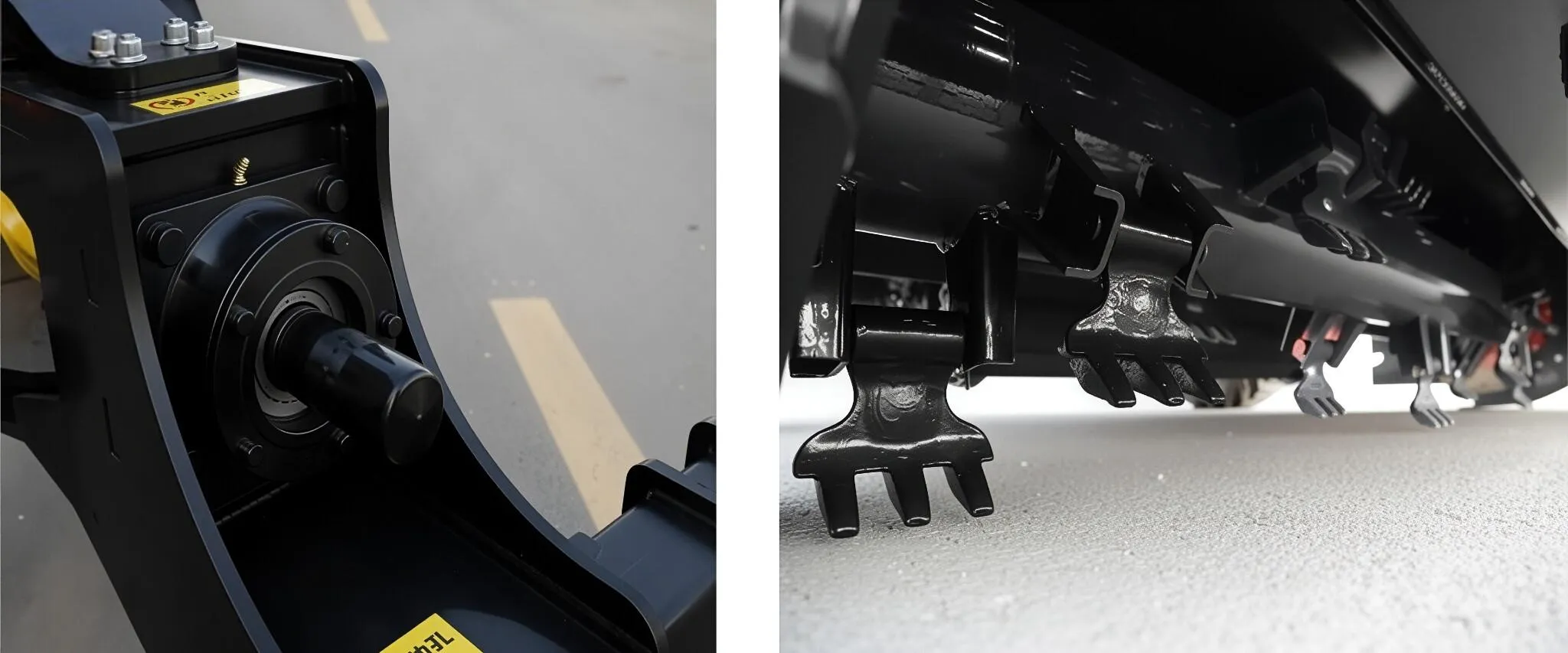
The primary baling mechanism in the 9YG series round baler is a drum-type bale chamber with 18 press rollers, each measuring 222 mm in diameter, arranged around a 1,200 mm diameter chamber. The chamber structural endplates are CNC laser-cut to precise dimensions and joined by automated welding. The total number of components in the baling mechanism is a fraction of that in a large square baler, which requires a precisely timed plunger, feeders, knotters, twine finger mechanisms, and shear bolt overload protection systems — each of which represents a potential field failure point. For a large wheat farm running through 10–15 consecutive days of straw baling, the structural simplicity of the round baler translates directly into fewer opportunities for season-interrupting mechanical failures.
Sensor-Controlled Density vs Mechanical Metering
The bale density control on the 9YG-2.24D series uses an electronic sensor system that triggers the net wrap and ejection sequence at a consistent target density regardless of windrow variation. This electronic metering replaces the mechanical density adjustment systems on conventional round balers and the twine tension settings on square balers that must be manually calibrated and rechecked across changing windrow conditions. For a large wheat farm where the operator may be covering many hectares per day across variable straw density conditions, the automated sensor control maintains consistent bale weight without requiring constant operator intervention — which translates into fewer rejected bales, more predictable transport load planning, and less labor time per bale produced.
Dual-Side Chain Drive
The dual-side chain drive on the 9YG-2.24D chamber distributes the compressive load symmetrically across both chamber side plates. This design detail matters for lifetime cost on a large wheat farm because asymmetric loading — the condition that develops in single-side drive machines when one chain elongates faster than the other — causes progressive bale shape distortion that appears as tapered or off-center bales. Correcting this in the field on a large square baler requires adjusting the plunger mechanism — a skilled, time-consuming task. On the dual-side round baler, balanced chain load reduces the rate of differential elongation and extends the interval between chain replacement events.
Material System
5. Material Choices That Affect Round Baler Lifetime Cost on Large Wheat Straw Operations
The lifetime cost advantage of a round baler over a square baler on large wheat farms is partly structural — as discussed above — and partly material. The materials used in the round baler’s drivetrain, pickup system, and frame coating determine how frequently components need replacement and how much skilled labor that replacement requires. For a large wheat farm management team evaluating round baler ROI, the material specification is as relevant as the purchase cost.
20A Heavy Roller Chain
The 9YG-2.24D S9000 and Transcend use 20A heavy-duty roller chain on both sides of the rear chamber drive. For a large wheat farm running 40–100 bales per hour across a 10-hour day, the chain accumulates significant fatigue cycling per season. The 20A specification provides a load safety margin that extends the time before chain replacement becomes necessary, compared to a lighter-specification chain that would reach its elongation limit sooner under the same loading. Chain replacement on a round baler is a competence-level maintenance task that a farm mechanic can complete in a few hours; replacing the knotter mechanism components on a large square baler is a significantly more skill-intensive and time-consuming procedure.
Spring Steel Tines vs Knotters
The most common wear parts on a round baler are spring-tooth pickup tines — high-tensile spring steel components that flex on impact with field debris and return to position. On a large wheat farm where the straw field surface is relatively clean after the combine pass, tine wear is modest and the replacement interval measured in seasons. By contrast, the knotter components on a large square baler — particularly the knotter billhook, twine disc, and needle — are precision-machined parts that must be replaced or re-timed when worn, a process that requires specialized tools and training. The repair cost differential between tine replacement and knotter overhaul is substantial and cumulative across a large operation.
Net Wrap vs Twine
The 9YG series uses automatic net wrapping, which applies a continuous film of polypropylene netting around the bale in 2–3 revolutions before cutting and ejecting. Net wrap costs more per bale than twine on a per-application basis, but it provides superior bale surface protection for outdoor storage in Korean summer and autumn weather conditions, significantly reducing surface spoilage losses that reduce the net sellable weight of straw bales in humid climates. For large wheat farms selling straw by weight to livestock or biomass buyers, the reduction in weather-related weight loss through net wrap protection is often worth more than the net wrap cost premium over the season.
Electrostatic Frame Coating
Large wheat farms in Korea’s southern regions face the corrosion challenge of summer humidity during the baling season combined with winter storage. The electrostatic powder coating on 9YG series frames provides better adhesion durability at frame joints and weld seams than conventional wet paint, extending the interval before structural corrosion requires intervention. For a machine that may be stored between the wheat straw season in June and the next major use in autumn, this seasonal storage corrosion resistance directly affects the machine’s resale value and structural integrity over a 10–15 year asset life.
Logistics and Market
6. Bale Handling, Storage, and Market Versatility: Where Each Type Has the Advantage
The handling and storage characteristics of round versus square bales have a real impact on the total cost of wheat straw management beyond the baling operation itself. These downstream logistics costs are often underweighted in the initial investment comparison but can be significant over the lifetime of the equipment — particularly for large wheat farms that manage their own straw storage and distribution to multiple end-use customers.
Round bales roll, which creates two distinct handling challenges: moving them in the field requires a bale spike or round bale gripper attachment on the tractor, and stacking them for storage requires either a rack system or acceptance of the natural hexagonal pack arrangement that round bales form when stacked without containment. Neither challenge is insurmountable, but they represent additional equipment and planning requirements that are not present with rectangular bales. On the other hand, the cylindrical shape of a round bale sheds rain from its curved upper surface in a way that flat-topped rectangular bales do not — which is a significant storage advantage in Korea’s rainy summer and typhoon season. Net-wrapped round bales stored outdoors through the Korean summer typically retain more of their original mass and feed value than uncovered square bales stored under the same conditions, due to the combination of the shed-rain geometry and the net’s moisture exclusion properties.
For market versatility, the round bale format is accepted by the widest range of wheat straw buyers in the Korean domestic market — livestock farms in the cattle and horse sectors, mushroom substrate producers who require a loose-fill straw source after bale unrolling, biomass energy facilities, and compost producers. The industrial hay export market, which is dominated by the Japan-Korea hay trade, has historically preferred rectangular bale formats for container loading efficiency. A large Korean wheat farm that targets domestic straw markets will find the round bale format fully adequate; a farm targeting export hay buyers may find that a large square baler’s output is more marketable for that specific channel, though for straw (as opposed to hay) this distinction is less pronounced.
Power and Gearbox
7. Gearbox Design and Power Demand: How the Round Baler Advantage Extends to PTO Efficiency on Large Wheat Farms
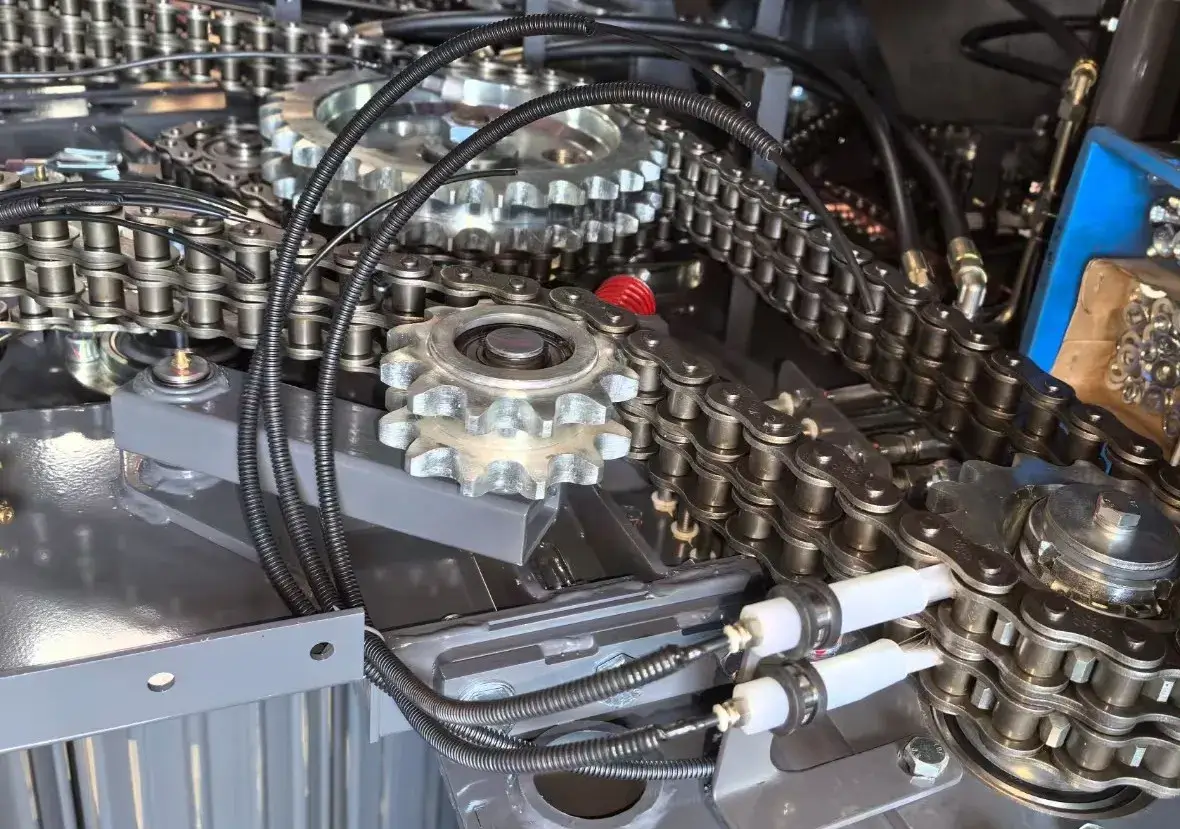
The round baler gearbox on the 9YG series is designed to transmit PTO input at 720 r/min to the pickup reel, feed mechanism, and bale chamber rollers through a compact, self-contained unit that requires relatively modest tractor power input compared to a large square baler. The 55–100 kW power requirement of the 9YG-2.24D series is achievable from the mid-range tractor class that dominates the Korean commercial farm fleet, while a large square baler operating at full capacity typically requires 130–200 kW of tractor power — a class that is far less common in Korean agriculture and represents a substantially larger capital investment when combined with the baler purchase.
The dual-coupling gearbox on the 9YG-2.24D Transcend variant addresses one of the practical limitations that affects round baler productivity on irregular-shaped or smaller Korean wheat fields: the inability of conventional fixed-drawbar balers to maintain PTO speed stability through tight turns. When a standard driveshaft bends beyond 15–20 degrees during a headland turn, it transmits speed fluctuations that momentarily reduce pickup reel and press roller speed — creating gaps in bale density and, on small fields with many turns, cumulatively affecting the machine’s productivity across the working day. The 90-degree dual-coupling gearbox design eliminates this effect, maintaining consistent PTO transmission through turns of any angle within the rated range. For a large Korean wheat farm covering many individual plots connected by narrow farm tracks, this turning-speed consistency is a genuine productivity advantage that contributes to a better bales-per-hour result over the full working season.
The safety torque shaft incorporated into the 9YG-2.24D Transcend PTO driveline provides overload protection that directly reduces the risk of mid-season gearbox failure events. On a large wheat farm where baler downtime during the harvest window has a real cost — both in lost baling time and in straw that is left on the field past its optimal collection date — this protection mechanism is a component of the ROI calculation that is easy to overlook but becomes very visible the first time it prevents a gearbox replacement event.
ROI Summary
8. For Most Large Korean Wheat Farms, Round Baler ROI Is Superior — With One Important Exception
Taking the full range of cost and revenue factors into account — capital investment, tractor power requirement, maintenance complexity, operator skill demand, downtime risk, bale storage performance, and domestic market versatility — the round baler delivers better ROI than a large square baler for the majority of large Korean wheat farms and Korean agricultural contractors operating in the wheat straw market. The lower capital cost, lower tractor power requirement, lower maintenance skill threshold, and better outdoor storage performance create a cumulative advantage that is particularly pronounced in the 100–500 hectare annual baling range where most Korean wheat straw operations sit.
The exception is a farm or contractor that specifically serves the export hay or premium domestic rectangular bale market — a segment that is a genuine commercial opportunity in some Korean agricultural regions but is not the dominant market for wheat straw. For operators in that specific segment, the capital and operating premium of a large square baler may be justified by the premium per tonne achievable for rectangular bale format. For all others, the round baler represents the more capital-efficient, operationally robust, and market-versatile investment for wheat straw management at large farm scale.
Within the round baler category, the right model selection depends on the annual baling area, available tractor power, and whether the farm also needs to bale other crop residues in addition to wheat straw. The 9YG-2.24D series covers the full commercial range for large wheat operations with its 40–100 bales per hour rating and 55–100 kW power requirement. The 9YG-1.25A, with its flexible 540–1000 r/min PTO input, is particularly well-suited for operations where multiple tractor models are used across the wheat straw contracting season.

Regulatory Context
9. Regulatory Frameworks Affecting ROI for Round Baler Investment in Wheat Straw Operations
The ROI calculation for a round baler on a large wheat farm is shaped not only by mechanical and market factors but by the regulatory environment governing machinery subsidies, crop residue management, and agricultural machinery safety. These frameworks differ significantly between Korea and other major wheat-producing regions.
Republic of Korea — Agricultural Machinery Subsidy and Straw Burning Restrictions
The Korean national agricultural machinery purchase subsidy program, administered by the Rural Development Administration (RDA), subsidizes eligible machinery purchases including round balers with type approval certification. This subsidy directly improves the ROI calculation for a round baler purchase by reducing the effective capital outlay. Simultaneously, Korea’s progressively stricter crop residue burning restrictions under the Clean Air Conservation Act create a legal imperative to bale or otherwise manage wheat straw — making the baling investment not merely a commercial optimization but a compliance necessity in many Korean wheat-growing regions. Both factors — subsidy availability and burning restriction — improve round baler ROI relative to doing nothing or continuing with loose-haul disposal.
ISO 4254-7 — Safety Certification and Insurance Implications
ISO 4254-7 compliance documentation for baling machines — covering pickup guarding, chain drive enclosure, tailgate safety locks, and ejection zone marking — is increasingly required by agricultural insurance providers as a condition of machinery insurance coverage at commercial farm scale. A round baler that cannot demonstrate ISO 4254-7 compliance may face higher insurance premiums or coverage exclusions that affect the ROI calculation. The 9YG series is manufactured under ISO 9001 quality management certification, which supports the documentation trail needed for insurance compliance verification in Korea and internationally.
European Union — CAP Cross-Compliance and Machinery Directive
In EU wheat-producing countries, Common Agricultural Policy cross-compliance requirements under Good Agricultural and Environmental Conditions (GAEC) standards mandate management of crop residues to prevent soil erosion and nutrient loss. These standards create a regulatory floor below which wheat straw management must reach, increasing the relative attractiveness of baling over field-burning or loose-haul disposal. All baling machinery used commercially in the EU must carry CE marking under the EU Machinery Directive 2006/42/EC, which covers the safety guarding provisions directly relevant to round baler pickup, chain drive, and ejection zone design.
India — Crop Residue Management Scheme and SMAM Subsidy
In India’s major wheat-producing states — Punjab, Haryana, and Uttar Pradesh — the Crop Residue Management (CRM) scheme and the Sub-Mission on Agricultural Mechanization (SMAM) both provide equipment purchase subsidies specifically for round balers and square balers used in wheat straw collection. The ROI comparison for Indian wheat farm operators is therefore shaped by which machine type attracts a higher subsidy rate under the applicable state program, as well as by the market for baled straw in the local livestock and biomass sector. Round balers typically attract similar subsidy rates to equivalent-capacity square balers, but their lower base purchase cost and tractor power requirement mean that the capital commitment before subsidy is lower.
Australia — National Farm Safety Standards and Tractor-Baler Combination Rules
Australian wheat farms — some of the world’s largest by area — operate under Safe Work Australia guidance that specifically addresses large square baler knotting mechanism hazards as a priority risk category. The knotter zone on a large square baler is the single most frequently cited source of serious hand and finger injuries in Australian baling operations, according to WorkSafe publications. This injury risk has a real ROI implication: it creates higher insurance premiums, higher worker compensation exposure, and in some states, specific training requirements for employees operating knotting mechanism equipment. Round balers do not have a knotter mechanism, which removes this specific hazard category and its associated cost overhead from the risk profile.
ASABE Standards — Gearbox Safety and PTO Guarding for Commercial Farm Equipment
The American Society of Agricultural and Biological Engineers ASABE S210 standard covers guarding requirements for agricultural field machinery, including both round balers and square balers. The PTO driveshaft guarding requirements under ASABE S210 and the equivalent ISO 5674 standard are identical for both machine types — both require a guard tube covering the rotating shaft between the tractor and the baler input. The practical difference is that large square balers operating at higher PTO speeds (typically 1000 r/min) require higher-grade driveshaft guarding rated for greater centrifugal forces, while the 720 r/min specification of the 9YG series falls in a lower guard rating category that is met by standard agricultural driveshaft guard designs.
Product Range
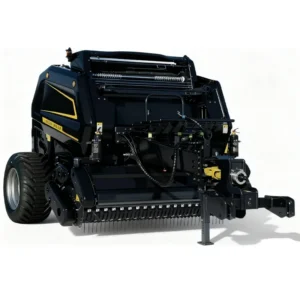
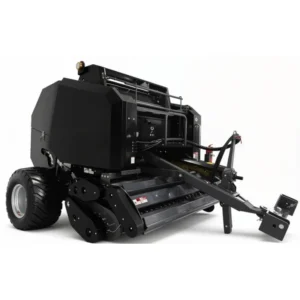
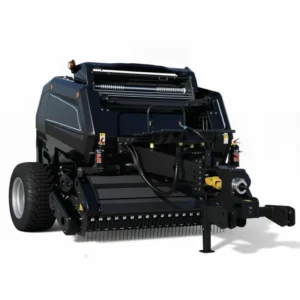
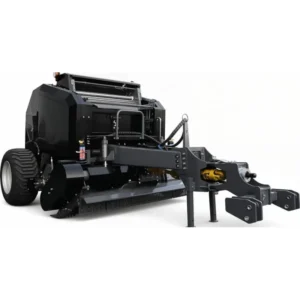
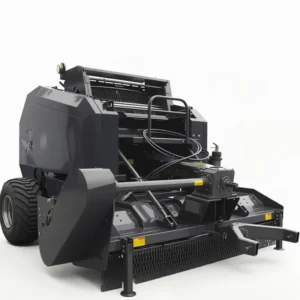
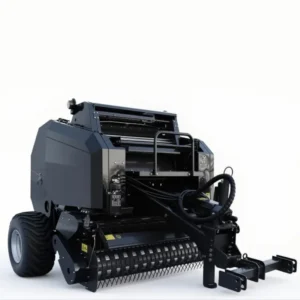
10. Round Baler Models for Large Wheat Farm and Contractor Applications
The full 9YG series provides options from compact small-farm wheat straw balers through to full commercial contractor models suited to large-scale wheat straw operations. All models use sensor-controlled bale density management, automatic net wrap, and ISO 9001 certified manufacturing.
FAQ
Frequently Asked Questions: Round Baler vs Square Baler ROI for Large Wheat Farms
Ready to Evaluate Round Baler ROI for Your Large Wheat Farm?
Our technical and commercial team can provide model recommendations, investment appraisal data, RDA subsidy documentation support, and export logistics guidance for Korean large wheat farm operators comparing round baler and square baler options for the coming season.
Keywords used in this article:
round baler · round baler machine · round baler application · round baler parts · round baler gearbox · round baler manufacturer · small round baler · mini round baler · round hay baler · round hay baler for sale · round balers for sale near me · small round baler for 40 hp tractor · small hay baler · round baler manufacturer · what is round baler · round baler vs square baler wheat farm ROI · round baler wheat straw Korea ROI · square baler knotter maintenance cost · round baler capital cost wheat farm · Korean large wheat farm round baler · round baler net wrap outdoor storage Korea · round baler RDA subsidy Korea wheat straw · Korea crop residue burning restriction round baler · round baler gearbox dual coupling wheat farm · round baler sensor density control wheat straw · round baler 55 kW wheat straw Korea · round baler manufacturer ISO 9001 Korea · round baler vs square baler maintenance · large wheat farm baler investment Korea · round baler wheat straw domestic market Korea · India CRM scheme round baler wheat straw · Australia square baler knotter safety WorkSafe · ISO 4254-7 round baler insurance · ASABE S210 round baler guarding wheat
Meta Description:
Compare round baler vs square baler ROI for large Korean wheat farms — capital cost, maintenance, market versatility, and regulatory factors analyzed and explained.
Editor: PXY