Cotton Stalk Baling | Round Baler Application Guide
A comprehensive technical guide for agricultural producers and equipment suppliers on selecting the right round baler and tractor combination when working with freshly harvested or moisture-rich cotton stalks.
1. Why Moisture Content Changes Everything in Cotton Stalk Baling
Cotton stalks left in the field after harvest retain a surprisingly high level of internal moisture — often between 30% and 60% at the time of first collection, depending on regional climate, irrigation practices, and how long the stalks have been standing post-defoliation. This moisture profile fundamentally changes the mechanical demands placed on a round baler and its tractor pairing. Unlike dry hay or weathered straw, freshly cut or partially dried cotton stalk fibers are dense, fibrous, and heavily woody at the base. They resist compression and tend to twist rather than fold within the bale chamber, which places enormous torque loads on the PTO shaft, gearbox, and roller assembly. Farmers who underestimate this and run an under-powered tractor risk PTO stall, gearbox overload, and uneven bale formation that leads to poor storage density and increased spoilage risk. Getting the power match right is not just a performance issue — it directly affects machine lifespan, bale quality, and field productivity. This guide walks through exactly what to consider before you invest.
2. Manufacturing Structure | Material System of Round Balers for Cotton Stalk Work
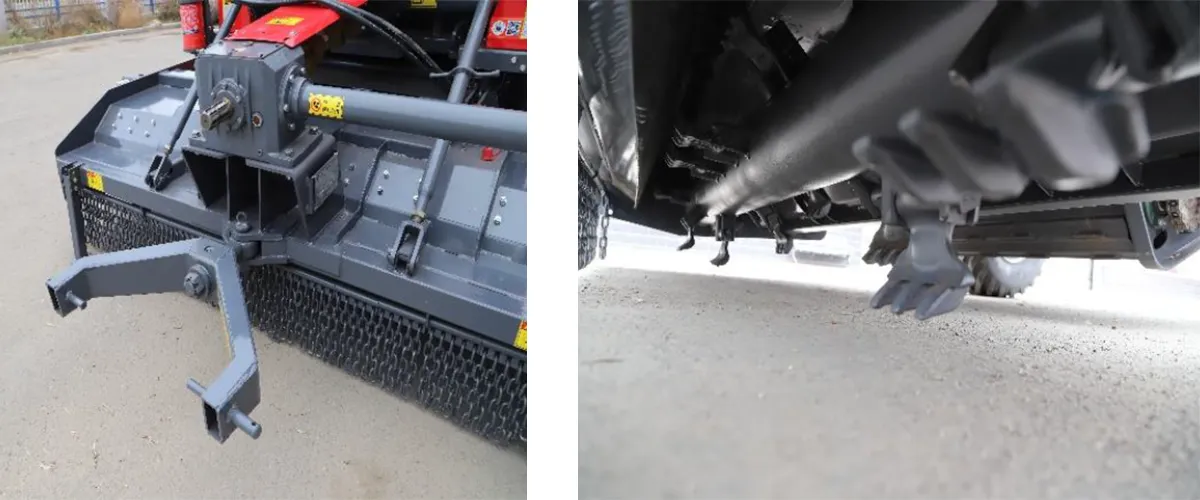
When assessing which round baler can handle high-moisture cotton stalks reliably, the structural build quality of the machine is the first thing to examine. The main chassis frame must be fabricated from heavy-gauge structural steel — typically Q345B or equivalent high-strength plate — to resist the flexing and vibration forces generated when the bale chamber repeatedly ingests dense, uneven crop material. Lightweight construction that is adequate for light hay may exhibit weld fatigue or bracket cracks within a single cotton stalk harvesting season. The compression roller assembly is the heart of the matter: each roller must be manufactured from solid or heavy-wall steel pipe with precision-ground journals, and the surface profile should be aggressive enough to grip wet, smooth stalk surfaces. Models in the 9YG-2.24D series use 18 rollers per chamber, each with a diameter of 222 mm, which provides a broad contact zone that effectively grips and rotates even the slipperiest wet stalk bundles.
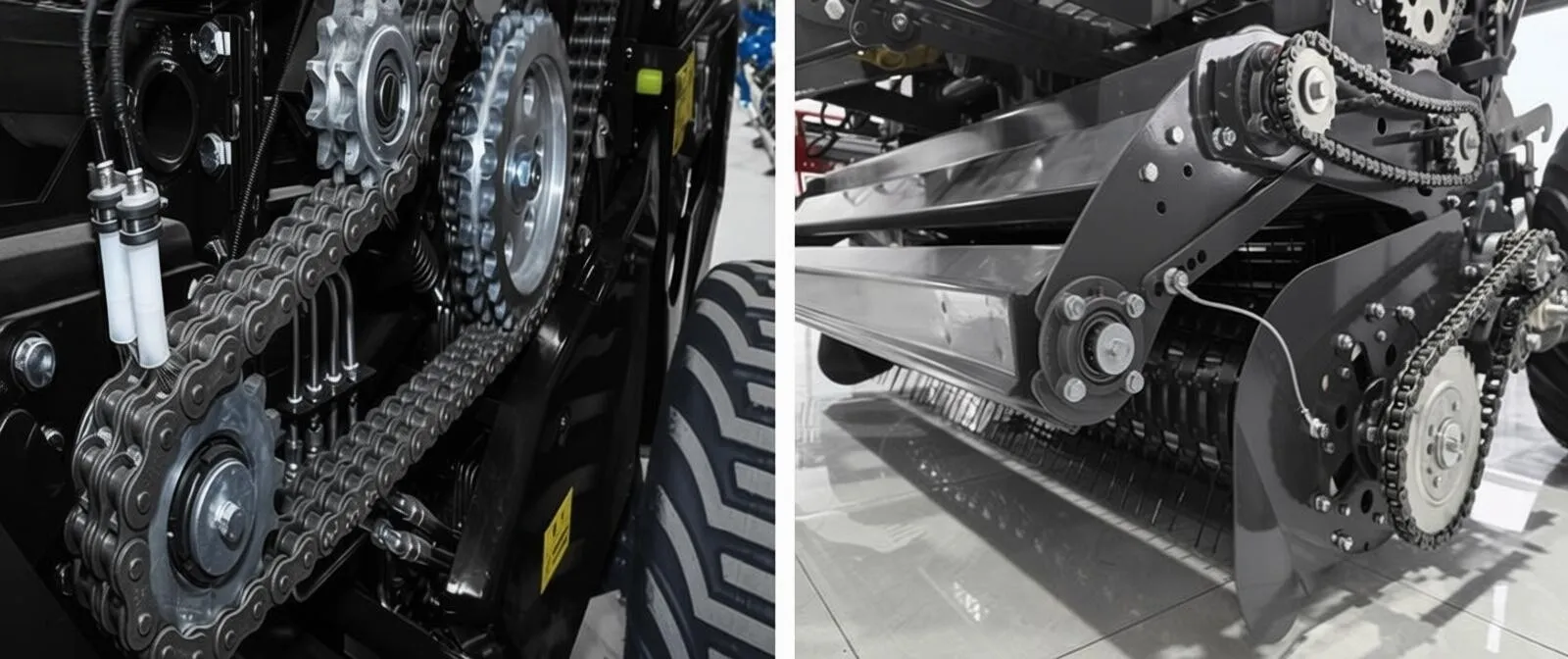
The chain drive system deserves equal attention. In high-moisture conditions, chain lubrication intervals shorten considerably because water intrusion accelerates wear on bushings and sideplates. Balers designed with 20A heavy-duty dual-side chain runs — as used in the rear chamber of the 9YG-2.24D series — distribute the baling load more evenly than single-side setups, reducing peak tension on any individual link and extending chain life significantly. The pickup header itself must use hardened spring tine fingers or, for more demanding cotton stalk conditions, switchable hammer-claw fingers. The 9YG-1.25 model offers exactly this interchangeable pickup system: spring-tooth for normal crop and hammer-claw for standing or semi-standing stalk collection, which eliminates the raking step and substantially reduces per-hectare operational cost.
| Component | Recommended Material / Spec | Relevance to Wet Cotton Stalk |
|---|---|---|
| Main frame | Q345B high-strength structural steel, CNC laser-cut | Resists weld fatigue from cyclic baling loads |
| Compression rollers | Heavy-wall steel pipe, 222 mm diameter, 18-roller array | Wide contact zone grips slippery wet stalks |
| Drive chain | 20A double-side chain, oil-bath or sealed lubrication | Handles peak torque spikes in dense, moist crop |
| Pickup tines | Hardened spring-tooth or interchangeable hammer-claw | Penetrates lodged or standing stalk rows cleanly |
| Gearbox housing | Cast iron, rated for high input torque (up to 1000 Nm) | Prevents housing fracture under sustained high-load PTO drive |
| Hydraulic cylinders | H-type ferrule fittings, high-pressure rated | Fast chamber opening/closing reduces cycle time in wet baling |
| Net wrap system | Automatic net binding, sensor-triggered density control | Maintains bale integrity when surface is tacky from moisture |
3. Tractor Power Requirements: Matching HP to Moisture Level
The fundamental rule when baling cotton stalks with residual moisture above 25% is to add a meaningful power buffer above the baler’s published minimum requirement. Manufacturers publish minimum tractor power ratings based on normal operating conditions with moderately dry crop material. Cotton stalks at 35–50% moisture content can double or even triple the instantaneous PTO torque demand compared to dry hay, particularly during the chamber-fill phase when the bale is small and the compression rollers are working hardest to initiate bale core rotation. A tractor running near its rated limit in these conditions will experience frequent PTO dips, erratic bale formation, and in severe cases, PTO clutch slippage or disengagement.
A practical working guideline used in Korean cotton-producing regions — notably Gyeongnam and Jeonnam provinces where cotton cultivation has expanded in recent years — is to add 20–30% above the baler’s minimum rated power when moisture content exceeds 30%. For the 9YG-1.25A model, which carries a minimum rating of 75 kW, this means pairing with a tractor of at least 95–100 kW in high-moisture cotton stalk conditions. For the 9YG-2.24D series with a 55–100 kW range, field experience in similar high-density fibrous crops suggests targeting 80–100 kW as a safe operating baseline when stalks have not dried below 30% moisture. The 9YG-1.0 model, with a lower minimum of 48 kW, is better reserved for lighter-stemmed cotton varieties or pre-dried stalks, as its chamber width of 1000 mm will restrict throughput on full-diameter cotton row material.
| Model | Min. Power (kW) | Recommended for Wet Stalks (kW) | Pickup Width (mm) | Chamber Width (mm) | Bale Density (kg/m³) |
|---|---|---|---|---|---|
| 9YG-1.0 | 48–80 | 65–80 | 1900 | 1000 | 115–200 |
| 9YG-1.0C | ≥69.8 (95 hp) | 80–95 | 2400 | 1250 | 115–200 |
| 9YG-1.25A | ≥75 | 90–100 | 2150 | 1250 | 100–200 |
| 9YG-1.25 (Double) | ≥88.2 (120 hp) | 95–110 | 2240 | 1250 | 115–200 |
| 9YG-2.24D | 55–100 | 80–100 | 2240 | 1400 | 100–200 |
| 9YG-2.24D Classic | 55–100 | 80–100 | 2240 | 1400 | 100–200 |
| 9YG-2.24D S9000 | 55–100 | 80–100 | 2240 | 1400 | 100–200 |
Note: “Recommended for Wet Stalks” adds a 20–30% buffer above minimum to accommodate surge torque when cotton stalk moisture exceeds 30%.
4. PTO Speed, Gearbox Design, and Drive Train Integrity
Round baler gearboxes used with tractors typically operate at a PTO input speed of 540 rpm or 720 rpm, and this choice significantly affects both torque multiplication and heat generation during cotton stalk baling. All models in the 9YG round baler series operate at a PTO input speed of 720 r/min under standard configurations, with the 9YG-1.25A capable of accepting a wider range of 540–1000 r/min depending on field tractor availability. The 9YG-1.0C specifies 540 r/min, which suits tractors whose rear PTO is configured for that standard — typical in many Korean mid-range utility tractor models from brands like Daedong (LS Tractor), TYM, and Kioti.
The gearbox itself in the 9YG-2.24D S9000 variant is notably described as a “reinforced/heavy-duty gearbox” designed to handle higher transmission torque compared to earlier models. This matters for cotton stalk work because the irregular feeding behavior of cotton — long fibrous stems that wrap partially around rollers before breaking off — generates torque spikes that can exceed sustained load ratings if the gearbox is built to minimum specification only. The dual-axis universal joint PTO shaft used in the 9YG-2.24D Classic variant is an important reliability differentiator: its self-developed design allows the baler to turn sharply without cutting PTO drive, which reduces field-turning downtime and prevents the driveline stress that causes shaft component damage in conventional single-joint designs. A torque-limiting safety device on the PTO shaft is strongly recommended when operating in wet cotton stalk conditions — most 9YG models allow this as an accessory fitment to protect both the baler gearbox and the tractor PTO stub from shock loads.
5. Feeding System Design: Handling Fibrous, Moisture-Heavy Cotton Stalks
The feeding system of a round baler determines whether cotton stalks enter the bale chamber as a controlled, even flow or arrive in clumps that stall the rollers and require field clearing. The 9YG series uses a proprietary axial-flow semi-forced feeding mechanism that eliminates the cam track and guard ring of traditional pickup designs. This approach reduces friction points where wet, sticky cotton stalk fibers would otherwise accumulate and jam. The auger and tine roller combined intake — used in models like the 9YG-1.25, 9YG-1.0C, and 9YG-1.0 — actively separates and distributes the incoming material across the full chamber width before it reaches the compression rollers. Even distribution is essential for forming a properly cylindrical bale in cotton stalk work, because uneven loading creates eccentricity in the bale that causes vibration, belt wear in belt-type balers, or roller bearing fatigue in roller-type machines.
The pickup width varies by model from 1900 mm in the compact 9YG-1.0 to 2400 mm in the 9YG-1.0C. For typical Korean cotton cultivation row widths — generally 0.6–0.9 m row spacing — any of the wider-pickup models will collect across multiple rows per pass, which substantially improves field efficiency. However, collecting more material per unit time also means the feeding system needs to handle a greater instantaneous flow rate, which places additional demand on both the feeder drive components and the tractor PTO. Operators new to cotton stalk baling should perform a preliminary pass at reduced forward speed (5–8 km/h) to assess how the machine handles the specific field’s stalk density and moisture before increasing to the upper working speed of 15–20 km/h or higher.
6. Bale Density, Moisture Retention, and Storage Considerations
Cotton stalk bales formed at high residual moisture levels behave differently in storage from dry hay or cereal straw bales. The bale density range achievable with the 9YG series — 100 to 200 kg/m³ depending on model and operating conditions — spans a critical threshold for post-baling moisture management. At the lower end of this range (near 100 kg/m³), the bale interior remains porous enough to allow continued respiration and slow aerobic fermentation, which in cotton stalks can generate heat and accelerate mold development on the bale surface if net wrap is not applied within a short time of ejection. At higher density, the restricted air movement within the bale actually slows the drying process, which can be desirable if the stalks are being stored for subsequent biomass energy use but is counterproductive if the intent is to produce dry stalk material for feed or bedding.
The sensor-controlled bale density system used across the 9YG series automatically maintains target compression regardless of how the crop is entering the chamber, which removes one of the main operator variables in achieving consistent bale quality. For cotton stalk applications, setting the density sensor to a moderate-high target — around 150–180 kg/m³ — tends to balance structural integrity against the moisture-entrapment risk. After baling, positioning the completed bales with their flat ends oriented to prevailing airflow and allowing a minimum of 2–4 weeks of field drying before covered storage is standard practice in cotton belt regions of eastern and southern Korea. The bale wrap net should be rated for UV degradation resistance if outdoor storage beyond 6 weeks is anticipated.
7. Regulatory Framework: Agricultural Machinery Laws in Korea and Key Markets
In the Republic of Korea, agricultural machinery including round balers is regulated under the Agricultural Mechanization Promotion Act, administered by the Ministry of Agriculture, Food and Rural Affairs (MAFRA). Under this framework, new agricultural machinery intended for sale or subsidy qualification must pass performance evaluation by the Korea Agricultural Machinery Industry Cooperative (KAMICO) and receive a type-approval certificate. Tractor and baler combinations that are used under the government’s agricultural subsidy scheme — known as the Nonggi Bogjo (농기보조) program — must use approved equipment models. This means importers of foreign-manufactured round balers should verify their KAMICO type approval status or begin the application process well ahead of selling season.
Korea’s Agricultural Product Quality Control Act also sets indirect requirements on bale quality for any cotton stalk material that enters the animal feed supply chain. Bales showing mold, contamination, or abnormal moisture levels may be rejected at receiving facilities, making bale density and net-wrap integrity standards commercially important beyond just regulatory compliance. Additionally, the Machinery Safety Act covers PTO-driven equipment and mandates that PTO shaft guards be in place during all field operations — a requirement that applies to round balers as much as any other tractor-driven implement. Field operators failing to maintain guards risk fines under the Occupational Safety and Health Act administered by the Ministry of Employment and Labor.
Related Regulatory Requirements in Other Markets
In the European Union, round balers sold or operated commercially must comply with Machinery Directive 2006/42/EC (currently being updated to Machinery Regulation 2023/1230, applicable from 2027). This directive requires a CE marking and technical file demonstrating conformity with harmonised safety standards, including EN ISO 4254-7 (agricultural machinery safety, specifically for balers). PTO shaft guarding, noise emission limits, and vibration exposure assessments are required elements of CE documentation. Operators in EU member states using baling equipment without valid CE marking may face equipment prohibition orders from national market surveillance authorities.
In the United States, the American Society of Agricultural and Biological Engineers (ASABE) standard S395 covers PTO shaft safety requirements, and ANSI/ASABE S328 addresses general baler safety. While these are voluntary standards in most states, OSHA’s General Industry Standard 1910.212 and the agricultural-specific 1928.57 both address guarding requirements for rotating power transmission elements. In Japan, agricultural machinery including balers must conform to the Japanese Agricultural Machinery Safety and Maintenance Standard (Nogyokikai Anzen Kakuho Ijikanri Kikaku), and importers must register equipment specifications with the Ministry of Agriculture, Forestry and Fisheries before commercial sale.
| Country / Region | Applicable Regulation | Key Requirement |
|---|---|---|
| Corea del Sur | Agricultural Mechanization Promotion Act; KAMICO type approval | Type-approval required for subsidy eligibility; PTO guards mandatory |
| European Union | Machinery Regulation 2023/1230 (from 2027); EN ISO 4254-7 | CE marking, technical file, noise and vibration assessment |
| United States | ASABE S395, S328; OSHA 1928.57 | PTO guarding, general machine safety compliance |
| Japan | MAFF Agricultural Machinery Safety Standard | Registration with Ministry of Agriculture before commercial sale |
| Australia | Work Health and Safety Regulation (WHS); AS 4600 (structural steel) | Plant registration, safe design declaration for high-risk plant |
8. Operating Speed, Field Conditions, and Practical Setup Tips
Cotton stalk rows typically stand at heights of 0.8–1.5 m when the baler pickup is working, depending on variety and pruning practices. This height range is within the operational envelope of all 9YG models, though ensuring the pickup header height is correctly set to keep tine penetration at 5–8 cm below stalk cut level is critical to avoiding soil contamination in the bale — a quality issue that is particularly problematic if the bale material is destined for animal bedding or biomass fuel. The working speed range for most 9YG models extends from 5 to 35 km/h for the larger 2.24D variants and 5 to 20 km/h for the compact 1.0 and 1.0C models. In high-moisture cotton stalk conditions, a practical working speed of 6–12 km/h balances throughput against bale formation quality, with slower speeds preferred when stalk density on the ground is higher than average after a good cotton yield.
Field turning is where many operators encounter drive train damage with round balers. The dual-axis PTO shaft design used in advanced 9YG variants allows the tractor to turn with a reduced turning radius (turn angle up to 100 degrees lateral, with lateral tractor tilt tolerance to 30 degrees) without disconnecting PTO drive or inducing the universal joint angle spikes that damage shaft components. For operators using tractors on the smaller end of the power scale — 40–60 HP class, which is common among Korean smallholder farms in Gyeongbuk and Chungnam provinces — it is worth noting that the 9YG-1.0 at 48–80 kW minimum power is specifically designed for this segment and has a more compact footprint (3750 mm × 2300 mm × 2020 mm working dimensions) that handles tighter field ends and narrower headlands.
9. Recommended Round Baler Models for Cotton Stalk Baling
Based on the power and structural requirements outlined above, the following round baler models represent the most practical choices for cotton stalk baling across a range of tractor power classes and farm scales.
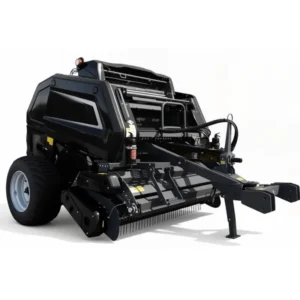
Empacadora de balas redondas 9YG-2.24D (S9000)
Pickup width: 2240 mm | Chamber: 1400 mm | Power: 55–100 kW | Bale: 1300×1400 mm | Density: 100–200 kg/m³ | PTO: 720 r/min | Output: 40–100 bales/h
A versatile high-output model suited for medium to large cotton fields. The reinforced gearbox and H-type hydraulic fittings give it strong credentials for high-moisture stalk baling at sustained production rates.
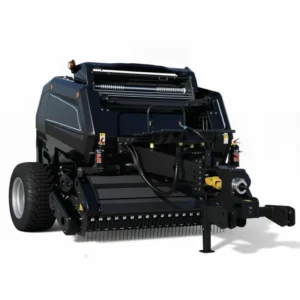
Empacadora redonda 9YG-1.25A
Pickup width: 2150 mm | Chamber: 1250 mm | Power: ≥75 kW | Bale: 1300×1250 mm | Density: 100–200 kg/m³ | PTO: 540–1000 r/min | Output: 40–100 bales/h
Wide PTO speed compatibility makes this model compatible with most Korean mid-range tractors. Its moderate chamber width balances throughput against tractor power demand in typical Korean cotton smallholder farm settings.
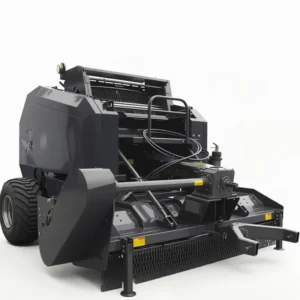
Empacadora de balas redondas 9YG-1.0C
Pickup width: 2400 mm | Chamber: 1250 mm | Power: ≥69.8 kW / 95 hp | PTO: 540 r/min | Bale: 1000×1250 mm | Density: 115–200 kg/m³ | Tine: 20 hammer claws
Hammer-claw pickup for direct standing cotton stalk collection. The widest pickup width in the compact series, making it a strong candidate when cotton stalks are still partly standing rather than windrowed.
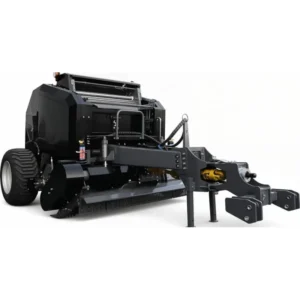
9YG-1.25 Round Baler (Double)
Pickup width: 2240 mm | Chamber: 1250 mm | Power: ≥88.2 kW (120 hp) | PTO: 720 r/min | Bale: 1200×1250 mm | Density: 115–200 kg/m³ | Output: 40–80 bales/h
Interchangeable spring-tooth and hammer-claw pickup, with a combined auger and tine roller feeder for even chamber loading. Ideal for fields transitioning between grass forage and cotton stalk baling across seasons.
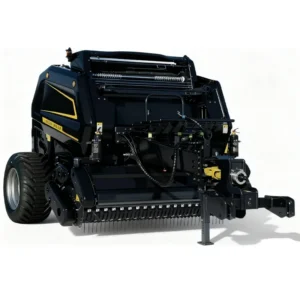
9YG-2.24D Round Baler (Classic)
Pickup: 2240 mm | Chamber: 1400 mm | Power: 55–100 kW | Bale: 1300×1400 mm | Mass: 4312 kg | PTO: 720 r/min | Output: 40–100 bales/h
The Classic variant features a dual universal-joint PTO shaft for improved turning radius capability, plus dual-side sprocket chain drive in the rear chamber for smoother high-moisture baling performance.
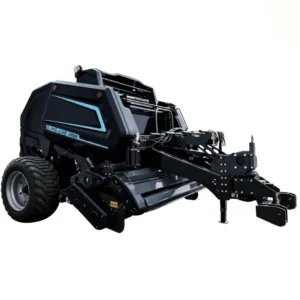
9YG-2.24D Round Baler (Transcend)
Pickup: 2240 mm | Power: 55–100 kW | PTO: 720 r/min | Bale density: 100–200 kg/m³ | Max bale weight: 500–1000 kg
A flagship-level round baler with advanced sensor-density control and quick-connect hitch design. The pivoting cross-hitch allows lateral and vertical adjustment, enabling clean connection even on rough cotton field terrain.
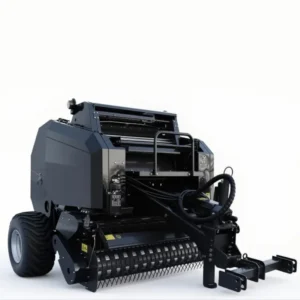
EP-9YG-1.0 Round Baler
Pickup: 1900 mm | Chamber: 1000 mm | Power: 48–80 kW | Bale: 1100×1000 mm | Density: 115–200 kg/m³ | PTO: 720 r/min | Speed: 5–20 km/h
The compact entry-level round baler for operators with smaller tractors. Works well with cotton varieties producing lighter or shorter stalks, and excels in fields where turning clearance limits the use of larger machines.
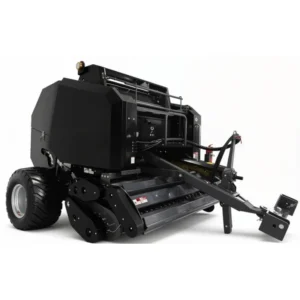
Empacadora de balas redondas 9YG-2.24D
Pickup: 2240 mm | Chamber: 1400×1200 mm | Power: 55–100 kW | Bale: 1300×1400 mm | Mass: 3922 kg | PTO: 720 r/min | Output: 40–100 bales/h
The standard 9YG-2.24D offers the proven axial-flow feeding system with wide bale format capability, making it a reliable workhorse for medium-scale cotton operations where consistent daily throughput is the primary requirement.
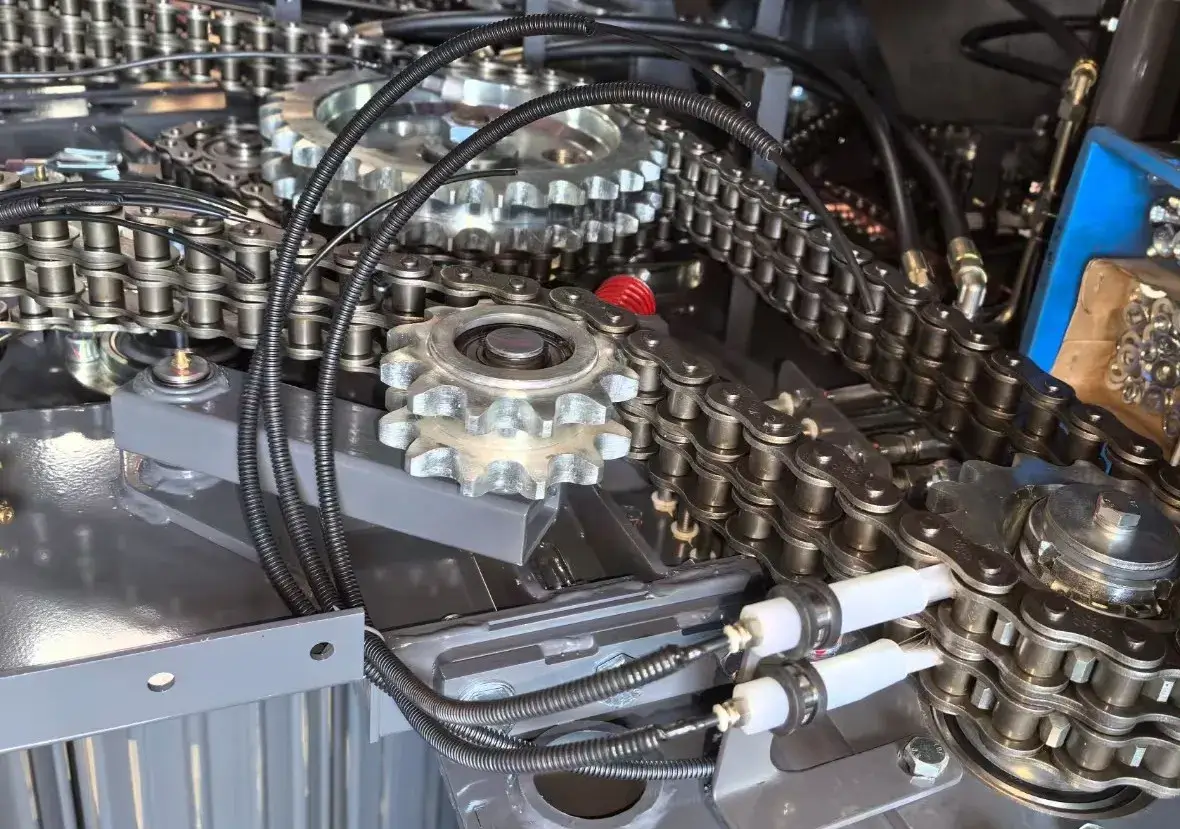
10. Compatible Accessories: Agricultural PTO Shafts and Drive Chains
A round baler is only as reliable as its ancillary drivetrain components. Pairing your baler with correctly rated PTO shafts and agricultural chains ensures that the full power delivered by the tractor reaches the baling mechanism without loss, and that wear components are readily replaceable when operating in demanding cotton stalk conditions. We supply a complete range of matched accessories for all 9YG series round balers.
Agricultural PTO Shaft for Round Balers
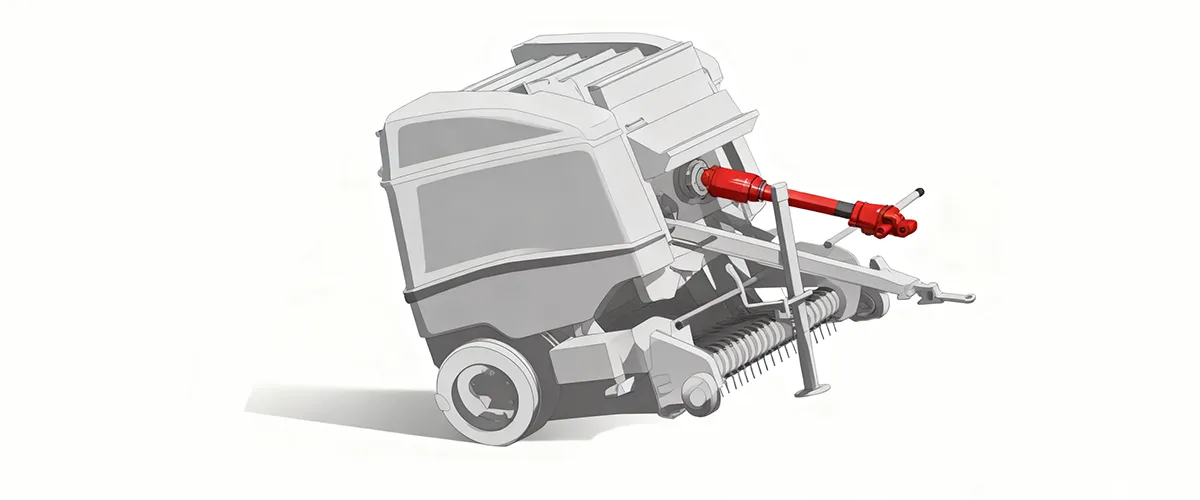
Our dedicated EP PTO shafts for round balers are engineered to match the 720 r/min and 540 r/min input requirements of all 9YG models. Built with torque-limiter compatibility and safety shielding compliant with Korean occupational safety regulations, these shafts deliver efficient power transfer from tractor to baler with minimal drivetrain loss — critical when running near rated power in heavy wet cotton stalk conditions.
Agricultural Drive Chains
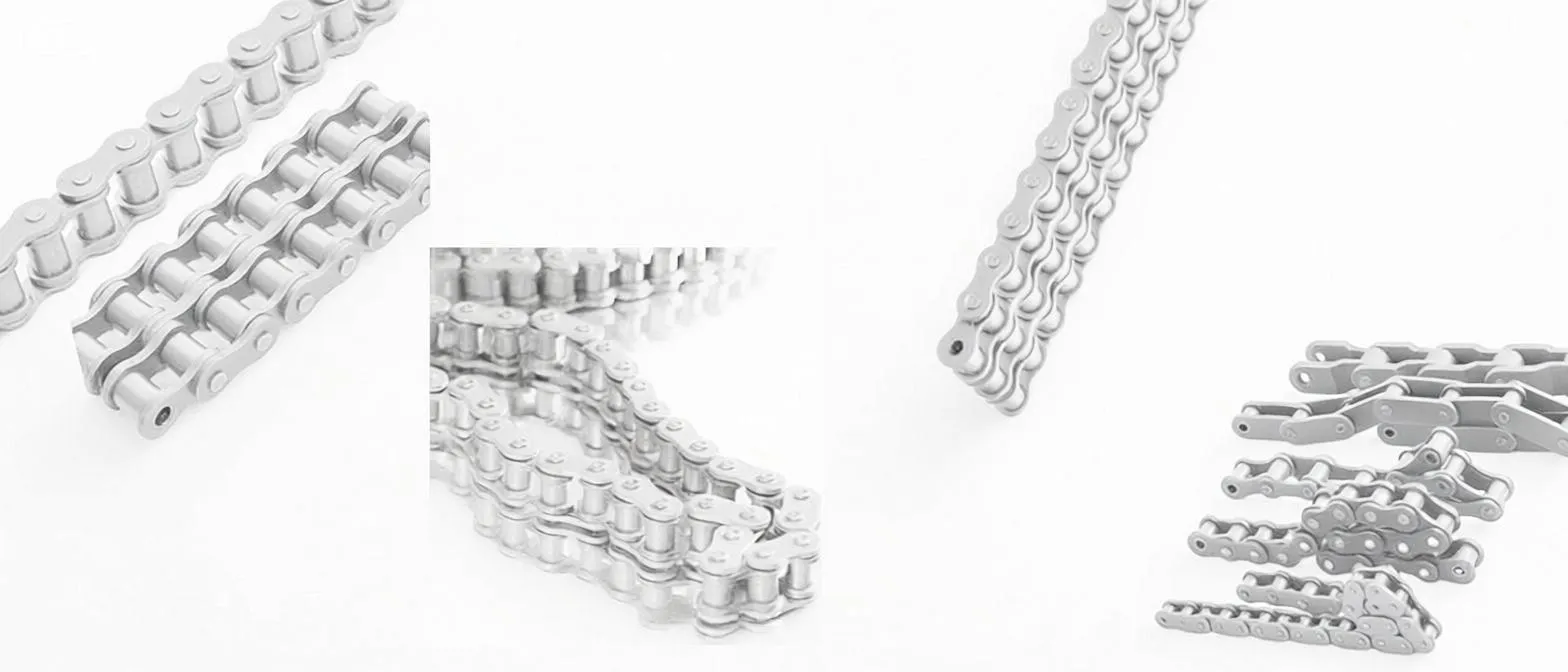
Replacement 16A and 20A drive chains for the 9YG-1.0C, 9YG-2.24D, and 9YG-2.24D series are available as matched pairs for dual-side chain configurations. These heavy-duty chains maintain rated tensile strength through extended wet-operating conditions and are designed to pair with the original baler sprocket profiles for exact pitch compatibility. Stock chains for preventive replacement before cotton season ensures no unplanned downtime during peak harvest windows.
11. Seasonal and Environmental Factors Affecting Power Demand in Cotton Baling
Cotton harvest timing varies significantly between Korean growing regions. In the southern coastal areas of Jeollanam-do and Gyeongsangnam-do, cotton defoliation and machine harvest typically occurs in October, when overnight temperatures begin to fall but daytime humidity can still exceed 70%. At this humidity level, even stalks that have been standing for 3–4 weeks post-defoliation may retain 35–45% moisture in the inner stem, even if the outer surface appears visually dry. Operators sometimes mistake the surface dryness of cotton stalks for overall low moisture and underestimate the power demand, leading to mid-field PTO stall events. A simple field test — bending a stalk at mid-height and examining the fracture — is a reliable indicator: if the break surface appears wet or fibrous rather than dry and crisp, baling power demand will be significantly higher than for truly dry material.
Temperature also affects gearbox oil viscosity in round balers. In cold-morning starts (below 5°C, which is common in Korean cotton regions after mid-October), gearbox lubricants thicken and increase resistance in the drive train during the first few minutes of operation. Allowing the baler to idle through 3–5 minutes of light operation before committing to full-speed baling in these conditions reduces the risk of seal damage and bearing pre-load issues. Checking gearbox oil grade against the baler manufacturer’s recommendation for low-temperature operation is worthwhile if cotton stalk baling continues into November.
12. Maintenance Schedule for Round Balers Used in Cotton Stalk Work
The maintenance requirements for a round baler used in cotton stalk baling are more demanding than for grass hay work, primarily because cotton stalk fiber is more abrasive and tends to collect in tight spaces around bearings, chain runs, and the pickup finger assembly. Establishing a post-session inspection routine — not just an end-of-season review — is essential for catching wear and blockage issues before they escalate into field failures. The following schedule is based on working with moisture-rich stalks at a sustained daily output of 400–600 bales:
| Interval | Task | Priority |
|---|---|---|
| After every session | Clear stalk fiber from pickup tine zones, roller gaps, and chain housings | Critical |
| Every 50 bales | Lubricate pickup tine bearings and apply chain oil if not sealed-type | High |
| Every 200 bales | Check roller bearing preload, inspect chain tension, verify bale density sensor calibration | High |
| Every 500 bales | Check gearbox oil level and condition; inspect net wrap mechanism for stalk fiber wrapping | Medio |
| End of season | Full gearbox oil change, replace worn chains, check all hydraulic fittings and seals | Essential |
Frequently Asked Questions
Q1. What is the minimum tractor horsepower needed to bale cotton stalks with 40% moisture content using a round baler?
For cotton stalks at 40% moisture, the general recommendation is to add 25–30% above the baler’s published minimum power rating. For example, if your round baler specifies a minimum of 75 kW (approximately 100 HP), you should target a tractor of at least 95–100 kW when operating in those conditions. Moisture above 35% significantly increases instantaneous PTO torque demand during bale initiation, so running near the published minimum risks PTO dip events and uneven bale formation.
Q2. Which round baler model is best for Korean smallholder farms baling cotton residue with a 40–60 HP tractor?
The 9YG-1.0 is designed specifically for tractors in the 48–80 kW range and is the most practical option for Korean smallholder farms with tractors in the 40–60 HP class. Its compact 3750 mm working length handles tight headlands on typical Korean field plot sizes, and its 1000 mm chamber width keeps compression load proportionate to available tractor power. For slightly drier cotton stalks or lighter stalk varieties, this model performs reliably throughout the harvest window.
Q3. How does a round baler gearbox handle the high torque demands of wet cotton stalk baling in practice?
The gearbox in advanced 9YG models is a reinforced cast-iron unit rated for input torques up to approximately 1000 Nm, which provides meaningful margin above what a fully powered tractor in the 75–100 kW range will deliver at 540 or 720 r/min PTO speed. The key design features are rigid integration with the traction frame (rather than a flexible-mount arrangement), and sealed or well-protected oil bath lubrication that resists contamination from moisture-laden cotton fiber dust generated during baling. Adding a torque-limiter device on the PTO shaft is strongly recommended as secondary protection for the gearbox when baling crops known for producing high-variance load spikes.
Q4. Where can I find a reliable round baler supplier for cotton stalk baling equipment in the Korean agricultural market?
We supply the complete 9YG round baler series to agricultural equipment distributors and farm operators in Korea and other markets. Our machines are backed by ISO 9001 quality certification and have a track record in high-moisture stalk baling environments. To discuss model selection, tractor compatibility, and shipping lead times for Korean delivery, please use the contact form on this site. We can also advise on KAMICO type-approval application documentation for Korean market access if required.
Q5. What is the typical bale output per hour when using a 9YG-2.24D round baler for large-scale cotton stalk baling operations?
Under favourable field conditions — stalks at 25–35% moisture, operating at 10–15 km/h with a well-matched 75–100 kW tractor — the 9YG-2.24D produces 40 to 100 bales per hour depending on field density. In heavy cotton stalk conditions with moisture above 40%, working speed typically drops to 6–10 km/h and output settles to 30–50 bales per hour. The wide 2240 mm pickup and 1400 mm chamber width maintain high per-pass intake volume even at reduced forward speed, keeping field productivity competitive compared to narrower baler formats.
Q6. Which round baler parts are most frequently replaced after a season of cotton stalk baling in humid regions?
After a full cotton stalk baling season in humid conditions, the components that typically require inspection or replacement are the pickup tine springs (which fatigue faster under the abrasive cotton fiber load), the drive chain links in the rear chamber (especially if not operating a sealed-bath lubrication system), and the net wrap knife or cutter assembly, which dulls faster when cutting tough cotton stalk fiber wrap. Roller bearing seals should be checked and replaced preventively. Most of these are available as standard replacement parts for the 9YG series and can be pre-ordered before the season to ensure no waiting time during the harvest window.
Q7. How long should cotton stalk bales be allowed to dry before storing indoors when using a round baler at harvest?
Bales formed from cotton stalks at 30–45% moisture content should be allowed a minimum of 3–4 weeks of outdoor field drying before transfer to covered storage, assuming good airflow around the bale stack. Position bales with their ends facing the prevailing wind rather than stacking them on cut ends. During this period, internal moisture redistributes outward through the bale. Bales that are moved into enclosed storage while still warm or internally moist risk developing thermal mold, which reduces biomass quality significantly. A handheld moisture meter inserted into the bale core at 12–15 cm depth is the most reliable way to assess readiness for enclosed storage.
Q8. Does a mini round baler have enough power output to handle cotton stalks, or is a full-size small round baler necessary?
A mini round baler — typically defined as a unit producing bales under 600 mm diameter — does not have the chamber geometry or roller count to compress woody cotton stalk material into a structurally stable bale at practical production rates. Cotton stalks at 30%+ moisture require the broader roller array and higher compression surface area of a machine like the 9YG-1.0 or larger. The 9YG-1.0 is the smallest model we consider appropriate for cotton stalk work — its 16-roller 1000 mm chamber and 48 kW minimum power requirement represent the practical lower boundary for reliable cotton baling performance.
Q9. When is the best time of day to bale cotton stalks in Korea to minimize moisture-related power demand issues?
In Korean cotton-growing regions during October and early November, stalk surface moisture drops fastest between 10:00 and 16:00 as daytime temperatures peak and humidity falls. Starting baling operations after 10:00 and stopping before 17:00 — when evening dew begins to settle on cut stalk surfaces — takes advantage of the lowest daily moisture window and reduces instantaneous power demand by 10–20% compared to early morning starts. On humid overcast days, the moisture differential through the day is smaller, and operators should simply apply the wet-stalk power buffer regardless of time of day.
Q10. Are there Korean government agricultural subsidies available for purchasing a round baler for cotton residue management?
Yes. Under the MAFRA agricultural mechanization subsidy program (농업기계화사업), farmers in Korea can apply for subsidized purchase of approved agricultural machinery including round balers, where the government typically covers 30–50% of the equipment cost depending on the applicant’s farm classification and regional priority status. The baler model must hold valid KAMICO type-approval certification to be eligible. Additionally, environmental management subsidies have been extended under the Clean Air Action Plan to support machinery that enables compliant disposal of crop residues (replacing open field burning), which includes balers used for cotton stalk collection. Consult your local Agricultural Technology Center (농업기술센터) for current eligibility criteria and application cycles.
Editor: PXY