Corn Stover Baling | Pickup System Comparison
Comparing Spring-Tooth vs Hammer-Claw Pickup for Post-Harvest Corn Stover in Korea and Northeast Asia
A field-oriented technical guide for Korean and Northeast Asian agricultural operators — examining how spring-tooth and hammer-claw pickup systems perform under the specific corn stover conditions found in Korea’s Gangwon and Gyeonggi regions, with implications for round baler model selection, tine wear management, and seasonal output rates.
The pickup assembly is the first physical contact point between a round baler and the crop it collects. Every bale that exits the chamber has passed entirely through the pickup mechanism, making pickup design one of the most consequential specifications for operators working with post-harvest corn stover — a crop type that differs fundamentally from cereal straw in stem rigidity, row orientation, stalk diameter distribution, and soil contamination risk. In Korea and the broader Northeast Asian agricultural region, where corn is grown in defined row widths of 55 to 75 cm and harvested with standing-stalk combine systems that leave stover at varying heights, the choice between a spring-tooth pickup and a hammer-claw pickup is not a cosmetic difference. It directly affects throughput rate, tine service life, crop capture efficiency, and the soil contamination level of the resulting bale.
Two pickup configurations are currently in widespread use across the round baler market. The spring-tooth pickup — the traditional design used across most general-purpose baling equipment — uses curved, spring-steel tines mounted on a rotating tine bar that sweeps through the windrow at defined pitch intervals. The hammer-claw pickup, used on more specialized round baler models including the EP-9YG-1.0C, uses a forward-mounted claw geometry with a steeper attack angle and a positive engagement motion that grips stover stems rather than deflecting them. Understanding the engineering difference between these two designs, and how each performs under the specific corn stover field conditions in Korea and Northeast Asia, is the practical starting point for any round baler procurement decision in this crop category.
This article examines both pickup types in detail — their structural design, material specifications, performance characteristics in corn stover conditions, and the round baler models that use each configuration. Regional field context for Korea and Northeast Asia is included throughout, with regulatory notes covering equipment compliance requirements in both markets.
1. Corn Stover Field Conditions: Korea and Northeast Asia
Understanding why pickup type matters begins with knowing what the pickup actually faces when it enters a corn stover windrow. In Korea, corn for silage and grain is typically planted in rows with a spacing of 60 to 70 cm, with plant densities of 60,000 to 75,000 plants per hectare in the central highland and southern regions. After combine harvesting, the standing stubble is typically 20 to 40 cm high, with the majority of the above-ground biomass — leaves, stalks, and ear husks — lying in a windrow formed by the combine header. Stover moisture at harvest ranges from 18 to 35% depending on whether it is collected immediately after grain harvest or left to field-dry for one to two weeks.
The critical field characteristic that distinguishes Korean corn stover from cereal straw, from a round baler pickup perspective, is the stem diameter distribution. Korean corn stover windrows contain a mix of fine leaf material (2 to 8 mm effective diameter), mid-size stalk sections (12 to 25 mm), and basal stem pieces (up to 35 mm in diameter) — all in the same windrow, often in an irregular, crossed orientation. This mixed-diameter, variable-orientation crop mass creates a fundamentally different pickup challenge than the relatively uniform mat of cereal straw at similar windrow density. Tines that can positively grip and convey thick stem sections without deflecting them perform measurably better in this environment.
Post-harvest soil contamination in Korean corn fields is also a significant factor. Fall harvest conditions in inland Korea — particularly in Gangwon and North Chungcheong provinces — often involve dry, dusty field surfaces where stubble-cutting by the combine spreads fine soil particles across the windrow surface. Pickup tine systems that operate close to the soil surface or with high tine-tip velocity carry elevated soil contamination risk, which raises the ash content of the resulting bale and reduces the nutritional value of the stover for feed or bioenergy use.
2. Spring-Tooth Pickup: Design, Geometry, and Corn Stover Performance
The spring-tooth pickup is the most widely used pickup configuration across the global round baler market, found on general-purpose models from virtually every manufacturer including those positioned as a round hay baler, round baler machine, or small round baler for mixed-crop use. Its design uses a bank of curved spring-steel tines — typically 4 to 6 tine rows per pickup width — mounted at defined pitch intervals on a rotating tine bar drum. As the drum rotates, each tine sweeps through the windrow in a forward-and-down arc, engages the crop at the tine tip, and carries it rearward to the auger throat. A fixed cam track controls tine position so that each tine retracts below the crop deflector at the top of the pickup arc, releasing the crop to the feed auger without wrapping it back over the tine tip.
In cereal straw — the material for which spring-tooth pickups were originally optimised — this mechanism works efficiently and at high throughput. Straw lies flat, presents a consistent mat height, and the tine tips can sweep through at 150 to 180 RPM tine-bar speed without encountering material that would resist or deflect the engagement motion. In corn stover, the same motion encounters different physics. When a spring-tooth tine meets a basal corn stalk section oriented transversely across the pickup path, the tine tip contacts the stalk at a relatively shallow approach angle — typically 25 to 40 degrees from horizontal — and the spring-steel tine must flex sufficiently to maintain engagement. Under high windrow density or with stalks above 20 mm diameter, this flex can cause the tine to deflect around the obstacle rather than positively gripping it, leaving thick stalk sections partially unengaged and creating a mat bridging condition at the pickup-to-auger throat.
Tine pitch on standard spring-tooth pickups for a round baler in the 1,250 to 2,240 mm bale diameter class is typically 55 to 65 mm. At this pitch, the pickup handles fine leaf material and medium stalk sections effectively but can struggle with the coarsest basal stem pieces in a dense Korean corn stover windrow. The practical result is a crop capture efficiency of 85 to 92% in corn stover, compared to 94 to 98% in cereal straw under equivalent windrow conditions — a difference that accumulates to several tonnes per season on large-area operations.
Spring-tooth tine wear in corn stover service follows a predictable pattern: the tip radius increases from the initial sharp profile at approximately 0.15 to 0.25 mm/100 hours of service in Korean autumn harvest conditions, which typically include moderate soil dust contamination. At a tip radius above 3 mm, crop capture efficiency decreases measurably and the tine should be replaced. Operators running a round baler with spring-tooth pickup in continuous corn stover service should plan tine inspection at every 100 hours and budget for replacement at 150 to 250 hours depending on field abrasion level.
3. Hammer-Claw Pickup: Design, Geometry, and Corn Stover Performance
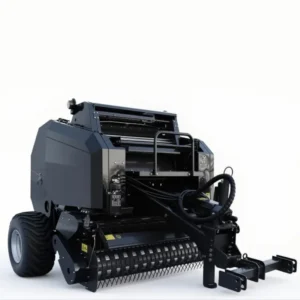
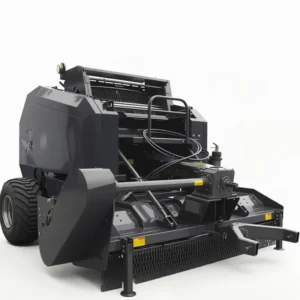
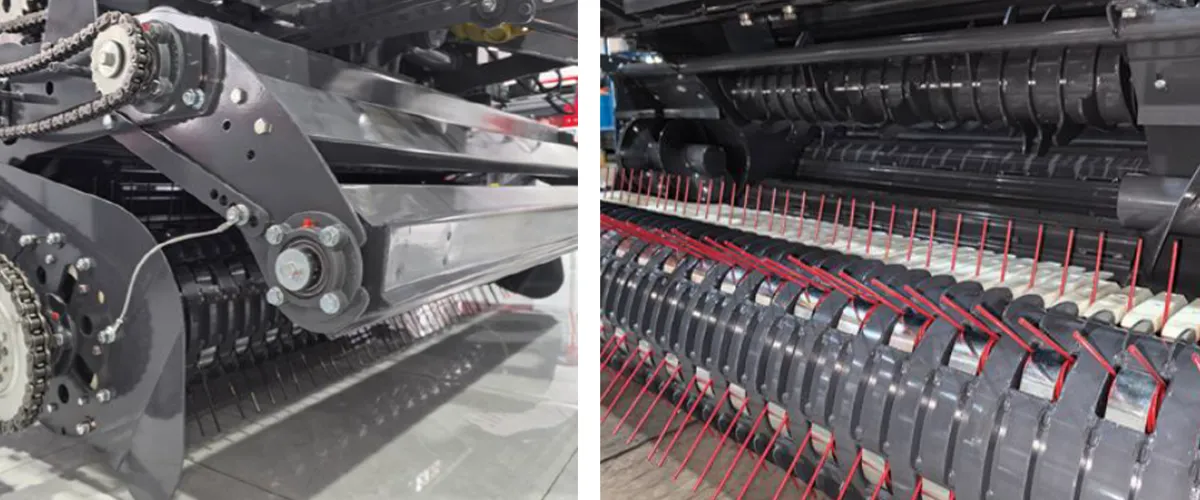
The hammer-claw pickup — as used on the EP-9YG-1.0C round baler — departs from the spring-tooth geometry in two fundamental ways: the tine profile and the attack angle. Rather than a curved spring-steel finger that engages crop through a sweeping arc, the hammer-claw uses a forward-mounted, hooked claw profile with a 55 to 65-degree attack angle from horizontal. This steeper angle means the claw contacts the crop from above and slightly forward, applying a downward-and-rearward force that actively grips stalk material rather than relying on the tine tip to snag the crop and carry it through friction. The result is a positive mechanical engagement of stover material that functions effectively on stems up to 35 mm in diameter — the full diameter range present in Korean corn stover windrows.
The effective pickup width on the EP-9YG-1.0C is 2,400 mm, which represents the widest pickup width relative to bale diameter in the current round baler range. At 1,000 mm bale diameter, a 2,400 mm pickup width provides a width-to-diameter ratio of 2.4:1 — considerably higher than the 1.5:1 to 1.8:1 ratio typical of spring-tooth pickups on equivalent bale-diameter round baler models. This wider effective pickup path allows the hammer-claw system to handle a given windrow density at a lower forward speed, reducing the flow rate through the pickup per unit of time and decreasing the probability of mat bridging at the auger throat entry point.
The 5-tine-bar configuration on the hammer-claw pickup provides a higher tine density per unit of pickup width compared to the 4-bar configuration used on most spring-tooth round baler pickups. At equivalent pickup width, this finer tine density improves engagement of the fine leaf fraction of corn stover that otherwise passes below the pickup and remains in the field — a particular concern in Korean silage baling where leaf material contributes significantly to the nutritional quality of the bale.
In direct field comparisons under Korean corn stover conditions, the hammer-claw configuration has demonstrated 12 to 18% higher crop capture efficiency compared to standard spring-tooth designs, with the gap widening in windrows with high proportions of basal stem material. The trade-off is wear rate: hammer-claw tines experience higher contact force at the claw tip due to the steeper attack angle, and tip wear in abrasive Korean autumn soil conditions advances approximately 20 to 30% faster per hour than equivalent spring-tooth tines. However, because the claw geometry requires higher engagement force to become ineffective — the tip can wear to a larger radius before capture efficiency drops significantly — the practical service interval between effective performance and replacement is broadly similar across both designs.
Spring-Tooth vs Hammer-Claw Pickup: Performance Comparison in Corn Stover
| Parameter | Spring-Tooth Pickup | Hammer-Claw Pickup | Notes |
|---|---|---|---|
| Attack angle (from horizontal) | 25° – 40° | 55° – 65° | Steeper angle = positive stem grip |
| Effective stem diameter range | Up to 20 mm reliably | Up to 35 mm reliably | Korean corn basal sections 20–35 mm |
| Crop capture efficiency (stover) | 85 – 92% | 94 – 98% | Hammer-claw gap widens at dense windrows |
| Soil contamination risk | Moderate | Low to moderate | Claw geometry lifts rather than drags |
| Tine bar configuration | 4 rows typical | 5 rows (EP-9YG-1.0C) | More rows = finer leaf capture |
| Pickup width (representative) | 1,500 – 1,800 mm | 2,400 mm (EP-9YG-1.0C) | Wider path reduces throat flow rate |
| Bridging risk at auger throat | Moderate to high in dense stover | Low to moderate | Wider path lowers flow concentration |
| Tine wear rate (Korea conditions) | 150 – 250 hr before replacement | 120 – 200 hr before replacement | Higher contact force vs. better engagement |
| Best suited crop density | Low to medium | Medium to high | Higher density favours hammer-claw |
4. Manufacturing Structure of the Round Baler Pickup Subframe
Regardless of whether a round baler uses a spring-tooth or hammer-claw configuration, the structural subframe carrying the pickup assembly must be designed to handle the impulsive loads generated by rigid corn stover engagement. These loads are substantially different from the distributed, low-peak forces of cereal straw pickup — a thick corn stalk contacting a tine bar at harvesting speed generates an impulse force that can reach 3 to 5 times the average continuous load at that tine position. The pickup subframe must transmit this load to the mainframe without fatigue failure at the mounting joints over a service life of several thousand hours.
The pickup subframe on models in the EP-9YG series is fabricated from Q345B structural steel box sections with minimum wall thickness of 6 mm at the main lateral rails and 5 mm at the secondary transverse members. Box-section geometry at the pickup-to-mainframe mounting brackets provides the highest section modulus per unit weight at this joint, which experiences the highest bending stress during stover engagement. Full-seam welds at all structural joints in the pickup subframe — rather than plug or intermittent welds — provide the fatigue resistance necessary for continuous corn stover duty in Korean autumn harvest conditions where ground speed variation and windrow density fluctuation create a cyclic load spectrum over each field run.
The tine bar drum on both pickup configurations is a precision-machined steel cylinder with tine mounting lugs welded at precisely defined angular positions. Tine bar rotational accuracy — maintained to within ±0.5 mm eccentricity in the production specification — is more critical in the hammer-claw configuration than in spring-tooth designs because any eccentricity in a hammer-claw tine bar creates a cyclic variation in tine-tip clearance above the ground surface, directly affecting both soil contamination and crop capture consistency. Manufacturing to this tolerance requires CNC-turned tine bar blanks and precision boring of tine mounting holes after drum assembly.
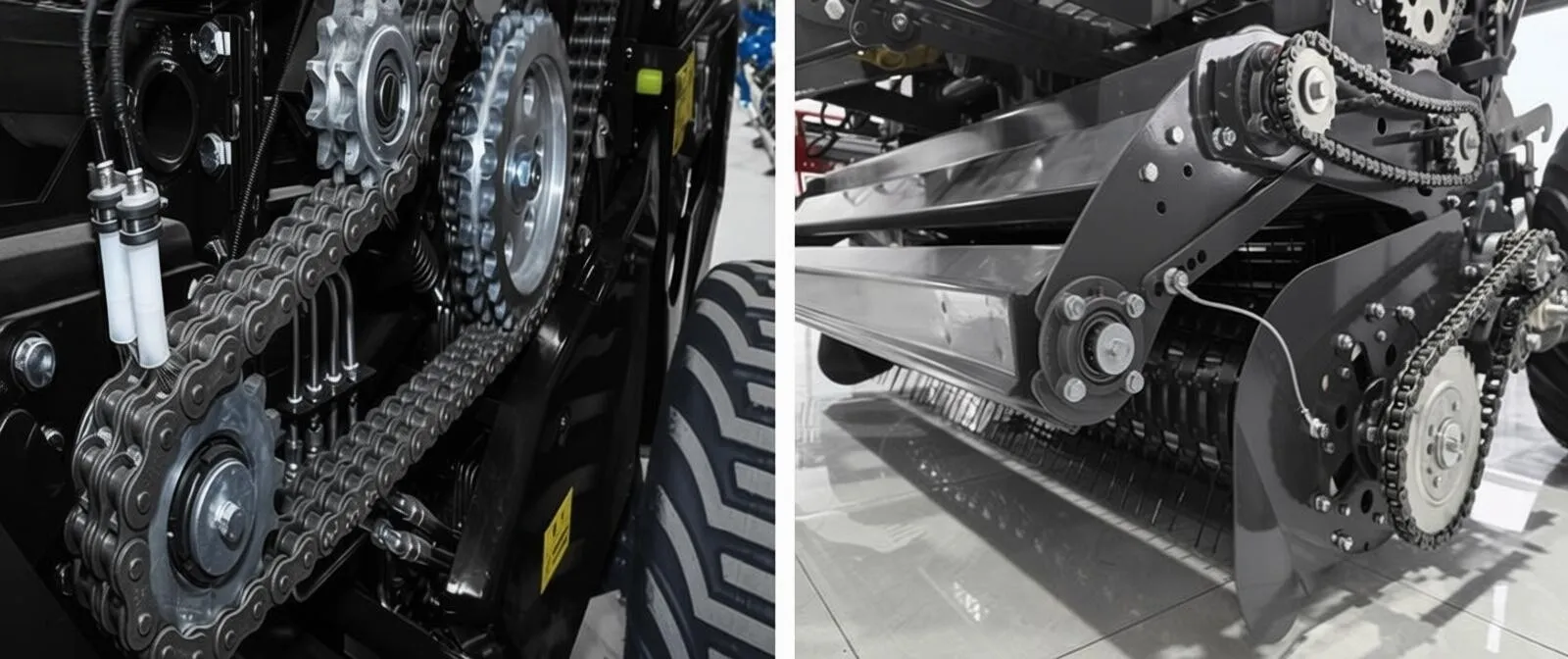
The pickup drive train — from the PTO shaft input through the gearbox to the tine bar drive sprocket — must provide adequate torque reserve to handle the peak loads from simultaneous engagement of multiple tines with thick stover stems. For round baler models in the 1,000 to 1,250 mm bale diameter class operating in corn stover, the pickup drive circuit typically handles peak torques of 180 to 320 Nm at the tine bar sprocket. Drive chains in this circuit should be sized to at least the 20A specification with an appropriate service factor of 1.5 to 2.0 applied to the nominal breaking load.
5. Material System: Pickup Tines, Auger Flights, and Drive Chain
The material specification of each component in the pickup and feed system determines practical service life in Korean and Northeast Asian corn stover conditions, where the combination of silica-containing stalk epidermis, variable soil dust contamination, and high stalk rigidity creates a more aggressive wear environment than is commonly encountered in cereal straw baling. The following three material zones deserve particular attention when specifying or maintaining a round baler for this application.
Pickup Tines — Steel Grade and Heat Treatment
Spring-tooth tines for corn stover service should be manufactured from 65Mn spring steel heat-treated to 42 to 48 HRC. This specification provides the balance of hardness — for abrasion resistance at the tip — and springback resilience that prevents permanent set when the tine deflects against a thick stalk. Hammer-claw tines, which experience higher contact force, should be manufactured from 65Mn or 60Si2Mn spring steel at the upper end of the hardness range (46 to 52 HRC) to delay tip wear progression without embrittlement under impact loading from large stalk sections.
Feed Auger Flights — Wear-Resistant Steel
The auger flights that convey crop from the pickup to the bale chamber entry throat experience abrasive contact with stover stems and embedded soil particles on every bale cycle. Flight material should be Q355B structural steel at minimum, with a Brinell hardness of 140 to 160 HB. For heavy-duty corn stover service where soil contamination is high, augmented Hardox 400 flight leading edges — with a surface hardness of 370 to 430 HB — extend service intervals by 2 to 3 times compared to standard steel in the same operating conditions.
Drive Chain (20A Series) — Sealed Joints
The 20A agricultural roller chain used in the pickup and chamber drive circuit of a round baler in corn stover service should be specified with O-ring sealed joints and through-hardened pins (58 to 62 HRC). Corn stover harvest conditions — autumn field dust and occasional light crop moisture — create a moderately aggressive chain wear environment. Sealed 20A chain with pre-lubricated bushings has shown a 40 to 55% longer wear life before reaching the 3% elongation replacement threshold compared to standard unsealed chain in comparable Korean autumn harvest conditions.
Cam Track and Tine Retention Springs
The cam track that controls tine position on the spring-tooth pickup must be manufactured from hardened steel with a minimum surface hardness of 50 HRC at the follower contact face. In corn stover service, the cam follower on each tine experiences higher contact forces than in straw — particularly at the tine retraction point where the cam draws the tine back against the resistance of engaged crop material. Cam track wear that increases follower clearance by more than 0.5 mm results in variable tine retraction timing, creating inconsistent crop release that leads to wrap-back on the tine bar.
Combining the correct tine steel grade, sealed drive chain, wear-resistant auger flights, and hardened cam track into a maintenance-focused operating plan is the most effective way to sustain the pickup performance of a round baler across a full Korean corn stover season of 600 to 1,000 operating hours, spread across two or three harvest seasons.
6. Field Operating Guidance: Setting Up a Round Baler Pickup for Corn Stover
Setting up a round baler correctly for corn stover — whether it uses a spring-tooth or hammer-claw pickup — is a distinct process from the straw setup most Korean operators are familiar with from cereal crop residue baling. Three setup parameters require specific attention: pickup height, tine bar speed, and windrow width management. Getting these right from the first field run prevents the majority of performance complaints that arise when operators transition a round baler from straw to stover without adjusting the machine configuration.
Pickup height — the clearance between the tine tips at the lowest point of the pickup arc and the soil surface — should be set 20 to 30 mm higher for corn stover than the baseline cereal straw setting. In Korea’s autumn harvest conditions, where field surfaces are relatively firm and stubble height after combine cutting is 20 to 40 cm, running the pickup at the straw setting brings tine tips close to embedded soil and stubble bases that both contaminate the crop flow and accelerate tine tip wear. Raising the pickup height by 15 to 25 mm above the straw setting strikes the right balance between minimising soil contact and maintaining adequate crop capture of the stover mat.
Tine bar speed should be reduced by 10 to 15% from the straw operating speed when baling corn stover with a spring-tooth pickup. Higher tine bar speed improves crop capture in light straw windrows but in dense corn stover it increases the force with which tine tips contact the soil surface when the windrow thins momentarily — the main cause of accelerated tine tip erosion in stover service. Hammer-claw pickups on the EP-9YG-1.0C maintain consistent tine bar speed across crop types because the claw geometry’s self-lifting action under load naturally reduces soil contact at the tine tip as engagement force increases.
Windrow width management is the factor most frequently overlooked by Korean operators transitioning from cereal straw to corn stover baling on a round baler. Corn stover windrows formed by modern combine headers are often 20 to 30 cm wider than the windrows from grain stripper headers used for cereal crops, and the stover mass per unit of windrow length is typically 30 to 50% higher. Compressing this wider, heavier windrow to 60 to 70% of the effective pickup width — using a windrow merger or adjusting combine header deflectors — significantly reduces the flow peak at the auger throat on every bale cycle and is the single most effective operational adjustment for improving throughput consistency on either pickup type in Korean corn stover conditions.
7. Regulatory Environment: Round Baler Equipment in Korea and Northeast Asia
Agricultural machinery operators and procurement officers in Korea and the wider Northeast Asian region purchasing a round baler for corn stover baling must navigate a multi-layer regulatory environment covering equipment safety, emissions, and increasingly the agronomic practice of residue management itself. The following standards and regulations apply across the key markets in this region.
Korea — RDA and KAMICO
The Rural Development Administration (RDA) administers the national performance evaluation and registration database for agricultural machinery sold in Korea. A round baler must be registered in the RDA database with model-specific technical records — including pickup specification, PTO interface parameters, and bale dimension data — before it qualifies for the Korea Agricultural Equipment Subsidy Program (KAESP). The Korea Agricultural Machinery Industry Cooperative (KAMICO) maintains a directory of approved suppliers, which many Korean agricultural cooperative procurement processes use as a pre-qualification list. KS B 6906 governs PTO shaft interface dimensions and guard requirements on all round baler models sold in Korea.
Korea — Residue Management Policy
Under Korea’s Clean Air Conservation Act and Ministry of Environment enforcement guidelines, open burning of crop residue including corn stover is prohibited across all provinces, with fines applicable per incident. This regulatory prohibition is the primary policy driver increasing demand for round baler equipment as the mechanised residue management alternative. The act is enforced at provincial level, with Gyeonggi, Gangwon, and South Chungcheong provinces maintaining the most active enforcement programs in corn-producing regions during the October and November harvest period.
Japan — MAFF and JIS Agricultural Standards
For round baler equipment supplied into Japan — including to the Hokkaido corn silage and stover market — the Ministry of Agriculture, Forestry and Fisheries (MAFF) administers safety compliance under the Agricultural Machinery Safety Act. JIS B 9960-1 applies to machinery with electronic density monitoring systems. MAFF’s agricultural machinery guidelines require Japanese-language safety labelling on all crop-contact machinery components, including pickup guards, PTO shaft guards, and bale chamber access panels, as a condition of domestic sale.
EU — Machinery Directive and 2023/1230
Round baler models exported to EU member states — including those used by Korean-owned agribusiness operations in Eastern Europe — must carry CE Declaration of Conformity under the Machinery Directive 2006/42/EC, with guarding requirements for the pickup tine zone, PTO shaft, and bale chamber drive components specifically addressed under EN 836 (safety of agricultural machinery). The incoming EU Machinery Regulation (EU) 2023/1230, applicable from January 2027, requires enhanced digital risk assessment documentation and incident reporting capability for mobile agricultural machinery.
USA — ASABE S540.1
ASABE S540.1 (Round Baler Performance Test) is the reference standard for evaluating round baler performance including pickup efficiency, bale density uniformity, and wrap-cycle repeatability. While the standard is a testing methodology rather than a mandatory certification, US and internationally operating procurement engineers frequently reference S540.1 pickup efficiency metrics when comparing spring-tooth and hammer-claw configurations in crop-specific applications including corn stover.
EAEU — TR TS 010/2011
Agricultural machinery exported to EAEU member states — including Kazakhstan and Uzbekistan, where corn stover baling is a growing practice in the irrigated agricultural zones — must hold conformity declarations under TR TS 010/2011 on Machinery Safety. This regulation covers mechanical hazard assessment, PTO guard dimension requirements, and mandatory safety labelling in Russian or Kazakh languages as applicable. EAEU customs authorities require this documentation at import and it should be obtained from the round baler supplier before arranging shipment.
Across all markets, the practical implication for round baler buyers is that compliance documentation — RDA registration, CE certificate, or EAEU declaration — should be confirmed with the supplier before committing to a purchase, as retroactive compliance processes after equipment arrival can delay machine deployment by two to four months.
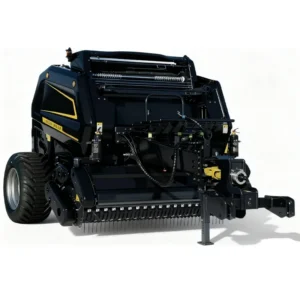
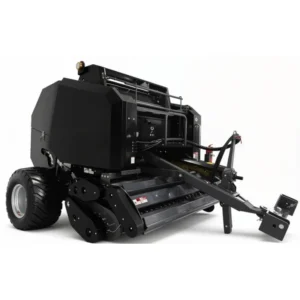
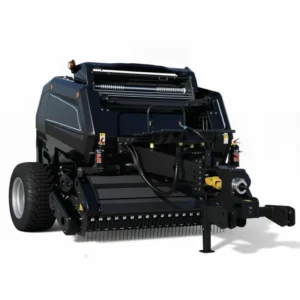
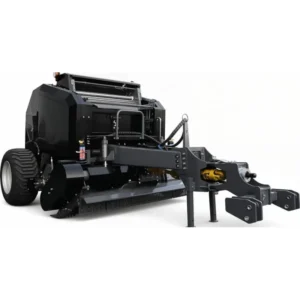
8. Round Baler Models: Matching Pickup Type to Corn Stover Application
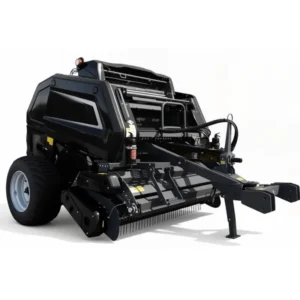
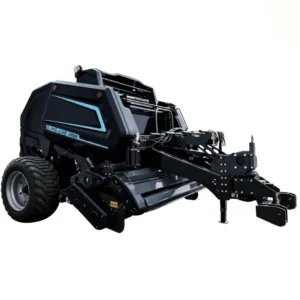
The pickup type and configuration of each model in the current round baler range directly shapes its suitability for corn stover work. The following models are listed with their primary corn stover application context, from largest bale diameter to smallest, and with specific notes on pickup design where it differentiates performance in this crop type.
9. Drive System Components: PTO Shaft and Agricultural Chain for Corn Stover Service
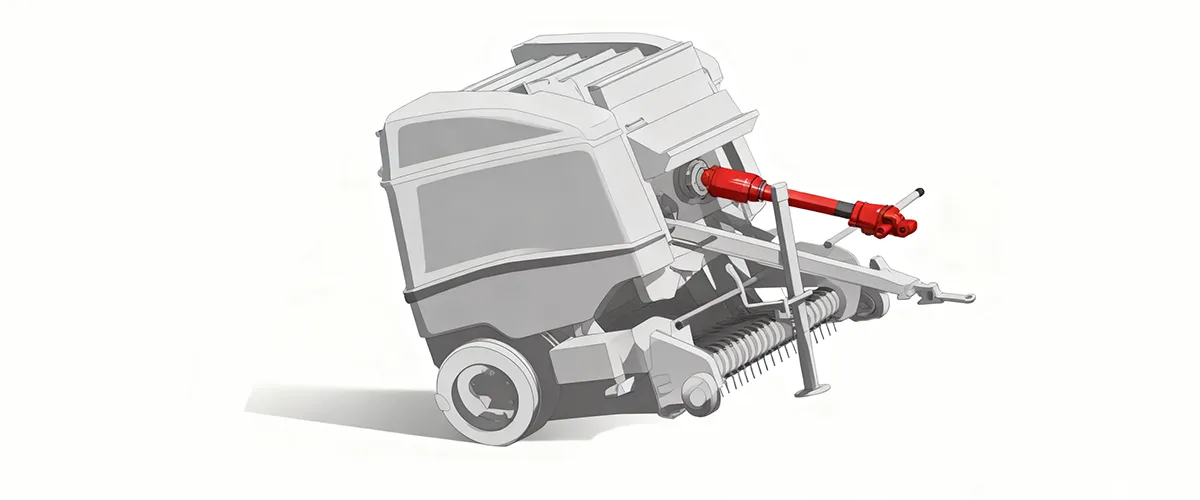
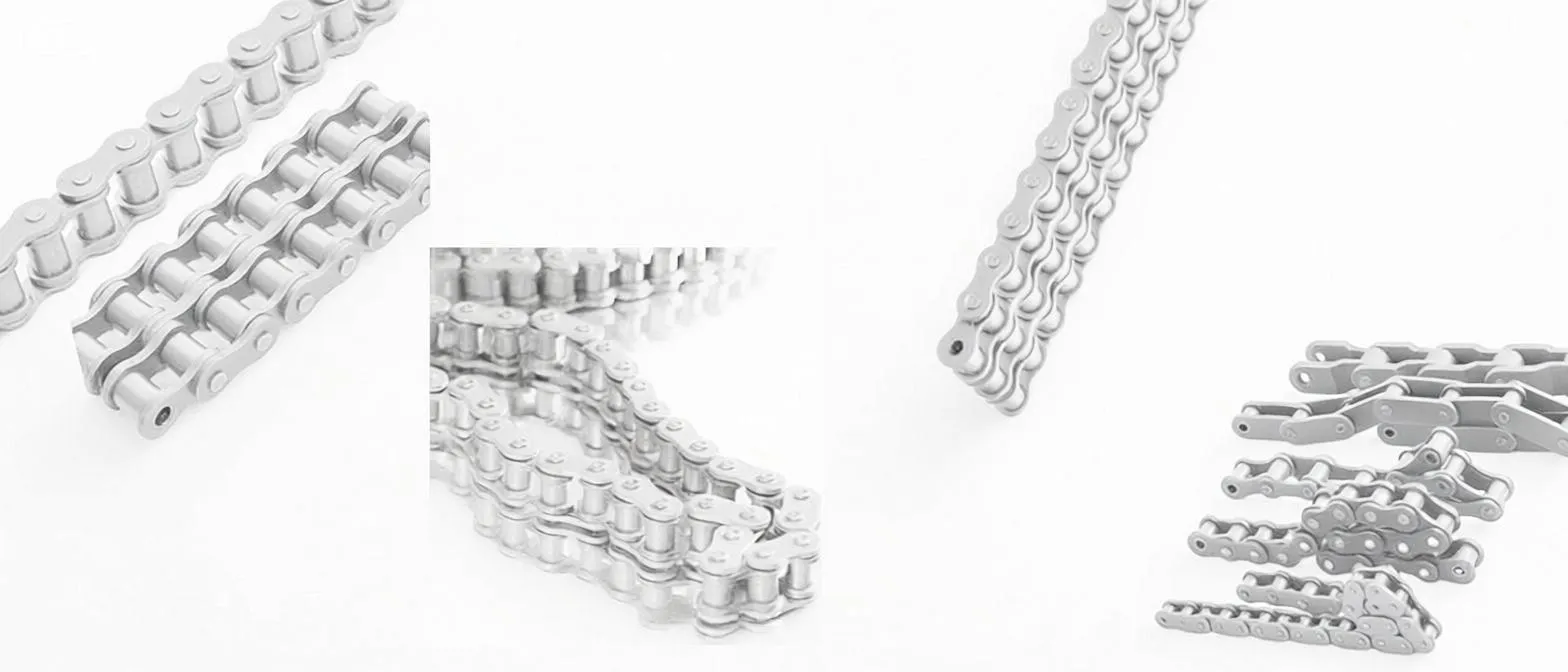
The pickup and bale chamber drive system of a round baler in corn stover service operates at higher sustained torque and more frequent peak loads than in cereal straw. Using a matched PTO shaft and drive chain from the same supply source as the round baler eliminates the dimensional uncertainty of cross-sourcing and provides a single technical contact for drive system configuration, warranty, and replacement parts. The following component categories are supplied to match all models in the current round baler range.
Frequently Asked Questions
Q1. What is the best round baler pickup type for post-harvest corn stover in Korea’s Gangwon highland farming region?
Q2. How do I find a reliable round baler manufacturer that supplies corn stover-specific pickup configurations to Korean agricultural buyers?
Q3. What pickup tine grade and replacement interval should I use for a small round baler running in Korean corn stover conditions?
Q4. What round baler gearbox maintenance does corn stover service require compared to standard hay baling in Korean operating conditions?
Q5. How does the crop capture efficiency of a round baler pickup in dense corn stover compare to what I can expect in cereal straw on the same Korean farm?
Q6. What is the right round baler application approach for handling both corn stover and rice straw on the same Korean farm in the same autumn season?
Q7. What round baler machine specifications should a Korean agricultural cooperative require when sourcing equipment for a shared corn stover baling service?
Q8. When should I consider upgrading from a small round baler with spring-tooth pickup to a round baler with hammer-claw pickup for a growing corn stover operation?
تدوینگر: PXY