Corn Stover Baling | Hammer-Claw Technology | Round Baler Application Guide
How a Hammer-Claw Round Baler Collects Standing Corn Stover Without a Prior Mowing Pass
A technical and operational guide for corn stover management — explaining the engineering principles behind direct collection of standing corn stalks using hammer-claw pickup systems on round balers, covering machine structure, material specifications, operational parameters, regulatory context, and model recommendations for Korean and Northeast Asian corn production areas.
Hammer-Claw Direct Collection
Corn Stover / Korea
1. The Case for Direct Stover Collection: Eliminating the Mowing Pass
In most corn stover management programs, the standard workflow involves two separate field operations: a mowing or chopping pass to cut the standing stalks, and a subsequent baling pass once the cut material is in a windrow. The appeal of this two-step approach is predictability — the baler receives material in a known, relatively uniform windrow format. The problem is the cost. In North Chungcheong, South Jeolla, or Gyeonggi Province in Korea, a separate mowing pass means additional tractor-hours, additional fuel consumption, additional operator time, and an additional weather exposure window during which cut stover on the ground can re-absorb rain or dew. When post-harvest harvest windows are narrow — which they frequently are in Korean autumn, when the window between combine harvest and the first frost or significant rainfall is measured in days — the mowing pass may simply be the difference between getting the stover off the field and leaving it there.
A round baler machine equipped with a hammer-claw pickup system changes this equation by making the mowing pass optional for corn stover collection. The hammer-claw mechanism is specifically engineered to engage, break, and collect standing crop stalks — not pre-cut windrow material — using a downward-striking, raking action that would be impossible for a standard spring-tine pickup. Understanding how this works at the mechanical level, what machine specifications support it, and how it performs in the specific conditions of Korean and Northeast Asian corn production is the purpose of this guide.
2. Standing Corn Stover: What the Machine Has to Work With
After a combine harvester passes through a Korean corn field, the stalks left standing are not uniform cylinders of dried grass — they are the lower portions of a mature corn plant’s structural architecture, with distinct mechanical properties at different heights. At the base, the main stalk has a diameter of 20–35 mm in well-irrigated Korean corn varieties (primarily Gwangpyeong-ok, Danok, and commercial hybrid varieties grown under contract for livestock feed programs). The stalk wall structure at this level is dense lignocellulosic material with a pith core, producing a material that resists bending and fractures rather than deflecting when struck. Higher up the stalk, where the combine’s header has cut, the remaining stump typically stands at 0.4–0.7 m above ground depending on combine header height setting.
The residual leaf and bract material attached to the stalk at node positions adds mass and creates the organic fiber that holds stover value for livestock bedding and composting applications, but it also creates the mechanical complexity for pickup systems: node material tends to wrap around rotating components rather than flowing through, and the combination of stiff main stalk and pliable node material means the pickup must handle two different mechanical responses within the same action. Additionally, Korean autumn corn fields frequently have uneven stalk spacing and irregular row alignment due to the prevalence of double-crop or relay-crop systems where corn follows an earlier rice or vegetable crop in the same field — creating an intake stream that is less geometrically predictable than a monoculture corn field with GPS-guided precision planting.
20–35 mm at the base in Korean corn varieties. Requires hammer-claw force to break loose rather than spring-tine deflection. Base diameter determines the minimum claw impact force needed for consistent stalk separation at the root zone.
0.4–0.7 m remaining stump height after combine harvest at standard header setting. The baler pickup must be set to sweep this height range consistently without ground contact that would pick up soil and increase bale ash content.
Node position leaf sheaths and bract fiber are pliable and wrap around rotating components. The feeder design must provide anti-wrap geometry — smooth shaft profiles, minimal protruding fasteners, and adequate shaft diameter at pickup tine bar locations.
Korean corn following relay crops is planted at 60–80 cm row spacing with variable inter-row gaps. A 2,240–2,400 mm pickup width sweeps three to four row widths per pass, covering enough area to collect a full bale load before headland turns reduce effective throughput.
3. How the Hammer-Claw Pickup System Processes Standing Corn Stover
The fundamental difference between a spring-tine pickup and a hammer-claw pickup is the direction and mechanism of crop engagement. A spring-tine pickup sweeps material from the ground into the feeder using the upward and forward motion of tines as they rotate through the pickup arc — this works for material lying in a windrow because the tines can get under the crop and lift it. Standing stalks present the opposite geometry: the material is above the ground, perpendicular to it, and rooted. A spring-tine following the standard pickup arc simply pushes laterally against the stalk, deflects, and moves past — collecting little to nothing. The hammer-claw operates by a fundamentally different principle: each claw unit strikes downward against the standing stalk at a point above the base, applying a combination of impact and shear force that breaks the stalk at or near the base and simultaneously directs the broken stalk toward the feeder intake. The “hammer” in the name refers to this impact-dominated engagement mode.
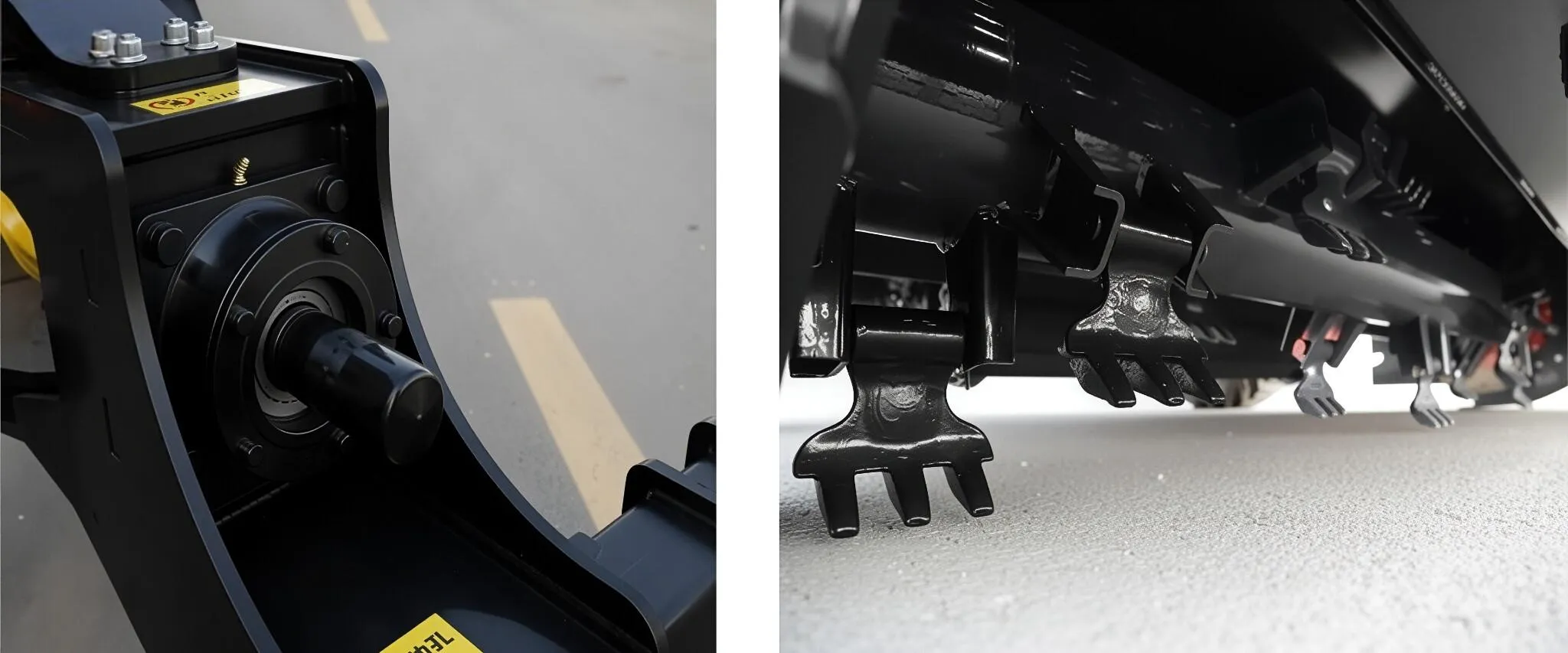
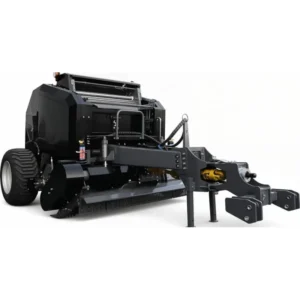
On the 9YG-1.0C round baler, the hammer-claw pickup system consists of 20 individual claw units mounted on rotating tine bars across a 2,400 mm working width. Each claw is cast from high-carbon steel and surface quench-hardened (HRC 50–55) to resist the blunt impact loads that stalk base engagement creates. The claw geometry produces a downward-and-forward striking angle that maximizes the shear force component at the stalk base — the primary separation mechanism — while also providing the forward velocity component needed to direct the broken stalk into the feeder intake rather than simply dropping it back on the ground. The working width of 2,400 mm is wider than the standard spring-tine pickup on the same tractor-baler combination, which is important because direct stover collection requires sweeping a wider swath to accumulate sufficient mass per bale cycle at the slower operating speeds that stover work demands.
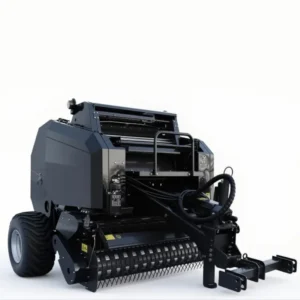
The 9YG-1.25 series round baler provides an interchangeable pickup option — the standard spring-tine assembly and the hammer-claw kit are designed to mount on the same tine bar carrier, allowing conversion in approximately 2–3 hours with basic tools. This interchangeability is particularly valuable for Korean corn farms that also grow rice or hay in rotation, where the baler needs to handle both standing corn stover in autumn and windrow hay or rice straw within the same season without acquiring a dedicated second machine. The conversion maintains the 2,240 mm working width of the spring-tine pickup but provides the hammer-claw engagement mechanics needed for standing stover collection.
4. Manufacturing Structure: What Enables Direct Corn Stover Collection
The ability to collect standing corn stover without a prior mowing pass is not a feature that can be added to an arbitrary round baler machine — it requires specific structural decisions at the pickup, feeder, compression chamber, and drivetrain levels that are either designed in from the start or absent. The 9YG series round balers that carry the hammer-claw system incorporate these decisions at the production design level, not as field adaptations. The following section covers the principal structural subsystems and their specific relevance to standing corn stover collection.
Pickup Assembly Structural Design for Impact Loading
The pickup assembly on the 9YG-1.0C and 9YG-1.25 series must withstand the peak impact loads generated when hammer claws engage corn stalks at 20–35 mm base diameter. These loads are considerably higher per engagement than the sweep loads a spring-tine experiences collecting windrow material. The tine bar carrier is fabricated from structural steel tube with precision-bored bearing seats at both ends — the bore tolerance determines how long the bar runs true before vibration from impact-loading causes bearing race migration that leads to progressive shaft eccentricity and irregular claw strike patterns. For standing stover collection, the pickup rotational axis must remain parallel to the ground to within a few millimeters across the full 2,240–2,400 mm working width, otherwise the claws at different positions along the bar strike at different heights above the stalk base — some too high (above the stalk’s structural weak point), some too low (risking ground contact and soil pickup).
Feeder System for Broken Stalk Segments
After the hammer-claw breaks a corn stalk at the base, the broken segment enters the feeder system with a random orientation relative to the machine’s fore-aft axis. Unlike windrow material where most stems enter roughly parallel to the direction of travel, direct-collected stover segments enter at whatever angle the stalk was standing when the claw struck — often perpendicular or at 45 degrees. The three-element feeder on the 9YG-1.25 (auger, toothed roller, drum) handles this orientation variability better than a single-roller design because the auger applies a lateral reorientation force before the toothed roller advances material into the chamber. The 9YG-1.0C’s feeder system uses a toothed roller plus drum configuration that provides strong directional advance force, which is effective for stover segments in the 200–600 mm length range produced by hammer-claw engagement of corn stalks at combine-cut height. For segments below 150 mm (produced when the claw engages at or near the base), a small proportion tends to drift and creates the characteristic bottom-of-chamber layer of short segments that is normal in direct stover collection and does not affect bale quality for most downstream uses.
Compression Chamber for Corn Stover Characteristics
Corn stover has intermediate mechanical properties between grass hay (highly flexible) and cotton stalks (very rigid). The stalk sections are semi-rigid — they can be bent and will fracture at lower deflection angles than cotton — and the pith core at the stalk interior compresses more readily than the outer lignocellulosic shell. This combination produces a bale formation behavior where the outer shell of each stalk fragment provides the structural skeleton of the bale and the compressed pith and leaf material fills the interstitial space. The 18-roller compression chamber of the 9YG-1.25 and 9YG-2.24D series, with spiral groove surfaces and 222 mm roller diameter, provides adequate grip and compression force for corn stover across the full density range of 115–200 kg/m³. The spiral groove surface profile is particularly important for stover: smooth rollers tend to slip on the shiny outer surface of corn stalk sections, causing the bale to stall during core formation. The spiral groove maintains rotational grip on the stalk exterior even when the stalk is slightly moist from overnight dew — a common condition in Korean autumn corn fields.
Round Baler Gearbox and Drivetrain for Stover Shock Loads
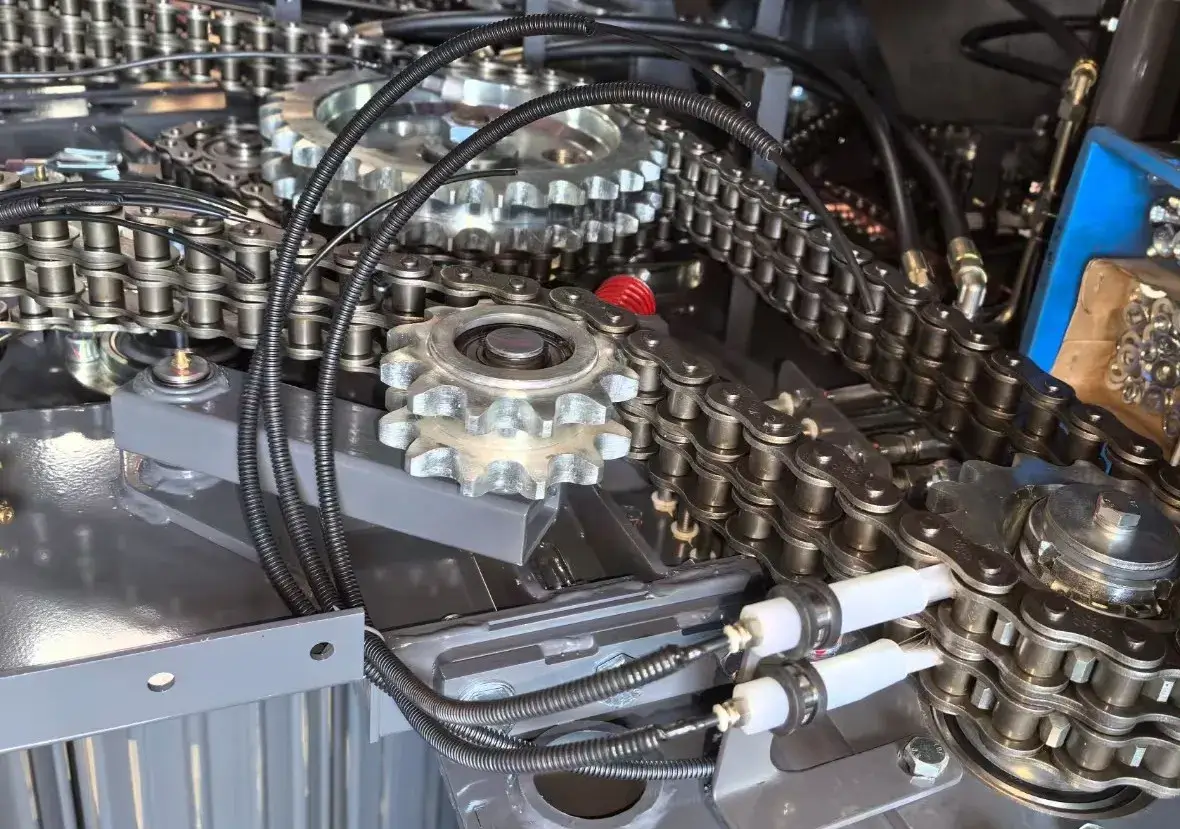
Direct corn stover collection without a mowing pass creates a distinctly variable intake pattern: as the baler progresses across the field, it alternates between high-density zones (where stalks are concentrated) and lower-density gaps (between rows or where irregular planting created spacing variation). This alternating intake pattern produces cyclic torque variation in the drivetrain — periodic spike loads when a dense stalk cluster enters the pickup, followed by lower-torque intervals in the gaps. For the round baler gearbox, this cyclic loading pattern is actually less severe than the sustained high-torque condition of dense cotton stalk service, but the repeated torque transitions from low to high create fatigue loading at gear tooth roots that accumulates over the season. The 9YG-1.0C’s gearbox at its standard specification handles this corn stover loading pattern within rated parameters when paired with the correct tractor (minimum 69.8 kW). The 9YG-2.24D S9000’s 1,000 Nm gearbox and integrated safety torque limiter are more than adequate for corn stover and provide significant fatigue margin that is useful for large-area operations running extended daily hours.
5. Material System: Component Specifications That Support Corn Stover Direct Collection
The material choices in the 9YG series production system that are most relevant to corn stover direct collection differ somewhat from the priorities in cotton stalk applications. Corn stover has lower silica content than rice straw (reducing the abrasive wear problem) and lower woody stem density than cotton (reducing the peak compression torque demand), but its semi-rigid stalk segments combined with pliable node fiber create a specific challenge: moderate abrasion combined with high fiber-wrap tendency. The material specifications below address this combination.
6. Operating Parameters: Ground Speed, Pickup Height, and Field Pattern for Direct Stover Collection
Direct corn stover collection without a mowing pass requires operational adjustments from standard hay baling practice. The most important difference is ground speed — in corn stover service, the machine must move slowly enough that each sweep of the hammer-claw bar encounters only two to three stalks simultaneously. At higher speeds, the claw bar contacts more stalks per revolution, and while the total material collected per unit time is higher, the instantaneous impact force per claw increases proportionally, accelerating claw tip wear and tine bar bearing fatigue. The recommended working speed range for standing corn stover with the 9YG-1.0C is 3–7 km/h — the lower end for dense stalk populations (300+ plants per 100 m row) and the upper end for lighter populations or well-separated row configurations where each claw sweep contacts fewer stalks.
Pickup height setting is the second critical parameter. For standing stover collection, the pickup must be set at a height that allows the claws to engage the stalk at the point of fracture resistance — typically 10–20 cm above the combine’s cut height. Too low and the claws contact the base stub, which may still be partially rooted and requires more force to dislodge, increasing both ground contact and soil pickup that elevates bale ash content. Too high and the claws engage above the structural weak point of the stalk, deflecting rather than breaking the stalk cleanly. The correct height produces a consistent sound pattern from the pickup assembly — a rapid series of discrete crack sounds as each stalk breaks cleanly, rather than a scraping sound (too low, ground contact) or a brushing sound (too high, deflection without fracture). Korean operators who have run both cotton stalk and corn stover programs with hammer-claw pickups report that corn stover height calibration is somewhat easier than cotton because corn stalks have a more consistent fracture point geometry along the stalk height.
7. Corn Stover End Uses and Bale Value in the Korean and Northeast Asian Market
The commercial value of round-baled corn stover in South Korea and Northeast Asia depends primarily on the downstream market the operation is targeting. The largest volume market is livestock bedding — Korean cattle and hog farms use corn stover bales as bedding material, particularly in the October–December period when straw supply from the rice harvest is being processed. Corn stover bales in livestock bedding service command similar values to rice straw bales, typically ranging across the same quality and moisture categories that rice straw buyers use. The material’s higher carbon-to-nitrogen ratio compared to rice straw makes it slightly more durable as bedding — corn stover bales tend to maintain structural integrity under animal traffic longer than rice straw bales of equivalent density.
The second significant market in Korea is compost production. Corn stover’s cellulosic content and relatively low silica level (compared to rice straw) makes it a preferred carbon source in composting operations serving the organic horticulture sector, particularly in the Jeolla and Chungcheong provinces where demand for certified organic soil amendment is growing. Biomass energy remains a smaller but growing channel — the Korean Renewable Portfolio Standard (RPS, 신재생에너지 공급의무화제도) includes agricultural biomass as a qualifying fuel category, and corn stover bales from direct collection programs can be registered as a qualifying fuel source with appropriate certification. Bale specifications for biomass buyers — diameter tolerance, moisture content at delivery, and net wrap type — should be confirmed with the specific buyer before finalizing the density target setting on the baler’s sensor control system.
8. Round Baler Models for Corn Stover Direct Collection
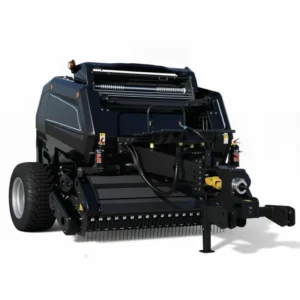
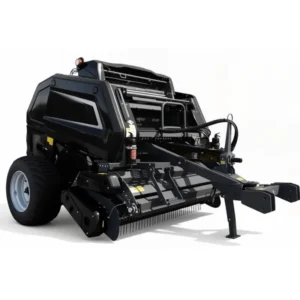
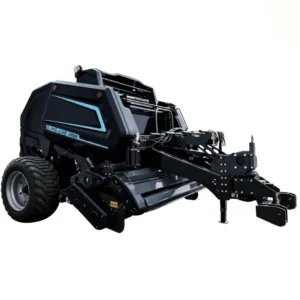
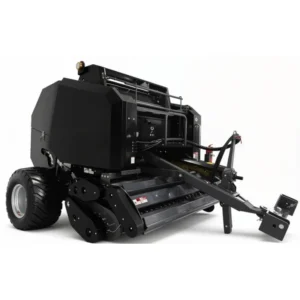
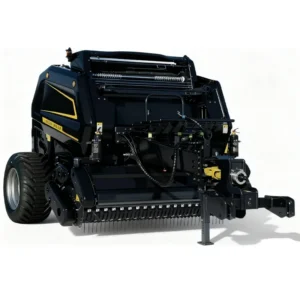
The following models cover the full range from compact small round balers suited to Korean farm-scale corn stover programs to high-capacity units for large consolidated operations.
9. Regulatory Context: Corn Stover Burning Restrictions and Machinery Standards
Open burning of corn stover after harvest is subject to increasing regulatory restriction across the major corn-growing markets globally, and understanding this regulatory environment is relevant both for compliance planning and for establishing the commercial justification for mechanical stover collection programs at scale.
South Korea — Clean Air Act and Agricultural Machinery Standards
South Korea’s Clean Air Conservation Act (대기환경보전법) prohibits open-field burning of agricultural residue, including corn stover, during designated enforcement periods enforced by provincial governments across Chungcheong, Jeolla, and Gyeonggi. For corn stover programs seeking Rural Development Administration financing (농기계 구입자금 융자, 1.5–2.0% per annum), the baling machinery must meet Korean Agricultural Machinery Safety Standards under KS B 6007 and the Agricultural Mechanization Promotion Act (농업기계화 촉진법). The round baler gearbox and PTO shaft guarding must conform to the safety requirements specified in these standards — specifically the requirements for enclosed transmission components and operator zone protection that are common to the Korean and international standards in this product category. The Korean RPS (신재생에너지 공급의무화제도) includes agricultural biomass as a qualifying renewable fuel, creating a commercial channel for corn stover bales supplied to qualifying biomass power plants.
Japan — Prefectural Burn Bans and MAFF Standards
Japan’s Air Pollution Control Act and prefectural-level agricultural residue burn bans extend to corn stover in many major corn-growing prefectures including Hokkaido, Iwate, and Miyagi. The Ministry of Agriculture, Forestry and Fisheries (MAFF) maintains performance standards for agricultural machinery registered in the National Agricultural Machinery Performance Database, and machines meeting these standards have improved access to the Agri-Innovation Program subsidies. Corn stover baling for livestock bedding supply chains in Hokkaido — where the livestock-to-arable ratio is high and stover demand is consistent — is the most established end market for stover baling programs in Japan.
European Union — Stover Management Under CAP
In EU member states that grow significant corn areas — France, Italy, Hungary, Romania, Poland — the Common Agricultural Policy’s Good Agricultural and Environmental Conditions (GAEC) requirements generally discourage or restrict open burning of crop residue as a cross-compliance condition for subsidy payments. The specific GAEC rules vary by member state implementing regulation, but the general principle is that farmers receiving CAP direct payments cannot openly burn crop residue on their supported land parcels. This creates ongoing demand for mechanical stover collection and baling across the EU corn belt. Agricultural machinery including round balers entering these markets must carry CE marking under Machinery Directive 2006/42/EC, with gearbox safety compliant with EN 703 and PTO shaft protection under EN 12965.
United States — State-Level Field Burning Regulations
In the United States, corn stover field burning is regulated at the state level. Iowa, Illinois, Indiana, and Nebraska — major corn stover producing states — have varying degrees of burn permit requirements or outright restrictions in certain air quality management districts. The federal Farm Bill’s conservation title supports corn stover collection through cost-share programs for conservation tillage practices, and the USDA NRCS (Natural Resources Conservation Service) has published corn stover harvest guidelines that specify removal rates compatible with soil health maintenance. For imported round balers entering the US market, OSHA agricultural machinery safety requirements apply, and State Department of Agriculture machinery safety programs in some states require registration and inspection of commercially operated harvesting equipment.
10. Compatible Components: Agricultural PTO Shaft and Drive Chain
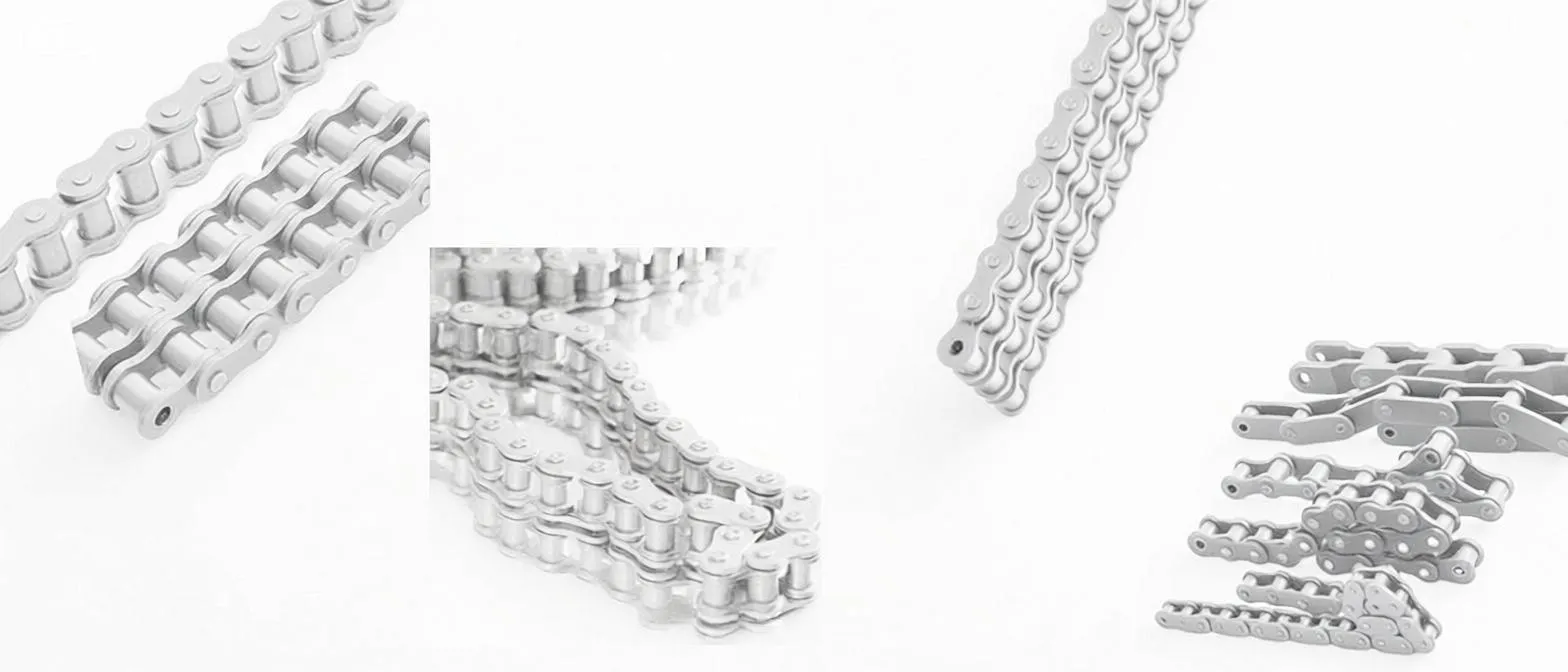
Direct standing corn stover collection places different demands on the PTO shaft connecting the tractor to the round baler than windrow baling does. The cyclic torque variation from intermittent stalk cluster engagement — high load during each claw sweep through a dense row zone, lower between rows — creates a dynamic shaft loading pattern that requires an overrunning clutch on the Agricultural PTO Shaft for round balers to absorb the inertia release at the end of each high-load phase. Without an overrunning clutch, these inertia releases transmit back to the tractor PTO gearbox as reverse torque pulses — a cumulative fatigue loading that accelerates tractor PTO wear in sustained stover service. Agricultural chain in 16A (feeder) and 20A (rear chamber) factory specifications ensures that the drive system maintains rated capacity through the seasonal accumulation of cyclic load events from direct stover collection.
Overrunning clutch prevents reverse torque from inertia release during cyclic corn stover loading events. Reduces tractor PTO gearbox fatigue in sustained standing-stover direct collection.
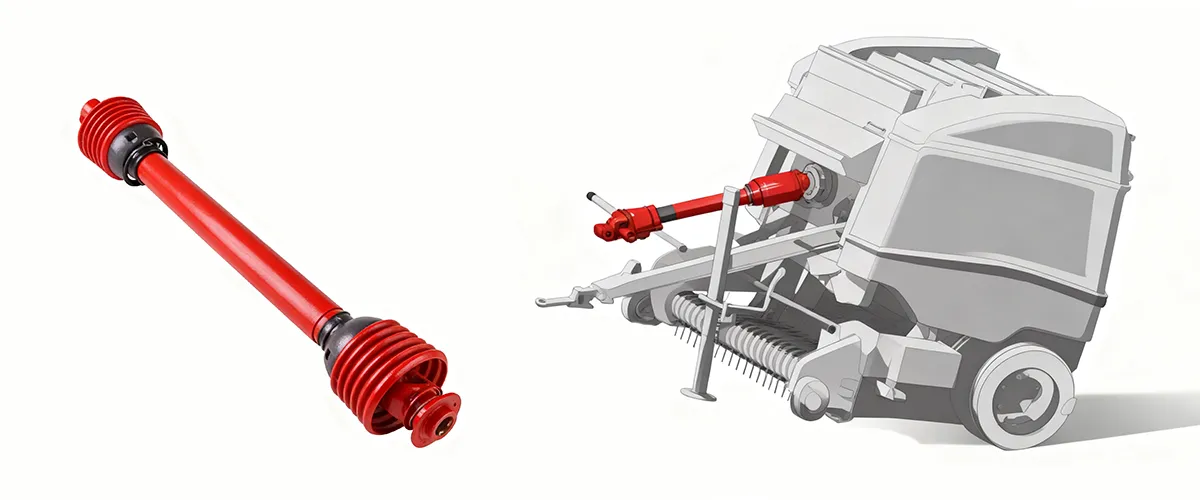
Corn node fiber migrates into chain link joints faster than most other crops; surface-hardened pin chain specification extends replacement intervals in continuous direct stover service. Available as complete machine-specific kits in 16A (feeder) and 20A (rear chamber) grades for all 9YG series models.
Frequently Asked Questions
Find the Right Round Baler for Your Corn Stover Program
Our technical team can recommend the correct hammer-claw model for your corn variety, field size, and tractor, and provide Korean RDA loan documentation and pre-season parts kit planning support.
تدوینگر: PXY