Rice Farm Investment Analysis — Round Baler ROI Guide
A structured financial and operational guide for Korean rice farmers, agricultural cooperatives, and contracting businesses evaluating the return on investment of transitioning from field burning to mechanised round baler operations — covering costs, income streams, subsidy capture, and payback calculation.
1. Why ROI Calculation Matters Before You Invest in a Round Baler
The decision to move a 100-hectare rice farm from open burning to mechanised baling is not primarily an emotional or regulatory one — it is, at its core, a capital allocation decision. The round baler machine, the operating fuel, the labour, the net wrap consumables, the raking pass — these all have real costs. And against them stand the bale revenues, the government direct payments, the avoided burning fines, the preserved agricultural direct payment entitlements, and in some cases the biomass energy contract income. Working out whether the investment makes financial sense — and over what time horizon — requires methodical calculation, not assumption.
This guide walks through a realistic ROI model for a 100-hectare Korean rice paddy operation switching from field burning to round baler straw collection. The inputs are built from actual field parameters: typical Korean autumn straw yield, realistic bale output rates for the 9YG-2.24D class machine, current subsidy and bale market conditions, and actual ownership costs. The goal is to give you a replicable calculation framework — one you can adjust to your own farm’s specific conditions — rather than a promotional figure designed to make the investment look better than it is. Rice straw baling can generate a genuinely attractive financial return. The numbers need to show it, not just the headline claims.
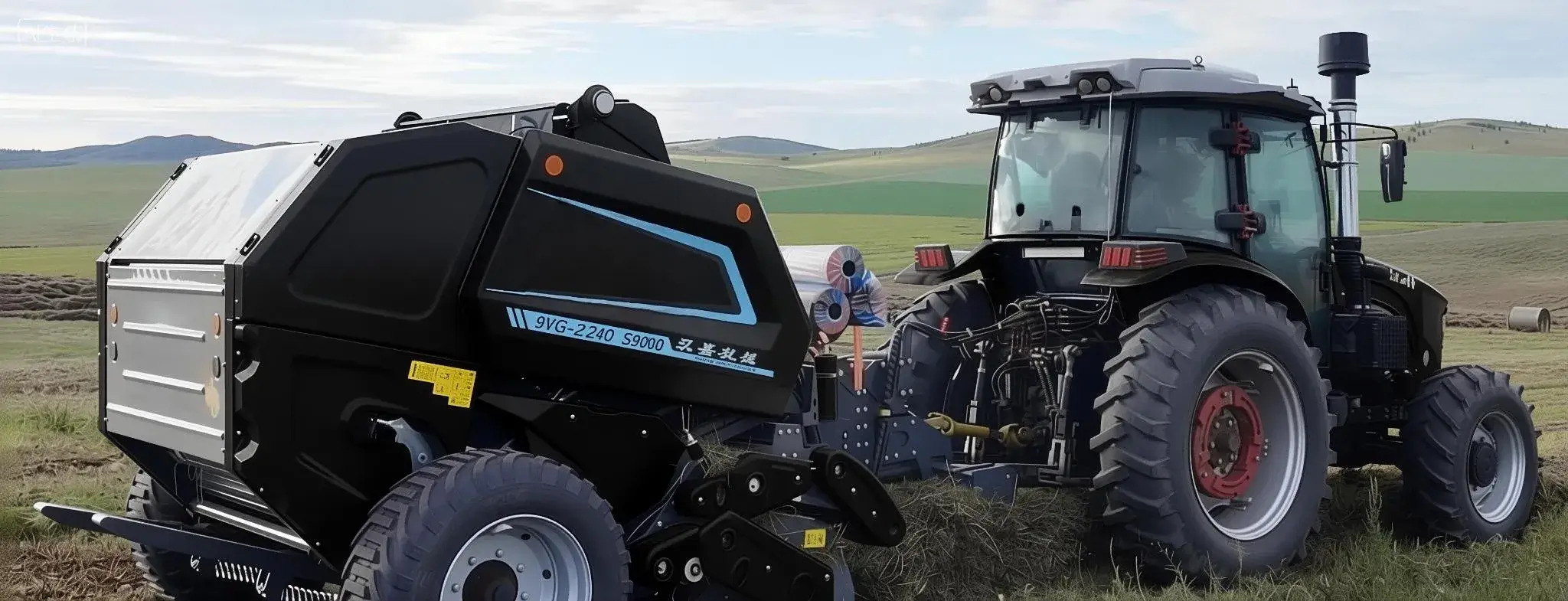
The model below uses the 9YG-2.24D round baler as the reference machine — a mid-to-high capacity traction-type round baler producing φ1300×1400 mm bales at 100–200 kg/m³ density, with a rated output of 40–100 bales per hour and a power requirement of 55–100 kW (75–135 HP). The 9YG-2.24D is the most commonly specified machine for 100-hectare scale commercial straw collection contracts in Korea’s principal rice-growing provinces. Where figures apply differently to smaller models (9YG-1.0, 9YG-1.25A), those differences are noted.
Step 1 — Defining Your Input Variables
Every ROI model is only as reliable as its input assumptions. The following baseline parameters are representative of a 100-hectare Korean paddy operation in a major rice-growing region (Chungnam, Jeonbuk, or Gyeonggi provinces) using a 9YG-2.24D class round baler. Adjust each figure to reflect your specific farm’s conditions before applying the calculations.
| Input Variable | Baseline Value | Notes |
|---|---|---|
| Total paddyarea | 100 hectares | Single-crop paddy, autumn harvest |
| Dry straw yield per hectare | 4.5 tonnes DM/ha | Korean national average: 4–6 t DM/ha |
| Total straw available | 450 tonnes DM | 100 ha × 4.5 t DM/ha |
| Bale size (reference machine) | φ1300 × 1400 mm | 9YG-2.24D series standard |
| Target bale density | 130 kg/m³ | Meets direct payment and biomass spec |
| Bale volume (φ1300, L1400) | ~1.86 m³ | π × (0.65)² × 1.4 |
| Gross bale weight (at 15% moisture) | ~242 kg gross | 130 kg/m³ × 1.86 m³ |
| DM per bale (85% DM correction) | ~206 kg DM | 242 × 0.85 |
| Total bales from 100 ha | ~2,180 bales | 450,000 kg DM ÷ 206 kg DM/bale |
| Operating days for baling | 8–10 days | 8 h/day × 30 effective bales/h practical rate |
| Diesel consumption | ~8–12 L/ha | Tractor + baler combined field operation |
| Net wrap consumption | ~9–11 rolls | ~200–250 bales per 2000 m roll |
Step 2 — The Cost Side: What You Actually Spend
The complete cost picture for a 100-hectare baling operation covers capital costs, operating costs, and opportunity costs. Many farmers underestimate total cost by focusing only on the machine purchase price and missing the ongoing operational expenditure. The framework below captures all material cost categories for an owner-operator using a 9YG-2.24D class round baler purchased with a 30% government machinery subsidy applied.
Capital costs for the round baler machine — before subsidy — sit in the range appropriate for a full-specification commercial traction-type roller baler with sensor density control, camless pickup, and net wrap system. With a 30% subsidy applied through the Korean agricultural machinery purchase programme (농기계 구입보조), the net capital outlay reduces correspondingly. This capital should be amortised over the machine’s useful life, which for a well-maintained 9YG-2.24D class machine operating at Korean seasonal intensity (6–8 weeks per year of high-intensity use) is realistically 8–12 years. Annual amortisation is therefore a fraction of the capital cost — less than many operators assume when they see the full machine price. The rake or tedder needed for windrow formation before baling adds a separate but more modest capital line; many Korean paddy operations already own or have cooperative access to raking equipment, so this cost may be zero or shared.
Operating costs per season are dominated by four categories: diesel fuel for the tractor during baling and raking operations; net wrap consumables at approximately 9–11 rolls per 100-hectare operation; labour, which for owner-operators is an opportunity cost rather than a cash cost but should be included for a complete picture; and annual maintenance, which covers chain tensioning, oil changes, tine inspection, and bearing replacement across the machine’s service intervals. Round baler parts for the 9YG series use standard Korean-market chain sizes (16A and 20A) and standard agricultural tine specifications, which keeps maintenance costs competitive compared to machines using proprietary component formats.
| Cost Category | Basis | Annual Estimate |
|---|---|---|
| Machine amortisation (post-subsidy) | Net capital ÷ 10-year life | Annual fraction of purchase cost |
| Diesel fuel (tractor + baling + raking) | ~10 L/ha × 100 ha | 1,000 litres per season |
| Net wrap (2,180 bales ÷ 220/roll) | ~10 rolls × market rate | Seasonal consumable cost |
| Labour (baling, raking, bale handling) | ~10 days × operator + helper | Owner-operator opportunity cost or hired rate |
| Annual maintenance and round baler parts | Chains, tines, oil, bearings | 2–4% of machine capital per year |
| Rake / windrow formation (if outsourced) | Contract rate per hectare | Optional — zero if own rake |
| Bale transportation (to buyer) | Distance-dependent; 2,180 bales | Often negotiated as buyer-arranged |
Step 3 — The Income Side: All Revenue Streams from 100 Hectares of Baled Straw
The income side of the baler ROI calculation is more complex than most farmers initially expect, because there are multiple independent revenue and saving streams that together build the total return. Capturing all of them requires understanding each programme’s eligibility criteria and delivery requirements — but the effort is worthwhile, because the combined income from a well-structured 100-hectare baling operation significantly exceeds what a simple bale-sale calculation would suggest.
The primary income stream is bale sales — either to a regional livestock cooperative for feed use, or to a biomass energy facility under a seasonal supply contract. Livestock cooperatives typically purchase bales on a gross weight basis with a moisture discount applied above 18%. Biomass energy facilities purchasing under the Renewable Portfolio Standard (RPS) programme may offer longer-term forward agreements with fixed unit rates, providing more predictable seasonal cash flow. For a 100-hectare operation producing approximately 2,180 bales, the choice of buyer has a significant effect on total seasonal revenue. Establishing relationships with multiple potential buyers before the harvest season — rather than seeking spot buyers post-harvest — is one of the most impactful financial decisions an operator can make.
The government direct payment for preserved field fodder (들녘경영체 직불금) is a per-bale subsidy paid by the Ministry of Agriculture, Food and Rural Affairs upon verified delivery to a registered receiver. Bales must meet minimum density and physical condition standards at the point of acceptance to qualify. For 2,180 qualifying bales, this payment represents a meaningful second income line that is independent of the bale sale price and adds directly to the operation’s total return.
Avoided costs also belong on the income side of the ledger — they represent real financial value even though they do not appear as cash received. These include: avoided fines under the Clean Air Conservation Act (up to KRW 1,000,000 per burning incident, with multiple incidents possible across a 100-hectare operation if burning were conducted in stages); and retained Basic Agricultural Income Support direct payment entitlements, which require no-burn compliance as a condition. For a 100-hectare farm receiving meaningful direct payment amounts, the financial value of retaining these entitlements through compliance is often larger than the direct payment income from bale sales.
| Income / Saving Stream | Quantity Basis | Revenue Type |
|---|---|---|
| Bale sales (livestock / biomass) | ~2,180 bales × market rate | Cash income — primary revenue |
| Direct payment — preserved fodder | Per-bale subsidy × qualifying bales | Government subsidy — separate from bale sale |
| Retained Basic Agricultural Income Support | Annual direct payment entitlement per ha | Avoided loss — compliance value |
| Avoided field burning fines | Avoided fine risk per incident | Avoided cost — risk elimination |
| Contract baling services to neighbours | Per-hectare or per-bale service fee | Additional income — machine utilisation |
| Carbon credit (Korean ETS, if registered) | Verified emission reduction units | Additional income — requires registration |
Step 4 — Building the ROI Calculation: Payback Period and Annual Return
With the cost and income frameworks established, the ROI calculation flows from a straightforward formula. The key metrics are: annual net income (total income minus total operating costs, excluding capital amortisation); payback period (net capital cost divided by annual net income); and return on invested capital (annual net income as a percentage of net capital cost after subsidy).
The most important variable affecting payback period is whether the operator bales only their own 100 hectares or offers contract baling services to neighbouring farms. A round baler operating for 8–10 days on 100 hectares of owned paddy is highly efficient per hectare but leaves the machine idle for most of the harvest season. The same machine extended to 250–400 hectares of paddy through contract services operates for 20–35 days — generating additional revenue that dramatically accelerates capital recovery without proportional cost increase, since the machine’s fixed capital cost is spread across a larger income base. Korean paddy regions where fields are fragmented across many small owners are particularly well-suited to contract baling business models, and this is increasingly how the round baler economics work in practice in Korea’s central rice-growing provinces.
For a 100-hectare own-farm operation using a 9YG-2.24D class machine with a 30% purchase subsidy applied, realistic payback periods range from 3 to 5 years when bale income plus government direct payments are captured fully, and from 2 to 3 years when the machine is additionally used for contract services at 150–300 additional hectares per season. This range reflects the variation in local bale market rates and subsidy amounts across different Korean provinces — operators in regions with strong livestock feed demand (Gyeonggi, Chungnam) tend to achieve faster payback than those in provinces where biomass energy is the primary buyer channel.
| Scenario | Hectares Baled/Year | Approximate Bale Volume | Estimated Payback Range |
|---|---|---|---|
| Own farm only — 30% subsidy | 100 ha | ~2,180 bales | 3–5 years |
| Own farm + 100 ha contract — 30% subsidy | 200 ha | ~4,360 bales | 2–3 years |
| Own farm + 200 ha contract — 40% subsidy | 300 ha | ~6,540 bales | 1.5–2 years |
| Cooperative pool — multiple machines | 500+ ha (shared) | 10,000+ bales combined | 1–2 years per machine |
2. Manufacturing Structure: What You Are Actually Buying
An ROI calculation is only meaningful if the asset being evaluated performs as modelled. The manufacturing structure of the round baler — the specific mechanical architecture — determines whether the machine actually achieves the output rates and density consistency that the financial model assumes. Understanding what is inside the machine is part of responsible investment analysis, not just a technical curiosity.
Pickup and Intake System
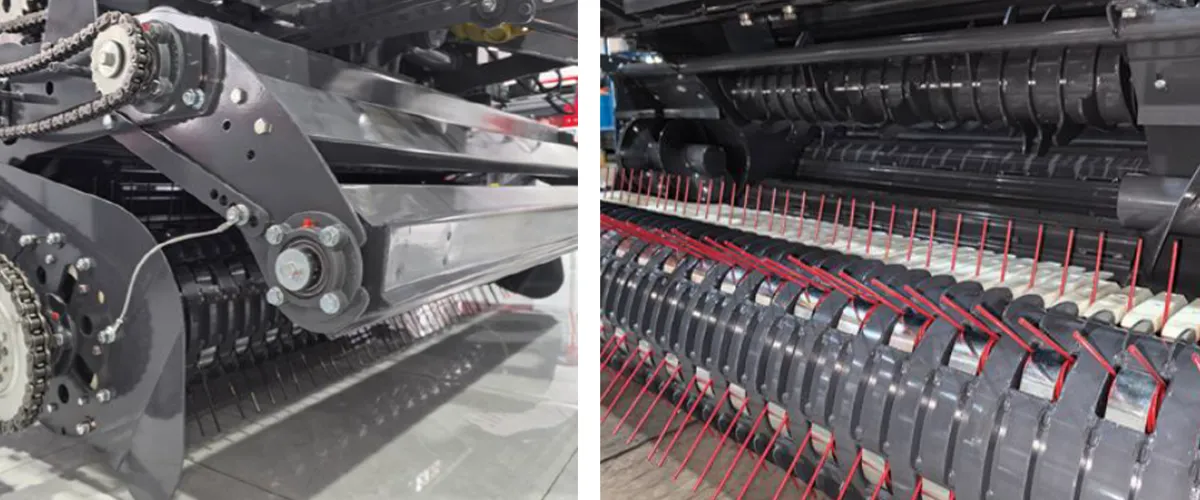
The 9YG-2.24D series uses a camless pickup mechanism — a proprietary axial-flow design that removes the cam track and guard ring assembly found in conventional baler pickups. For rice straw, this matters because conventional cam tracks accumulate straw material within 15–20 minutes of operation, progressively reducing intake capacity and eventually causing a full block that requires field-side disassembly to clear. Each plug event costs 15–25 minutes of productive time. At a modelled output of 30 effective bales per hour over an 8-hour day, two plug events reduce daily output by roughly 10–15 bales — a meaningful reduction in seasonal throughput that compounds across 8–10 operating days. The camless design eliminates this failure mode, which is a direct financial contribution to the ROI calculation: fewer downtime events means the output assumption in the model is more likely to be achieved in practice.
Sensor-Controlled Density System
The sensor-controlled density system on the 9YG-2.24D series monitors chamber pressure continuously and triggers the net-wrap cycle automatically when the preset target density is reached. This has a direct financial implication: bales produced under sensor control are consistently within the target density band — meaning virtually all bales qualify for direct payment and bale sale eligibility, rather than a variable proportion that depends on operator judgement. Without sensor control, density variance of ±20–30 kg/m³ is typical across a day’s production, which means some bales fall below buyer minimums and must be discounted or rejected. Across 2,180 bales, consistent versus inconsistent density can represent a meaningful difference in total qualifying bale count and therefore in total income.
Net Wrap Automation
The automatic net wrap system in the 9YG series engages, wraps, and cuts without operator intervention between bale cycles, which keeps the machine’s productive rhythm consistent and reduces fatigue-related throughput decline over a long operating day. For a 100-hectare operation modelled at 2,180 bales over 8–10 days, operator fatigue is a real productivity variable — and the automation of wrap cycles is one of the engineering choices that makes the high end of the bale-per-hour range achievable in practice rather than just in theory.
3. Material System: Engineering Durability Into the ROI Assumption
A 10-year amortisation period for the round baler is only a realistic assumption if the machine’s material quality supports a service life of that length at Korean harvest intensities. The material system of the 9YG-2.24D Classic model is specifically engineered for sustained high-intensity operation — and the specific material choices have financial implications for maintenance costs and machine life within the ROI model.
The rear chamber drive in the 9YG-2.24D Classic uses dual-side 20A heavy-duty roller chain — a chain standard rated for significantly higher radial loads than the 16A chains used in lighter-duty machines. In a 100-hectare rice straw operation running 8–10 days at high intensity, chain elongation is the primary drive system wear variable. Standard 16A chain in a high-density baling application can require tensioner adjustment every 2–3 days and may need replacement within 2–3 seasons. 20A chain in the same application typically goes 4–5 seasons before replacement is needed, and requires less frequent tensioner intervention. Across a 10-year machine life, the reduced chain replacement frequency represents a real reduction in annual maintenance cost — improving the annual net income figure in the ROI model.
The structural frame is manufactured through CNC laser cutting and automated welding with electrostatic powder coating — a chemical bonding surface treatment that resists the alkaline paddy mud environment better than conventionally painted frames. Frame corrosion is one of the leading causes of premature machine retirement in Korean paddy conditions, and a machine that remains structurally sound through 10 seasons retains residual asset value that contributes positively to the total return on investment calculation. The dual cross-joint PTO drive shaft with integrated torque limiter protects the gearbox from overload events — preventing the costly drivetrain failures that can shorten effective machine life and introduce unplanned capital replacement costs into the ROI timeline.
4. Round Baler Gearbox Design and International Regulatory Compliance
The round baler gearbox converts tractor PTO rotation into the multiple internal drive circuits that power the rollers, pickup, net-wrap mechanism, and hydraulic systems. In a commercial rice straw operation, gearbox reliability directly supports the output rate assumptions embedded in the ROI model — an unplanned gearbox failure during the harvest window represents both an immediate repair cost and a loss of productive days that cannot be recovered within the season’s weather window.
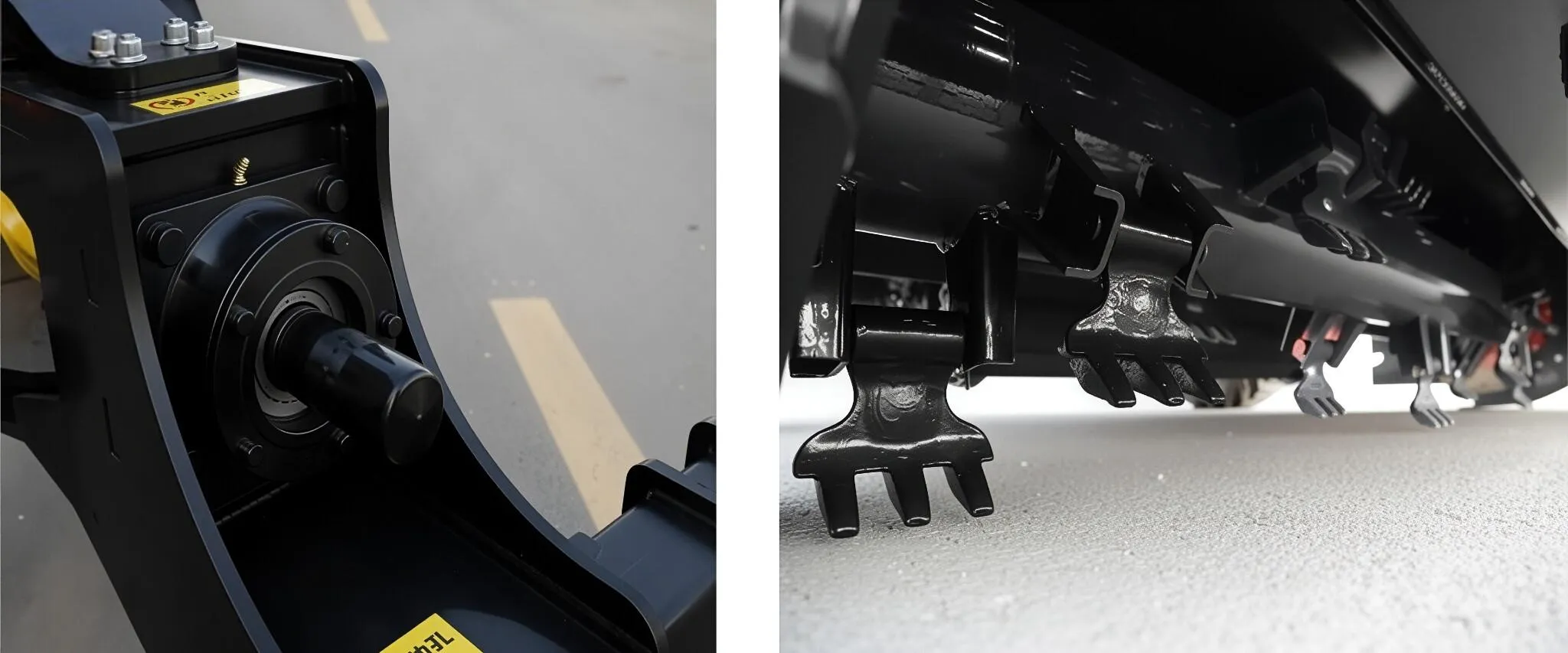
The single gearbox configuration on the 9YG-2.24D standard model transmits PTO power through a bevel gear set at 720 r/min output. The housing is externally accessible without major disassembly, which allows oil level checks and condition inspections at the daily maintenance stop. SAE 90 GL-4 gear oil (or equivalent Korean-market product from GS Caltex, S-OIL, or SK Lubricants) is the correct specification — a product available from any Korean automotive supplier without special ordering, keeping routine oil service straightforward even in remote rural locations.
The dual gearbox on the 9YG-2.24D Transcend model adds mechanical complexity but delivers a specific operational benefit for fragmented Korean paddy parcels: independent ±90° lateral rotation of each gearbox allows sharp headland turns without PTO shaft binding or power interruption. In a 100-hectare operation across multiple small parcels with short headlands — which is the typical land structure in Korea’s central rice-growing regions — this reduces non-productive turning time by an estimated 15–20% over the full operating period, improving the actual daily bale count toward the upper end of the 40–100 bales/hour rated range.
| Market | Relevant Regulation | Gearbox / PTO Requirement |
|---|---|---|
| کره جنوبی | Agricultural Mechanisation Promotion Act; Safety Standards for Agricultural Machinery (농업기계 안전기준) | PTO shaft guarding; gearbox certification for subsidy eligibility; oil change documentation required |
| European Union | Machinery Directive 2006/42/EC → EU Machinery Regulation 2023/1230; EN ISO 11684 | CE marking; Declaration of Conformity; PTO coupler EN 9:2016; safety signage compliant |
| Japan | Agricultural Machinery Safety Standards; JAS conformity | JAS safety mark; PTO cover integrity; gearbox oil specification documented |
| United States | ASABE S331.4; OSHA 29 CFR 1928.57 | PTO master shield; gearbox torque rating ≥ peak tractor PTO output; operator manual requirement |
| Vietnam / Thailand (ASEAN) | National agricultural machinery safety and import standards | Country-specific import certification; tropical climate lubricant specification for gearbox (SAE 90+ recommended) |
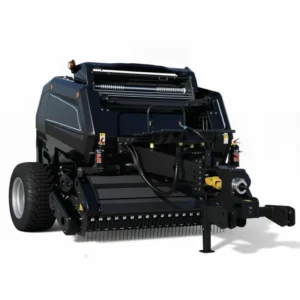
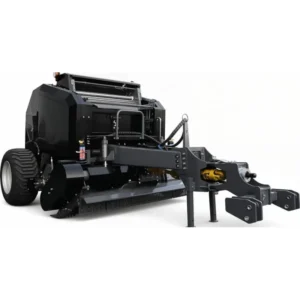
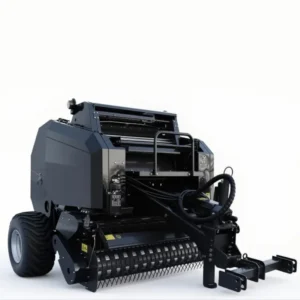
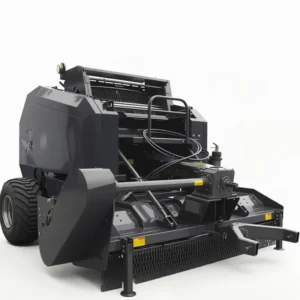
5. Round Baler Models: Matching Machine Specification to Your ROI Target
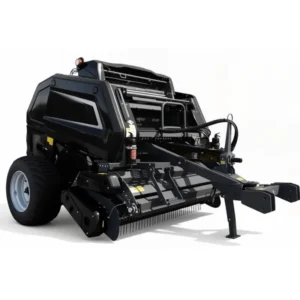
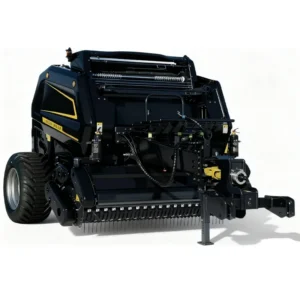
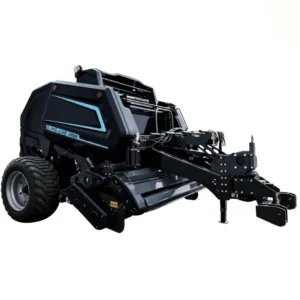
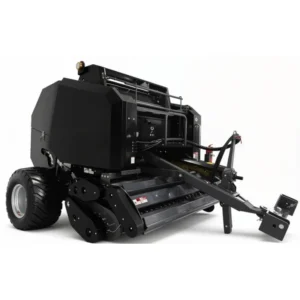
The right model selection is itself a financial decision — oversizing or undersizing the machine relative to your operational volume affects both capital cost and throughput efficiency. The following models span the range from compact small round baler options for smaller farms to high-capacity commercial machines for large contractors and cooperatives.
6. Accelerating Payback: Contract Baling as an Additional Revenue Stream
The single most effective lever for improving the round baler ROI calculation is extending machine utilisation beyond own-farm operations through contract baling services. A round baler operating for 8–10 days on 100 hectares of owned paddy has significant unused capacity — the machine is capable of 40–100 bales per hour and the harvest window in most Korean provinces spans 5–7 weeks. Offering contract baling to neighbouring farms within a 10–20 kilometre service radius converts idle capital into active income without requiring any additional equipment investment.
Contract baling in Korean paddy regions is typically priced on a per-bale or per-hectare basis, with the baler operator bringing the machine, operating it, and ejecting bales in the field for the landowner to handle. The landowner handles their own raking (windrow formation) and bale collection and transport. This division of labour allows the baling contractor to move efficiently from one farm to the next within the harvest window, maximising machine utilisation. At 150 additional hectares of contract baling, the round baler’s annual income contribution roughly doubles, while operating costs increase by only fuel, net wrap, and labour — not capital. The ROI calculation for a 100-hectare operation with 150 ha of contract services shifts from 3–5 year payback to under 2 years in most Korean market conditions.
Building a contract baling network requires advance relationships with neighbouring landowners — ideally established before the harvest season through local agricultural cooperative networks (농협) or regional agricultural extension office introductions. Many Korean rice regions have established informal baling contractor directories, and extension officers are often useful connectors. Pricing should be set to cover fuel, net wrap, and labour costs plus a reasonable hourly rate for the machine — and should reflect the density guarantee that a well-maintained round baler with sensor control can offer, which smaller-scale or older equipment cannot match reliably.
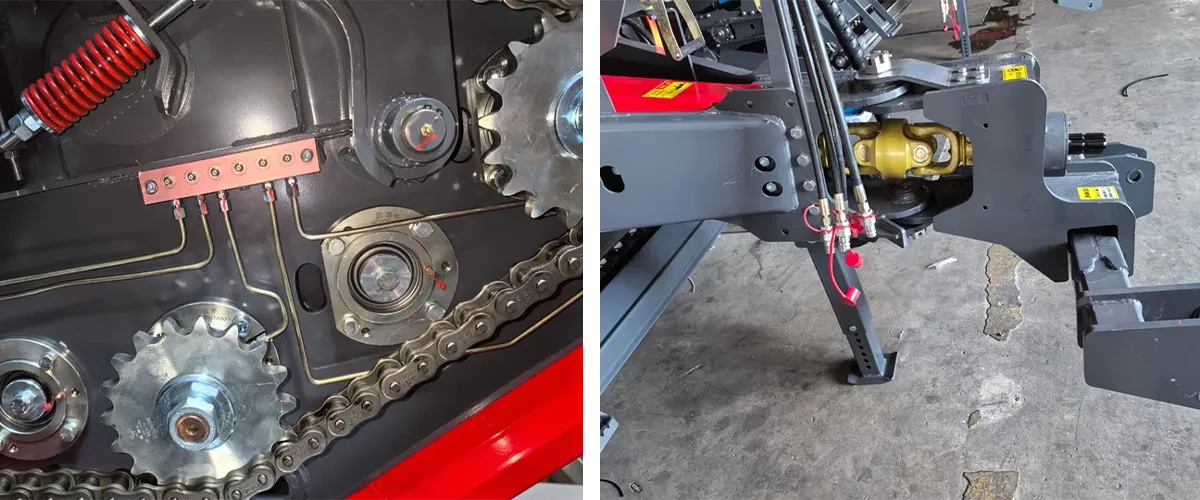
7. Compatible Systems: PTO Shafts and Agricultural Chain for Complete Drivetrain ROI
A complete ROI calculation includes the full drivetrain, not just the baler body. Matched PTO shaft and drive chain components from the same system supply chain reduce the risk of compatibility-related failures that create unplanned repair costs — protecting the operating cost assumptions in your payback model.
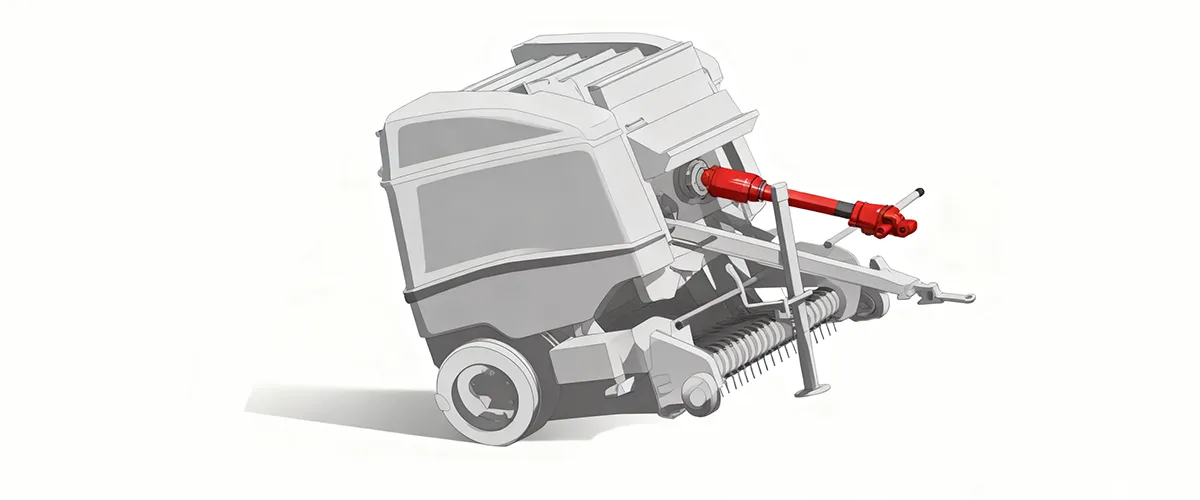
Agricultural PTO Shaft — System-Matched
A correctly rated Agricultural PTO Shaft for Round Balers is the link between tractor power and baler performance. Under-rated shafts fail under peak compression load — a mid-season failure that costs both repair time and baling days that cannot be recovered. Our PTO shaft range is torque-rated and cross-joint-angled to match the 9YG series specifications exactly, covering the standard single-gearbox configuration and the dual gearbox variant on the Transcend model. Safety clutch specification matches peak Korean tractor PTO output ratings for LS Mtron, TYM, Kukje, and Branson models. Including a correctly specified PTO shaft in the initial equipment procurement eliminates one of the most common causes of unplanned downtime costs in Korean commercial baling operations — keeping your operating cost assumptions intact across the modelled payback period.
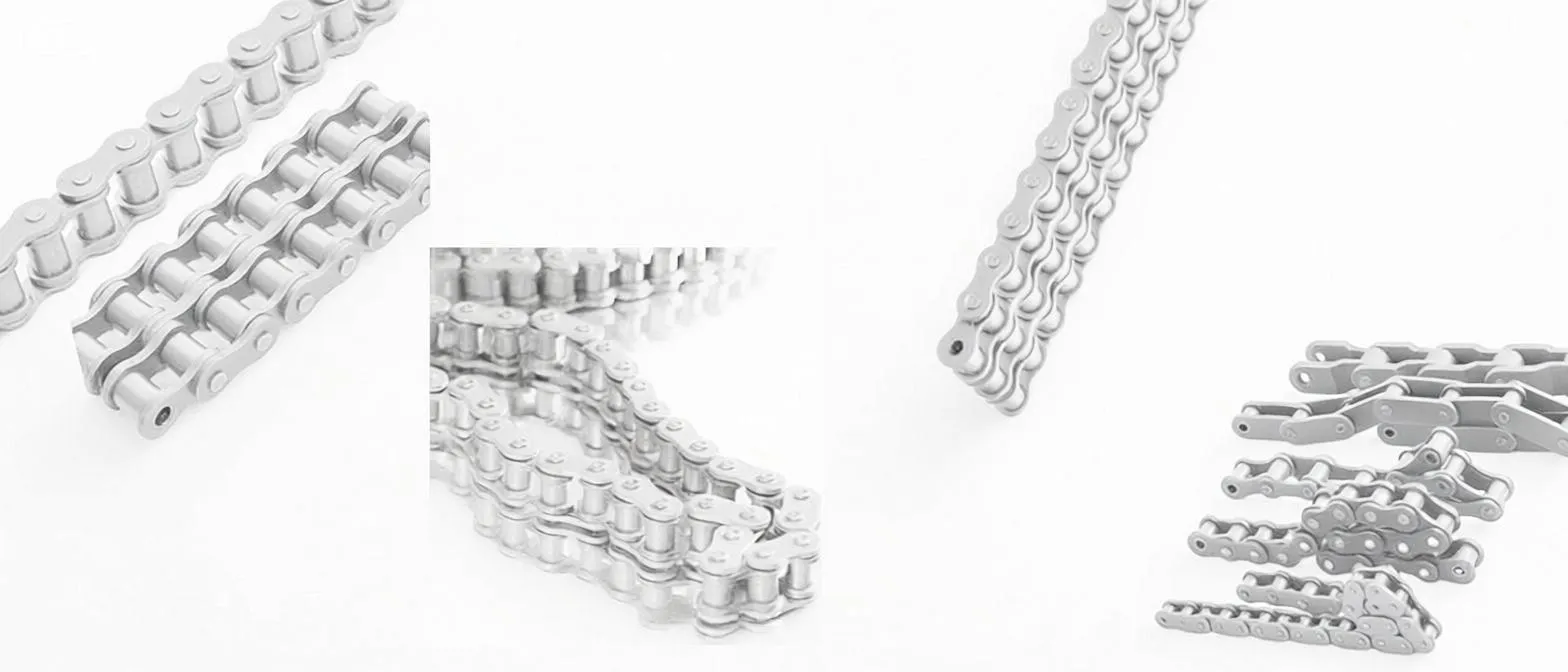
Agricultural Drive Chain — Season-Ready
Drive chain is a predictable consumable in a commercial rice straw baling operation, and including it in the initial procurement ensures specification compatibility between the chain and the baler’s sprocket geometry. Our agricultural drive chain covers both the 16A standard (9YG-1.0 and 9YG-1.0C chamber drives) and 20A heavy-duty specification (9YG-2.24D Classic dual-side rear drive). Both standards use Korean-market sprocket profiles for field-side replacement without specialised tooling. A pre-season chain tensioner check and a spare chain section kept on the machine allow same-day field repair if a link failure occurs — eliminating the 1–2 day delay of waiting for a dealer order that can cascade into significant productivity loss during the short harvest window. In the ROI model, keeping replacement chain on hand is a low-cost insurance against a high-cost downtime scenario.
Frequently Asked Questions
تدوینگر: PXY