Rice Straw Baling — Japan and South Korea Season Guide
A technical guide for Korean and Japanese rice straw operators explaining the optimal post-harvest baling window — covering regional harvest timing differences, moisture drying curves, weather risk windows, round baler machine selection for each phase, and the regulatory frameworks that constrain or incentivize rice straw collection in both countries.

Why Timing the Baling Window Matters More Than Machine Specification
1. The Post-Harvest Window in East Asian Rice Agriculture: A Calendar Problem With Expensive Consequences
Rice straw management in Japan and South Korea presents a narrow, weather-sensitive collection window that operators in wheat or hay farming rarely encounter at equivalent intensity. Both countries practice predominantly single-crop (ichimake in Japanese terms) or — in parts of southern Korea — double-crop rice production, and in both cases the harvest event deposits rice straw across the paddy surface at a point in the autumn calendar when drying conditions, field access, and subsequent tillage scheduling all exert competing demands on the farm’s available time. Getting the baling window right — meaning starting early enough to capture straw before weather deterioration, but not so early that the straw is still too wet to produce safe, market-quality bales — determines both the commercial outcome of the straw harvest and the agronomic outcome of the field management season.
A round baler machine deployed too early on wet rice straw (above 22% moisture) produces bales that are prone to biological heating during storage — a process where residual microbiological activity in the compressed, moist straw generates heat that can reach temperatures high enough to begin combustion in extreme cases, or more commonly, to degrade bale quality to a level where livestock or biomass buyers reject the material. A round baler deployed too late — after the baling window has been narrowed by autumn rainfall events or the onset of consistently cold weather — encounters straw that has been reabsorbed moisture from rain, dew, or frost, requiring remedial re-raking to restore windrow height before baling can proceed. Both of these timing errors impose real costs: either degraded bale value from premature baling, or additional field operations and potential straw loss from delayed baling.
This guide defines the optimal baling windows for the major rice-growing regions of South Korea and Japan, explains the meteorological and crop factors that determine those windows, and recommends the 9YG round baler models most suited to each phase of the post-harvest rice straw management calendar in both countries.
Regional Timing
2. Harvest Timing by Region: South Korea and Japan Post-Harvest Calendar Comparison
The rice harvest calendar in South Korea and Japan is determined by latitude, variety maturity, and regional climate. The table below maps the primary rice-growing regions of both countries to their harvest windows and the resulting optimal straw baling windows.
| Region | کشور | Harvest Window | Optimal Baling Start | Baling Window Close | Primary Risk |
|---|---|---|---|---|---|
| Jeollanam-do / Gyeongsangnam-do (South) | کره جنوبی | Late Oct – mid-Nov | 3–5 days post-harvest | Late November | Late autumn rain; early frost |
| Chungcheongnam-do / Gyeonggi-do (Central) | کره جنوبی | Mid-Oct – early Nov | 3–5 days post-harvest | Mid-November | Earlier frost; autumn rain |
| Kyushu / Shikoku (South Japan) | Japan | Early Oct – early Nov | 4–6 days post-harvest | Mid-November | Typhoon season late September–October |
| Kinki / Tokai (Central Japan) | Japan | Mid-Oct – early Nov | 3–5 days post-harvest | Late November | Autumn rain; field access after harvest |
| Niigata / Tohoku (North Japan) | Japan | Late Sep – late Oct | 3–4 days post-harvest | Early November | Early frost; cold dew compression; shorter window |
| Hokkaido (North Japan) | Japan | Mid Sep – early Oct | 3–4 days post-harvest | Late October | Shortest window; rapid frost onset; prioritize speed |
Moisture Dynamics
3. Understanding the Rice Straw Moisture Drying Curve After Harvest in Japan and Korea
The moisture content of rice straw at harvest time — when the combine deposits it on the paddy surface — typically ranges from 25–40% in Korea and Japan depending on weather conditions in the 2–3 weeks before harvest, the variety’s natural drying rate at maturity, and whether early morning harvesting has been performed on straw that has absorbed dew overnight. This initial moisture level is well above the target baling range of 12–18%, and the rate at which field drying brings the straw down to target range depends on a combination of temperature, solar radiation, wind, and the physical structure of the straw mat left by the combine.
In typical autumn conditions in both Korea and Japan — mild temperatures of 15–22°C, moderate solar radiation, and light winds — rice straw deposited at 30–35% moisture will generally reach the 18–22% range within 2–3 days and the target 12–18% range within 3–6 days, depending on the windrow thickness and whether the straw has been raked to improve air circulation through the mat. A thick, flat mat deposited across the full combine cutting width will dry more slowly than the same material consolidated by a rake into a narrower windrow with more exposed surface area per unit mass. This is one of the arguments for raking rice straw before baling even when the combine windrow width is within the baler pickup width — the raking action lifts the mat, increases air circulation, and accelerates moisture loss by 30–50% compared to an undisturbed flat mat under equivalent weather conditions.
The drying rate slows significantly once ambient temperatures drop below 10°C, which in northern Korean provinces and Tohoku Japan happens during the harvest window itself — meaning that the temperature-dependent drying that is reliable in southern Korea (Jeollam-do) and Kyushu Japan is not available at the same efficiency in Gyeonggi-do or Hokkaido. Operators in these higher-latitude regions must therefore either start baling at higher moisture (accepting some quality compromise) or deploy more aggressively with raking to compensate for the slower natural drying rate under cold conditions.
Phase-by-Phase Strategy
4. Three Phases of the Post-Harvest Baling Window and the Round Baler Strategy for Each
Experienced Korean and Japanese rice straw operators typically describe the post-harvest baling window in three phases, each with distinct weather conditions, straw moisture profiles, and machine management priorities. Understanding these phases allows operators to plan their baling calendar and machine configuration choices across the full window rather than treating every day the same.
Phase 1: Days 1–3 Post-Harvest (High Moisture)
Straw moisture 25–40%. Do not bale in this phase in most circumstances. The correct action is raking — consolidating the flat straw mat into a narrower windrow to accelerate drying. Using a side-delivery rake to combine two combine swaths into one consolidated windrow increases the exposed surface area and lifts the mat to allow air circulation beneath the straw layer. This raking pass, performed 1–2 days after harvest when the surface of the mat has started to show signs of surface drying, is the highest-value single field operation in the entire rice straw management calendar. Korean operators who skip this raking step to save time typically find that their baling window extends by 2–3 additional days as the thick flat mat dries much more slowly than a consolidated windrow.
Phase 2: Days 3–8 Post-Harvest (Optimal Window)
Straw moisture 12–22%. This is the productive baling phase where round baler deployment generates the best bale quality outcomes. The round baler machine should be deployed as efficiently as possible during this window, prioritizing the completion of all targeted baling area before the weather risk of autumn rain or early frost events increases toward the end of the window. The sensor-controlled density management system on the 9YG series is particularly valuable during this phase because straw moisture continues to decrease across the period — bales formed at 20% moisture at the start of Phase 2 are heavier per unit volume than bales formed at 14% at the end, and the sensor system compensates for this by triggering ejection at a consistent mass-based density rather than at a fixed volume, keeping bale weight within the range expected by buyers throughout the productive phase.
Phase 3: Days 8–15+ Post-Harvest (Risk Phase)
Straw moisture variable (may decrease to 8–10% in good conditions, or rebound to 18–25% after rain). This is the remediation and cleanup phase where operators address straw that was not captured in Phase 2. The key challenge is that rain events during Phase 3 can reset the straw from near-optimal baling condition back to Phase 1 moisture levels in a single heavy rain, requiring a re-raking pass before baling can resume. The hammer-claw pickup on the 9YG-1.0C is the best-suited machine configuration for Phase 3 baling in both Korea and Japan, because rain-rehydrated straw in the flat mat condition it reverts to after wetting is most reliably captured by the claw’s penetrating action rather than the spring-tooth’s sweep action.
Weather Risk Management
5. Autumn Weather Risks in Japan and South Korea That Close the Baling Window Prematurely
The post-harvest baling window in both Japan and South Korea is constrained by specific autumn weather patterns that operators need to monitor and plan around. Understanding these patterns allows better pre-season planning of machine deployment timing and reduces the probability of being caught without sufficient baling capacity when favorable conditions are available and without a contingency plan when adverse weather closes the primary window.
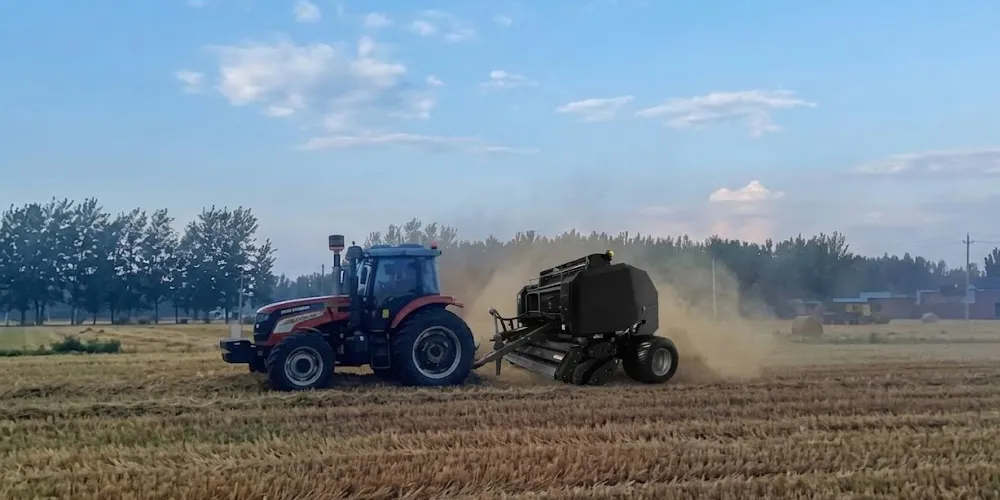
In Japan, the late typhoon season (September–October) is the most significant weather risk for southern Kyushu and Shikoku rice straw operations. A typhoon passing over rice-growing regions during or immediately after harvest can deliver 100–300mm of rain over 24–48 hours, completely saturating windrows and flattening any consolidated mat. Recovery time after a typhoon rain event is typically 5–7 days in warm October conditions in southern Japan — which can consume most of the remaining baling window for that region. For Japanese rice straw operators in typhoon-exposed regions, maintaining baling readiness from the earliest viable date (3–4 days post-harvest when moisture is still high but the weather window is favorable) is preferable to waiting for ideal moisture conditions that may be preempted by a weather event.
In South Korea, the primary weather risk is the succession of autumn rain events associated with the tail of the East Asian monsoon and the cold front systems that push down from the north in October–November. These are less intense than typhoons but more frequent — a 20–50mm rain event occurring every 3–5 days in many Korean paddy regions during the baling window is not unusual. Each rain event adds 1–2 days of straw drying recovery time and may require a re-raking pass if the windrow has been flattened. Korean operators who plan their harvest and baling calendar to concentrate baling immediately after the combine — rather than allowing a 7–10 day gap — consistently report better outcomes than operators who allow the straw to sit while waiting for perceived ideal conditions that autumn rain events eventually interrupt.
Machine Selection
6. Which 9YG Round Baler Model for Each Phase of the Japanese and Korean Rice Straw Window?
Machine selection for rice straw baling in Japan and Korea should be matched both to the operator’s total annual baling area and to the specific straw conditions that characterize the phase of the window when baling will be concentrated. The guidance below maps the 9YG series models to their primary phase application in both countries.
9YG-1.0C — Best for Phase 3 (Remediation) and Post-Rain Recovery
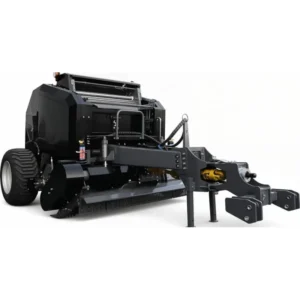
The 9YG-1.0C’s hammer-claw pickup is purpose-designed for the wet, flat, tangled straw condition that characterizes post-rain rice straw in both Korea and Japan. Its compact format (≥70 kW, Ø1000×1250 mm bale) minimizes soil disturbance on soft paddy surfaces during late-window field operations when the soil has been subject to multiple rain events. For Korean and Japanese operators who need a machine primarily for the remediation phase — collecting rain-affected straw that was not captured during the main Phase 2 window — the 9YG-1.0C is the most effective single model. It also performs well in Phase 2 when the windrow is in good condition, making it a practical all-season rice straw choice for farms under 80 hectares.
9YG-1.25A — Best for Phase 2 (Optimal Window) Across Cooperative Operations
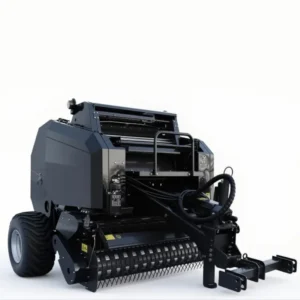
The 9YG-1.25A with its 540–1000 r/min PTO flexibility produces larger bales at Ø1300×1250 mm and is well-matched to Phase 2 conditions in Korea and Japan when the consolidated windrow is at 12–20% moisture and weather conditions are favorable. Its PTO input range accommodates the tractor diversity of Korean rice farming cooperatives and Japanese agricultural cooperative machinery pools (Nokyo machinery centers in Japan), where multiple different tractor models may be used across member farms. For operations targeting commercial livestock or biomass buyers who prefer the larger Ø1300 mm bale format, the 9YG-1.25A covers the Phase 2 productive window efficiently while remaining compact enough for most paddy field access conditions.
9YG-2.24D S9000 / Transcend — Best for Large-Area Phase 2 with Biomass Supply Target
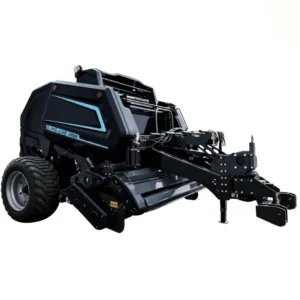
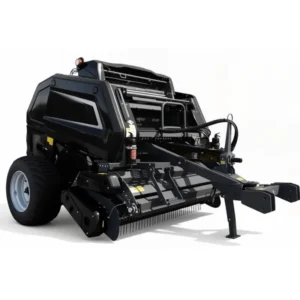
For Korean rice operations supplying bales to RPS biomass utilities, or for Japanese rice straw contractors covering consolidated block areas of 150+ hectares per season, the 9YG-2.24D S9000 or Transcend provides the highest throughput at 40–100 bales per hour and the widest pickup width at 2,240 mm. The sensor-controlled density management maximizes bale quality consistency during Phase 2 when windrow moisture varies across the day as morning dew evaporates and afternoon drying conditions differ from early-morning baling. The dual-coupling gearbox on the Transcend maintains consistent PTO transmission through the irregular headlands of small paddy plots that characterize both Korean and Japanese paddy farming, reducing the bale density gaps that occur during headland turns on conventional single-shaft PTO machines.
Manufacturing Structure
7. How Frame Construction, Chamber Design, and Pickup Engineering Handle the Variability of the East Asian Rice Straw Window
The structural requirements of a round baler deployed across the full post-harvest rice straw window in Japan and Korea differ from those of a machine used only in the Phase 2 productive window. A machine that will be deployed from Phase 2 through Phase 3, across conditions ranging from well-dried consolidated windrows to rain-rehydrated flat mats on soft paddy soil, requires structural robustness at the pickup mounting, the feed throat, and the tailgate hinge that a narrower-use machine does not need to the same degree.
CNC Precision Frame for Consistent Performance Across the Window
The CNC laser-cut frame of the 9YG series maintains dimensional consistency that allows the pickup to be removed and reinstalled without specialist alignment tools — a feature that matters when operators need to switch between spring-tooth and hammer-claw configurations (on the 9YG-1.25 series) mid-season as rice straw conditions change between Phase 2 and Phase 3. Automated welding at all structural nodes ensures that the pickup mounting point geometry remains consistent across the machine’s working life, preventing the progressive misalignment of pickup-to-bale-chamber centerline that develops in manually-welded frames as weld joints distort asymmetrically under field stress.
Bale Chamber and the Rice Straw Core Formation Problem
Rice straw’s tangled fiber structure creates a specific challenge in the early stages of bale chamber filling: the material tends to accumulate in loose, irregular piles at the chamber floor before beginning to rotate as a cohesive core. This delayed core formation can produce bales with a loose, incompletely-compressed center even when the surface density meets the sensor’s target. The press roller array geometry in the 9YG series — with rollers positioned to contact the forming bale across its full diameter rather than only at the equator — maintains compressive contact even in the early chamber fill stages, accelerating core formation and reducing the likelihood of a loose center in the completed bale.
Tailgate Cylinder and Bale Ejection on Soft Paddy Surfaces
Bale ejection on soft Korean and Japanese paddy surfaces presents a specific challenge not encountered on firm dryland fields: the ejected bale deposits into a field surface that may have insufficient bearing capacity to hold the bale upright, causing it to roll or settle into a soft patch. The buffer cylinder tailgate design on the 9YG-2.24D Classic absorbs the opening shock of the heavily-loaded tailgate, protecting the hinge welds from the accelerated fatigue that repeated hard opening events cause in paddy field operating conditions where the paddy surface offers less resistance to bale rolling than a firm dryland field would, meaning the bale separates from the machine quickly and the tailgate opens against minimal external load.
Material System
8. How Tine Steel, Chain Grade, Bearing Sealing, and Frame Coating Perform Across the Full East Asian Rice Straw Window
A round baler operating across the full post-harvest rice straw window in Japan and Korea encounters a wider range of material conditions in a single season than most other baling applications: from partially-dried 20% moisture straw in Phase 2 conditions, through rain-rehydrated 28% straw in Phase 3, to the occasional dry crisp straw at 10% moisture that develops when an extended dry spell occurs in late October. This material range variability, combined with the abrasive fine clay of paddy field surfaces and the lower ambient temperatures of late October–November operation, tests the material system comprehensively.
Hammer-claw Tine Impact Resistance
Hammer-claw tines on the 9YG-1.0C are manufactured from high-strength alloy steel that balances hardness — for abrasion resistance against paddy silt — with toughness against impact from soil clods, buried stubble bases, and hard debris on the paddy surface. In Phase 3 conditions where the paddy surface has been softened by rain, tine contact with the soil surface is more frequent than in Phase 2, increasing the risk of claw fracture from embedded hard material. The alloy specification provides a fracture resistance margin for these Phase 3 conditions while maintaining the hardness needed to resist the accelerated tip wear from paddy clay abrasion that a softer tine alloy would experience more rapidly.
Chain Drive — Cold-Weather Lubrication for Late Window
Korean and Japanese rice straw baling extends into November when ambient temperatures approach 5–10°C in central regions and below 5°C in northern regions. At these temperatures, standard chain lubricants increase significantly in viscosity, reducing their ability to penetrate chain link clearances on cold starts and providing thinner lubricant films at pin-bushing contact surfaces than they deliver at summer temperatures. Using a low-temperature penetrating oil rather than standard grease for chain lubrication during the November window maintains adequate film protection and ensures chain engagement stays smooth even on cold early-morning starts when the chain has been static overnight in sub-10°C conditions.
Frame Coating for High-Humidity Paddy Storage
Korean and Japanese paddy farms store their baler machines in environments that are among the most challenging for unprotected steel in agricultural use: equipment sheds adjacent to paddy fields where ambient humidity is consistently high, condensation from temperature differentials between machine surfaces and ambient air occurs repeatedly through the storage period, and the residual paddy clay on machine surfaces acts as a moisture-retaining poultice against frame components. The electrostatic powder coating on 9YG series frames provides corrosion protection that resists this combination more effectively than spray paint, through both its adhesion quality at weld interfaces and its resistance to the chip damage that condensation cycling would accelerate on thinner surface coatings.
Gearbox and PTO
9. Round Baler Gearbox Performance Across the Changing Conditions of the Japanese and Korean Rice Straw Window
The gearbox torque demand profile changes meaningfully between Phase 2 and Phase 3 of the rice straw baling window in Korea and Japan. In Phase 2, straw at 14–20% moisture compresses with moderate resistance, and the torque demand on the gearbox input is relatively stable across the working day once the machine reaches steady operating temperature. In Phase 3, rain-rehydrated straw at 22–30% moisture is significantly heavier per unit volume, and its tangled fiber structure presents higher compaction resistance than the more open Phase 2 windrow. This translates into a 20–35% higher average torque demand on the gearbox in Phase 3 compared to Phase 2, and a higher frequency of torque spikes from cluster events as tangled clumps of wet straw enter the chamber simultaneously.
For Korean and Japanese cooperative operations where a single round baler machine must cover both Phase 2 and Phase 3 conditions across the full season, the gearbox’s torque rating should be evaluated against Phase 3 demands rather than Phase 2 demands. The 9YG-1.0C at 540 r/min input provides a mechanical advantage: the lower rotational speed at the pickup and feed mechanism gives more time per cycle for the tangled wet straw to reorient and flow into the feed path, reducing the instantaneous cluster events that create the highest gearbox torque spikes in Phase 3 conditions. This is a less obvious benefit of the 540 r/min specification than its compatibility with standard Korean and Japanese domestic-brand tractor PTO outputs, but it is a real operational advantage in wet rice straw handling.
The gearbox oil change that should be performed at the start of the rice straw season in both Korea and Japan needs to use a multi-viscosity grade — SAE 80W-90 as a minimum — to maintain adequate lubricant viscosity across the temperature range from the warm early-season conditions of late October through the cold November conditions of the window close. Using SAE 90 monograde oil that was adequate for summer baling operations will provide insufficient cold-flow viscosity in November morning startup conditions in both northern Korean and northern Japanese paddy regions.
Regulatory Frameworks
10. Rice Straw Management Regulations, Machinery Safety Standards, and Gearbox Compliance in Japan and Korea
Both Japan and South Korea have developed regulatory frameworks that constrain open burning of rice straw and support mechanized baling, as well as machinery safety standards that apply to round balers operating in paddy field conditions.
Japan — Agriculture, Forestry and Fisheries Ministry (MAFF) Straw Burning Regulations
Japan’s Ministry of Agriculture, Forestry and Fisheries (MAFF) has progressively restricted open burning of crop residues including rice straw under the Law for the Promotion of Sustainable Agriculture. While outright national bans are not uniform across all prefectures, burning restrictions in designated areas — including regions near urban centers and in prefectures where air quality management objectives are most stringent — effectively require mechanized straw management. Prefectural agricultural offices in major rice-growing regions including Niigata, Akita, and Miyagi have issued guidelines on post-harvest rice straw management that prioritize baling and either incorporation or compost use over burning.
Japan — JAMA Agricultural Machinery Safety Standards
The Japan Agricultural Machinery Industry Association (JAMA) publishes safety standards for agricultural machinery including round balers, aligned with ISO 4254-7 and referenced by the Ministry of Agriculture for machinery certification under the Food, Agriculture and Rural Areas Basic Plan. JAMA safety provisions for balers cover PTO shaft guarding, pickup zone enclosure, and bale ejection safety mechanisms. Round balers imported into Japan for commercial rice straw baling use must either hold JAMA certification or demonstrate compliance with equivalent standards through documentation that Japanese agricultural cooperatives and their insurers recognize for machinery liability coverage.
South Korea — Clean Air Conservation Act Post-Harvest Straw Burning Ban
Korea’s Clean Air Conservation Act, administered by the Ministry of Environment, prohibits field burning of rice straw in most paddy regions during designated autumn restriction periods. Local government enforcement in Gyeonggi-do, Chungcheong-do, Jeolla-do, and Gyeongsang-do has intensified since 2022, with on-site inspection by environmental management officials during the post-harvest period. For Korean rice farmers whose operations fall within restriction zones, the timing of the baling window is now partly determined by compliance requirements: the straw must be baled or incorporated within the post-harvest management deadline specified by the local government, creating a regulatory upper limit on how long the straw can remain in the field unmanaged.
South Korea — RDA Machinery Type Approval and 2025 Subsidy Program
The Rural Development Administration (RDA) maintains the national type approval list for agricultural machinery eligible for purchase subsidy under the annual machinery support program. Round balers deployed for rice straw collection in Korea must hold current RDA type approval to qualify for the subsidy, which significantly reduces the net capital cost for Korean rice farmers making a round baler investment. The ISO 9001 quality management certification of the 9YG series manufacturing process supports the RDA approval documentation process. Korean buyers should confirm model-specific approval status at the time of purchase, as the approved machine list is updated annually and variants within a product series may have different approval status.
ISO 4254-7 — International Baler Safety Standard for Paddy Field Operation
ISO 4254-7 covers baling machine safety requirements that are directly relevant to paddy field operating conditions in Japan and Korea: the floating ground surface on soft paddy soil creates additional risk of unexpected machine settling or tilting during bale ejection, making the tailgate crush protection provisions of ISO 4254-7 particularly pertinent. The standard is referenced by both Japanese (JAMA) and Korean (RDA, KS standards) machinery certification systems, and compliance documentation is expected by agricultural insurance providers in both countries as a condition of machinery liability coverage for commercial rice straw baling operations.
Taiwan BAPHIQ and Southeast Asian Regional Context
While Taiwan, Vietnam, and Thailand are not the primary focus of this guide, their rice straw management regulatory developments are relevant context for Korean and Japanese equipment exporters. Taiwan’s Bureau of Animal and Plant Health Inspection and Quarantine (BAPHIQ) requirements for agricultural machinery import, and Vietnam’s MARD certification process, both create export documentation obligations that are comparable in structure to Korean and Japanese requirements. For equipment exporters who develop compliance documentation packages for Korean RDA and Japanese JAMA certification, adapting those packages for Southeast Asian markets is a manageable extension that opens the broader East and Southeast Asian rice straw baling market to a single product line.
Product Range
11. 9YG Round Baler Models for the Japanese and Korean Rice Straw Harvest Season
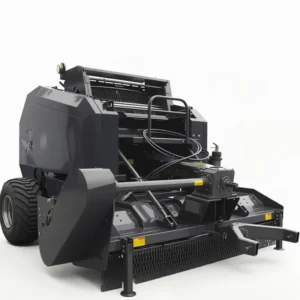
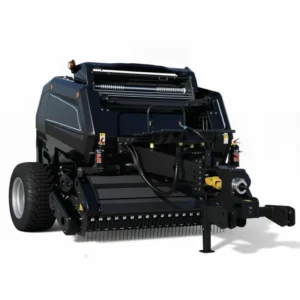
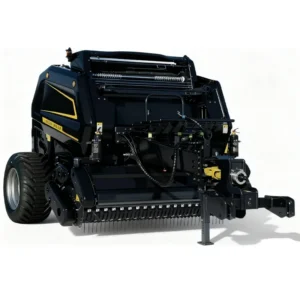
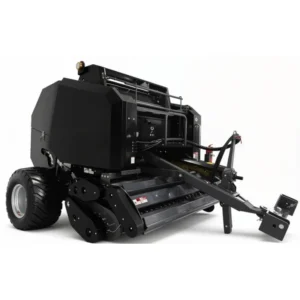
All 9YG series models feature sensor-controlled density management, axial-flow semi-forced feeding, and are manufactured under ISO 9001 certification. Models are matched to different phases of the East Asian rice straw baling window below.
FAQ
Frequently Asked Questions: Optimal Rice Straw Baling Window in Japan and South Korea
تدوینگر: PXY