1. Why Korean Coastal Wetlands Need Mechanical Intervention at Scale
The ecological decline of Korea’s coastal wetlands is well documented and the restoration challenge is substantial. The West Sea tidal flat system — now partly protected under UNESCO World Heritage status for its portions in Incheon, Chungnam, Jeonbuk, and Jeonnam provinces — supports globally important migratory waterbird populations and provides nursery habitat for commercially critical marine species. But the reclamation-era drainage infrastructure that surrounds most remaining wetland sites has permanently altered the hydrology of adjacent areas, creating conditions that favour invasive monocultures over the mosaic of native halophyte and emergent communities that characterise healthy coastal wetland habitat. Restoring species diversity in this altered hydrological context requires active management rather than passive protection — and active management at the scale of hundreds of hectares requires mechanised tools.
The round baler machine fills a specific operational gap in Korean coastal restoration: it can process and remove the above-ground biomass of invasive reed stands across large areas within a single seasonal window, at a cost per hectare that makes multi-year repeat treatment financially viable within environmental programme budgets. Hand removal, the alternative at small scale, costs 8–15 times more per hectare of treated area and is physically impossible to sustain across the multi-year treatment programmes that effective invasive management demands. Cutting without biomass removal — using a disc mower or flail without a following round baler — is actively counterproductive when seed-bearing invasive material is left on the site. Baling closes the loop between cutting and site clearance, and the round baler is the most efficient tool available for this function at landscape restoration scale.
The practical case in Korean coastal restoration also rests on the value chain that baled reed biomass can enter. Rather than paying for off-site disposal of the removed material, restoration project managers who have pre-arranged supply agreements with biogas facilities, thatching material processors, or coastal construction material suppliers can convert the round baler campaign from a net cost operation to a partially self-funding activity. This value chain integration is most achievable when the machine produces bales to a consistent, specified density and moisture standard — which the sensor-controlled density management system of 9YG models delivers consistently across variable windrow conditions.
2. Tidal Phenology and the Science of Reed Stand Management
Effective round baler deployment in coastal wetland restoration is inseparable from an understanding of the phenological calendar of the target invasive vegetation and the tidal and seasonal patterns that govern site access and ecological sensitivity. Phragmites australis — the primary invasive reed target in Korean coastal restoration — follows a predictable annual growth cycle: dormant below-ground in winter, rapid shoot emergence in March–April as temperatures rise, peak aerial biomass accumulation through June–August, seed head formation in August–September, aerial senescence in October–November, and return to dormancy after the first hard frosts. Each of these stages creates different conditions for the round baler machine and different ecological implications for the timing of intervention.
The ideal round baler operating window for maximum rhizome depletion effect is late August to mid-September in most Korean coastal locations — after the plant has completed its seasonal photosynthesis investment into rhizome carbohydrate reserves but before seed head opening and dispersal begins. Cutting and baling at this specific phenological stage removes the maximum investment the plant has made this season while also preventing the seed dispersal that would re-establish invasive populations on the freshly treated substrate. The 10–20 day overlap in late August represents the key window within which the round baler machine should complete treatment of each target area.
Tidal access patterns impose a secondary constraint on round baler scheduling that is unique to coastal wetland settings. Sites in the lower tidal zone may be accessible by tractor and round baler only during neap tide periods when daytime low tide exposes the substrate for the 4–6 hour minimum required for a productive baling session. Coordination between the round baler campaign schedule and the tidal calendar — readily available from the Korea Hydrographic and Oceanographic Agency — is therefore an important operational planning step that has no equivalent in inland agricultural baling. The neap tide windows in August and September in Korea’s West Sea tidal zone typically provide 10–14 days per month during which substrate in the target elevation range is exposed during daylight hours for the 4–6 hour minimum operating period.
3. How a Round Baler Integrates Into a Multi-Year Habitat Recovery Plan
A single-season round baler campaign in a coastal wetland restoration programme is rarely sufficient to achieve lasting ecological change. The biology of Phragmites and other invasive wetland monocultures means that above-ground removal alone does not kill the plant — it stresses it by denying photosynthetic capacity and depleting rhizome carbohydrate reserves over multiple seasons of consistent treatment. Understanding how the annual round baler contribution accumulates into an effective multi-year restoration trajectory is essential for restoration ecologists designing treatment programmes and for the contractors who operate the equipment.
In a well-designed multi-year programme, the round baler role evolves across the treatment seasons. In Year 1, the primary objective is maximum biomass removal and prevention of seed dispersal — the round baler should operate at maximum effective speed across the entire target area, prioritising coverage area over any concern about treatment quality variation. By Year 3 or 4, with rhizome reserves significantly depleted, the regrowth biomass is sparser and the baler can shift to a more selective mode — targeting the patches of residual regrowth that represent the last rhizome reserves, while leaving the emerging native vegetation that has colonised the previously treated areas. This transition is visible in the reduced daily throughput of the round baler machine as the target material becomes sparser and more dispersed.
The machine also plays a constructive role in native species establishment during the later phases of a restoration programme. After 2–3 years of invasive management have created bare or low-competition substrate, the round baler can be redeployed in propagule transfer mode. This creates the species-diverse native community that is the end goal of the restoration programme, completing the ecological trajectory that began with the invasive management round baler campaigns of the first two or three years.
| Programme Year | Round Baler Role | Expected Site Condition | Bale Output per Hectare |
|---|---|---|---|
| Year 1 | Full-coverage invasive biomass removal | Dense Phragmites monoculture at full biomass | 8–15 bales/ha |
| Year 2 | Full-coverage repeat — rhizome depletion | Moderate regrowth, 50–70% of Year 1 biomass | 5–10 bales/ha |
| Year 3 | Targeted patch treatment of residual reed | Sparse regrowth patches, native colonisation begins | 2–5 bales/ha |
| Year 4–5 | Propagule transfer and final patch removal | Mixed native and residual invasive patches | 1–3 bales/ha (targeted) |
4. Ground Pressure, Tyre Selection, and Sediment Compaction Prevention
Of all the operational parameters that determine the ecological acceptability of round baler deployment in Korean coastal wetlands, machinery ground pressure is the one most frequently specified in environmental work plan approvals issued by the Ministry of Environment. The Rural Development Administration (RDA) guidance on wetland machinery operation identifies 50 kPa ground contact pressure as the recommended upper limit for tractor and implement combinations operating on semi-consolidated tidal flat sediment to avoid compaction damage to the microbial communities, invertebrate fauna, and plant root systems in the upper sediment layer. Understanding how this limit applies to round baler machine deployment helps restoration contractors configure their equipment correctly and document compliance with permit conditions.
Ground contact pressure for a tractor and round baler combination is calculated as total axle load divided by total tyre contact area. Reducing either the axle load (by selecting a lighter round baler model) or the contact pressure per unit area (by fitting wider low-pressure tyres) brings the combination within the permit threshold. The 9YG-1.0 at 2640 kg is the lightest round baler in the 9YG range and paired with a 40–55 kW tractor on wide, low-pressure agricultural tyres, produces a combined rear axle contact pressure that typically falls within or close to the RDA 50 kPa guidance threshold for firm tidal flat substrate. The heavier 9YG-2.24D variants at 3922–4570 kg require wider tyre specifications or geotextile trackway support on softer substrate to meet the same ground pressure threshold, but they are appropriate and well within limits on firm reclaimed-land reed bed sites with consolidated substrate.
Tyre pressure management is as important as tyre size in coastal wetland operations. Standard agricultural tyres inflated to field road transport pressures of 1.6–2.0 bar develop far less contact area than the same tyre at the minimum recommended field operating pressure of 0.6–1.0 bar. Reducing tyre pressure to the minimum recommended by the tyre manufacturer for the field operating load — a simple adjustment that takes 5 minutes but can reduce ground contact pressure by 25–35% — is one of the most effective and lowest-cost ground pressure management measures available to round baler operators on sensitive wetland substrate. Many Korean restoration programme site permits specifically require that machinery tyre pressures are set to the minimum recommended field operation pressure as a compliance condition.
5. Manufacturing Structure: Engineering for Repeated Coastal Deployment
A round baler that enters Korean coastal restoration service is signing up for one of the most structurally demanding applications in agricultural machinery — not because individual loading events exceed the structural capacity of a well-designed machine, but because the combination of corrosive salt exposure, repeated high-cycle gate operation, long-fiber crop processing, and off-road access conditions compounds into a cumulative structural challenge that tests every joint, fastener, and bearing race in the machine across each successive season of use. The manufacturing choices that determine a round baler’s structural longevity in coastal service are made at the design and fabrication stage and cannot be improved upon after the machine reaches the field.
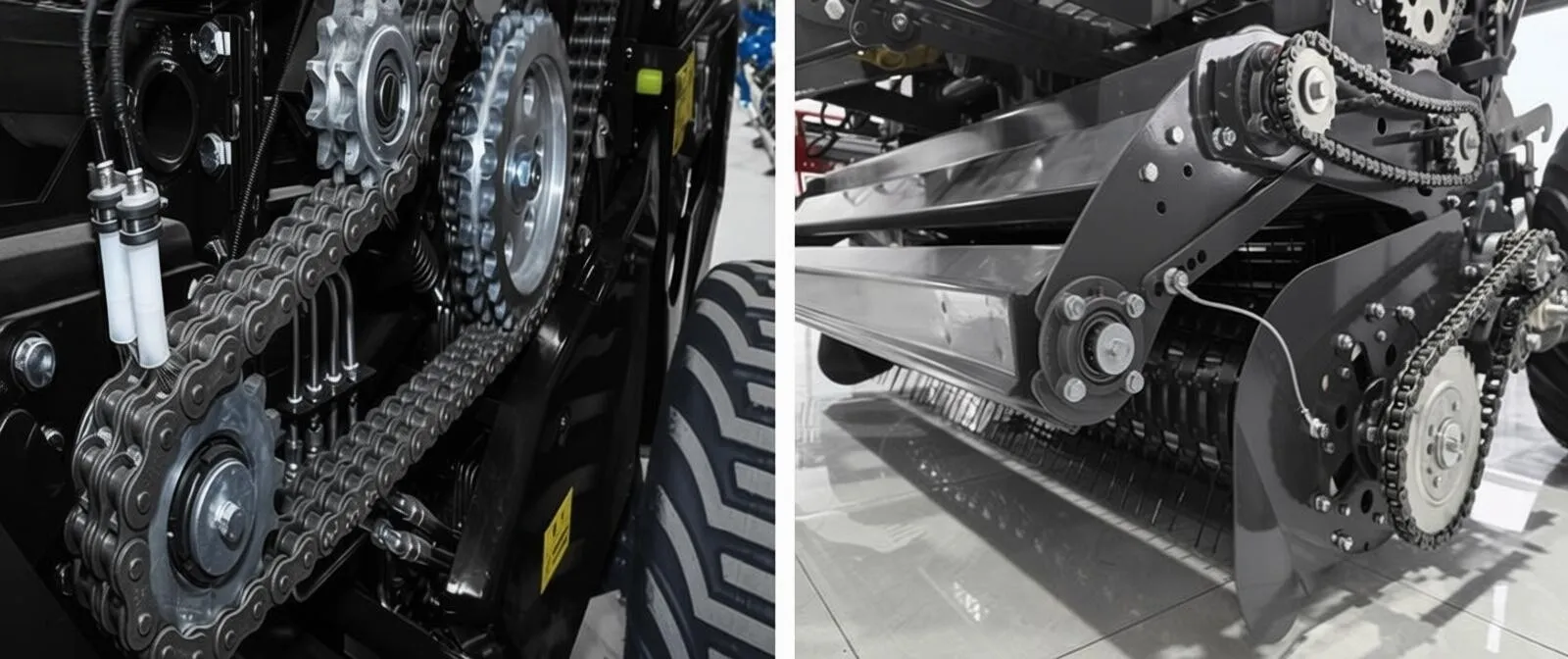
The CNC laser-cut chassis frame that forms the structural spine of the 9YG series is fabricated with clean, burr-free plate edges at every cut profile. This edge quality specification matters because paint adhesion at plate edges is the weakest point in any coating system, and in a coastal salt environment, corrosion that initiates at a poorly prepared edge will undermine the paint film across a progressively wider area through a process called cathodic disbondment. The electrostatic paint system applied in factory conditions achieves film uniformity in structural recesses — around bolt bosses, behind gusset plates, and at the bottom of channel sections where water and organic mud accumulate — that field-applied coating systems cannot replicate. Post-weld precision machining at the compression roller mounting bores maintains the geometric accuracy of the 16 or 18 roller array despite the thermal distortion that welding introduces, and this geometric precision is what ensures the round baler produces consistently round, balanced bales in the varied density conditions of a coastal wetland reed campaign.
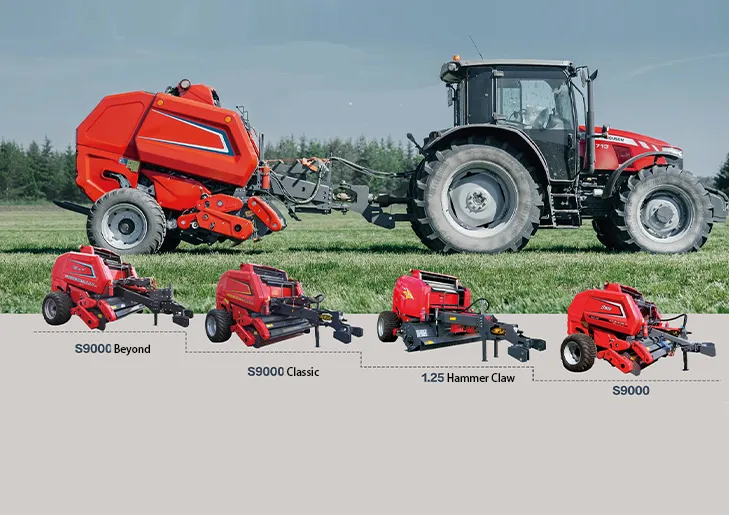
The gate hinge system carries the highest corrosion risk of any structural element in the coastal round baler because it sits at the base of the rear gate where mud and saline standing water contact the pivot points during low-lying wetland access. Hardened stainless or galvanised steel pivot pins running in re-greaseable sealed spherical bearings prevent the corrosion-induced seizing that would otherwise lock the gate pivot mid-campaign and halt the baling operation. The cushion cylinder fitted to S9000 Classic and Transcend round baler models decelerates the gate in the final 15 degrees of its closing arc, eliminating the impact loading that would otherwise accumulate as fatigue at the hinge weld when dense, wet reed bales resist the initial ejection and then release suddenly — a loading scenario that conventional gate cylinders are not designed to absorb without accumulating structural damage over multiple seasons.
Laser-Cut Frame Edges
Burr-free CNC cut plate edges maximise paint adhesion and prevent coastal corrosion initiation at the edge disbondment points that are the weakest link in structural coatings.
Post-Weld Bore Machining
Precision machining of all 16/18 compression roller mounting bores after chassis welding maintains geometric accuracy regardless of weld thermal distortion — producing balanced, round bales in variable wetland crop conditions.
Gate Cushion Cylinder
Standard on S9000 Classic and Transcend round baler models. Decelerates gate in final 15 degrees of closing arc, absorbing the ejection-adhesion shock loads that accumulate as hinge fatigue in high-moisture reed baling service.
Cam-Free Feed Mechanism
Axial-flow semi-forced feed with no cam ring obstruction. The primary anti-wrap engineering feature that allows long Phragmites stems to pass through the pickup zone continuously without the progressive entanglement that stops conventional round balers.
6. Material Systems: Corrosion Science Applied to Wetland Round Balers
The material science of a round baler for coastal wetland service begins with understanding the specific corrosion mechanisms that the salt environment drives and then specifying materials that resist each mechanism at the relevant component location. The three primary corrosion mechanisms in coastal round baler service are: general galvanic corrosion of structural steel surfaces exposed to salt-electrolyte moisture; crevice corrosion in fastener and pivot clearances where oxygen-depleted salt solution concentrates; and corrosion fatigue at dynamically loaded components where pre-existing salt pits act as stress concentration sites that initiate fatigue cracks at loads far below the material’s uncorroded fatigue limit. Each mechanism requires a different material response.
General surface corrosion is managed primarily through the paint and surface treatment system. The multi-coat electrostatic paint applied in factory conditions on 9YG series round baler machines provides the primary barrier between the structural steel and the coastal atmosphere. A zinc-rich primer coat in the system provides sacrificial galvanic protection at any location where the topcoat is mechanically damaged during field operation — the zinc corrodes preferentially, delaying the onset of substrate steel corrosion and buying time for touch-up maintenance to be applied before structural integrity is compromised. Crevice corrosion at fasteners and pivot pins is managed through material selection: zinc-plated or hot-dip galvanised steel fasteners at structural joints, stainless steel specification at pivot pins that are subject to regular disassembly for maintenance, and careful attention to dissimilar-metal joint design that could create galvanic cell conditions between adjacent components of different electrode potential.
Corrosion fatigue at dynamically loaded components is the failure mechanism that most distinguishes coastal from inland round baler service, and it affects spring tines more than any other component. The zinc-phosphate conversion coating on 9YG series tines prevents the salt pitting at the tine surface that initiates fatigue cracks — but this protection is only effective as long as the coating is intact. In coastal round baler service, tine tip coatings are progressively removed by abrasion with the substrate surface on the inevitable passes over salt-contaminated soil, and the inspection interval for tine surface condition should be halved compared to inland hay service to catch coating breaches before they progress to pit formation and crack initiation.
| Corrosion Mechanism | Primary Risk Location | Material Response | Inspection Trigger |
|---|---|---|---|
| General galvanic (wet salt surface) | Chassis frame, gate plate | Multi-coat electrostatic paint + zinc-rich primer | Any topcoat breach — touch up immediately |
| Crevice corrosion (oxygen depletion) | Fastener heads, pivot pin bores | Zinc-plated or stainless fasteners; galvanised pins | Annual fastener replacement at high-risk joints |
| Corrosion fatigue (cyclic load + salt pit) | Spring tine roots and tips | 65Mn tine steel with intact zinc-phosphate coating | Every 60 h coastal service — replace pitted tines |
| Chloride-induced rubber degradation | Hydraulic hose outer sheath | Salt-tolerant UV-resistant outer compound | Monthly check; replace at 3 years coastal service |
| Fretting corrosion (bearing races) | Roller bearing races in salt moisture | Labyrinth seal grease + 60-hour re-grease interval | Bearing heat check post first 2 h coastal operation |
7. Gearbox Engineering for Reed Biomass and Coastal Environments
The gearbox in Korean coastal round baler service must withstand two concurrent challenges that individually are manageable but together require more careful oil management and maintenance attention than standard hay service demands. The first is the sustained high-torque load of processing dense, high-moisture Phragmites reed — one of the heaviest crop streams a round baler pickup can encounter, with mature August-cut reed producing windrow densities comparable to heavy ryegrass silage. The second is the salt-humid operating environment that contacts the gearbox housing through the vent system, input shaft seal, and — in cases of submersion during tidal access — through any drainage hole that may exist in the gearbox casing.
All 9YG round baler models receive PTO input at 720 r/min and distribute power to the compression rollers, pickup reel, and net-wrap mechanism through the gearbox output shafts. The rated torque capacity of the gearbox is verified under the Agricultural Machinery Performance Test Certificate conditions required for Korean MAFRA subsidy eligibility. For wetland restoration round baler operations, the safety torque shaft fitted to the 9YG-2.24D Transcend variant provides the peak-overload protection that prevents gear tooth fracture when the pickup encounters a dense reed pile — an event that can generate a torque spike 2–3 times the normal operating torque in less than one shaft revolution. This protection is valuable not just for the immediate overload event but for the accumulated fatigue protection it provides over an entire seasonal campaign of variable-density wetland vegetation.
For gearbox oil management in coastal round baler service, the primary adaptation is a shortened oil change interval and a heightened attention to oil condition monitoring. In standard hay service, annual or 200-hour oil changes are typically adequate. In coastal wetland round baler service where ambient humidity is high and any seal imperfection can allow moisture ingress, oil changes at the end of each seasonal campaign are strongly recommended regardless of hours accumulated. Using a gear oil with explicit anti-moisture and anti-corrosion additive packages — API GL-4 or GL-5 specification with high-viscosity-index base oil — provides the oil film stability across the range of temperatures encountered in Korean coastal August service (ambient 28–34 degrees C) and the anti-rust protection needed if any moisture contamination occurs before the season’s oil change removes it. For the regulations governing gearbox design in each export market — from Korea’s KS B 1521 standard and the EU’s EN 1553 to Japan’s JIS B series — the key shared requirement is that the gearbox demonstrates rated torque capacity and adequate seal performance at the maximum operating temperature, which coastal operators should verify at the start of each seasonal campaign by monitoring gearbox housing temperature after the first two hours of operation.
8. Bale Density, Bale Weight, and Coastal Site Logistics
The physics of bale weight management in coastal wetland round baler operations constrain the density specification more tightly than in inland agricultural baling because the access vehicles and lifting equipment available on coastal restoration sites typically have lower rated capacities than standard farm loaders. A fresh-cut August reed bale at 70% moisture and 130 kg/m3 density in a Ø1300 x 1400 mm round baler bale weighs approximately 480–520 kg — close to the maximum safe lift of a standard tractor front loader at the extended reach needed to load the bale onto a transport trailer. At 160 kg/m3, the same bale weighs 590–640 kg, which exceeds the safe capacity of most agricultural front loaders and creates a tipping risk on soft substrate where the tractor’s stability margin is already reduced. The sensor-controlled density management on 9YG round baler models allows project managers to set and hold a density specification matched to their site-specific handling equipment capacity rather than accepting whatever density the machine produces at its default setting.
Transport vehicle weight limits on temporary coastal access trackways impose a further constraint on bale weight management. A standard agricultural flatbed trailer loaded with 18 round baler bales at 500 kg each carries a total payload of 9 tonnes, which combined with a 3-tonne trailer tare weight and a 5-tonne tractor creates a combination of approximately 17 tonnes total axle weight. On geo-textile-supported temporary trackways of the type used for Korean tidal flat restoration access, total vehicle and payload weight limits of 10–15 tonnes are common in site-specific environmental approval conditions, requiring either lighter bales (achieved through lower round baler density settings) or smaller trailer payloads to remain within compliance. These logistics constraints must be factored into the round baler campaign planning before any machine is mobilised to a coastal restoration site.
For autumn-harvested Phragmites at 15–20% moisture — the preferred specification for thatching material supply — the bale weight constraint is less acute because the same Ø1300 x 1400 mm bale at this moisture and a 140 kg/m3 density weighs approximately 280–330 kg, well within the safe lift range of standard agricultural loaders. Autumn campaigns on Korean coastal sites also benefit from improved substrate bearing capacity as summer rainfall diminishes and surface drying consolidates the upper tidal flat sediment layer, making heavier transport vehicles more feasible than during the August high-biomass campaign period. A programme that targets autumn thatching supply may therefore have different bale density specifications and transport logistics than the summer biogas supply campaign, and the round baler density management system must be reset between campaigns to reflect each end-use requirement.
9. Round Baler Models and Their Match to Restoration Project Scale
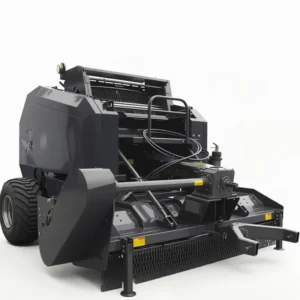
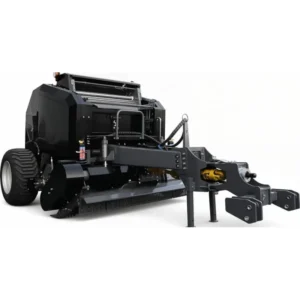
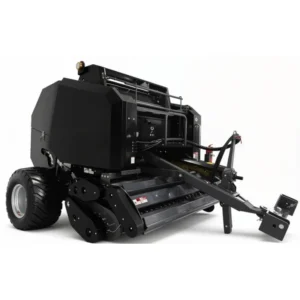
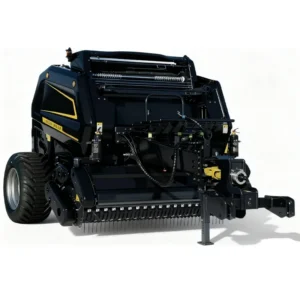
Korean coastal restoration projects range from small licensed plots of a few hectares managed by conservation NGOs to national programme areas of hundreds of hectares managed by Korea Environment Corporation contractors. The following round baler machine models are matched to this range of project scales and access conditions.


10. Korean and International Regulatory Requirements for Wetland Machinery
Round baler machine deployment in designated wetland areas is governed by a regulatory overlay that extends significantly beyond standard agricultural machinery certification. Restoration contractors must navigate both the machinery safety standards that apply to the round baler itself and the environmental permitting requirements that govern any mechanical activity in ecologically sensitive habitat. Treating these as two separate compliance tracks — machinery certification managed by the equipment supplier and environmental permitting managed by the project ecologist — is the clearest way to ensure that neither is overlooked in the pre-campaign planning.
Korea
Under the Wetland Conservation Act (습지보전법), mechanical restoration activities in Ramsar-designated or nationally designated wetland conservation areas require work plan approval from the Ministry of Environment before any field operations begin. The approved work plan must specify machinery type and weight, access routes and trackway specifications, the seasonal window of operation (typically July–October to avoid bird breeding and peak migratory periods), biomass removal and disposal methods, and post-operation site condition monitoring responsibilities. Round baler machines used in MOE-funded or Korea Environment Corporation contracts must typically carry Agricultural Machinery Performance Test Certificates (농업기계 성능검정서) under the Act on the Promotion of Agricultural Mechanisation. The RDA ground pressure guidance of 50 kPa applies to all machinery including round balers operating on designated wetland substrate, and compliance documentation may be required as part of the environmental permit application.
European Union
Round baler machines operating in EU coastal wetland restoration programmes must comply with EU Machinery Directive 2006/42/EC (transitioning to EU Machinery Regulation 2023/1230 from January 2027), with CE marking confirming compliance with EN 1553 gearbox standards and EN ISO 4413 hydraulic safety. Environmental site access permits in EU Natura 2000 designated habitats require Appropriate Assessment under Article 6 of the Habitats Directive (92/43/EEC), and national agencies in the Netherlands, Germany, France, and other member states with coastal wetland restoration programmes impose additional machinery specifications in site-level access authorisation documents.
United States
Mechanical vegetation management in US wetland areas may require Section 404 Clean Water Act permits administered by the Army Corps of Engineers, particularly if access track construction or vegetation removal results in discharge of fill material into jurisdictional waters of the United States. Round baler machines must comply with ASABE S430 and OSHA 29 CFR 1928. The US Fish and Wildlife Service co-reviews operations in National Wildlife Refuge wetlands where large-scale round baler reed management campaigns are most common.
Japan
Japan’s Nature Conservation Act and Law on Conservation of Endangered Species govern mechanical activity in nationally designated natural areas. Round baler machinery must comply with JIS B series standards. The Ministry of the Environment authorisation is required for activities in designated nature parks, and the Ramsar-designated wetlands of Japan — Kushiro Marsh, the Fujimae tidal flat, and others — have site-specific management plans that specify machinery weight, seasonal windows, and access protocols for mechanical operations.
| Region | Round Baler Machinery Standard | Key Environmental Permit | Gearbox-Specific Note |
|---|---|---|---|
| Korea | Agricultural Mechanisation Act / KS B ISO 4413 | Wetland Conservation Act work plan (MOE) | KS B 1521 rated torque documented for certification |
| EU | Machinery Directive 2006/42/EC / EN 1553 | Habitats Directive Article 6 AA / national permits | EN 1553 vent system and seal requirements critical |
| USA | ASABE S430 / OSHA 29 CFR 1928 | Section 404 CWA / Army Corps / USFWS | ASABE S430 PTO guard requirements apply on wetland sites |
| Japan | JIS B series agricultural standards | Nature Conservation Act / MOE authorisation | Site management plan may specify oil-change schedule |
| ISO (International) | ISO 4413:2010 / ISO 11684 | Ramsar Convention wise-use principles | ISO 4413 hydraulic contamination control in wetland use |
11. Post-Campaign Maintenance: The Protocol That Protects Investment
The return on investment from a round baler machine deployed in Korean coastal wetland restoration is substantially determined by the post-campaign maintenance protocol applied after each seasonal baling campaign. Salt deposits and moisture-contaminated gear oil left unaddressed after a round baler coastal campaign cause corrosion that compounds across successive seasons — progressively shortening component service life in a way that is not visible from the machine’s external appearance until failures begin occurring in the field. A 3-hour maintenance session immediately after the final day of each coastal baling campaign prevents months of inter-season corrosion progression.
The post-campaign protocol begins with a complete round baler wash-down using a pressure washer, targeting the chassis underside, gate hinge areas, the bale chamber floor, and the pickup reel frame. Removing the primary salt deposit before it dries and concentrates is the most time-efficient intervention available, because dried salt is significantly more aggressive than the same quantity of dilute salt solution. After washing the round baler, all chain drives should be lubricated while warm from the day’s operation, since the wash inevitably removes some existing lubricant from chain link joints that are now exposed to atmospheric corrosion until the next lubrication event. A water-displacing lubricant spray applied to all fastener heads, hinge pivot surfaces, and hydraulic coupling threads provides the inter-session corrosion protection layer.
At the end of the campaign season, the machine should receive the full post-season round baler service: gearbox oil change while still warm from operation, re-greasing of all labyrinth bearing points using NLGI Grade 2 water-resistant lithium-complex grease, inspection and touch-up of all paint damage, hydraulic hose outer sheath condition check with replacement of any hose showing cracking or blistering, and gate hinge pivot pin withdrawal and inspection for corrosion swelling that would indicate the pin will require replacement before the next campaign. The round baler should then be stored under cover, with all hydraulic coupler dust caps fitted and any structural steel showing bare metal coated with rust-inhibitor before storage. This end-of-season protocol, consistently applied, is what allows the machine to serve multiple years of Korean coastal restoration work without the premature component failures that would otherwise undermine the economics of the multi-year investment.
Frequently Asked Questions
Q1. Which round baler model best meets the 50 kPa ground pressure limit of Korea RDA guidance for tidal flat substrate in West Sea coastal restoration work? +
Q2. What round baler bale density should Korean wetland restoration contractors specify when supplying summer-cut Phragmites reed to a biogas facility under an RPS biomass contract? +
Q3. How does the round baler gearbox perform in the Korean coastal salt environment and what oil change schedule should wetland restoration contractors follow? +
Q4. Where can Korean environmental engineering firms get a supplier quote for round baler machines for MOE-approved coastal wetland invasive species management contracts? +
Q5. What round baler parts and supplies should Korean coastal restoration contractors carry on-site during a multi-week reed management campaign on remote tidal flat areas? +
Q6. How many years of consistent round baler campaigns are needed to effectively deplete Phragmites rhizome reserves and enable native plant recovery in Korean coastal wetlands? +
Q7. What is the optimal tidal window for scheduling round baler operations on Korean West Sea tidal flat restoration sites to maximise access days per campaign season? +
Q8. How does the small round baler for 40 hp tractor compare to larger models for Korean coastal wetland restoration NGOs managing annual Phragmites removal programmes? +
Éditeur : PXY