1. Why Corn Stover Is a Critical Biomass Feedstock in Korea and East Asia
Corn stover — the collective term for stalks, leaves, husks, and cobs that remain in the field after cereal grain harvest — is one of the most abundant and underutilised agricultural residues produced in Korea, Northeast China, Japan, and Southeast Asia. In South Korea, corn cultivation covers over 70,000 hectares primarily in Gangwon, Gyeongbuk, and North Chungcheong provinces. At a typical dry stover yield of 4-8 tonnes per hectare, Korea alone generates several hundred thousand tonnes of collectable corn stover annually — most of which is currently field-burned, left to decompose, or tilled back without any energy value recovery.
The shift toward renewable energy policy in Korea — driven by the Renewable Energy 3020 Plan and the 2050 Carbon Neutrality and Green Growth Strategy — has substantially increased demand for domestically produced biomass feedstock significantly. Both dedicated biomass power plants and biogas facilities are actively seeking reliable supply chains for corn stover and other crop residues. The round baler machine plays a central role in this supply chain by converting loose, scattered stover into standardised, dense, net-wrapped bales that can be transported, stacked, and stored efficiently enough to serve as a predictable industrial feedstock rather than an opportunistic waste stream.
Beyond Korea, the same dynamic is unfolding across East and Southeast Asia. Vietnam, Thailand, and the Philippines all produce large volumes of corn stover that national bioenergy programmes are beginning to mobilise. The round baler is consistently the most practical single-machine solution for field collection at farm scale in these markets. Understanding how a round baler works in this specific application — what pickup design it needs, what bale specifications it must produce, and how its mechanical systems differ from a standard hay baler — is essential for anyone evaluating equipment for a corn stover biomass supply programme.

2. What Makes Corn Stover Challenging to Collect and Why Baling Solves It
Corn stover presents a unique collection challenge compared to the hay and grass forages that most round baler designs were originally developed around. The material is simultaneously bulky, irregular in density, partially lodged against the soil surface, and varying in moisture from the upper stem and leaves (which dry faster after grain harvest) to the lower stalk sections (which retain soil moisture longer). In Korean autumn conditions — where corn harvest runs from late August through October — stover may be collected immediately after combine harvesting at 25-45% moisture, or field-dried 2-4 weeks to reach the 15-20% moisture range that biomass energy facilities generally prefer for direct combustion applications.
The physical structure of corn stover also differs substantially from grass or hay. Corn stalks are hollow, fibrous tubes of 12-25 mm outer diameter, and when they fall or are partially chopped by the combine header, they lie in irregular, intertwined layers that conventional pickup systems struggle to lift cleanly. The coarse, rigid nature of corn stalk sections means they do not flow through narrow feed throats as readily as fine-stemmed grass, creating the blockage risk that is the primary operational complaint when using standard hay-configured round balers for stover collection.
Baling solves the fundamental logistics problem of corn stover collection: it converts material occupying 20-30 cubic metres per tonne in field-lying condition into a compact, dense round bale of 1.0-1.4 m diameter that standard agricultural forklifts can handle. A well-made round bale of corn stover at 120-180 kg/m3 weighs 200-450 kg and represents a standardised unit of biomass supply that can be inventoried, traded, and processed predictably — far more commercially manageable than the loose field residue it was made from. The round baler machine is what makes this transformation economically viable at farm scale without requiring dedicated industrial processing equipment at the collection point.
3. How the Round Baler Adapts Its Action Mode for Corn Stover Collection
The baler operational sequence — pickup, feeding, compression, wrapping, and ejection — each respond differently when processing corn stover compared to grass hay. Understanding how these action modes adapt helps biomass supply chain operators set their round baler machines correctly and avoid performance failures that occur when a hay-configured round baler is pressed into stover service without appropriate setup or model selection.
3.1 Pickup Phase Adaptation
In corn stover collection, the pickup phase must deal with material sitting at varying heights above the soil surface — from tall partially standing stalks left at combine cut height to flat-lying leaves and husks nearly flush with the ground. A spring-tine pickup set for hay operation with tine tips running 5-8 cm above the soil will miss significant quantities of lower-lying stover material. The hydraulic float capability of 9YG series round baler pickups addresses this by allowing tine height to self-adjust continuously in response to ground contour rather than being fixed at a preset height, reducing both material loss and soil pickup simultaneously. This float capability makes the round baler practical in Korean paddy-adjacent corn fields where soil surface irregularity is common.
3.2 Feed Mechanism Adaptation
The axial-flow semi-forced feed mechanism across the 9YG round baler series eliminates the cam ring and pickup guard that create the constriction zone where coarse stalk material bridges and blocks in conventional round baler designs. When a conventional cam-guided pickup encounters a slug of interlocked corn stalk sections, the rigid geometry of the cam ring creates a mechanical trap. The cam-free design allows stover to pass through the pickup exit zone continuously without a fixed obstruction, dramatically reducing blockage frequency. In commercial stover biomass operations, blockage events with conventional round balers can consume 15-25% of total field time in stop-clear-restart cycles. Eliminating this constriction delivers field productivity improvements of 60-100% in heavy stover — directly translating into more tonnes collected per operating day.
3.3 Compression and Bale Formation
Inside the drum-roller compression chamber, corn stover forms a bale core more readily than dry straw because the hollow stalks collapse under roller pressure to a greater degree, creating a denser initial core. The 16 or 18 fixed steel rollers in 9YG series compression chambers maintain their geometric relationship through precision-bored roller mounting plates, ensuring that the crushing and rolling forces applied to incoming stover are distributed evenly across the bale width. Even distribution is especially important in corn stover baling because the coarser material tends to deposit unevenly — heavier stalk sections gravitate to the lower part of the chamber, while lighter leaf and husk material distributes more evenly. The sensor-controlled density management system monitors bale growth continuously and modulates compression back-pressure to compensate for this natural tendency, producing a consistently round, symmetrically dense bale that meets biomass facility specification.
4. Hammer-Claw Pickup vs. Spring-Tine Pickup for Stover Collection
The choice of pickup configuration is the single most important equipment decision for a farmer or contractor entering the corn stover biomass supply market. The two options — spring-tine pickup and hammer-claw pickup — produce very different results in stover applications, and selecting the wrong one leads to either poor material recovery, frequent blockages, or both.
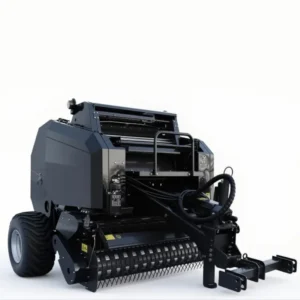
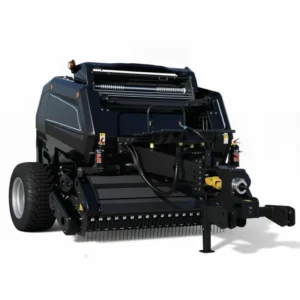
The spring-tine pickup, standard on the 9YG-1.0, 9YG-1.25A, and 9YG-2.24D round baler series, is designed to sweep windrow-laid material off a flat surface. It works acceptably for corn stover that has been previously cut, windrowed, and partially field-dried. In this configuration, the spring-tine round baler achieves collection efficiencies of 70-85% of available stover in the windrow. The uncollected material is primarily fine leaf and husk fragments that fall through the pickup zone.
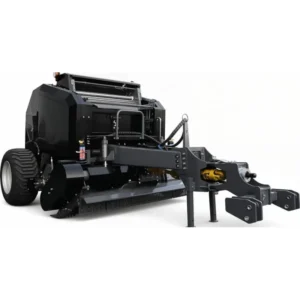
The hammer-claw pickup, fitted on the 9YG-1.0C as its primary configuration and available as an interchangeable option on the 9YG-1.25 Double, takes a fundamentally different approach. Rotating flail-type claw fingers actively grip and pull standing stalks from the ground, processing them directly into the round baler without requiring a prior cutting and windrowing pass. For standing corn stover in Korean fields where labour shortages make the additional windrowing pass economically unattractive, the hammer-claw achieves collection efficiencies of 80-95% of standing stover mass and eliminates one entire field operation. The 9YG-1.0C uses 20 hammer claws and requires at least 69.8 kW (95 hp) tractor power for this more aggressive picking action.
| Parameter | Spring-Tine Pickup | Hammer-Claw Pickup |
|---|---|---|
| Stover condition required | Cut, windrowed, field-dried | Standing or fallen, no prior processing |
| Collection efficiency | 70-85% of windrow material | 80-95% of standing stover mass |
| Pre-processing required | Cutting and windrowing pass needed | None, direct single-pass collection |
| Tractor power requirement | 48-100 kW depending on round baler model | 69.8 kW minimum on 9YG-1.0C |
| Blockage risk | Moderate (cam-free design: low) | Low, aggressive forced feed |
| Best suited to | Biomass supply chains with combine windrowing | Single-pass biomass collection at farm scale |
5. Manufacturing Structure for High-Throughput Biomass Residue Work
A round baler deployed in commercial corn stover biomass collection operates under conditions more structurally demanding than typical hay or even rice straw farm operations. Biomass supply contracts typically require the baler to run for 8-14 hours per day during the collection window — which in Korea’s corn-growing regions runs from late August through October. This sustained high-throughput operation places continuous stress on every structural joint, bearing, and drive component in the machine, quite different from the intermittent use pattern of a farm round baler that processes one or two seasonal forage campaigns per year.
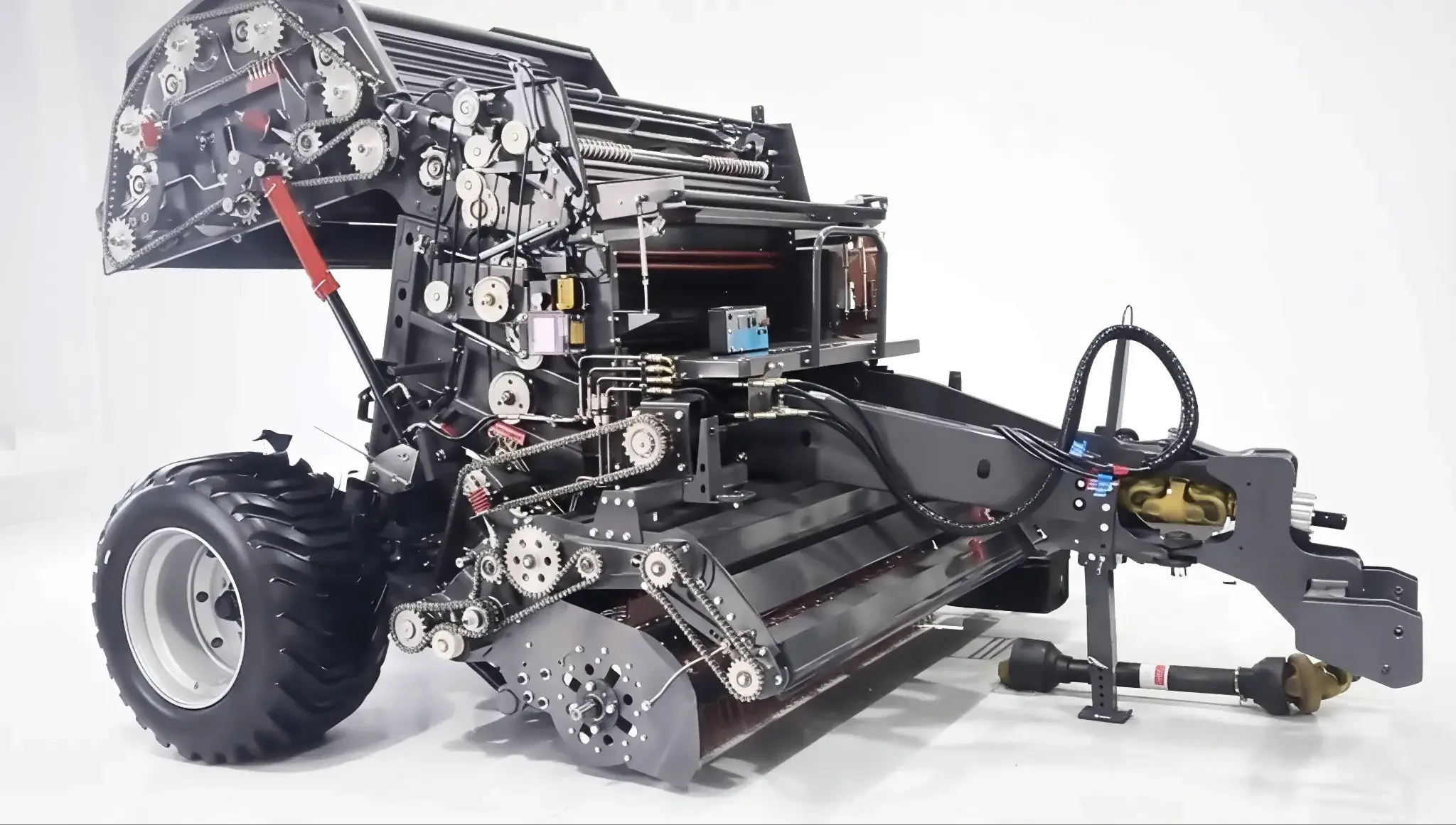
The chassis frame is the starting point of structural integrity. CNC laser-cut from high-strength structural steel plate with full-penetration MIG welds at all primary load paths, the frame must withstand both the compressive forces of baling and the dynamic shock loads that occur when the round baler pickup encounters variations in stover density — from near-empty gaps where the combine’s chopper already processed the material to dense unprocessed zones where stalk volume peaks. Post-weld precision machining of the roller mounting bores ensures geometric accuracy is maintained even after thermal distortion from the welding process, critical for producing round, balanced bales across the full range of stover conditions in a commercial biomass campaign.
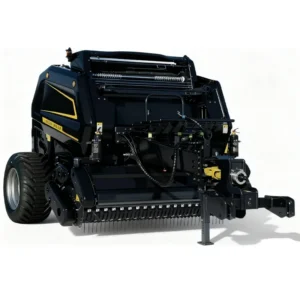
The rear gate assembly requires particular structural attention in high-throughput stover baling. Commercial biomass operations may cycle the gate 200-400 times per operating day, compared to 50-100 cycles in a typical hay farm operation. At this frequency, fatigue loading on gate hinge welds accumulates faster. The gusseted hinge flange design distributes cylinder reaction forces across a broad area of gate plate rather than concentrating them at a single attachment boss, delivering the fatigue endurance that commercial round baler duty requires. The cushion cylinder fitted as standard on 9YG-2.24D S9000 Classic and Transcend models decelerates the gate in the final 15 degrees of its closing arc, eliminating the impact shock that would otherwise accumulate as weld fatigue at high daily cycle rates. For a biomass contractor operating 60-80 days per year at 300 gate cycles per day, this means 18,000-24,000 cushioned gate closings annually across a machine service life of 8-12 years.
Chassis Frame
CNC laser-cut structural steel. Full-penetration MIG welds. Post-weld roller bore machining for commercial biomass baling geometric accuracy.
Gate Assembly
Gusseted hinge flanges, hardened pivot pins, sealed spherical bearings. Cushion cylinder rated for 18,000-24,000 cycles per year commercial use.
Compression Rollers
16 or 18 induction-hardened rollers resist silica abrasion from stover cell walls. Dual-side 20A heavy chain on S9000 series for symmetric compression.
Dual Gearbox Tongue
90 degree lateral rotation. Rigid drawbar connection eliminates PTO angle stress on headland turns. Safety torque shaft on Transcend variant absorbs stover slug overloads.
6. Material Systems Built to Handle Abrasive Corn Stover
Corn stover is significantly more abrasive to baler components than grass hay and comparable in abrasiveness to rice straw. The silica content in corn stalk cell walls — deposited during plant growth and concentrated in outer epidermal layers — acts as a fine abrasive against any steel surface it contacts repeatedly under pressure. In a commercial biomass round baler processing 80-120 tonnes of dry stover per operating day, cumulative abrasive wear on unprotected steel surfaces can become visible within a single campaign season. Material system choices at the design stage therefore have a direct and measurable effect on the maintenance budget and operating profitability of a biomass collection enterprise.
The compression rollers are the highest wear-priority components in the biomass round baler. Formed from cold-drawn seamless steel tube, the roller outer surfaces are induction-hardened or hard-chrome plated to bring working hardness into the 55-62 HRC range. At this hardness level, the hardness differential between the roller surface and the silica particles in stover is insufficient for efficient abrasive cutting. The same hardened surface resists adhesion of lignin-rich stover material that, at elevated temperatures in a heavily worked bale chamber, can partially bond onto softer steel surfaces and build up a layer that eventually disturbs roller balance and forces an unscheduled service stop.
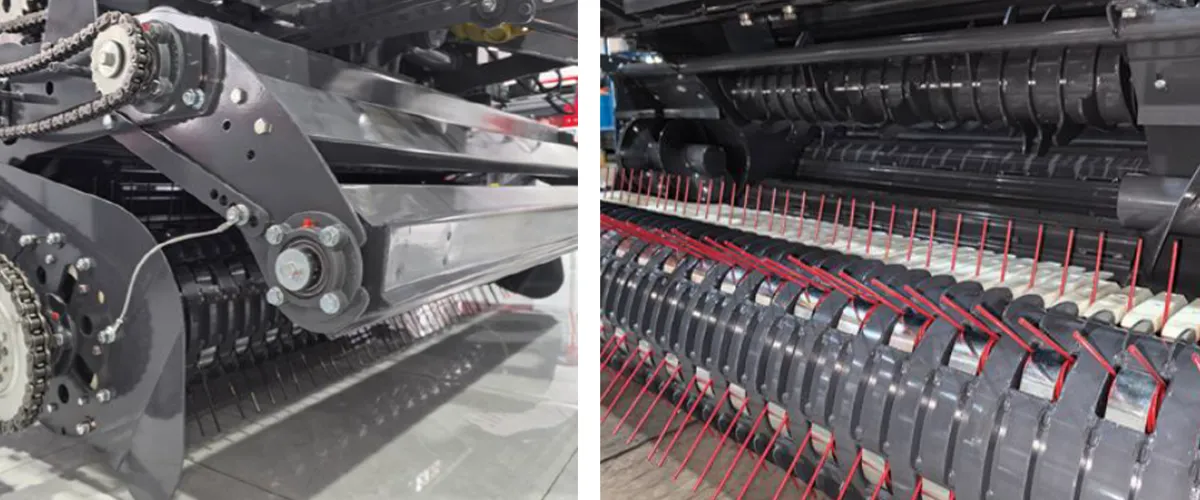
Spring tines for corn stover collection are heat-treated medium-carbon steel, typically 65Mn specification, achieving a carefully balanced hardness profile: hard enough at the surface to resist stover contact abrasion, with a tough core that resists bending fatigue from millions of pickup flex cycles across a long biomass season. For the hammer-claw pickup on the 9YG-1.0C round baler, the claws themselves are manufactured from wear-resistant alloyed steel with a higher hardness specification than standard spring tines, reflecting the more aggressive contact forces involved in pulling standing stalks from soil level. The zinc-phosphate corrosion protection coating on all tines and claws extends their useful life in the wet morning conditions of Korean autumn harvest periods, when dew maintains a continuously moist environment around the tine contact zones throughout the early-morning baling hours.
| Component | Material / Treatment | Biomass Relevance | Typical Service Life |
|---|---|---|---|
| Compression rollers | Induction-hardened / chrome plated, 55-62 HRC | Resists silica abrasion from stover cell walls | 3-5 years commercial use |
| Spring tines | 65Mn heat-treated, zinc-phosphate coated | Fatigue and abrasion in autumn stover | 1.5-3 seasons biomass |
| Hammer claws (9YG-1.0C) | High-hardness wear-resistant alloy steel | Direct stalk-pulling from soil-level contact | 1-2 seasons heavy stover |
| Cylinder rods | Hard chrome plated, approx. 800 HV | Fire safety critical in dry stover environment | 5-8 years seal-dependent |
| Drive chain (20A heavy) | Hardened alloy steel pins and plates | Handles peak torque in stover density surges | 2-4 seasons correct tensioning |
7. Round Baler Gearbox Demands in Corn Stover Biomass Operations
The round baler gearbox in a corn stover biomass application experiences a more demanding duty cycle than in typical hay or even rice straw farm operations. Commercial biomass stover collection runs at sustained high throughput with relatively few idle periods — an operator maintaining a biomass supply contract will push the machine to its rated capacity for the duration of each operating day. The gearbox receives 720 r/min PTO input continuously and must distribute this power to the compression rollers, pickup reel, and feed components without generating the heat and vibration that would indicate bearing distress or gear mesh problems under load.
The dual gearbox architecture of the 9YG-2.24D S9000 round baler series contributes to biomass stover operation efficiency in a specific way that goes beyond basic power transmission. In a corn field biomass context, the round baler must navigate between partially standing stalks, irregular windrow shapes from the combine’s chopper, and field margins where stover density drops off sharply. The dual gearbox tongue rotation of 90 degrees in either direction allows the tractor-baler combination to make these navigation adjustments without requiring wide arc turns that leave uncollected stover on the field. For a biomass contractor paid on delivered tonnage, this maneuverability improvement has a direct revenue impact.
The safety torque shaft fitted on the Transcend variant — part of the dual cross-joint drive shaft design — provides overload protection against the sudden high-torque events that occur in stover baling when the bale chamber encounters an unexpected slug of densely packed unprocessed material. In corn stover biomass service, this protection is particularly valuable because the non-uniform field distribution of stover means intake rate varies more unpredictably than in a well-formed hay windrow. Each slug event absorbed by the torque limiter rather than transmitted to the gearbox represents a saved fatigue cycle on gear teeth and bearing races, cumulatively extending round baler gearbox service life in proportion to the frequency of slug events across a biomass season. Post-season gearbox oil change is recommended regardless of hours run, as sustained high-load operation accelerates oxidation of the gear oil additive package faster than intermittent farm baling conditions.
8. Bale Density Requirements for Biomass Energy Applications
Biomass energy facilities specify minimum bale density requirements for the feedstock they accept, and these requirements differ by end-use application. Understanding the density targets allows round baler operators to configure their sensor-controlled density systems correctly and ensures bales meet contract specifications without having to re-process or reject substandard material at the receiving facility. A round baler machine producing consistently dense, specification-compliant bales is the foundation of a reliable biomass supply business.
| Biomass End Use | Target Bale Density | Target Moisture | Notes |
|---|---|---|---|
| Direct combustion power plant | 150-200 kg/m3 | 20% or below | High density reduces transport cost per GJ |
| Pellet mill feedstock | 130-180 kg/m3 | 12-18% | Lower moisture reduces pre-drying cost at mill |
| Biogas / anaerobic digestion | 100-150 kg/m3 | 30-55% | Higher moisture supports digestion process |
| Co-firing coal and biomass | 160-200 kg/m3 | 15% or below | Strict quality requirements, ash content monitored |
The sensor-controlled hydraulic density management system on all 9YG round baler models measures bale diameter growth through a star-wheel position sensor and modulates compression back-pressure in real time to hold the operator-set density target. For biomass direct combustion applications requiring 150-200 kg/m3, this typically means a hydraulic pressure setting of 150-180 bar on the density control circuit. The consistent density delivery across variable stover conditions — which the sensor system achieves automatically rather than requiring operator adjustment as field conditions change — is particularly valuable in commercial biomass supply contexts where contractual density specifications must be consistently met to avoid rejection penalties. This is one of the strongest arguments for investing in a sensor-equipped round baler machine over a mechanically pre-tensioned design for biomass supply work.
9. Net Wrapping vs. Twine in Biomass Bale Logistics
For corn stover biomass bales transported to an energy facility and processed within weeks of collection, the choice between net wrapping and twine tying has logistical and economic implications that differ from forage storage applications. Two considerations dominate: wrapping speed (which directly affects bale output rate and daily tonnage) and contamination risk (because some biomass conversion technologies — particularly pellet milling — are sensitive to plastic contamination from bale wrapping material entering the process stream).
Net wrapping is significantly faster than twine tying per bale — typically 2-3 net passes at 10-20 seconds total wrap time versus 3-4 twine passes at 30-50 seconds. For a commercial biomass round baler targeting 100 bales per 10-hour operating day, this difference in wrap speed accounts for 15-30 minutes of additional productive baling time per day. The hydraulic net-wrap sub-circuit on 9YG series round baler models controls netting tension through a hydraulic brake clutch that keeps the net drawn snugly against the bale surface during the wrap cycle, producing a tight, uniform net coverage that protects the bale during transport and outdoor staging. For direct combustion facilities that accept whole bales on a conveyor feed system, the net wrapping is typically removed mechanically at the facility intake and does not create a contamination risk.
Twine wrapping remains the preferred option for biomass applications where plastic contamination is a strict process constraint — notably biogas facilities where plastics can block pump systems and anaerobic digestion processes. Natural twine variants such as sisal or other biodegradable fibre twines that can be co-processed with the stover in a biogas digester eliminate the contamination concern entirely. The trade-off is slower wrap speed and a more complex mechanical knotting mechanism requiring more maintenance attention than the simpler hydraulic brake clutch of a net-wrap system. Farmers and biomass contractors should confirm the wrapping material requirements with their energy facility off-taker before specifying the round baler wrapping configuration — a conversation that is best had before committing to a machine specification, not after.
10. Round Baler Product Range for Corn Stover Biomass Collection
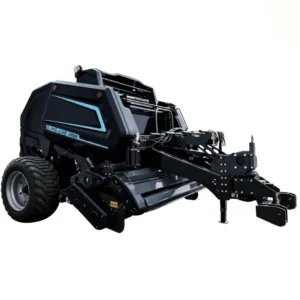
The following round baler machine models cover the full range of corn stover biomass collection scenarios from single-farm supplemental recovery to commercial biomass contractor operations serving energy facility supply agreements.
11. Regulatory and Environmental Framework for Corn Stover Biomass by Region
Corn stover biomass collection and energy use operates within a layered regulatory environment covering the round baler machine itself, the biomass energy supply chain, and the agricultural land management practices associated with residue removal. Korean corn stover biomass suppliers and the round baler equipment they operate must navigate these frameworks to access subsidy programmes, meet energy facility procurement standards, and comply with environmental protection requirements.
Korea
Round baler machines used in commercial corn stover biomass collection in Korea must hold a valid Agricultural Machinery Performance Test Certificate (농업기계 성능검정서) under the Act on the Promotion of Agricultural Mechanisation (농업기계화 촉진법) to be eligible for MAFRA purchase subsidies. The round baler gearbox must demonstrate rated torque capacity under the test conditions. On the biomass energy supply side, the New and Renewable Energy Development, Use and Diffusion Promotion Act governs the qualification of agricultural biomass as a renewable energy source eligible for the Renewable Portfolio Standard (RPS) system. Corn stover biomass round bales must meet moisture and density specifications set by the receiving power facility to qualify for RPS credit. Korean environmental guidance from the Rural Development Administration additionally recommends limiting stover removal to no more than 50% of above-ground biomass in any single season to maintain soil organic matter.
European Union
EU Machinery Directive 2006/42/EC (transitioning to EU Machinery Regulation 2023/1230 from January 2027) requires CE marking for round baler machines, with EN 1553 covering agricultural machinery gearbox safety requirements including vent system design and rated power labelling. For biomass energy, the EU Renewable Energy Directive RED III sets sustainability criteria for agricultural biomass used in energy generation — including requirements that biomass sourcing does not deplete soil carbon stocks, directly mirroring Korean RDA guidance on stover removal rates. EU biomass power facilities must demonstrate supply chain compliance with these criteria, which means round baler operators in EU countries need documentation of their stover removal rates and field management practices to support their customers’ regulatory compliance submissions.
United States
ASABE Standard ASAE S430 and OSHA 29 CFR 1928 govern round baler machine safety in agricultural operations. For corn stover biomass specifically, the US Renewable Fuel Standard (RFS) under the Energy Independence and Security Act of 2007 classifies corn stover ethanol as a cellulosic biofuel qualifying for Renewable Identification Numbers (RINs), subject to lifecycle greenhouse gas reduction thresholds. The USDA Agricultural Research Service has published recommended stover removal guidelines for US Corn Belt soils, typically suggesting maximum removal of 30-70% of above-ground stover depending on soil erodibility and organic matter content — guidance that round baler operators in commercial biomass supply contracts should apply to ensure long-term soil productivity is maintained alongside the biomass revenue stream.
Japan and Southeast Asia
In Japan, the Act on Special Measures Concerning Procurement of Electricity from Renewable Energy Sources covers agricultural biomass including corn stover under its biomass power category. Round baler machinery imported to Japan must comply with JIS B series standards for tractor-drawn agricultural implements. Vietnam and Thailand — significant corn producers and emerging biomass energy markets — require imported agricultural machinery to meet national standards and registration requirements, with biomass energy supply chains increasingly subject to sustainability certification requirements from international buyers and financing institutions operating in those markets.
| Region | Machine Standard | Biomass Energy Framework |
|---|---|---|
| Korea | Agricultural Mechanisation Act / KS B ISO 4413 | New and Renewable Energy Act / RPS system / RDA 50% removal guideline |
| EU | Machinery Directive 2006/42/EC / EN 1553 | RED III biomass sustainability criteria / soil carbon requirements |
| USA | ASABE S430 / OSHA 29 CFR 1928 | Renewable Fuel Standard / USDA stover removal guidelines |
| Japan | JIS B series agricultural implement standards | Feed-in Tariff Act / biomass power procurement rules |
| Russia / CIS | TR CU 010/2011 / EAC mark | National bioenergy development programmes (country-specific) |
12. Corn Stover Biomass Supply Chain: From Field to Energy Plant
The round baler occupies a central position in the corn stover biomass supply chain, but understanding the full chain — from post-harvest field conditions through collection, storage, transport, and energy plant reception — helps round baler operators optimise their machine settings and logistics for each link. Disconnects between the round baler’s output specification (bale density, moisture, size) and the energy facility’s receiving requirements are the most common cause of supply chain inefficiencies, and most can be resolved by ensuring the round baler is configured correctly for the end-use destination from the outset.
The collection phase begins immediately after corn combine harvesting, when stover is still partially standing at cut height or lying in field-chopped segments. The round baler — whether using a hammer-claw pickup for direct standing stover collection or a spring-tine pickup for windrowed material — should ideally begin baling within 2-4 days of harvest in dry autumn conditions to capture stover at target moisture before either further drying or re-wetting from rain events. Korean autumn weather patterns in September-October make timely baling critical, as the frontal systems that bring autumn rains can rewet standing stover rapidly and require additional field drying time before round baler baling can resume.
Storage of completed round bales prior to delivery should keep bales off bare soil surfaces to prevent moisture wicking from below, ideally positioned on a well-drained gravel or concrete pad with net-wrap intact. For biomass combustion applications, outdoor storage for up to 6 months is generally acceptable for well-wrapped, dense bales at 15-20% moisture. Unlike silage grass bales that depend on the net seal for fermentation preservation, stover biomass bales are simply degrading slowly during outdoor storage, and the primary risk is outer layer mould affecting only 5-10% of bale mass in well-wrapped high-density product. The round baler machine’s ability to produce consistently dense, tightly net-wrapped bales is therefore as important for biomass storage logistics as it is for energy content per bale delivered to the facility.
Corn Stover Biomass Supply Chain Key Stages
Stage 1
Corn grain harvest — combine removes grain, stover cut or standing
Stage 2
Optional field drying 2-4 days for target moisture range
Stage 3
Round baler collection — hammer-claw or spring-tine pickup
Stage 4
Net-wrapped bales stacked on drainage pad for outdoor storage
Stage 5
Transport to biomass facility on flat-bed trailer
Stage 6
Facility reception — moisture check, density verification, net removal
13. About Our Round Baler Range
Our FASCAR round baler lineup spans from the compact 9YG-1.0 for supplemental farm-scale stover collection to the high-throughput 9YG-2.24D S9000 Transcend for commercial biomass supply contractors operating against energy facility tonnage commitments. Every baler model in the lineup uses the proprietary axial-flow semi-forced feed mechanism that handles coarse, irregular corn stover without the blockages that conventional round baler designs suffer in this application. The 9YG-1.0C hammer-claw pickup enables direct collection of standing stalks without prior cutting or windrowing — a decisive advantage for Korean and East Asian biomass programmes where labour for additional field passes is limited. All models carry ISO 9001 certification and have delivered proven performance in corn stover and other biomass residue applications across Northeast Asia.
For biomass supply programme planners, energy facility procurement teams, and individual farmers evaluating entry into corn stover biomass supply, our team can assist with round baler model selection, bale specification guidance, subsidy certification status, and parts support. Contact us for a tailored recommendation based on your collection area, annual tonnage target, and energy facility requirements.
Frequently Asked Questions
Q1. Which round baler model is best suited for collecting corn stover biomass in Korean regions where combine harvesting leaves stalks at cut height? +
Q2. What bale density should Korean biomass suppliers target when delivering corn stover bales to a direct combustion power plant under an RPS supply contract? +
Q3. How does the round baler gearbox hold up during sustained commercial corn stover biomass collection compared to standard hay baling? +
Q4. Where can Korean biomass energy project developers get a supplier quote for round baler machines configured for corn stover commercial collection contracts? +
Q5. What round baler parts wear fastest during commercial corn stover biomass collection and how should Korean contractors plan their parts inventory? +
Q6. How does the axial-flow semi-forced feed system in the 9YG round baler improve collection efficiency for corn stover biomass compared to conventional designs? +
Q7. What is the recommended corn stover removal rate for Korean biomass programmes to comply with RDA soil health guidelines while maximising round baler output? +
Q8. How does a small round baler for 40 hp tractor compare to a larger commercial round baler machine for corn stover biomass collection cost per tonne in Korea? +
Q9. When is the optimal time to bale corn stover in Korean regions to meet pellet mill moisture specifications without extra drying cost at the facility? +
Q10. How does the round baler application for corn stover biomass collection in Korea qualify for MAFRA equipment subsidies and what certification is required? +
संपादक: पीएक्सवाई