1. Hemp Fiber as an Industrial Crop: Why It Is Growing in Korea and East Asia
Industrial hemp (Cannabis sativa L.) has experienced a significant resurgence in commercial cultivation across East Asia over the past decade, driven by growing demand for natural fiber in the textile, automotive composite, construction biocomposite, and paper industries. In South Korea, industrial hemp cultivation is governed by strict licensing requirements under the Narcotics Control Act (마약류 관리에 관한 법률) but has been progressively liberalised since 2020 to support fiber and seed production in designated cultivation zones, particularly in Andong (Gyeongbuk province), which is Korea’s primary licensed hemp-growing region with centuries of traditional cultivation history. Korean industrial hemp varieties selected for fiber production — including traditional Andong hemp (안동삼) — produce stalk heights of 1.5–3.5 meters at harvest maturity, with bast fiber content of 25–35% of dry stalk mass.
The global industrial hemp fiber market is expanding at compound annual growth rates, and with it the demand for reliable round baler equipment of 15–20% in the composite materials and geotextile segments, creating sustained demand for raw bast fiber bales from processing facilities in Korea, Japan, and Europe. This demand has elevated the logistical question of how to efficiently collect, compact, and transport harvested hemp stalks from the field to the fiber retting or decorticating facility. The round baler — which can process standing cut hemp, windrowed stalks, or field-retted straw in a single pass — has emerged as the most practical baling solution for hemp fiber operations at farm scale, provided the machine is correctly selected and configured for the specific physical challenges that hemp’s long, interlocking fibers create inside the baling mechanism.
Beyond Korea, industrial hemp cultivation is expanding rapidly in Japan, and the round baler machine need is growing with it (where THC thresholds were updated in the 2023 Cannabis Control Act revision), Vietnam, and Thailand, as well as across the EU under the Common Agricultural Policy framework that supports hemp cultivation below 0.2% THC. Each of these markets needs round baler solutions that can handle hemp without the chronic fiber wrap-up and blockage problems that have historically made hemp baling difficult with standard round baler machine equipment not designed for long fiber. Understanding what mechanical features distinguish a hemp-capable round baler machine from a standard hay baler is the starting point for any farmer or cooperative entering the industrial hemp fiber supply chain.

2. Why Long-Fiber Hemp Challenges Conventional Round Baler Designs
Industrial hemp presents a harvesting challenge for any round baler that is fundamentally different from both grass hay and cereal straw, and the reasons are rooted in the crop’s physical structure. Hemp stalks at harvest maturity are 1.5–3.5 meters long — far longer than the 0.3–0.8 m stem lengths typical of grass hay and cereal straw — and the outer bast fiber layer of the stalk contains long, strong cellulose fibers that are actively designed by the plant’s biology to resist being pulled apart. When long hemp fibers encounter the rotating components inside a round baler, they do not break off cleanly as shorter hay stems do; instead, they wrap continuously around rollers, bearings, and drive shafts, creating the progressive entanglement that eventually seizes the round baler machine.
The problem is compounded by hemp density, which challenges the round baler. At peak fiber maturity — typically around 120–130 days from sowing — industrial hemp can produce 8–15 tonnes of dry stalk mass per hectare. When cut and laid in windrows at this yield, the material forms an extremely dense, intertwined mat of long fibers that a pickup reel must lift and feed into the compression chamber simultaneously. Conventional cam-guided pickup mechanisms create a constriction at the tine-retraction zone where long hemp fibers wrap around the cam ring, accumulating until they either break the cam drive or produce a solid plug of wound fiber that stops the machine completely.
The compression rollers inside the round baler chamber face a related problem. Hemp bast fibers, when under compression, behave like a bundle of cables rather than a mass of short, randomly oriented fibers. The long-fiber bundles tend to align along their length during rolling rather than folding into the random orientations that give a hay bale its structural cohesion. This fiber alignment can produce a round baler bale that, while dense at the perimeter, has a less cohesive core structure than would be seen with grass hay. The round baler bale can also develop a tendency to unwind partially when the gate opens, particularly if the net-wrap tension was insufficient to consolidate the outer fiber layer before ejection. These problems are not insurmountable — but they require a round baler machine designed with these specific failure modes in mind, rather than a standard hay baler pressed into an application it was not engineered for.
3. How the Round Baler Action Mode Adapts for Hemp Fiber Collection
Successful hemp fiber baling with a round baler requires these three action phases differently from standard hay operation: the pickup must handle long, entangling fibers without wrap-up; the feed mechanism must prevent the coarse, cohesive hemp mat from bridging at any constriction point; and the compression chamber must form a coherent bale from material that resists the random-orientation packing that shorter fibers naturally achieve.
3.1 Pickup Action for Cut Hemp
Cut and windrowed hemp, whether fresh-cut or field-retted, lies in a dense, intertwined mat that the pickup reel must lift cleanly from the ground. The spring-tine pickup used across the 9YG round baler range performs this lifting action by sweeping tine tips underneath the mat and throwing material rearward. For round baler hemp service specifically, the key variable is the tine tip speed relative to the tractor’s forward speed — a ratio known as the crop factor. Too low a crop factor leaves material on the ground; too high a crop factor causes the tines to beat the hemp mat rather than lift it cleanly, shattering the brittle inner hurds (woody core) and reducing fiber bundle integrity. A crop factor of 1.3–1.6 is generally recommended for hemp operations, which corresponds to tractor ground speeds of approximately 6–10 km/h at standard PTO-driven tine speeds.
3.2 Feed Mechanism and Anti-Wrap Design
The axial-flow semi-forced feed mechanism across the 9YG round baler series is particularly valuable for hemp fiber collection because it eliminates the cam ring and retaining guard that are the primary sites of long-fiber wrap-up in conventional baler designs. Without a fixed cam ring for hemp fibers to catch on, the long bast fiber strands pass through the pickup-to-chamber transition zone continuously rather than accumulating into the progressive entanglement that characterises hemp baling failures. The absence of the cam ring also means there are no stationary surfaces adjacent to the rotating pickup cylinder at the fiber handoff point — a geometry that is the single most important anti-wrap feature for long-fiber crop baling. Operators switching from conventional round baler equipment to the 9YG series for hemp fiber work consistently report a substantial reduction in wrap-up stops per operating day, which translates directly into more tonnes processed per available seasonal window.
3.3 Compression Chamber Rolling Action for Long Fiber
Inside the drum-roller compression chamber, the 16 or 18 fixed steel rollers that form the bale-forming zone must work hemp fibers into a coherent round bale despite their tendency toward linear alignment. The key is to ensure that the incoming material enters the rolling zone in a controlled, even stream rather than in irregular surges that allow large clumps of aligned fibers to enter together. Maintaining a moderate, steady tractor speed of 6–10 km/h in hemp — lower than the maximum speeds achievable in grass hay — gives the rollers time to integrate each incoming layer of hemp material into the rotating bale core before the next layer arrives. The sensor-controlled density management system on all 9YG round baler models continuously adjusts hydraulic back-pressure to compensate for the irregular density variations in hemp windrows, ensuring that the final bale meets the density specification required by the fiber processing facility even across variations in windrow volume.
4. Pickup System Selection for Hemp: Long-Fiber Crop Considerations
Unlike corn stover collection where the hammer-claw pickup offers significant advantages for standing material, hemp round baler fiber collection almost always uses the spring-tine pickup, because hemp’s harvesting protocol involves cutting the stalks first and leaving them to rett in the field before baling. The field retting process — during which dew, rain, and microbial activity partially degrade the pectin bonds between the bast fiber bundles and the woody hurds — typically takes 2–6 weeks depending on Korean seasonal temperatures and rainfall. During this retting period, the cut hemp stalks dry and partially decompose to a mat of loose, partially separated fiber that is much better suited to spring-tine pickup than to the aggressive hammer-claw action designed for standing material.
The round baler pickup width of 2240 mm on the 9YG-2.24D series is well matched to hemp windrow widths produced by standard hemp cutting equipment — typically a disc mower cutting a 3.0–4.5 m swath that is then tedded or raked into a pickup-width windrow. For smaller hemp plots or cooperative operations sharing a single round baler, the 2150 mm pickup of the 9YG-1.25A and the 1900 mm pickup of the 9YG-1.0 provide useful options for matching machine size to available tractor power and field scale. In all cases, the round baler pickup hydraulic float capability that allows self-adjustment to the uneven surface of a field-retted hemp windrow — which can vary in height from nearly flat to 30–40 cm of accumulated material — is an essential feature for consistent hemp fiber recovery.
One important difference from grass hay pickup is the need to limit the pickup reel height to a lower setting than would be used for fine-stemmed crops. Field-retted hemp stalks can extend horizontally across the windrow rather than standing upright, and if the pickup tine tips are set too high, they will skip over the outermost layer of flat-lying stalks rather than engaging beneath them. Setting the round baler pickup float to a lower height while maintaining the float flexibility to handle terrain variation is the standard operating approach for hemp fiber round baler work. Regular tine tip inspection during hemp round baler baling sessions is also more important than in grass hay service, because the greater mass and rigidity of individual hemp stalk sections impose higher bending loads on each tine contact event than lighter grass stems produce.
| Pickup Parameter | Field-Retted Hemp | Standard Grass Hay |
|---|---|---|
| Recommended tine height setting | Low float, 3–5 cm above soil | Medium float, 5–8 cm above soil |
| Optimal crop factor range | 1.3–1.6 | 1.5–2.0 |
| Tractor operating speed | 6–10 km/h | 8–20 km/h |
| Wrap-up risk | High in conventional round baler; low with cam-free 9YG design | Rendah |
| Tine inspection frequency | Every 4–6 h operating | Every 8–10 h operating |
| Pickup width recommendation | Match to tedded windrow width | Standard windrow match |
5. Manufacturing Structure Built for Long-Fiber Crop Durability
Hemp fiber baling places specific structural demands on a round baler machine that are distinct from both grain straw and grass hay applications. The combination of high stalk mass per unit area, long interlocking fiber strands that create lateral loads on rollers and bearings, and the sustained operating periods typical of commercial hemp fiber supply operations requires a machine structure engineered with more than average robustness at every load-bearing point. A round baler machine that performs reliably in hay service may show its structural limitations quickly when placed in hemp fiber service at comparable throughput rates.
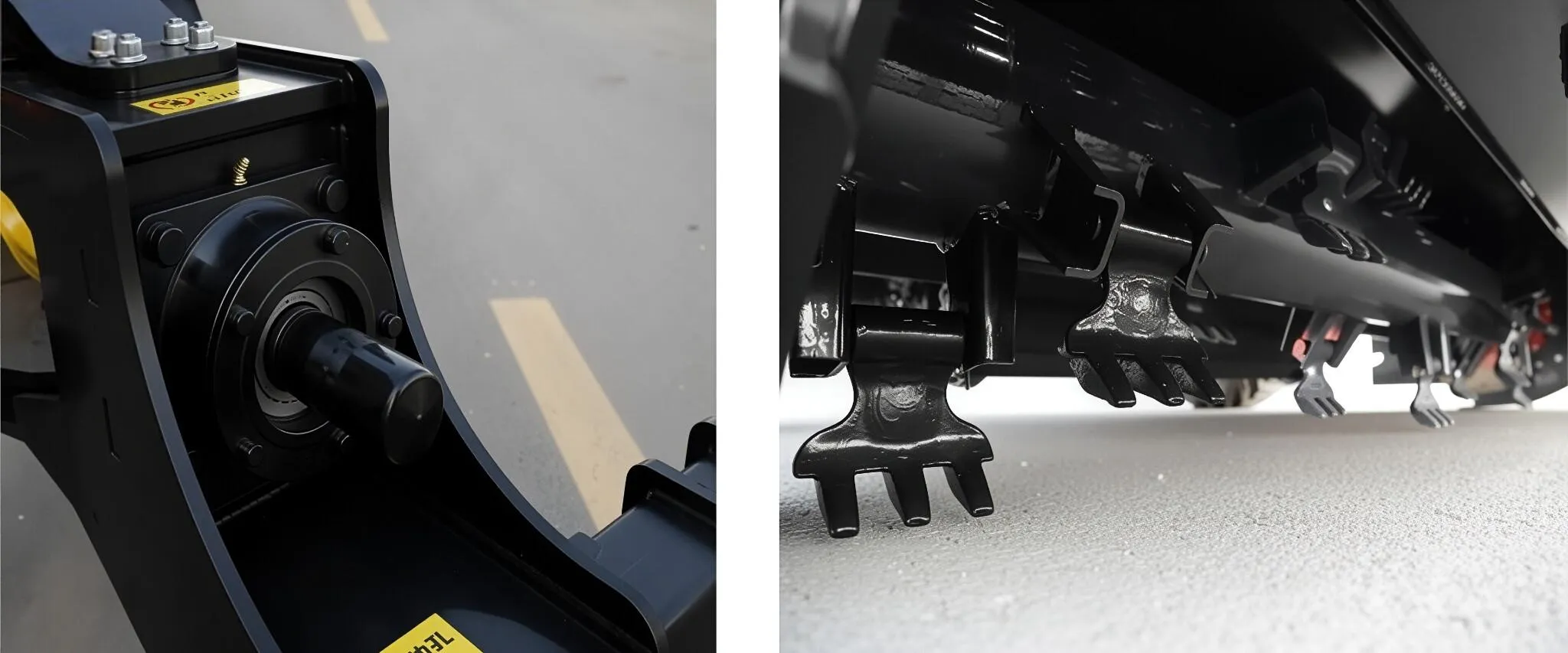
The round baler chassis frame is the structural foundation from which all other performance characteristics follow. CNC laser-cut structural steel with full-penetration MIG welds forms the round baler chassis at all primary load paths, the 9YG series chassis is designed to handle the asymmetric loading that hemp fiber creates when the bale chamber receives an uneven feed of interlocked stalk material from one side of the windrow before the other. Post-weld precision machining of the compression roller mounting bores maintains the geometric accuracy of the roller array even after the thermal distortion introduced by welding, ensuring that all 16 or 18 rollers remain in their designed radial positions relative to the bale-forming zone. This geometric precision is what allows the rollers to apply even, progressive compression to the hemp mass as the bale grows, rather than leaving regions of lower density where a misaligned roller fails to contribute its share of compression force.
The rear gate on a round baler machine in hemp fiber service carries a specific challenge not present in hay baling. Hemp bast fibers on the outer surface of the completed bale can partially adhere to the rear roller surfaces during the compression phase, particularly when the bale contains freshly-retted hemp at 20–35% moisture. When the gate opens, these adhesions can cause the bale to momentarily resist ejection before releasing — a brief but high-force event that creates a shock load on the gate hinge welds. The cushion cylinder fitted to the 9YG-2.24D S9000 Classic and Transcend round baler models manages this risk by decelerating the gate’s motion at both the opening and closing extremes of its arc, dampening the force transmission to the hinge structure regardless of whether the load is created by bale adhesion on opening or by gate momentum on closing.
Chassis Frame
CNC laser-cut structural steel. Full-penetration MIG welds. Post-weld roller bore machining — essential for even compression across interlocked hemp fiber mass.
Gate and Cushion System
Gusseted hinge flanges, hardened pivot pins, sealed spherical bearings. Cushion cylinder manages bale-adhesion ejection shock in fresh-retted hemp service.
Compression Roller Array
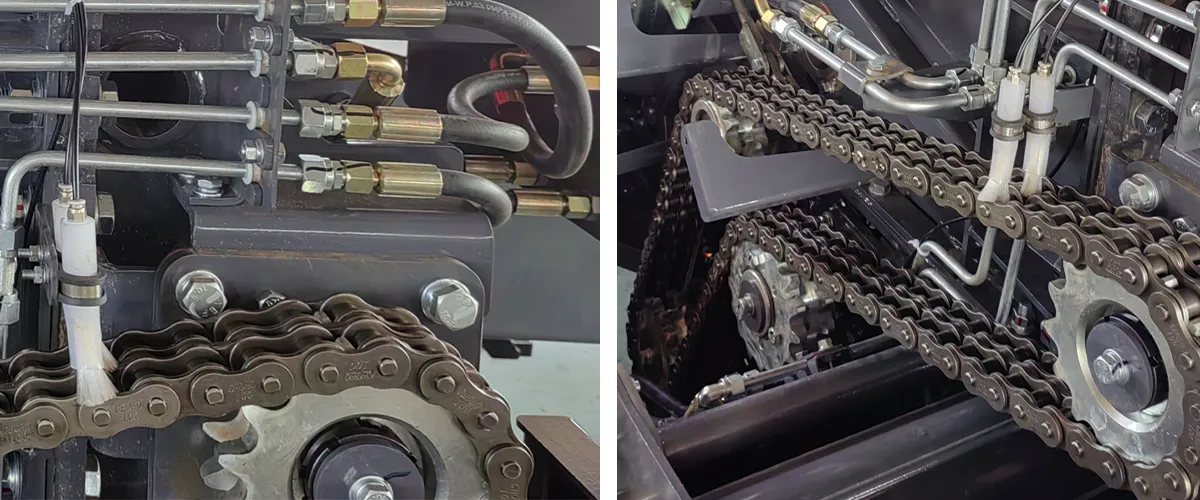
16 or 18 rollers. Hardened surfaces with anti-adhesion finish. Dual-side 20A chain drive on S9000 series ensures symmetric torque distribution through dense hemp fiber mass.
Feed Zone — Cam-Free Design
Axial-flow semi-forced feed eliminates cam ring and retaining guard. Removes the primary fiber wrap-up site that makes conventional round balers unreliable in hemp fiber service.
6. Material Systems That Resist Hemp Fiber Wrap-Up and Stem Abrasion
The material choices in a round baler construction have a more direct effect on its suitability for hemp fiber work than for most other crop applications, because hemp simultaneously challenges component surfaces in two distinct ways: its long, strong bast fibers create entanglement and wrapping forces on rotating parts, while its abrasive inner hurd (the woody core of the stalk) acts as a fine abrasive against steel surfaces wherever the two materials meet under compression. A round baler material system that handles one of these challenges without addressing the other will show accelerated wear in hemp service regardless of how robustly it is built.
The compression rollers are the most critical material point for a hemp-capable round baler. The outer surface of each roller must simultaneously resist the adhesion of moist hemp fiber (which has a natural tackiness from the partially broken-down pectin bonds left by field retting) and the abrasion of hemp hurds (which contain silica and cellulose-lignin complexes similar in hardness to cereal straw). Induction hardening or hard-chrome plating brings the roller surface into the 55–62 HRC hardness range, which resists abrasion effectively. The smooth, hard surface also reduces the mechanical grip that moist hemp fiber needs to initiate the wrapping around the roller that eventually leads to build-up and seizure. In practice, a properly hardened round baler roller surface in hemp service will remain functionally effective for 3–5 years of typical Korean two-cut hemp production, compared to 1–2 years for untreated surfaces.
Spring tines must handle the specific loading pattern of lifting dense hemp windrows where individual stalks can be 1.5–3.5 m long. The bending moment on a tine that has hooked under a long hemp stalk at one end while the other end of the stalk is still resting on the ground is substantially higher than the bending moment from lifting short-stemmed grass. Heat-treated 65Mn medium-carbon steel tines provide the toughness-hardness balance needed to flex under this load without fatigue cracking, while the zinc-phosphate surface coating extends tine service life in the moist conditions of early-morning hemp baling when dew has re-moistened the retted stalks. The tine tips themselves are the first parts to show wear in hemp service, and maintaining sharp, undamaged tine tips is more important for hemp collection efficiency than for grass hay, because blunt or bent tines tend to push hemp mat along the soil rather than lifting cleanly underneath it.
| Component | Material / Treatment | Hemp-Specific Relevance | Expected Service Life |
|---|---|---|---|
| Compression rollers | Induction-hardened or chrome plated, 55–62 HRC | Resists fiber adhesion and hurd abrasion simultaneously | 3–5 years two-cut hemp use |
| Spring tines | 65Mn heat-treated, zinc-phosphate coated | High bending moment from long hemp stalk pickup | 2–3 seasons hemp service |
| Roller bearing seals | Labyrinth seal, re-greaseable or sealed-for-life | Hemp hurd dust is fine and penetrating — seal quality critical | Inspect every 100 h hemp service |
| Hydraulic cylinder rods | Hard chrome plated, approximately 800 HV | Hemp fibers can abrade unprotected rod surfaces at ejection | 5–8 years seal-dependent |
| Drive chain (20A heavy) | Hardened alloy steel pins, sealed rollers | Peak torque from dense hemp stalk slugs entering chamber | 3–5 seasons with correct tensioning |
7. Round Baler Gearbox Demands in Hemp Fiber Harvesting
The round baler gearbox faces an operating duty cycle in hemp fiber service that combines the sustained high-torque demands of processing a dense, long-fiber crop with the specific challenge of irregular intake events that occur when the tractor and round baler encounter zones of concentrated hemp windrow density. Industrial hemp at yield levels of 8–15 tonnes per hectare produces windrows that are significantly heavier per linear meter than typical grass hay, and the weight and stiffness of individual hemp stalk sections create higher peak torque spikes at the baler intake than shorter-stemmed crops generate. These peak torque events are transmitted directly to the gearbox gear mesh and bearing races, and if the gearbox is not designed with adequate torque reserve, each event becomes a fatigue cycle that progressively degrades gear tooth surfaces and bearing raceway finish.
All 9YG round baler series models accept 720 r/min PTO input from the tractor. For hemp operations, maintaining full PTO speed throughout the baling pass — including during the approach to dense windrow zones where an untrained operator might be tempted to reduce engine speed — is critical for keeping the pickup tine speed at the correct level for clean fiber pickup without entanglement. A momentary PTO speed reduction during a dense windrow entry reduces tine velocity below the crop-factor threshold for clean lifting, causing the pickup to drag and tangle rather than sweep, which is the trigger for the fiber wrap-up events that stop the machine.
The safety torque shaft on the 9YG-2.24D S9000 Transcend provides overload protection that round baler hemp operations specifically benefit from. When a large slug of densely packed hemp stalk material enters the feed zone simultaneously — as happens when the baler passes over a windrow pile that has accumulated at a field corner — the torque spike at the pickup and feed mechanism can momentarily exceed the normal operating torque by a factor of 2–3. Without a torque limiter, this spike is transmitted to the gearbox as a shock load. The slip element in the safety torque shaft absorbs the spike and resets without operator intervention, protecting the gearbox from the kind of sudden gear tooth loading that causes immediate fracture or accumulated fatigue damage depending on the magnitude of the overload. For hemp operations where windrow density is inherently unpredictable, this protection mechanism extends gearbox service life measurably.
8. Bale Density and Fiber Quality: What Hemp Processors Require
Hemp fiber processing facilities receiving round baler bales — whether decorticating mills, retting tanks, or fiber board manufacturers — each specify minimum round baler bale density requirements for the feedstock they accept. These specifications are driven by logistics cost (higher density means more fiber per transport trip), processing throughput (denser bales take longer to open but produce more consistent infeed batches), and fiber quality (bale density affects the uniformity of any post-harvest retting or drying that continues inside the stored bale).
| Hemp Processing End Use | Target Bale Density | Moisture at Delivery | Notes |
|---|---|---|---|
| Decortication (fiber / hurd separation) | 120–160 kg/m3 | 12–18% | Lower density allows easier opening and infeed; moisture critical for fiber flexibility |
| Textile fiber retting mill | 100–140 kg/m3 | 15–25% | Moderate density supports continued retting inside stored bale |
| Biocomposite / fiber board | 140–180 kg/m3 | 10–15% | High density reduces transport cost; low moisture avoids mould in long-term storage |
| Animal bedding (hemp hurds) | 80–120 kg/m3 | 10–15% | Lower density acceptable; hurd must be dry for bedding absorbency |
The sensor-controlled density management on all 9YG round baler series models measures bale diameter through a star-wheel position sensor and modulates compression back-pressure to hold the operator-set target. For hemp decortication feedstock requiring 120–160 kg/m3, the hydraulic pressure setting on the density control circuit is typically in the 100–140 bar range — lower than the settings used for dense grass silage or rice straw, reflecting the need for a slightly more open bale structure that decortication equipment can infeed smoothly. The consistent delivery of bales within the specified density range — which the sensor system achieves automatically across varying windrow conditions — is a significant competitive advantage for hemp farms supplying multiple batches to a fiber processor that grades input quality against delivery specification.
9. Retting Hemp and Round Baler Timing: When to Bale in the Harvest Cycle
The timing of round baler operation within the hemp harvest cycle has a more significant effect on both machine performance and fiber quality than timing matters for most other round baler applications. Hemp fiber quality is at its peak during a relatively narrow retting window — after sufficient dew retting has occurred to loosen the bast fiber bundles from the hurds, but before over-retting degrades the fiber length and strength. Baling before this window closes captures optimal quality but may result in round baler bales with higher moisture content that require careful storage management to prevent anaerobic decomposition inside the bale. Baling after the window has passed captures drier, more stable bales but may deliver partially degraded fiber that commands a lower processing price.
For Korean hemp producers in Andong and neighboring regions, the typical autumn round baler collection window runs from late August (cutting) through September and early October (field retting and round baler collection). The short Korean autumn retting window — constrained by the transition to cold temperatures that slow microbial retting activity — means hemp farmers often have 10–20 days of optimal baling conditions within a season. A round baler that operates reliably at 40–100 bales per hour during this window — without the multi-hour downtime for wrap-up clearing that conventional round balers suffer in hemp service — is therefore not just a round baler productivity advantage; it is the difference between capturing the full crop at optimal quality and leaving a portion in the field past its ideal condition.
The relationship between round bale moisture content at baling and subsequent fiber quality during storage is an important consideration. Bales at 20–30% moisture at baling will continue to slowly recess in temperature during the first weeks of storage as microbial activity completes the retting process. If the bale density is too high, oxygen exclusion from the bale interior can shift this process from aerobic retting to anaerobic putrefaction, degrading fiber quality. For this application, the round baler sensor-controlled density system’s ability to produce moderately dense rather than maximum-density bales — and to hold that density consistently across every bale — is what prevents the storage quality losses that result from density variation within a delivered batch.
10. Round Baler Product Range for Hemp Fiber Operations
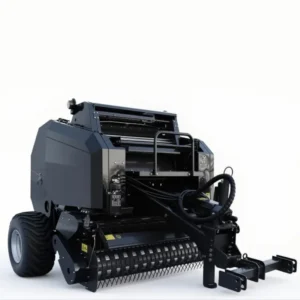
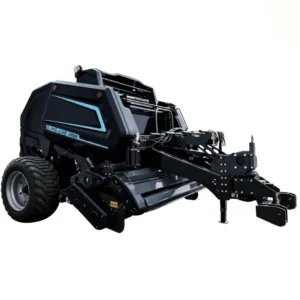
The following round baler machine models are suited to different scales and configurations of Korean and international hemp fiber production — from small licensed cultivation plots through to large cooperative or commercial industrial fiber operations.
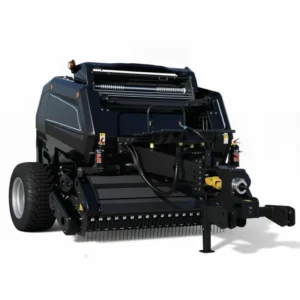
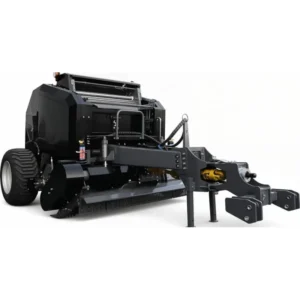
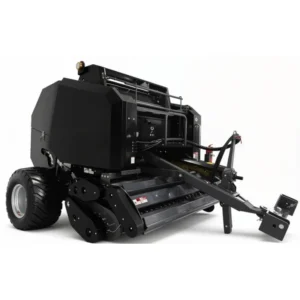
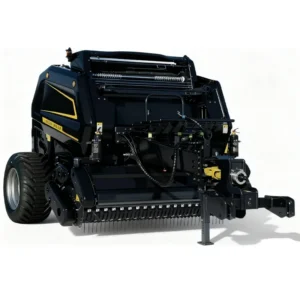
11. Regulatory Framework for Round Balers and Hemp Farming by Region
Industrial hemp cultivation is one of the most heavily regulated sectors in global agriculture, and the round baler machine used in hemp fiber harvesting is subject to both agricultural machinery standards (which apply regardless of crop type) and the hemp-specific licensing and traceability requirements that govern where and how hemp can be grown, harvested, and transported. Farmers planning to use a round baler in hemp fiber operations should verify round baler compliance requirements compliance requirements in all three dimensions: machine certification, hemp cultivation licensing, and transport documentation for harvested material.
Korea — Hemp Cultivation and Machinery Regulation
In South Korea, industrial hemp cultivation is permitted under license from the Ministry of Food and Drug Safety (MFDS, 식품의약품안전처) under the Narcotics Control Act (마약류 관리에 관한 법률). Licensed cultivation is primarily concentrated in Andong, Gyeongbuk province, with cultivation area and THC level subject to mandatory annual inspection. The round baler used in licensed hemp harvest operations must comply with standard agricultural machinery requirements — including holding a valid Agricultural Machinery Performance Test Certificate (농업기계 성능검정서) if the farmer wishes to qualify for MAFRA purchase subsidies. The gearbox on a subsidised round baler must demonstrate rated torque capacity per the certification test requirements. Hemp bales transported from the field to a licensed processing facility must be accompanied by documentation confirming their origin from a licensed cultivation plot, as crop material with ambiguous origin documentation can be subject to seizure under narcotics control provisions even when the THC content is legally compliant.
Uni Eropa
EU Machinery Directive 2006/42/EC (transitioning to EU Machinery Regulation 2023/1230 from January 2027) requires CE marking for round baler machines used in EU hemp fiber operations. EN 1553 covers agricultural machinery gearbox safety requirements, and EN ISO 4413 governs hydraulic system design. For hemp cultivation, EU Regulation 1307/2013 (Common Agricultural Policy) permits hemp cultivation below 0.2% THC on agricultural land eligible for direct payments, and EU Regulation 2021/2115 (CAP Strategic Plans Regulation) updates these provisions while maintaining the THC threshold. Bales of industrial hemp transported between EU member states must be accompanied by the seed certification documents proving the variety is listed on the EU Common Catalogue of agricultural plant varieties — a requirement that affects how round-baled hemp is documented and invoiced in cross-border fiber supply chains.
United States
The 2018 Farm Bill (Agriculture Improvement Act of 2018) removed industrial hemp from Schedule I controlled substance classification in the United States, establishing a federal framework for hemp cultivation under USDA oversight with individual state plans or tribal plans required for licensed production. Round baler machines used in US hemp operations must comply with ASABE Standard ASAE S430 for tractor-powered implement safety and OSHA 29 CFR 1928 for agricultural worker protection. Hemp bales must carry traceability documentation linking them to a licensed cultivation plot with tested THC content at or below 0.3% to comply with federal transport regulations across state lines.
Japan
Japan revised its Cannabis Control Act in 2023 to permit cultivation of hemp varieties for fiber, seed, and CBD production under licensed conditions, ending a decades-long near-total prohibition. Round baler machinery imported for Japanese hemp fiber operations must comply with JIS B series agricultural implement standards. The 2023 revision created a pathway for expansion of licensed hemp fiber cultivation in rural areas, and the need for efficient harvest equipment including round balers is expected to grow as the licensed cultivation area expands over the coming years.
| Region | Round Baler Standard | Hemp Cultivation Framework |
|---|---|---|
| Korea | Agricultural Mechanisation Act / KS B ISO 4413 | Narcotics Control Act license / MFDS oversight / Andong primary zone |
| EU | Machinery Directive 2006/42/EC / EN 1553 | CAP framework / THC below 0.2% / EU Common Catalogue varieties |
| USA | ASABE S430 / OSHA 29 CFR 1928 | 2018 Farm Bill / USDA oversight / THC below 0.3% / state plans |
| Japan | JIS B series agricultural implement standards | Revised Cannabis Control Act 2023 / licensed cultivation only |
| Russia / CIS | TR CU 010/2011 / EAC mark | Industrial hemp cultivation under federal crop licensing (country-specific) |
12. Total Cost of Ownership: Running a Round Baler on Hemp Crops
For a hemp fiber farmer or cooperative evaluating the investment in a round baler, the total cost of ownership calculation must account for the specific wear rates and maintenance requirements of hemp service, which are meaningfully different from standard hay or straw service. Hemp’s combination of long fibers (which create wrap-up risk on insufficiently protected components) and abrasive hurds (which accelerate surface wear) means that maintenance intervals in hemp service should be shorter than the manufacturer’s standard hay service recommendations, and the parts budget should be sized accordingly.
The most important pre-season step for any round baler entering hemp service is a thorough round baler inspection of all rotating crop-contact surfaces — compression roller hardness condition, spring tine tip geometry, and bearing seal integrity. Rollers showing surface softening from previous service (indicated by a matte rather than glossy surface finish) should be assessed against the manufacturer’s minimum diameter specification before the hemp season begins, because a roller already at the lower tolerance limit will deteriorate rapidly in hemp’s abrasive environment. Bearing seals showing any sign of contamination from fine hurd dust — indicated by discolouration of the grease at the seal lip — should be cleaned, repacked, and re-sealed before the first hemp baling session, since hurd dust that has entered a bearing generates lapping compound conditions that will destroy the bearing within tens of operating hours.
During the hemp baling season, a brief daily round baler check routine adds minimal time but catches the issues before they become major failures. Checking for fiber wrap-up on the round baler pickup tine shaft ends and on compression roller ends is a 5-minute round baler inspection that should be performed at the start of each morning’s work. Even with the cam-free round baler design’s reduced wrap-up frequency, any hemp fiber accumulating on a rotating shaft should be removed at the daily check rather than allowed to build up over multiple sessions. Hemp bast fiber wrapped around a round baler shaft becomes difficult to remove and may require cutting tools, creating additional downtime. Chain tension checks, hydraulic hose visual inspection, and a brief gate cycle test round out the daily routine without adding more than 15 minutes to the start-up procedure.
Round Baler Hemp Season Maintenance Checklist
Pre-Season
- Inspect roller surface hardness and diameter
- Check tine tip geometry, replace bent or worn tines
- Inspect and repack bearing labyrinth seals
- Check all hydraulic hose assemblies for cracking
- Verify cushion cylinder operation on gate cycle
- Change gearbox oil if previous season was heavy use
Daily During Hemp Season
- Inspect tine shaft ends and roller ends for fiber wrap
- Remove any accumulated hemp fiber from rotating parts
- Check drive chain tension front and rear
- Visually inspect hydraulic hoses for weeping
- Cycle gate open and closed — note speed and smoothness
- Check bearing temperature on rollers after morning work
Editor: PXY