Conservation & Ecological Management Series
A comprehensive guide on how round baler machines support the ecological management of floodplain grasslands — covering vegetation removal objectives, terrain challenges, machine selection, manufacturing structure, material durability, and the international conservation and agricultural machinery regulations that apply to these sensitive environments.

Why Floodplain Grasslands Need Active Management
1. What Role Does a Round Baler Play in Floodplain Conservation?
Floodplain grasslands are among the most ecologically productive habitats in the temperate world. Their periodic inundation by river water deposits sediment and nutrients that support a diversity of plant species far higher than adjacent upland grasslands, and they provide critical nesting, foraging, and overwintering habitat for wading birds, waterfowl, invertebrates, and small mammals. However, without active vegetation management, these habitats are vulnerable to succession — the gradual takeover of diverse, low-nutrient-adapted plant communities by coarse, competitive grasses, invasive sedges, and reed beds that shade out the specialist forbs and fine-leaved grasses that characterize healthy floodplain grassland.
The traditional management tool for floodplain grassland conservation is hay cutting — removing the accumulated biomass of the growing season to prevent rank vegetation buildup and maintain the low-nutrient soil conditions that support high plant diversity. In a conservation context, this cutting and removal cycle is not about maximizing yield or feed quality: it is about subtracting nutrients from the system rather than recycling them as mulch or silage on the same land. A round baler machine is the essential link between the cutting operation and the removal of vegetation from the site — it densifies the cut material into transportable bales that can be moved off the floodplain to a livestock operation, a biomass facility, or a composting site without leaving the nutrient load behind.
For conservation land managers in Korea — where the Han River, Nakdong River, and Geum River systems support nationally important floodplain grassland habitats — and for ecologists managing internationally designated sites across Europe, Japan, Australia, and New Zealand, the round baler is a workhorse of the conservation calendar. This guide explains the specific machine requirements that floodplain conservation imposes, how the 9YG series round baler lineup addresses those requirements, and what regulatory frameworks govern machinery operation in these sensitive environments.
Conservation Context
2. Why Hay Cutting and Baling Is Ecologically Superior to Other Vegetation Management Methods
Floodplain grassland ecologists distinguish between vegetation management approaches on the basis of nutrient removal, soil disturbance, and habitat structure. Burning removes aboveground biomass but returns ash to the soil, contributing to the nutrient accumulation that eventually drives species-poor rank vegetation. Mulching — leaving cut material in situ — returns all the nutrient value of the cut crop to the topsoil, which over multiple seasons progressively enriches a habitat that should remain nutrient-poor to support its characteristic plant communities. Only cutting and complete removal — hay harvesting — achieves the nutrient export that floodplain grassland management requires.
The baling step is what makes nutrient export operationally viable at the scale of a conservation reserve. Loose-cut vegetation without baling is difficult to handle, cannot be transported efficiently, and tends to be left on site in rows or piles where it decomposes and returns its nutrients locally. A round hay baler converts the cut material into a dense, self-contained unit that can be loaded onto a trailer and removed from the site entirely within hours of cutting. For conservation sites that operate annual management contracts with neighboring livestock farmers or biomass buyers, the bale is also the commercial unit that generates income to offset the management cost — making the operation financially sustainable rather than dependent entirely on grant funding.
Late hay cutting — typically July to September in the northern hemisphere, delayed to protect ground-nesting birds through their breeding season — means that the vegetation being baled on a conservation site is often coarser, taller, and drier than a commercial hay crop. The plant community is also more diverse and less uniform in stem diameter than a monoculture grass sward, which places different mechanical demands on the pickup and feed system of the round baler than a conventional agricultural hay crop. Understanding these differences helps conservation site managers select and operate their equipment appropriately.
Terrain Challenges
3. Soft Ground, Irregular Terrain, and Wet Conditions: The Operational Reality of Floodplain Baling
Floodplain grasslands by definition occupy land that floods regularly — and the soft, waterlogged soil conditions that follow inundation events persist well into the hay-cutting season in many years. This creates a fundamental operational challenge for round baler selection: the machine and its tractor must be able to move across soft, bearing-limited ground without creating the wheel ruts and soil compaction that damage the root mat of the conservation grassland and alter drainage patterns at the field scale. Ground pressure management is therefore an equipment selection criterion on conservation sites in a way that simply does not arise on a well-drained arable farm.
The 9YG series round balers, with their tow-behind trailer-type configuration, distribute their machine weight across two wheels rather than concentrating it at a three-point linkage mounting point. The 9YG-2.24D models have a structural mass in the 3,922–4,570 kg range depending on variant, with a wheel track of 2,600 mm. This wide wheel track distributes the machine weight over a larger footprint per axle load than narrower machines, reducing the peak ground pressure applied at each contact patch. On conservation sites where ground conditions are a management concern, operators should also consider using low-pressure flotation tires on both the tractor and the baler axle to further reduce soil impact — a practice well-established in UK agri-environment scheme guidance and increasingly standard in Korean river corridor conservation management programs.
The irregular, microtopographic surface of a floodplain — with its hummock-and-hollow structure, creek crossings, and irregular drainage channels — demands that the round baler’s pickup system follow ground surface variations without riding up over vegetation or scalping into the soil surface. The spring-tine pickup on the 9YG series uses a floating mounting system that allows the pickup bar to follow ground contour variation independently of the main frame, maintaining consistent tine-to-ground clearance across the uneven surfaces characteristic of mature floodplain grassland.
Manufacturing Structure
4. Frame Design, Chamber Engineering, and Feed System Construction
The structural demands of conservation grassland baling are distinct from commercial hay production in several ways. The vegetation being processed is often older, tougher, and more fibrous than a managed grass sward; the operating environment imposes higher risks of encountering stones, debris, and partially buried material left by previous flood events; and the machines may be operated by conservation volunteers or seasonal staff rather than experienced agricultural operators. This combination of factors places a premium on structural robustness, tolerance to occasional unusual loads, and simplicity of operation.
Main Frame Construction
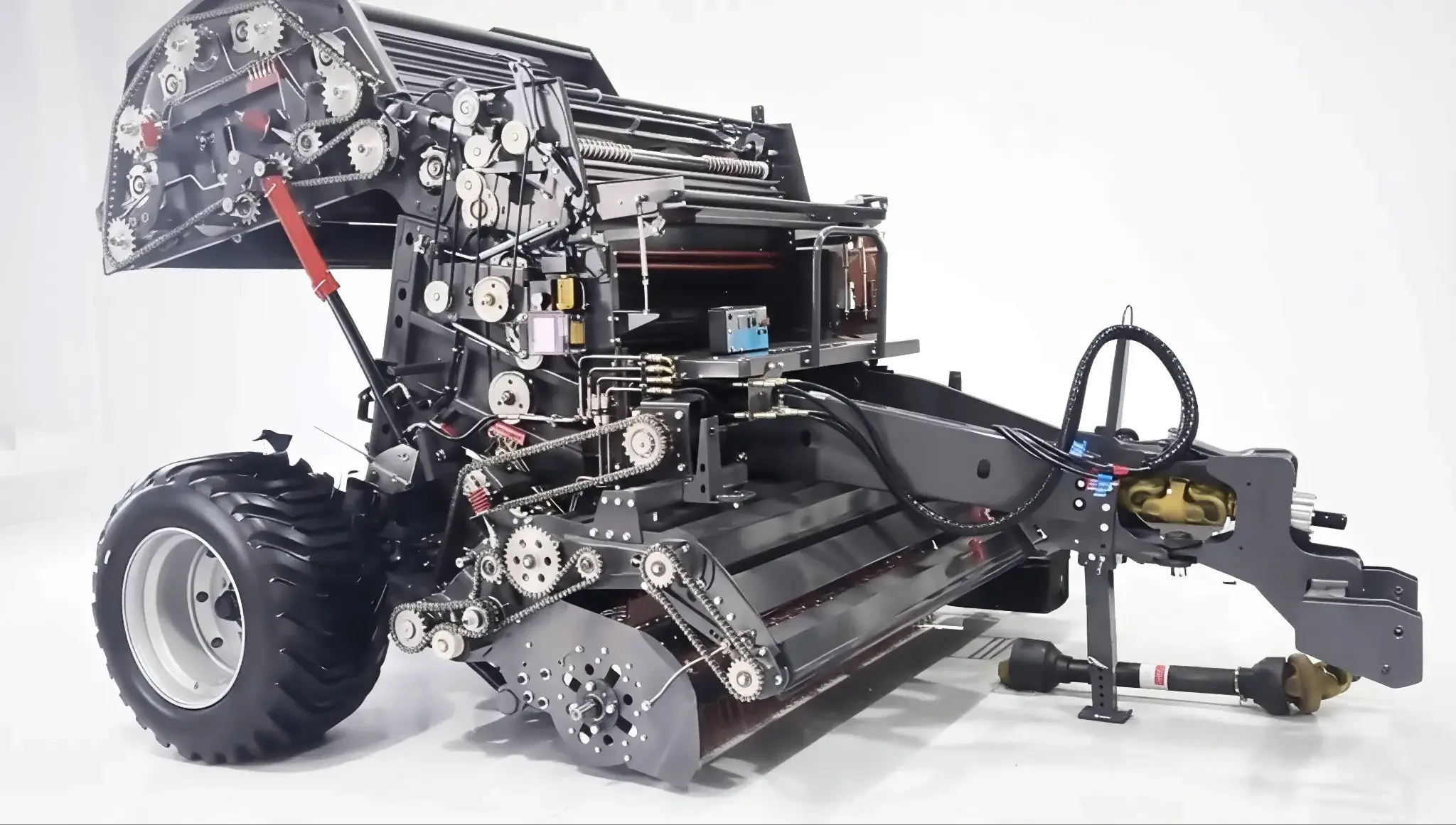
The 9YG series main frame is constructed from CNC laser-cut structural steel plates with automated welding at all primary structural nodes. The boxed-section drawbar design handles the lateral and longitudinal forces that arise when the machine is towed across uneven, soft ground at the varying speeds dictated by terrain rather than by crop volume. The hitch point uses heavy-wall tube with machined bore for the tow pin, preventing the elongation that would develop over multiple seasons of maneuvering on rough terrain if the hitch were made from thinner material. The reinforced frame design also protects against the occasional impact with waterlogged branches, accumulated flood debris, or subsurface stones that floodplain sites routinely present.
Bale Chamber and Roller Array
The bale chamber on the 9YG-2.24D measures 1,200 mm in diameter and 1,400 mm in width, with 18 press rollers each 222 mm in diameter arranged to provide consistent compressive force across the entire bale width. The dual-side chain drive ensures the roller array is driven symmetrically, preventing the uneven compaction that can occur with single-side drive designs when handling the mixed-composition vegetation of a species-rich grassland — where stiff-stemmed plants may cluster on one side of the chamber and fine-leaved grasses on the other. Sensor-controlled density management triggers the wrapping and ejection sequence at the same bale density each cycle, regardless of how vegetation composition varies across the field.
Pickup System for Diverse Plant Communities
The spring-tine pickup on the 9YG-2.24D series covers a 2,240 mm width with floating-action tine fingers that flex on contact with windrow material and return to position for the next engagement without the cam mechanisms that older designs require. The absence of cam components reduces the number of wear items in the pickup, which matters on conservation sites where maintenance access may be less frequent than on a commercial farm. The axial-flow semi-forced feeding mechanism between the pickup and the bale chamber provides continuous, uninterrupted material flow even when vegetation density in the windrow varies markedly — a common occurrence on species-rich grassland where different plant communities cut to different bulk densities.
Material System
5. Corrosion Resistance, Chain Specification, and Tine Materials for Wet, Debris-Rich Environments
Floodplain environments impose corrosion and contamination conditions that are more severe than typical dryland hay fields. Residual flood silt on the field surface contains fine clay particles that infiltrate mechanical gaps and combine with moisture to create an abrasive paste around bearings, chain links, and sliding surfaces. River-transported organic matter deposited during flood events can contain fermentation acids that attack surface coatings. Understanding how the material system of the 9YG series round baler is designed to handle these conditions helps conservation land managers plan maintenance schedules and pre-season preparation appropriately.
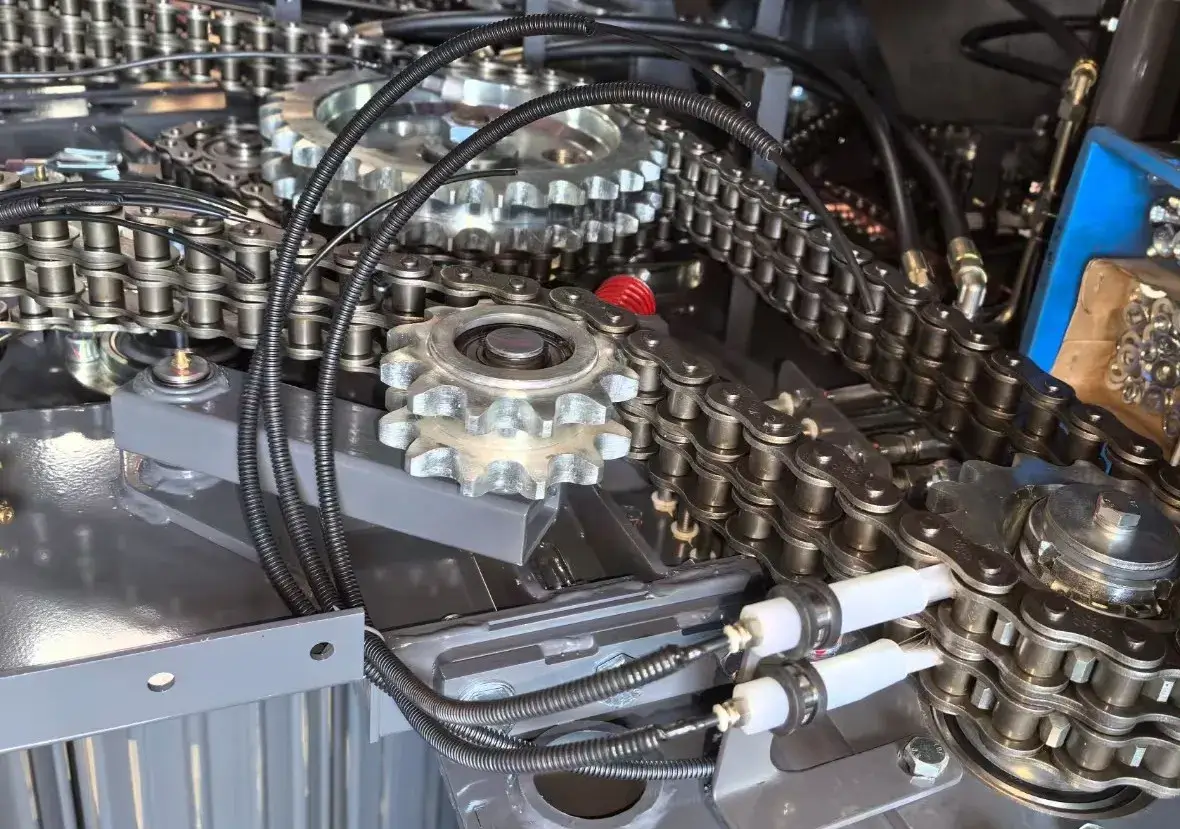
20A and 16A Roller Chain
Large-format 9YG-2.24D models use 20A heavy-duty roller chain on both sides of the rear chamber drive, providing rated dynamic load capacity for the elevated compressive forces involved in densifying late-cut, coarse floodplain vegetation to the 100–200 kg/m³ target. In floodplain conditions, chain lubrication intervals should be treated as a minimum — the fine silt that permeates the working environment displaces lubricant from chain contact surfaces faster than in clean-field conditions. A penetrating lubricant applied after each working day, combined with a chain rinse before lubrication when visible silt accumulation is present, significantly extends chain service life on conservation sites.
Spring Steel Pickup Tines
High-tensile spring steel tines provide the elasticity needed to self-clear around occasional stones or waterlogged debris material without fracturing. On a commercial hay field, tine-breaking events are relatively rare; on a floodplain conservation site, partially buried flood debris and stones deposited by recent inundation events make tine contact with hard materials a regular occurrence rather than an exception. Maintaining a stock of replacement tines before the conservation hay season begins is standard practice for experienced operators on floodplain sites — the 9YG series uses a standardized tine profile that simplifies spare parts ordering and replacement without requiring specialist tools.
Electrostatic Frame Coating
After CNC fabrication and automated welding, 9YG series frames receive electrostatic powder coating over a prepared surface. On floodplain conservation sites where machines may be stored in field-side shelters close to riverbanks — with high ambient humidity year-round — this coating’s adhesion quality directly determines how rapidly corrosion develops at frame joints during storage between seasons. Annual inspection of coating integrity, with spot-priming of any chips or scratches before the conservation cutting season, prevents the undercutting corrosion cycle that can compromise structural integrity at hinge and mounting points over multiple seasons.
Hydraulic System Sealing
The H-type ferrule fittings used throughout the hydraulic circuit of the 9YG series provide a higher burst-pressure tolerance and better resistance to vibration-induced fitting loosening than conventional cone-seal designs. On a floodplain conservation site where the tractor and baler navigate hummock-and-hollow terrain throughout the working day, hydraulic connections experience more vibration cycling than on flat, smooth fields. The ferrule fitting design maintains seal integrity under these conditions, preventing the incremental hydraulic oil weeping that would otherwise require frequent investigation and tightening of fittings during a working day.
Operational Planning
6. Conservation Hay Cutting Timing and Round Baler Specification Matching
Different floodplain grassland types in Korea and internationally have different cutting time windows determined by ecological management objectives. The table below maps conservation site type to cutting period and round baler specification priorities.
| Site Type | Cutting Window | Vegetation Condition | Key Machine Requirement | Recommended Model |
|---|---|---|---|---|
| Korean river corridor grassland | August–September | Tall, partially dried; mixed sward height | Wide pickup; soft-ground wheel track; high productivity | 9YG-2.24D or 9YG-1.25 |
| European wet meadow (UK, Germany, Netherlands) | July–August | Late-cut; coarse and fibrous | Robust pickup; sensor density control; corrosion resistance | 9YG-2.24D Classic or Transcend |
| Japanese riverbank conservation zone | September–October | Tall reed and miscanthus mixed; very coarse | High torque gearbox; interchangeable pickup option | 9YG-2.24D Transcend or 9YG-1.0C |
| Restored floodplain (mixed forb/grass) | Late June–July (first cut); August–September (second) | Fine-stemmed; variable density windrow | Gentle pickup; density consistency; small bale option | 9YG-1.25A or 9YG-1.0 |
| Invasive reed removal (Phragmites) | July (summer cut to weaken plant) | Dense, fibrous, high moisture; variable height | High compression force; coarse feed mechanism | 9YG-2.24D S9000 or Classic |
Power Transmission
7. The Round Baler Gearbox on Soft Ground: Why Consistent Torque Delivery Matters for Conservation Baling
On a commercial hay farm, the tractor typically maintains steady forward speed on firm, even ground, delivering consistent torque to the round baler gearbox throughout the baling run. On a floodplain conservation site, this consistency is rarely achievable. The tractor must slow, steer around drainage features, navigate hummocks, and occasionally reverse to avoid waterlogged patches — all of which introduce variable PTO speed inputs to the gearbox that affect bale quality and component loading. Understanding how the gearbox design manages these inputs determines how consistently the machine performs across the irregular operating profile of a conservation hay day.
The dual-coupling gearbox on the 9YG-2.24D S9000 Transcend addresses one of the most common gearbox stress sources on irregular terrain: driveshaft bind during tight turns. Standard single-joint PTO shafts transmit speed fluctuations when bent beyond approximately 15–20 degrees — which on a floodplain site with frequent steering corrections and tight access routes can occur dozens of times per working day. The dual-coupling design allows the gearbox to rotate up to 90 degrees relative to the drawbar without transmitting these fluctuations downstream, maintaining consistent roller and pickup speeds regardless of the tractor’s heading relative to the machine body. For conservation land managers who rely on a single machine to cover an entire reserve in a compressed management window, this design reliability is more than a technical specification — it is the difference between completing the management work within the agri-environment scheme deadline or missing it.
The safety torque shaft incorporated into the PTO driveline of the Transcend variant adds an important layer of mechanical protection for conservation applications: the occasional encounter with a large stone, submerged root system, or compacted debris pile that a floodplain site presents can impose a sudden spike torque load on the gearbox input shaft. The safety torque shaft absorbs this energy rather than transmitting it as a destructive shock through the gearbox internals. Without this protection, repeated stone encounters over a conservation season can cause fatigue damage to gear tooth faces that only becomes apparent when the gearbox fails at a critical point in the following season.
Regulations & Standards
8. Conservation Designations, Machinery Regulations, and Gearbox Safety Standards in Key Regions
Conservation grassland management on designated sites is subject to multiple overlapping regulatory requirements — from habitat protection legislation that restricts when and how machinery can operate, to agricultural machinery safety standards that govern the design and guarding of the round baler itself. The following frameworks are relevant to operators in Korea, Europe, Japan, and other regions with active floodplain conservation programs.
Republic of Korea — Wildlife Protection and Management Act
Floodplain grasslands along Korea’s major river systems — particularly those within ecological corridors designated under the Wildlife Protection and Management Act — require prior consultation with the Ministry of Environment before vegetation management activities are undertaken. The Han River basin management guidelines specify that heavy machinery should avoid operating on wet or soft ground within 30 meters of designated ecological buffer zones, and that machinery used in conservation management should not introduce invasive plant seeds or soil pathogens from other sites. Machinery cleaning protocols before and after use on designated floodplain conservation sites are increasingly required by Korean river corridor management plans.
Korea Agricultural Machinery Safety — RDA Type Approval
Round balers used in Korea for any commercial or subsidized purpose — including conservation management contracts funded under agri-environment or ecosystem service payment programs — must hold Rural Development Administration (RDA) type approval. The RDA certification evaluates safety guarding, PTO shaft design, and operational performance against Korean Industrial Standard (KS) requirements. Machines used specifically for conservation site management contracts under the Ministry of Environment framework may be subject to additional stipulations from the contracting authority regarding machinery weight and ground pressure limits.
EU — Habitats Directive and Common Agricultural Policy Agri-Environment Schemes
In European Union member states, floodplain grasslands designated as Sites of Community Importance under the Habitats Directive (92/43/EEC) require Appropriate Assessment before any vegetation management activity that could affect the qualifying habitat features. Under Common Agricultural Policy agri-environment schemes, farmers and conservation managers who receive payments for late hay cutting are required to follow specific machinery use conditions — including ground pressure limits, cutting date compliance windows, and in some schemes, minimum bale removal dates. Round baler machinery operating on Natura 2000 floodplain sites must additionally comply with the EU Machinery Directive 2006/42/EC CE marking requirements.
United Kingdom — Sites of Special Scientific Interest (SSSI) Consent Requirements
In the UK, floodplain grassland SSSIs are managed under agreements with Natural England (England), NatureScot (Scotland), Natural Resources Wales, or NIEA (Northern Ireland). Hay cutting operations on SSSIs require prior written consent specifying permitted machinery types, cutting dates, and conditions for machinery access. The SSSI management guidance documents typically specify that machinery operating on wet floodplain soils should not exceed a specified ground pressure threshold, and that round baler axle loads should be calculated and declared as part of the consent application. ISO 4254-7 baler safety compliance is expected for all machinery used in consent-compliant management operations.
Japan — Nature Conservation Act and River Law
Japan’s floodplain conservation management — particularly in the riverbank habitat zones of Hokkaido, the Kanto Plain, and the Kii Peninsula — is governed by the Nature Conservation Act and by prefectural river management authority regulations under the River Law. The Ministry of Land, Infrastructure, Transport and Tourism (MLIT) issues guidelines for vegetation management in river corridor zones that specify permitted machinery types and access conditions. Conservation hay cutting operations in government-managed riverbank areas typically require pre-submission of machinery specifications including axle weight and PTO shaft guarding compliance, which must align with Japan’s industrial machinery safety standards under JIS B series.
ISO 4254-7 — Agricultural Machinery Safety for Balers
ISO 4254-7 provides the international reference standard for baling machine safety, covering the guarding of rotating pickup components, tailgate crush prevention mechanisms, warning labels for entanglement and ejection hazard zones, and emergency stop provisions. For conservation site managers operating under SSSI or Natura 2000 conditions, demonstrating that the round baler in use meets this standard is part of the duty of care documentation required under contracted management agreements. The standard is referenced by machinery certification bodies in both the EU and Korea, and ISO 9001 manufacturing certification supports the quality management trail that underpins ISO 4254-7 compliance claims.
Product Range
9. Round Baler Models for Conservation and Ecological Grassland Management
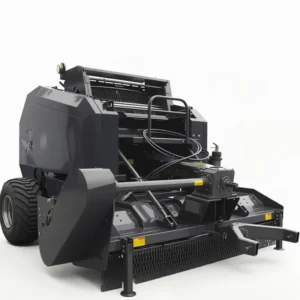
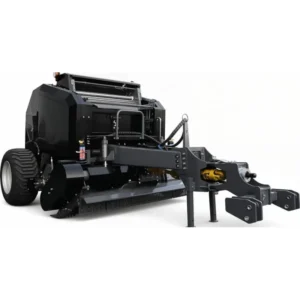
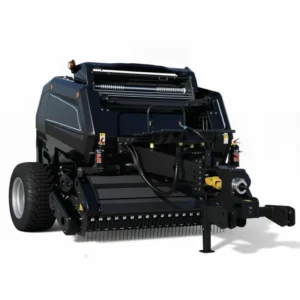
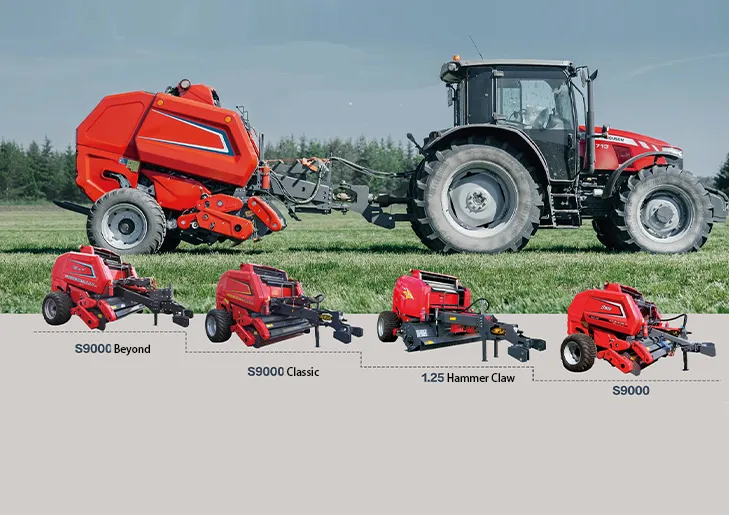
The models below represent the full 9YG series range, from compact units suited to small conservation reserve management on modest tractor power, through to full-size commercial models appropriate for large-scale floodplain restoration contracts.
FAQ
Frequently Asked Questions: Round Balers for Floodplain Grassland Conservation
Redattore: PXY