Wheat Straw Export Quality Series
A technical deep-dive into electronic density monitoring systems, bale consistency standards for international trade, and which round baler configurations deliver the most reliable export-grade straw output
1. Why Bale Density Consistency Determines Export Viability for Wheat Straw
When wheat straw moves from a domestic farm into an international export chain, it stops being an agricultural byproduct and becomes a commodity with clearly defined physical specifications. Buyers in Japan, Southeast Asia, Europe, and the Middle East who purchase Korean wheat straw for livestock bedding, mushroom cultivation substrate, or industrial fiber applications specify not just moisture content and chemical purity, but bale weight tolerance, dimensional consistency, and packing density — and they enforce those specifications through rejection clauses and price adjustments on non-conforming deliveries. A shipment of round bales with density variation of plus or minus 40 kg/m³ across a container load creates real commercial risk: bales that are too light collapse during stacking and shipping, while bales that are too dense cannot be easily separated at the receiving facility without mechanical breaking equipment that smaller buyers may not have.
The production tool that most directly determines whether bale density meets export tolerances is the density control system of the round baler machine. Traditional spring-tension systems — which have been standard on round balers for decades — apply a fixed mechanical resistance to the compression chamber and produce bales whose density varies with crop moisture, windrow weight, and forward travel speed. These variables shift continuously during a full harvest day in Korean wheat-producing regions, and the result is a batch of bales with density spread wide enough to create sorting and grading costs at the point of export. Sensor-based electronic density control systems address this variability directly by measuring actual bale pressure and adjusting the chamber variable in real time, producing a much tighter density distribution even when field conditions are inconsistent. Understanding how this technology works — and which round baler models incorporate it effectively — is the starting point for any operation planning to move wheat straw into export markets.
2. How Sensor-Based Density Control Actually Works Inside a Round Baler
The sensor-based density control system found on the 9YG series round balers operates through a continuous pressure monitoring loop that runs throughout every bale formation cycle. As material enters the compression chamber and the bale grows, pressure sensors positioned on the chamber frame measure the resistance force being applied to the bale surface in real time. This pressure signal is compared electronically against a target setpoint programmed by the operator before the baling run begins. When the measured pressure falls below the target — which happens when lightweight or low-density straw enters the pickup in thin windrow sections — the control system tightens the variable element of the compression chamber to maintain output pressure. When an unusually dense slug of straw enters and chamber pressure spikes above the setpoint, the system releases chamber tension slightly to avoid over-pressuring the bale or stalling the pickup drive.
The practical result of this closed-loop control is that bale formation pressure stays within a narrow band regardless of what the crop is doing at the pickup. In wheat straw terms, this means a morning baling run — where straw has absorbed overnight dew and runs slightly heavier — produces essentially the same output density as the afternoon run when the same straw has dried to its minimum field moisture. It also means that cross-field variation in straw density, caused by combine header discharge patterns, field micro-topography, or inter-variety differences in stem weight, does not directly translate into bale density variation the way it would with a fixed-spring system. Operators who have used both types in the same field consistently report that sensor-controlled round balers produce a bale population whose weight variation is roughly half that of equivalent spring-tension machines in the same wheat straw conditions.
It is worth being precise about what sensor control does and does not change. The sensor system controls the compression chamber pressure — it does not control bale diameter or bale width, which remain fixed by the physical dimensions of the compression chamber. Bale length (for a fixed chamber machine this is the same as bale diameter at the programmed diameter limit) is set by the diameter sensor that triggers the wrap-and-eject cycle. The density sensor system operates between bale start and the diameter trigger point, influencing the core and mid-radius density profile of the bale. What this means in practice is that every bale from a well-set sensor-controlled round baler reaches the target diameter with the same core density, producing a batch of bales that are physically interchangeable from a logistics and stacking standpoint — which is exactly what export buyers specify when they write their purchase contracts.
3. Manufacturing Structure — How the Compression Chamber Is Built to Support Density Control
A sensor-based density control system is only as reliable as the mechanical structure it is monitoring. If the compression chamber flexes under load, the pressure sensor readings become inconsistent — the sensor measures frame deflection as well as true bale pressure, and the control system chases a moving target. For this reason, the structural engineering of the round baler’s compression chamber frame is a prerequisite for accurate electronic density control, not a separate consideration. The 9YG series uses a drum-type (roller-type) compression chamber with 16 or 18 compression rollers depending on model, mounted on a rigid welded steel frame manufactured from high-tensile Q355B structural plate. The chamber frame wall thickness and cross-brace geometry are designed to minimize deflection under the peak compression loads generated during dense bale formation — the same loads that the pressure sensor must interpret accurately for the control system to function correctly.
The rear tailgate assembly — which forms the back half of the compression chamber — is hinged at the top and opens hydraulically for bale ejection. On round balers with sensor-controlled density, the tailgate must maintain consistent sealing pressure against the main frame throughout the bale formation cycle; any variation in tailgate-to-frame preload creates a pressure leak path that biases the sensor reading. The 9YG-2.24D Classic variant addresses this with H-type ferrule hydraulic fittings rated for higher burst pressure than standard compression fittings, ensuring the tailgate cylinder maintains its force consistently without the micro-leakage that degrades sensor accuracy on lower-quality hydraulic circuits. The buffer cylinder on the same model absorbs tailgate closure shock, preventing the impact of closure from generating a false pressure spike that could trigger a premature density-satisfied reading at the start of the next bale cycle.
The number and diameter of compression rollers directly affects how evenly pressure is distributed across the growing bale surface — and even pressure distribution is what makes the sensor signal representative of the whole bale rather than just one contact zone. With 18 rollers of 222 mm diameter in the 9YG-2.24D chamber, the bale surface contact area is high enough that pressure measured at any single structural frame point is well-correlated with the actual average bale density. Larger-chamber models maintain this advantage, while the smaller 9YG-1.0 series with 16 rollers still provides sufficient contact area for reliable sensor performance in the lower bale weight range that compact models target.
4. Material System — Sensor Housing, Chain Grade, and Frame Protection for Long-Term Accuracy
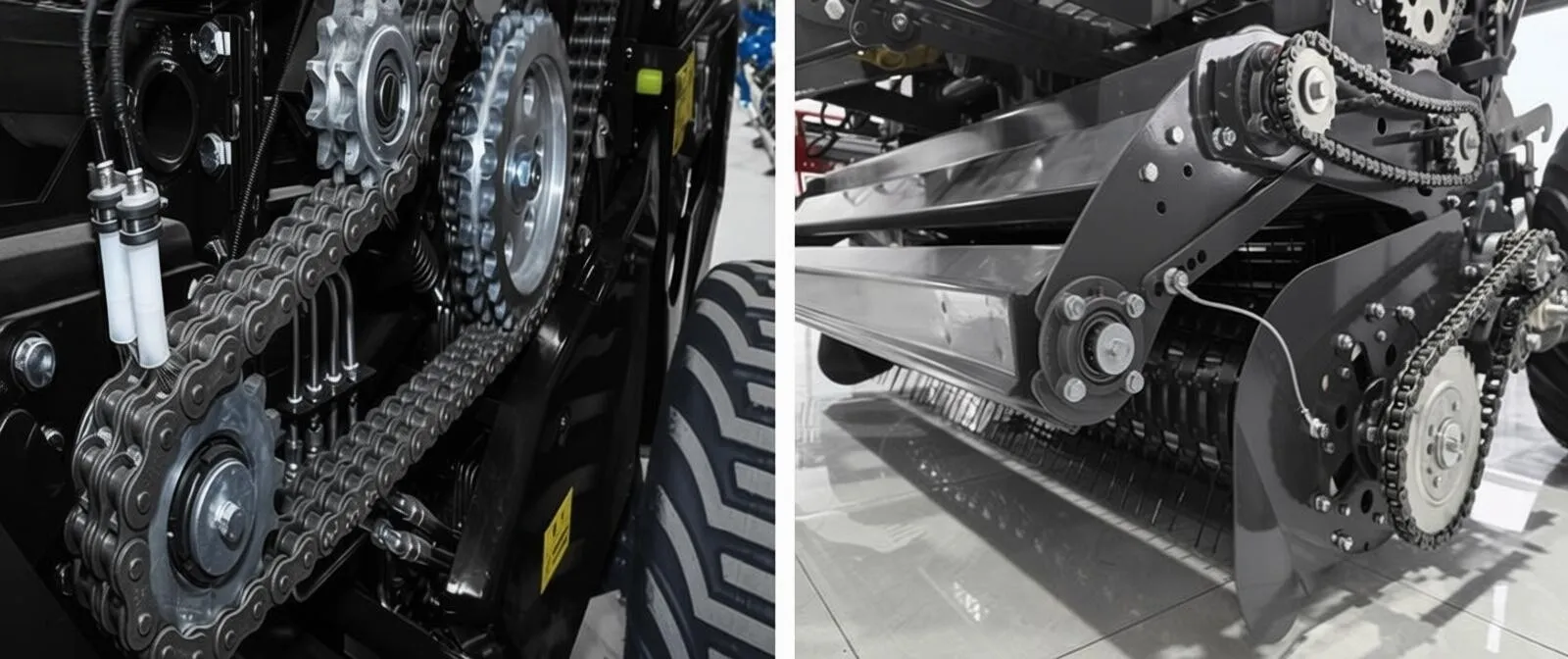
The longevity of a sensor-based density control system depends as much on the materials protecting the sensor hardware as on the sensor technology itself. Wheat straw harvest environments are particularly hostile to electronic components: fine silica dust infiltrates every gap, field vibration is high at typical baling speeds, and the rapid temperature cycling between morning cool and afternoon peak heat stresses cable insulation and connector contacts. On the 9YG series round balers, pressure sensors are mounted in housings that provide protection against dust ingress and mechanical shock, with cable routing designed to minimize exposure to the rotating and reciprocating elements of the pickup and feeding mechanism where cable chafing is most likely to occur.
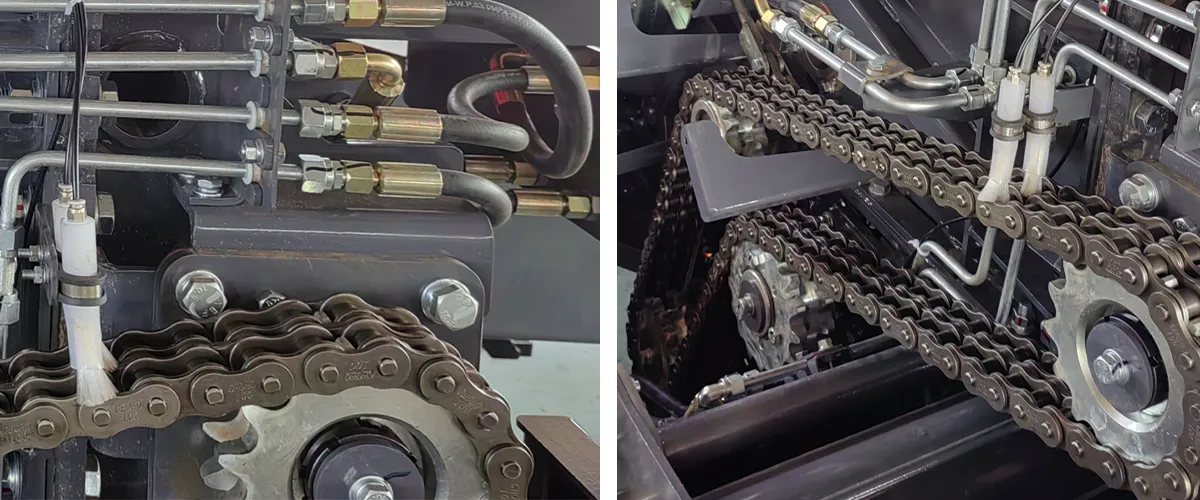
The chain drive system that transmits compression force from the PTO input to the bale chamber rollers is the primary mechanical element whose condition determines whether the sensor system can maintain accurate control. A stretched chain introduces backlash into the drive that makes the system’s pressure response sluggish — the control system commands a tension change, but the actual bale pressure change is delayed by the chain lash, causing the control loop to overshoot and undershoot in alternation. The 9YG-2.24D S9000 uses 20A heavy-duty chain (1.25-inch pitch) in the dual-side rear chamber drive, and the 9YG-2.24D Classic uses the same specification. This chain grade stretches significantly more slowly than 16A chain under equivalent load, maintaining the tight mechanical response that allows the sensor control system to function as designed. Operators who replace worn chains with lighter-grade substitutes often report that density control becomes erratic — a symptom of the drive lash issue rather than any failure of the sensor system itself.
Frame surface protection in the dust-heavy wheat straw environment matters for the structural accuracy of the sensor mounting points over the machine’s multi-year life. The electrostatic spray painting process used on the 9YG series produces a uniform protective coating across internal frame surfaces and recessed weld zones where conventional painting leaves thin spots. This comprehensive surface protection prevents the localized corrosion that can cause frame wall thickness changes at sensor mounting bosses — changes that would alter the frame stiffness at the sensor location and introduce a drift in the sensor calibration over successive seasons. For operations planning to use a round baler machine for 10 or more years of wheat harvest, frame corrosion protection is not a cosmetic specification; it is part of the density system’s long-term calibration stability.
5. Export Quality Standards for Wheat Straw Bales — What International Buyers Actually Specify
Understanding the buyer’s specification is the starting point for configuring your round baler density setpoint. Different export markets and end-use sectors apply different density and weight tolerances, and the gap between the most demanding and most relaxed specifications is large enough that the same baler settings cannot serve all markets. The table below summarizes typical specification ranges for the main export end-use categories that Korean wheat straw producers commonly supply, based on documented buyer requirements from the livestock bedding, substrate cultivation, and industrial fiber sectors.
| End-Use Sector | Target Density (kg/m³) | Moisture Limit | Bale Weight Tolerance | Key Requirement |
|---|---|---|---|---|
| Livestock bedding (equine) | 160–200 | ≤15% | ±5% | High density for compact shipping; dust-free preferred |
| Livestock bedding (dairy) | 140–180 | ≤18% | ±8% | Wider tolerance; bale break-open ease important |
| Mushroom substrate | 130–160 | ≤15% | ±6% | Mid-density; too dense prevents inoculation penetration |
| Industrial fiber / biomass | 140–200 | ≤20% | ±10% | Volume-density optimization for transport cost |
| Erosion control / export mat | 120–150 | ≤18% | ±8% | Looser density for processing; intact stem preferred |
The key insight from this table is that the sensor density setpoint on a round baler needs to be adjusted between supply contracts — the machine serving a livestock bedding export buyer at 180 kg/m³ should not be delivering substrate-market bales at the same setpoint. Electronic sensor control makes this adjustment straightforward: the operator changes the pressure setpoint in the baler’s control interface, and the machine recalibrates automatically for the new target. A spring-tension system requires physical adjustment of the tension hardware — a time-consuming process that most operators avoid doing between fields, leading to density drift that costs money across multiple deliveries.
6. Round Baler Gearbox Standards and Legal Regulations Affecting Export-Ready Equipment
For Korean grain producers who purchase round balers with the intention of producing export-quality wheat straw bales, the regulatory status of the equipment itself matters beyond just performance. Agricultural machinery imported into South Korea must pass Rural Development Administration (RDA / 농촌진흥청) type approval testing under the Agricultural Mechanization Promotion Act (농업기계화 촉진법). Type-approved machines appear on the RDA approved equipment list, which also governs eligibility for the Agricultural Machinery Subsidy Program (농기계지원사업) that can reduce effective purchase cost by up to 50%. For an exporting operation, being able to demonstrate that the production equipment meets national regulatory standards also strengthens the compliance documentation package that some international buyers — particularly those in the EU — request as part of their supply chain due diligence process.
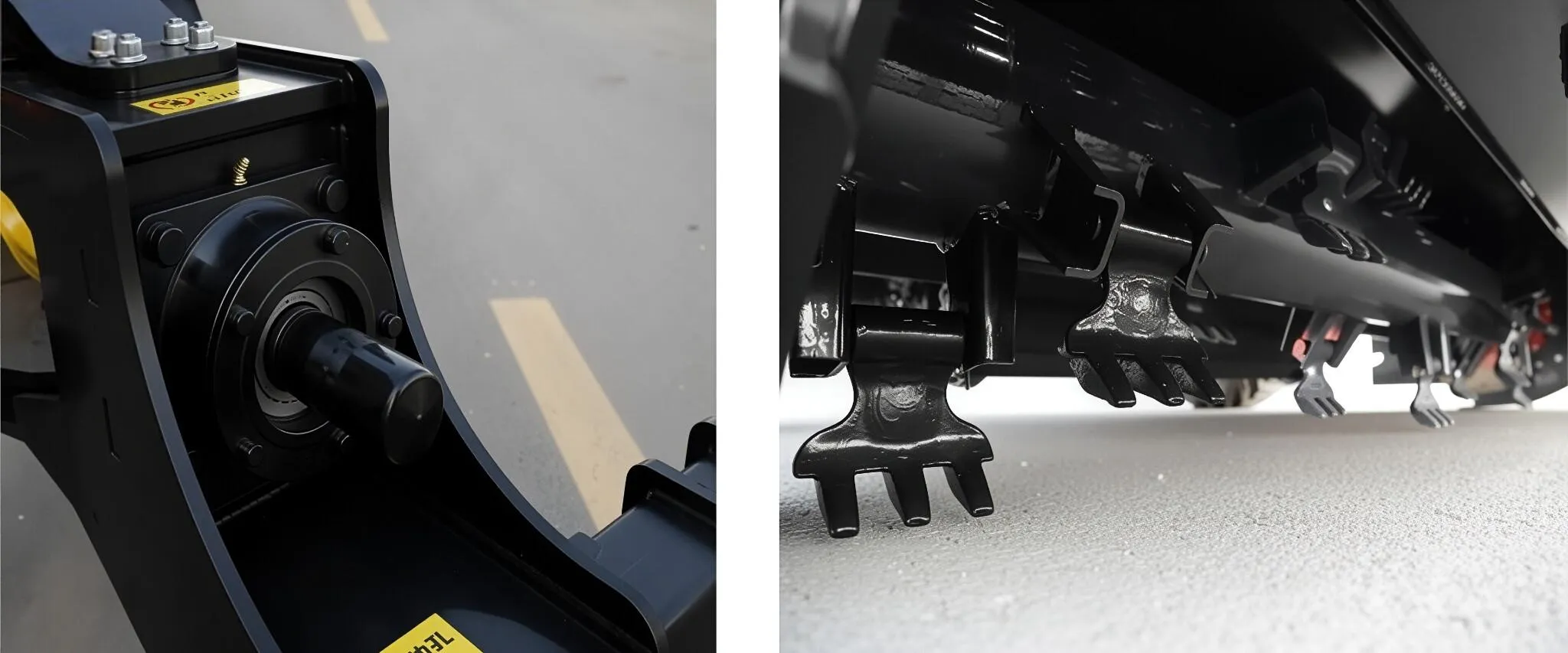
The gearbox assembly of the round baler sits at the intersection of several regulatory frameworks. In South Korea, PTO-driven gearboxes on agricultural machinery are assessed under the general machinery safety provisions of the Industrial Safety and Health Act (산업안전보건법) and the more specific RDA type approval protocol, which includes operational performance testing at rated PTO speed. In the European Union, where some Korean producers export their packaged straw through EU-based re-exporters, the gearbox and its associated PTO shaft guards must meet EN ISO 4254-1 safety standards and the overall machine must carry CE marking under the Machinery Directive 2006/42/EC. Round baler gearboxes sold into EAEU markets (Russia, Kazakhstan, Belarus) must comply with TR CU 010/2011 and GOST 21354 gear reliability standards under the EAC certification system. For North American buyers using Korean straw, ASABE Standard S493 (Safety for Agricultural Field Equipment) sets the applicable design safety framework for round baler drives and power transmission assemblies.
The dual-joint gearbox design used on the 9YG-2.24D S9000 and related high-specification models has been developed through a proprietary engineering program that includes independent performance certification. The rigid coupling between the gearbox assembly and the drawbar frame that characterizes this design — as opposed to flexible coupling that allows relative movement — provides predictable mechanical behavior under regulatory testing conditions, making type approval documentation more straightforward. The torque-limiting driveshaft that is standard on these models is itself a safety-relevant component under both the RDA protocol and EN ISO 4254 standards, which specifically require overload protection on PTO-driven power transmission paths to baling chambers. Specifying a round baler machine that already integrates these protection systems reduces the compliance workload for importers navigating multi-market regulatory requirements.
| Market / Region | Applicable Standard | Gearbox-Specific Requirement | Conformity Mark |
|---|---|---|---|
| 韓国 | Agricultural Mechanization Promotion Act; Industrial Safety and Health Act; RDA Type Approval | PTO guard, overload protection, rated-speed performance test | RDA 농기계 형식검정 |
| European Union | Machinery Directive 2006/42/EC; EN ISO 4254-1; EN ISO 4254-7 | PTO shaft guarding; torque overload protection; Declaration of Conformity | CE Mark |
| EAEU (Russia, Kazakhstan, Belarus) | TR CU 010/2011; GOST 21354; GOST R 12.2.111 | Gear reliability rating; documented fatigue life; third-party test record | EAC Mark |
| USA / Canada | ASABE S493; ANSI/ASABE S296; OSHA 29 CFR 1928 (agricultural safety) | PTO guard; power transmission guarding; operator manual requirements | ASABE Conformance |
| Japan | Agricultural Machinery Safety Standard (農業機械の安全に関する基準); JISB 9700 | Safety guard verification; noise level certification; agricultural type approval | JIS / MAFF Approval |
| Australia / New Zealand | AS 4024; Work Health and Safety Act; AS 2205 (welded assemblies) | Guarding of moving parts; weld quality documentation; WHS-compliant operator manual | WHS-compliant documentation |
7. 9YG Round Baler Models — Density Control Specifications and Export Suitability
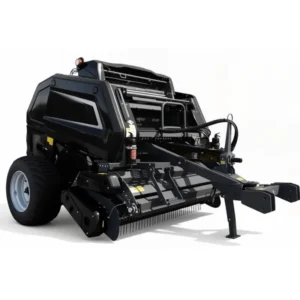
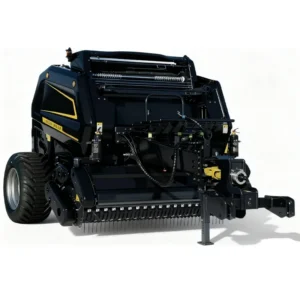
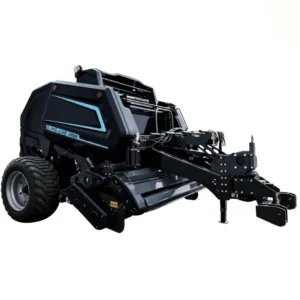
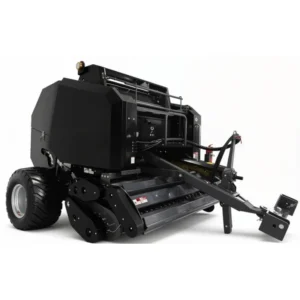
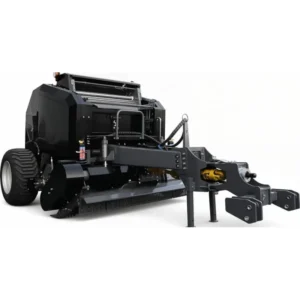
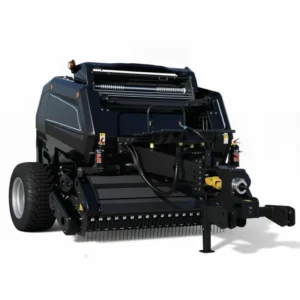
Not all models in the 9YG series carry the same density control specification. Understanding which configurations include electronic sensor density control — and at what bale size and pressure range that control operates — helps you match the machine to the export grade you are producing. The product cards below summarize each model’s density control capability alongside the core specifications relevant to wheat straw export work. For the full product listing, visit the complete round baler range.
8. Sensor Control vs. Spring Tension — Density Output Comparison for Wheat Straw
| Parameter | Spring Tension System | Electronic Sensor Control (9YG) | Export Impact |
|---|---|---|---|
| Density variation across batch | ±30–50 kg/m³ typical | ±8–15 kg/m³ typical | Meets ±5–10% buyer tolerance; reduces grade-out loss |
| Response to morning dew moisture | Density increases unchecked | System compensates automatically | Consistent bale weight regardless of harvest time of day |
| Adjustment between buyers | Physical spring change (20–40 min) | Setpoint change (1–2 min) | Enables rapid switching between bedding and substrate grade |
| Windrow slug response | Over-density spikes in bale | Chamber releases to absorb slug | Eliminates hard-core bales that damage handling equipment |
| Operator skill dependency | High — speed management critical | Low — system self-corrects | Consistent output across multi-operator harvest teams |
| Season-to-season calibration drift | Spring fatigue changes baseline | Sensor recalibrated digitally | Reliable year-over-year density matching for repeat buyers |
9. About Our Round Baler Manufacturing and Quality Infrastructure
The 9YG round baler series is manufactured at a 32,000-square-meter production facility equipped with CNC laser cutting machines, automated welding lines, electrostatic painting spray systems, and independent quality inspection equipment. Manufacturing operations comply with ISO 9001:2015 quality management standards and the facility holds national high-technology enterprise designation. Close to 100 registered technical patents cover the proprietary design features of the 9YG series, including the axial-flow feeding system and dual-joint gearbox arrangement that underpin the density control performance described throughout this article. Annual round baler production capacity is 2,000 units, with the capability to accommodate custom specifications for non-standard PTO speeds, hydraulic connection standards, and bale dimension requirements for specific export market configurations.
The manufacturing operation holds self-operated import and export authorization and has built documented commercial relationships with buyers in multiple international markets through participation in agricultural machinery trade exhibitions. For Korean buyers, the technical team can provide construction documentation, performance test data, and product specification sheets in a format suitable for RDA type approval submissions and Korean customs clearance under HS Code 8433.40. For international buyers purchasing Korean-baled wheat straw and seeking assurance about the production equipment, the facility can issue ISO 9001 certification copies and relevant patent documentation as part of the supply chain compliance package. The after-sales team provides multilingual remote support for setup, calibration, and maintenance of the sensor density control system across all 9YG round baler models.
10. Setting Up the Density Control System for Wheat Straw Export Production — A Practical Checklist
Getting the sensor density control system configured correctly before the first baling run of the season takes less time than most operators expect, but skipping any step creates the kind of batch-wide density error that is expensive to correct after bales are already in storage. The checklist below covers the pre-season setup, in-field calibration check, and mid-harvest verification that should be standard practice for any round baler machine used in wheat straw export production.
| Stage | Action | Purpose |
|---|---|---|
| Pre-season | Verify sensor cable continuity; clean sensor housing; check mounting bolts | Ensures accurate signal from day one; prevents false readings from loose mounts |
| Pre-season | Check and adjust chain tension to within specification; replace any worn chain links | Chain lash degrades density control response — tight chain is a prerequisite for closed-loop accuracy |
| Pre-season | Change gearbox oil; inspect hydraulic fittings for weeping; test tailgate open-close under load | Fresh oil prevents thermal drift in gearbox response; leak-free hydraulics stabilize chamber pressure signal |
| In-field calibration | Bale 3 test bales; weigh on certified scale; compare to target weight for the buyer spec | Validates that the setpoint pressure correlates to the target density in actual crop conditions |
| In-field calibration | Adjust setpoint up or down by 5% increments if test bale weights are outside tolerance | Compensates for field-specific straw weight that may differ from the last season |
| Mid-harvest check | Weigh one bale from each half-day run against the target; log results | Catches any sensor drift or mechanical change before it affects an entire storage batch |
| End of season | Clean sensor housing thoroughly; photograph sensor mount for winter service reference | Preserves sensor condition during storage; provides baseline for pre-season check next year |
Frequently Asked Questions
Q1. How does electronic sensor-based density control in a round baler machine improve wheat straw bale quality for export buyers in Japan and Southeast Asia?
Sensor-controlled density systems continuously measure bale pressure and adjust the compression chamber in real time, producing bales with density variation of approximately ±8–15 kg/m³ compared to ±30–50 kg/m³ from spring-tension machines. For export buyers in Japan and Southeast Asia who specify weight tolerance clauses in purchase contracts, this tighter distribution means fewer bales fall outside specification, reducing grade-out losses and freight inefficiency caused by underweight bales that leave unused container capacity.
Q2. Which round baler manufacturer offers sensor density control combined with a dual-joint gearbox suitable for Korean wheat farms with narrow field parcels?
The 9YG-2.24D S9000 Surpass combines electronic sensor density control with a dual-joint gearbox that rotates up to 90 degrees left and right, reducing turning radius significantly on small Korean grain parcels where headland space is limited. This combination addresses the two most common operational complaints from Korean wheat producers: density inconsistency across a day’s baling, and difficulty maintaining PTO engagement through tight headland turns without shutting down the machine mid-turn.
Q3. What round baler parts most directly affect density sensor accuracy in wheat straw operations, and how often do they need replacement?
The drive chain condition has the greatest effect on density sensor control accuracy — stretched chains introduce drive lash that delays the mechanical response to sensor commands, causing the density control loop to overshoot and undershoot. Check chain tension every 50 operating hours and replace any chain run showing more than 3% elongation. Sensor cable integrity and housing seal condition are the next most critical components; inspect both at the start of each season and after any impact event in the field. Hydraulic fitting seals at the tailgate cylinder affect chamber pressure stability and should be checked post-season after high-cycle wheat operations.
Q4. When should a Korean wheat producer calibrate the round baler density sensor for the first time in a new field or crop variety during the harvest season?
Calibrate at the start of the season by baling three test bales under representative field conditions, then weighing each on a certified scale. If the measured bale weight differs from the target by more than 5%, adjust the sensor setpoint accordingly. Recalibrate when moving to a different field with a materially different variety or straw density, and again if you change combine header settings that alter the straw chop length or discharge pattern. Mid-season recalibration takes less than 30 minutes and prevents the silent density drift that accumulates when setpoints are left unchanged across changing crop conditions.
Q5. What is the round baler gearbox regulatory requirement in South Korea for imported agricultural baling equipment used in commercial wheat straw production?
Round baler gearboxes on imported machines must pass Rural Development Administration (RDA) type approval testing, which includes functional performance evaluation at rated PTO speed (typically 720 r/min), operator safety assessment of all power transmission guards, and noise measurement. The gearbox must also comply with the general machinery safety provisions of the Industrial Safety and Health Act (산업안전보건법) regarding guarding of rotating drive elements. Machines that pass type approval appear on the RDA approved equipment list and are eligible for the Agricultural Machinery Subsidy Program (농기계지원사업) that can reduce the net purchase cost by up to 50%.
Q6. How does the axial-flow feeding mechanism in the 9YG round baler series improve sensor density control performance when baling dry wheat straw?
The axial-flow semi-forced feeding system generates a continuous, steady material flow from the pickup into the bale chamber, unlike conventional cam-type feeders that produce a pulsed entry pattern. This smoother material delivery reduces the amplitude of pressure spikes at the chamber entrance, which means the density sensor receives a more stable pressure signal and the control system makes smaller, more precise corrections rather than large compensatory adjustments. In practical terms, bales formed with axial-flow feeding show a narrower density distribution within the individual bale cross-section — the core, mid-radius, and outer layers are all closer to the target density — which matters for bale structural integrity during container shipping.
Q7. Where can Korean agricultural exporters find a round hay baler manufacturer that provides export-compliant documentation for overseas supply chain requirements?
Our manufacturing facility holds self-operated export authorization and can provide ISO 9001 quality management certification copies, technical construction documentation, patent registration records, and specification sheets in formats suited to international supply chain compliance requirements. For Korean exporters whose overseas buyers request production equipment documentation as part of their supplier qualification process, these documents can be issued alongside the commercial invoice and packing list for each shipment. Contact the technical team through our inquiry page to discuss specific documentation requirements for your target export market.
Q8. What is the difference in cost of ownership between a sensor-controlled round baler and a spring-tension round baler when used for export-grade wheat straw production over five years?
The ownership cost difference depends on your production volume and the value of reduced grade-out losses. A sensor-controlled round baler typically carries a higher initial purchase position, but this is offset by reduced losses from bales outside buyer specification, lower labor cost from not requiring manual density adjustment across the day, and fewer stoppages caused by density failures that require re-baling rejected material. For operations producing 5,000 or more export bales per season, the consistency improvement from sensor control typically generates commercial return that justifies the additional initial investment within two to three harvest seasons. The exact breakeven depends on your buyer specification tolerance and the per-bale penalty applied to rejected bales in your export contracts.
編集者: PXY