Environmental Engineering & Sustainable Agriculture
A knowledge guide exploring the connection between agricultural round baler technology and civil engineering erosion control — covering straw wattle production requirements, machine specifications, and the regulatory landscape across key markets including Korea, the EU, and beyond.
1. The Unexpected Connection Between Farming Equipment and Erosion Control Engineering
Straw wattles — also called straw logs, straw rolls, or erosion control rolls — are cylindrical tubes of compressed straw enclosed in a biodegradable mesh netting, used extensively in civil engineering and environmental remediation to slow surface water runoff, trap sediment, and stabilize disturbed slopes. They appear on highway construction sites, stream bank restoration projects, post-wildfire landscape stabilization work, and urban development perimeters across Korea, Japan, Southeast Asia, Europe, and North America. The product is simple in concept but surprisingly demanding to manufacture at scale: consistent diameter, uniform density, and reliable binding are all required for wattles to perform their hydraulic function correctly in the field.
What is not immediately obvious is how closely the technical requirements of straw wattle production align with what a round baler machine does naturally. A well-configured round baler compresses harvested straw into dense, consistently shaped cylinders of defined diameter — exactly the form factor that straw wattle production requires. The main difference between a standard agricultural straw bale and an erosion control wattle is diameter (wattles are typically 200–450 mm in diameter versus 1,000–1,300 mm for standard agricultural bales) and the outer mesh enclosure used in wattle applications. The core production process — gathering loose straw, compressing it into a cylinder, and binding it — is fundamentally the same operation.
For Korean farmers, contractors, and small enterprises looking for diversified income streams from straw collection operations, this alignment between agricultural baling technology and the civil engineering wattle market represents a genuine commercial opportunity. The domestic Korean construction industry, the infrastructure development pipeline for road, rail, and coastal protection projects, and the expanding stream bank restoration programs under Korea’s Four Major Rivers and related watershed management policies all create consistent demand for erosion control straw products. Understanding how round balers fit into this supply chain — and what product quality requirements must be met — is the subject of this guide.
2. What Straw Wattles Are and How They Control Erosion
Straw wattles function as physical barriers placed along the contour of a slope or across a drainage channel to intercept sheet flow and shallow concentrated flow before they gain the velocity needed to transport soil particles. The mechanism is hydraulic: when surface water encounters a wattle, it is forced to pool briefly behind the barrier, reducing kinetic energy and dropping suspended sediment. The straw material itself absorbs some water, softening the impact of rainfall on the bare soil immediately behind the wattle. As vegetation establishes on the protected surface, the wattle’s role transitions from active erosion control to a structural support that slows surface wash until plant roots provide the permanent soil reinforcement.
The density of the straw core is critical to this hydraulic performance. A loosely packed wattle allows surface water to pass through the straw itself rather than pooling behind it, defeating the sediment-trapping function. A wattle with core density below approximately 80 kg/m³ behaves more like a permeable filter than a genuine flow barrier. The target density range for erosion control wattles used on active construction sites — where high flow rates from disturbed, compacted ground are anticipated — is typically 100–160 kg/m³. This density range requires real mechanical compression of the straw core, not just pushing loose straw into a net tube by hand. The compression chamber of a round baler machine, which can produce bale densities of 100–200 kg/m³ across a range of straw materials, is therefore well-suited to producing wattle cores that meet professional erosion control specifications.
Diameter consistency is the second key quality parameter for straw wattles. Wattles are deployed in lengths of 5–10 meters on construction sites, and they must fit standard biodegradable net tube diameters that are manufactured in set sizes — typically 200 mm, 300 mm, and 450 mm. A wattle core that varies from 280 mm at one end to 350 mm at the other will not feed cleanly through the netting machine used to apply the outer mesh, creating production waste and inconsistent finished product dimensions. Variable-chamber round balers with sensor-controlled density management produce bale diameters that are consistent to within a few millimeters across the full production run — a level of consistency that straw processing facilities find difficult to achieve with manual or simple mechanical compaction methods.
3. Manufacturing Structure: Round Baler Design Features for Consistent Straw Compression
Producing straw bales consistently suitable for wattle core use — in terms of density, diameter, and shape — requires a round baler machine with engineering features that support precise, repeatable compression across varying straw conditions. Rice straw, wheat straw, barley straw, and reed canary grass are all used in wattle production, and each presents different physical characteristics to the baling mechanism. A machine that handles this range reliably must be engineered for consistent performance rather than peak performance on a single crop type.
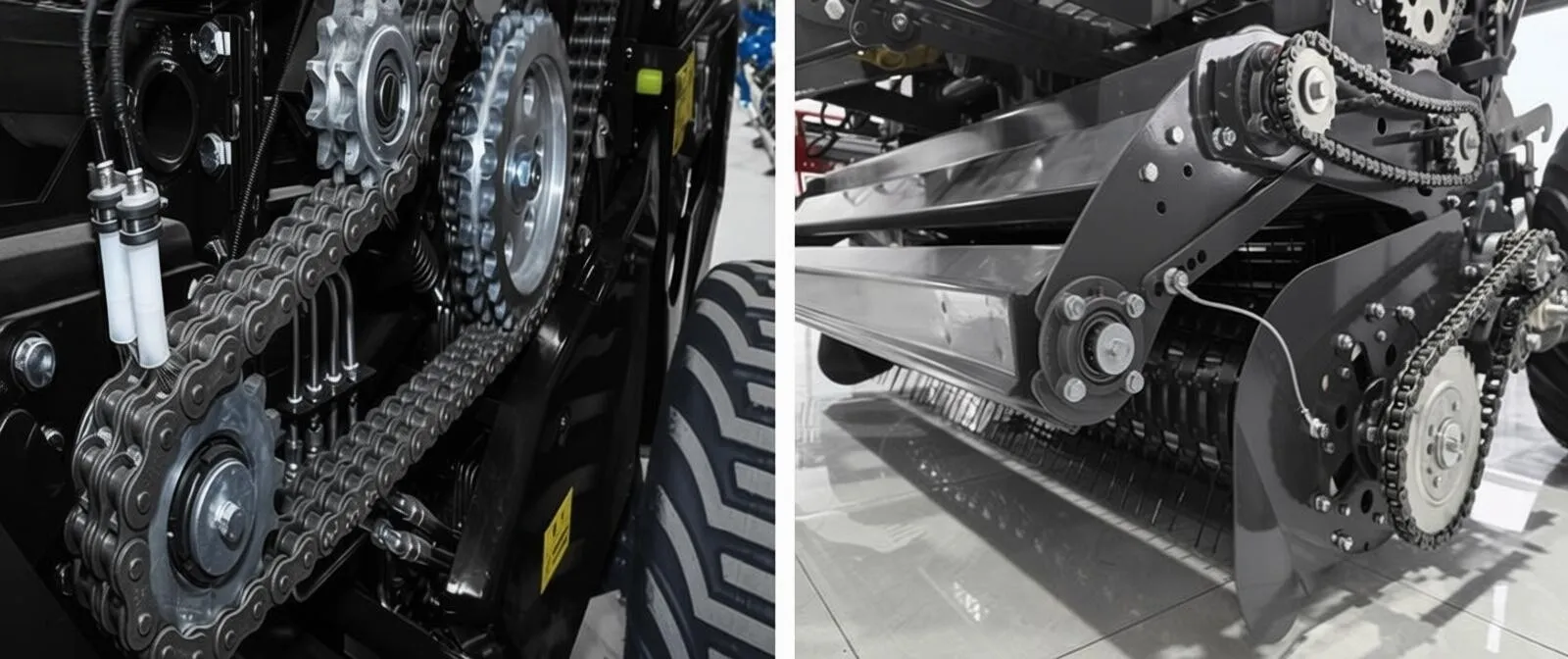
The variable-chamber compression principle used in the 9YG series is particularly well-suited to wattle production feedstock because it begins compressing material from the very first crop entering the chamber, producing a dense core rather than the loosely packed center that fixed-chamber machines create. For wattle cores where core density is as important as surface density in determining hydraulic performance, this distinction matters directly. The 18 compression rollers of φ222 mm diameter in the 9YG standard chamber are arranged to maintain progressive compression throughout the bale-building cycle, and the sensor-controlled density trigger ensures each bale is ejected at a consistent pre-set diameter regardless of windrow variation.
The axial-flow semi-forced feed mechanism in the 9YG series handles the brittle, dry straw material typically used for wattle production better than conventional cam-guided feed designs. Dry straw at 10–15% moisture content tends to break into short sections when it encounters rotating cam guides — this creates excessive fine material (chop) that escapes between roller gaps rather than compacting into the bale core, reducing effective density and creating a dusty working environment. The camless design routes straw through the feed zone with minimum breakage, preserving the long-fiber structure that gives compressed straw its structural strength as a wattle core material.
Frame construction for a straw wattle production operation does not require the same acid-corrosion resistance demanded by silage applications, but it does require resistance to the fine abrasive dust generated by dry straw processing. A well-sealed paint system over shot-blasted, primed steel provides the dust and moisture cycling protection needed for equipment that may be operating in a covered processing barn as well as in open fields. The tailgate system — which must cycle reliably through hundreds or thousands of bale ejections per production run — benefits from the H-type hydraulic fittings and buffer cylinder design used in the 9YG series, which absorb the closing shock on each cycle and extend latch mechanism service life across high-cycle production operations.
Manufacturing Specifications Relevant to Straw Wattle Core Production
| Component | Wattle Production Requirement | 9YG Series Specification |
|---|---|---|
| Compression chamber type | Variable-chamber for dense, consistent core | Variable-chamber roller design |
| Compression rollers | Consistent geometry for repeatable diameter | 18 rollers, φ222 mm, case-hardened surface |
| Density sensor and control | Consistent diameter triggering for standard wattle sizing | Electronic sensor, ECU-linked cab alert |
| Feed mechanism | Minimum straw breakage to preserve long-fiber density | Axial-flow semi-forced, camless, proprietary design |
| Pickup header | Clean recovery of windrow with minimal soil pickup | Spring-tine type, 2,240 mm standard width |
| Binding system | Net or twine binding to hold core for transport to netting machine | Auto net wrap or twine, selectable |
| Tailgate system | Reliable high-cycle operation for batch production runs | H-type fittings, buffer cylinder, sensor-triggered |
| Bale density output | 100–160 kg/m³ target for erosion control spec | 100–200 kg/m³ achievable across straw types |
4. Material System: Straw Types, Binding Materials, and Product Quality Requirements
The choice of straw material for wattle production affects the finished product’s hydraulic performance, biodegradation rate, and weed seed content — three quality parameters that professional erosion control contractors and the environmental engineers specifying wattle products evaluate before purchase. Understanding these material relationships helps both straw producers and wattle fabricators align their round baler machine selection and operational practices with the quality expectations of their target market.
Wheat straw is the most widely used wattle core material in Korea and temperate East Asia, primarily because of its widespread availability after summer grain harvest, its predictable stem structure, and its moderate biodegradation rate of 12–18 months on a typical construction site. Wheat straw at 10–14% moisture content compresses cleanly through the 9YG series feed mechanism without excessive breakage, producing cores with long intact stem segments that interlock and provide the structural cohesion needed in a wattle deployed on a 25-degree cut slope. The silica content of wheat straw (3–6% by dry weight) is lower than rice straw’s 10–15%, which reduces roller surface wear to manageable levels for straw wattle production without requiring the enhanced surface protection that intensive rice straw operations demand.
Rice straw, while more abrasive, is also used for wattle cores in regions where it is the primary available residue — including many Korean paddy farming areas where wheat is not grown. Rice straw wattles tend to have slightly lower tensile strength when wet due to the reduced lignin content compared to wheat straw, and their faster biodegradation rate (6–12 months) can be a limitation on construction projects with extended sediment control requirements, but also an advantage for post-fire revegetation projects where rapid organic matter incorporation into recovering soils is beneficial.
Reed canary grass (Phalaris arundinacea), barley straw, and oat straw are all used in specific regional contexts. Reed canary grass is particularly valued in streambank and wetland restoration wattles because its natural affinity for wet environments means the installed wattle can actually sprout and establish a living reed fringe if installed while some plant viability remains — a feature that standard cereal straw cannot provide. The binding materials applied during round baling must be compatible with the wattle’s intended end use. For wattle cores that will be enclosed in biodegradable mesh netting, twine binding in natural sisal is preferred over polypropylene net wrap because it degrades at a similar rate to the outer netting and does not create plastic contamination in the finished wattle product. For cores that will be transported long distances before netting, polypropylene net wrap provides better shape retention and moisture resistance through the supply chain.
5. The Straw Wattle Supply Chain: From Field to Construction Site
Understanding the full supply chain from straw field to erosion control installation helps round baler operators position themselves correctly within this value chain and make appropriate decisions about product specification, bale dimensions, and binding materials for their target market. The supply chain for Korean straw wattles typically involves several distinct stages, each with quality transfer points that determine whether the final product meets the specifications required by civil engineering contractors and environmental regulatory bodies.
Stage 1
Straw Collection and Baling — Round baler machine produces compressed cylindrical cores from field-dried cereal or grass straw at target density 100–160 kg/m³.
Stage 2
Bale Storage and Sorting — Bales are checked for moisture content (must be below 18%), diameter consistency, and contamination. Non-conforming bales are diverted to livestock bedding or compost.
Stage 3
Netting Application — Qualifying bale cores are fed through a wattle netting machine that applies biodegradable polypropylene, jute, or coir mesh in the standard diameter (200, 300, or 450 mm). Binding material is removed or retained.
Stage 4
Quality Inspection — Finished wattles are inspected for diameter, density, length, and outer mesh integrity. Certified wattles are labelled with specification sheets for delivery to civil construction buyers.
Stage 5
Site Deployment — Wattles are staked to contour lines on disturbed slopes, placed across drainage channels, or used to protect stream banks. Performance depends on all upstream quality stages.
The round baler machine is the enabling technology for Stage 1, and the quality decisions made there — consistency of compression, bale diameter, straw moisture, and binding material choice — cascade through every subsequent stage. A round baler operator who understands the downstream quality requirements can produce bale cores that command better prices from wattle fabricators and require less sorting and rejection at Stage 2.
6. Round Baler Models for Straw Wattle Core Production
The models below maintain variable-chamber compression, sensor-controlled bale formation, and dry-straw-compatible feed mechanisms that make them suitable feedstock producers for the erosion control wattle industry. Each model’s technical parameters are drawn from verified product specifications.
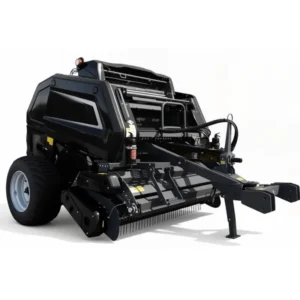
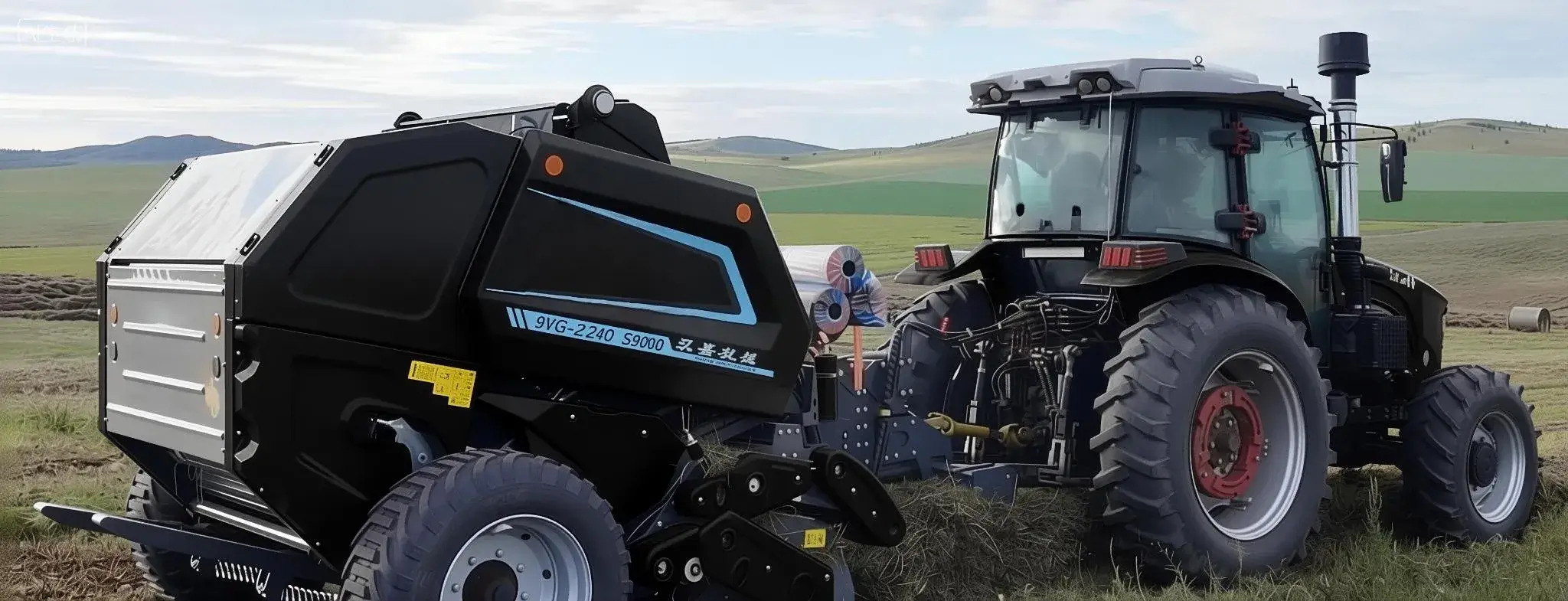
9YG-2.24D дөңгелек пресс-подборщик (S9000)
φ1,300×1,400 mm · 18 rollers · 55–100 kW · 4,262 kg · 40–100 bales/h · Sensor density control · Auto net wrap
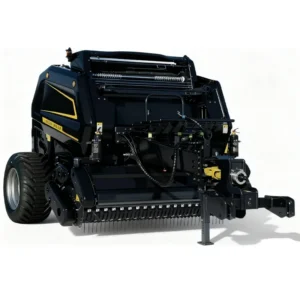
9YG-2.24D Round Baler (Classic)
4,312 kg · Dual-side 20A heavy chain · H-type hydraulic fittings · Buffer tailgate · 55–100 kW
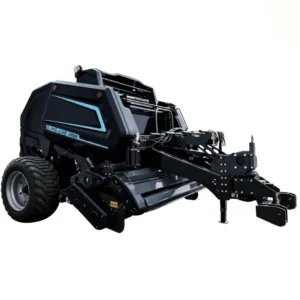
9YG-2.24D Round Baler (Transcend)
Dual-joint gearbox ±90° lateral · 4,570 kg · 720 r/min PTO · Safety torque driveshaft · 5–35 km/h
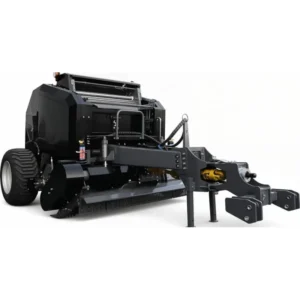
9YG-1.25 Round Baler (Double)
Interchangeable pickup (spring-tine / hammer-claw) · ≥88.2 kW · 4,558 kg · 1,200×1,250 mm · 40–80 bales/h
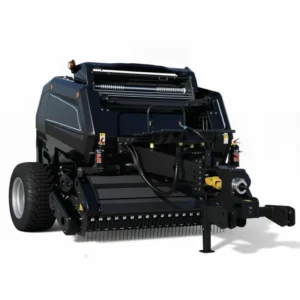
9YG-1.25A дөңгелек пресс
540–1,000 r/min PTO · Density 100–200 kg/m³ · Net 2,000×1.25 m · 4,472 kg · ≥75 kW
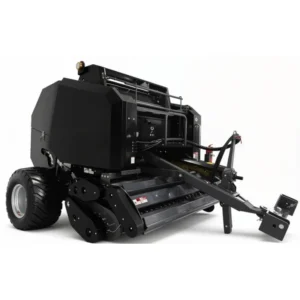
9YG-2.24D дөңгелек пресс
Axial-flow semi-forced camless feed · 3,922 kg · 55–100 kW · φ1,300×1,400 mm · 40–100 bales/h
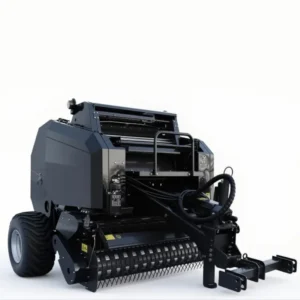
9YG-1.0 Round Baler (Mini Round Baler)
Small round baler for 40 hp tractor · 48–80 kW · Bale φ1,100×1,000 mm · 2,640 kg · 16 rollers
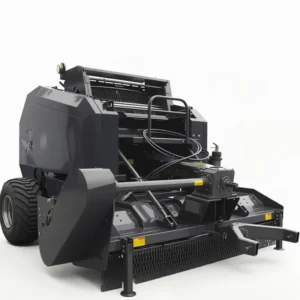
9YG-1.0C дөңгелек пресс
Hammer-claw pickup · Dual-side 16A heavy chain · ≥69.8 kW · Bale φ1,000×1,250 mm · 3,198 kg
7. Round Baler Gearbox: Reliable Power for High-Cycle Dry Straw Production
The round baler gearbox in a dry straw wattle production context faces a different operating environment than in silage applications. Dry straw at 10–15% moisture content imposes lower peak torque loads per bale than wet silage crops — the bale weight of a dry straw cylinder is typically 150–250 kg versus 400–600 kg for a same-diameter silage bale. However, wattle core production operations often run at higher cycle counts than typical agricultural baling, particularly when a dedicated straw processing facility is running the machine continuously against a large post-harvest straw windrow. The gearbox in this context is subjected to sustained medium-load operation for many consecutive hours, which places a premium on thermal stability and lubricant maintenance rather than peak torque capacity.
The dual-joint gearbox in the 9YG-2.24D Transcend model provides an advantage in dedicated straw wattle production operations where the machine may be working on irregular terrain collecting straw from post-harvest cereal fields. Korean grain-growing areas in Gyeongbuk and Chungnam provinces have field geometries that include many small irregular parcels with tight headland turns, and the ±90 degree lateral and ±30 degree vertical articulation of the Transcend driveshaft maintains continuous PTO engagement through these turns without the operator needing to disengage and re-engage the PTO on each headland. Over a full day’s operation with hundreds of headland turns, this translates to a measurable reduction in total time lost to PTO management and a corresponding improvement in bales produced per hour.
Gearbox thermal management in high-cycle dry straw production deserves specific attention. Running a round baler machine continuously for 8–10 hours in sustained medium-load straw baling can raise gearbox oil temperatures above the 80°C threshold at which standard mineral ISO VG 150 gear oil begins to oxidize more rapidly. Checking gearbox oil temperature (by touch on the housing — hot to the touch but not painfully so is acceptable; too hot to hold hand on for more than two seconds suggests thermal concerns) at the mid-shift break is a simple field check that costs nothing and can prevent the oil degradation that accumulates silently into expensive bearing and gear tooth wear if ignored. The correct oil change interval for high-cycle dry straw production is 200 hours — more frequent than some operators assume for what appears to be a lighter-load application.
The torque limiter or shear bolt protection system at the PTO input is relevant in straw wattle production because post-harvest cereal fields frequently contain embedded rocks, irrigation pipe sections, and other debris that the combine harvester’s header pushed into the windrow during grain harvesting. These objects can cause sudden severe over-torque events at the pickup and feed system. A correctly calibrated shear bolt or friction clutch limiter absorbs this energy and protects gearbox internals, chain sprockets, and frame welds from absorbing the full impact load. Replacing a shear bolt after a protection event takes minutes; repairing fractured gearbox housing or broken sprocket teeth takes days and requires unscheduled downtime during the narrow post-harvest straw collection window.
8. The Korean Straw Wattle Market: Demand Drivers and Opportunity
South Korea’s combination of intensive infrastructure development activity, stringent environmental protection requirements, and abundant post-harvest cereal straw supply creates a natural environment for a domestic straw wattle industry. The country has been in an active phase of highway expansion, railway construction, port development, and urban infrastructure renewal for several decades, each of which generates large areas of disturbed soil requiring erosion control treatment. At the same time, environmental regulations under the Natural Environment Conservation Act (자연환경보전법), the Soil Environment Conservation Act (토양환경보전법), and the Construction Work Standards for Environmental Protection require that construction site operators deploy BMPs (Best Management Practices) including sediment control on disturbed slopes — a mandate that creates direct, sustained demand for certified erosion control products including straw wattles.
The Korean Ministry of Environment (환경부) and the Ministry of Land, Infrastructure and Transport (국토교통부) both specify erosion and sediment control requirements for permitted construction projects, and the use of biodegradable, natural-fiber erosion control materials is increasingly favored over synthetic alternatives in environmentally sensitive project areas, including near watercourses, in conservation zone buffer areas, and on projects subject to Green Building certification requirements. For straw wattle producers who can demonstrate that their product meets biodegradability requirements, local sourcing standards, and minimum density and diameter specifications, the Korean public sector procurement market offers a stable buying channel with predictable demand across the construction calendar.
Beyond construction, Korea’s expanding stream bank and riverside restoration programs — particularly the ongoing management and rehabilitation of restored reaches of the Han, Nakdong, Geum, and Yeongsan river systems — create long-term demand for biodegradable erosion control products. These ecological restoration contexts specifically favor products made from locally sourced natural materials, which aligns well with the supply chain model of Korean rice and cereal farmers producing baled straw for local wattle fabricators supplying government environmental restoration contractors.
9. Regulatory Framework: Agricultural Machinery, Gearbox Standards, and Erosion Control Compliance
Round baler machines used in straw wattle feedstock production operate within two parallel regulatory environments: the agricultural machinery safety regulations that govern PTO-driven equipment, and the erosion control product standards that govern the end product delivered to construction and environmental projects. Both are relevant to operators seeking to supply certified wattle markets.
South Korea — Agricultural Machinery
Round balers used in straw collection operations in South Korea must comply with the Act on the Promotion of Agricultural Mechanization (농업기계화 촉진법), with machinery eligible for government purchase subsidy programs requiring performance evaluation by the National Institute of Agricultural Sciences (농촌진흥청). The Industrial Safety and Health Act (산업안전보건법) mandates PTO shaft guarding and pickup zone safety measures. Operators using contracted labor for straw collection — as is common in dedicated wattle production operations — have employer safety obligations under these provisions that extend beyond the individual farm equipment owner.
South Korea — Erosion Control Product Standards
Straw wattle products used on Korean public sector construction projects must meet specifications defined by the relevant construction authority, typically aligned with KCS (Korean Construction Standards) or Ministry of Environment technical guidance documents. Key product parameters for certified wattle supply include minimum core density (typically 80–150 kg/m³ depending on application), maximum moisture content (typically below 18–20%), outer mesh material type and biodegradation class, and minimum finished wattle diameter tolerance (within ±10% of specified diameter). Products that cannot demonstrate conformity with these specifications through batch testing records are not eligible for use on regulated construction sites and cannot be included in public procurement contracts.
European Union
Round balers sold in EU member states must carry CE marking under Machinery Directive 2006/42/EC, with harmonized standards EN ISO 4254-7 (harvesting machinery safety) and EN 12965 (PTO drive shaft safety) applicable. Straw erosion control products used on EU construction projects fall under EN 13254 (geotextiles — requirements for erosion control) and EN ISO 11058 (geotextile water permeability characteristics), with biodegradable erosion control materials from natural fibers increasingly covered by European Green Deal procurement preferences in public sector projects. Gearbox lubricant requirements in EU markets reference ISO VG 150 GL-4 or GL-5 gear oil, with biodegradable lubricant alternatives required for machinery operating in proximity to Natura 2000 conservation areas and watercourses in several member states.
United States
In the US, straw wattle products used on construction sites regulated under Clean Water Act NPDES permit programs (National Pollutant Discharge Elimination System) must meet specifications in the Construction General Permit (CGP) issued by the EPA, which references ASTM International standards for erosion control products. ASTM D6475 covers biodegradable erosion control products including straw rolls, with test methods for density, tensile strength, and water flow reduction. Round baler machines used in US straw wattle production are governed by ASABE safety standards S318 and EP455 for PTO guarding.
Russia and Kazakhstan
In Russia and Kazakhstan, agricultural machinery must carry EAC conformity marking under TR EAEU 010/2011 (machinery safety). Erosion control product standards in these markets reference GOST standards for geosynthetic materials where applicable, with growing infrastructure investment creating demand for certified erosion control products including straw-based materials in highway and railway construction contracts. Gearbox oil specifications reference GOST 23652 gear oil for agricultural machinery.
Australia
In Australia, straw erosion control products are specified under State Roads Authority technical guidelines and Environment Protection Authority (EPA) soil and erosion management guidelines in each state. New South Wales and Queensland erosion management guidelines specify minimum density and diameter requirements for straw rolls used on development sites under the Environmental Planning and Assessment Act framework. Round baler machinery used in straw collection must comply with harmonized WHS regulations and AS 1152 guarding standards.
10. Maintaining the Round Baler for Reliable High-Cycle Straw Production
Straw wattle production operations often involve running the round baler machine in longer continuous sessions than typical agricultural baling — processing large post-harvest straw windrows across multiple days to build up inventory for a wattle fabrication facility. This high-cycle dry straw operation has its own maintenance rhythm that differs from seasonal hay or silage baling. The lower per-cycle load means individual components experience less peak stress, but the higher total cycle count means cumulative wear on bearings, chain links, and binding mechanism components accumulates faster in calendar time than in seasonal silage work.
The most important daily maintenance step in dry straw production is removal of accumulated straw dust from all areas where it can pack against bearing seals, chain guides, and electrical connections. Fine dry straw dust penetrates spaces that wet silage residue cannot, working into bearing housings over weeks of operation and combining with any lubricant residue to form an abrasive paste that accelerates internal bearing wear. Compressed air cleaning of these areas at the end of each operating shift takes minutes and prevents cumulative damage that would not become apparent until the bearing develops audible roughness — by which point useful life is already significantly reduced.
Chain lubrication in dry straw conditions requires attention to lubrication retention. Standard chain oil applied in an open environment in dusty straw conditions evaporates or is displaced within a few hours. A heavier viscosity chain oil (ISO VG 220 or higher) applied to warm chain links at each daily startup retains better in dry dusty conditions than light spray lubricants. The binding mechanism knife and anvil assembly should be checked weekly for edge sharpness, as dry straw binds through the knife cut cleanly only when the blade is sharp — a dulling knife starts to tear rather than cut, creating trailing net ends that catch and pull back into the bale on the next cycle.
At the end of the harvest straw collection campaign, a full inspection should document compression roller diameter at multiple points, chain elongation using a ruler check against the manufacturer’s maximum specification, and pickup tine condition. Ordering replacement round baler parts for any items found to be approaching their wear limit during this post-campaign inspection allows them to be fitted during the off-season, ensuring the machine is ready at full specification for the next harvest window without unplanned downtime.
Frequently Asked Questions
Редактор: PXY