Rice Straw Baling | Northeast Asia | Farm Scale Analysis
A practical technical guide for farm managers, cooperatives, and procurement specialists evaluating round baler machine specifications, material construction, regulatory obligations, and total operating cost across large-scale paddy operations in Korea, Japan, and the broader Northeast Asia region.
Korea Focus
50–200 ha Scale
1. The Scale Question: Why 50–200 ha Changes Everything
Operating a rice farm at 50 to 200 hectares puts you in a different mechanical league than the small-plot farmer running five hectares with a single compact tractor. At this scale, the post-harvest window — the narrow corridor between combine threshing and the onset of autumn rain — becomes the most operationally critical period of the year. A slow or unreliable round baler machine does not just leave straw on the ground; it costs you an entire season’s residue revenue and risks delaying the next field operation. Procurement at this scale is not about finding the cheapest round baler for sale near you. It is about matching throughput, bale density, drivetrain durability, and parts availability to the specific cropping calendar, field geometry, and downstream straw market that your operation depends on.
Northeast Asia’s rice-growing belt — spanning South Korea’s Jeolla and Chungcheong provinces, Japan’s Niigata and Tohoku regions, and northeastern China’s Heilongjiang basin — presents a consistent set of mechanical challenges that distinguish it from wheat or corn baling operations in drier climates. Silica-rich rice straw, compact paddy plot geometry, and compressed harvest schedules driven by predictable autumn monsoon patterns all place demands on baler design that a machine optimized purely for dry-climate hay simply cannot reliably meet. The analysis that follows is built around those specific conditions, using published product specifications from the 9YG round baler series to provide a concrete, comparable framework for decision-making.
2. Defining the Scale Tiers: 50 ha, 100 ha, and 200 ha Operations
The distinction between a 50 ha operation and a 200 ha operation is not simply a matter of doing four times more baling. It changes the optimal machine configuration, the number of machines needed, the logistics chain for bale removal, and whether a single-machine approach can realistically complete the harvest window without straw degrading in the field. Understanding these tier differences is the starting point for any honest baler selection exercise.
A single mid-capacity round baler producing 50–70 bales per hour can realistically clear 50 ha in 2–3 days with one operator. Machine weight under 4,500 kg is preferred for field accessibility. Power requirement: 55–80 kW tractor.
At 100 ha, either a high-throughput single machine or two mid-capacity units running in parallel is required. Throughput of 80–100 bales per hour becomes necessary. Gearbox rated at 1,000+ Nm and continuous PTO turning capability are key features.
Operations at 200 ha require a fleet approach: 2–3 high-capacity round baler machines with dedicated bale transport equipment. The 9YG-2.24D class machines at 40–100 bales per hour, combined with bale carriers, form the standard configuration at this scale across Northeast Asia.
3. Manufacturing Structure: What Separates Field-Proven Balers from Budget Models
At 50–200 ha scale, a machine breakdown during the harvest window is not a minor inconvenience — it can mean 10–40 tonnes of straw left on the field to degrade. Understanding manufacturing structure helps buyers distinguish machines built for sustained heavy-cycle operation from those designed for occasional, lighter-duty use. The following breakdown covers the principal structural subsystems of the 9YG series round balers and explains why each design choice matters specifically for Northeast Asian rice straw conditions.
Main Frame and Chassis
The load-bearing frame of a round baler handling rice straw experiences a combination of static compression force from the bale, dynamic shock from field obstacles, and fatigue stress from the rhythmic motion of the pickup, feeder, and chamber systems. Frames fabricated from Q345B structural steel with continuous MIG-welded joints and gusset-reinforced corners provide the stiffness needed to maintain alignment of the compression rollers across the bale cycle. Misalignment at the roller level — even 2–3 mm from a twisted or fatigue-cracked frame — produces asymmetric bale shapes that cause problems in net wrapping and bale stability during transport. The 9YG-2.24D Transcend series uses a rigidly integrated gearbox-drawbar assembly to prevent the torsional frame cracking seen in designs where the gearbox is mounted separately from the main frame.
Pickup Assembly
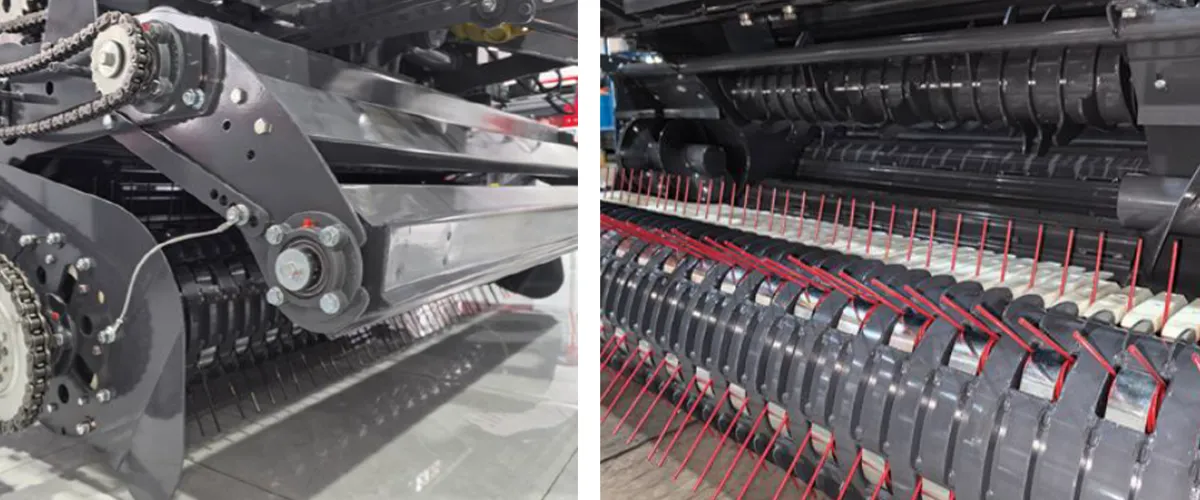
The pickup assembly spans 1,900–2,400 mm depending on model, with pickup tines mounted on either a cam-follower carrier or, in the camless axial-flow designs, directly on the drum. For rice straw, the camless design — used in the 9YG-1.0 and 9YG-1.0C — is valuable because the cam track is the first component to clog when silica-laden straw fragments and moist soil mix around the carrier. Eliminating the cam track removes the primary source of pickup outages in wet harvest conditions. Spring tines in 65Mn spring steel with induction-hardened tips are the current standard; boron-treated tines are available for high-silica applications where tip wear exceeds 2 mm per 100 operating hours.
Compression Chamber and Roller System
All 9YG series models use a fixed-chamber design with 16 or 18 steel rollers (Ø222 mm each) arranged circumferentially. The rollers are surface-profiled with spiral grooves that grip the crop as it rotates inside the chamber, building the bale from the inside out. Sensor-controlled bale density monitoring — standard across the 9YG range — signals the operator when the bale reaches the preset target diameter, typically Ø1,000–Ø1,300 mm depending on model. For large-scale operations, the sensor system’s accuracy directly affects throughput: a miscalibrated sensor that stops the machine too early produces undersize, underweight bales that undercut sale value; one that runs too long creates oversize bales that risk net-wrap failure on ejection.
Round Baler Gearbox and Drivetrain
The round baler gearbox is the structural component under the greatest mechanical stress in paddy straw operation at large scale. At 100+ bales per hour, the gearbox goes through thousands of load cycles per operating day, with peak torque spikes occurring each time a dense section of windrow enters the chamber. The 9YG-2.24D S9000 series specifies a twin-axle heavy-duty gearbox rated at 1,000 Nm maximum input torque, with 90-degree lateral rotation capability in both directions. This allows the tractor to navigate narrow paddy headlands at full PTO without disengaging power — a critical productivity feature at 100–200 ha scale where headland turns account for a measurable fraction of total operating time. The gearbox housing is cast nodular iron (QT450 grade), which provides high vibration damping and dimensional stability under thermal cycling from full-load to idle during field maneuvering.
4. Material System: Specifications That Matter at Scale
When a round baler machine is running 8–10 hours a day for 10–15 consecutive days during a rice harvest, the material specification of its components determines whether the machine finishes the season intact or requires disruptive mid-season repair. The 9YG series production process uses CNC laser-cut structural panels, robotic MIG welding on primary load paths, and electrostatic powder coating — a combination that improves dimensional consistency and surface durability compared to hand-cut and wet-painted alternatives. The following table summarizes the key material specifications and their practical relevance to Northeast Asian rice straw conditions.
5. Side-by-Side Model Comparison for 50–200 ha Rice Operations
The following comparison covers the primary round baler machine models relevant to this scale of operation, drawing on published manufacturer specifications. All models use net wrapping as standard — the preferred method for Northeast Asian paddy straw given outdoor storage requirements between harvest and collection logistics. The table is organized from smallest to largest operational capacity to facilitate tier-based selection.
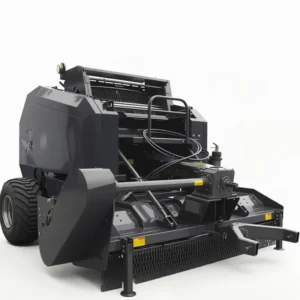
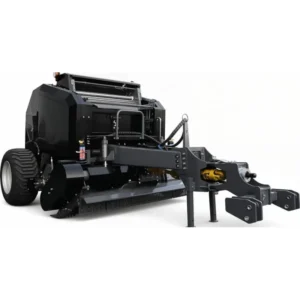
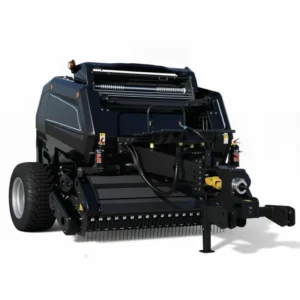
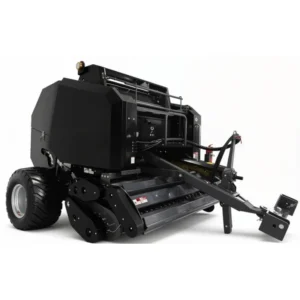
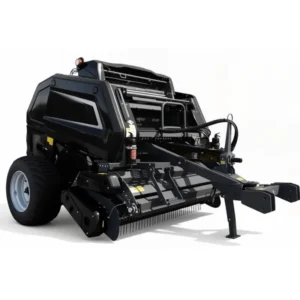
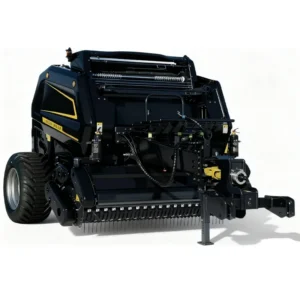
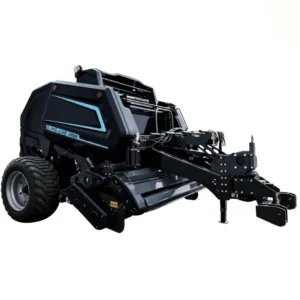
6. Full Round Baler Product Range
All models are production-certified under ISO 9001 and available for export across Northeast Asian markets. Specifications are from the manufacturer’s current published datasheets.
7. Operational Cost Drivers at 50–200 ha Scale
The sticker cost of a round baler machine accounts for a smaller fraction of total ownership cost than most buyers expect. For a machine running 120–180 hours per harvest season at large scale, the cost of consumables — primarily net wrap, replacement tines, and chain sets — and the opportunity cost of unplanned downtime together often exceed the annualized capital cost within three seasons. Understanding these drivers helps justify investment in higher-specification machines at the 100–200 ha scale, where the premium of a gearbox-upgraded S9000 model over the base 9YG-2.24D is small relative to the revenue exposure of a single day’s breakdown in peak harvest.
Net wrap consumption is the most visible recurring cost. At 2,000 meters of net per bale across a 1.4-meter-wide bale, a machine producing 80 bales per hour and running 10 hours per day uses approximately 1,600,000 meters of net per day at maximum throughput — though in practice, most large rice operations budget 60–70% utilization. Tine replacement costs scale with silica exposure: farms in heavy clay paddy soils with high straw silica content typically replace 30–40% of their tine sets mid-season. Buying machines from manufacturers that maintain accessible regional spare round baler parts inventory — within 5–7 business days’ delivery to Korea or Japan — is not a secondary criterion; at this scale, it is a primary procurement requirement.

8. Regulatory Framework Across Northeast Asia and Beyond
Operators and procurement teams at 50–200 ha scale need to understand the regulatory environment on two levels: the rules governing straw disposal (which create demand for baling), and the rules governing machinery safety and import certification (which determine which machines can legally operate or receive subsidy support in each jurisdiction).
South Korea — 농기계 안전 and Subsidy Compliance
South Korea’s Rural Development Administration (농촌진흥청, RDA) administers the 농기계 구입자금 융자 program, which provides low-interest loans (1.5–2.0% per annum) for qualifying agricultural machinery purchases. Machines must meet Korean Agricultural Machinery Safety Standards, referenced under the Agricultural Mechanization Promotion Act (농업기계화 촉진법). For baling machinery specifically, the Korea Agricultural Machinery Industry Cooperative (한국농기계공업협동조합) oversees performance certification under KS B 6007 and related standards. Open-field burning restrictions under the Clean Air Conservation Act (대기환경보전법) create the regulatory driver for baling adoption: the law classifies agricultural residue burning as a PM2.5 source, and provincial-level enforcement in Jeolla, Chungcheong, and Gyeonggi applies penalties during the October–November peak rice harvest window. Imported balers are eligible for subsidy consideration if they pass third-party technical inspection at a designated Korean testing authority.
Japan — MAFF Registration and Prefectural Burn Bans
In Japan, the Ministry of Agriculture, Forestry and Fisheries (MAFF) maintains the National Agricultural Machinery Performance Database. Machines registered in this system with verified performance data are more accessible for farmers applying for MAFF Agri-Innovation Program subsidies. Field burning is regulated under the Air Pollution Control Act with prefectural government enforcement: Niigata, Akita, Miyagi, and Fukuoka have enacted near-total harvest-season burn bans, with penalty provisions of up to 300,000 JPY per violation. Safety requirements for agricultural machinery are governed by the Labour Safety and Health Act and its implementing regulations, which cover PTO shaft guarding, operator protection zones, and stability requirements for trailed equipment operating on inclined paddy terrain.
European Union — CE Marking and Machinery Directive
Agricultural machinery exported into the European Union must carry CE marking in compliance with Machinery Directive 2006/42/EC. For round balers specifically, the applicable harmonized standard is EN 703 (agricultural machinery — safety — requirements for crop harvest and processing machinery), alongside EN ISO 11684 for safety signs. PTO shaft guarding must comply with EN ISO 11684 and EN 12965. EU members producing significant rice — Spain’s Valencian Community (l’Albufera), Italy’s Po Valley, and Portugal — are subject to these requirements. Operators in these regions purchasing a baler for import must confirm CE certification and the availability of a Declaration of Conformity from the manufacturer.
Vietnam and ASEAN — MARD Guidance and TCVN Standards
Vietnam’s Ministry of Agriculture and Rural Development (MARD) has issued guidance under Resolution 01/NQ-CP discouraging paddy straw burning in the Mekong and Red River Deltas, where double and triple cropping creates post-harvest residue volumes that overwhelm traditional disposal methods. Machinery safety in Vietnam is governed by TCVN national standards, and imported balers pass technical inspection at Ministry of Transport testing centers. Thailand’s Department of Agricultural Extension has issued similar guidance against open burning of rice stubble in the Chao Phraya Basin, creating demand for baling alternatives in Southeast Asia’s second-largest rice producer.
9. Fleet Configuration Strategy for 150–200 ha Operations
At 150–200 ha, the single-machine approach reaches its practical limit. Even a high-throughput round baler machine producing 100 bales per hour is constrained by the physical reality that the operator also needs to navigate between plots, wait for bale ejection, and account for field irregularities and unexpected straw density variation. A standard planning assumption is that a machine’s effective field utilization rate is 60–70% of its theoretical maximum throughput — meaning a 100-bale-per-hour machine delivers around 60–70 bales per usable hour in real paddy conditions. At 200 ha, this typically points to a two-machine fleet with dedicated bale transport and a defined daily plot rotation schedule to prevent overlap and ensure each machine is always working within a fresh windrow.
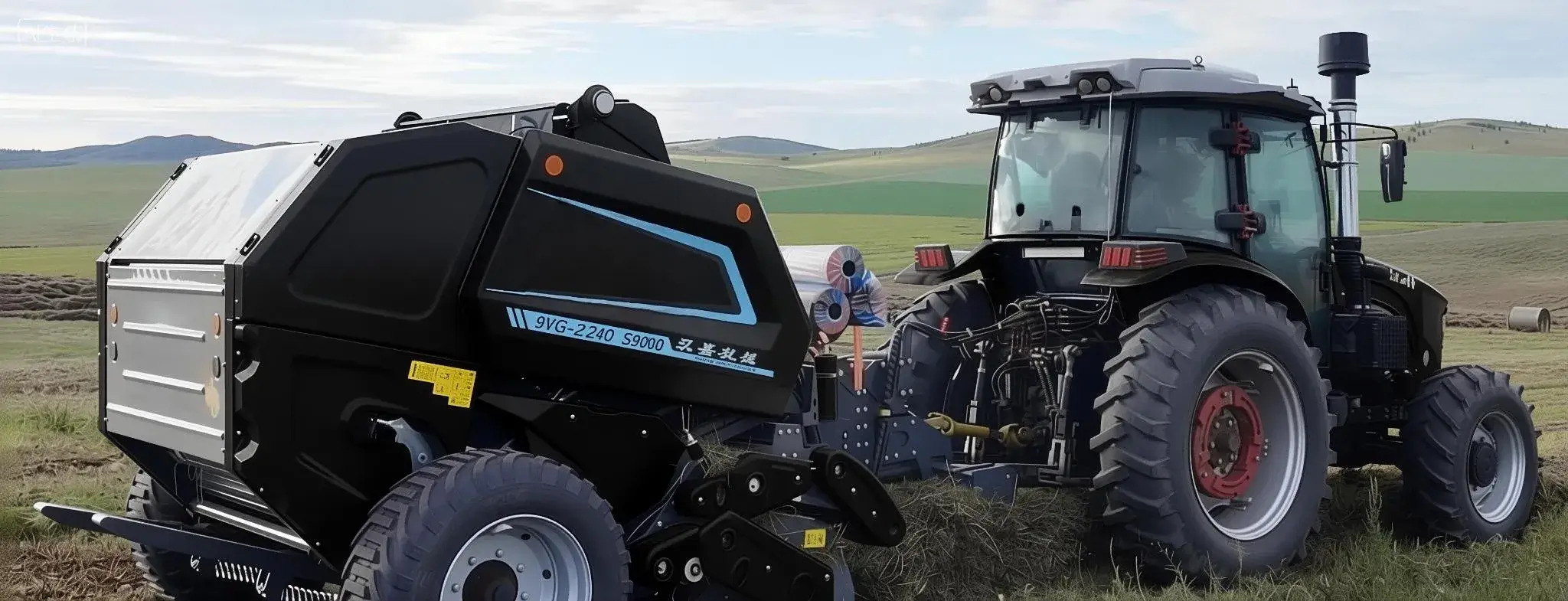
For a two-unit 200 ha fleet, the 9YG-2.24D S9000 or Transcend models are the logical choice: their 1,000 Nm gearbox rating, continuous-PTO headland turning, and robust H-type hydraulic system are engineered for sustained multi-shift operation without the accelerated wear that causes lesser machines to require mid-season gearbox oil changes or hydraulic seal replacement. The S9000’s twin-universal-joint driveshaft further protects both the tractor and baler drivetrain during the repeated turning cycles that a 200 ha operation requires across dozens of narrow paddy plots per day.
10. Compatible Components: Agricultural PTO Shaft and Drive Chain
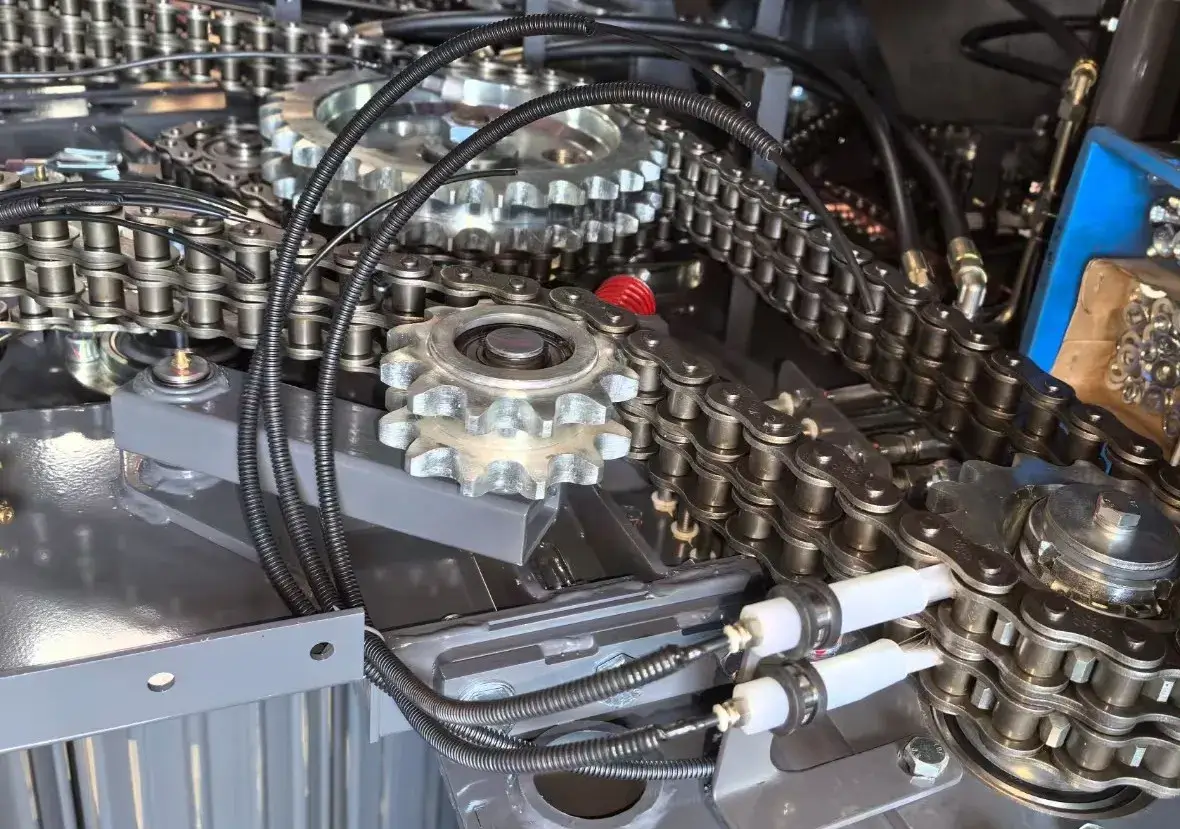
A round baler machine is only as reliable as its complete drivetrain system. At 50–200 ha scale, the PTO shaft connecting the tractor to the baler absorbs the full torque output of the engine through thousands of bale cycles per season. Specifying a matched Agricultural PTO Shaft for round balers — rather than using a generic cross-type shaft not sized for baler shock loads — is one of the most cost-effective reliability improvements available. Drive chain quality is equally important: the internal chain sets driving the compression roller array and feeder system directly determine bale formation consistency and the frequency of chain replacement that adds to seasonal maintenance cost.
We supply compatible Agricultural PTO Shafts and Agricultural Chain as part of a one-stop system that ensures dimensional and load-rating compatibility with the 9YG baler series. The advantage of sourcing both the round baler machine and its drive components from within the same verified supply chain is the elimination of specification mismatches that typically surface after 50–100 operating hours — precisely when the harvest pressure is highest. All components are available with factory technical documentation for warranty and compliance purposes.
Heavy-duty PTO shafts specifically sized and rated for round baler torque profiles. Includes overrunning clutch and shear-bolt torque limiter options for paddy straw shock-load protection.
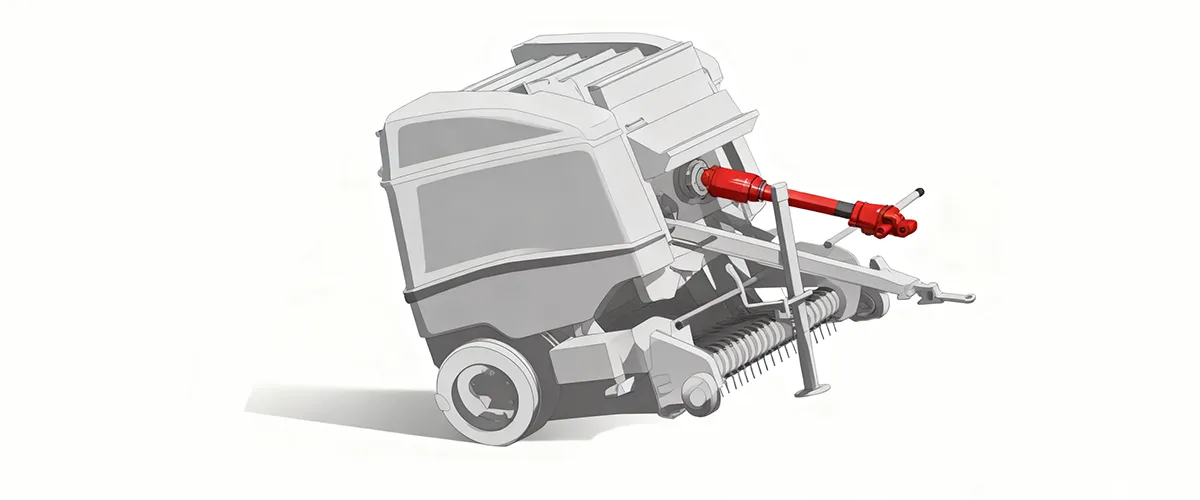
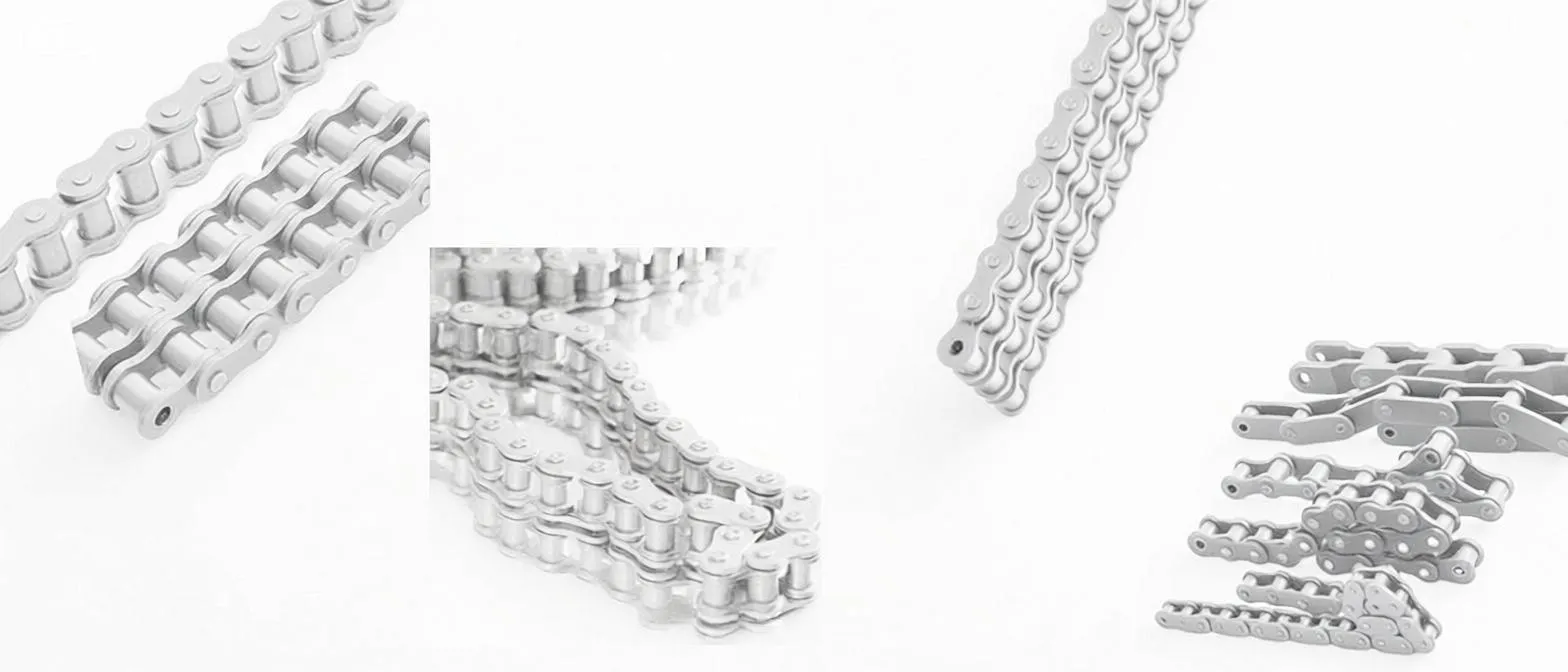
16A and 20A heavy-duty roller chain sets compatible with 9YG series rear chamber and feeder drives. High-carbon steel links with surface hardening for extended service in abrasive rice straw environments. Available in full-chain replacement kits sized per model.
Frequently Asked Questions
편집자: PXY