Egypt & North Africa Agricultural Guide
Cotton Stalk Baling in Egypt and North Africa:
Key Operational and Procurement Considerations
A comprehensive knowledge guide for farmers, agri-contractors, and procurement officers evaluating round baler solutions for cotton residue management across Egypt, Morocco, Sudan, and the broader MENA belt.
1. Why Cotton Stalk Baling Matters in the North African Context
Egypt ranks among the world’s most historically significant cotton producers, and its Nile Delta fields generate millions of tonnes of cotton stalk residue each harvest season. Across the wider North Africa region — Morocco’s Gharb plain, Sudan’s Gezira scheme, and Libya’s coastal agricultural strips — cotton cultivation leaves behind a fibrous, woody biomass that has traditionally been managed through field burning. That practice carries mounting legal, environmental, and economic costs that modern mechanisation can address more effectively. The round baler has emerged as one of the most practical machines for transforming loose cotton stalk into dense, transportable bales suited for biomass energy, animal feed supplementation, cardboard manufacturing, or direct soil amendment.
Cotton stalks present specific baling challenges that differ markedly from hay or wheat straw. The stems are woody and semi-rigid, moisture content varies significantly between upper and lower zones of the plant, and field conditions in Egyptian cotton zones — particularly the heavy, silty soils of the Delta — put extra demand on pickup mechanisms and gearbox transmission systems. Choosing the right round baler requires understanding not only horsepower compatibility and bale density targets, but also the local regulatory environment, post-harvest timing windows, and the true total cost of ownership when spare parts and service networks may be geographically distant from the operating location.
This guide is structured to walk procurement officers, large-scale agri-contractors, and farm managers through the critical decision points — from field-level operational considerations through to regulatory compliance and supplier evaluation criteria.

2. Manufacturing Structure of a Modern Round Baler
Understanding how a round baler is built helps buyers make informed decisions about durability, repairability, and long-term operational cost — especially when operating far from a dedicated service depot. A full-chamber roller-type round baler, which is the dominant design across the product lines sold into Egypt and the MENA region, consists of four main structural assemblies that work in sequence.
1. Pickup Assembly
The spring-tooth or hammer-claw pickup reel lifts cut stalks from windrows. On cotton stalk applications, a 2240mm pickup width — as found on the 9YG-2.24D S9000 — is strongly preferred to handle the wide windrows created by cotton harvester attachment. The pickup teeth are manufactured from heat-treated spring steel and must resist the abrasive silica content that cotton stalk accumulates from dusty Delta soils. Tooth-pitch spacing and ground-following flotation capability are critical for North African conditions where topsoil is often loose and irrigation furrows create irregular ridges.
2. Feeding and Pre-Compression System
Collected material passes through the feeding mechanism before entering the bale chamber. The axial-flow semi-forced feeding design — a proprietary system eliminating cam tracks and guard rings — reduces clogging risk by nearly 50% compared to conventional designs. For cotton stalks with their tendency to bridge and jam at feeding inlets, this architecture is a meaningful operational advantage. The dial-tooth roller and drum combination found on 9YG-series balers ensures an even crop curtain enters the compression chamber, critical for forming cylindrical bales with consistent density from core to wrap.
3. Compression Chamber and Roller System
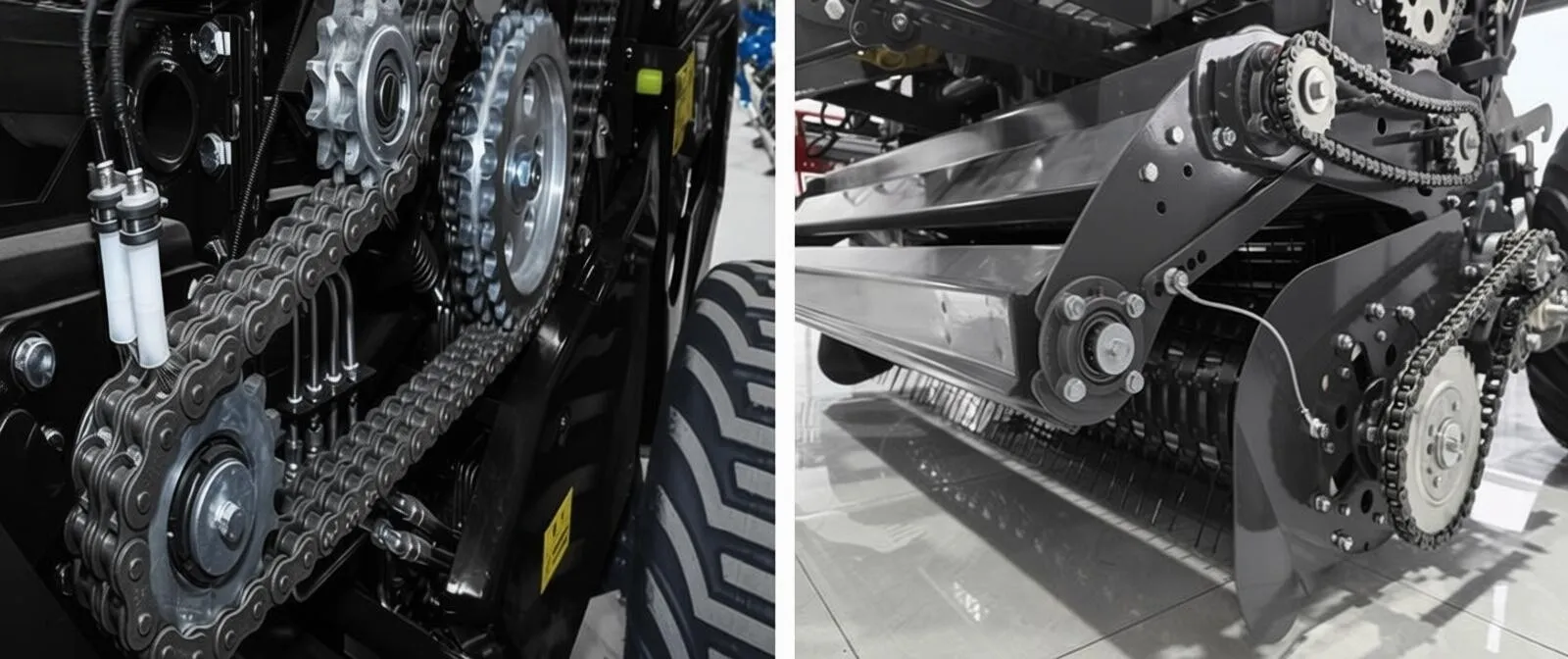
The compression chamber is the heart of the machine. Roller-type chambers use between 16 and 18 heavy-duty steel rollers (diameter Φ222mm on 9YG series) to progressively compact material as the bale grows. The chamber width — 1000mm on the compact 9YG-1.0 model and 1400mm on the 9YG-2.24D series — directly determines bale volume and per-trip transport efficiency. Dual-side chain drive systems, particularly the 20A heavy-duty chain upgrade found on the S9000 variant, dramatically increase compression force, enabling single-bale cotton stalk weights between 250 and 500 kg. Sensor-controlled bale density feedback ensures consistent output without manual monitoring.
4. Traction, Gearbox, and PTO Drive Train
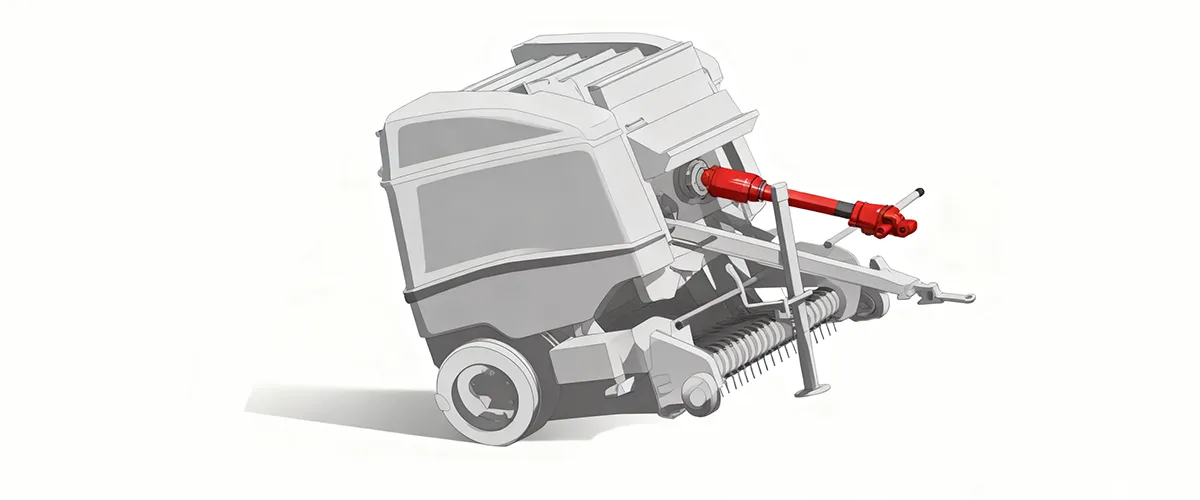
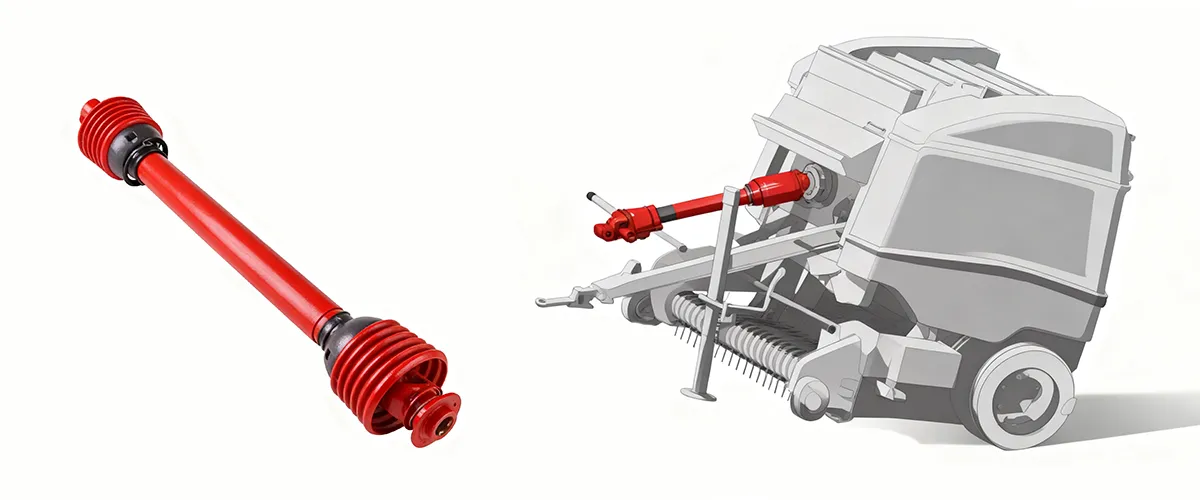
Power is delivered from the tractor PTO shaft at 720 r/min through a main gearbox to the chamber and feeding systems. The traction hitch and gearbox arrangement is where cotton stalk operations most frequently cause machine damage on lesser-built equipment. The dual cross-joint (double universal joint) driveshaft on S9000-series machines, with a torque rating of 1000 Nm, eliminates the binding failures seen on conventional rigid-hitch designs when turning on narrow irrigation-bordered cotton plots. The gearbox uses gear transmission rather than belt-and-pulley to deliver a transmission efficiency advantage and handle the intermittent shock loads that dense cotton stalk generates at the feeding inlet.
3. Material System: Frame, Chain, and Coating Specifications
The working environment in Egyptian cotton fields is particularly demanding from a materials standpoint. Airborne silica from the desert-influenced soils of Upper Egypt, the alkaline salts present in reclaimed desert farmland in the Western Desert expansion zones, and the high ambient temperatures during post-harvest October-November operations all accelerate material degradation. Knowing the specific material grades used in a baler’s construction is therefore not merely a technical curiosity — it is a procurement due-diligence requirement.
| Component | Material / Grade | Relevance for Cotton Operations |
|---|---|---|
| Main Frame | High-tensile Q345B structural steel | Maintains rigidity under high compression shock loads common with woody cotton stalk |
| Pickup Teeth | Heat-treated spring steel | Resists wear from abrasive soil particles embedded in cotton root zones |
| Compression Rollers | Φ222mm forged steel rollers | Surface-profiled grip ensures fibrous cotton stalk catches and rotates evenly |
| 구동 체인 | 20A heavy-duty double-side chain (S9000); 16A (1.0C model) | Higher compression pressure for dense cotton bales; extended service life vs. standard chain |
| Exterior Coating | Electrostatic powder spray (multi-layer) | Alkali-salt resistant; important for reclaimed desert soil environments in Egypt’s New Lands |
| Hydraulic Fittings | H-type ferrule fittings | Higher burst pressure tolerance; faster gate response for improved field cycle times |
The electrostatic powder-coat process applied during manufacture — in contrast to conventional wet-spray systems — produces a bonded coating that adheres more reliably to chassis welds and resists the micro-crack propagation that leads to accelerated rusting in high-UV, sandy environments. For procurement teams sourcing equipment for extended deployments in Upper Egypt or the Sudan Gezira, requesting documentation of the coating specification is a reasonable due-diligence step when comparing supplier quotes.
4. Understanding Cotton Stalk as a Baling Material
Cotton stalk — the woody stem and branch structure remaining after boll harvest — behaves very differently from cereal straw or pasture grass when fed into a baling chamber. Its material characteristics directly dictate which baler configurations perform reliably and which will struggle in practice. Agronomically, Egyptian cotton (varieties including Giza 45, Giza 94, and the semi-long-staple Giza 92 widely grown in the Nile Delta) produces stalks with a lignin content significantly higher than wheat straw. Lignin concentration typically ranges between 18–24% of dry weight in cotton stems, compared to 7–12% in wheat straw. This translates into a material that compresses with greater resistance, generates higher inter-baler friction, and puts more torque demand on the drive train when bale density is pushed above 150 kg/m³.
Moisture content at baling time is a critical operational variable. Cotton stalks harvested in October in the Nile Delta typically carry 25–40% moisture at the base of the stem, significantly higher than at the tip. This moisture gradient creates uneven compression resistance across the bale cross-section, which can lead to asymmetric bale formation if the feeding system does not distribute material evenly. The dial-tooth roller and drum feeding system found on the 9YG-2.24D series is specifically engineered to homogenise crop distribution across the chamber width before compression begins, which directly addresses this moisture-gradient challenge. Operators are generally advised to allow stalks to field-dry for 5–8 days post-mowing before baling to bring moisture below 30%, which meaningfully improves both bale density consistency and net wrap adhesion.
Additionally, cotton stalks carry a disease-transmission risk specific to the crop: the FAO and Egypt’s Central Agricultural Pesticides Laboratory have issued guidance on the role of infected residue in perpetuating Fusarium wilt and Verticillium wilt across growing seasons. Baling — rather than chopping-and-incorporating — removes infected biomass from the field entirely, and is therefore increasingly recommended by extension services as an integrated pest management practice, not merely a residue-management convenience.
5. Recommended Round Baler Models for Cotton Stalk Applications
The table below presents the full line-up. Product selection should be matched to tractor horsepower availability, target bale weight, and field plot size. Two representative models are highlighted below the table.
| Model | Power (kW) | Pickup (mm) | Bale Size (Ø×W mm) | Density (kg/m³) | Output (bales/h) | Weight (kg) |
|---|---|---|---|---|---|---|
| EP-9YG-1.0 | 48~80세 | 1900 | Φ1100×1000 | 115~200 | 40~100 | 2640 |
| EP-9YG-1.0C | ≥69.8 | 2400 | Φ1000×1250 | 115~200 | 40–80 | 3198 |
| EP-9YG-1.25 (Double) | ≥88.2 | 2240 | 1200×1250 | 115~200 | 40–80 | 4558 |
| EP-9YG-1.25A | 75세 이상 | 2150 | Φ1300×1250 | 100–200 | 40~100 | 4472 |
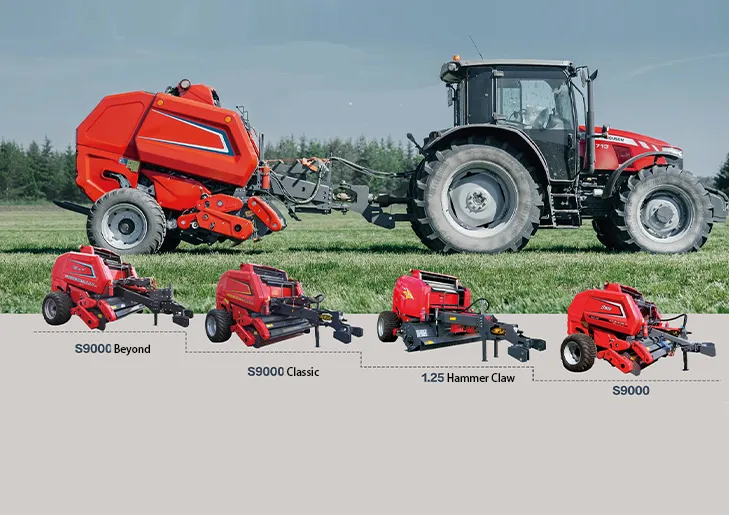
| 9YG-2.24D S9000 ★ | 55–100 | 2240 | Φ1300×1400 | 100–200 | 40~100 | 4262 |
| EP-9YG-2.24D | 55–100 | 2240 | Φ1300×1400 | 100–200 | 40~100 | 3922 |
| 9YG-2.24D Classic | 55–100 | 2240 | Φ1300×1400 | 100–200 | 40~100 | 4312 |
| 9YG-2.24D Transcend | 55–100 | 2240 | Φ1300×1400 | 100–200 | 40~100 | 4570 |
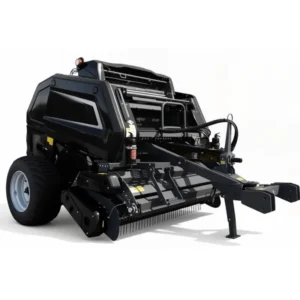
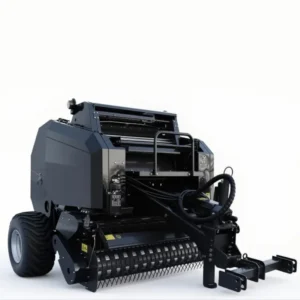
★ Most recommended model for large-scale cotton stalk operations in open Delta fields. See detailed featured product cards below.
6. Round Baler Gearbox Regulations: Egypt, North Africa, and International Standards
Gearbox and power-transmission components in agricultural machinery are subject to an increasingly robust regulatory framework across the MENA region and internationally. Procurement officers importing round balers into Egypt, Morocco, or Tunisia need to be aware of the applicable standards at both import and operational levels.
Egypt
Egypt’s primary regulator for agricultural machinery is the Agricultural Engineering Research Institute (AEnRI) under the Ministry of Agriculture and Land Reclamation. Imported machinery must satisfy the Egyptian Standards Organisation (ESO) technical conformity requirements, with particular reference to ES 1-2020 series on mechanical power transmission. PTO-driven machinery connecting to tractor drive shafts must comply with ISO 11684 on safety signs and markings and ISO 4254-1 (General Safety Requirements for Agricultural Machinery), which Egypt formally adopted through CAPMAS alignment. Gearboxes imported as independent components are subject to customs HS code 8483.10 (transmission shafts and cranks), which carries a 10% import duty and requires a certificate of origin under the COMESA trade agreement for origin-preferential treatment.
Morocco
Morocco’s agricultural machinery sector is regulated through the Ministry of Agriculture under the Plan Maroc Vert and its successor strategy. Agricultural equipment imported for commercial use requires conformity with Moroccan NM standards, which in the agricultural machinery domain are closely harmonised with ISO and CE standards. CE marking of the baler (including its gearbox assembly) under EU Machinery Directive 2006/42/EC is broadly accepted by Moroccan customs authorities and simplifies the import clearance process. Morocco’s Association Agreement with the EU (in force since 2000) provides preferential tariff treatment for EU-conformant machinery. Non-EU machinery carrying CE documentation still typically receives expedited technical inspection. The Office National du Conseil Agricole (ONCA) provides advisory support for machinery selection in rural zones.
Tunisia
Tunisia has developed a relatively detailed agricultural machinery homologation system administered through the Office de l’Élevage et des Pâturages and the technical institutes under the Ministry of Agriculture. Machines must obtain an operating homologation certificate (Certificat d’Homologation) before commercial use in Tunisia. For PTO-driven balers, documentation of gearbox torque rating, PTO speed compatibility (540 or 1000 r/min), and compliance with ISO 4254-7 (Safety Requirements for Balers) is required. Tunisia is party to the Agadir Agreement, facilitating intra-MENA equipment trade with Egypt, Morocco, and Jordan under harmonised tariff schedules for qualifying agricultural machinery.
Sudan and the Broader MENA Region
Sudan’s Gezira cotton scheme, one of the world’s largest irrigation-based farming operations, has historically relied on state-controlled mechanisation. Private import of agricultural machinery has expanded significantly since the 2019 transition government reforms. Sudanese customs apply HS 8433.20 to round balers and related forage machinery, with a 5% import duty applicable under most bilateral agreements. Saudi Arabia and the Gulf Cooperation Council (GCC) states have aligned agricultural machinery safety standards with the Gulf Standards Organisation (GSO) framework, which references ISO 4254 series for baler safety. CE-certified equipment or equipment with ISO 9001-documented quality management are generally accepted without additional technical verification in GCC agricultural ministry procurement tenders.
Key International Standards Applicable to Round Baler Gearboxes and PTO Systems
| Standard | Scope | Relevance to Baler Procurement |
|---|---|---|
| ISO 4254-1:2013 | General safety — agricultural machinery | Baseline mandatory reference in Egypt, Tunisia, GCC |
| ISO 4254-7:2012 | Safety requirements for balers and forage harvesters | PTO guard specifications, bale ejection safety requirements |
| ISO 500-1:2014 | Agricultural tractors — rear PTO | 540/720/1000 r/min compatibility matching with tractor fleet |
| EU Machinery Dir. 2006/42/EC | CE marking of machinery including gearbox assemblies | Accepted by Morocco; simplifies customs documentation across MENA |
| ISO 9001:2015 | Quality management systems | Required documentation for GCC government tenders and Egyptian public-sector procurement |
7. Field Operational Guidance for Cotton Stalk Baling in Egypt
Tractor Matching Guide for North African Cotton Operations
The tractors most commonly deployed on large Egyptian cotton farms are predominantly in the 80–110 HP range — primarily Massey Ferguson 240-series, Deutz-Fahr Agrofarm 430, and locally-assembled TAFE and Eicher models. The 9YG-2.24D S9000, requiring 55–100 kW (approximately 74–134 HP), fits this fleet profile well for mid-to-upper-end tractors. For farms running below 70 HP, the EP-9YG-1.0 at 48–80 kW is the more appropriate choice, avoiding the risk of PTO stall under heavy crop loads.
| Farm Scale | Typical Tractor HP | Recommended Model | Typical Cotton Stalk Output |
|---|---|---|---|
| Smallholder (5–20 ha) | 50–70 HP | EP-9YG-1.0 / EP-9YG-1.0C | 40–60 bales/hour |
| Medium Farm (20–100 ha) | 75–100 HP | EP-9YG-1.25A / EP-9YG-1.25 | 50–80 bales/hour |
| Commercial Farm (100+ ha) | 100–135 HP | 9YG-2.24D S9000 / Classic | 60–100 bales/hour |
8. Procurement Considerations: What to Evaluate Beyond Specifications
Technical specifications give you a performance ceiling. Procurement decisions for agricultural machinery in the MENA region, however, are ultimately shaped by factors that sit outside the spec sheet. Below are the evaluation criteria that experienced agri-equipment buyers in Egypt and North Africa consistently flag as high-impact.
Quality Certification Documentation
Request ISO 9001:2015 certificate, CE declaration of conformity (if applicable), and any regional agricultural machinery approval certificates. Egyptian public-sector procurement portals increasingly require ISO documentation as a prerequisite. Verify the certificate scope covers agricultural machinery manufacturing — not simply the company’s administrative operations.
Spare Parts Lead Times
Cotton baling is a narrow seasonal window — typically 3–5 weeks in Egypt’s Delta. A machine that sits idle for 10 days awaiting a replacement chain or roller bearing costs far more in lost capacity than the difference in purchase price between supplier tiers. Confirm the supplier’s regional distribution footprint, whether a spare parts buffer stock can be pre-positioned locally, and the DHL/express freight policy for emergency components.
After-Sales Technical Support
On-site commissioning, operator training, and remote diagnostics availability are decisive factors when the operational team has limited prior experience with the specific machine. Ask specifically whether the supplier conducts annual follow-up surveys during harvest season, whether a WhatsApp or remote video call support channel is available in Arabic or French, and what the warranty terms cover in the context of operations outside the manufacturer’s home country.
OEM and ODM Customisation Options
North African agri-contractors increasingly operate branded service fleets, and the ability to commission balers with specific livery colours, dealer-branded decals, or localised operator manuals (in Arabic) is a meaningful differentiator. Confirm whether the manufacturer offers OEM customisation and what the minimum order quantity for factory colour changes is. PTO input speed adjustability between 540 r/min (common on older Egyptian tractor fleets) and 720 r/min should also be verified.
Incoterms and Logistics Routing
FOB or CIF pricing is the norm for machinery exports to Egypt. Understand total landed cost — customs duty (typically 5–10% for HS 8433.20), port handling at Alexandria or Port Said, and inland transport to the farm — before comparing supplier quotes on an equivalent basis. Suppliers offering consolidated container shipments can significantly reduce per-unit freight costs for orders of three or more machines.
Production Capacity and Delivery Lead Times
Round baler demand peaks globally in spring-summer months and orders placed in July–August for October harvest delivery may be subject to production queue constraints. Suppliers with annual production capacity of 2000+ units per line (as is the case for ISO-certified manufacturers producing 9YG series) are better positioned to guarantee delivery windows. Request a written production schedule commitment at the time of order placement.

9. Compatible Components: Agricultural PTO Shaft and Chain Systems
A round baler is only as reliable as the full drivetrain connecting it to the tractor. Sourcing PTO shafts and agricultural chain from the same supply chain as the baler itself eliminates compatibility uncertainty, simplifies spare-parts procurement, and supports a genuine one-stop agricultural machinery solution.
Frequently Asked Questions
Q1. Which round baler model is best suited for large-scale cotton stalk baling operations in the Egyptian Nile Delta? +
For large-scale Delta operations — typically 100 hectares or more per campaign — the 9YG-2.24D S9000 is the strongest fit. Its 2240mm pickup width, dual-side 20A heavy-duty chain drive, and sensor-controlled bale density system combine to deliver consistent output of 40–100 bales per hour from wide cotton windrows. The 1000 Nm adjustable traction device also handles the irrigation-bordered plot layouts typical of Delta cotton farms without the drive shaft risks associated with standard rigid-hitch designs.
Q2. What tractor horsepower do I need to run a round baler for cotton stalk in North Africa, and which models match 75–100 HP tractors? +
The 75–100 HP (approximately 56–75 kW) range is served by the EP-9YG-1.25A, which requires a minimum of 75 kW, and the EP-9YG-1.25 Double variant requiring 88.2 kW. Both operate at 720 r/min PTO and produce bales in the Φ1250–1300mm diameter range. These models are well matched to the Massey Ferguson 290 and Deutz-Fahr 430 tractors commonly found on medium-scale Egyptian cotton farms.
Q3. What is the optimal bale density for cotton stalk when targeting biomass energy buyers or cardboard-pulp mills in the MENA region? +
Biomass energy buyers in Egypt and the Gulf typically require bale density above 130 kg/m³ to justify transport economics over distances of 50 km or more. Cardboard and paper-pulp processors generally specify a minimum of 120 kg/m³ but prefer 150 kg/m³ and above for loading efficiency. The 9YG-series balers deliver 100–200 kg/m³, and the S9000’s 20A heavy-duty chain system enables reaching the upper end of that range consistently with properly field-dried cotton stalk below 30% moisture.
Q4. Where can I find round balers for sale that are compatible with older Egyptian tractor fleets running 540 r/min PTO output? +
The 9YG-1.25A model explicitly lists a PTO speed range of 540–1000 r/min, making it directly compatible with older 540 r/min PTO tractors common on traditional Egyptian farm holdings. The EP-9YG-1.0C also operates at 540 r/min. When ordering, confirm the PTO input speed requirement with the supplier and ensure the supplied PTO shaft is rated for 540 r/min operation at the expected torque loads for cotton stalk baling.
Q5. How does a small round baler handle cotton stalk differently from hay, and what adjustments are needed in North African field conditions? +
Cotton stalk is significantly more rigid than hay and has a higher lignin content, which means the compression chamber must exert more force to form dense bales. For small round balers like the EP-9YG-1.0, operating speed should be reduced to 5–8 km/h (versus 10–15 km/h for dry hay) to allow sufficient chamber dwell time. Pickup height should be set at 30–50mm above soil in sandy Egyptian soils to minimise contamination, which causes accelerated chain and roller wear. Net wrap tension should be set at the upper recommended level to secure the more irregular surface of cotton stalk bales.
Q6. What are the import duty rates and regulatory requirements for bringing a round baler into Egypt from an international round baler manufacturer? +
Round balers and forage harvesting machinery fall under HS code 8433.20 in Egypt’s customs tariff schedule. The standard import duty is 5% for most equipment, rising to 10% for some categories — confirmed with your Egyptian customs broker at the time of import. Value-added tax at 14% applies on the CIF value plus duty. Egyptian Standards Organisation (ESO) technical conformity review may be required; ISO 9001 and CE documentation from the supplier significantly accelerates this process. The COMESA agreement may allow preferential rates for qualifying origin.
Q7. When is the best time of year to procure a round baler for cotton stalk collection in Sudan’s Gezira region or Upper Egypt? +
The cotton harvest in Egypt’s Nile Delta and Upper Egypt typically runs from September through November. Cotton stalk removal and baling follows immediately after picking — generally October through December. Orders placed in June–July allow sufficient lead time (production cycle of 15–25 working days plus sea freight of 20–35 days) for delivery before the baling window opens. Orders placed after September risk arrival delays that miss the season entirely. Sudan’s Gezira scheme operates on a similar October-December window for long-staple varieties.
Q8. Is a round baler gearbox covered under standard warranty when operating in high-temperature, dusty conditions typical of Egyptian summer harvest? +
Standard warranty terms generally cover manufacturing defects in the gearbox and transmission components but exclude damage arising from operation outside specified parameters — including use without the recommended lubricant grade, failure to replace chain tension within specified intervals, or operation with the PTO speed outside the rated range. In Egyptian harvest conditions (ambient temperature 35–42°C), more frequent gearbox oil checks (every 50 operating hours rather than the standard 100-hour interval) are advisable to maintain lubrication viscosity within effective range. Confirm specific warranty exclusion language with the supplier before purchase.
Q9. What are the key differences between the 9YG-2.24D Classic, S9000, and Transcend round baler models, and which is best for North African cotton stalk work? +
All three models share the same 2240mm pickup width, 55–100 kW power range, and Φ1300×1400mm bale format. The primary distinction is in the traction system and chain specification. The Classic uses a conventional traction arrangement with the H-type ferrule hydraulic system and dual-side chain drive — excellent for flat Delta fields. The S9000 adds the 1000 Nm adjustable-tilt traction device with 100° lateral and 30° vertical adjustment, making it the preferred choice for any field with surface irregularity, irrigation ridges, or slope. The Transcend is the premium variant at 4570 kg with the same lateral adjustment range. For most North African cotton operations, the S9000 offers the best balance of terrain adaptability and cost-efficiency.
편집자: PXY