Alfalfa / Hay Baling — Dry Matter Preservation Guide
A field-level technical guide for hay producers and forage contractors: understanding where dry matter disappears in the round baler machine cycle and what machine settings, timing decisions, and maintenance practices actually prevent it.
Alfalfa is among the highest-value forage crops grown across the temperate zone, and dry matter loss during the baling process is one of the most underappreciated sources of economic damage in its production chain. Research conducted across multiple country systems consistently places total harvesting losses in alfalfa between 10 and 25% of the pre-cut standing dry matter yield — a range wide enough to make the difference between a profitable cutting and one that barely covers its costs. The round baler machine is not the only source of loss in that chain, but it contributes at every stage from the moment the pickup lifts the windrow to the moment net wrap is applied and the bale is ejected. For South Korean Hanwoo beef and dairy producers who depend on high-quality domestically grown alfalfa and Italian ryegrass to supplement increasingly expensive imported concentrate, understanding where the round baler is leaking leaf matter, fine stems, and nutritional quality is not an abstract agronomic question — it is directly connected to feed cost management and livestock performance. This guide examines the loss mechanisms at each stage of the baling process and provides practical, machine-specific guidance for minimising them.
Where Alfalfa Dry Matter Loss Actually Occurs in the Baling Cycle
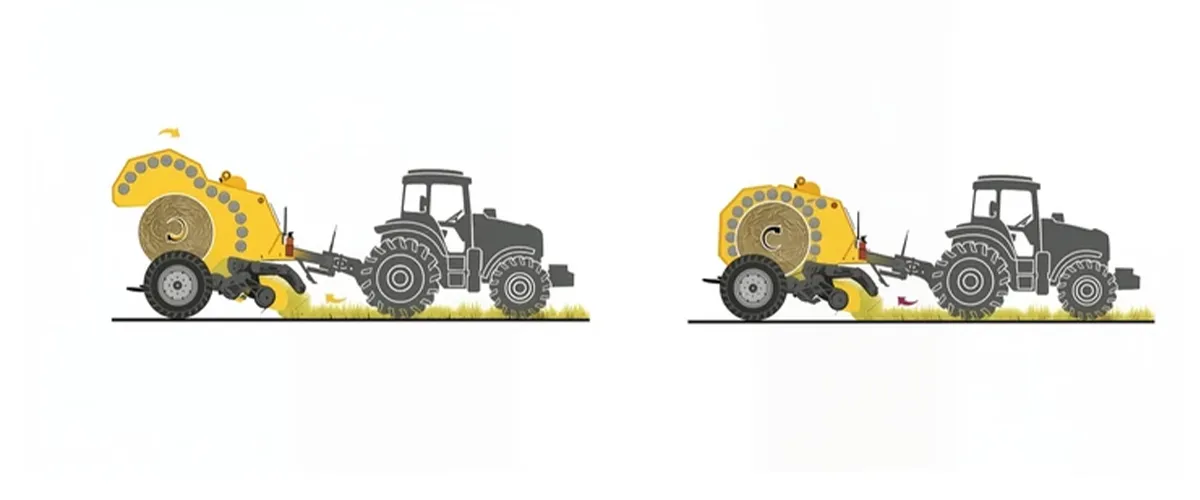
Loss in alfalfa baling is not evenly distributed across the baling cycle. Research and practical field experience both point to two dominant loss zones: the pickup header and the early chamber filling stage. The pickup zone is where alfalfa leaf shatter is greatest — when tines contact dried alfalfa stems at speeds and angles that exceed the mechanical tolerance of brittle leaf tissue, significant quantities of leaf matter are knocked loose and either fall back to the ground or are blown sideways out of the windrow before entering the machine. This matters disproportionately to overall quality because alfalfa leaves contain approximately 70% of the plant’s total crude protein and over 50% of its digestible energy — losing leaf material is not just a volumetric loss, it is a nutritional loss that degrades the feed value of every bale produced that day.
The chamber filling stage introduces a second and less visible loss mechanism: material that enters the chamber but is rejected back toward the intake throat by roller friction before joining the growing bale core. In a well-maintained round baler running at the correct PTO speed, this rejection rate is low. In a machine with worn pickup tines, misadjusted crop deflectors, or rollers operating at below-rated speed due to PTO underpowering, the rejection rate climbs and a progressively larger fraction of each load of material cycles through the pickup multiple times before forming a bale core — each cycle adding mechanical stress and shattering more leaf tissue.
The net wrap stage is the final loss zone. If the wrap cycle is slow, or if the bale has expanded slightly after gate opening due to insufficient gate pressure, the outer layer of loosely consolidated alfalfa can unravel before net wrap secures it. This outer-layer loss is visible as a ring of scattered leaf and stem around each bale ejection site and is often dismissed as minor — but on a day when 80 bales are produced, even a 0.5 kg outer-layer loss per bale amounts to 40 kg of high-protein alfalfa left in the field.
Manufacturing Structure: Machine Design Features That Directly Affect Dry Matter Loss
The mechanical design of a round baler machine determines its baseline dry matter loss rate before any operator setting has been applied. The following table identifies the structural elements most relevant to alfalfa leaf retention and explains how design choices at each point either mitigate or amplify the loss mechanisms described above.
| Machine Component | Design Feature for Low-Loss Alfalfa Work | Loss Mechanism Addressed |
|---|---|---|
| Pickup Tine Profile | Rounded, low-angle entry profile; cam-less guard-ring-free design | Reduces mechanical impact force on dried alfalfa leaf; cam-less design eliminates the secondary impact from guard ring contact during tine rise phase |
| Pickup Tine Density | Higher tine count per row; minimum 5-row design | More tines per unit area of windrow reduces the speed each individual tine needs to achieve to lift the same material volume — lower speed means less shatter force at contact |
| Crop Deflector Plate | Wide, smooth-surfaced deflector; adjustable height setting | Guides loose leaf matter into the auger intake rather than allowing it to spill laterally from the pickup zone; height adjustment matches deflector position to windrow cross-section |
| Feed Auger Design | Axial flow, semi-forced feed with wide-pitch flights | Wide auger pitch reduces the number of times a clump of alfalfa is turned during transit, limiting secondary shatter at the pickup-to-chamber transition |
| Compression Roller Surface | Φ222 mm diameter; profiled steel surface; 16–18 roller arrangement | Larger roller diameter reduces surface speed differential relative to bale rotation; more rollers distributes radial force and prevents the material rejection cycling that generates additional shatter |
| Hydraulic Gate Control | Accumulator-damped hydraulic gate; adjustable gate speed | Controls the rate at which the gate opens at bale completion — slower gate opening reduces the outer-layer expansion that causes pre-wrap surface leaf loss |
| Net Wrap Dispenser | Fast-cycle auto-tension net dispenser; sub-15-second wrap time | Short wrap cycle time limits the window during which bale surface can unravel after gate opening; auto-tension maintains even wrap coverage across the bale face |
| Bale Chamber Geometry | Fixed roller chamber; uniform bale diameter at each setting | Fixed chambers maintain consistent bale diameter, which means net wrap system geometry is always matched to bale size — variable-chamber machines need more frequent wrap system recalibration |
A round baler designed with all of these features working together can realistically achieve alfalfa dry matter field losses in the 4 to 8% range — the lower end of what is practically achievable with mechanical baling of dried alfalfa. Machines that lack good crop deflector coverage, use smaller-diameter rollers, or have slow net wrap systems will typically operate in the 10 to 18% total loss range under the same conditions, representing a significant and avoidable economic cost per cutting.
Material System: Alfalfa Leaf Shatter and the Physics of Loss
Alfalfa dry matter loss in baling is fundamentally a consequence of the physical brittleness of dried alfalfa leaf tissue. When alfalfa is cut and wilted to the moisture content range appropriate for dry hay storage — typically 12 to 18% — the leaf lamina becomes highly susceptible to fragmentation under mechanical impact. The petiole, which connects the leaf to the stem, is the first structure to fail under the repeated bending and impact forces generated by pickup tines, auger flights, and roller surfaces. Once the petiole fractures, the leaf detaches from the stem as a discrete fragment that behaves aerodynamically — it is lighter than stem material and is carried by air currents generated by the rotating pickup mechanism, the auger, and the chamber airflow patterns rather than following the bulk material flow into the bale.
The timing of baling relative to windrow moisture is the single most important factor governing the magnitude of this shatter loss. At windrow moisture contents above 25%, alfalfa leaves are still sufficiently flexible to bend under mechanical impact without fracturing — leaf shatter rates in this range are typically 2 to 5% of total leaf mass. As moisture drops below 20%, the leaf tissue becomes progressively more brittle and shatter rates climb sharply, reaching 10 to 20% of leaf mass at moisture contents below 14%. At these dry conditions, the timing of the baling operation relative to morning dew is critical — dew that raises surface moisture by even 3 to 5 percentage points in the early morning can halve the effective shatter rate compared to afternoon baling of the same material after dew has evaporated.
The stem fraction of alfalfa is far more resistant to mechanical damage than the leaf. Alfalfa stems at hay moisture are flexible enough to fold and compress in the chamber without shattering, which means that most of the dry matter retained in the bale is stem-dominant. This creates a well-known forage quality gradient: alfalfa baled under conditions that cause high leaf shatter will weigh close to the expected amount because the stems are retained, but will have significantly lower crude protein, lower digestibility, and lower relative feed value than the standing windrow suggested. For South Korean Hanwoo producers managing feed rations tightly, this quality degradation has direct implications for daily gain and meat marbling scores that are not visible on the weigh scale at the bale store.
Practical Operator Settings That Reduce Alfalfa Dry Matter Loss
Machine settings are the operator’s primary tool for controlling dry matter loss within the constraints set by the machine’s design and the day’s crop conditions. The following recommendations address each stage of the baling process in sequence, from pickup to ejection. Most adjustments can be made in the field in under 10 minutes and do not require specialist tools.
Time the Baling Pass to Windrow Condition, Not the Clock
This is the most impactful single decision the operator makes each day. In South Korea’s spring and summer alfalfa cutting cycles, windrow moisture follows a predictable daily pattern: highest in the early morning after any overnight dew reabsorption, declining through mid-morning as temperatures rise, reaching minimum in the early to mid-afternoon. The optimal baling window is typically the period when windrow moisture is between 15 and 22% — dry enough for storage but still flexible enough to limit shatter. Use a calibrated moisture meter on samples from the base and top of the windrow, not just the surface, and delay the first pass if surface readings are above 22% at the windrow core.
Reduce Ground Speed on Dry, Fluffy Windrows
Ground speed directly controls the volume of material the pickup tines are attempting to lift per unit of time. On a fluffy, well-tedded alfalfa windrow where the material is at or below 15% moisture, reducing ground speed from 8 km/h to 5 or 6 km/h reduces the tine loading force per plant contact event. This slower, gentler lift translates directly into lower leaf shatter at the pickup. The trade-off is lower output per hour, but on dry, high-value first-cut alfalfa where crude protein content is maximised, the quality premium from reduced leaf loss typically outweighs the throughput reduction from a 25% speed reduction.
Set Pickup Height Correctly for the Windrow Cross-Section
Pickup tine tips should clear the soil surface by approximately 20 to 30 mm in typical alfalfa hay baling conditions. Setting the pickup lower than this does not improve collection efficiency and instead pushes tine tips into the soil surface at each rotation, creating impact loading that shatters tines and contaminates bales with soil — which in turn abrades roller surfaces and bearing seals at an accelerated rate. Setting the pickup too high — typically above 40 mm on firm soil — leaves a significant fraction of the fallen leaf layer on the ground, as the tines arc upward before completing contact with the lower portion of the windrow. On fields with surface irregularity, add skid shoes or gauge wheels if the machine offers them, to maintain constant clearance rather than relying on operator feel alone.
Match Gate Pressure to Windrow Density and Moisture
For dry alfalfa hay intended for long-term barn storage, gate pressure should be set at the higher end of the machine’s range — typically 170 to 220 bar — to maximise bale density. High-density alfalfa bales are more stable structurally, which means less post-ejection surface relaxation and less opportunity for the outer wrap to fail. However, on first-cut alfalfa that still carries some stem moisture — common in Korea’s late May to early June first cut when night temperatures in highland zones have been cool — reducing gate pressure slightly to 150 to 170 bar prevents the over-compression that can cause stem fracture and generate an additional fine-particle dust loss inside the chamber.
Trigger Net Wrap Immediately at Target Bale Diameter
Every second between the moment the bale reaches its target diameter and the moment the first strand of net wrap contacts the bale surface is a second during which the outer layer of loosely consolidated alfalfa leaf is vulnerable to unravelling. On machines with electronic bale size monitoring — where the operator sets a diameter threshold and the wrap system triggers automatically — verify that the trigger threshold is set to the actual target diameter and has not drifted upward over the season. On machines without automatic triggering, train operators to initiate the wrap cycle immediately on seeing the bale size indicator reach the target mark, without waiting for a full indicator light confirmation.
Inspect and Replace Worn Pickup Tines Before Each Cutting Season
Worn pickup tines are among the least expensive round baler parts to replace but among the most costly in terms of dry matter loss when left in service too long. A tine that has lost 10% of its original tip length contacts the windrow at a shallower angle than designed, which causes it to push material along the soil surface before lifting rather than scooping from below — the pushing action generates significantly more leaf shatter than the designed scoop motion. In South Korea’s intensive alfalfa systems, where three to four cuttings per year are common in the central provinces, tines may need inspection after each cutting, not just annually.
Dry Matter Loss Rates by Baling Stage and Operating Condition
The table below presents representative dry matter loss ranges for each stage of the alfalfa round baling process under different operating conditions. These figures reflect the combined experience of research literature and field practice — individual operations will vary depending on machine condition, crop variety, and climate. Use these ranges as a benchmarking reference to identify where your operation has the greatest improvement potential.
| Baling Stage | Low-Loss Condition | High-Loss Condition | Primary Driver |
|---|---|---|---|
| Pickup Header | 2–4% DM loss | 8–15% DM loss | Ground speed, tine wear, moisture content at baling time |
| Auger / Feed Transition | 0.5–1.5% DM loss | 2–5% DM loss | Auger speed, crop deflector coverage, intake throat clearance |
| Chamber Filling (Material Rejection) | 1–2% DM loss | 3–7% DM loss | PTO speed vs rated RPM, roller surface condition, gate pressure |
| Bale Surface / Outer Layer | 0.3–0.8% DM loss | 1–3% DM loss | Gate opening speed, net wrap initiation timing, bale density |
| Net Wrap Application | Negligible (< 0.3%) | 0.5–1.5% DM loss | Wrap cycle time, net tension, number of wrap layers applied |
| Total Estimated Range | 4–9% total DM loss | 14–30% total DM loss | Combined effect of all stages |
DM = Dry Matter. Figures represent field-level estimates across representative conditions. Results vary by machine model, crop variety, and local climate.
Recommended Machine for Low-Loss Alfalfa Hay Baling
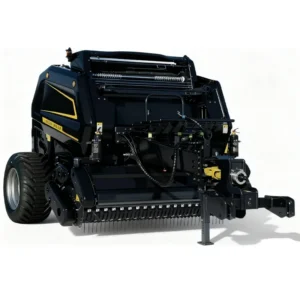
9YG-2.24D Round Baler — Classic
The 9YG-2.24D Classic is a high-capacity round baler machine with a 2.24 m pickup width, 18-roller fixed compression chamber, and automated net wrap system with fast-cycle dispensing. For alfalfa hay baling operations focused on dry matter preservation, the machine’s cam-less, guard-ring-free pickup mechanism reduces leaf shatter at the header contact point compared to conventional cam-guided tine designs. The 18-roller chamber configuration distributes radial compression force evenly around the bale, minimising the material rejection cycling that creates secondary leaf shatter during chamber filling. Gate pressure is hydraulically controlled with accumulator damping, giving the operator smooth control over the gate opening rate — a key variable in outer-layer loss management. With a bale density range of 100 to 200 kg/m³ and a production rate of 40 to 100 bales per hour on suitable windrows, this machine is appropriate for medium to large-scale alfalfa hay operations in South Korea’s major forage growing areas and for export-facing hay production operations.
18-Roller Chamber
40–100 Bales/hr
CE & ISO Certified
How Machine Maintenance Directly Affects Alfalfa Dry Matter Loss Rates
The relationship between round baler maintenance and dry matter loss is more direct than most operators assume. A well-maintained machine operating at its design specifications produces measurably lower leaf shatter and bale surface losses than the same machine with deferred maintenance — often by 4 to 8 percentage points of total dry matter, which on a productive alfalfa operation represents a significant fraction of annual forage revenue. The maintenance activities most directly connected to dry matter loss are those that affect the mechanical interaction between the machine and the crop material.
| Maintenance Item | Service Interval in Alfalfa Hay Season | DM Loss Impact if Neglected |
|---|---|---|
| Pickup tine inspection and replacement | Between each cutting; replace tines worn beyond 10% of original tip length | Worn tines push-scrape rather than scoop, increasing leaf shatter by 3–6% at the header |
| Crop deflector plate position check | Before each cutting season; re-check after any rock strike | Displaced deflector allows 2–5% of pickup-zone leaf material to spill laterally before entering the auger |
| Roller surface inspection | Pre-season and mid-season; check for smooth wear, groove filling, or surface cracking | Smooth roller surfaces reduce grip on alfalfa stems, increasing material rejection cycling and secondary shatter |
| Net wrap dispenser tension check | Weekly during active baling; before each day if bale surface losses are observed | Low net tension produces loose outer wrap that allows surface leaf layer to detach before wrap is complete |
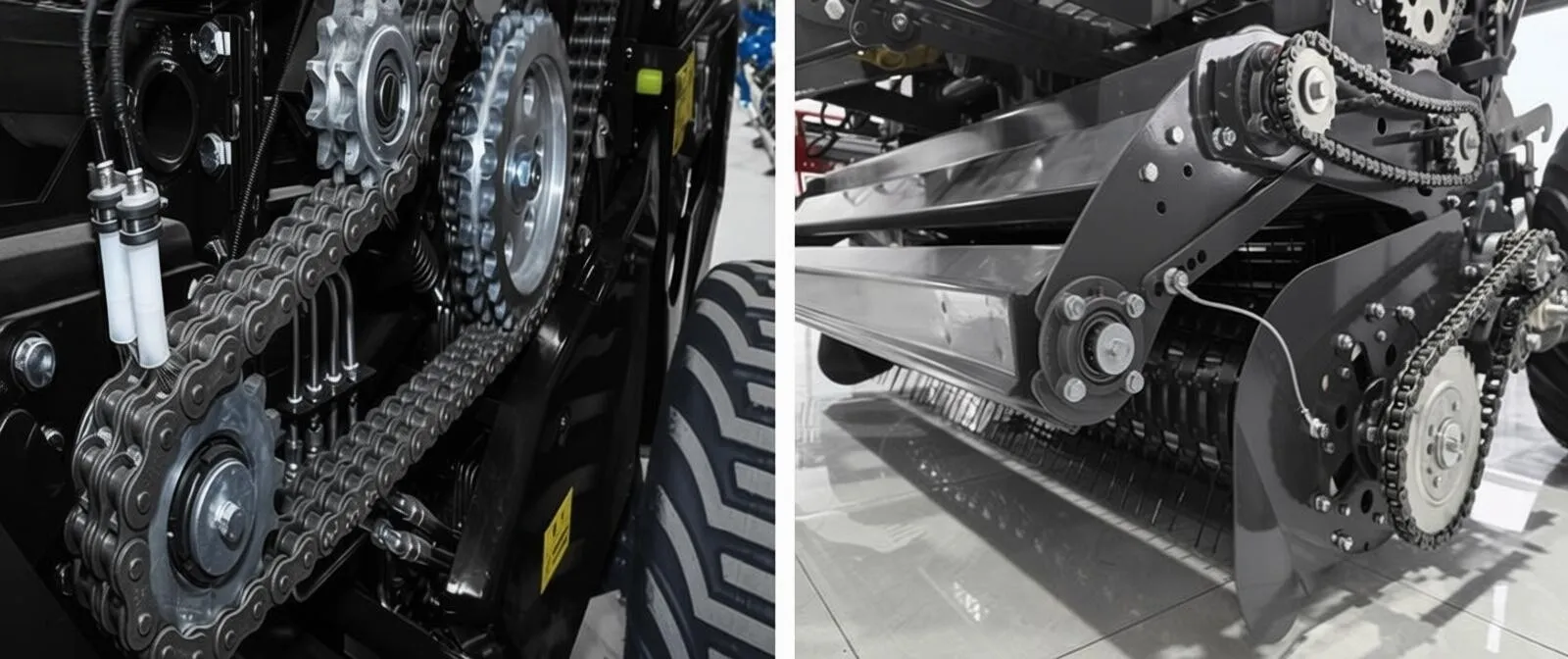
| Round baler gearbox oil and seal check | Pre-season; mid-season spectrographic oil sample for high-use operations | Gearbox wear causes PTO input speed instability, which translates into inconsistent roller surface speed and uneven compression across the bale face |
| Auto-lubrication system verification | Daily check of reservoir level during high-intensity alfalfa seasons | Dry bearings on pickup shaft and roller journals cause bearing noise that signals accelerated wear — output speed variation follows bearing wear, affecting leaf handling quality |
Regulatory Framework for Agricultural Machinery and Forage Quality Standards
Operators purchasing a round baler machine for alfalfa hay production need to understand not only the machine’s technical capabilities but also the regulatory environment in their operating market. Machinery safety certification, environmental operating standards, and forage quality regulations all influence which machines can be legally operated and which baling practices comply with local agricultural codes.
| Market | Relevant Regulation or Standard | Practical Impact on Alfalfa Round Baling Operations |
|---|---|---|
| 대한민국 | Agricultural Mechanisation Promotion Act; Rural Development Administration (RDA) machinery standard certification; National Institute of Animal Science (NIAS) forage quality guidelines | Round balers must meet applicable machinery safety standards for domestic registration and subsidy eligibility under the RDA mechanisation support programme. NIAS forage quality guidelines specify minimum relative feed value (RFV) and crude protein targets for certified Hanwoo and dairy feed — alfalfa baled with high dry matter loss will typically fail to meet the crude protein specification due to leaf shatter, which reduces the marketability of bales to registered livestock operations. |
| European Union | EU Machinery Regulation 2023/1230; EN 704 Agricultural Machinery Safety Standard (hay making machines); Common Agricultural Policy (CAP) conditionality — GAEC standards | CE marking is mandatory for round baler machines marketed or operated commercially in the EU. EN 704 specifically addresses safety requirements for pickup, feeding, and compression mechanisms on haymaking machines, including guard requirements and emergency stop provisions. CAP conditionality standards require minimum soil cover management on hay fields — practices that maintain field residue rather than stripping it completely are encouraged. |
| United Kingdom | Supply of Machinery (Safety) Regulations 2008; PUWER (Provision and Use of Work Equipment Regulations) 1998; DEFRA Countryside Stewardship scheme standards for hay meadow management | Round balers used in commercial hay production in the UK must carry UKCA marking (or transitional CE acceptance). PUWER requires that all machinery used commercially is maintained in safe working condition with documented inspection records. Countryside Stewardship management options for traditional hay meadows specify baling timing requirements and cut height minimums that affect which machine settings are permissible on enrolled land. |
| Australia | State WHS Acts; AS 4024 machinery safety series; Australian Fodder Industry Association (AFIA) hay quality grading standards | The AFIA hay grading standards set out quality parameters — including moisture content limits and relative feed value benchmarks — that directly connect baling practices to commercial value. Alfalfa baled under high-shatter conditions will frequently grade below the premium specification. Export-quality Australian lucerne hay for the Korean and Japanese markets must meet additional buyer specifications that often exceed the domestic AFIA minimums, reinforcing the economic case for low-loss baling practices. |
| Netherlands | Arbo-wet (Working Conditions Act); Dutch NVWA (Netherlands Food and Consumer Product Safety Authority) feed quality regulations; EU Machinery Regulation | Feed produced mechanically — including baled alfalfa and grass hay — falls under NVWA feed safety oversight when sold commercially. Bale contamination from excessive soil pickup during low-pickup-height operation can trigger feed safety compliance issues. CE marking requirements apply as in all EU member states. |
| Canada | Canadian Agricultural Safety Association (CASA) farm machinery safety standards; provincial Environmental Farm Plan (EFP) requirements; Canada Agricultural Products Act (quality grading) | Canadian hay grading standards under the Canada Agricultural Products Act include visual and laboratory quality criteria for marketed alfalfa hay — excessive leaf loss during baling degrades visual grade, reducing market value. Provincial EFP programmes in Ontario and Alberta encourage hay baling as a sustainable residue management practice on cropping farms, with associated best management practice guidelines covering baling moisture and equipment maintenance. |
Alfalfa Round Baling in South Korea: Practical Context for Local Operators
South Korea’s alfalfa hay sector has expanded significantly over the past decade, driven by the growth of registered Hanwoo beef operations and the rising cost of imported feed — Japan and Korea together represent the largest export destination for premium Australian and United States lucerne hay, and domestic production has increasingly been seen as a cost-management alternative for livestock operations with sufficient land base. However, Korean alfalfa production faces a specific set of climatic and agronomic challenges that differ from those in the large-scale hay-producing countries whose equipment and practices the industry often benchmarks against.
The most significant of these is the Korean summer monsoon season, which typically runs from late June through early August. The timing of the monsoon coincides with the period when alfalfa would normally be completing its second cut, and the high humidity and rainfall during this window creates persistent challenges for field wilting and drying. Alfalfa cut in late June frequently encounters rain events before it reaches baling moisture, which means that either the crop is baled at higher-than-ideal moisture — increasing storage loss risk — or the cut is delayed until after the rain event, by which time the windrow may have been partly bleached by heat and lost quality. Many Korean alfalfa producers adapt their round baler machine operation during this period by accepting slightly lower bale density in exchange for faster baling of partially wilted material, then relying on net wrap and outdoor storage site management to limit spoilage.
The highland growing areas in Gangwon Province offer somewhat more favourable summer baling conditions due to lower temperatures and less concentrated rainfall, and alfalfa production in these areas is expanding among Hanwoo producers who can access the land base. For these highland operations, the dry matter loss framework in this guide applies more directly — cooler temperatures and lower humidity support more reliable field drying and allow baling at the optimal moisture window more consistently than in lower-altitude areas.
Compatible System Components for Alfalfa Hay Operations
A round baler machine performs at its best when the associated drivetrain components are matched to the same design standards and rated for the same operating loads. For alfalfa hay baling, where high PTO duty cycles and consistent output are expected across multiple daily cuttings through a four-month season, using correctly specified supporting components is the difference between a reliable, productive system and one prone to unscheduled downtime at peak times.
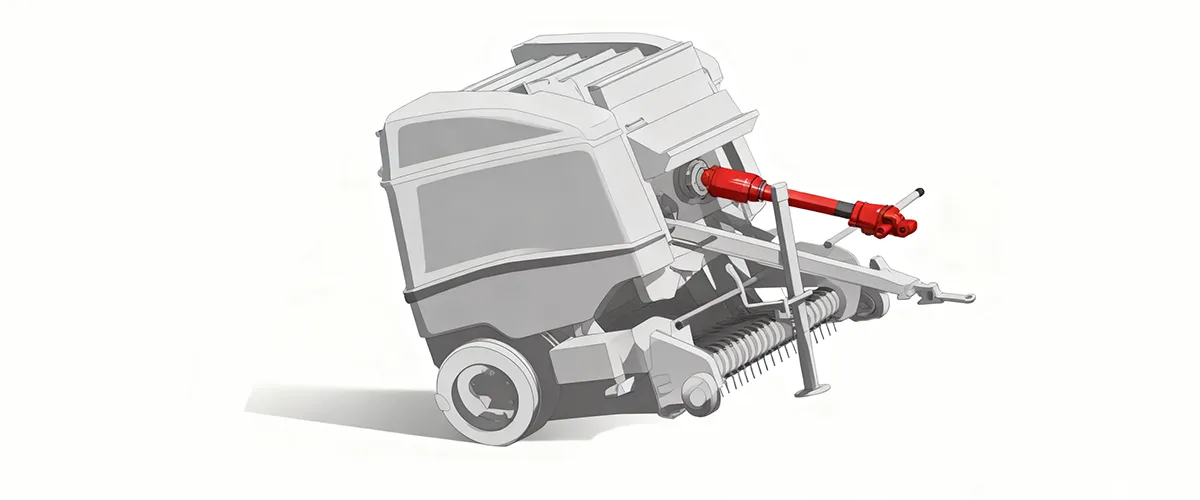
Agricultural PTO Shaft for Round Balers
The PTO shaft transmits all tractor power to the round baler machine, and its condition directly affects roller surface speed stability — which in turn affects the consistency of leaf handling in the compression chamber. A PTO shaft with correct torque rating, functioning overrun clutch, and intact guard ensures that the baler runs at its designed roller speed throughout the day rather than hunting between overload protection events that create momentary speed drops. For Korean alfalfa operations running three to four cuttings per year, PTO shaft inspection at the start of each cutting season is a practical investment in seasonal output reliability.
Agricultural Chain Drive System
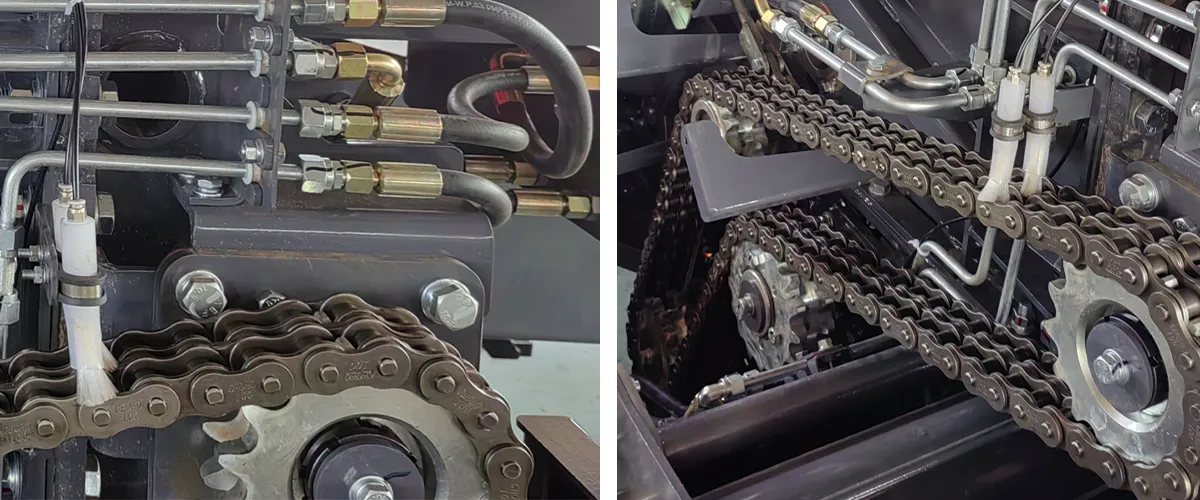
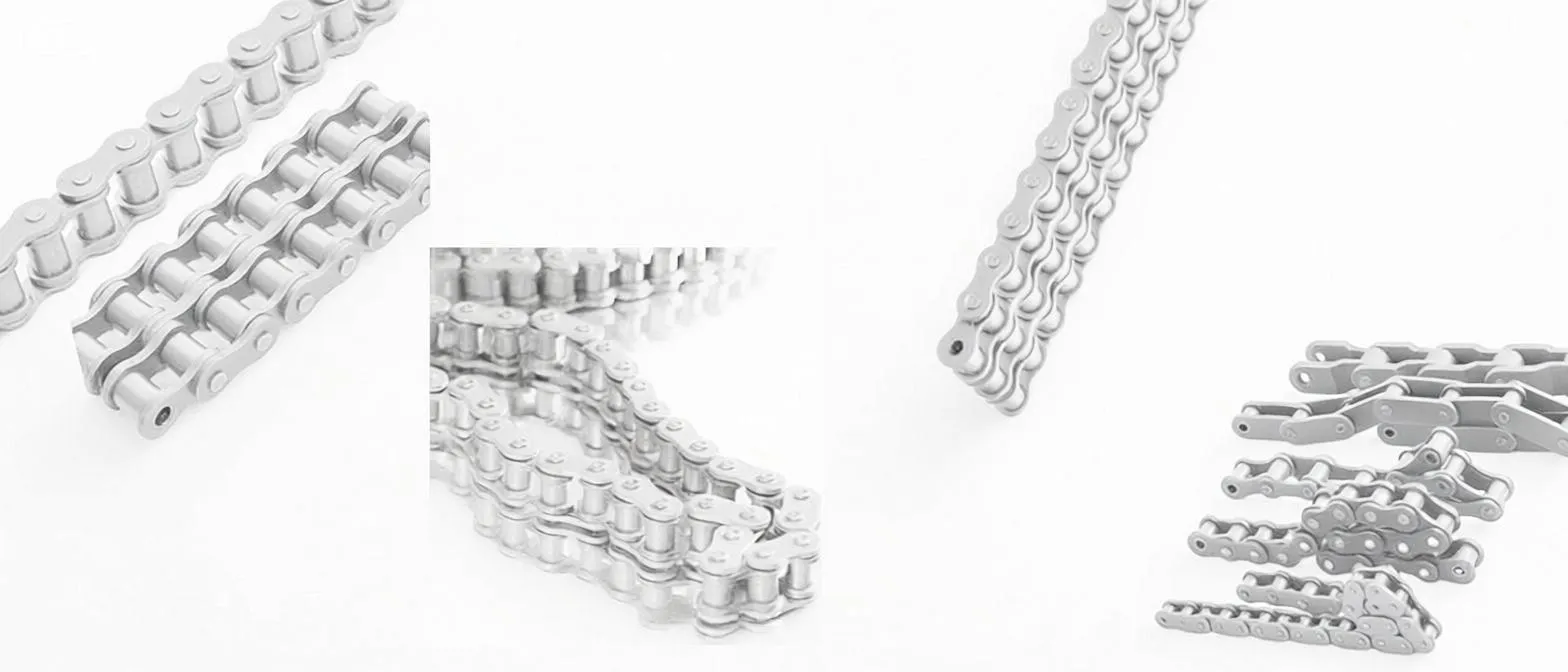
The roller drive chain inside the round baler gearbox system is exposed to sustained high-cycle loading across a full alfalfa hay season. Alfalfa hay, while cleaner than stover in terms of dust and debris, still introduces fine chaff particles into the chain lubrication environment — these particles combine with chain lubricant to form a mildly abrasive compound that accelerates plate and pin wear beyond what the standard maintenance interval expects if the auto-lubrication system is not functioning correctly. Using a matched-specification agricultural chain with correct pitch and breaking load for your machine’s drive system rating gives predictable service intervals that can be planned around the cutting calendar rather than responded to reactively.
About Us
Founded in 2013, we operate as a modern intelligent manufacturing enterprise focused on agriculture and livestock harvesting equipment. Our product range spans the full spectrum of forage harvesting machinery — from compact light-duty round balers for smaller farm operations through heavy-duty commercial models, as well as single and double-blade mowers, disc rotary mowers, and single and double-side rakes. We hold independent import and export rights and maintain ISO 9001 Quality Management System certification across our manufacturing processes.
Our manufacturing facility operates more than 60 sets of large-scale production equipment, including CNC laser cutting systems, automated welding lines, and electrostatic spray finishing production, with an annual design capacity of 2,000 units. Close to 100 registered technology patents cover our compression chamber designs, pickup mechanisms, hydraulic control systems, and net wrap automation across the product range.
Over more than a decade of operation, we have built distribution and after-sales support relationships across Asia, Europe, Oceania, and the Americas. For alfalfa hay producers, livestock farm operators, and forage contracting businesses seeking a reliable round baler machine supplier with both engineering depth and export compliance documentation, we welcome direct enquiries and distribution partnership discussions.
Want to discuss round baler specifications for your alfalfa operation?
Our technical team can help you select the right machine configuration and accessories for your cutting schedule, tractor HP, and storage requirements.
Frequently Asked Questions
편집자: PXY