Cotton Stalk Baling | Tractor Power Analysis | Round Baler Technical Guide
Tractor Power Requirements for Baling Cotton Stalks with High Residual Moisture
A technical guide for farm operators, cooperative machinery managers, and equipment procurement specialists who need to correctly size tractor PTO power when baling cotton stalks under high residual moisture conditions — covering the physics of power demand, drivetrain load calculations, round baler machine specification requirements, manufacturing structure, material systems, and international regulatory context.
High Moisture Cotton
PTO Power Sizing
1. Why High Residual Moisture Fundamentally Changes the Tractor Power Equation for Cotton Stalk Baling
The conventional wisdom in cotton stalk baling — derived from the experience of Central Asian and South Asian cotton operations where harvest occurs in dry, sunny autumn conditions — assumes that cotton stalks arrive at the round baler machine at 8–15% moisture content. In these dry conditions, the power demand on the tractor’s PTO is primarily driven by the mechanical work of compressing woody, rigid material inside the compression chamber. But a meaningful share of the world’s cotton is grown in environments where harvest coincides with, or closely follows, rain events: the coastal cotton areas of Gyeongnam in South Korea, certain zones of Sindh province in Pakistan following post-monsoon harvest delays, and parts of India’s Vidarbha region where late-season rain regularly interrupts the picking schedule. In these conditions, cotton stalks arrive at the baler at 25–45% moisture content — a fundamentally different material that loads the baler drivetrain through an entirely different set of mechanisms.
High moisture cotton stalks do not simply require “more power” in the way that a heavier load in general terms requires more force. The power demand increase is specific, and it occurs at different points in the baling cycle than in dry stalk operation. Understanding where these demands arise — in the pickup, feeder, compression chamber, and net wrapping system — and how the tractor PTO must be sized to handle each of them simultaneously, is the practical foundation of tractor selection for this application. Undersizing the tractor PTO by even 15–20% below what high-moisture cotton stalks actually demand does not merely reduce throughput; it causes sustained above-rated loading of the round baler gearbox and drive chain that leads to accelerated component wear and reduced machine service life. This guide covers the analysis that prevents those outcomes.
2. How High Residual Moisture Changes Cotton Stalk Physical Behavior in the Baler
To correctly size tractor PTO power, it is necessary first to understand how moisture fundamentally alters the mechanical properties of cotton stalks as they pass through each stage of the round baler application. At low moisture (8–15%), the main challenge is rigidity: stalks are stiff and resist bending into the compression chamber, requiring high feeder force and high roller compression force. At high moisture (25–45%), this rigidity challenge is partially reduced — wetter stalks are slightly more pliable — but three new and more serious power demand drivers emerge that together exceed the power requirement of dry stalk operation.
A cotton stalk bale at 35% moisture contains significantly more water mass than at 12% moisture — potentially 30–40 kg per bale more water weight. This increases the rotational inertia of the bale inside the chamber, requiring more torque from the roller array to maintain constant bale rotation speed against gravity as the bale grows.
Moist cotton fiber at the branch nodes is significantly more adhesive than dry fiber. It bonds to rotating feeder and chamber surfaces with far greater force, creating continuous fiber wrap drag on the feeder shaft bearings and auger that adds a persistent frictional load to the PTO demand beyond the primary compression work.
Moist stalks clump and stick to each other rather than flowing individually through the feeder assembly. This clumping creates intermittent high-force intake events when the auger breaks a clump loose — events that appear as torque spikes transmitted through the feeder chain to the PTO shaft and require margin in the tractor’s PTO rated output.
High-moisture stalks compress less efficiently than dry stalks for a given roller force because water in the cell structure acts as a hydraulic cushion that resists compression. Achieving the target bale density requires higher sustained roller torque when stalk moisture is above 25%, directly increasing average PTO load throughout the compression phase of each bale cycle.
3. PTO Power Demand Analysis: What the Numbers Actually Mean
The published minimum PTO power requirements on round baler specification sheets are almost always derived from testing in optimal crop conditions — typically dry, well-windowed material at 12–18% moisture with uniform windrow density. These figures are the floor of power requirement, not the operating norm for challenging conditions. For high moisture cotton stalk baling, the actual sustained PTO demand regularly exceeds the published minimum by 20–35%, and the peak demand during clump intake events can exceed it by 40–60% for 2–5 second intervals. Understanding this gap is the reason why procurement guidance for high moisture cotton applications consistently recommends a tractor PTO output headroom of at least 25–30% above the baler’s stated minimum specification.
Consider the 9YG-1.25 series round baler, which specifies a minimum PTO requirement of 88.2 kW (120 HP). In dry cotton stalk conditions at 10–15% moisture, a 100 kW tractor provides adequate headroom. In high moisture conditions at 30–40% stalk moisture, the same 88.2 kW rated baler sustains average PTO demand closer to 100–108 kW with peak demands reaching 120–130 kW during clump intake events. A tractor at exactly 100 kW PTO output will be operating near its rated capacity continuously and at overload during peaks — a condition that activates the tractor’s engine governor, causes tractor speed fluctuation at the PTO shaft, and loads the baler gearbox with irregular-frequency torque pulses rather than the smooth sustained load it was designed for. A 120–130 kW tractor paired with the 9YG-1.25 provides the 25–30% headroom that keeps both tractor and baler within their rated operating parameters throughout the high moisture cotton stalk baling session.
Note: High moisture recommendations include 25–30% headroom above the published minimum PTO specification to account for sustained elevated demand and peak clump-intake torque events at 25–45% stalk moisture.
4. Manufacturing Structure: How Baler Design Responds to High Moisture Power Demand
High moisture cotton stalk baling creates power demand patterns — sustained elevated average load with superimposed sharp peaks — that place specific structural requirements on the baler’s main components. Understanding these structural requirements explains why the 9YG series design choices produce machines that can operate within rated parameters when a correctly sized tractor is paired with them, while lower-specification machines with identical published minimum power ratings fail through component fatigue when exposed to the same conditions.
Feeder System: Three-Element Design for Moist Clump Management
The feeder system on the 9YG-1.25 combines a helical auger, toothed roller, and drum roller in sequence. This three-element configuration is particularly valuable in high moisture cotton stalk conditions because each element addresses a different aspect of the clumping problem. The auger breaks apart adhesive clumps laterally — the horizontal shear force it applies is more effective at separating moist, sticky stalk clusters than the purely axial force of a single-roller feeder. The toothed roller then provides the directional force to push the broken material through the chamber inlet at a consistent rate. The drum roller provides the final rotational acceleration into the chamber, preventing the hesitation at the chamber entry point that causes inlet mat accumulation in simpler feeder designs. This staged, forced intake reduces peak PTO demand spikes by distributing the clump-breaking work across three separate components rather than concentrating it at a single roller, which would create a more severe instantaneous power demand peak.
Compression Chamber for Wet Material
The fixed compression chamber with 18 steel rollers (Ø222 mm each, spiral groove surface) used in the 9YG-1.25 and 9YG-2.24D series provides adequate circumferential grip for high moisture cotton stalks. The spiral groove pattern is more effective than a smooth roller surface at maintaining grip on wet, slippery material — a key factor because if the bale surface slips against the roller array, the chamber torque demand spikes as the rollers attempt to re-establish rotation. Each slip-and-re-grip event produces a sharp power demand peak that the tractor PTO must absorb, contributing to the overall power demand variability that makes correct tractor sizing so important. With spiral groove rollers maintaining continuous grip, these slip events are significantly less frequent, the average PTO demand is more stable, and the tractor engine governor is less frequently activated — all of which translate to more consistent working speed and better bale formation consistency across the session.
Round Baler Gearbox Specification for High Moisture Load Patterns
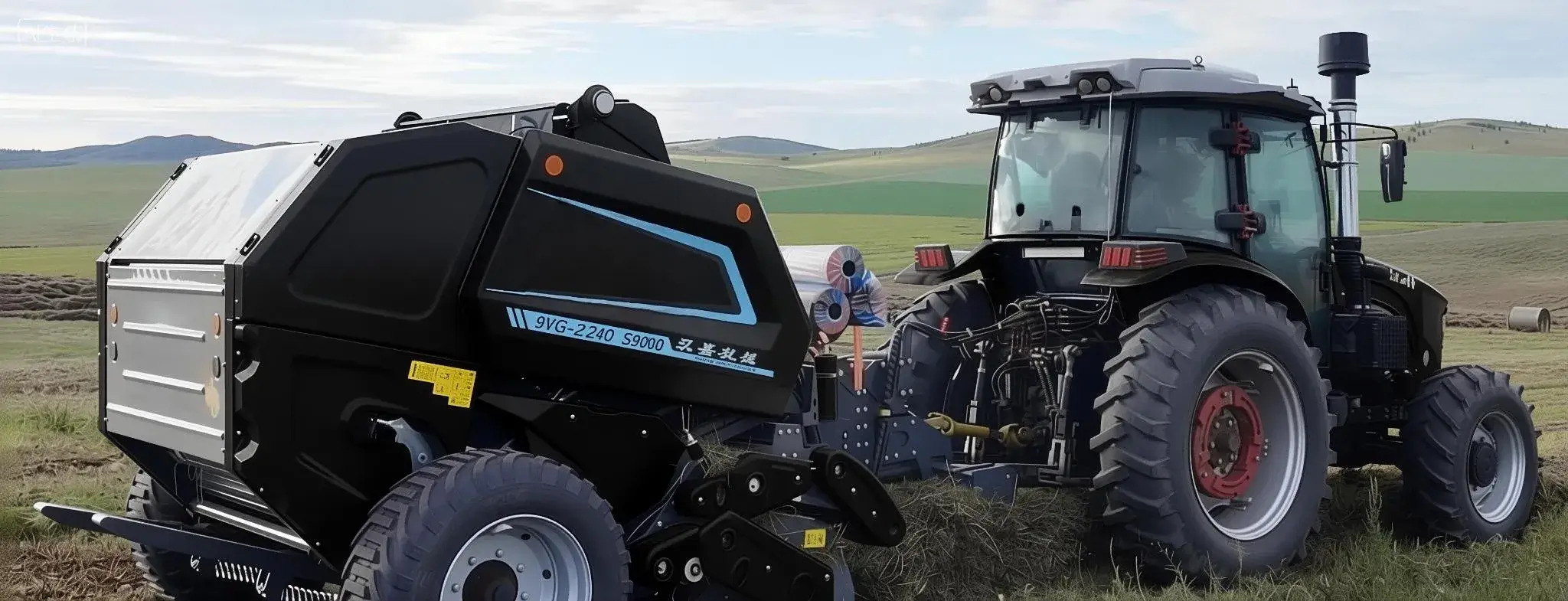
The round baler gearbox is the component most directly exposed to the elevated and variable torque demand of high moisture cotton stalk baling. At sustained above-minimum PTO demand, the gearbox gear tooth faces experience higher contact stress than in rated-condition operation. This elevated contact stress accelerates the early stages of micropitting — a progressive gear surface wear mode — and raises gearbox oil temperature, which reduces oil viscosity and further accelerates gear surface wear in a compounding cycle if the gearbox is not adequately specified. The 9YG-2.24D S9000’s gearbox specification of 1,000 Nm rated input torque with a QT450 nodular cast iron housing provides the rated torque headroom and vibration damping capacity to handle the high moisture cotton stalk load pattern across a full operating session without oil temperature entering the accelerated wear regime. The integrated safety torque limiter on this model provides additional protection during the severest peak torque events from large moist clumps entering the chamber.

5. Material System: Specifications That Handle High Moisture Load Conditions
The material choices in the 9YG series production system address the specific wear and fatigue mechanisms that high moisture cotton stalk baling creates — beyond the standard agricultural machinery material requirements for dry crop applications. The table below maps each critical component to its specification and the high-moisture-specific rationale for that specification choice.
6. Tractor Selection Framework for High Moisture Cotton Stalk Operations
Selecting the correct tractor for high moisture cotton stalk round baling involves more than matching the published PTO minimum specification — it requires evaluating several tractor characteristics that are rarely covered in a simple kilowatt comparison. The following framework covers the five most important tractor capability parameters beyond raw PTO rated output, and explains how each affects operational performance with a high moisture cotton stalk load.
The difference between the tractor’s rated PTO output and the baler’s minimum PTO specification. For high moisture cotton, a minimum 25–30% reserve is required. A 120 HP tractor paired with an 88.2 kW (120 HP) rated baler has zero reserve — any above-minimum demand trips the engine governor and creates variable PTO shaft speed that disturbs baler operation. A 130 HP tractor with the same baler has approximately 8% reserve — still below the recommended minimum for high moisture cotton. A 150 HP tractor provides the correct 25% reserve margin for this application.
When the PTO load exceeds the tractor’s rated output, the engine governor reduces fuel injection to prevent engine overspeed — but this reduction takes 0.3–1.5 seconds to fully activate depending on the governor design. During this lag, PTO shaft speed drops momentarily. In high moisture cotton baling, these governor activations occur multiple times per bale cycle at each clump intake event. A governor with faster electronic response (common in modern TIER IV tractors) provides smaller PTO speed variation than older mechanical governors, resulting in more consistent baler operation.
Baling cotton stalks in post-rain conditions frequently means operating on soft, wet soil. Tractor drive configuration (2WD vs. 4WD) directly affects whether the tractor can maintain constant forward speed through soft patches — and constant forward speed is necessary to maintain the intake rate consistency that prevents alternating feast-and-famine cycles in the feeder. For Korean coastal cotton areas and wet post-rain Sindh fields, 4WD is the standard recommendation for high moisture cotton stalk baling operations.
Some tractor models allow the operator to select between a constant PTO speed mode (where the PTO shaft maintains 540 or 720 r/min regardless of engine speed) and a ground speed-proportional mode. For round baler applications, constant PTO speed mode is always the correct setting — the baler’s internal timing depends on consistent PTO shaft speed. In high moisture cotton conditions, a momentary PTO speed drop from governor activation disrupts feeder timing in a way that can cause inlet accumulation even at ground speeds where the intake rate would normally be manageable.
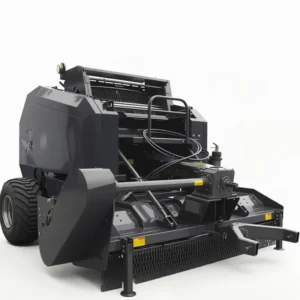
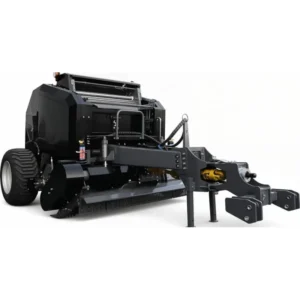
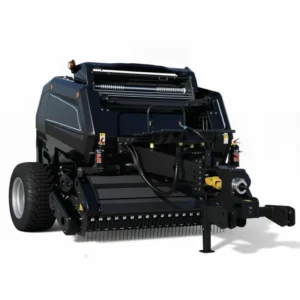
7. Round Baler Models for High Moisture Cotton Stalk Applications
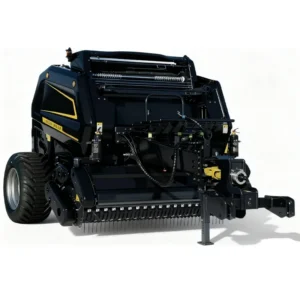
Each model is shown with its minimum PTO specification. For high moisture cotton stalk operations, pair the baler with a tractor providing 25–30% above the listed minimum.
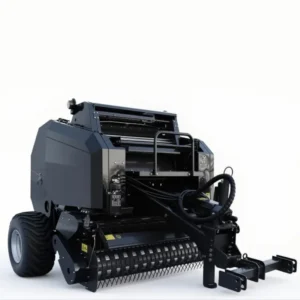
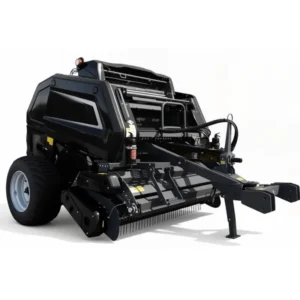
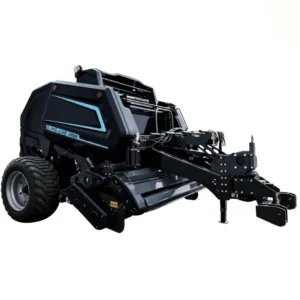
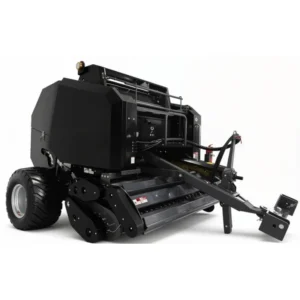
8. Regional Context: Where High Moisture Cotton Stalk Baling Is Most Common
High residual moisture in cotton stalks at baling time arises in three distinct regional patterns. The first is late-season rainfall during or after harvest — a pattern common in South Korea’s Gyeongnam coast, parts of India’s Vidarbha and Marathwada regions, and Myanmar’s Irrawaddy Delta cotton areas. The second is dew re-wetting of stalks that were initially dry — common in humid coastal and riverside cotton areas where diurnal temperature variation causes heavy overnight dew accumulation. Morning baling in these areas encounters stalks at 20–35% moisture even if they were at 12–15% the previous afternoon. The third is deliberate early harvest before the stalk dries fully — practiced in areas where the field needs to be prepared quickly for the next rotation crop. Understanding which moisture mechanism applies to your field conditions helps with practical planning: early-morning moisture from dew can be mitigated by delayed start time, while rainfall-driven high moisture requires genuine tractor power headroom that cannot be managed by scheduling alone.
For Korean operations — which face all three moisture sources, particularly in the coastal areas of Gyeongnam and South Jeolla — the practical planning approach is to assume high moisture conditions as the baseline and size the tractor accordingly. The cost of pairing a correctly sized 130–150 HP tractor with a 9YG-1.25 series baler is fully recovered in avoided gearbox and drive chain replacement costs within the first one to two seasons of operation in conditions where an undersized tractor would have been causing sustained above-rated loading. This is the operating economics argument that experienced Korean farm equipment managers consistently cite when justifying the 25–30% tractor power headroom recommendation over the baler’s rated minimum.
9. Regulatory Framework: Gearbox Safety Standards and Cotton Stalk Burning Restrictions
The tractor power sizing decisions covered in this article intersect with regulatory requirements in a specific way: machinery certification standards in most jurisdictions are calibrated to in-specification operating conditions — machines and tractors operating within their rated parameters. Sustained operation above rated parameters — which is what an undersized tractor causes in high moisture cotton stalk baling — voids component warranty and in some jurisdictions creates liability under workplace health and safety regulations if the resulting mechanical failure causes an accident. Understanding the regulatory framework in each key market helps frame the correct tractor power specification as both an operational efficiency measure and a compliance requirement.
South Korea — Labour and Agricultural Machinery Safety Standards
South Korea’s Occupational Safety and Health Act (산업안전보건법) requires that agricultural machinery including round balers be operated within the parameters specified in their certification documentation. The Agricultural Mechanization Promotion Act (농업기계화 촉진법) requires that machinery sold or imported for agricultural use meet Korean Agricultural Machinery Safety Standards, which include requirements for PTO shaft guarding, operator safety zones, and equipment-to-tractor compatibility documentation. Operating a round baler with an undersized tractor in conditions where the resulting overload creates mechanical failure risk is not specifically enumerated as a violation in Korean agricultural machinery law, but it creates civil liability exposure under general product liability and workplace safety frameworks. For Korean cotton farms in Gyeongnam and South Jeolla, the Clean Air Conservation Act (대기환경보전법) prohibits open burning of cotton stalks, and the Rural Development Administration (RDA) equipment financing program (농기계 구입자금 융자, 1.5–2.0% per annum) supports certified baling machinery — providing both the compliance driver and the financial instrument for upgrading to correctly sized equipment combinations.
European Union — Tractor-Implement Compatibility Under Machinery Directive
The EU’s Machinery Directive 2006/42/EC requires that the manufacturer provide a specification sheet indicating the minimum and maximum tractor PTO power output for which the implement is designed. Operating outside these bounds — in particular, pairing a tractor with insufficient PTO output for the implement’s power demand under actual field conditions — is technically non-conforming with the implement’s CE marking scope. The harmonized standard EN 703 for crop harvest machinery and EN ISO 11684 for safety signs both reference the importance of operator compliance with manufacturer-specified machine parameters. EU cotton regions in Greece (Macedonia, Thessaly) and Spain (Andalusia) where post-harvest high moisture conditions are possible face this regulatory context for any round baler imported from outside the EU.
Uzbekistan and Kazakhstan — GOST and EAC Tractor Compatibility
In Uzbekistan and Kazakhstan, agricultural machinery must carry EAC certification under TR CU 010/2011 (Eurasian Economic Union machinery safety regulation). This technical regulation requires that implement manufacturers specify the PTO power range for which the machine is designed and certified, and that operators use the implement only within this specified range. At the practical level, EAC certification inspectors evaluate the tractor-implement combination during field trials — an undersized tractor that creates visible mechanical stress during the certification baling run will result in a conditional or refused certification. For Uzbek cotton operations where high moisture conditions are less common but do occur in irrigated areas following irrigation scheduling changes or rainfall, verifying the EAC-certified power range for the specific baler model against actual high-moisture power demand is a compliance step that is often overlooked in procurement.
India — BIS Standards and SMAM Scheme Requirements
In India, where cotton is grown across Maharashtra, Gujarat, Telangana, and Andhra Pradesh, the Sub-Mission on Agricultural Mechanization (SMAM) provides subsidy support for certified baling equipment. BIS standards IS 9578 (general safety for agricultural machinery) reference tractor-implement compatibility as a design requirement. In Maharashtra and Gujarat, where post-monsoon cotton harvest frequently occurs in high-humidity conditions with elevated stalk moisture, the power sizing analysis presented in this guide is directly applicable — and the SMAM scheme’s preference for officially tested and certified equipment combinations makes the 25–30% power headroom recommendation a de facto procurement criterion for subsidy-eligible tractor-baler packages.
10. Compatible Drive Components: Agricultural PTO Shaft and Drive Chain
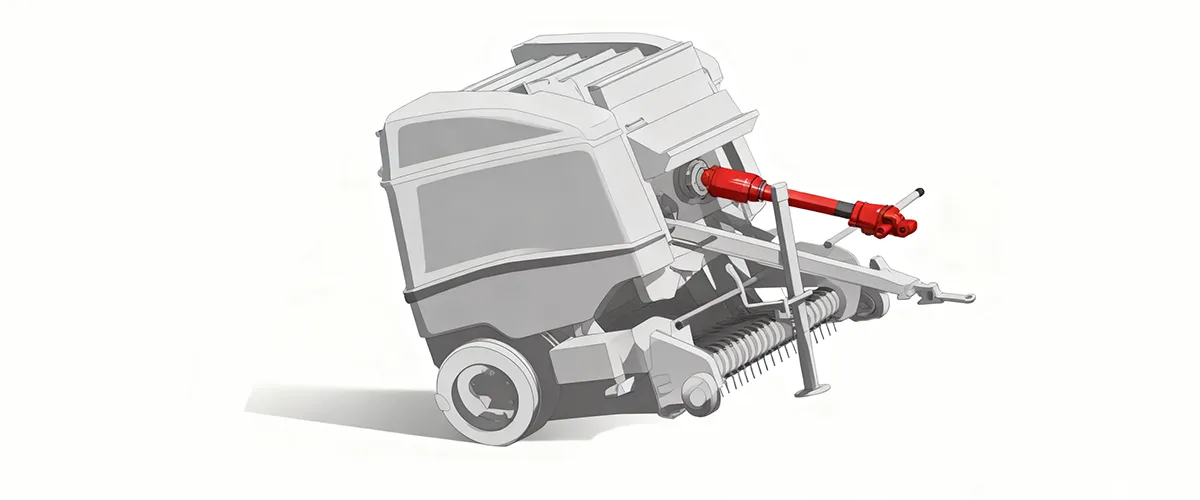
Correct tractor power sizing protects the round baler machine’s internal drivetrain — but the PTO shaft connecting the tractor to the baler must also be rated for the elevated continuous torque that high moisture cotton stalk baling generates. A standard hay-application Agricultural PTO Shaft for round balers is typically rated at the baler’s minimum PTO specification — which, as established earlier in this guide, underestimates the actual sustained demand in high moisture cotton conditions by 20–35%. A purpose-rated baler PTO shaft that matches the recommended tractor power level (rather than just the published minimum) provides the continuous torque rating and thermal capacity needed for extended high-moisture cotton sessions. Agricultural chain — specifically 16A feeder chain and 20A rear chamber chain — must be sourced to the factory specification when working in high moisture conditions, since the elevated sustained chain tension from wet material compression creates faster elongation in lighter-specification substitutes.
Purpose-rated PTO shafts for round baler sustained high-torque service. Overrunning clutch options protect against reverse shock during chamber stall events in high moisture cotton. Browse Agricultural PTO Shaft Range
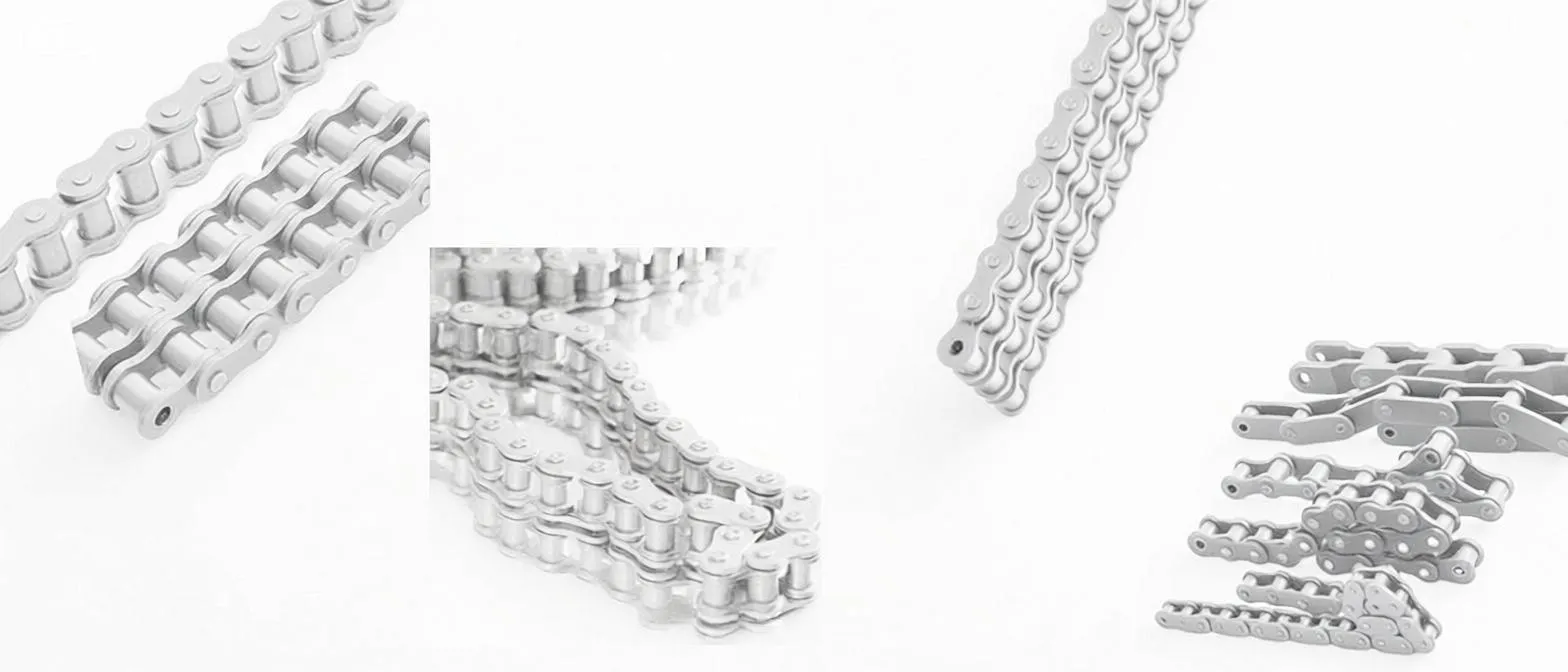
Factory-specification roller chain in 16A (feeder) and 20A (rear chamber) grades for 9YG series balers. Elevated chain tension from high moisture cotton compression makes exact specification matching even more important than in dry stalk conditions — lighter chain grades elongate faster under these loads. Available as complete model-specific replacement kits.
Frequently Asked Questions
편집자: PXY