Agricultural Machinery Knowledge Series
A thorough guide to the mechanics, engineering design, material systems, and practical farm-level benefits of variable-chamber round baler technology — and why it has become the dominant approach in modern round hay baler design worldwide.
1. Understanding Variable-Core Bale Technology: The Concept Explained
Variable-core bale technology refers to the design principle used in variable-chamber round balers, where the baling chamber expands progressively as crop material accumulates inside it. Unlike fixed-chamber machines — where the chamber size is rigid and predetermined from the start of each baling cycle — a variable-chamber round baler begins each cycle with a near-zero internal volume and grows to full bale diameter as crop is continuously fed in. This fundamental difference in chamber behavior has far-reaching consequences for bale density, crop versatility, fuel efficiency, and the downstream quality of stored forage or dry hay.
The term “variable core” describes what happens at the center of the bale. In fixed-chamber machines, the bale core is formed under relatively low compression because the chamber is already at its full diameter when the first material enters. Material at the center is loosely laid rather than tightly compacted, which can create an oxygen reservoir that compromises silage fermentation or allows moisture infiltration in dry hay storage. In a variable-chamber design, material entering the chamber immediately encounters the restraining pressure of the belts, chains, or rollers enclosing it. Core density in a variable-chamber round baler is therefore substantially higher — and more consistent from bale to bale — than in equivalent fixed-chamber machines.
For Korean livestock farms, dairy operations, and hay contractors working with Italian ryegrass, mixed-grass swards, or whole-crop maize, the practical meaning of this distinction is direct: better silage fermentation, higher bale weights per trip, and reduced spoilage losses through the long Korean winter feeding period. Understanding the engineering behind variable-core technology helps buyers evaluate whether a specific round baler machine genuinely delivers on these promises or merely claims to.
2. Action Mechanism: How Variable-Core Chamber Systems Work in Motion
The operational cycle of a variable-chamber round baler begins the moment the tailgate closes after the previous bale has been ejected. At that point, the belts — or in roller-type machines, the drum assembly — form a very small starting loop or contact zone at the chamber’s inlet. Crop material picked up from the windrow by the spring-tine or hammer-claw pickup header is pulled into this zone by the feeder rotor and immediately begins to be tumbled and compacted by the moving belts or rollers.
As material accumulates, the belts stretch outward under increasing tension maintained by a spring or hydraulic tensioning system. This tension is the critical variable: it determines how hard the material is being compressed at any given chamber diameter. In well-engineered machines, the tension system maintains a near-constant compressive pressure throughout the growth cycle, which means the outer layers of the finished bale are compressed at roughly the same force as the core material was. This produces a bale with consistent density from center to surface — the defining characteristic of genuine variable-core technology.
Once the bale reaches the pre-set target diameter — monitored via a sensor linked to the cab indicator or ECU display — the binding cycle begins automatically. In net-wrap machines, a motor-driven roller advances net from a roll into the chamber where it is caught by the rotating bale. One to two complete revolutions wrap the net around the bale circumference and end faces. A knife then severs the net. The rear tailgate opens hydraulically, the completed bale rolls onto the ground, the tailgate closes, and the next cycle begins immediately. The entire ejection and restart sequence on efficient machines takes under thirty seconds, enabling sustained productivity of 40 to 100 bales per hour on open, well-windowed terrain.

3. Manufacturing Structure: Engineering the Variable Chamber
Two principal mechanical approaches exist for constructing a variable chamber: belt-based systems and roller-drum systems. Belt systems use multiple parallel rubber-reinforced belts running over a series of fixed and floating rollers to form the chamber walls. As the bale grows, the floating rollers move outward, increasing belt path length while the hydraulic or spring tensioner maintains load. Belt systems handle a very wide range of crop types and moisture contents without adjustment, but the belts themselves are wear items requiring periodic inspection and replacement.
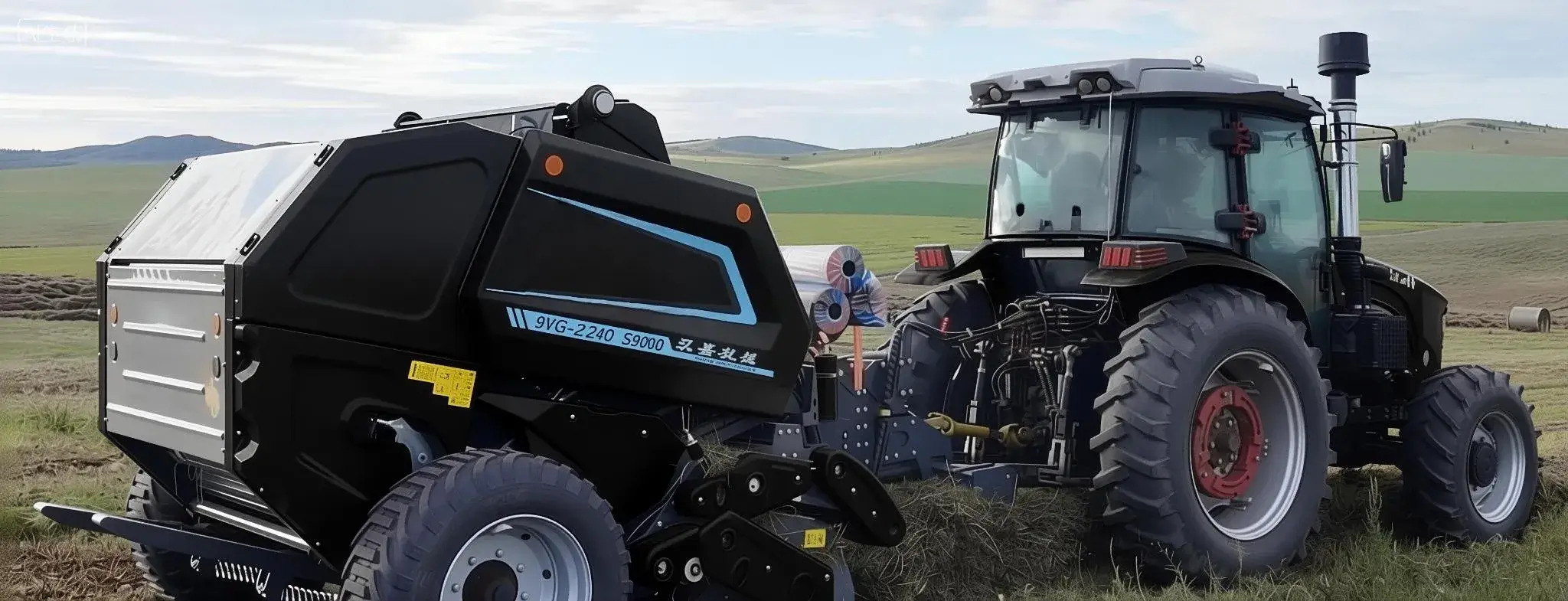
Roller-drum systems — the approach used in the round baler range detailed in this guide — replace the belts with a set of cylindrical steel drums arranged in a geometric arc around the chamber axis. The 9YG-series machines, for instance, use 18 compression rollers with a diameter of φ222 mm. As crop accumulates, the outer drums do not move outward; instead, the crop mass pushes against their fixed positions, and compression is achieved by the rotational speed differential between the crop surface and the drum surfaces. Roller-drum machines are generally more durable than belt machines in abrasive or gritty crop conditions, require less consumable replacement in normal operation, and produce a particularly dense bale surface that handles well on uneven terrain during field transport.
The feed system architecture feeding material into a variable chamber is equally important for consistent bale shape. A poorly designed feeder produces bales that are heavier on one side, creating imbalanced cylinders that do not wrap evenly and can tip during transport. The axial-flow semi-forced feed mechanism used in the 9YG series — developed as a proprietary in-house design — channels crop from the full width of the 2,240 mm pickup header inward and distributes it evenly across the chamber width before the rotational compression cycle begins. This mechanism operates without the cam guides and protective rings used in older designs, which reduces the number of crop-contact points that can cause blockages and simplifies clearing procedures when over-dense material is encountered.
Core Structural Elements of a Variable-Chamber Round Baler
| Structural Element | Role in Bale Formation | Design Specification (9YG Series) |
|---|---|---|
| Spring-tine pickup header | Lifts windrow and channels into feeder | 2,240 mm width, spring-tine type |
| Axial-flow feed rotor | Distributes crop evenly across chamber width | Semi-forced, camless, proprietary design |
| Compression rollers | Provide rotational compression to build bale | 18 rollers, φ222 mm diameter |
| Bale density sensor | Signals when target diameter is reached | Electronic sensor, cab display alert |
| Net-wrap dispenser | Applies binding net before ejection | Automatic, net 2,000 × 1.4 m per bale |
| Hydraulic tailgate | Opens for bale ejection, closes to restart | H-type compression fittings, buffer cylinder |
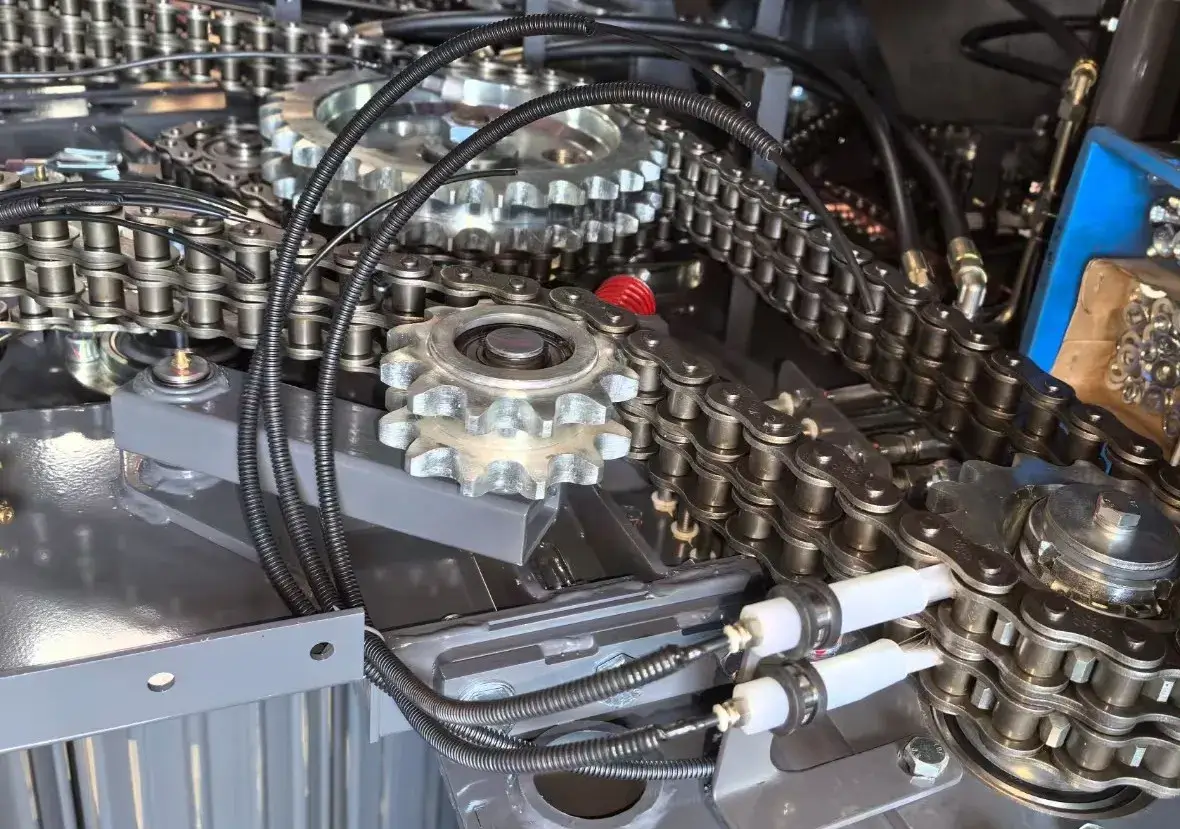
| Drive chain assembly | Transmits PTO torque to chamber rollers | Dual-side 20A heavy chain, rear chamber |
| Tow hitch and gearbox | Connects to tractor, transmits and distributes PTO power | Dual-joint, ±90° lateral, ±30° vertical articulation |
4. Material System: What Goes Into a Variable-Chamber Round Baler
The choice of materials throughout a round baler machine defines its service life, repairability, and resistance to the highly abrasive operating environment of harvesting. Crop material — especially dry cereal straw and mature grass — carries significant silica content that erodes metal surfaces at rates that matter over a full season’s operation. Baling equipment used for maize stover or wet silage crops additionally faces corrosion from acids and plant juices, while machines working in sandy or gritty soils experience accelerated surface wear on all exposed components.
Frame steelwork in commercial round balers is typically fabricated from S355 or equivalent structural steel (355 MPa minimum yield strength), laser-cut for dimensional precision and robot-welded for repeatable weld quality. Critical high-stress areas — the chamber side cheeks, the tailgate pivot points, and the pickup mounting brackets — are often fabricated from heavier 10–16 mm plate with corner reinforcement gussets. The compression rollers in roller-drum machines are surface-hardened: the working surface is case-hardened or hard-chrome plated to resist abrasive wear while the core remains relatively ductile to absorb impact loads without fracturing.
Chain materials in the drive circuit are high-tensile roller chain, typically DIN 8187 or equivalent, with hardened-pin and bush construction. In machines designed for sustained high-output work, the rear chamber chain circuit specifically uses heavier 20A series chain — a larger pitch and higher tensile rating than the standard agricultural 16A chain found in entry-level machines. This matters because the rear chamber experiences the highest sustained load in the baling cycle, particularly when forming bales from high-moisture silage crops that resist compaction more than dry hay. Heavier chain in this location reduces elongation rate and extends the maintenance-free interval between chain adjustments.
Net wrap material is polypropylene or HDPE woven or knotted mesh. Twine binding, where used as an alternative, is either natural sisal or UV-stabilized polypropylene. The net dispenser housing and knife assembly are typically stainless steel or hardened carbon steel to resist both mechanical wear from the net material and corrosion from wet crop juice contamination.
5. The Seven Key Advantages Variable-Core Technology Delivers
Variable-core bale technology does not exist as a marketing concept — its advantages are measurable, documentable, and directly relevant to operational economics. Each benefit described below has a corresponding engineering mechanism that explains why it occurs, not simply a claim that it does.
Variable compression from the very first material entry ensures the core is as dense as the outer layers. Typical density for ryegrass silage bales reaches 115–200 kg/m³, delivering more dry matter per bale and fewer transport trips per hectare stored.
A dense core minimizes the oxygen reservoir at the bale center, giving lactic acid bacteria the anaerobic environment they need to drive fermentation efficiently. Reduced core air space means lower aerobic losses, better pH drop, and superior silage digestibility.
Because the chamber adapts continuously to the material being compressed, the same round baler machine can handle wilted ryegrass silage at 30% DM, whole-crop maize at 28% DM, dry cereal straw at 85% DM, and mature mixed-grass hay — all without mechanical adjustment between crops.
A well-formed variable-core bale maintains its cylindrical shape during loading, transport, and storage because the core provides structural support. Fixed-chamber bales with a loose center can collapse under their own weight when stacked, damaging the outer net layer and exposing silage to aerobic spoilage.
Higher bale density means more forage dry matter per bale, which directly reduces the number of bales needed to store a given crop yield. Fewer bales means fewer baling cycles, less tractor time, and lower total fuel burn per tonne of crop stored — a meaningful saving over a full harvest season.
The progressive compression cycle of a variable-chamber machine allows the baler to keep moving forward throughout most of the baling cycle, only briefly stopping or slowing for the binding and ejection phase. On well-prepared windrows, this produces throughput rates of 40–100 bales per hour — a figure that is difficult to match with fixed-chamber technology at equivalent bale sizes.
Variable-chamber machines can produce smaller-than-maximum bales simply by triggering the binding sequence at an earlier diameter. This is useful on irregular fields, headlands, and thin windrows at field margins where collecting a full-size bale is not always practical but abandoning crop is wasteful.
6. Variable-Core vs. Fixed-Chamber: A Direct Comparison
Understanding what variable-core technology offers is clearest when placed alongside what fixed-chamber machines deliver. The table below compares the two approaches across the criteria most relevant to commercial forage harvesting operations.
| Criterion | Variable-Chamber (Variable Core) | Fixed-Chamber |
|---|---|---|
| Core density | High — compressed from first contact | Low — loose core, compressed outer shell |
| Bale density uniformity | Core to surface consistent | Density gradient center to surface |
| Silage fermentation suitability | Excellent — minimal core air space | Moderate — core oxygen pocket risk |
| Crop type range | Very broad — silage to dry straw | Narrower — better suited to dry hay |
| Bale diameter consistency | Highly consistent via sensor control | Fixed — determined by chamber geometry |
| Minimum bale size option | Yes — ejectable at any diameter above minimum | No — must fill full chamber |
| Mechanical complexity | Higher — tensioner, sensor, ECU integration | Lower — simpler mechanical structure |
| Transport stability of finished bale | Good — solid core supports shape | Moderate — core collapse possible under stack weight |
7. Round Baler Models That Apply Variable-Core Technology
The models listed below all use variable-chamber compression principles with roller-drum or equivalent mechanisms. Each is engineered for sustained field productivity across a range of crop types, with sensor-based density control, automatic net wrap, and hydraulic tailgate management as standard features. Technical parameters are drawn directly from verified product specifications.
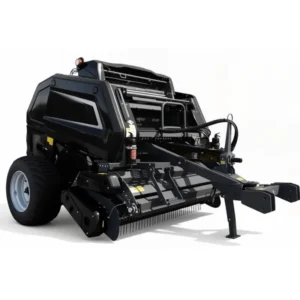
9YG-2.24D 원형 베일러(S9000)
Bale φ1,300×1,400 mm · 18 rollers · 40–100 bales/h · 55–100 kW · 4,262 kg · Sensor density control
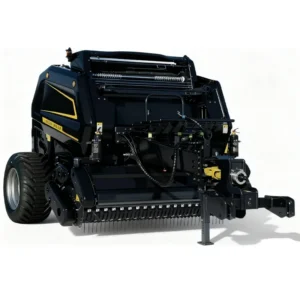
9YG-2.24D 원형 베일러 (S9000 클래식)
4,312 kg · H-type hydraulic fittings · Dual-side chain drive · Buffer tailgate cylinder · Auto net wrap
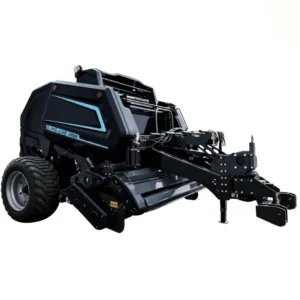
9YG-2.24D Round Baler (Transcend)
Dual-joint gearbox · ±90° lateral articulation · 4,570 kg · 720 r/min PTO · 5–35 km/h operating speed
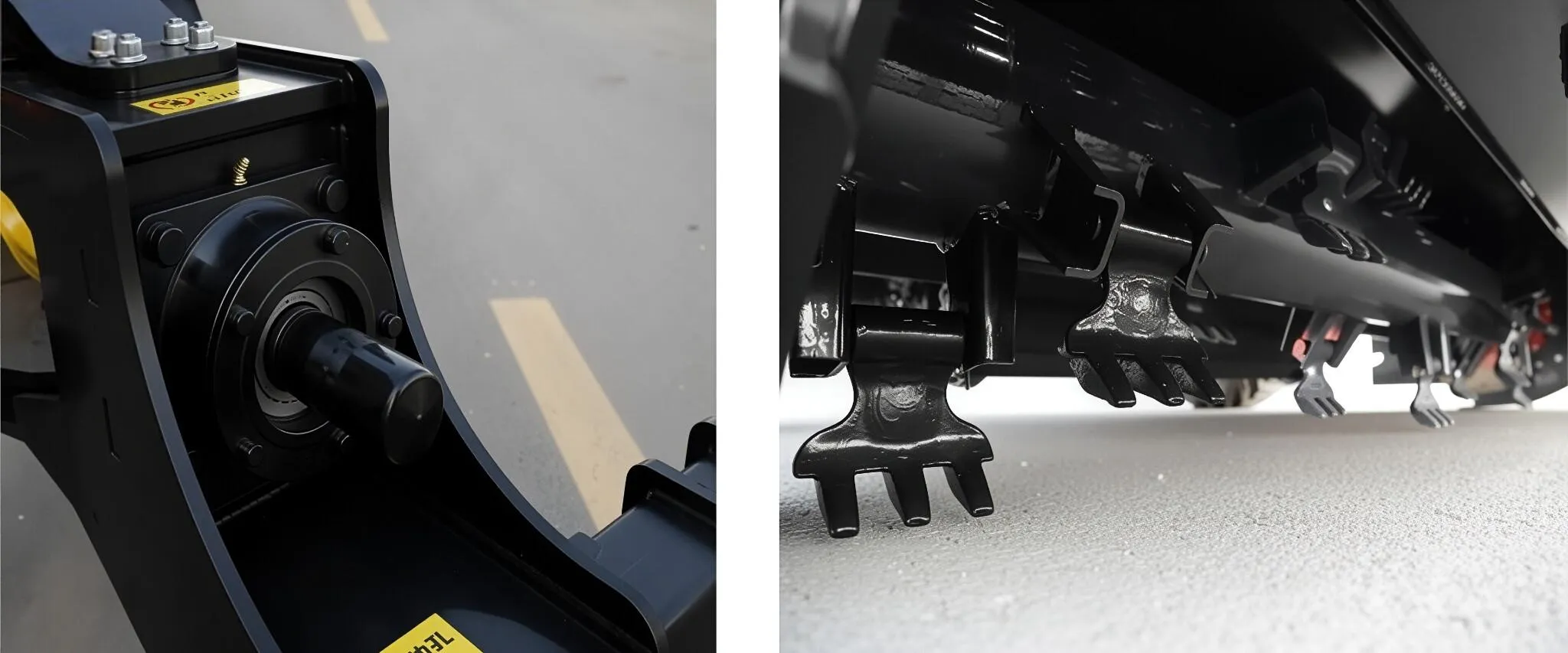
8. Round Baler Gearbox: The Transmission Foundation of Variable-Core Performance
Variable-core technology depends on consistent rotational speed at the compression rollers across the full baling cycle. This consistency is delivered by the gearbox and drive train. The gearbox in a round baler machine reduces PTO input speed from the tractor’s 540 or 720 rpm output to the working speeds required by the pickup header, feeder rotor, and compression roller assembly, while simultaneously allowing the machine to be turned on headlands without disengaging or damaging the drive line.
The dual-joint gearbox design used in the 9YG-2.24D Transcend model resolves a persistent engineering challenge in tractor-trailed machines: conventional single-joint PTO driveshafts can jam, bind, or transfer uneven torque pulses when the tractor turns at angles beyond approximately 25 degrees from the machine’s axis. By incorporating a twin cross-joint (dual Cardan joint) transmission shaft, this design maintains smooth power delivery at lateral angles up to 90 degrees and vertical angles up to 30 degrees. The practical result is that an operator can make a full turning radius on a small Korean field plot without stopping to disengage PTO or risk driveshaft damage — a genuine daily-use benefit in the irregular field geometries common across Korean agricultural districts.
Gearbox housing materials are cast iron or fabricated steel, sealed for oil-bath lubrication that protects gear teeth and bearings from the fine dust and crop debris that permeate any baling environment. Internal gear teeth are case-hardened to 58–62 HRC surface hardness, providing wear resistance while preserving core ductility to absorb shock loads. Oil must be maintained at the correct level and changed at manufacturer-specified intervals — typically every 200–250 operating hours — to preserve the gearbox within its design service life.
Torque protection is provided by shear-bolt limiters or friction-clutch devices at the PTO input shaft. These absorb over-torque events caused by stone ingestion, sudden heavy-crop blockages, or incorrect engagement speed. In integrated baler-wrapper combination machines, the gearbox also serves as the power distribution node for the wrapper’s secondary hydraulic circuit, adding thermal load that must be managed through adequate oil capacity and, in high-duty-cycle applications, supplementary cooling.
9. Round Baler Applications: Where Variable-Core Technology Performs Best
Variable-core round baler technology is not limited to a single crop or a single farming system. Its adaptability to varying material characteristics is precisely what makes it the technology of choice across such diverse agricultural contexts as Korean silage operations, Russian and Mongolian steppe hay harvesting, Central Asian cereal straw collection, and South and Southeast Asian mixed-crop farms transitioning toward mechanized forage storage.
For grass and legume silage — including Italian ryegrass, mixed fescue-clover swards, alfalfa, and vetch-oat mixes — the dense core produced by variable-compression technology is particularly valuable. These crops contain high water-soluble carbohydrate (WSC) content at optimal cutting stage, but that WSC is rapidly lost to aerobic respiration if bale density is insufficient to exclude oxygen. Variable-core machines producing bales consistently above 150 kg/m³ dry matter density deliver meaningfully better silage quality than looser bales from equivalent fixed-chamber equipment.
For cereal straw — wheat, rice, oat, barley — variable-core machines handle the low-density, highly abrasive material effectively because the progressive compression cycle allows even the lightest material to be built up gradually rather than needing to fill a fixed space uniformly. The 9YG-1.0C model’s hammer-claw pickup option allows it to work directly on standing maize stubble, harvesting the stover without prior cutting or raking, which saves a field operation pass and reduces total harvest cost per hectare.
Mini round baler versions in the 9YG-1.0 class, with a bale diameter of φ1,100 mm and a machine weight of 2,640 kg, are particularly well-suited to Korean smallholding operations and hobby farms where tractor power is limited to 48–80 kW and field access is constrained by narrow tracks or irregular boundaries. These small round baler machines maintain full variable-core functionality while requiring significantly less drawbar power and producing bales light enough for manual handling with basic on-farm equipment.
Crop Suitability by Round Baler Model
| Model | Grass Silage | Dry Hay | Cereal Straw | Maize Stover | Min. Tractor (kW) |
|---|---|---|---|---|---|
| 9YG-2.24D S9000 Transcend | ✓ | ✓ | ✓ | ✓ | 55 |
| 9YG-2.24D (Classic) | ✓ | ✓ | ✓ | ✓ | 55 |
| 9YG-1.25 (Double) | ✓ | ✓ | ✓ | ✓ | 88 |
| 9YG-1.25A | ✓ | ✓ | ✓ | ✓ | 75 |
| 9YG-1.0 (Mini) | ✓ | ✓ | ✓ | ◯ | 48 |
| 9YG-1.0C | ✓ | ✓ | ✓ | ✓ | 70 |
✓ = Fully compatible. ◯ = Compatible with additional pickup header accessory.
10. Regulatory and Compliance Landscape for Round Baler Gearboxes and Equipment
Round baler machines — including the gearbox, PTO drive shaft, and all driven implements — are subject to specific safety and standards requirements in the markets where they are sold and operated. Compliance is not merely a legal formality; it affects subsidy eligibility, import clearance, and liability coverage for farm operators.
대한민국
In South Korea, all commercially sold agricultural machinery must comply with the Act on the Promotion of Agricultural Mechanization (농업기계화 촉진법) and be registered under the performance evaluation system administered by the National Institute of Agricultural Sciences (농촌진흥청 — Rural Development Administration). Round balers wishing to qualify for government purchase subsidy programs — which substantially reduce the net acquisition cost for Korean farmers — must appear on the approved equipment list maintained by the Ministry of Agriculture, Food and Rural Affairs (MAFRA, 농림축산식품부). PTO-driven machines are additionally subject to requirements under the Industrial Safety and Health Act (산업안전보건법) regarding shaft guarding and operator protection.
European Union
Round balers exported to EU member states must carry CE marking under the Machinery Directive 2006/42/EC (transitioning to Machinery Regulation EU 2023/1230 from January 2027). Key harmonized standards include EN ISO 4254-7 (agricultural machinery safety — harvesting machinery), EN ISO 11684 (safety signs and hazard pictograms), and EN 12965 covering PTO drive shafts with universal joints. Gearbox oil specifications for CE-compliant machines used in temperate European conditions typically reference ISO VG 150 or GL-4 / GL-5 classified gear oils per AGMA 9005 guidelines. CE-marked machinery must be accompanied by a Declaration of Conformity and a technical construction file retained by the manufacturer.
United States
In the United States, agricultural machinery safety is governed by ASABE standards (American Society of Agricultural and Biological Engineers), particularly ASABE S318 (safety for agricultural equipment) and ASABE EP455 (PTO guarding). OSHA 29 CFR Part 1928 applies to employed agricultural workers and requires specific guarding on PTO-driven implements. The EPA additionally regulates certain aspects of new equipment concerning off-road emissions from diesel-powered accessories, though most tractor-PTO-driven balers are exempt as implements rather than self-propelled vehicles.
Russia and EEU Markets
Agricultural machinery sold in the Russian Federation must carry GOST R certification and comply with Technical Regulations of the Eurasian Economic Union (TR EAEU 010/2011 — machinery safety). Kazakhstan and Belarus are also EEU members, requiring the same technical regulation compliance. Gearbox oil specifications in these markets typically reference GOST 23652 (gear oils for tractors and agricultural machinery). EEU Customs Union certification (EAC mark) is required for lawful sale within member states.
Mongolia
Mongolia’s Ministry of Food, Agriculture and Light Industry oversees agricultural mechanization policy. Imported agricultural equipment must clear Mongolian Customs General Administration with standard documentation including CCC or equivalent third-country certification. ISO 9001 quality management certification from an accredited body is widely recognized by Mongolian procurement authorities as evidence of manufacturing process compliance where specific Mongolian National Standards (MNS) do not exist for the equipment category.
Australia and New Zealand
PTO-driven equipment in Australia must comply with the Work Health and Safety (WHS) regulations as harmonized across states, with specific reference to AS 1152 (guarding of farm machinery) and AS 4024.1 (safety of machinery series). New Zealand’s WorkSafe NZ enforces similar requirements under the Health and Safety at Work Act 2015. Gearbox lubricant specifications typically follow ISO 6743-6 (lubricants for gears) classification, with VG 150 and VG 220 grades most commonly specified.
11. Electronic Density Control: How Sensors Optimize the Variable-Core Process
The intelligence layer in a modern variable-chamber round baler is its electronic density control system. Earlier-generation variable-chamber machines relied on mechanical indicators — a flag or pointer visible from the tractor cab — to signal when the bale had reached the target diameter. The operator then had to judge manually when to trigger the binding cycle. On irregular windrows or at the end of a long operating day, this manual judgment introduced inconsistency: some bales were under-filled, some overfilled, and density varied run-to-run.
Modern sensor-controlled systems replace this judgment call with a continuous measurement loop. A position sensor monitors the chamber expansion in real time and compares it against a pre-set target diameter programmed by the operator through the cab ECU. When the measured diameter matches the target, the system automatically triggers the net-wrap sequence, signals the operator with an audible or visual alert, and initiates the tailgate opening after wrapping is complete. The operator’s role is reduced to maintaining forward travel speed appropriate to the windrow density — the machine manages the binding and ejection cycle autonomously.
The benefit is not only consistency. Automatic triggering prevents the common error of over-filling the chamber on a thick windrow, which can cause the bale to exceed the net-wrap mechanism’s capacity or jam the tailgate opening sequence. It also prevents under-filling on a thin windrow, which would produce a bale too light and too loosely formed to maintain shape during field transport. Across a full day’s operation of 400–800 bales, the cumulative effect of consistent automatic density control on total crop stored per hectare is measurable — and economically significant.
12. Maintaining a Variable-Core Round Baler for Long-Term Performance
Variable-chamber machines have more mechanical elements than fixed-chamber alternatives, and the service regimen needs to reflect this. The most time-sensitive maintenance requirement during harvest season is daily chain lubrication across all drive circuits — pickup, feeder, compression roller, and net-wrap drive. On dry-crop days producing fine crop dust, chain lubrication intervals may need to shorten to every half-shift to prevent accelerated pin-and-bush wear.
The net-wrap knife assembly requires weekly inspection during active harvest periods. A blade that has lost its edge does not cut net cleanly, leaving trailing ends that wrap back into the bale and jam the dispenser mechanism. Knife replacement is a straightforward field operation requiring no specialized tools, and maintaining a stock of spare blades as part of the on-farm round baler parts inventory avoids avoidable downtime at peak season. Net roll holders and their bearings — which rotate continuously throughout every baling cycle — should be greased at each pre-season service and inspected for roughness or wobble at each shift inspection.
The gearbox oil level check and condition inspection should be added to the daily pre-operation checklist. Oil that has turned dark, smells burnt, or shows a milky appearance indicating water contamination must be drained and refilled immediately. Contaminated gear oil accelerates bearing and gear tooth wear at rates that are not obvious until significant damage has already occurred. Annual oil changes at the manufacturer’s specified grade and viscosity, combined with cleaning and inspection of the magnetic drain plug for metal particle accumulation, form the minimum responsible gearbox maintenance protocol.
Frequently Asked Questions
편집자: PXY