Running a livestock farm or forage operation on under 50 hectares brings a specific set of challenges. You need a round baler that keeps up with seasonal workload without demanding the tractor power or capital budget of a commercial contractor. The market for small round baler equipment has grown considerably over the last decade, and today there are well-engineered options genuinely built around compact grassland use — not simply scaled-down versions of large machines.
This guide walks through construction, material systems, mechanical principles, legal compliance, and — critically — which models actually match the realities of sub-50 ha meadow and pasture baling. Whether you are evaluating a mini hay baler for a family holding, sourcing replacement grassland equipment, or comparing round baler machine options ahead of the season, the information below is designed to give you a reliable foundation for that decision.
Why 50 ha Is a Meaningful Threshold for Round Baler Selection
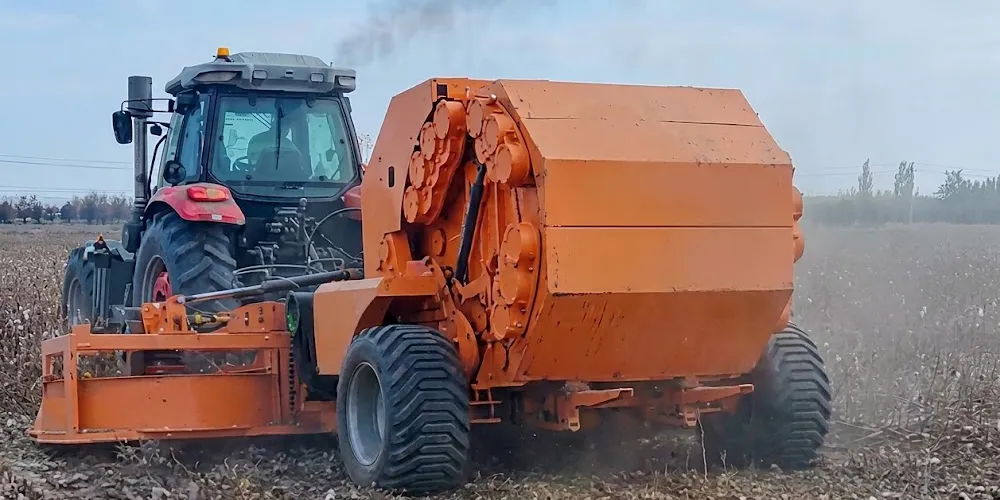
Fifty hectares is not an arbitrary cutoff — it is the upper boundary at which compact tractor compatibility, seasonal throughput, and per-bale handling logistics converge in a way that defines a distinct category of equipment. Below 50 ha, most grassland operations run tractors in the 35–80 hp range, typically with 540 RPM PTO outputs. A standard commercial round hay baler designed for 100 hp and above simply overloads the drivetrain, burns more fuel per bale, and in some cases damages the tractor PTO shaft over repeated seasons.
Additionally, the typical bale volume for a sub-50 ha holding — usually between 200 and 600 bales per season in grass hay or silage — does not justify the depreciation cost of a high-capacity machine. A mini round baler or small round baler correctly sized for your acreage and tractor delivers a far better return per operating hour. Productivity in the 15–40 bales/hour range is usually more than adequate, and bale diameters of 800–1000 mm are ideal for handling and storage in standard barns and round bale feeders. Understanding exactly where your operation sits within this spectrum is the first step toward a purchasing decision you will not regret two seasons in.
For farms in Korea — where the average cultivated land per household has historically remained below 2 ha but where consolidated grassland operations in Gangwon and Jeolla provinces may reach 30–60 ha — the sub-50 ha category is especially relevant. Korean agricultural policy increasingly incentivises mechanisation of forage production to reduce dependence on imported feed, and equipment sized to Korean tractor fleets (predominantly 45–80 hp units from LS Mtron, TYM, and Dongyang) is now in active demand.
Manufacturing Structure
A compact round baler is built around three interlocking structural assemblies: the main chassis frame, the compression chamber, and the pickup mechanism. Each must be engineered with enough rigidity to absorb continuous field vibration while keeping the overall weight within the towing capacity of a compact tractor. For machines in the sub-50 ha category, total implement weight typically falls between 1,000 and 2,200 kg — light enough for a 40–60 hp tractor to manage safely on slopes common to Korean highland meadows.
Main Chassis Frame
The frame is fabricated from hot-rolled steel profiles — typically rectangular hollow sections with wall thicknesses of 6–10 mm. CNC laser-cut mounting plates are welded at stress concentration points around the hitch, axle, and chamber pivot. The frame must resist both the torsional loads from uneven field surfaces and the compressive reactions from bale density buildup inside the chamber. On well-built machines, the frame geometry is verified by finite element analysis before production begins, and sample frames are tested to rated load limits before any batch leaves the factory floor.
Compression Chamber
For fixed-chamber designs (the most common type in small round baler products for sub-50 ha use), the chamber is defined by a ring of steel rollers arranged in a cylindrical array. The number of rollers ranges from 12 to 18 depending on the model tier; more rollers mean a more uniform pressure distribution and fewer flat spots on the finished bale. Roller diameter, typically 180–230 mm on compact models, determines the contact arc and influences density consistency. Chamber width directly controls bale width, so a machine with an 800–1000 mm chamber produces bales in a size range well-suited to Korean barn doorways and standard round bale wrapping film.
Pickup Mechanism
The pickup reel spans the full working width of the machine, usually 1.4–2.3 m, and uses spring-tine or cam-driven tine carriers to lift cut material from the windrow. On quality compact models, the pickup height adjusts via gauge wheels rather than fixed skids, which preserves tine-to-ground clearance across uneven meadow ground. A well-designed pickup on a small hay baler also incorporates a crop deflector hood to prevent material from bypassing the intake — a common source of field losses when grass has been cut short or when windrow volume is inconsistent.
Material System
The longevity and field performance of a round baler machine depend heavily on the materials used across its core wear points. For a grassland operator baling 200–600 bales per year, material quality is a long-term cost issue as much as a reliability one — replacement rollers, chains, and pickup tines represent a recurring maintenance budget that compounds over the working life of the implement.
| Component | Typical Material | Key Property | Service Relevance |
|---|---|---|---|
| Compression Rollers | 45# carbon steel, surface-hardened | HRC 45–55 surface hardness | Resists abrasion from grit and silica in grass windrows |
| Drive Chains | ANSI #50/#60 alloy steel | Minimum tensile 60 kN | Handles shock loads during dense bale core formation |
| Pickup Tines | Spring steel (65Mn) | High fatigue resistance | Deflects on stone contact without permanent deformation |
| Side Walls / Panels | Q345 structural steel, 4–6 mm | Yield strength 345 MPa | Maintains chamber geometry under lateral bale pressure |
| Gearbox Housing | Cast iron / ductile iron (GGG40) | Vibration damping, machinability | Absorbs torsional shock from PTO; maintains bearing alignment |
| Net Wrap Mechanism | Zinc-plated mild steel | Corrosion resistance | Critical where silage wrapping exposes steel to acid fermentation gases |
| Surface Coating | Electrostatic epoxy primer + polyurethane topcoat | Salt spray 500+ hours | Essential for coastal and high-humidity Korean grassland regions |
Beyond raw material grades, weld quality is arguably the single most consequential factor in field durability. Automatic MIG welding lines using robotic torch positioning achieve a penetration and bead consistency that manual welding struggles to replicate at production volumes. When evaluating a round baler manufacturer, asking for information on welding process qualifications — particularly whether welds are inspected by ultrasonic testing on structural joints — is a reasonable due diligence step.
The Round Baler Gearbox: Design, Ratios, and Compatibility
The round baler gearbox is the mechanical heart of the drivetrain. It receives rotary power from the tractor PTO shaft (typically at 540 RPM) and distributes it at the correct speed and torque to the pickup reel, roller drive, and net-wrap mechanism. For small farms with tractors in the 35–80 hp range, the gearbox must handle torque peaks during bale core formation without overheating or developing backlash.
A well-specified compact baler gearbox for grassland use carries a transmission ratio of approximately 1:2, housed in a ductile iron casing and sealed to IP55 or better against dust and crop debris. Spiral bevel gears at the input stage handle the directional change from PTO shaft axis to roller drive axis, while spur or helical gears handle the final distribution to the chamber drive. Internal lubrication is typically splash-type with a synthetic or mineral gear oil, and quality producers will specify oil change intervals in the operator manual — something worth checking before purchase, as gearbox neglect is the leading cause of premature failure in used round balers.
On models compatible with Korean tractor brands such as LS Mtron and TYM — which use 6-spline 1-3/8 inch PTO shafts at 540 RPM — the gearbox input flange must be matched to this spline specification. The gearbox in the EP round baler series uses a 35 mm, 6-spline input shaft with a rated torque capacity exceeding 500 Nm, sized with a 20% fuel-saving design that reduces power draw during partial-density baling early in the bale formation cycle.
When pairing a round baler machine with a compact Korean tractor, verify that the tractor PTO output shaft spline count and diameter match the baler gearbox input. Mismatched splines require an adapter sleeve — acceptable for occasional use but a point of wear under high-cycle grassland baling seasons. Always confirm with the equipment supplier before purchasing.
Compression Mechanics and Bale Density for Pasture Grass
Pasture and meadow grass presents specific compression challenges compared to cereal straw. Grass harvested at optimal moisture (60–70% DM) for silage is heavier, stickier, and more prone to mat formation at the pickup. Bale density in finished grass silage bales typically targets 150–200 kg per cubic meter — high enough to ensure good fermentation by excluding oxygen, but not so high that the outer wrap is compromised by excessive internal pressure when the bale is rolled off the tailgate.
Fixed-chamber round baler machines achieve this density through adjustable hydraulic back-pressure on the chamber tailgate. As the bale grows, internal pressure increases; sensors or mechanical pressure gauges signal the operator when target density is reached. On models equipped with automatic systems, the tailgate opens and the bale is discharged without the operator leaving the tractor cab. For a small farm owner baling alone, this automation significantly reduces stress and the risk of overweight bales that damage handling equipment.
For dry hay baling on the same parcels — timothy, ryegrass, or orchardgrass cut in July or August in Korean highland grasslands — the same machine operates with lower chamber back-pressure, targeting 80–120 kg/m3. The ability to switch between silage and hay baling modes without hardware changes is a key selection criterion for mixed grassland operations where both products are made in the same season.
Model Comparison: Which Small Round Baler Suits Grassland Operations Under 50 ha?
The table below compares models in the range relevant to pasture and meadow grass operations on holdings up to 50 hectares. Specifications are drawn from current product documentation; tractor power requirements reflect PTO horsepower at rated load, not peak engine output.
| Model | Bale Diameter | Lebar Pengambilan | Required PTO HP | Bale Weight | Suited Farm Size | Grassland Use |
|---|---|---|---|---|---|---|
| 9YG-1.0 | ⌀1100 mm | 1.4 m | 35–55 hp | 100–200 kg | 5–25 ha | Grass hay, light silage, paddy-adjacent meadow |
| 9YG-1.0C | ⌀800–1000 mm | 2.2 m | 40–65 hp | 100–180 kg | 15–40 ha | Grass silage, hay, light straw; variable moisture |
| 9YG-1.25 | ⌀1200–1500 mm | 1.8 m | 45–65 hp | 150–280 kg | 20–50 ha | Dense grass, silage, mixed forage operations |
| 9YG-1.25A | ⌀1200–1500 mm | 1.8 m | 50–80 hp | 150–300 kg | 25–50 ha | High-volume hay, silage; compatible with major tractor brands |
For operations sitting firmly below 25 ha with tractors under 50 hp, the 9YG-1.0 is the appropriate entry point — its camless, axial-flow feeding system significantly reduces the probability of blockage in moist grass windrows compared with conventional cam-track pickup designs. Farms in the 25–50 ha band that also handle some corn silage or heavier forage crops alongside their pasture grass should consider moving up to the 9YG-1.25 or 9YG-1.25A, which carry wider chamber widths and handle higher-volume windrows without requiring a field pass to reduce windrow density.
Highlighted Model: EP-9YG-1.0 Round Baler
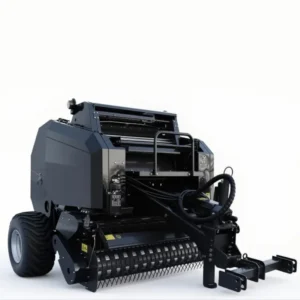
EP-9YG-1.0 Mini Round Baler
The 9YG-1.0 is purpose-built for compact grassland operations. Its patented axial-flow semi-forced feeding structure eliminates the traditional cam guard system, which means fewer moving parts at the pickup — and far fewer blockages when grass is cut at high moisture or when windrow density varies across a sloped meadow. The compression chamber uses 16 heavy-duty steel rollers at 222 mm diameter, producing uniform bales with density up to 200 kg/m3 even on a 35–55 hp compact tractor.
The bale dimension of approximately 1100 mm diameter fits Korean standard livestock barn doorways and is easily handled with a front loader or compact bale spike. Net wrap is automatic and can be completed without leaving the tractor cab — an important feature on steep pasture ground where repositioning the tractor between operations adds risk.
Highlighted Model: EP-9YG-1.0C Round Baler
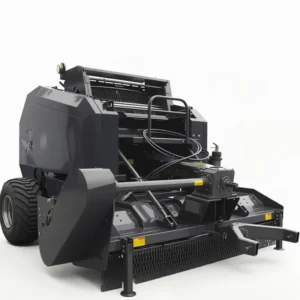
EP-9YG-1.0C Round Baler — Wider Pickup, Meadow-Ready
Stepping up from the base 9YG-1.0, the 9YG-1.0C extends the pickup width to 2.2 m and supports a variable bale diameter range of 800 mm to 1000 mm. That flexibility matters on pasture operations where the same machine may be asked to produce small-diameter bales for individual feeder use and full-size silage bales for pit or wrapped storage. Supporting both net-wrap and film-wrap binding methods, the 9YG-1.0C works efficiently across hay and silage production windows within the same season.
The working width of 2.3 m means the machine can follow a tractor on a standard 1.5 m wheelbase pass without leaving significant crop behind. Compatible with tractors requiring at least 40 hp PTO, this model fits the majority of Korean compact tractors in active field use on consolidated meadow holdings between 15 and 40 hectares.
Feeding System Design: Semi-Forced vs Conventional Pickup
In traditional round baler machines, the pickup tines pass crop material through a fixed cam track that times tine retraction as each carrier passes the feed-in point. This mechanism works well in dry, low-density straw but introduces challenges in moist, stemmy, or tangled grass. The cam track becomes a blockage point when material bridges across multiple tine carriers simultaneously.
The axial-flow semi-forced feeding system used in the 9YG-1.0 series eliminates the cam guard entirely. Instead, material is accelerated directly into the chamber by the angular momentum of the pickup reel combined with active rotor assistance. The result is a more continuous, positive crop flow — particularly valuable in Korean highland meadows where grass swards often include broadleaf species with higher stem-to-leaf ratios than monoculture ryegrass plots.
Operators transitioning from older cam-track small hay baler designs typically report a reduction in manual blockage clearances per session — sometimes from several per field to none per field — once they adapt their forward speed to the crop conditions. This translates directly into reduced field hours per 100 bales, which is the metric that most accurately reflects operating cost on compact grassland holdings.
Binding and Wrapping Systems for Grass Baling
Binding choice affects not just immediate operational convenience but also bale fermentation quality, transport handling, and long-term storage behaviour. For pasture grass baled as silage, the progression is: net wrap to secure the bale immediately after discharge, followed by stretch film wrapping for anaerobic preservation. For dry hay, twine or net alone is sufficient.
Applied automatically as the bale completes; two to three revolutions are typical. Net wrap significantly reduces leaf loss during discharge and handling compared to twine — particularly important with high-value timothy and alfalfa mixes.
Lower material cost per bale; suitable for dry hay where leaf shatter is less of a concern. Twine-wrapped bales require more manual intervention during application on older models.
Applied by a separate bale wrapper after discharge. Requires 4–6 layers of stretch film around the full bale surface. Establishes the anaerobic seal needed for lactic acid fermentation. Many small farms on under 50 ha use a baler-wrapper combination unit for single-pass operation.
Legal and Regulatory Framework: Korea and International Standards
Republic of Korea
Agricultural machinery imported into or manufactured for use in Korea is subject to oversight by the Ministry of Agriculture, Food and Rural Affairs (MAFRA). Round baler equipment must conform to the Agricultural Machinery Certification system under the Act on Development of Agricultural Mechanization, which mandates safety inspections covering PTO guard compliance, transport lighting, and towing hitch load ratings. Machinery meeting certification criteria may be eligible for government subsidy programmes that reimburse up to 50% of the purchase price for qualifying farmers — a meaningful factor for small farm owners comparing a mini round baler for sale across multiple suppliers.
Additionally, under the Korean Clean Air Conservation Act (대기환경보전법), open-field burning of crop residues — including grass cuttings — is restricted across most agricultural zones. This regulation has directly increased demand for baling equipment as an alternative residue management method, since baled material can be recycled as livestock feed, biomass fuel, or mulch rather than burned.
EU and Europe
In EU member states, agricultural trailed machinery including round balers must comply with Machinery Directive 2006/42/EC (transitioning to EU Machinery Regulation 2023/1230). CE marking is required for all implements sold commercially in the EU, verifying compliance with essential health and safety requirements including guarding of all rotating shafts, PTO input protection, and clearly marked emergency stop functions. ISO 11684 governs the design of safety signs on agricultural machinery sold across EU markets.
Japan
The Agricultural Mechanization Promotion Law provides a certification pathway for imported forage machinery. The Japan Agricultural Standards (JAS) system sets performance benchmarks for bale density and net wrap application quality — parameters relevant to any small round baler exported to the Japanese forage market. Given the similarity in farm scale and tractor power range between Japanese and Korean small farm operations, compliance data prepared for one market often translates well for the other.
United States
In the US, ASABE (American Society of Agricultural and Biological Engineers) standards govern PTO shaft dimensions (ASABE S203.15), slow-moving vehicle emblems (ASABE S276.6), and rollover protective structures on associated tractors. While the round baler itself does not require federal certification before sale, state-level road regulations govern transport of implements on public roads — relevant when towing a small hay baler between multiple parcels within a grassland operation.
Australia
The Australian Work Health and Safety Act 2011 and associated state WHS regulations classify agricultural machinery as plant subject to risk assessment and safe use documentation. Round baler gearbox guarding and PTO shaft shielding must meet AS 4024.1 (Safety of Machinery) standards. Residue management in Australian grasslands is also increasingly regulated under state biosecurity and fire risk frameworks, which has elevated demand for baling as a fire fuel management tool.
When importing a round baler machine for use in Korea, confirm that the supplier provides documentation for MAFRA Agricultural Machinery Certification requirements, PTO guard compliance (ISO 500-1), and CE marking where applicable. Certified equipment opens access to government subsidy channels that can significantly reduce effective acquisition cost.
Matching a Small Round Baler to Your Compact Tractor
Tractor matching is the single most avoidable source of round baler problems on small farms. Underpowered tractors overheat, slip the clutch, and in worst cases damage the PTO shaft during heavy bale formation. Overpowered tractors waste fuel and introduce ground pressure issues on soft meadow soils. Getting the match right requires checking four parameters: PTO horsepower at rated speed, hitch category, hydraulic output flow (for remote tailgate cylinders), and tyre footprint relative to your meadow soil bearing capacity.
| Farm Size | Recommended Tractor PTO | Compatible Baler Model | Korean Tractor Examples |
|---|---|---|---|
| 5–20 ha | 35–50 hp PTO | 9YG-1.0 | TYM T454, LS Mtron XP40 |
| 20–40 ha | 40–65 hp PTO | 9YG-1.0C | TYM T553, LS Mtron XP60, Dongyang DK604 |
| 30–50 ha | 50–80 hp PTO | 9YG-1.25 / 9YG-1.25A | TYM T754, LS Mtron MT7, John Deere 5075E |
Crop Suitability: Which Grasses Bale Best with a Mini Round Baler?
Not all pasture and meadow grasses behave the same way at the pickup and in the compression chamber. Understanding how different sward types interact with your round baler machine helps you set pickup height, travel speed, and chamber back-pressure correctly for each cutting and grass type — and avoid unnecessary wear on round baler parts that come from running the wrong settings for the crop at hand.
High yield, moderate stem stiffness. Wilts quickly when cut in good weather; well-suited to both hay and silage baling. Standard pickup settings work reliably. Common in Korean lowland meadows.
Excellent hay quality, stiff stem. Dries relatively quickly. Produces clean, leafy bales. Popular in Gangwon highland grasslands as a premium livestock feed species.
Dense bunched growth; forms compact windrows. Handles well at higher moisture than ryegrass. A semi-forced feeding mechanism avoids bridging issues in heavy orchardgrass swaths.
Found in diverse Korean meadow systems. Higher moisture at cutting; tangled stems benefit most from axial-flow pickup designs. Film wrapping is recommended to preserve quality over winter storage.
Seasonal Maintenance of Round Baler Parts on Small Grassland Holdings
A compact round baler on a sub-50 ha holding typically works 60–150 hours per season — short enough that end-of-season maintenance habits determine the machine condition three or four years down the line more than any single mechanical event during operation. The most common causes of premature failure in second-hand mini round baler units are bearing seizure from inadequate greasing, chain stretch from incorrect tensioning, and corrosion inside the chamber from storing the machine outdoors with a damp bale still inside at season end.
Maintenance priorities by component group:
- Bearings: Grease all points every 8 operating hours during the season, or after every 50–80 bales in moist grass conditions. Use a lithium-complex grease rated to NLGI Grade 2 minimum.
- Drive chains: Check tension at the start and midpoint of each baling day. Most manufacturers specify a sag of 10–15 mm at the midspan. Overlubricate chains in the first season to bed in the pins.
- Pickup tines: Inspect for bent or missing tines after each field. A single missing tine leads to an uneven crop intake that accelerates wear on the adjacent tine carriers.
- Round baler gearbox oil: Drain and refill after the first 50 hours, then annually. Use the viscosity grade specified — usually GL-4 or GL-5 at 80W-90.
- Net wrap mechanism: Clean out crop debris from the net guide rollers after every session. Crop accumulation in the net guide path is the most common cause of incomplete net wrapping mid-bale.
- Chamber rollers: At end of season, rotate each roller by hand to identify bearing roughness. Replace any roller showing noticeable resistance before storage, as the condition will not improve over winter.
System Compatibility: PTO Shafts and Agricultural Chain
A round baler machine is only as reliable as the drivetrain components connecting it to your tractor. For grassland operations, the PTO shaft and the internal drive chains are the two components most likely to require attention across a working season, particularly when operating in variable-moisture grass where load spikes during bale core formation are common.
Agricultural PTO Shaft
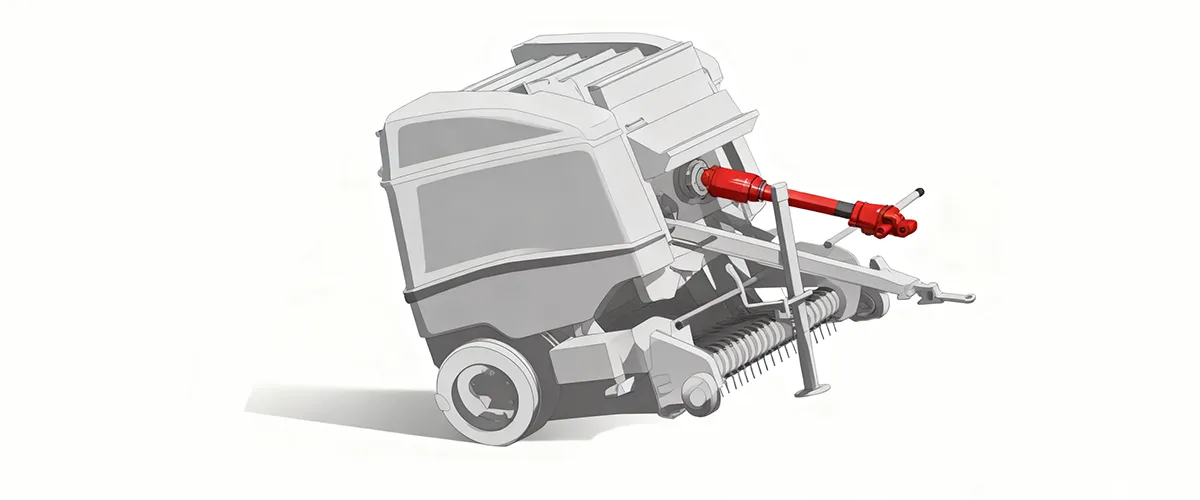
Yang PTO shaft transmits power from your tractor output to the baler gearbox input. For round baler use in variable grassland conditions, a shaft with an integrated shear bolt or friction-clutch overrun protection is strongly recommended — it prevents mechanical shock from propagating back to the tractor gearbox during sudden blockages. The EP-PTO series uses a 1-3/8 inch Z6 spline configuration with adjustable length from 600 to 1200 mm and torque transmission efficiency above 95%, compatible with SAE and EURO flange standards.
Agricultural Drive Chain
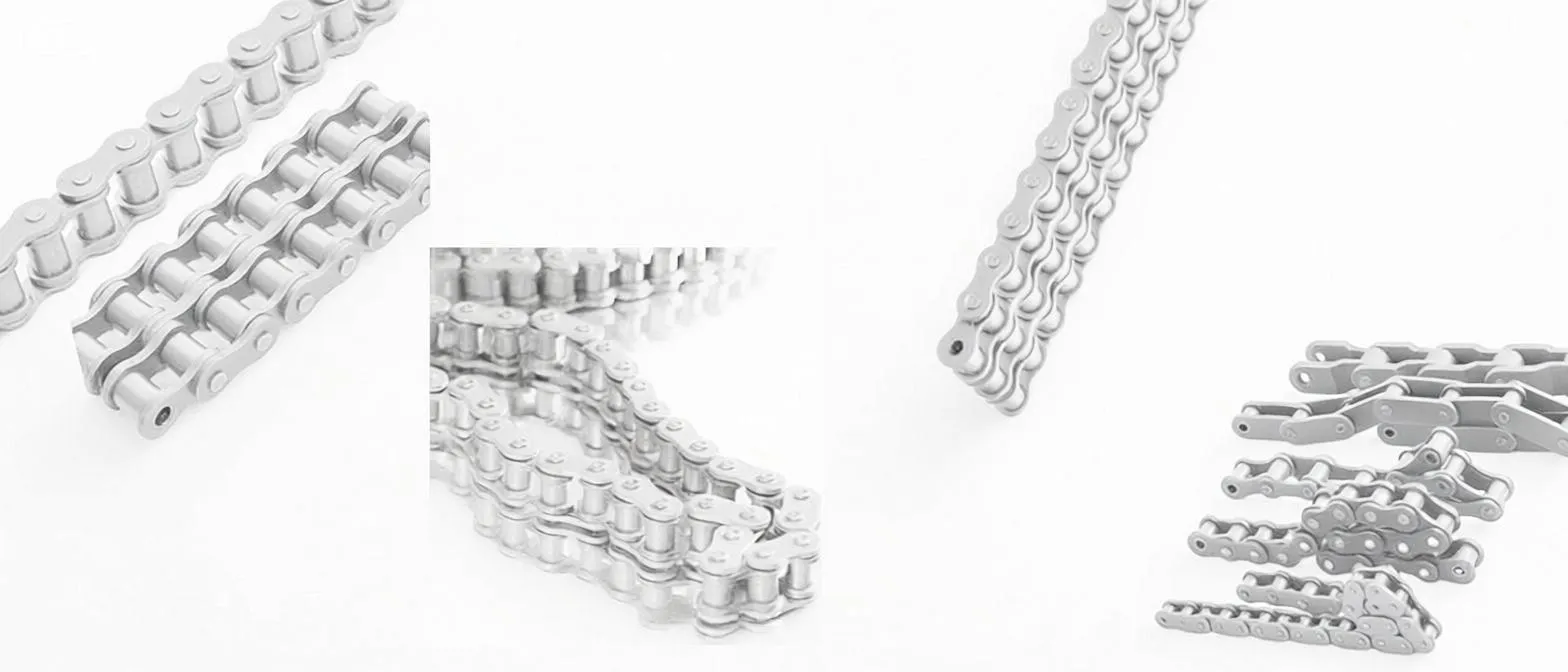
The internal drive chains on a round baler machine handle both continuous rotation of the chamber rollers and intermittent loads from the pickup reel. ANSI #50 and #60 alloy-steel chains rated to minimum 60 kN tensile are specified for the models in this range. Chain pitch (12.7–19.05 mm), sprocket tooth count, and chain length all affect drive ratio and the speed at which material moves through the chamber. Sourcing replacement chains that match OEM specifications — not just pitch but roller diameter and inner-plate width — ensures that sprocket wear is shared evenly across chain and sprocket life.
About Our Grassland Baling Equipment
Established in 2013, our manufacturing facility has grown into a comprehensive agricultural machinery enterprise with more than a decade of hands-on experience across hay, silage, and crop residue baling. We produce a full series of round balers — from compact models for small hay baler applications to heavy-duty machines for large-scale silage contractors — alongside single and twin-blade mowers, disc rotary cutters, and raking equipment that supports the complete grassland operation cycle.
Our facility operates over 60 sets of large-scale production equipment including CNC laser-cutting lines, automatic welding stations, and electrostatic coating systems, with an annual design capacity of 2,000 units. All equipment leaves the facility under ISO 9001 Quality Management System certification, and we hold independent import and export rights to supply customers directly in Korea, Australia, Europe, and North America.
Our goal is straightforward: match the right round baler to each farm actual scale, tractor, and crop type — and support that match with responsive parts availability and technical guidance for the life of the machine.
Frequently Asked Questions
Which mini round baler model works best for small grassland farms under 20 hectares in Korea?
What is the minimum tractor horsepower required to run a small round baler for hay production on Korean pasture farms?
How do I choose between a mini hay baler and a full-size round baler for my meadow grass operation under 50 ha?
Where can I find a reliable round baler supplier that ships directly to small farms in South Korea?
What round baler parts are most commonly replaced on a small hay baler used for grassland operations each season?
How many bales per hour can a small round baler realistically produce on ryegrass meadow pasture?
Does a round baler machine for grassland qualify for Korean government agricultural machinery subsidy programmes?
What bale diameter is most practical for storage and feeding on a small Korean livestock farm with a compact barn?
Can a small round baler handle orchardgrass and mixed sward types found on Gangwon highland meadow farms?
What is the best way to get a quote for a mini round baler suitable for a 30-hectare grassland farm in Korea?
Editor: PXY