Reed and Wetland Grass Baling — Bioenergy Application Guide
Density Requirements and Supplier Checklist
A practical engineering and procurement guide for bioenergy operators, wetland managers, and equipment buyers selecting a round baler for reed and wetland grass biomass applications.
Reed biomass — harvested from natural reedbeds, managed wetlands, and riparian margins — is attracting serious attention from bioenergy plant operators in South Korea, driven by policy targets for non-food renewable biomass. A pembalut bulat configured for reed collection is the standard field-harvesting solution, but not every pembalut bulat is engineered for what reed biomass imposes. The hollow culm structure, silica-bearing dust at dry moisture levels, and mat-formation tendency in wet spring conditions all demand specific structural and material engineering that distinguishes a capable machine from one that will underperform or fail early in commercial service.
This guide covers the density requirements bioenergy plants specify for reed biomass, the engineering criteria a pembalut bulat must meet to achieve them consistently, and a structured supplier checklist for procurement teams evaluating machines in Korean and international markets.
Why Reed Biomass Is a Viable Bioenergy Feedstock
Common reed (Phragmites australis) and associated wetland grasses produce dry matter yields of 8–20 tonnes per hectare per year, with calorific values of 17–19 MJ/kg on a dry weight basis — competitive with lower-grade wood chips and agricultural straw in the feedstock hierarchy of solid biomass boilers and co-firing operations. For Korean bioenergy plants operating under the Renewable Portfolio Standard (RPS), domestic wetland reed offers a short supply chain without the import logistics and certification costs of imported wood pellets. Regular managed harvest also supports wetland ecology by preventing sward decline and in some types reducing net methane emissions from accumulated organic matter.
The limiting factor in most reed supply chains is not crop availability but harvest logistics — specifically the cost per tonne of getting cut reed to the bioenergy plant gate. A well-specified pembalut bulat with adequate density capability is the single piece of equipment that determines whether reed biomass harvesting is commercially viable at a given site.
Bale Density Requirements for Bioenergy Plant Acceptance
Bioenergy plant operators specify minimum bale density for two reasons: transport economics and combustion logistics. At 100 kg/m³, a 1 200 mm diameter reed bale holds approximately 113 kg; at 150 kg/m³, the same geometry holds 170 kg — a 50% payload improvement per vehicle movement. Over a season delivering 5 000 tonnes, that density gap means 44 000 vs 30 000 individual bales and the associated handling cycles. Low-density bales are also mechanically fragile, lose material at the plant gate, and may not meet the minimum bulk density threshold for automatic debaler in-feed systems that most biomass boilers use ahead of primary combustion.
| Application | Minimum Bale Density | Preferred Density | Notes |
|---|---|---|---|
| Direct combustion boiler | 110 kg/m³ | 140–160 kg/m³ | Higher density reduces shredding energy and improves in-feed consistency |
| Co-firing with coal or biomass pellets | 120 kg/m³ | 150–180 kg/m³ | Plant in-feed systems typically sized for pellet-equivalent bulk density |
| Biomass gasification unit | 100 kg/m³ | 130–150 kg/m³ | Gasifier feed size often more flexible; density affects storage footprint |
| Outdoor field storage (pre-collection) | 90 kg/m³ | 120–140 kg/m³ | Higher density improves weathering resistance and reduces bale contact losses in outdoor rows |
These density levels are achievable on dry reed at 12–18% moisture with a correctly specified pembalut bulat at adequate PTO power. Spring-cut reed above 25% moisture reduces achievable density — a larger forming chamber with higher compression force maintains more consistent output across moisture variation in early-season harvest.
Manufacturing Structure: What a Reed-Capable Round Baler Must Have
Not every pembalut bulat sold for hay and straw work is suitable for reed biomass. Reed imposes specific demands on four sub-systems — the pickup, the intake rotor, the forming chamber, and the wrapping mechanism — that differentiate a machine capable of sustained reed baling from one that will suffer repeated blockages and premature wear in this application.
Pickup Rotor
The pickup rotor on a reed-duty pembalut bulat must handle the long, tangled culm structure of reed differently from cereal straw or pasture grass. Reed culms average 2–4 m in length at natural stand and are cut to 0.5–1.5 m sections by the header before pickup. At this length they tend to bridge across conventional cam-track tine systems, wrapping around the rotor core rather than passing cleanly into the intake channel. A camless or guard-ring-free tine design — where crop passes axially rather than wrapping radially — significantly reduces this tendency. Pickup width of 1.8 m or above is preferred for reed to allow a single pass over the full spread of a windrow formed by a wide-cut header.
Intake and Pre-Compression
Reed enters the forming chamber with less natural cohesion than grass, because the hollow culm does not interlock with adjacent material in the way that fibrous grass stems do. A pre-compression rotor or positive intake stage — where a secondary rotor actively pushes material into the chamber against the first layer of forming rollers — dramatically improves bale core density compared to a gravity-feed or simple auger intake. This pre-compression stage is the primary mechanical difference between a reed-capable pembalut bulat and a standard pasture model in terms of achievable bale density at consistent throughput speed.
Forming Chamber
Fixed-chamber pembalut bulat designs, where all forming rollers maintain their position throughout the bale cycle, produce more consistent bale diameters than variable-chamber designs in reed applications. This matters for bioenergy plant in-feed systems, which are calibrated to a specific bale diameter for debaler clearance and conveyor spacing. A pembalut bulat producing 1 000–1 250 mm diameter bales at consistent cylinder geometry reduces plant-side handling adjustments and downstream equipment wear. Chamber roller spacing must be tight enough to prevent reed culm sections from bridging and stalling the rotation of the forming bale in the early stage of the bale cycle, when the bale core is small and the material is most prone to rearrangement.
Wrapping System
Net wrap is strongly preferred over twine for reed biomass bales. Reed culm surfaces are smooth-sided after drying, and a twine-wrapped bale of reed can shed significant outer material during transport — particularly in vehicle loading and stacking operations. Net wrap applied at 2–3 pre-programmed passes before ejection maintains the bale surface integrity from field to plant gate. The net wrap knife and tension system must be specified for the abrasive silica content of dried reed, which dulls standard knife-edge blades significantly faster than in grass or straw applications.
The EP-9YG-2.24D pembalut bulat series addresses all four structural requirements in standard configuration: wider pickup, high-capacity intake, fixed-chamber roller geometry, and dual wrap capability — making it the model from the EP range most consistently suited to reed biomass baling at commercial bioenergy supply volumes.
Material System: Engineering for Reed’s Abrasive and Corrosive Environment
Reed biomass harvesting exposes a pembalut bulat to a more demanding environment than standard agricultural applications. Dry reed culms carry silica in the outer cuticle that becomes an abrasive media when processed, attacking bearing seals, metal surfaces, and polymer guide components faster than grass or straw. Wetland harvest conditions add a corrosion dimension: a pembalut bulat working near coastal wetlands or tidal inlets encounters salt aerosol and elevated humidity that demand a more robust corrosion protection system than standard agricultural finish.
| Component | Reed-Specific Requirement | Standard Material |
|---|---|---|
| Main frame | Shot-blasted before painting; two-pack epoxy primer mandatory for coastal wetland work | Q345B high-strength structural steel |
| Pickup tines | Must survive silica abrasion at high tine speed; tempered spring steel with correct tine tip geometry | 65Mn or 60Si2Mn spring steel, heat-treated |
| Chamber rollers | Induction-hardened surface to resist silica wear; smooth-profile rollers reduce culm bridging risk | Alloy steel, induction-hardened outer surface |
| Bearing seals | Double-lip or labyrinth seals; standard single-lip seals fail rapidly in reed silica dust at pickup speed | NBR or HNBR rubber compound, double-seal bearing housings |
| Net wrap knife | Replaceable blade with hardened cutting edge; reed silica dulls standard knives 3–5 times faster than in grass | Through-hardened tool steel, replaceable cassette design |
| Surface coating | Two-pack epoxy primer plus polyurethane topcoat; standard single-coat enamel insufficient for coastal wetland salt exposure | Epoxy primer + polyurethane topcoat system |
| Gearbox seals and breather | Protected breather vent to exclude silica-laden dust from gearbox oil; shaft seal rated for dusty environment | Ductile iron QT500 housing; labyrinth or filtered breather |
The bearing seal specification is the most underestimated maintenance issue in reed baling operations. A pickup rotor bearing at 450–600 rpm in a silica-laden airstream loses single-lip seal integrity within 100–150 hours, leading to contamination, race wear, and eventual seizure mid-season. Verifying double-seal or labyrinth-seal specification at the pickup and forming drive bearing housings is a non-negotiable item on any reed biomass pembalut bulat procurement checklist.
Recommended Round Baler for Reed Biomass Baling
Recommended for bioenergy supply contracts requiring consistent bale density on reed and wetland grass.

Round Baler Gearbox: Service and Specification for Reed Applications
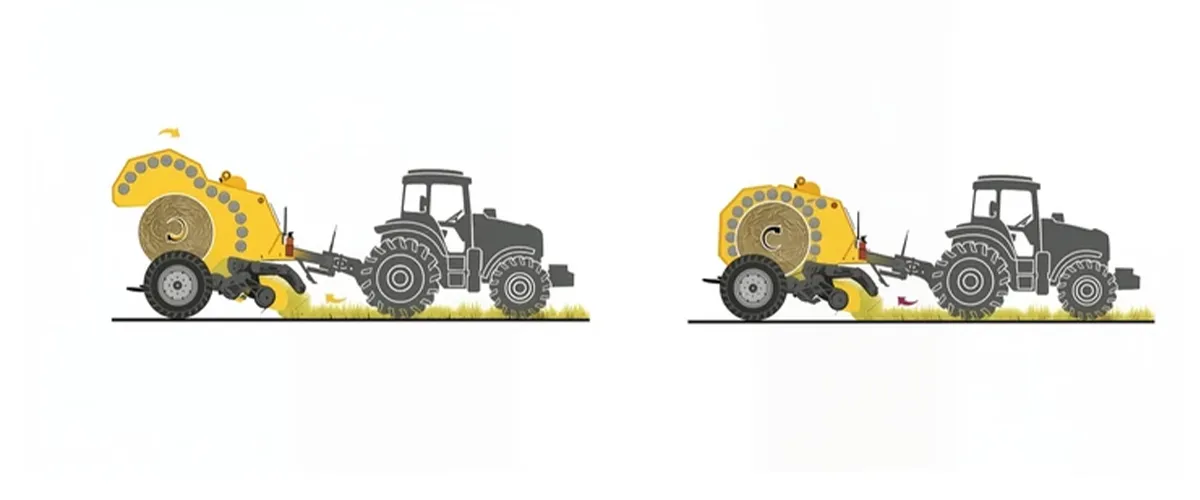
Yang round baler gearbox in a reed biomass application operates under a different torque profile than in pasture grass or straw service. Dry reed compresses with lower initial resistance followed by a sharp increase in forming force at bale completion — an uneven demand curve that a round baler gearbox must handle without running near its service limit on the peaks. The EP-9YG-2.24D Classic gearbox housing is manufactured in ductile iron (QT500), providing vibration damping and dimensional stability across the temperature range of Korean reed harvest — from near-zero early-morning starts in late-winter wetlands to 30–35 degrees Celsius in summer harvest programmes.
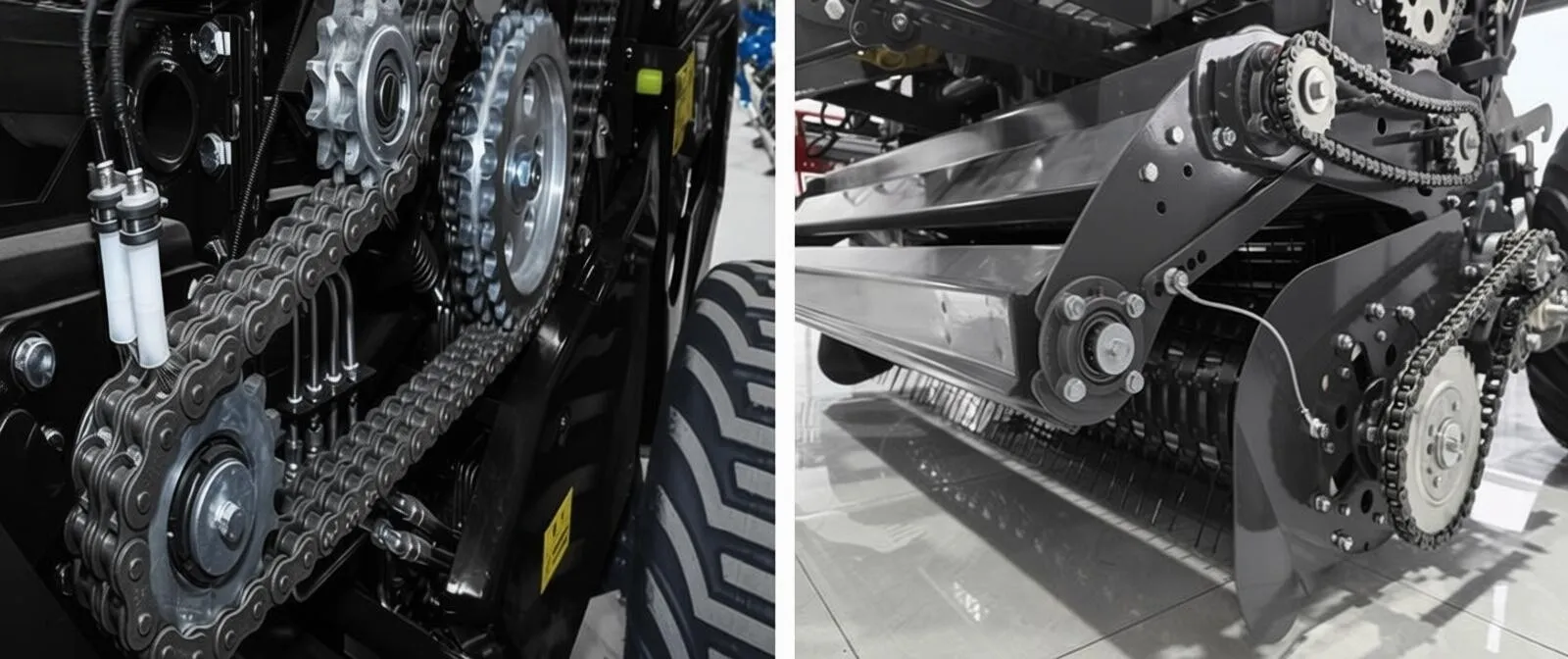
The primary chain drive must use agricultural-grade roller chain with sealed inner links. Standard chain accumulates silica dust between plates, accelerating pin and bushing wear. Sealed-link chain lasts twice as long in reed conditions — essential given mid-season pembalut bulat failure risk on remote wetland harvest sites.
Regulatory and Compliance Context for Reed Biomass Baling Equipment
Reed biomass baling equipment for commercial bioenergy supply sits at the intersection of agricultural machinery regulation, biomass sustainability certification, and wetland management permitting.
South Korea (KR)
A pembalut bulat used commercially in Korea for reed biomass supply falls under the Agricultural Mechanization Promotion Act and must comply with RDA safety standards for any government mechanisation support. The Renewable Portfolio Standard (RPS) under MOTIE requires that domestic biomass feedstocks including wetland reed meet sustainability criteria under the New and Renewable Energy Act. Korean Forest Service and local authorities regulate wetland access for commercial harvesting — a harvest licence or management agreement must be confirmed before deploying equipment. The pembalut bulat drivetrain must comply with noise limits near residential wetland buffer zones, typically 65–70 dB(A) at 10 m in Korean municipalities.
European Bloc (EU)
EU biomass sustainability requirements under the Renewable Energy Directive (RED III) impose greenhouse gas saving thresholds and land-use criteria for solid biomass. Reed from natural wetlands not involving peat drainage can typically satisfy these criteria with proper harvest documentation. The pembalut bulat as a trailed implement requires CE marking under the Machinery Directive 2006/42/EC (transitioning to Machinery Regulation (EU) 2023/1230 from January 2027). The Sustainable Biomass Program (SBP), required by many European co-firing plants, covers supply chain documentation — bale weight records, moisture certification, and transport manifests are all part of SBP audit requirements that the pembalut bulat operator must support through consistent production record-keeping.
Japan (JP)
Japan’s Feed-In Tariff and Feed-In Premium systems cover solid biomass combustion, and coastal wetland reed has been evaluated by the Ministry of the Environment as part of wetland restoration programmes on Hokkaido. Agricultural machinery including a pembalut bulat imported for biomass contracts is assessed against JIS B 9700 on machinery safety and JIS A 1515 on noise if used near residential areas. Wetland harvesting requires species habitat approval under the Act on Conservation of Endangered Species, adding an environmental permitting layer to any commercial reed baling programme.
Australia (AU)
In Australia, wetland reed harvesting may require referral under the EPBC Act 1999 for Ramsar or threatened species sites. The pembalut bulat must comply with state WHS Acts, and dust/sediment management requirements apply near waterways. Customs classification HS 8433.40.00 covers round baler imports. State-level renewable energy certificate eligibility criteria typically exclude areas subject to native vegetation clearing restrictions.
The EP pembalut bulat range is manufactured under ISO 9001 QMS certification, providing a quality baseline that supports import assessment across all markets above.
Supplier Checklist: Evaluating a Round Baler for Reed Biomass Supply
Use the following checklist when evaluating pembalut bulat suppliers for reed biomass supply contracts. Each item addresses a specific failure mode in commercial reed baling operations.
1. Bale density documentation
Can the supplier provide independent test data showing bale density on reed or similar hollow-stemmed biomass at specified PTO HP and crop moisture? Verify from field trial data, not catalogue claims alone.
2. Bearing seal specification
What is the bearing seal specification at pickup rotor and forming roller positions? Single-lip seals are insufficient for reed silica dust. Request the bearing housing specification showing seal type and dust retention rating.
3. Net wrap knife replacement
Is the net wrap cutter knife a replaceable cassette or a fixed integrated blade? For reed biomass, knife replacement frequency is three to five times higher than in grass applications. A fixed knife requiring workshop access to replace creates unacceptable mid-season downtime risk on remote wetland harvest sites.
4. Gearbox service factor
What is the gearbox service factor above mean operating torque? For reed biomass baling, a service factor of at least 1.75 above mean torque is recommended to accommodate the sharp peak loads at bale completion on dense dry reed. Request the gearbox engineering specification if this is not stated in the product literature.
5. Surface coating system
What primer system is applied to the frame? Single-coat enamel fails rapidly in the coastal wetland salt aerosol environment. Minimum: shot-blasted substrate plus two-pack epoxy primer plus polyurethane topcoat. Verify by requesting the paint specification sheet, not just the supplier’s claim.
6. Round baler parts stock
Which round baler parts are held for express dispatch? Pickup tines, net wrap knife blades, primary chain, and pickup bearing housings must be available within 48–72 hours of a field failure. Confirm stocking position explicitly — “available on order” is not adequate for a remote wetland harvest site.
A pembalut bulat supplier who answers all six items with documented evidence demonstrates the technical depth required for a bioenergy supply contract. Insist on written documentation — not verbal assurances — for any pembalut bulat procurement where a supply contract is at stake.
Compatible Accessories for Reed Biomass Round Baler Operations
A complete reed biomass pembalut bulat setup requires correctly specified PTO shaft and drive chain — both with reed-specific requirements.
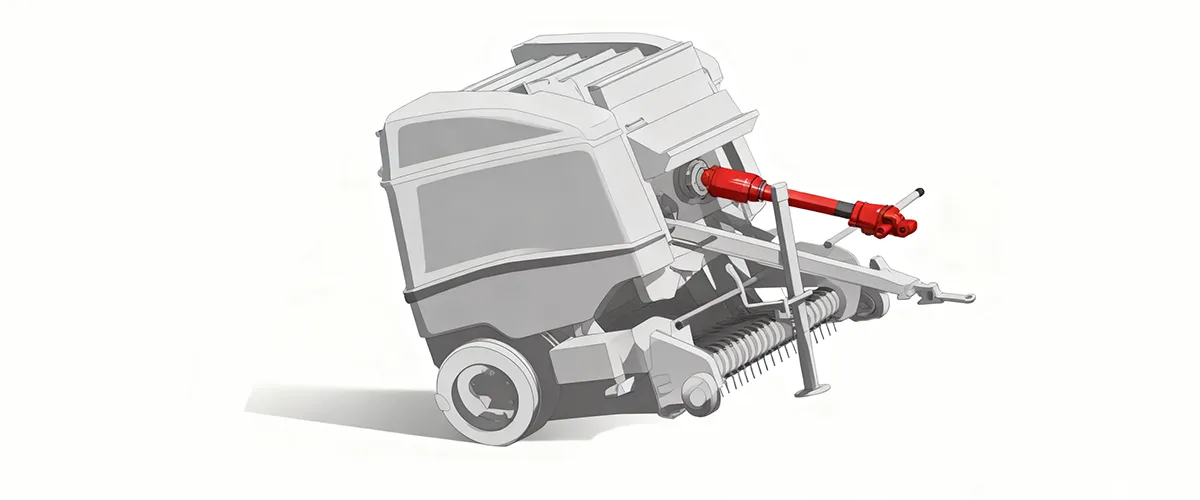
Agricultural PTO Shaft
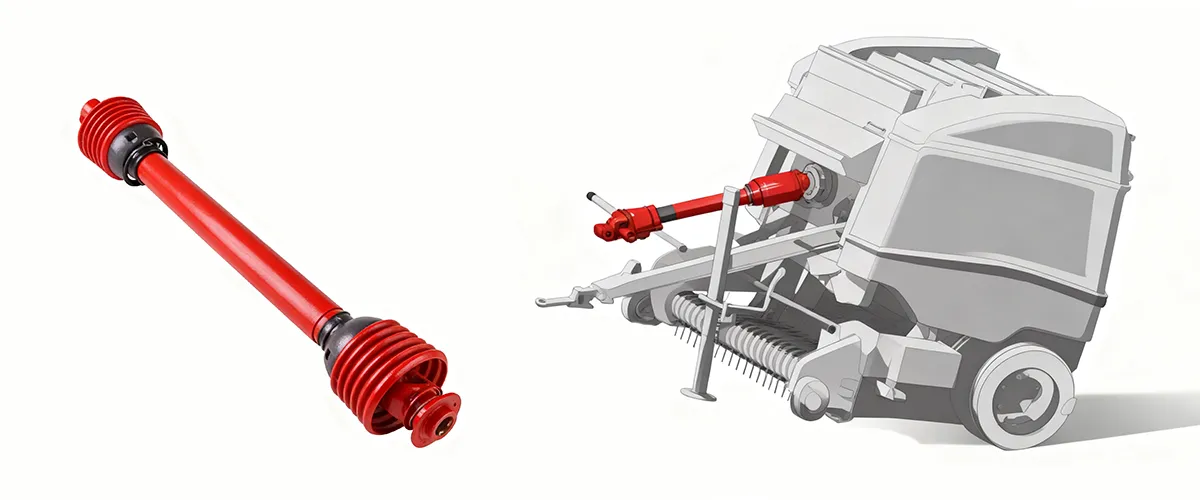
Yang PTO shaft connecting tractor to pembalut bulat in a reed biomass operation must be rated for peak torque at bale completion — a short-duration event two to three times the mean running torque. The shaft must include a functional overrun clutch, a full-length safety guard, and universal joints rated for the operating angle range across all tractor-baler steering positions and wetland terrain gradients. EP-compatible PTO shafts for pembalut bulat applications are engineered to each specific EP model’s torque profile with CE-compliant guarding meeting EN ISO 4254-7 requirements.
Agricultural Drive Chain
The secondary chain drive on a pembalut bulat used for reed biomass requires sealed-link heavy-duty agricultural roller chain — not an upgrade option. Reed silica dust entering an unsealed chain reduces pin and bushing life by 60–70% compared to dust-free conditions. Always replace the driven sprocket when replacing chain; new chain on a worn sprocket achieves less than 40% of theoretical service life. For remote wetland harvest sites, stocking one spare joining link set and one complete chain length for the highest-wear drive stage is the minimum on-site round baler parts provision.
10+ Years Manufacturing Agricultural Baling Equipment
Our agricultural machinery operation has been building harvesting and baling equipment since 2013, from light-duty compact round balers to the heavy-duty EP-9YG-2.24D series for commercial biomass supply. The product range covers light and heavy round balers, mowers, and rakes, all manufactured under ISO 9001 QMS certification. The facility operates 60+ sets of large-scale production equipment with annual capacity of 2 000 units. Our engineering team can advise on machine configuration and maintenance for reed and wetland biomass applications.
Frequently Asked Questions
Editor: PXY