Organic Agriculture Guide
A comprehensive guide to the role of round baler machines in sustainable residue management, certified compost feedstock preparation, and soil fertility programs — covering equipment selection, gearbox specifications, manufacturing design, and the regulatory frameworks shaping organic agriculture worldwide.
The relationship between round balers and organic farming runs deeper than most equipment guides acknowledge. On a certified organic operation, every management decision around crop residue — whether to bale it, compost it, apply it as mulch, or return it as green manure — carries implications for soil health, certification compliance, and the long-term fertility cycle of the land. A round baler machine is not simply a tool for tidying fields after harvest; in the hands of an organic farmer or a composting enterprise, it becomes a key part of the nutrient cycling system that makes synthetic inputs unnecessary.
This guide explains how round balers contribute to organic farming operations at each stage of the process — from field-level residue collection and compost feedstock preparation, through to the structural and material requirements that determine whether a machine is suited to the gentle, precision-oriented work that organic systems demand. It also addresses the regulatory landscape in South Korea, the European Union, Japan, the United States, and other markets where organic certification rules directly influence how baled material can be used and labelled. Whether you are sourcing a small round baler for a mixed organic holding or evaluating a full-specification machine for a compost production enterprise, the considerations in this guide will help you make an informed decision.
1. What Organic Farming Operations Actually Need from a Round Baler
Organic farming places different demands on baling equipment compared to conventional agriculture, and those differences are not trivial. On a conventional farm, the primary metrics for a round baler are throughput, bale density, and uptime. On an organic operation, those metrics still matter — but they sit alongside a set of softer requirements that have real consequences for certification compliance and soil biology. The machine must handle a wider variety of residue types, including cover crops, green manures, and mixed-species swards that conventional balers are rarely asked to manage. It must do so without contaminating the residue with synthetic lubricants, heavy-metal particles from worn components, or other prohibited substances that could compromise the organic status of compost feedstock or mulch material.
Consistent bale density is particularly important in composting applications. When baled straw, corn stover, or hay is used as the carbon-rich structural layer in a compost windrow, density uniformity determines how evenly air and moisture penetrate the bale mass during decomposition. A bale that is dense on the outside but hollow at the core — the characteristic failure mode of poorly calibrated round balers — creates anaerobic pockets that produce volatile fatty acids and clostridial fermentation products instead of the aerobic humification that compost managers are trying to achieve. The sensor-based density control standard on the 9YG series directly addresses this: every bale is compressed to the same specification, within the rated density range of 100 to 200 kg/m³, regardless of windrow density variation or operator fatigue during a long harvest day.
A further requirement specific to organic systems is the capacity to handle cover crops — legumes, brassicas, and mixed species mixes that are cut before they seed and either baled for use as green-manure mulch or incorporated into compost piles. These crops are typically shorter in stem length, more fragile, and higher in moisture than the dry straw and hay that round balers are most commonly evaluated on. The axial-flow semi-forced feeding mechanism engineered into the 9YG product range was developed precisely for this kind of material variability: it actively moves crop through the feed channel regardless of moisture level or strand fragility, without the blockages and throughput drops that conventional passive-feed designs suffer in soft, green, or fine-stemmed material.
2. Round Balers in Compost Feedstock Preparation: Why Bale Form Matters
Commercial compost producers and organic farms running on-site composting programs share a practical challenge: getting carbon-rich bulking material — straw, hay, cereal residue, corn stalks — from field to compost pad in a form that is easy to handle, store, and proportion into compost mixes. Loose residue in heaps is difficult to meter, prone to moisture absorption, and logistically inconvenient to move between field and composting area. Baling solves all of these problems simultaneously: it converts field residue into a dense, stackable, weather-resistant unit with a defined volume and approximate weight that can be incorporated into compost recipes with reasonable precision.
Round bales produced by the 9YG-2.24D series measure ø1,300 × 1,400 mm and weigh between approximately 250 and 600 kg depending on crop type and baling moisture, at bale densities of 100 to 200 kg/m³. For a compost enterprise managing a carbon-to-nitrogen ratio recipe, knowing the approximate weight and volume of each bale unit simplifies feedstock batching considerably compared to estimating from loose windrows. The smaller-format 9YG-1.0 produces bales of ø1,100 × 1,000 mm at densities of 115 to 200 kg/m³ — a lighter, more handleable unit suited to smaller composting operations or farms where bales need to be moved without heavy equipment.
For large-scale compost producers, the productivity figure of 40 to 100 bales per hour on the 9YG-2.24D series translates into a significant operational advantage during the narrow post-harvest collection windows that organic farmers depend on. Losing several days of collection capacity to a mechanical breakdown, or to blockages caused by an ill-suited feeding system, can mean insufficient feedstock inventory to maintain compost windrow activity through winter — with direct consequences for the following season’s soil amendment program. The semi-forced axial-flow feeding mechanism reduces this risk materially by handling the full range of post-harvest material types without operator intervention, from dry cereal straw at 12% moisture to freshly cut cover crops at 65% moisture or above.
| Crop / Residue Type | Role in Compost | Approx. C:N Ratio | Baler Suitability | Recommended Model |
|---|---|---|---|---|
| Rice straw | Carbon bulking agent | ~60:1 – 70:1 | High | 9YG-2.24D, 9YG-1.25 |
| Wheat straw | Carbon bulking agent | ~80:1 – 100:1 | High | 9YG-2.24D, 9YG-1.25A |
| Corn stover | Mixed C / nutrients | ~50:1 – 60:1 | High (hammer-claw) | 9YG-1.25 Double, 9YG-1.0C |
| Legume cover crops | Nitrogen-rich activator | ~15:1 – 25:1 | Medium (high moisture) | 9YG-1.0, 9YG-1.25 |
| Alfalfa hay (spent) | Nitrogen-rich activator | ~20:1 – 30:1 | High | 9YG-1.25A, 9YG-2.24D |
| Pasture grass (mixed) | Balanced C/N input | ~25:1 – 40:1 | High | 9YG-1.0, 9YG-1.25 |
3. Manufacturing Structure: What Organic Farmers Should Look for in a Round Baler
The structural design of a round baler determines not just its mechanical performance but also its appropriateness for organic applications. Organic producers are rightly attentive to material contamination risks — any substance that contacts baled material during the baling process and is not approved for use in certified organic production could technically constitute a prohibited input if it migrates into compost feedstock or directly applied mulch. This makes the quality and specification of lubricants used in the drive system, the sealing of hydraulic circuits, and the surface treatments on compression rollers genuinely relevant procurement questions for organic buyers, not just performance metrics.
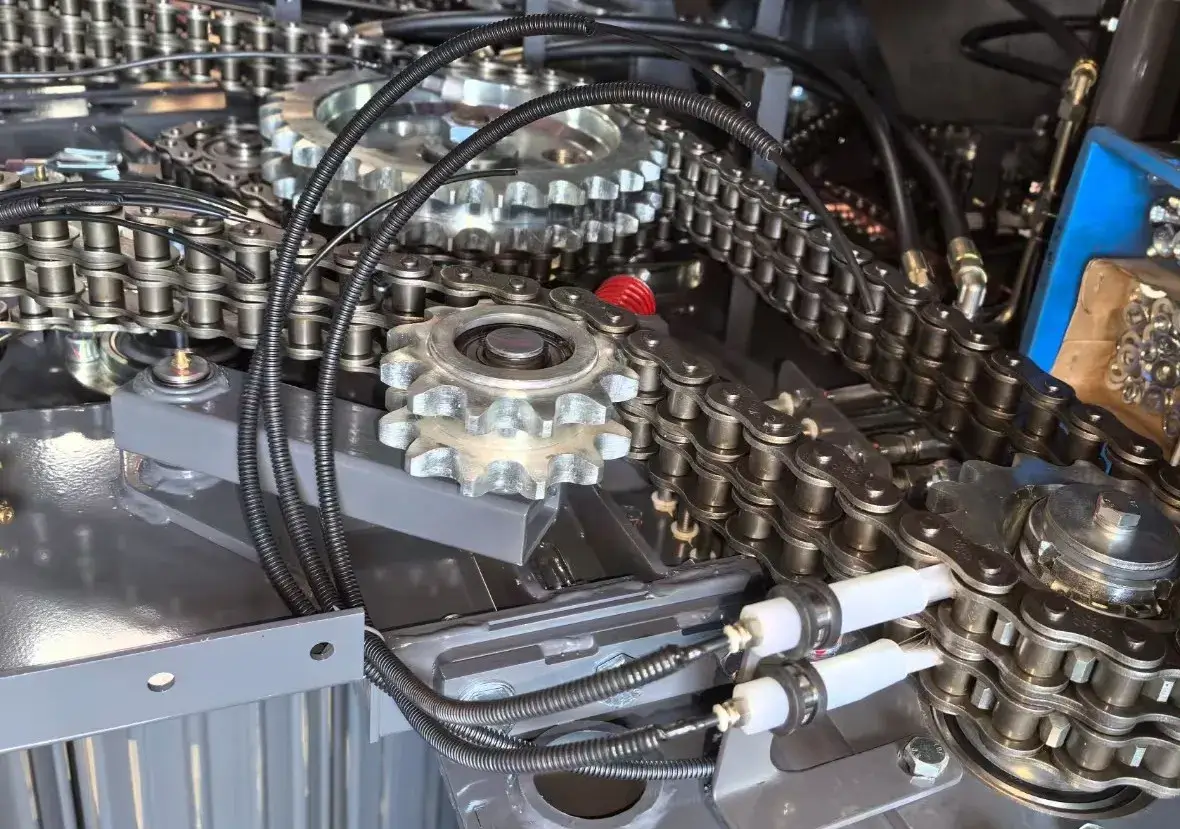
In the 9YG series, the roller-type compression chamber uses 18 ø222 mm steel rollers in the 9YG-2.24D and 9YG-1.25 models, and 16 rollers in the 9YG-1.0 series. The roller design produces the compression force through radial contact pressure rather than through belts or chains that span the crop surface — meaning there is no belt-to-crop contact that could transfer lubricant residue into the bale mass. The drive chains that power the roller array are located outside the crop flow path, in an enclosed section of the rear chamber, and the H-type sleeve hydraulic fittings rated for high working pressure reduce the likelihood of micro-leaks that could deposit hydraulic fluid into crop material during the baling cycle.
The camless, no-guard-ring pickup design eliminates the mechanical components most commonly associated with grease contamination events in other baler designs. Conventional cam-track systems require regular regreasing of the cam follower path, and grease application in close proximity to the pickup tines creates a real — if low-probability — risk of grease transfer to collected material on soft, fine-stemmed crops like legume cover crops. The absence of this component in the 9YG pickup design removes the contamination pathway altogether, which is a structurally cleaner outcome for organic applications than attempting to mitigate the risk with food-grade greases or more frequent component inspection.
| Model | Chamber Type | Rollers | Chamber Width | Baaldichtheid | Power (kW) | Productiviteit |
|---|---|---|---|---|---|---|
| 9YG-2.24D (S9000) | Roltype | 18 × ø222 mm | 1,400 mm | 100–200 kg/m³ | 55–100 | 40–100 bales/h |
| 9YG-2.24D | Roltype | 18 × ø222 mm | 1,400 mm | 100–200 kg/m³ | 55–100 | 40–100 bales/h |
| 9YG-1.25 (Double) | Roltype | 18 × ø222 mm | 1,250 mm | 115–200 kg/m³ | ≥75 | 40–80 bales/h |
| 9YG-1.25A | Roltype | 18 × ø222 mm | 1,250 mm | 100–200 kg/m³ | ≥75 | 40–100 bales/h |
| 9YG-1.0 | Roltype | 16 × ø222 mm | 1,000 mm | 115–200 kg/m³ | 48–80 | 40–100 bales/h |
| 9YG-1.0C | Roltype | 16 × ø222 mm | 1,250 mm | 115–200 kg/m³ | ≥69.8 | 40–80 bales/h |
4. Material System: Drive Components, Seals, and the Organic Contamination Question
The material system of a round baler — the metals, alloys, polymers, and lubricants from which it is constructed — becomes a due-diligence item for organic buyers in a way that does not apply to conventional purchasers. At first look this seems like over-caution: a round baler collects crop material externally without the crop passing through any enclosure where drive components are housed. But the pickup zone, where tines contact plant material at high speed, and the feed channel, where auger and paddle rollers push material into the compression chamber, do involve proximity between drive surfaces and collected crop. Any situation where seal failure, bearing wear debris, or accumulated grease migrates into collected material represents a potential contamination event.
The dual heavy-duty 20A drive chain used on the rear chamber of the 9YG-2.24D S9000 is enclosed within the chamber housing and located outside the direct crop flow path. The chain’s higher wear resistance compared to 16A chain means it generates less metallic particle debris over a full operating season — a detail that matters when the baled material is destined for compost piles that will eventually be applied to certified organic land. The spring-tooth tines on the standard pickup are manufactured from spring steel with a hardened temper that resists deformation without metal fatigue fracture, meaning fewer tine fragments are lost into collected material during long harvesting days. For buyers supplying compost feedstock to certified organic operations, maintaining records of round baler parts replacement, lubricant type, and scheduled inspection is becoming standard practice as traceability requirements in organic certification become more detailed.
The hydraulic system, including the buffer cylinders on the chamber door and the main working circuit, uses H-type sleeve fittings rather than push-fit or ferrule-compression connectors. This fitting design maintains seal integrity at higher working pressures and over more operating cycles, reducing the frequency of micro-leaks that could deposit hydraulic fluid on the bale surface during chamber opening and closing. For operations where food-grade biodegradable hydraulic fluid is used — an increasingly common practice on certified organic farms in Europe and Korea — the fitting quality directly determines how well the fluid is retained in the circuit rather than transferred to baled material during ejection.
5. Round Baler Series: Matching Machine to Organic Operation Scale
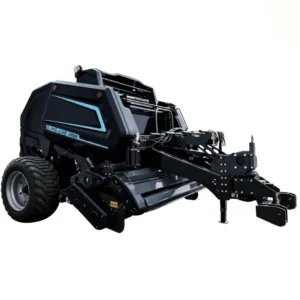
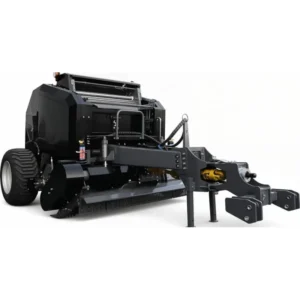
6. Round Baler Gearbox Design and Its Role in Organic Operations
The round baler gearbox is the machine’s central power distribution node, and its specification is relevant to organic operations for two distinct reasons: performance and compliance. On the performance side, the gearbox must transfer power from the tractor’s PTO shaft to the pickup, feed system, and compression chamber simultaneously, at the correct ratio and under the variable load conditions created by changes in windrow density and operating speed. The 9YG-2.24D and 9YG-1.25 series operate at a PTO input speed of 720 r/min, while the 9YG-1.25A extends this range to 540–1,000 r/min, making it compatible with a wider range of older tractors that may be in use on organic farms where equipment investment is deliberately conservative.
The dual-coupled gearbox design in the 9YG-2.24D S9000 allows the machine to rotate 90 degrees left or right relative to the tractor centerline without cutting PTO power. This is particularly valuable in organic field layouts, which often feature more complex and irregular boundaries than the large square fields associated with intensive arable production. Organic farms frequently retain hedgerows, field margins, and buffer zones that create non-standard field shapes with tight headlands, and the ability to maintain baling momentum through tight turns without stopping the compression cycle reduces the amount of windrow left uncollected at field ends — material that would otherwise decompose in place rather than being directed toward the composting or mulching program.
On the compliance side, gearbox oil specification matters on certified organic land. Conventional mineral-based gear oils are not prohibited under most organic regulations — they are confined to the machine, not applied to the land — but some certifying bodies in Europe and Japan are beginning to recommend or require that operators document lubricant specifications as part of equipment contamination risk assessments. Using fully synthetic or food-grade gear oil in the gearbox of a baler operating on certified organic land aligns with the precautionary approach that most organic certifiers now encourage, and it is worth specifying this in procurement discussions when sourcing equipment for organic applications.
7. Organic Certification Regulations and Gearbox Compliance Across Key Markets
Understanding how organic certification standards and machinery safety regulations interact is increasingly important for farmers and compost producers in key markets. The following is a summary of the primary regulatory frameworks relevant to round baler operation and organic crop residue management.
Zuid-Korea
South Korea’s organic agriculture framework is governed primarily by the Act on the Promotion of Environment-Friendly Agriculture and Fisheries and the Management of and Support for Organic Foods (친환경농어업 육성 및 유기식품 등의 관리·지원에 관한 법률). Under this act, organic certification requires that crop residues used as compost feedstock or soil amendments originate from allowable inputs and are processed in ways that prevent contamination with prohibited substances. The National Institute of Agricultural Sciences (농촌진흥청 국립농업과학원) publishes approved input lists covering compost feedstocks. Agricultural machinery used on certified organic land must not contaminate soil or crops with prohibited materials, which is the basis for the contamination risk assessment recommendations noted above. The Agricultural Machinery Purchase Subsidy (농업기계화 지원사업) is available for round balers used in certified organic operations when the machine meets RDA certification criteria, providing a financial incentive for organic farmers to invest in compliant equipment.
European Union
EU organic production is governed by Council Regulation (EU) 2018/848 on organic production and labelling of organic products, which came fully into force in January 2022. This regulation specifies that compost for use in organic agriculture must be produced from allowed feedstocks defined in Annex I, which includes crop residues and non-crop plant material. The regulation does not directly specify machinery requirements, but under its contamination prevention principles, certifying bodies may request operators to document equipment-related contamination risks. Agricultural machinery safety — including gearbox and PTO shaft requirements — falls under the Machinery Directive 2006/42/EC and its successor, Machinery Regulation (EU) 2023/1230, enforceable from January 2027. PTO shaft guarding must comply with EN ISO 5674, and safety markings on gearbox housings must follow EN ISO 11684.
United States
In the United States, the USDA National Organic Program (NOP) under 7 CFR Part 205 governs organic crop production. Under NOP rules, compost feedstocks must comply with section 205.203, and the composting process must achieve minimum temperatures of 131°F (55°C) for at least three days when using windrow management. Crop residues such as straw and corn stover baled using a round baler are explicitly allowable as carbon feedstocks for certified organic compost when sourced from non-prohibited materials. OSHA 29 CFR 1928.57 covers guarding requirements for PTO-driven implements including balers, mandating that PTO shaft master shields and driveline guards are in place during operation. The Organic Materials Review Institute (OMRI) provides independent listing services for inputs used in organic production, and compost producers supplying certified organic farms often seek OMRI listing to document feedstock compliance.
Japan
Japan’s organic standards are set under the Japanese Agricultural Standard (JAS) for organic plants, administered by the Ministry of Agriculture, Forestry and Fisheries. JAS organic certification permits the use of compost made from plant materials including crop residues, provided the materials and processing methods comply with the approved input list. Agricultural machinery used on JAS-certified organic land is subject to the same contamination prevention expectations as in other markets. Machinery safety — including gearbox and PTO standards — falls under the guidelines of the Japan Agricultural Machinery and Food Technology Research Association (JAFT) and JISB0144 coupling standards. Round balers recommended by JAFT qualify for subsidy consideration under Japan’s national agricultural mechanisation programs.
Russia and EAEU
Russia’s organic agriculture is governed by Federal Law No. 280-FZ on Organic Products, which came into force in January 2020. This law permits the use of composted plant material in certified organic production when produced from non-prohibited inputs. Machinery safety is covered under GOST R 53056 for agricultural machinery and Technical Regulation TR CU 010/2011 on machinery safety for equipment imported into the Eurasian Economic Union. EAC conformity marking is required for imported equipment circulating in Russia and Kazakhstan. Gearbox fluid contamination considerations apply under the same precautionary framework described for other markets.
8. From Bale to Soil: Pathways for Organic Residue in Fertility Programs
Once crop residue is baled, it enters one of several pathways depending on the farm’s fertility strategy. Understanding these pathways helps clarify what bale specifications — density, moisture at baling, net wrap type — are most appropriate for each end use, and therefore which round baler configuration to specify.
The most direct pathway is composting: bales are moved to a composting pad, broken open, and combined with nitrogen-rich materials such as manure, food waste, or legume material at a target carbon-to-nitrogen ratio of approximately 25:1 to 30:1. The bale’s density determines how the straw integrates into the compost pile — a very dense bale breaks into large intact masses that resist even moisture and air penetration, whereas a moderately dense bale breaks into a mix of intact sections and loose material that blends more readily. For compost applications, bale densities in the lower range of the 9YG series specification — around 100 to 130 kg/m³ — tend to produce more suitable feedstock than bales compacted to the maximum 200 kg/m³, which requires additional shredding or turning to achieve adequate porosity.
A second pathway is direct mulch application, where bales are unrolled along crop rows to provide weed suppression, moisture retention, and gradual nutrient release as they decompose in place. This use is common in vegetable production and ginseng cultivation in Korea, where rice straw mulch is a traditional and commercially significant practice. For mulch application, bale density matters less than moisture content at baling — straw baled too dry at low density may shatter when unrolled, creating uneven coverage, while straw baled at moderate moisture holds together better during unrolling and lies flatter on the soil surface. A third pathway is use as livestock bedding, with the soiled bedding later composted — a circular route that passes through the animal system before reaching the compost pile. For all three pathways, the round baler’s role is primarily as a field logistics tool: it concentrates residue into transportable, stackable units that can be directed to whichever soil-building pathway the farm requires in any given season.
9. About Our Round Baler Manufacturing
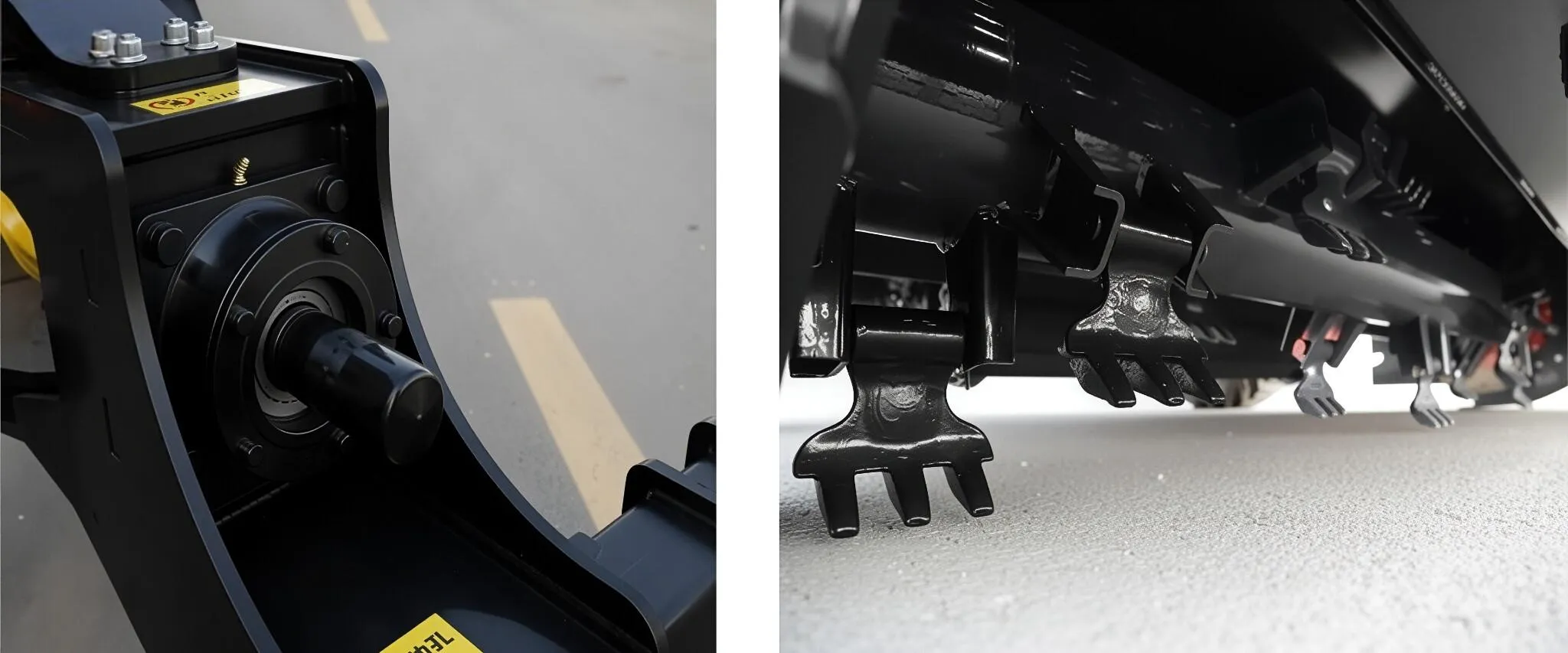
The 9YG round baler series is manufactured at an ISO 9001-certified facility covering over 32,000 m², with dedicated production lines for round balers and mowing equipment running at an annual capacity of 2,000 units per line. The facility is equipped with CNC laser cutting, automated welding lines, and electrostatic coating systems, and the product range holds close to 100 registered patents including exclusive rights to the axial-flow semi-forced feeding mechanism and the camless pickup design that distinguish these machines in demanding multi-crop applications. The product range has received the Best Innovation Award at the 12th Jiangsu International Agricultural Machinery Expo, an AAA Credit Enterprise rating, and a Quality Trustworthy Products designation. All current models are registered in national agricultural machinery subsidy catalogs where applicable.
10. Baling Cover Crops and Green Manures: Practical Guidance
Cover crops are a cornerstone of organic soil management, and baling them rather than incorporating them with tillage equipment offers flexibility that organic farmers increasingly value. A stand of winter-killed rye, crimson clover, or vetch can be baled in spring before the primary crop is planted, with the baled material used as either immediate mulch, stored green manure, or a nitrogen-rich compost activator for summer or autumn composting runs. The timing and execution of this operation is more sensitive than baling dry straw — moisture content is higher, the material is more fragile, and the window between crop kill and field preparation is typically narrow.
The axial-flow semi-forced feeding system in the 9YG series handles these conditions well, but there are configuration adjustments that can improve performance. Operating at the lower end of the 5 to 35 km/h speed range — around 8 to 12 km/h — on green cover crop material allows the compression chamber to build more uniform bales without the surge-and-gap feeding pattern that high-speed operation can produce in light, short-stemmed crops. The sensor-based density control manages the target compression regardless of forward speed, so the operator can prioritise consistency over throughput without sacrificing bale quality.
For farms operating a small round baler for 40 hp tractor configurations — such as the 9YG-1.0, rated at 48 to 80 kW — cover crop baling on smaller fields or between-row operations is entirely practical. The 9YG-1.0 produces bales of ø1,100 × 1,000 mm at 115 to 200 kg/m³ with a 1,900 mm pickup width — sufficient for standard-width windrows laid by a finger-wheel rake or a side-delivery rake on a single pass. The lighter bale weight (approximately 100 to 250 kg depending on crop and moisture) makes this unit easier to handle with smaller farm equipment, which aligns well with the philosophy of minimising external inputs and heavy equipment dependency that is central to many Korean organic operations and traditional Korean Natural Farming (한국식 자연농법) approaches.
11. Bale Storage Practices That Protect Organic Feedstock Quality
Storing round bales intended for organic compost or mulch application requires somewhat different considerations than storing bales for livestock feed, where the primary concern is nutritional value retention. For compost feedstock, the key storage requirement is preventing contamination and excessive pre-composting during storage — two goals that pull in slightly different directions. Some initial decomposition on the outer bale surface is acceptable and even beneficial, as it helps open the straw structure for faster integration into compost piles. But contamination from soil, chemical runoff from adjacent land, or residue from non-organic storage materials is not acceptable and can jeopardise the certification status of compost made from contaminated bales.
Net wrap, as used on all 9YG series models, performs better than twine for outdoor storage of compost feedstock bales because the tighter outer surface sheds rainwater more effectively and reduces the depth of moisture ingress into the bale core. The 9YG-2.24D uses 2,000 × 1.4 m net rolls per bale, the 9YG-1.25 uses 2,000 × 1.25 m rolls, and the 9YG-1.0 uses 2,000 × 1.0 m rolls — all sized to achieve complete, overlapping coverage of the bale surface that maintains its structural integrity during storage periods of three to nine months before composting commences. Bales stored on crushed stone or elevated timber bearers show significantly lower bottom-surface degradation than bales stored directly on soil, regardless of net wrap quality, and this practice is worth standardising for any operation where bale quality at the time of composting is important.
| Storage Practice | Impact on Feedstock Quality | Relevant to Organic Certification | Notes |
|---|---|---|---|
| Net wrap (vs twine) | Reduces outer layer dry matter loss 5–15% | Reduces contamination ingress | Standard on all 9YG models |
| Elevated storage (stone/timber) | Significantly reduces base degradation | Prevents soil contact contamination | Simple, low-cost practice |
| North–south orientation | Even drying, reduces hot-spot spoilage | Maintains uniform feedstock | Best for outdoor storage rows |
| Avoid adjacent chemical storage | Prevents airborne contamination | Critical for certification compliance | Often required by certifiers |
| Bale log / traceability record | No direct quality impact | Supports audit trail for certification | Record field source, date, crop, baler |
12. Selecting a Round Baler for Your Organic Operation: A Practical Framework
Choosing the right round baler machine for an organic operation involves balancing several factors that do not all point in the same direction. Larger machines with higher throughput reduce the number of hours needed to collect residue within a narrow harvest window, but they require more tractor power, have higher acquisition costs, and may be disproportionate for small or diversified organic holdings. Smaller models — including what would conventionally be called a small round baler or mini round baler category — are well suited to mixed operations where baling is one of several seasonal tasks and the total field area is measured in tens rather than hundreds of hectares.
For organic farms in South Korea under 50 hectares — a common scale for family-run certified organic rice and vegetable operations — the 9YG-1.0 is typically the most appropriate entry point. Its rated power range of 48 to 80 kW means it works with moderate-powered tractors that many Korean farms already own, and the 1,900 mm pickup width handles the windrows produced by standard Korean rake equipment. For farms operating between 50 and 150 hectares or running a mixed straw-and-corn-stover operation, the 9YG-1.25 Double with its interchangeable spring-tooth and hammer-claw pickup addresses both crop types from a single machine investment. For large organic composting enterprises or arable operations above 200 hectares where throughput is the primary concern, the 9YG-2.24D series — with its 2,240 mm pickup, 18-roller chamber, and 40 to 100 bales per hour productivity — provides the capacity to complete residue collection within the windows that seasonal weather typically allows.
Quick Selection Summary for Organic Operations
Under 50 ha, mixed organic farm, moderate tractor: 9YG-1.0 (48–80 kW, 1,900 mm pickup, ø1,100 × 1,000 mm bale)
50–150 ha, mixed straw and corn stover, interchangeable crops: 9YG-1.25 Double (≥75 kW, interchangeable pickup, ø1,300 × 1,250 mm bale)
Large organic compost enterprise, 200+ ha throughput priority: 9YG-2.24D (55–100 kW, 2,240 mm pickup, ø1,300 × 1,400 mm bale, 40–100 bales/h)
Direct corn stover collection without prior mowing (any scale): 9YG-1.0C (≥69.8 kW, 20 hammer-claw units, 2,400 mm width)
Frequently Asked Questions
Redacteur: PXY