
Crop Quality Series
A practical and technical breakdown of wrap system mechanics, material science, and measurable crop quality outcomes — for farmers, agronomists, and machinery buyers making informed equipment decisions.
Dry matter loss during baling, storage, and feedout is one of the most persistent and underestimated cost factors in commercial hay and silage production. When forage is wrapped inadequately — whether through insufficient bale surface coverage, poor tensile strength at the wrap seam, or moisture infiltration through gaps — the resulting aerobic fermentation at the bale surface degrades both energy content and palatability before the feed ever reaches the animal. The choice between net wrap and conventional twine on a round baler machine is not simply a question of wrapping speed or material cost per bale; it directly determines the proportion of harvested dry matter that remains biologically available at feedout. This article examines the mechanical and material factors behind that difference, with reference to the crop types, climate conditions, and regulatory contexts relevant to Korean livestock operations and international forage producers.
Net wrap has gained significant ground over twine-bound baling across Korean perennial ryegrass, sudangrass, and mixed-sward silage operations since the mid-2010s, and its adoption reflects measurable field outcomes rather than novelty. Understanding exactly why net wrap outperforms twine in dry matter retention requires looking at surface coverage geometry, bale density distribution, and the thermodynamic conditions inside a stored bale — all of which are shaped by decisions made at the round baler stage, before the wrap is even applied.
Why Dry Matter Loss Occurs After Baling
Dry matter loss in round bales begins the moment the bale is ejected from the chamber. The bale surface is warm, partially compressed, and immediately exposed to ambient air carrying oxygen and fungal spores. If the bale surface is not sealed against oxygen infiltration quickly and completely, aerobic microbial activity starts degrading the outer crop layer within hours. This outer fermentation zone does not stay contained — depending on bale density and wrap quality, it can extend 10–30 mm into the bale surface over a storage period of 60–90 days, representing a meaningful percentage of total bale mass in a round bale with a large surface-area-to-volume ratio.
Twine-wrapped bales present an inherently discontinuous surface seal. The twine wraps contact the bale at discrete spiral intervals, leaving the crop between wraps exposed or only lightly compressed by adjacent material. Rain infiltration between twine spirals is well documented in humid climates — conditions that characterize Korean spring and autumn cutting seasons, where rainfall events within the first 48 hours after baling are statistically common. Each infiltration event reactivates surface fermentation, accelerating dry matter loss and leaching water-soluble carbohydrates that are the most energetically valuable fraction of the forage.
Net wrap eliminates the inter-spiral gap problem entirely. A properly applied net wrap creates a near-continuous woven mesh layer over the bale surface, with individual strands spaced closely enough that surface crop material cannot escape and external moisture cannot penetrate as readily. The net also constricts the bale circumference slightly on ejection, helping the bale retain its density and shape — which matters because bale shape directly affects how well subsequent stretch-film wrapping adheres for silage bales, and how neatly bales stack for covered storage of dry hay.
Aerobic microbial activity within the first 10–30 mm of bale surface degrades net energy and crude protein within the initial storage weeks. Continuous surface coverage is the primary barrier.
Gaps between twine spirals allow direct water entry. Korean autumn cutting seasons with irregular rainfall make this a significant risk factor that net wrap’s woven mesh structure substantially reduces.
Net wrap constricts the bale circumference on ejection, maintaining compression-formed density and bale shape — reducing the expansion-driven surface cracking that creates fresh air infiltration pathways.
Manufacturing Structure of Net Wrap Feed Systems
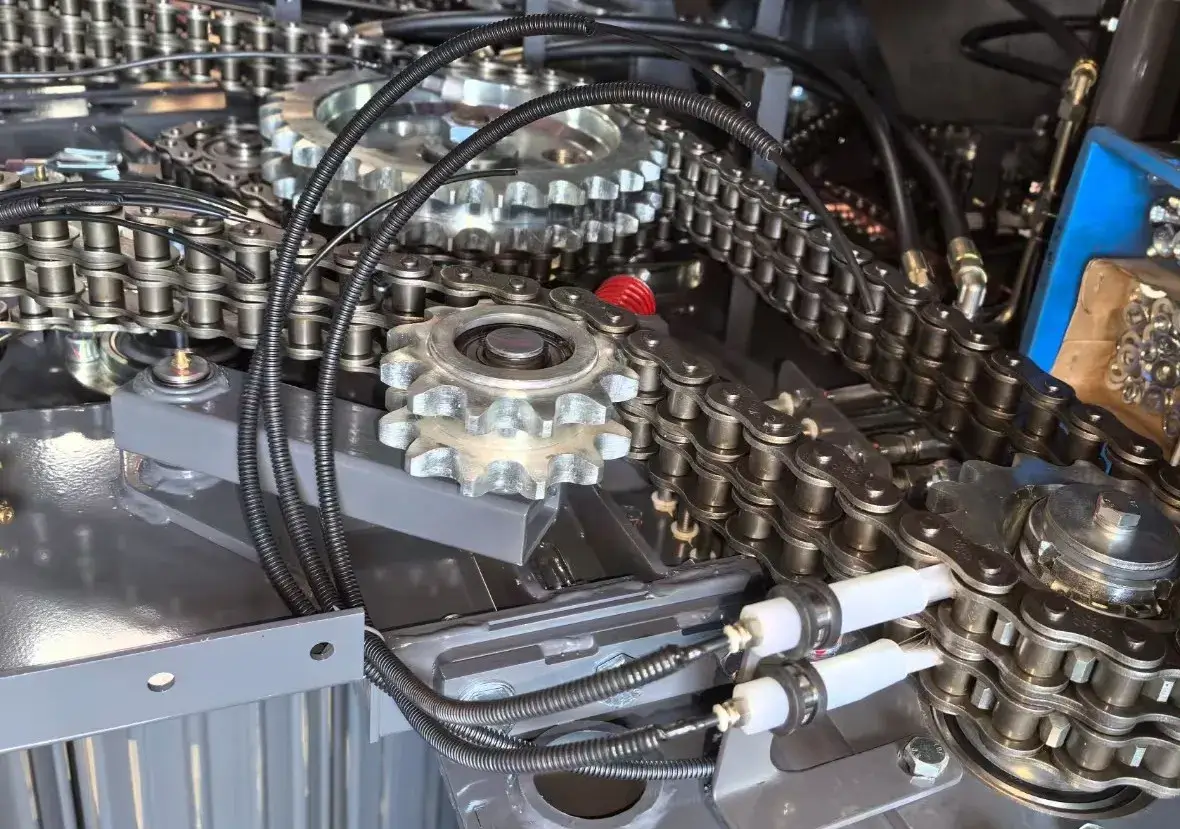
The net wrap feed mechanism on a round baler machine is integrated into the rear chamber door assembly and consists of three primary sub-systems: the net roll holder and brake mechanism, the net feed and cut actuator, and the net guide plate that directs the leading edge of the net into the bale chamber intake gap. The roll holder is machined from galvanized steel tube stock and accepts standard 1.25 m or 1.4 m net roll widths depending on bale chamber configuration. A tension brake — either a friction-plate type or a magnetic retarder — maintains consistent net tension during the feed cycle, preventing the net from feeding too quickly and producing loose, under-tensioned wraps that fail to compress the bale surface adequately.
The cut mechanism is actuated either hydraulically or by a mechanical cam follower linked to the chamber door open sequence. Timing accuracy of the cut is critical: if the net is cut too early, the final wrap layer fails to overlap the leading wrap edge, leaving a longitudinal gap along the bale. If cut too late, net material feeds into the bale ejection gap and wraps around the lower roller, causing a blockage that requires manual clearing. On the 9YG-1.25A and 9YG-2.24D series machines, automatic net wrap is standard, with the cut-and-feed cycle sequenced by the same electronic control system that manages density sensor feedback — so the operator receives a single alert when the bale is complete and the net is already being applied.
Net guide plates are typically fabricated from spring-steel strip with a wear-resistant coating on the leading edge, where contact with the bale surface creates a continuous low-level abrasion load. The guide plate geometry determines how far the net enters the bale chamber before contact with the rotating bale surface draws it in — this entry geometry is specific to each machine model and is not interchangeable between baler brands without modification. Using the correct net width for the guide geometry is essential: undersized net leaves exposed bale-end zones where dry matter loss is highest, and oversized net folds over itself at the bale ends, creating gaps and potential wrapping failures.
Material Systems | Net Wrap Construction & Performance Properties
Agricultural net wrap is manufactured from high-density polyethylene (HDPE) tape yarns woven in an open-mesh configuration. The longitudinal (machine direction) strands carry the primary tensile load during bale ejection and during the bale’s settling period in the field, when the bale weight is fully supported by the net at contact points. HDPE net wrap tensile strength in the machine direction typically runs between 10 kN/m and 20 kN/m depending on product grade, with a minimum elongation-at-break value of 12–15% to allow the net to conform to bale surface irregularities without tearing under the tension applied by the feed brake system. Tear propagation resistance — the force required to extend an existing nick or cut across the net width — is the material property most relevant to bale integrity during handling, and is specified separately from tensile strength on quality-grade net wrap products.
UV stabilizer content in the HDPE polymer matrix determines storage life under outdoor exposure. Standard net wrap carries UV stabilization rated for 12–18 months of field exposure, which is sufficient for the 60–120 day outdoor storage periods common in Korean hay and silage operations before bales are moved to covered facilities or fed out. For operations where bales remain outdoors through a full Korean winter before spring feedout, UV-stabilized net wrap rated for 18 months is the minimum recommendation — net that degrades prematurely under UV exposure becomes brittle, cracks at the strand crossover points, and loses its surface tension function, allowing the bale to expand and develop surface fermentation pathways. Product datasheets from net wrap suppliers will specify the UV stabilizer type (typically hindered amine light stabilizer, HALS) and the rated exposure period under a standard solar spectrum reference.
Twine, by contrast, is typically polypropylene (PP) or sisal fiber, neither of which provides comparable surface coverage regardless of how many passes are applied. PP twine absorbs less moisture than sisal but retains more surface heat under sun exposure, which can accelerate the drying and cracking of the bale outer layer at contact points. Sisal twine biodegrades faster and presents lower plastic contamination risk in manure-spread fields, but its UV stability and consistent tensile strength are inferior to both PP twine and HDPE net wrap for extended storage applications. The critical comparison is not twine type vs. twine type — it is continuous surface coverage versus point-contact coverage, and on that dimension net wrap has a structural advantage that no twine configuration can fully replicate.
Bale Density, Net Wrap Interaction & Dry Matter Preservation
Net wrap performance does not operate independently of bale density — the two factors interact in ways that determine total dry matter preservation across the storage period. A high-density bale with net wrap retains its geometry more stably than a low-density bale with net wrap, because the internal compressive stress in the bale resists the expansion force that the crop exerts as cell wall moisture redistributes during the first 24–48 hours after baling. High-density bales also have a smaller ratio of surface area to volume, meaning the net-wrapped outer layer represents a proportionally smaller fraction of total bale mass — so even when some surface dry matter loss does occur, its impact on total recoverable dry matter is diluted across a larger bale core.
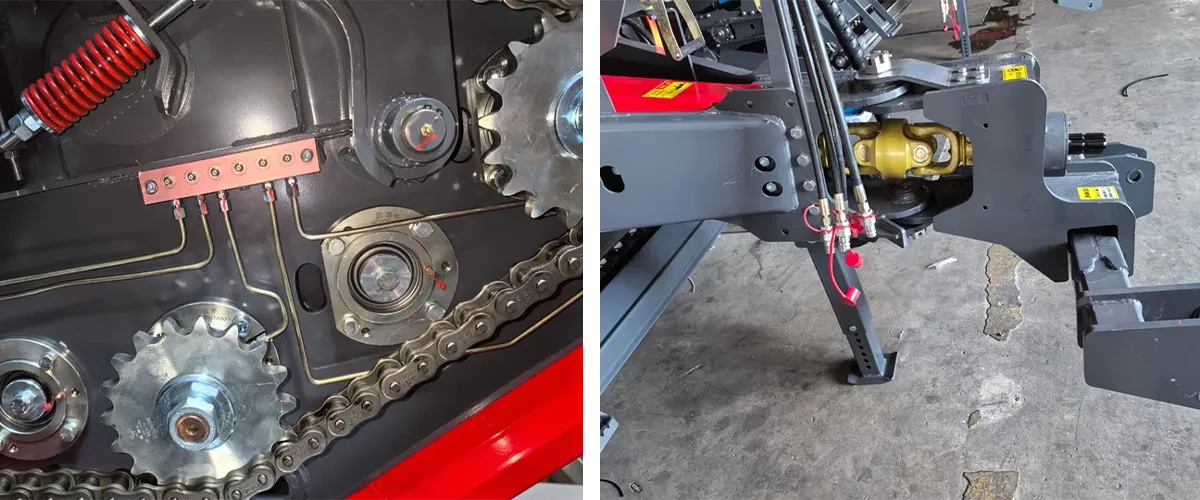
On roller-type bale chambers — the design used in the 9YG-1.25A with its 18 compression rollers at φ222 mm each — the bale density is controlled by a pressure sensor that signals the operator when target chamber pressure is reached. The electronic density control system on this model delivers bale densities in the 100–200 kg/m³ range, which is the practical window for combined net-wrap-and-silage-stretch-film operations. Bales in the lower half of this density range are suitable for dry hay net-wrap storage, while those in the upper range — requiring 75+ kW tractor PTO input — are better candidates for silage operations where the stretch film layer provides the primary anaerobic seal and the net wrap functions as a structural support layer preventing film puncture from bale surface protrusions.
The interaction between bale density and net wrap application rate — measured in revolutions of net applied before cut — is a calibration variable that operators should adjust seasonally. Dry grass at 15–18% moisture content requires fewer net revolutions than fresh silage-cut material at 55–65% moisture, which expands more aggressively on ejection. Applying the net wrap calibration setting for dry hay to a high-moisture silage bale results in under-wrapping, which allows the outer layer to slip under the net during the expansion phase and creates the looseness that defeats the dry matter protection function entirely.
Stable geometry post-ejection; lower surface-to-volume ratio means surface loss affects a smaller proportion of total bale mass; net maintains constriction force through the expansion phase.
Greater bale expansion on ejection opens gaps in discontinuous twine coverage; larger surface-to-volume ratio amplifies the proportional impact of surface fermentation on recoverable dry matter at feedout.
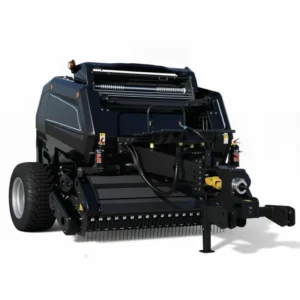
Featured Product: EP 9YG-1.25A Round Baler
| Pickup Width | 2,150 mm |
| Chamber Diameter | φ1,200 mm |
| Chamber Width | 1,250 mm |
| Compression Rollers | 18 rollers, φ222 mm each |
| Wrap System | Net wrap (automatic) |
| Bale Size (Ø × W) | φ1,300 mm × 1,250 mm |
| Bale Density | 100–200 kg/m³ (sensor-controlled) |
| PTO Speed | 540–1,000 r/min |
| Required Power | ≥75 kW |
| Net Spec | 2,000 × 1.25 m per bale |
Net Wrap Application in Silage Operations & Stretch Film Compatibility
In silage baling — the dominant round bale application on Korean beef and dairy farms running perennial forage crops — the net wrap layer serves a dual function that twine cannot replicate. Its primary role is to hold the bale together structurally from chamber exit to stretch film wrapper; a period that typically ranges from a few minutes to several hours depending on farm workflow, and during which the bale must resist the significant centrifugal forces applied by a table-type or satellite-arm stretch film wrapper spinning the bale at 25–40 rpm. A net-wrapped bale maintains rotational stability under these forces; a twine-wrapped bale of comparable density does not, because the discontinuous contact points of twine allow individual sections of the bale circumference to flex independently under the lateral acceleration of the wrapping arm.
The secondary function of net wrap in a silage system is as a puncture-resistant substrate layer beneath the stretch film. Bale surface protrusions — cut stubble ends, woody stem fragments, or crop particles that have not been fully incorporated — are the primary source of stretch film puncture during wrapping and the storage period. The net wrap layer holds these protrusions in place and prevents them from working their way through the film layer when the bale settles or is handled by a loader. Even a single stretch film puncture, if undetected, allows sufficient oxygen ingress over a 90-day fermentation period to create a shoulder-depth aerobic spoilage zone, which can represent 5–15 kg of lost dry matter per bale depending on bale size and ambient temperature — losses that significantly exceed the material cost of upgrading from twine to net wrap for the season.
Wrapping Cycle Time: Net Wrap vs Twine Productivity Impact
Beyond the crop quality argument, net wrap offers a meaningful cycle-time advantage over twine in commercial round baler operations. A twine-wrapped bale requires multiple sequential passes of the twine across the full bale width to achieve acceptable surface coverage — a process that typically takes 45–90 seconds of chamber dwell time depending on bale width and twine head speed. Net wrap, applied as a single continuous sheet, covers the same bale surface in 10–20 seconds. In a high-throughput silage operation running 60+ bales per hour, this difference compounds into a significant daily time saving that translates directly into field area baled per working day.
The automatic net wrap system on machines like the 9YG-1.25A links the wrap cycle directly to the density sensor signal, so the transition from baling to wrapping to ejection is managed without operator input beyond monitoring. This removes the hesitation time that human-triggered twine application introduces — hesitation that is negligible per bale but meaningful across a full harvesting day, and that increases operator fatigue in long-shift silage cutting windows. For Korean livestock farmers working through the narrow first-cut window in late April and early May, where weather breaks limit total working days, per-day throughput is a critical operational constraint that automatic net wrap measurably eases.
Regulatory Context: Baling Material Standards in Korea & International Markets
South Korea does not currently mandate net wrap over twine under the Agricultural Mechanization Promotion Act or the related MAFRA farm machinery eligibility criteria. However, MAFRA-administered livestock feeding quality guidelines, enforced through regional rural development centers, set minimum crude protein and net energy standards for preserved forage used in subsidized livestock operations. Bales that present measurable surface fermentation losses may fail forage quality sampling when presented for animal feed inspection on registered beef cattle and dairy farms — a risk that is operationally managed by the choice of wrapping system rather than by post-storage treatment. Producers applying for the Korean National Agricultural Policy Finance livestock feed support program should document their baling and preservation methods as part of the farm plan review, where net wrap plus stretch film silage systems are viewed favorably compared to twine-wrapped outdoor stored hay.
In the European Union, plastic agricultural materials including net wrap and silage film are regulated under the Single-Use Plastics Directive context and the EU Farm to Fork Strategy, which sets targets for reducing agricultural plastic waste. Several EU member states have introduced collection schemes requiring farmers to return used net wrap to designated recycling contractors rather than landfilling or burning — practices that were historically common in rural areas. Net wrap manufacturers supplying the EU market are increasingly required to demonstrate recyclability compliance and to label products with material identification codes consistent with EU plastic packaging regulation amendments under discussion as of 2024. Korean exporters selling value-added silage products into EU markets should verify that their preservation system, including net wrap brand and specification, is compatible with EU buyer supply chain documentation requirements.
In Australia, the National Farmers Federation has issued guidance on agricultural plastic waste management that specifically addresses net wrap and silage film as priority materials for on-farm collection programs. Several state governments, including New South Wales and Victoria, have implemented Waste Levy exemptions for agricultural plastic recycling collections, creating a financial incentive structure for adopting recyclable net wrap grades over conventional grades. Japan’s Act on the Promotion of Effective Utilization of Resources, which governs packaging material recyclability, has implications for imported agricultural equipment sold with consumable wrap materials in the Japanese market, requiring supplier documentation of material composition and recycling pathway.
MAFRA forage quality standards; livestock feed support program documentation; Agricultural Mechanization Promotion Act; ISO 9001 machinery procurement alignment.
Single-Use Plastics Directive context; Farm to Fork agricultural plastic targets; national collection scheme requirements; plastic recyclability labeling under EU Packaging Regulation revision.
NFF agricultural plastic waste guidance; state-level Waste Levy exemptions for net wrap recycling collections in NSW and Victoria; regional voluntary plastic recovery schemes.
Act on the Promotion of Effective Utilization of Resources; packaging material recyclability documentation requirements for imported consumables; JIS B 9700-series machinery safety standards.
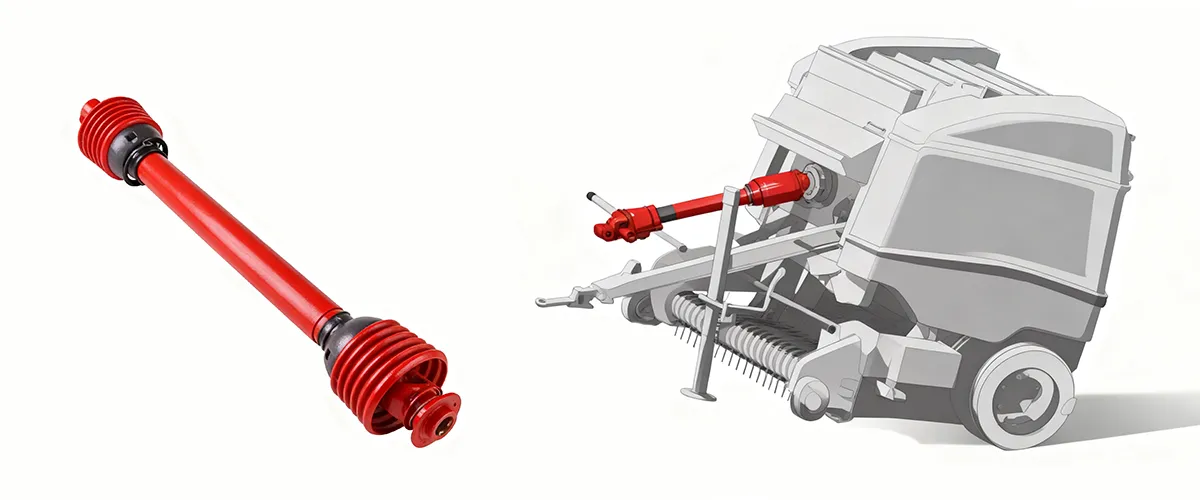
Compatible Agricultural Drive Components
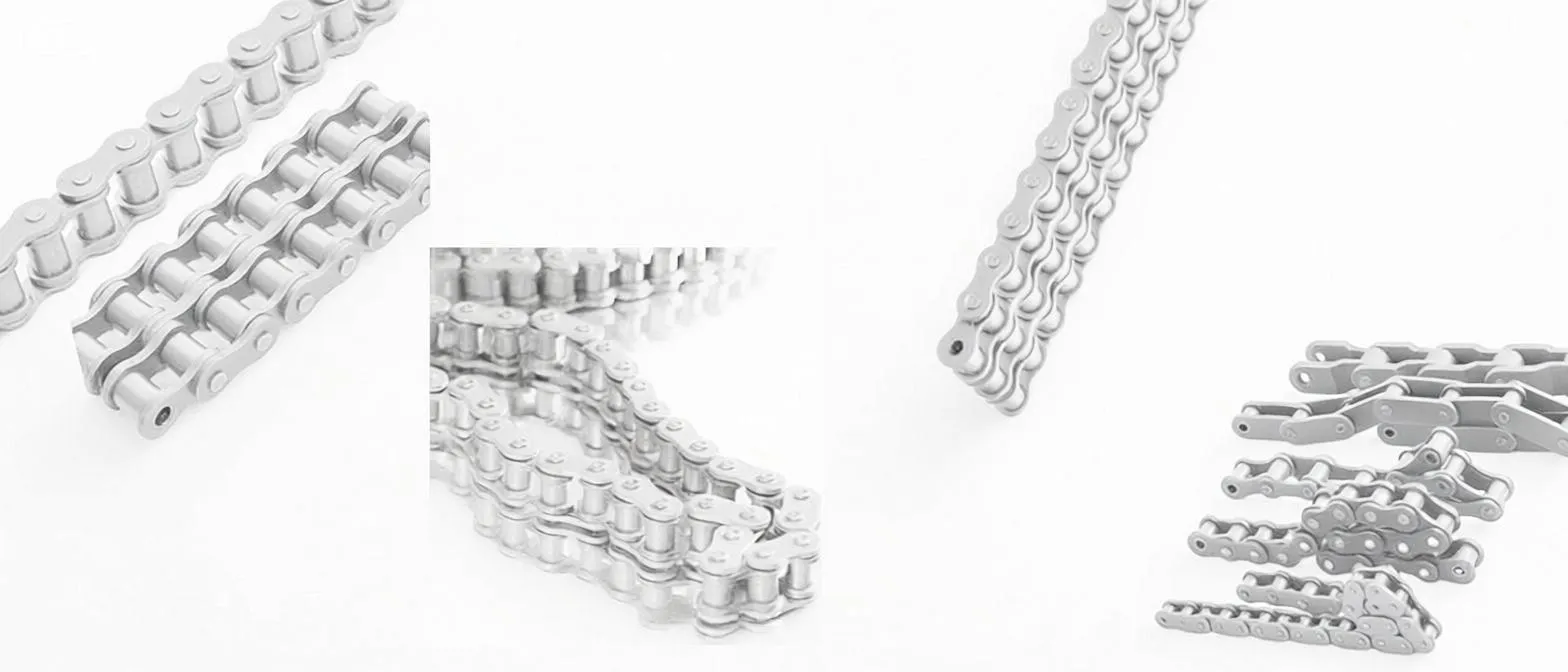
Our round balers are designed for direct compatibility with the following drive system components, supporting a complete single-source machinery solution.
More Than a Decade of Agricultural Machinery Expertise
Our manufacturing operation has been active since 2013, building a portfolio that spans light and heavy round balers, single and double-blade mowers, disc rotary mowers, and single and double-side rakes. Every machine carries our independent import and export certification and is produced under an ISO 9001-certified quality management system, ensuring that the net wrap feed systems, compression roller assemblies, and drive chain configurations on shipped machines meet the specifications documented at design and testing stages.
With over 60 large-format production equipment units across our facilities and an annual capacity of 2,000 machines, our production scale supports consistent component availability and short lead times for replacement parts — including net wrap guide plates, cut actuator assemblies, and roll holder brake components — for customers operating in Korean, Australian, European, and other international markets.
The goal that has shaped our product development from the beginning is building machinery that performs consistently in real field conditions rather than optimal test conditions. The net wrap systems on our round balers are designed and calibrated for the crop types, moisture ranges, and operating speeds that commercial forage producers in Korea and comparable climates actually encounter.
Frequently Asked Questions
How much dry matter loss can Korean livestock farmers realistically expect from net-wrapped silage bales stored outdoors during the winter season? +
What is the correct net wrap width to use on a round baler with a 1,250 mm bale chamber for perennial ryegrass silage production in Korea? +
Which round baler model is best suited for Korean dairy farms that want automatic net wrap and need to process both ryegrass silage and rice straw dry hay in the same season? +
When should Korean farmers replace the net wrap guide plate on their round baler and where can they source compatible replacement parts? +
How does net wrap used on a small round baler for lower-horsepower Korean farm tractors affect the stretch film wrapping process at a shared bale wrapper? +
Editor: PXY