Forage Crop Production & Hay Management Series
A comprehensive knowledge guide covering the role of round baler technology in commercial alfalfa production — from machine engineering and gearbox systems to operational scheduling, quality management, and the regulatory landscape across major alfalfa-producing and importing markets.

1. Alfalfa Production and the Round Baler: A Critical Partnership
Alfalfa (Medicago sativa) is one of the most nutritionally dense forage crops in commercial production, valued globally for its high crude protein content (18–22% of dry matter), exceptional digestibility, and reliable multi-cut yield across a growing season of three to five harvests per year. For Korean dairy and beef cattle producers — and for the commercial alfalfa hay importers and domestic producers serving them — quality is everything. The alfalfa that arrives in the feed bunk in October determines the milk production curve through February, and the handling and preservation decisions made at harvest are the primary variables that determine whether that quality is retained or lost.
The round baler machine sits at the center of this quality management challenge. In large-scale alfalfa production, whether conducted on the open steppe of Inner Mongolia, the irrigated plains of Kazakhstan, or the developing domestic alfalfa growing areas of Korea’s Gyeongbuk and Gangwon provinces, the round baler is the primary compression and preservation equipment that converts cut, wilted alfalfa windrows into handleable, storable bales. The decisions made about which round baler to use, how to set it up, when to bale relative to the wilting window, and how to manage bale density directly determine whether the finished product delivers on alfalfa’s nutritional promise or falls short of it through leaf shattering, over-drying, rain damage, or fermentation failure.
This guide examines the specific machine engineering features, material choices, and operational practices that determine round baler performance in large-scale alfalfa production — the crop where baling decisions matter most, and where the difference between a well-engineered machine and a mediocre one shows up most clearly in the finished product quality that a dairy farmer’s ration formulator sees when they analyze the delivered hay.
2. Why Alfalfa Is the Most Demanding Round Baling Crop
No common forage crop is more demanding of precise baling technique than alfalfa, and understanding why helps explain which machine design features make the biggest practical difference. Three biological and physical characteristics of alfalfa conspire to make the baling window narrow, the moisture requirements critical, and the leaf loss risk higher than with grass crops of comparable value.
The first is leaf fragility. Alfalfa leaves are the most nutritionally concentrated component of the plant — containing roughly 70% of the crude protein, nearly all the vitamin A and E, and the majority of the minerals in the whole-plant crop. When alfalfa is over-wilted before baling (moisture content below 15%), the leaves become brittle and shatter on contact with the pickup tines, feed mechanism, and compression rollers. Every shattered leaf that escapes as dust or fine material during baling represents a direct loss of the highest-quality material in the crop. The baling window for alfalfa hay — the moisture range at which leaf loss from mechanical handling is tolerable while the moisture is still safe for storage — is typically 14–20% for non-wrapped dry hay. At either extreme of this range, quality is compromised: too wet and the hay heats in storage; too dry and leaf loss during baling is unacceptably high.
The second challenge is stem-to-leaf ratio variation within the windrow. In a cured alfalfa windrow, the stems and leaves reach safe storage moisture at different rates. Stems, being denser and more protected by their epidermis, dry more slowly than the flat, thin leaves. A windrow that feels adequately dry on the surface may have stem moisture of 20–25% while the leaves are already at 12% and entering the shatter-risk zone. A round baler pickup system that is too aggressive at these conditions shakes the windrow repeatedly during pickup, liberating brittle leaves before they even enter the compression chamber. Fine-tine, gentle-action pickup designs with appropriate ground clearance minimize this pre-chamber leaf loss in alfalfa applications.
The third challenge is the high protein content itself. Alfalfa protein begins to degrade through heat-mediated reactions (the Maillard reaction between sugar and amino acids) as soon as bale temperature rises above 38–40°C. In conventional dry hay storage, bales that have been baled at above-optimal moisture undergo aerobic heating as residual plant enzymes and spoilage bacteria consume soluble carbohydrates. This heating can raise internal bale temperatures to 60–70°C, permanently binding a portion of the crude protein in a form that rumen bacteria cannot digest — reducing the effective protein delivery even if the analytical protein percentage on the hay test appears unchanged. Baling at correct moisture, achieving adequate density to minimize oxygen ingress, and completing the bale-to-storage transition quickly are all critical in alfalfa production because of this heat-sensitivity.

3. Manufacturing Structure: Engineering the Alfalfa-Optimized Round Baler
The round baler machine most suitable for large-scale alfalfa production must address the leaf fragility, moisture sensitivity, and density requirements of this crop through specific engineering choices at the pickup, feed system, compression chamber, and bale ejection stages. A machine designed for general-purpose dry-straw or grass-silage work can produce alfalfa bales, but machines with design features specific to legume forage applications deliver measurably better leaf retention, more consistent density, and fewer quality-limiting baling events per season.
The pickup header is the first critical contact point. For alfalfa, a spring-tine pickup with carefully calibrated tine angle — neither too aggressive in its lifting action nor too passive in its crop recovery rate — delivers the best combination of clean pickup and gentle handling. The 2,240 mm pickup width in the standard 9YG series models matches the windrow widths produced by Korean and international alfalfa mower-conditioners, allowing full-width crop recovery in a single pass without the side-delivery raking that introduces additional mechanical leaf loss before the pickup stage. Ground clearance adjustment is important in alfalfa: a header set too close to the ground on hard or uneven soil will contact the ground repeatedly, jarring the tines and creating additional leaf loss at each contact point.
The compression chamber design determines bale density and its consistency. In the 9YG series, 18 compression rollers of φ222 mm diameter are arranged in the variable-chamber configuration, applying progressive compression from the first alfalfa entering the chamber. For alfalfa hay baled at 15–20% moisture, this means the core is compressed at virtually the same intensity as the outer layers, producing a bale that maintains its shape under storage stack loading without the soft-center collapse that fixed-chamber machines can produce. Bale density at 100–200 kg/m³ across the full cylinder cross-section is achievable with the 9YG series, placing the finished bale within the range that allows adequate airspace for safe residual moisture equilibration while maintaining structural integrity through transport and storage.
The drive chain specification matters in large-scale alfalfa operations where machines run for 10–14 hours per day during peak cutting windows. The dual-side 20A heavy-duty roller chain in the 9YG series rear compression circuit is sized to tolerate the sustained full-load operation of high-density alfalfa baling without the progressive elongation that lighter 16A chain develops under continuous use. Chain elongation in the compression circuit changes the chain-to-sprocket mesh geometry, increasing the shock load at each tooth engagement and accelerating sprocket wear in a self-reinforcing degradation cycle. Correct chain sizing from the outset prevents this cycle from beginning.
Manufacturing Specifications for Large-Scale Alfalfa Production
| Component | Alfalfa-Specific Requirement | 9YG Series Specification |
|---|---|---|
| Pickup header | Gentle tine action to minimize pre-chamber leaf loss | Spring-tine, 2,240 mm, adjustable ground clearance |
| Feed mechanism | Even distribution with minimal leaf shatter points | Axial-flow semi-forced, camless, proprietary design |
| Compression chamber | Variable-chamber for dense, uniform core-to-surface compression | 18 rollers φ222 mm, variable-chamber progressive design |
| Density sensor | Consistent bale diameter across variable windrow density | Electronic sensor, ECU-linked programmable target |
| Drive chain | Sustained full-load capacity through 10–14 hr daily operation | Dual-side 20A heavy-duty roller chain, rear circuit |
| Net-wrap system | Clean cut at optimal moisture; 2+ revolution wrap for security | Automatic, hardened knife, 2,000 × 1.4 m/bale |
| Tailgate hydraulics | Fast, reliable ejection for high-throughput harvest windows | H-type fittings, buffer cylinder, fast-cycle design |
| PTO driveshaft | Uninterrupted power through large-field headland turns | Dual-joint (Transcend), ±90° lateral, ±30° vertical |
4. Material System: Durability Through Multiple Alfalfa Cuttings Per Year
Large-scale alfalfa production operations harvest three to five cuts per year from the same fields. In temperate climates like Korea’s, the cutting calendar runs from late April through October, with individual cutting cycles of 28–35 days at full production. A round baler machine in a dedicated commercial alfalfa operation may accumulate 800–1,500 operating hours per year — significantly more than the 200–400 hours typical in mixed farming operations where the baler is used for one or two forage crops across a shorter season. The material selection and wear resistance of every wear-contact component must be adequate for this intensity of annual use or the machine’s effective life and per-bale operating cost will be unacceptable.
The frame steelwork — S355 structural steel, laser-cut and robot-welded — provides the foundation for sustained annual use. Consistent weld quality at every joint is the key benefit of robot welding in this context: human-variable weld quality creates joints where some welds are deeper and stronger than others, and the weakest welds are the points where fatigue cracks initiate under sustained cyclic loading. A machine that accumulates 1,200 operating hours per year in alfalfa production experiences approximately 400,000–600,000 tailgate open-close cycles and many millions of compression roller revolutions during that period. Frame fatigue is a real service life limitation in machines with inconsistent weld quality, and it is not a limitation that becomes visible until cracks have already propagated to a structurally significant length.
Compression roller surfaces in alfalfa applications are subject to a different wear mechanism than in silica-rich straw applications. Alfalfa stems and leaves have low mineral content and therefore low abrasive wear on roller faces. The primary wear mechanism in alfalfa baling is corrosion fatigue from the plant acid environment during the wilted-crop phase, combined with mechanical fatigue from the cyclic compression load. Case-hardened roller surfaces resist this combined attack significantly better than mild steel rollers, maintaining the dimensional accuracy needed for consistent bale geometry across multiple cutting seasons.
The binding system is particularly important in alfalfa operations where hay quality commands a premium and bale presentation affects buyer confidence. Net wrap binding produces a cleaner, more uniform bale surface appearance than twine binding, holds the cut end of the hay more securely during transport, and provides better resistance to moisture ingress on the bale surface during outdoor storage between cutting and shipping. For premium-grade alfalfa bales sold into the Korean dairy and equine hay markets — where buyers are knowledgeable and quality-sensitive — net wrap is the standard expectation. Twine binding remains appropriate for on-farm use or lower-value markets where presentation is a secondary consideration.
5. Round Baler Models for Commercial Alfalfa Production
The following models apply variable-chamber compression, sensor-controlled bale formation, and leaf-gentle feed system design to alfalfa and legume forage crops across the full range from small domestic hay operations to large commercial multi-cut alfalfa producers. Parameters are drawn from verified product specifications.
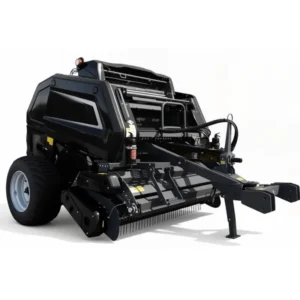
9YG-2.24D Round Baler (S9000)
φ1,300×1,400 mm · 18 rollers · 55–100 kW · 4,262 kg · 40–100 bales/h · Sensor density control · Auto net wrap
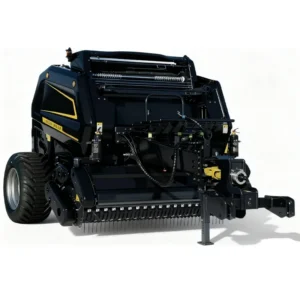
9YG-2.24D Round Baler (Classic)
4,312 kg · Dual-side 20A heavy chain · H-type hydraulic fittings · Buffer tailgate cylinder · 55–100 kW
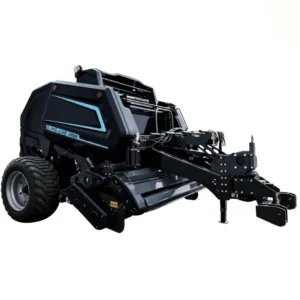
9YG-2.24D Round Baler (Transcend)
Dual-joint gearbox ±90° lateral · 4,570 kg · 720 r/min PTO · Safety torque driveshaft · 5–35 km/h working speed
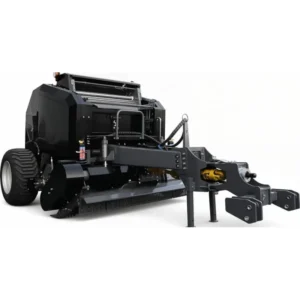
9YG-1.25 Round Baler (Double)
Interchangeable pickup options · ≥88.2 kW · 4,558 kg · 1,200×1,250 mm · Auger + feed roller + drum · 40–80 bales/h
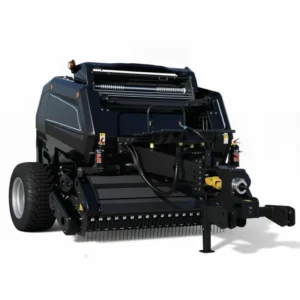
9YG-1.25A Round Baler
540–1,000 r/min PTO · Density 100–200 kg/m³ · Net 2,000×1.25 m · 4,472 kg · ≥75 kW
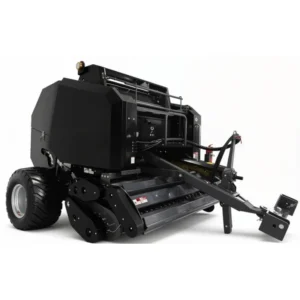
9YG-2.24D Round Baler
Axial-flow semi-forced camless feed · 3,922 kg · 55–100 kW · φ1,300×1,400 mm · 40–100 bales/h
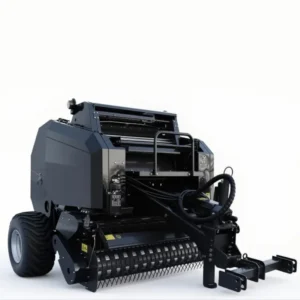
9YG-1.0 Round Baler (Mini Round Baler)
Small round baler for 40 hp tractor · 48–80 kW · Bale φ1,100×1,000 mm · 2,640 kg · 16 rollers
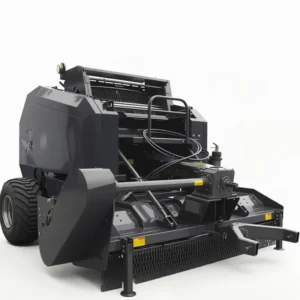
9YG-1.0C Round Baler
Hammer-claw pickup option · Dual-side 16A heavy chain · ≥69.8 kW · Bale φ1,000×1,250 mm · 3,198 kg
6. Round Baler Gearbox: Reliability Through Long Alfalfa Harvest Days
Commercial alfalfa production operates on tighter windows than almost any other forage crop. When alfalfa reaches the ideal cutting stage — 10% bloom for first cut, slightly earlier for subsequent cuts — the farmer has approximately two to four days before quality begins to decline. If the cutting is followed by a rain event before baling, the leaf-shatter losses from handling re-wet, then re-dried alfalfa can be severe. The round baler gearbox in this operational context is not a component that can be expected to have problems during the harvest window — any unplanned downtime during a four-day quality window represents a loss that may not be recoverable with the current cutting.
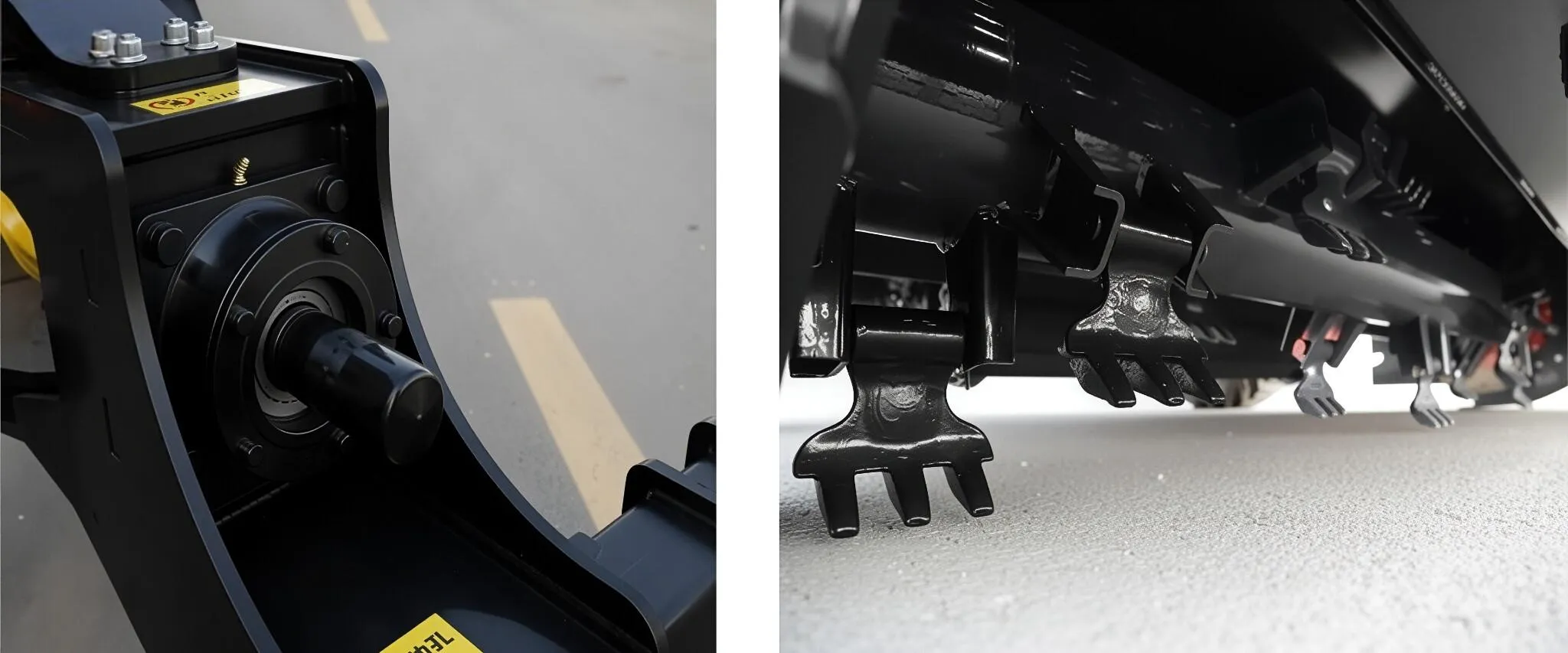
The gearbox in the 9YG series is designed for sustained full-load operation without thermal runaway. Sealed oil-bath lubrication maintains consistent gear tooth and bearing film thickness throughout an operating shift, and the housing design provides adequate thermal dissipation to prevent oil temperature from exceeding critical limits even during continuous 10-hour operating days in ambient temperatures of 25–35°C — the conditions typical of Korean and Central Asian summer alfalfa harvesting. Gearbox breather design allows thermal expansion and contraction of the oil volume without pumping moisture into the housing, which is important in the morning dew-to-midday heat temperature cycling of summer harvest days.
The dual-joint gearbox design in the 9YG-2.24D Transcend model is particularly valuable in large-scale commercial alfalfa operations where fields are measured in tens or hundreds of hectares and the operator may complete several hundred headland turns per day. Each headland turn with a conventional single-joint PTO driveshaft requires either slowing significantly to stay within the shaft’s angular limit or briefly disengaging PTO — creating a flow interruption in the pickup and feed system that leaves a small amount of windrow material uncollected at each turn. Over a full day’s operation of 200+ headland turns, these individual losses accumulate into a meaningful total crop recovery reduction. The Transcend’s continuous PTO engagement through turns eliminates this loss source and contributes to total daily throughput in ways that are not obvious from the spec sheet alone.
Gearbox oil specification for alfalfa baling operations should be ISO VG 150 GL-4 classified gear oil at a minimum. In Central Asian and Mongolian alfalfa production environments where ambient temperatures can reach 38–42°C during peak summer harvest, the case for ISO VG 220 or a synthetic GL-5 formulation becomes stronger — these maintain adequate film thickness at higher oil temperatures and reduce the varnish and sludge deposits that mineral oils at their operating temperature limits accumulate over a season. Change interval in commercial alfalfa operations should be maintained at 200 hours — the highest harvest intensity operations may reach this interval within a single cutting season, and scheduling the change between cuts rather than waiting for the annual service is the appropriate protocol.
7. Operational Scheduling: Managing Round Baler Use Across the Alfalfa Season
Large-scale commercial alfalfa production demands a round baler operational schedule that aligns precisely with the cutting-wilting-baling sequence for each of three to five annual cuts. Getting this sequence right determines hay quality; getting it wrong — by baling too early, too late, or after a rain interruption — produces hay that fails to meet buyer quality specifications and undermines the commercial rationale for the production operation. Understanding how the round baler machine fits into this scheduling discipline helps producers use their equipment most effectively across the full alfalfa season.
The cutting-to-baling window for alfalfa hay depends primarily on ambient temperature, solar radiation, humidity, and windrow swath width. In Korean summer conditions (25–33°C, moderate humidity), alfalfa takes 36–72 hours from cutting to reach the 15–20% moisture content target for baling as dry hay. In Central Asian continental summer conditions (35–42°C, low humidity), dry-down can occur within 18–24 hours. In Korean spring first-cut conditions (15–20°C), the window may extend to 72–96 hours or longer. Monitoring windrow moisture with a handheld moisture meter at stem and leaf level separately — not just overall windrow feel — is the most reliable way to determine when the baling window has opened.
The round baler throughput rate across the available baling window determines how much area can be baled before the window closes or the next rain event arrives. At 40–100 bales per hour and a bale weight of 200–350 kg per bale for alfalfa hay at 15–18% moisture, a single 9YG-2.24D series machine can process 8–35 tonnes of hay per hour under ideal conditions. On a large commercial alfalfa block of 100 hectares yielding 6 tonnes per cut at first cut, a single machine and tractor operating at 50 bales per hour for 8 hours per day can complete the baling of the entire block in approximately 1.5 days — within the safe dry-hay baling window in summer conditions. Planning the cutting schedule across blocks so that each block reaches baling moisture at a different time, rather than all simultaneously, allows a single machine to service a large operation without requiring parallel machine investment.
Highest protein content and most valuable cut. Target cutting at 10% bloom or early bud. Wilting window 48–72 hours in Korean spring. Leaf loss risk highest due to cold-snap risk and slow dry-down on cool mornings. First cut bales command premium prices in Korean dairy markets.
Shorter regrowth period, slightly lower protein. Summer heat accelerates dry-down to 36–48 hours. Korean monsoon onset risk (late June to mid-July) requires close weather monitoring. The most time-pressured cut of the year in Korean production systems.
Post-monsoon conditions return to drier, faster dry-down weather. Third cut alfalfa in Korea typically has intermediate protein and fiber values. This cut’s quality is heavily influenced by monsoon soil saturation effects on regrowth — high soil nitrogen from legume fixation can increase stem fraction.
A light cut of slower autumn regrowth. Cool temperatures extend dry-down to 72–96 hours. The final cut timing must leave enough photosynthesis time before frost for the plant to build root carbohydrate reserves for winter survival. Premature final cutting can reduce stand persistence into the following spring.
8. Bale Density, Heating Risk, and Alfalfa Nutritional Quality
The relationship between bale density and nutritional quality preservation is more nuanced in alfalfa than in grass silage, where the goal is simply to maximize density for oxygen exclusion. For alfalfa dry hay, the optimal density range is a balance between two competing objectives: the bale must be dense enough to hold its shape structurally and resist moisture ingress on the outer surface during storage, but not so dense that residual moisture at the core cannot equilibrate outward during the normal bale conditioning period that follows baling.
A correctly packed dry alfalfa bale at 15–18% moisture content will undergo a mild self-heating event in the first 10–21 days of storage as residual plant enzyme activity and normal microbial adjustment consume a small amount of soluble carbohydrate. This conditioning phase is normal and expected — internal bale temperatures of 38–45°C for a few days do not cause significant quality loss and are part of the process by which the hay completes its stabilization to a safe long-term moisture equilibrium. However, if bale moisture at the time of baling was above 20% — because the windrow was baled before adequate dry-down — the self-heating phase extends and intensifies, with temperatures potentially reaching 55–70°C and persisting for weeks. At these temperatures, the Maillard heat-damaged protein (ADIN — acid detergent insoluble nitrogen) fraction increases, permanently reducing the digestible protein available to ruminant animals even though the total protein on hay analysis remains unchanged.
Bale density in this context is relevant because higher-density bales at any given moisture content have lower oxygen reserves available for aerobic heating, which limits the intensity and duration of the heating event. Variable-chamber round balers that produce dense, consistent bales — with 100–200 kg/m³ density across the full cross-section rather than a loose core — tend to produce hay with less intense conditioning heating than loosely-packed bales of the same moisture content. This is one of the less-discussed quality advantages of variable-chamber round baler technology that is particularly significant for alfalfa hay, where even moderate protein heat damage reduces the commercial value of an otherwise high-quality product.
9. Regulatory Framework: Machinery Safety, Gearbox Standards, and Alfalfa Trade Compliance
South Korea
Round baler machines used in Korean alfalfa production must comply with the Act on the Promotion of Agricultural Mechanization (농업기계화 촉진법) and pass performance evaluation through the National Institute of Agricultural Sciences (농촌진흥청) if the operator intends to claim government purchase subsidy support under the Ministry of Agriculture, Food and Rural Affairs (MAFRA, 농림축산식품부) mechanization subsidy program. PTO-driven equipment must meet Industrial Safety and Health Act (산업안전보건법) guarding requirements. Korean alfalfa hay imported from overseas — particularly from the US, Australia, and Central Asia — is subject to plant quarantine inspection under the Plant Protection Act (식물방역법), with import lot testing for moisture content and phytosanitary compliance affecting the quality premiums that domestic alfalfa commands relative to imported product.
European Union
Round balers used in EU alfalfa production areas — including Spain, France, Italy, and Eastern European producers that supply EU markets and export to Asia — must carry CE marking under Machinery Directive 2006/42/EC. Harmonized standards EN ISO 4254-7 (harvesting machinery safety) and EN 12965 (PTO drive shafts) apply. EU organic alfalfa production under Regulation EU 2018/848 places additional requirements on machinery cleaning procedures and lubricant compatibility where organic certification standards prohibit residual synthetic chemical contamination of crop material. Gearbox oil specifications reference ISO VG 150 GL-4 as standard, with food-grade or biodegradable lubricants required in some organic certification schemes.
United States
The US is the world’s largest alfalfa producer and exporter, with major production in California, Idaho, Montana, and the Pacific Northwest. Round baler safety standards follow ASABE S318 and EP455, with OSHA 29 CFR Part 1928 applicable to employed farm labor. US alfalfa exported to Korea passes through USDA APHIS phytosanitary certification, and quality grading follows the National Alfalfa and Forage Alliance (NAFA) hay quality testing standards based on Relative Feed Value (RFV) or Relative Forage Quality (RFQ). Round baler operation that minimizes leaf loss and heating damage directly supports achieving the premium RFQ grades that Korean importers specify in long-term supply contracts.
Kazakhstan and Central Asia
Kazakhstan is a significant and growing alfalfa producer, with domestic demand from its expanding dairy and sheep sectors supplemented by export opportunities to East Asian markets. Agricultural machinery in Kazakhstan must comply with TR EAEU 010/2011 technical regulations and carry EAC conformity marking. Gearbox oil specifications reference GOST 23652 gear oil standards. The large-scale, open-landscape alfalfa production on Kazakh irrigated land — with fields of 50–500 hectares per block — makes the throughput rate and headland efficiency of the round baler machine especially important, as any per-cycle time loss multiplies across thousands of bales per season.
Australia
Australia is the second-largest alfalfa exporter to Korea, with production centered in New South Wales, Victoria, and South Australia. Round baler machinery safety follows harmonized WHS legislation and AS 1152 guarding standards. Australian export alfalfa for Korean markets undergoes DAFF (Department of Agriculture, Fisheries and Forestry) phytosanitary inspection and certification. Quality testing follows AMS (Agricultural Marketing Service) equivalent standards, with Korean importers commonly specifying RFV above 150 as the minimum entry grade for premium contract supply. Baling practices that preserve leaf retention — gentle pickup, correct moisture management, and consistent density — are central to achieving export-grade quality consistently across the Australian alfalfa season.
10. Maintenance in Commercial Alfalfa Operations: The High-Intensity Service Program
A round baler machine accumulating 1,200 operating hours per year in commercial alfalfa production requires a maintenance program calibrated for this intensity — not the standard seasonal service program appropriate for a machine doing 200 hours of mixed hay and straw baling. The fundamental principle is that maintenance intervals must scale with operating intensity: a machine doing five times the annual hours of a mixed-use machine will consume wear items five times faster, and waiting for annual service intervals to address wear that accumulates within a single cutting season guarantees quality-limiting and sometimes machine-damaging deterioration.
Daily maintenance during each alfalfa cutting campaign should include chain lubrication across all circuits (once per shift minimum), inspection of pickup tine tips for bending or breakage, and a visual check of the net-wrap knife edge for adequate sharpness. The density sensor should be verified against a physically measured bale at least once per cutting campaign — sensors that drift off calibration cause systematic under-filling or over-filling that may not be noticed until the bale count per hectare appears anomalous. Hydraulic fluid level and hose condition checks at each daily pre-operation inspection catch developing issues before they become field failures.
Between cuts — typically 28–35 days — a mid-season service should include chain tension measurement and adjustment across all circuits, inspection and cleaning of the net-wrap dispenser including knife sharpness assessment, gearbox oil level and condition check, and lubrication of all grease nipples. Any round baler parts showing significant wear or approaching replacement limits should be ordered at this point — alfalfa season timing does not allow multi-day delivery waits for parts. At the end of the alfalfa season, a comprehensive post-season inspection that includes compression roller diameter measurement, chain elongation quantification, and frame weld visual inspection at high-stress locations provides the baseline for determining which parts to replace during the off-season rather than waiting for failure in the middle of the following year’s first cut.
Frequently Asked Questions
Editor: PXY