Efficiency & Productivity Series
A technical deep-dive into the structural engineering, material science, and field mechanics that allow modern round balers to maintain peak output even under the most demanding swath conditions.
Heavy swath conditions present one of the biggest throughput bottlenecks in commercial hay and forage harvesting. When windrows are thick, matted, or unevenly laid, single-rotor pickup systems choke under the crop volume, leading to frequent stoppages, bale density inconsistencies, and drive component stress. The twin-rotor pickup configuration solves these problems at the mechanical root level by distributing the material intake load across two synchronized rotors that work in tandem — a fundamentally different approach to how a round baler processes large volumes of standing crop residue or cut forage. Understanding why this design works so well requires looking at the structural assembly, drive mechanics, crop flow paths, and how each element interacts under peak field loads.
This article targets agronomists, farm machinery operators, and procurement decision-makers in the Korean agricultural market who need accurate, application-ready knowledge about selecting the right round baler machine for high-density swath environments. Whether you operate across the flat plains of Gyeonggi-do or manage larger pastoral estates in Gangwon, the technology choices made at the pickup stage determine everything that follows downstream in the baling process.
Manufacturing Structure of Twin-Rotor Pickup Systems
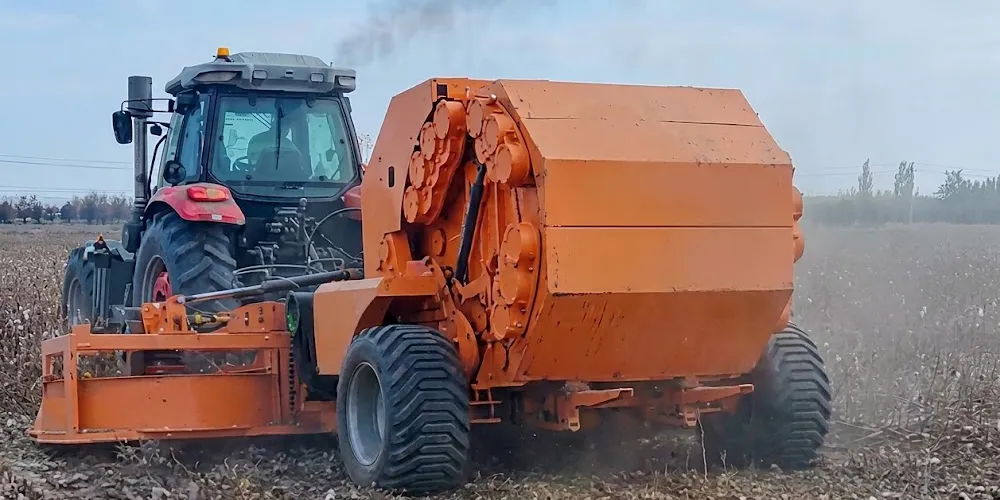
The twin-rotor pickup assembly on a heavy-duty round baler is built around a central cross-beam frame machined from high-grade structural steel. Each rotor shaft is independently supported by sealed spherical roller bearings housed in cast-iron pillow blocks bolted directly to the main frame. This mounting approach distributes rotational loads away from the pickup frame itself, reducing frame fatigue in applications where crop volume spikes suddenly — a common occurrence when the tractor crosses a merged windrow or enters a depression where cut material has accumulated.
The twin-rotor configuration on agricultural machinery used in Korean pastoral operations typically features a pickup width of 2,150 mm to 2,400 mm, which allows the machine to capture wide-spread swaths in a single pass without the crop folding under the frame sides. Tine bars are arranged in a staggered spiral pattern around each rotor cylinder, so that as one bank of tines lifts material, the opposing bank is already accelerating the next crop layer toward the feed intake opening. This stagger pattern is what creates continuous crop flow rather than the pulsed, intermittent intake seen in single-rotor designs.
Welding quality at the tine bar mounting sockets is a critical structural variable. On production-grade machines, these sockets are MIG-welded with multi-pass reinforcement beads, then stress-relieved before final assembly. Machines that skip the stress-relief step show early cracking in the socket weld toe when operated in stony fields or across uneven Korean hill terrain. The tines themselves — typically 6 mm spring-steel wire formed to a hooked profile — are replaceable individually, which matters for field serviceability across long harvesting seasons.
Main cross-beam machined from structural steel; pillow-block bearing housings bolted directly to frame for load isolation; multi-pass MIG welding with stress relief on tine socket joints.
Two independently supported rotor shafts with staggered spiral tine bars; sealed spherical roller bearings; synchronized through a spur-gear or chain-and-sprocket drive train to maintain phase alignment.
6 mm spring-steel hooked tines in staggered spiral arrangement; individually replaceable per socket; field-adjustable cam follower height on premium configurations.
Material Systems | Steel Grades, Surface Treatments & Wear Components
The material choices in a twin-rotor pickup directly govern how long the machine maintains its rated throughput before service is required. Rotor cylinder bodies are typically rolled from Q345B or equivalent medium-carbon structural steel plate, which balances weldability with the impact resistance needed when the rotor contacts stone or hardened soil clods in Korean upland fields. The cylinder wall thickness on production machines runs between 4 mm and 6 mm — thinner walls save weight on the rotating assembly, improving responsiveness, while thicker walls absorb the shock loads common in rocky highland terrain.
Tine bars are formed from 65Mn spring-steel strip, a material that combines high fatigue strength with the elastic deflection needed to clear ground obstacles without permanent deformation. After forming, bars are heat-treated to a surface hardness of HRC 42–48, which prevents the bar-to-tine socket interface from galling under the oscillatory loads of heavy-swath operation. Surface protection across the pickup frame generally involves a multi-coat electrostatic powder paint system, with a zinc phosphate conversion coating applied at the substrate level before primer and topcoat. This system is particularly relevant for Korean users who operate in coastal or humid regions where salt air accelerates corrosion on unprotected steel.
Wear-prone components — ground slides, skid plates, and the crop deflector edge strips — are typically made from abrasion-resistant steel plate, hardness ratings in the AR300–AR400 range. These parts are designed as bolt-on replaceable segments rather than welded-in sections, so operators can swap a worn ground slide without cutting or welding in the field. On models built for extremely heavy swath conditions, the crop deflector edge may receive a hardface welding deposit to extend the replacement interval.
Crop Flow Dynamics: From Ground to Bale Chamber
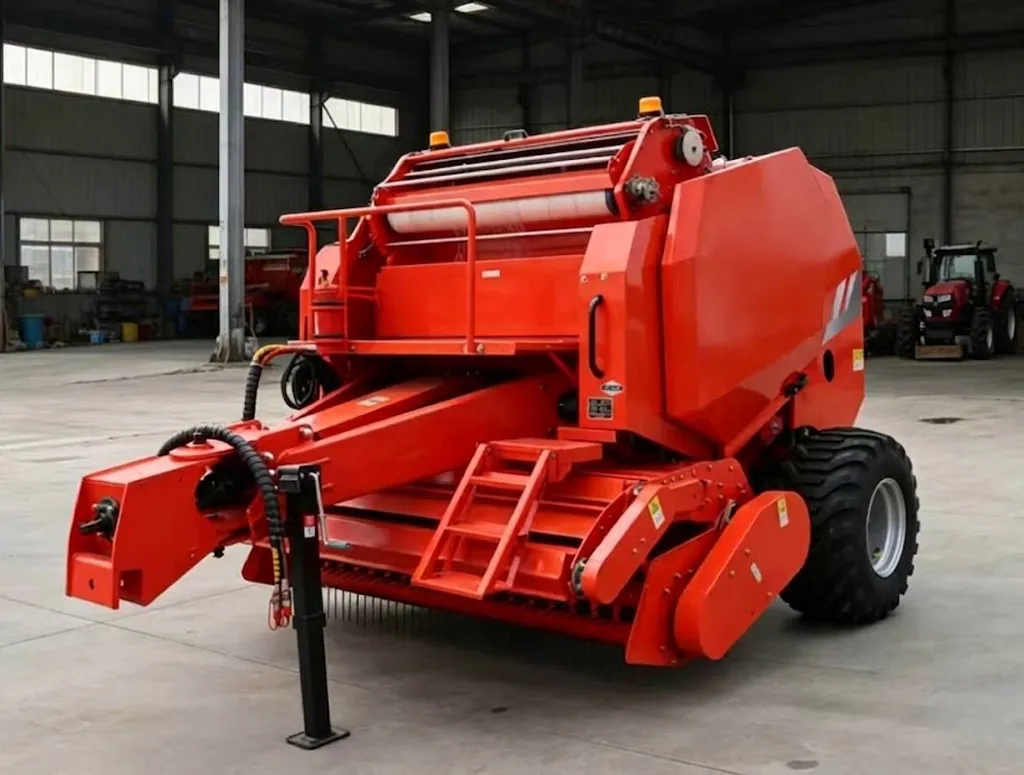
The path crop material travels from ground contact to the bale chamber entrance defines throughput capacity more precisely than any single specification figure. In a twin-rotor round baler, the first rotor lifts and accelerates the bottom layer of the swath while the second rotor picks up the upper portion of the crop mass simultaneously. Because both rotors rotate in the same direction (counter to forward travel), they create a rearward-directed airstream that keeps material moving continuously toward the intake throat. This is meaningfully different from a single rotor that must pause its effective sweep while the previous batch clears the intake gap — a phenomenon that creates the characteristic pulsing throughput of older single-rotor designs.
The semi-forced axial-flow feeding mechanism found on models such as the 9YG-2.24D reduces the tendency for dry, fine-stemmed material to stall at the feed entry. By pairing the rotor tine action with a stub-auger that centers the crop stream relative to the bale chamber width, this design prevents the side-loading that causes uneven bale density across the bale width — a quality issue that affects silage fermentation uniformity and bale transport stability. The axial-flow auger itself is cam-follower-free on certain configurations, removing a common maintenance point without degrading the feeding action.
Crop velocity at the intake throat matters because faster-moving material enters the bale chamber at a momentum that helps initiate rotation of the growing bale core. When crop enters too slowly — as happens with single-rotor designs in thick, tangled swaths of rice straw or maize stover — the compression rollers must do extra work to initiate core rotation, which raises PTO torque demand and increases slippage risk. The twin-rotor design maintains higher crop velocity through continuous dual-layer intake, so the bale core forms more quickly and the machine can reach rated chamber pressure sooner, reducing cycle time per bale.
Drive Train Architecture & Round Baler Gearbox Design
The round baler gearbox translates tractor PTO input into the coordinated rotational motion of the pickup rotors, feed auger, compression rollers, and twine or net wrap system. On machines rated for 55–100 kW tractors — the power range typical of Korean rice and mixed-crop farms — the main gearbox is a multi-stage bevel and spur arrangement housed in a cast-iron body, rated for continuous input torque levels in excess of what the tractor’s PTO can physically deliver, providing a safety margin against sudden crop slug events.
The dual-linked gearbox arrangement seen on certain 9YG-2.24D-series machines eliminates a key problem of traditional towed balers: when the tractor-baler articulation angle is sharp — during headland turns on small Korean paddy field plots — the single driveshaft between tractor and gearbox experiences a bending moment that causes vibration and premature universal-joint wear. The dual-linked arrangement allows 90-degree left and right rotation of the gearbox relative to the tow hitch, so the tractor and baler can pivot freely without stressing the driveshaft. This design detail is particularly relevant for operations on the small, irregular field parcels characteristic of Korean upland farming regions.
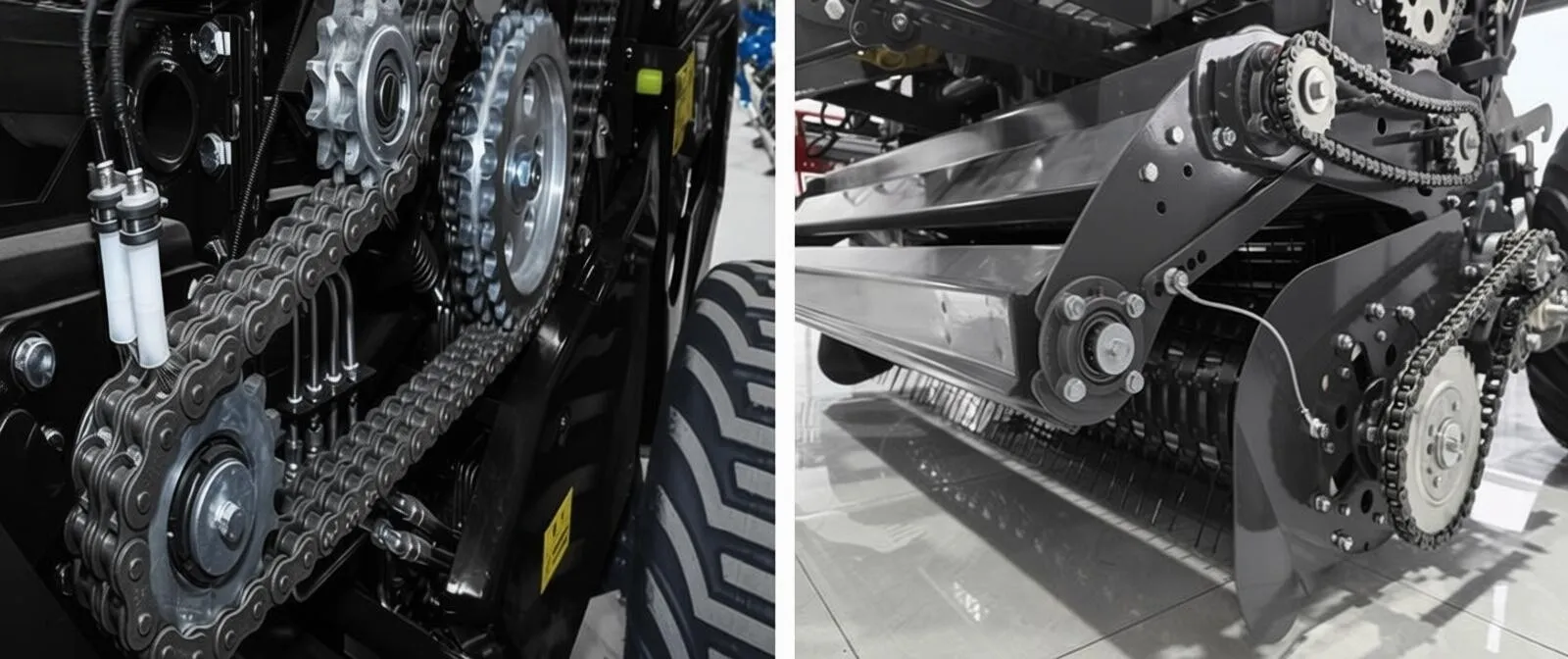
The compression roller chain drive deserves separate attention. Heavy-duty 20A reinforced chain on both sides of the rear chamber — as used in the 9YG-2.24D S9000 configuration — maintains even compression across the full bale width and avoids the chain-stretch differential that causes one side of the bale to be denser than the other. The bale density control sensor feeds back to an electronic display, allowing the operator to set target density (100–200 kg/m³ on this model) and maintain it automatically across varying crop moisture levels.
Allows ±90° tractor-baler pivot without driveshaft stress; reduces universal-joint wear; enables no-power-cut headland turns; improves overall field efficiency on small or irregular plots.
Dual-side 20A heavy chain for balanced roller pressure; 18 compression rollers (φ222 mm); sensor-controlled bale density in the 100–200 kg/m³ range; hydraulic chamber-open buffer cylinder prevents slam damage on ejection.
Featured Product: EP 9YG-2.24D Round Baler (S9000 Series)
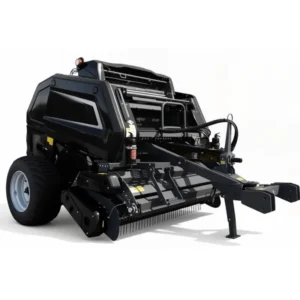
| Pickup Width | 2,240 mm |
| Compression Chamber | φ1,200 mm × 1,400 mm wide | Roller-type |
| Rollers | 18 rollers, φ222 mm each |
| PTO Speed | 720 r/min |
| Required Power | 55–100 kW |
| Bale Size (Ø × W) | φ1,300 mm × 1,400 mm |
| Bale Density | 100–200 kg/m³ (sensor-controlled) |
| Output Rate | 40–100 bales/hour |
| Operating Speed | 5–35 km/h |
| Net Wrap | 2,000 × 1.4 m per bale |
Throughput Performance: What the Numbers Mean in Practice
A rated output of 40–100 bales per hour on a round hay baler is a wide band that reflects real-world variability. At the lower end, the machine is handling wet, heavy silage-cut material at low field speed with frequent density check stops. At the upper end, it is running through dry, light-density fescue or timothy at near-maximum ground speed with sensor-controlled density that eliminates manual bale density checks entirely. The twin-rotor pickup maintains throughput closer to the upper portion of this range in heavy swath conditions precisely because it does not need to slow down for intake clearance — the dual rotor action clears the swath volume as fast as the tractor can travel within its rated operating window.
Field speed is the dominant throughput multiplier. At 5 km/h the machine produces roughly half the bale output of the same machine running at 10 km/h over the same crop. The twin-rotor design permits a higher average field speed in heavy swaths because it does not trigger the intake overload that would force a slower pass — a practical throughput increase that does not appear in the rated specification sheet but is consistently observed by operators switching from single-rotor designs. Korean livestock farms producing silage bales for winter feeding typically gain one to two additional bale-hours per operating day when using twin-rotor equipped machines under comparable crop and field conditions.
Bale Chamber Design & Roller Configuration
The bale chamber on a roller-type round baler functions on a different mechanical principle than a belt-type chamber. Rather than relying on rubber belts to contain and rotate the growing bale, the roller configuration uses 18 hardened steel rollers (φ222 mm in the 9YG-2.24D configuration) arranged in a fixed cylindrical array. As the crop core builds inside this ring of rollers, the rollers spin it continuously while also compressing it radially inward. This achieves higher and more uniform density across the bale cross-section compared to belt systems, because roller contact pressure is applied at discrete points around the full circumference simultaneously rather than through a flexing belt that may develop tension variation across its width.
The hydraulic rear-chamber opening system on the 9YG-2.24D uses an H-type push-connect coupling at the hydraulic connection point — a fitment that handles higher pressure cycles more reliably than standard push-pull connectors, and allows faster chamber open-close cycles without oil spillage. A buffer hydraulic cylinder fitted behind the rear chamber door absorbs the mechanical shock when the door closes after bale ejection, protecting the chain drive components and frame joints from the repeated impact that degrades them on machines without this feature. In Korean silage baling operations where cycle times are pushed hard during the two-week spring and autumn cutting windows, this detail materially extends major component service life.
Net wrap application is integrated into the chamber closure sequence. On the 9YG-2.24D, net width is 1.4 m, sufficient to cover the full 1,400 mm bale width with adequate overlap at the bale ends. Net wrap protects bale shape during field storage and reduces surface waste on silage bales compared to twine-only wrapping. After wrapping is complete, the net is cut automatically, and the operator receives a visual or auditory alert before the door opens for ejection. This automation reduces per-bale cycle time and removes the manual net-cutting step that was previously a labor bottleneck in high-throughput operations.
Regulatory Framework: Korea & International Standards for Round Balers
Agricultural machinery operating in Korea must comply with requirements set out under the Act on Agricultural Mechanization Promotion (농업기계화 촉진법), administered by the Ministry of Agriculture, Food and Rural Affairs (MAFRA). Under this framework, round balers imported for commercial farm use must carry certification from the Korea Agricultural Machinery Industry Cooperative (KAMICO) or equivalent testing body, and must meet the safety standards specified in KS B ISO 4254-7, which governs agricultural machinery safety for balers specifically. This standard addresses guard design, emergency stop device placement, and labeling requirements that are non-negotiable for machines operating on Korean farms or eligible for domestic farm machinery subsidy programs.
For machines sourced internationally, the relevant import pathway under Korean customs regulation requires HS code classification under Chapter 84.33 (harvesting or threshing machinery), with import duties assessed according to the current Korea-applied MFN tariff schedule. Korean purchasers who access the national farm machinery purchase subsidy (농기계 구입자금 지원) administered through regional rural development centers (농업기술센터) should verify that the specific model and configuration is listed in the annual eligible equipment catalog, as subsidy coverage varies by machine category and rated power range.
Beyond Korea, the EU Machinery Directive 2006/42/EC and its successor Machinery Regulation (EU) 2023/1230 govern round baler safety requirements for machines sold into EU markets — relevant context for Korean agricultural exporters who sell value-added hay to European buyers and need to verify that the baling equipment used in their supply chain meets exporting-country standards. In Australia, round balers must comply with AS 4024 (Safety of Machinery) series requirements, while in Japan the Agricultural Machinery Safety Law (農業機械化促進法施行規則) covers equivalent provisions. ISO 4254-7 forms the technical backbone of most of these national frameworks, so machines certified to ISO 4254-7 have a reasonable starting point for multi-market compliance, though national-specific labeling and operator documentation requirements will still differ.
Agricultural Mechanization Promotion Act; KS B ISO 4254-7 safety standard; KAMICO certification; MAFRA subsidy eligibility review.
Machinery Regulation EU 2023/1230 (replacing 2006/42/EC); CE marking required; ISO 4254-7 harmonized standard applies.
AS 4024 Safety of Machinery series; state-level farm safety regulations; Work Health and Safety Regulations 2017 applicable.
Agricultural Machinery Safety Law; JIS B 9700-series machinery safety standards; Ministry of Agriculture safety guidelines for tractor-implement combinations.
Maintenance Considerations & Round Baler Parts Longevity
The round baler parts that require the most attention in a twin-rotor pickup machine are tines, tine sockets, pickup drive chain, and rotor bearing assemblies. Tine replacement intervals vary significantly based on soil contact rate — in fields where the pickup consistently sweeps bare ground (low stubble or post-combine windrows close to the ground), tine tip wear is faster and replacement cycles shorten to every 300–400 operating hours rather than the 600+ hours achievable on cleaner crop windrows. Maintaining correct pickup height — the distance between tine tip arc and ground level — is the single most controllable variable in tine wear rate, and operators who set this diligently at the start of each crop type see measurably longer tine life across a season.
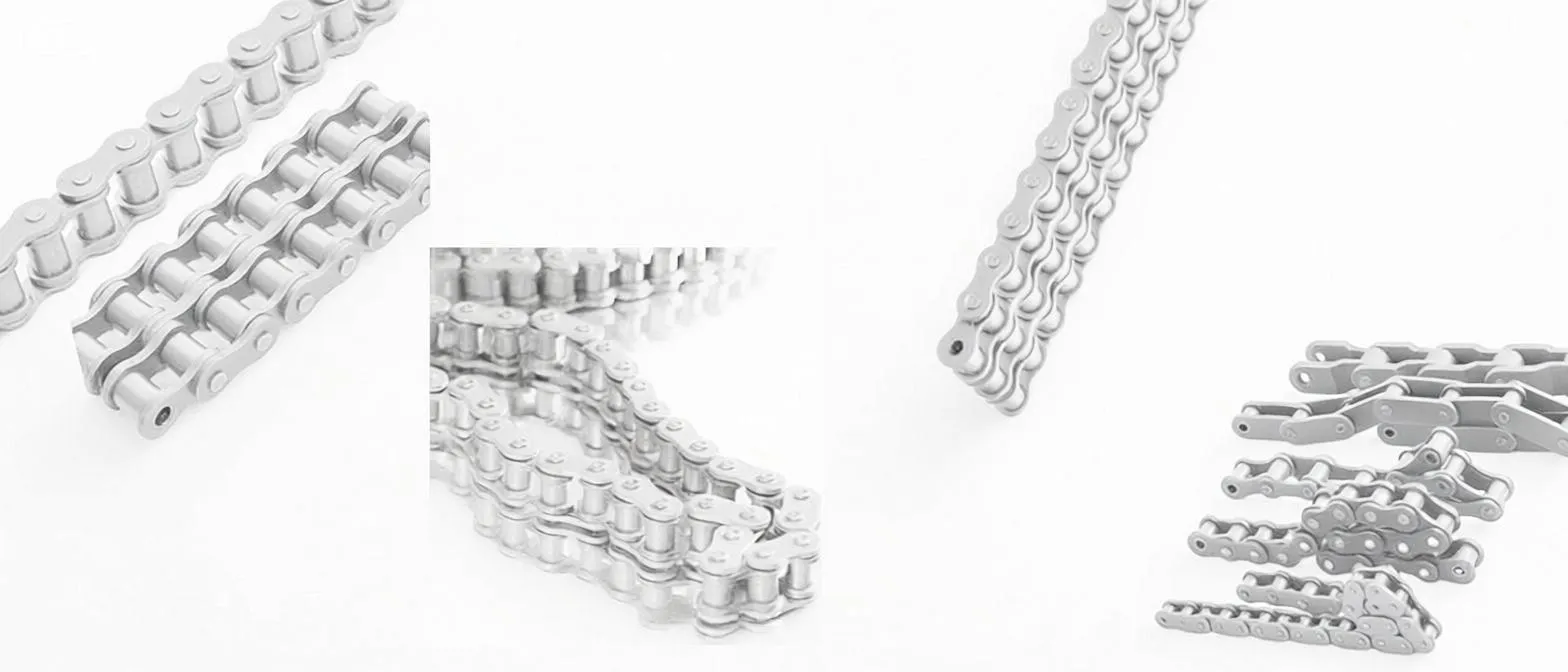
The pickup drive chain should be inspected and lubricated at every 50-hour interval during active harvest periods. Chain elongation beyond 2% of original pitch length is the standard replacement trigger — elongated chain increases the dynamic load on sprocket teeth and accelerates sprocket wear in a compounding cycle that becomes costly if left unaddressed. On the 9YG-2.24D, the twin-side 20A chain in the compression chamber has a different replacement schedule from the pickup drive chain; monitoring these separately prevents the common mistake of replacing both simultaneously based on the condition of whichever wore faster, which wastes serviceable chain life on one side.
Compression roller bearing grease intervals on roller-type bale chambers are typically every 8–10 operating hours when the machine is working in wet, contaminated crop environments. The sealed pillow-block bearing units on the pickup rotor shafts require less frequent attention — typically every 50 hours — but should be checked for contamination ingress after any operation in extremely dusty or sandy conditions, which are less common in Korea but relevant for machines exported to arid pastoral regions. Electronic density-control sensor calibration is a seasonal maintenance task; verifying sensor output against a reference weight scale at the start of each season prevents systematic bale weight drift that can affect feed ration calculations on dairy and beef operations.
Compatible Agricultural Equipment
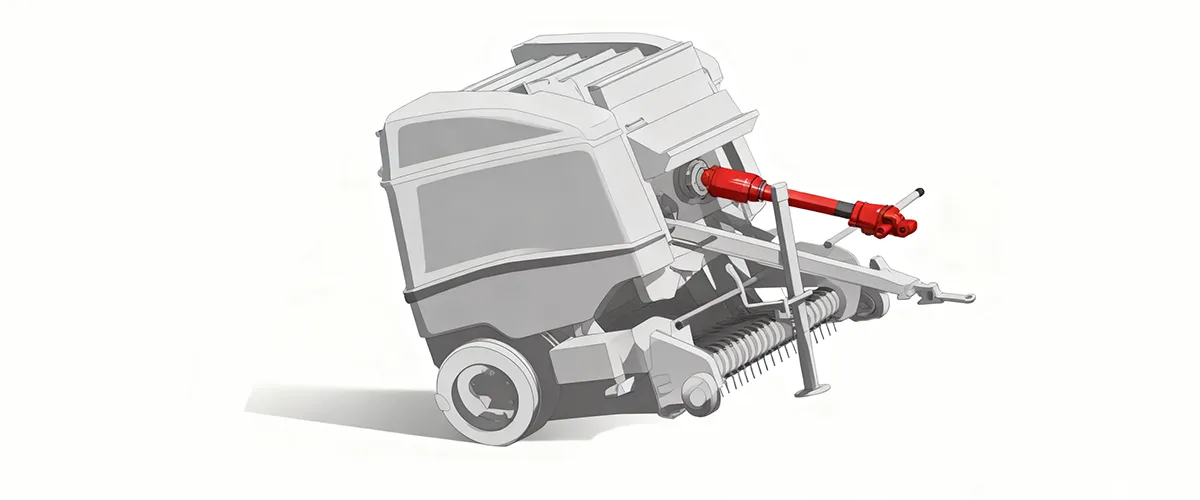
Our round balers pair directly with the following drive and power components for a complete, one-source machinery solution.
Over a Decade of Agricultural Machinery Manufacturing
Founded in 2013, we operate as a modern, intelligent-manufacturing enterprise in the agriculture and animal husbandry machinery sector. Our production scope covers light and heavy round balers, single and double-blade mowers, disc rotary mowers, and single and double-side rakes — a range that allows us to support the full forage harvest chain from cutting through to baling.
Independent import and export licensing, ISO 9001 Quality Management System certification, and a manufacturing fleet exceeding 60 large-scale production equipment units underpin an annual design capacity of 2,000 machine units. This scale allows us to maintain consistent production quality across batches and to carry replacement parts inventory that supports rapid field service response for international customers including those operating across Korean, Australian, European, and South American markets.
Our engineering team draws on field feedback from operators across diverse terrain and climate profiles — from Korean paddy-field edges to Canadian prairie grasslands — which directly informs the structural and material decisions that make our round baler machines reliable across varied operating conditions.
Frequently Asked Questions
How does a twin-rotor round baler handle thick rice straw swaths in Korean paddy field harvesting conditions? +
Which round baler model is best suited for Korean livestock farms producing silage bales with a 55–80 kW tractor? +
What maintenance schedule should a Korean farm operator follow for round baler pickup tines during the spring cutting season? +
Where can I find a reliable small round baler manufacturer that ships directly to Korean agricultural importers? +
How does the twin-rotor pickup design compare to standard spring-tine single-rotor pickups when baling maize stover or corn stalk residue on Korean upland farms? +
Editor: PXY