Alfalfa / Hay Baling — Regulatory and Market Standards
A comprehensive reference for hay producers, importers, and round baler operators navigating the quality certification, import compliance, and machinery regulatory frameworks that govern alfalfa hay trade between the world’s major producing regions and the East Asian premium feed markets.
South Korea and Japan together represent two of the most demanding, highest-value destinations for traded alfalfa hay in the world. Both markets import substantial volumes of premium forage annually — primarily from Australia, the United States, and Canada — to supply rapidly growing beef, dairy, and equine sectors whose domestic forage production cannot meet either the volume or the quality requirements of commercial livestock enterprises. For round baler operators, hay producers, and export-oriented agricultural businesses working in or supplying these markets, understanding the regulatory and grading environment is not optional background knowledge — it is the direct determinant of whether a bale of hay qualifies for premium-tier pricing, passes phytosanitary inspection, or meets the machinery certification requirements of the importing country. This article builds a structured overview of the standards that matter across the full hay baling and trade chain, from the round baler machine operating in a Korean alfalfa field or an Australian lucerne paddock through to the laboratory analysis that assigns a grade grade to bales arriving at a Japanese feed mill or Hanwoo feedlot.
Why Round Baler Standards and Feed Grading Are Directly Connected
The connection between round baler machine operation and the final hay grade assigned in an importing market is more direct than most producers recognise at the time of baling. Grading systems in both South Korea and Japan place significant weight on physical bale appearance, moisture content, and laboratory-measured nutritional parameters — all of which are directly influenced by decisions made during baling. A bale that is too loosely compressed will fail physical density standards and may be downgraded or rejected as a market unit. A bale containing excess moisture due to premature baling will fail moisture limits and create phytosanitary complications at customs. A bale with high leaf shatter from an improperly adjusted or poorly maintained round baler will test below the minimum crude protein threshold for premium grade, even if the standing crop it came from was excellent quality.
Understanding the grading framework is therefore not simply a compliance exercise after the hay is produced — it is a backward-mapping tool that allows the round baler operator and the farm manager to set baling targets that align with the grade they are trying to achieve. If a Korean Hanwoo feedlot operator requires a minimum crude protein of 18% and a relative feed value above 160 for contracted hay, those requirements translate into specific baling timing targets, moisture thresholds at baling, pickup speed settings, and post-bale storage protocols that are best planned before the machine enters the field, not after a load fails laboratory analysis.
The round baler machine itself also comes under regulatory scrutiny in these markets. Both South Korea and Japan impose machinery import and registration requirements on agricultural equipment, including round balers. Operators running uncertified machinery risk both legal liability for machinery-related incidents and ineligibility for government mechanisation subsidy programmes that have become an important part of the financial case for forage equipment investment in both countries.
South Korean Alfalfa Hay Grading Standards and Import Regulations
South Korea’s alfalfa hay market is primarily supplied through commercial imports, with domestic production in Gangwon, Jeju, and selected highland areas contributing a growing but still minority share. Imported hay must pass through a multi-stage compliance process that covers phytosanitary inspection, feed ingredient registration, and nutritional quality assessment before reaching commercial livestock operations. The grading framework applied to alfalfa hay in the South Korean market draws on both national standards and buyer-specified contractual requirements.
| Parameter | Supreme Grade | Premium Grade | Good Grade | Basic / Utility |
|---|---|---|---|---|
| Relative Feed Value (RFV) | > 185 | 170–185 | 150–169 | 130–149 |
| Crude Protein (CP), % DM | > 22% | 19–22% | 17–18.9% | 15–16.9% |
| Acid Detergent Fibre (ADF), % DM | < 27% | 27–29% | 30–32% | 33–35% |
| Neutral Detergent Fibre (NDF), % DM | < 34% | 34–36% | 37–40% | 41–45% |
| Moisture Content | < 12% | < 14% | < 15% | < 17% |
| Colour and Aroma | Bright green, sweet fresh odour | Green, fresh odour | Green to yellow-green, acceptable odour | Yellow-brown acceptable; no mould |
| Foreign Matter / Soil | Nil tolerance | Trace permitted | Min. detectable | Low level accepted |
The grading parameters above reflect the consolidated expectations of major Korean feedlot, dairy, and equine market buyers, drawing on National Institute of Animal Science (NIAS) guidance and the contracted quality specifications used by leading Hanwoo feedlot operators in Gyeongbuk and Chungnam provinces. Individual buyer contracts may differ from these benchmarks, and operators sourcing hay for specific contract supply should verify the contractual specification directly with the buyer before establishing round baler settings for that supply chain.
It is also important to note that crude protein values in particular are sensitive to the baling process. High leaf shatter during pickup — a common consequence of over-speed round baler operation on dry alfalfa — disproportionately reduces crude protein because alfalfa leaf tissue contains the majority of the plant’s total protein. A bale that visually appears acceptable can test 2 to 4 percentage points below its expected crude protein grade if pickup losses were significant. Achieving Supreme or Premium grade in the Korean market therefore requires both high crop quality and a correctly configured round baler machine operating within the settings range appropriate for the crop’s moisture at harvest time.
South Korea Import Regulations and Phytosanitary Requirements for Alfalfa Hay
All alfalfa hay imported into South Korea is subject to phytosanitary inspection under the Plant Protection Act administered by the Animal and Plant Quarantine Agency (APQA). The APQA implements Korea’s obligations under the International Plant Protection Convention (IPPC) and the WTO Agreement on the Application of Sanitary and Phytosanitary Measures (SPS Agreement). Alfalfa hay from approved origins must be accompanied by an official Phytosanitary Certificate issued by the national plant protection authority of the exporting country, declaring the consignment free from regulated pests and meeting Korea’s specific import conditions.
Key regulatory requirements under Korean import rules for alfalfa hay include: compliance with fumigation requirements where stipulated for specific origin countries; declaration of baling date and storage duration; absence of regulated quarantine pests including but not limited to alfalfa weevil, spotted alfalfa aphid, and khapra beetle; and documentation of the baling moisture content at time of production. The last of these requirements directly involves the round baler operator — Korean import documentation for some origins requires a producer declaration of baling moisture, which means that moisture meter records kept at the time of baling may be requested as part of customs compliance documentation.
Feed ingredient registration is a parallel compliance pathway. Alfalfa hay sold commercially as an animal feed ingredient in Korea must be registered under the Control of Livestock and Fish Feed Act, administered by the Ministry of Agriculture, Food and Rural Affairs (MAFRA). Registered alfalfa hay must meet maximum residue limits for heavy metals, pesticides, and mycotoxins as specified in the Feed Safety Standards and Specifications. Bales with elevated aflatoxin — a fungal toxin that can develop when alfalfa is baled at excessive moisture and stored in poorly ventilated conditions — will fail feed safety testing and may be subject to mandatory recall if discovered after entering the feed supply chain.
Japan Alfalfa Hay Grading Standards and Feed Market Requirements
Japan is consistently one of the largest importers of alfalfa hay globally, purchasing primarily from the United States, Australia, and to a lesser extent Canada, for its Wagyu beef, Holstein dairy, and thoroughbred equine sectors. The Japanese hay quality framework is particularly strict in its visual and physical assessment criteria — Japanese buyers and feed mills apply grading standards that in some respects exceed the laboratory-parameter focus of Korean grading, placing additional emphasis on bale colour, leaf-to-stem ratio, and absence of any foreign material including soil, weeds, and non-alfalfa grass species.
| Parameter | Grade A (Supreme) | Grade B (Premium) | Grade C (Standard) |
|---|---|---|---|
| Crude Protein (CP), % DM | > 20% | 17–20% | 14–16.9% |
| ADF, % DM | < 28% | 28–31% | 32–35% |
| NDF, % DM | < 34% | 34–39% | 40–45% |
| Moisture Content | < 12% | < 14% | < 16% |
| Colour (visual) | Deep green; uniform | Green; slight bleaching acceptable | Yellow-green acceptable; no brown |
| Weed Content | Nil; pure alfalfa only | Trace; < 1% by volume | < 3% by volume; no noxious weeds |
| Soil Contamination | Zero tolerance | Not detectable visually | Minimal; no soil clumps |
| Densidade do fardo | Firm; uniform; no surface loss | Firm; minor surface variation | Acceptable; no structural collapse |
Japanese Grade A alfalfa — the standard required for premium Wagyu finishing programmes and elite equine feeding operations — sets a high bar that reflects the quality expectations of buyers who are willing to pay significant premiums over standard market rates for reliable grade consistency. The zero-tolerance position on soil contamination is particularly relevant for round baler operators: even minor soil pickup from excessive windrow contact by the pickup header at harvest will downgrade bales from Grade A to Grade B or lower regardless of the nutritional analysis results.
Japanese buyers also place emphasis on cutting stage at harvest as a visual indicator that correlates with nutritional quality. Alfalfa baled at the early bud stage — before 10% of stems have reached full bloom — produces the deep green colour and high leaf-to-stem ratio that Grade A specifications require. Alfalfa that has advanced to full bloom before baling produces more yellow bales with lower CP and higher fibre, falling naturally into Grade B or Grade C territory. This means that the round baler operator’s relationship with the cutting decision is commercially significant — baling a day earlier or later can change a consignment’s grade outcome regardless of machine settings.
Japan Import Requirements for Alfalfa Hay: Phytosanitary and Feed Safety Framework
Japan’s alfalfa hay import framework is administered by the Ministry of Agriculture, Forestry and Fisheries (MAFF) and the Ministry of Health, Labour and Welfare (MHLW). The Animal Quarantine Service (AQS) handles phytosanitary inspection at ports of entry, while feed safety oversight falls under the Feed Safety Law (Shiryou Anzen Hou), which sets maximum contaminant levels for all registered feed ingredients including imported alfalfa hay.
All alfalfa hay entering Japan must be accompanied by a valid phytosanitary certificate from the exporting country’s national plant protection authority and must comply with Japan’s specific import conditions for alfalfa, which are maintained by the MAFF Plant Protection Division. Japan maintains stricter-than-average pest exclusion requirements and has historically imposed additional treatment requirements when specific pest concerns arise in source regions. Hay from North American origin has at various times required treatment for khapra beetle risk; importers should verify current treatment requirements for their specific origin country with the MAFF or a licensed customs broker before shipping.
Under the Feed Safety Law, alfalfa hay must meet maximum residue limits for aflatoxin (typically set at 10 ppb total aflatoxins), heavy metals including lead, arsenic, cadmium, and mercury, and pesticide residues as specified in the MHLW positive list system. The positive list system adopted by Japan applies strict maximum residue limits to pesticides not specifically registered for use on the target crop — this means that pesticides applied to neighbouring crops can create residue issues in hay produced from alfalfa grown in the same area, even if the pesticide was not directly applied to the alfalfa.
Manufacturing Structure: How Round Baler Design Affects Grade-Ready Alfalfa Hay Production
Achieving premium grade in the Korean and Japanese markets consistently requires not only correct farm management and cutting decisions but also a round baler machine whose mechanical design is capable of producing the bale characteristics those markets require. The following table maps the key structural design features of a suitable round baler machine to the specific grade parameters they influence.
| Machine Design Element | Grade Parameter Influenced | How the Design Choice Affects Grade Outcome |
|---|---|---|
| Low-angle, cam-less pickup tines | Crude Protein (CP), Leaf Retention, Colour | Reduces leaf shatter at pickup; more leaf retained in bale means higher CP and greener bale colour on inspection |
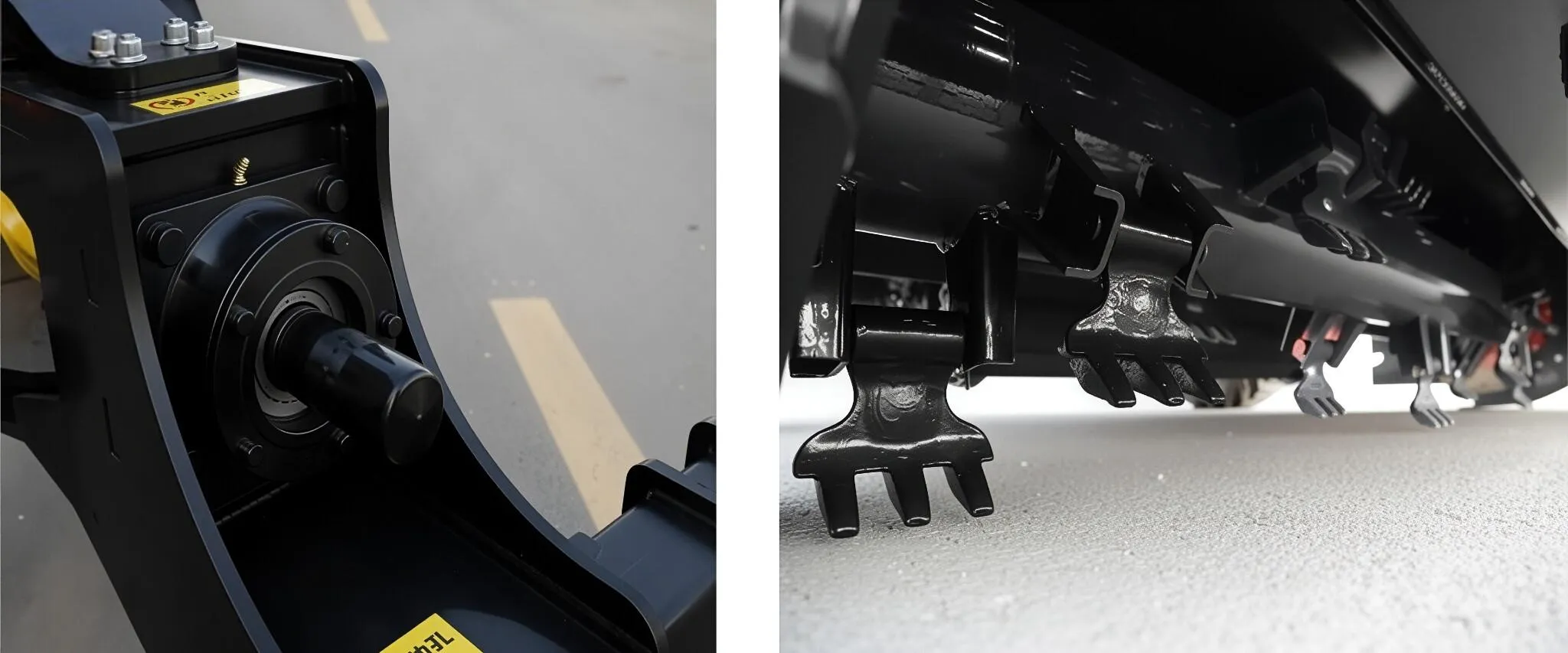
| High pickup clearance adjustability (skid shoes / gauge wheels) | Soil Contamination | Precise height control above soil prevents tine-to-ground contact; eliminates the soil pickup that causes Grade A failure in Japan |
| 18-roller fixed compression chamber (Φ222 mm) | Bale Density, Moisture Distribution | Uniform radial compression produces consistent density from core to outer layer; prevents the soft-core bales that store poorly and develop moisture migration that risks mycotoxin growth |
| Hydraulic accumulator gate control | Bale Structure, Outer Layer Retention | Damped gate opening reduces outer-layer expansion after bale completion; prevents the surface leaf scatter that reduces visual grade on inspection |
| Fast-cycle auto-tension net wrap system | Bale Physical Integrity, Post-Storage Quality | Rapid net engagement after gate opening prevents outer-layer loss; even net tension maintains bale shape during transport, reducing moisture infiltration at transit seams |
| Auto-lubrication system | Operational Consistency Across Multiple Cuttings | Continuous lubrication maintains roller speed consistency through long daily operating periods; prevents the bearing-wear-induced speed variation that produces density inconsistency across a run of bales |
Material System: Alfalfa Variety, Cutting Stage, and Baling Conditions That Determine Grade Potential
The grade potential of any batch of alfalfa hay is largely determined before the round baler enters the field. The variety, soil fertility, cutting stage, and wilting conditions create the ceiling above which no machine or baling practice can raise the final grade — but baling practice can easily lower the grade below that ceiling. Understanding the material system means understanding where the grade potential comes from and how to preserve it through the baling process.
Alfalfa variety selection is the foundation. High-leafy varieties developed for hay export markets — such as those bred for the Japanese Grade A equine and Wagyu market — consistently carry 10 to 15% more leaf mass relative to stem mass than standard forage varieties, which directly elevates the CP and RFV potential of the standing crop. In South Korea’s developing domestic alfalfa sector, variety selection is beginning to receive the commercial attention it deserves, with seed importers offering certified high-leafy varieties for producers supplying the premium commercial market. A high-leafy variety baled with minimum shatter from a correctly configured round baler machine can achieve CP values in the 22 to 24% range, placing bales in the Korean Supreme or Japanese Grade A category without requiring exceptional cutting timing.
Cutting stage is the second major determinant. The transition from vegetative to budding stage in alfalfa is accompanied by a rapid increase in ADF and NDF as the plant converts photosynthate into structural cell wall material for reproductive growth. Cutting at early bud stage — before 10% bloom — captures the peak of leaf mass relative to stem mass and produces the lowest ADF and NDF values of the season. Waiting until 25% bloom or beyond increases yield per cutting but reduces quality so significantly that the crop may shift from Supreme to Good grade even under otherwise identical conditions. For export-oriented Korean producers, the commercial premium associated with Supreme or Japanese Grade A typically far exceeds the yield increase from delayed cutting, making early bud stage the economically rational harvest point.
Wilting conditions in the field affect both the moisture content at baling and the extent of respiration losses that deplete soluble carbohydrates from the cut material before it is baled. Rapid wilting to 15 to 18% moisture in 24 to 36 hours — achievable in good drying conditions — minimises respiration losses and preserves the nutritional quality of the standing crop into the bale. Slow wilting due to cloud cover, humid conditions, or dense windrows produces extended respiration loss periods that degrade both CP and energy content before the round baler picks up the windrow. Korean producers managing multiple cuttings per season should plan cutting dates to align with forecast drying windows wherever possible, particularly for the second and third cuts when summer humidity in central Korea can make field drying significantly slower than for the spring first cut.
Round Baler Machine Regulations: Certification Requirements in South Korea, Japan, and Key Supplier Markets
Beyond the hay grading and import regulations, round baler machines themselves are subject to a distinct layer of regulatory requirements covering machinery safety, import certification, and operational compliance. These requirements apply to the equipment used to produce alfalfa hay regardless of whether the hay is for domestic consumption or export, and failure to operate a machine that meets applicable standards can result in exclusion from subsidy programmes, legal liability for workplace incidents, and complications with machinery insurance.
| Country / Market | Round Baler Machinery Regulation | Key Compliance Requirement |
|---|---|---|
| Coréia do Sul | Agricultural Mechanisation Promotion Act; RDA machinery certification standards; MAFRA registration for commercially supplied equipment | Round balers imported for commercial sale or subsidy eligibility must meet RDA safety and performance standards. CE marking from the machine’s manufacturing country is accepted as a compliance baseline by many Korean importers. Registration through a MAFRA-recognised importer or dealer is required for RDA subsidy programme eligibility. Operators outside the subsidy programme are not legally prohibited from using uncertified machinery but assume full liability for any resulting incidents under the Occupational Safety and Health Act. |
| Japan | Agricultural Machinery Safety Act; MAFF agricultural machinery performance standards; Industrial Safety and Health Act where commercial operation applies | Japan’s agricultural machinery regulatory framework includes MAFF performance certification standards for key machine types. Round balers imported for commercial agricultural use in Japan must comply with applicable safety guard and emergency stop requirements. The Industrial Safety and Health Act applies where machinery is used in commercial enterprises with employed workers. CE marking from EU-origin machines is recognised by Japanese authorities as evidence of design conformance to relevant international standards. |
| European Union (Supplier Market) | EU Machinery Regulation 2023/1230 (replacing Machinery Directive 2006/42/EC); EN 704 Safety of Agricultural and Forestry Machinery — Haymaking Machines | CE marking mandatory for all round baler machines placed on the EU market. EN 704 specifies safety requirements for pickup, feeding, and compression mechanisms. The EU Machinery Regulation introduces new requirements for high-risk machinery, risk assessment documentation, and technical file maintenance. Round balers exported from EU manufacturers to Asian markets carry CE compliance documentation that importing country authorities use to assess conformance with their own standards. |
| Australia (Hay Supplier Market) | State Work Health and Safety Acts; AS 4024 Machinery Safety Standards series; Australian Fodder Industry Association (AFIA) operational guidelines | Round balers used in Australian hay production for export to Korea and Japan must comply with state WHS Acts governing machinery guarding, operator safety, and workplace incident reporting. The AFIA publishes industry best practice guidelines for hay production that include machinery maintenance standards relevant to hay quality and worker safety. Exported hay is inspected for compliance with importing country phytosanitary requirements, and the condition of bales — including wrap integrity — is a factor in inspection outcomes. |
| United States (Hay Supplier Market) | OSHA 29 CFR Part 1928 (Agricultural Operations); ASABE (American Society of Agricultural and Biological Engineers) machinery standards; USDA Animal and Plant Health Inspection Service (APHIS) export certification | US-origin alfalfa hay exported to Korea and Japan is accompanied by APHIS phytosanitary certificates. OSHA Part 1928 governs worker safety on agricultural operations using machinery including round balers. ASABE standards provide voluntary performance and safety benchmarks widely adopted by round baler manufacturers operating in the North American market. US round baler machines are not CE-marked but major manufacturers comply with equivalent ASABE safety standards, which are recognised in Asian export markets. |
| Canada (Hay Supplier Market) | Provincial OHS Acts; Canadian Agricultural Safety Association (CASA) machinery guidelines; Canadian Food Inspection Agency (CFIA) export phytosanitary certification | Canadian hay exported to Korea and Japan is certified by the CFIA under the Plant Protection Act. Provincial OHS requirements govern machinery safety for round balers used in commercial agricultural operations. CASA publishes voluntary best practice guidelines for farm machinery safety. Canadian alfalfa hay for the Japanese market must comply with MAFF import conditions, including heat treatment requirements that apply to some Canadian origin certifications. |
For Korean domestic alfalfa producers who are both operating round balers and selling hay into the domestic premium market, the dual compliance framework — machinery safety on one hand and hay quality standards on the other — creates an integrated management requirement. Keeping the round baler machine correctly certified, maintained, and configured is simultaneously a safety compliance obligation, a subsidy eligibility criterion, and a quality production requirement.
Recommended Round Baler for Premium Alfalfa Hay Production
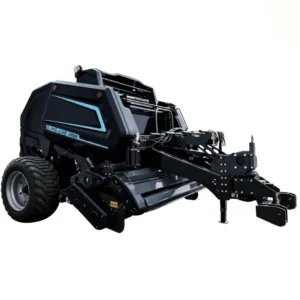
9YG-2.24D Transcend Round Baler
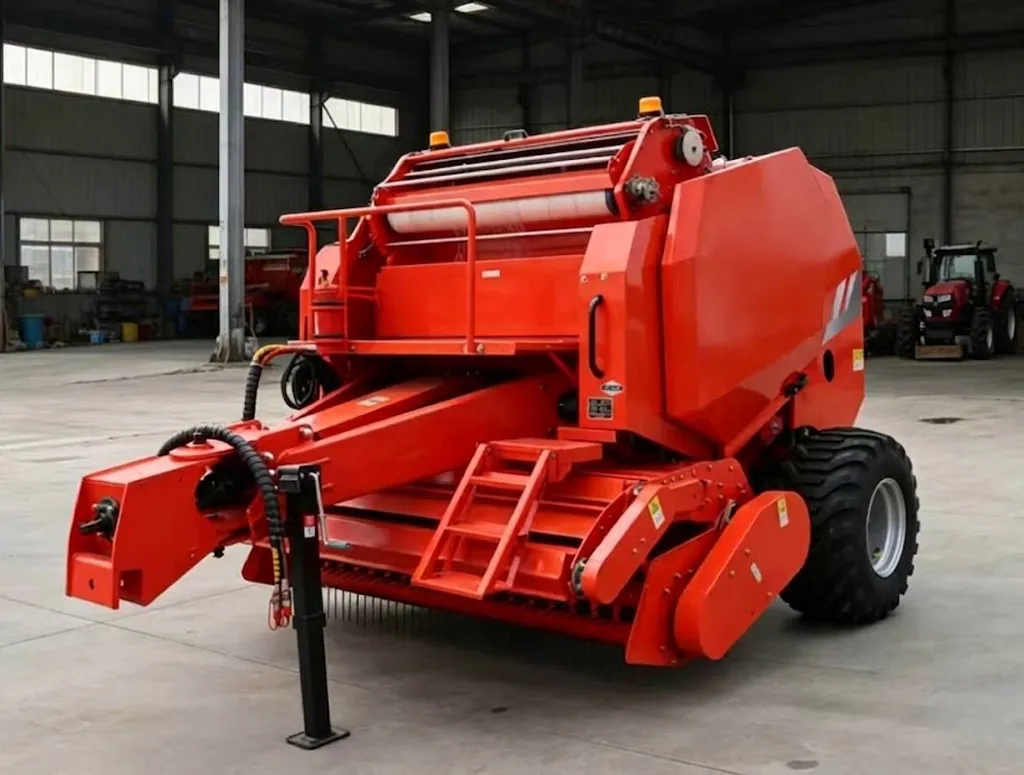
The 9YG-2.24D Transcend is a high-output round baler machine designed for operators where grade consistency and throughput are both commercial priorities. Its 2.24 m pickup width with cam-less guard-ring-free tine design minimises the leaf shatter at the header contact point that is the primary cause of crude protein downgrading in dried alfalfa. The 18-roller fixed compression chamber delivers uniform radial compression across the full bale diameter, producing the firm, consistent bale density that Korean and Japanese buyers evaluate on visual inspection before laboratory testing. The fast-cycle automated net wrap system limits the outer-layer exposure window after gate opening — critical for maintaining the surface leaf coverage that contributes to the bright green visual appearance required for Grade A and Supreme grade classification. With ISO 9001 manufacturing certification and CE compliance documentation available for export markets, this machine meets the baseline administrative requirements for import registration in both South Korean and Japanese agricultural machinery frameworks.
18-Roller Chamber
Auto Net Wrap
CE & ISO 9001
How Round Baler Operating Practice Directly Affects Export Grade Outcome
The regulatory and grading frameworks above establish what the market requires. The practical question for round baler operators is how operating decisions on a day-to-day basis translate into grade outcomes at the receiving market laboratory. The following mapping table connects specific operational choices during alfalfa hay baling to the grade parameters they most directly affect, giving operators a reference framework for calibrating their day-to-day baling decisions against the export grade specifications they are targeting.
| Operational Decision | Grade Parameter at Risk | Direction of Impact if Done Incorrectly |
|---|---|---|
| Baling at moisture above 17% | Moisture content; mycotoxin risk (aflatoxin) | Fails moisture limit for Korean Premium and Japanese Grade A; elevates aflatoxin risk under warm storage conditions |
| Ground speed too high on dry alfalfa | Crude Protein; visual colour grade | Excess tine impact speed increases leaf shatter at pickup; CP falls 2–4% below standing crop potential; green surface colour replaced by yellow stems |
| Pickup too low (tine-to-soil contact) | Soil contamination | Even trace soil in bales causes Grade A failure under Japanese zero-tolerance criterion; heavy contamination causes Grade C downgrade or rejection |
| Gate pressure too low for dry hay | Bale density; bale physical structure | Under-dense bales fail visual density assessment; outer-layer relaxation after ejection creates surface scatter visible on Japanese buyer inspection |
| Delayed net wrap trigger | Surface leaf retention; colour grade | Outer leaf layer disperses from bale surface before net engages; residual bale surface appears yellow-stemmy, reducing visual grade on inspection |
| Baling past mid-bloom stage | ADF, NDF, CP, RFV — all nutritional parameters | Post-bud-stage baling shifts ADF above 30%, NDF above 40%, and CP below 18% — dropping from Korean Supreme to Good or Basic grade regardless of baling quality |
System Components That Support Grade-Consistent Alfalfa Hay Production
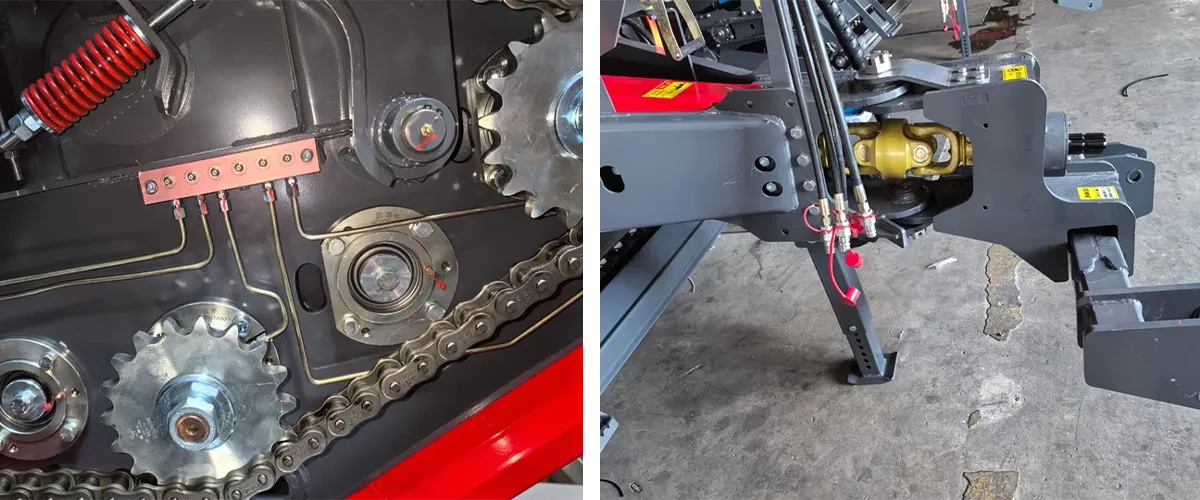
Consistent alfalfa hay grade across a season of multiple cuttings depends on the reliability and correctness of every component in the round baler drive system. A round baler machine producing inconsistent output across a run is frequently experiencing a drivetrain issue — PTO shaft wear, chain stretch, or gearbox oil degradation — rather than a crop condition change. Ensuring that all supporting components are correctly specified and properly maintained eliminates a major source of unexplained grade variation across a season.
Agricultural PTO Shaft for Round Balers
The PTO shaft connects the tractor’s power output directly to the round baler machine’s input shaft, driving the roller chain, compression rollers, and pickup mechanism. In alfalfa hay baling, where the tractor-baler combination may run continuously for 10 to 14 hours across multiple daily passes through a cutting, PTO shaft condition directly affects the stability of roller surface speed that determines leaf handling quality. An overrun clutch on the PTO shaft prevents back-driving events when the baler gate opens, protecting the round baler gearbox from the sudden reverse torque that is one of the most common causes of gearbox damage in extended hay baling operations. Using a correctly rated PTO shaft with intact overrun clutch and shear-bolt protection is a basic requirement for grade-consistent baling across a full alfalfa cutting season.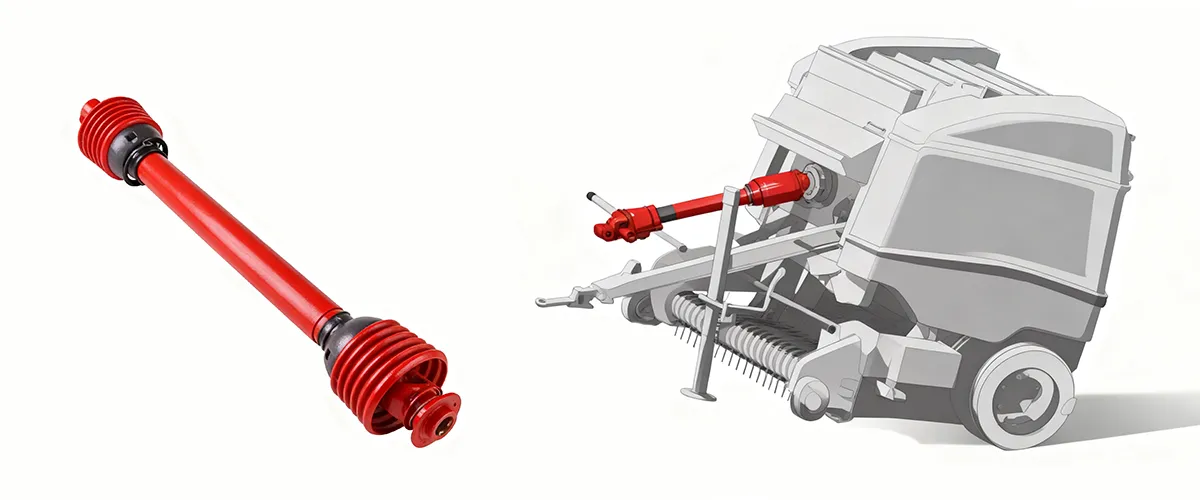
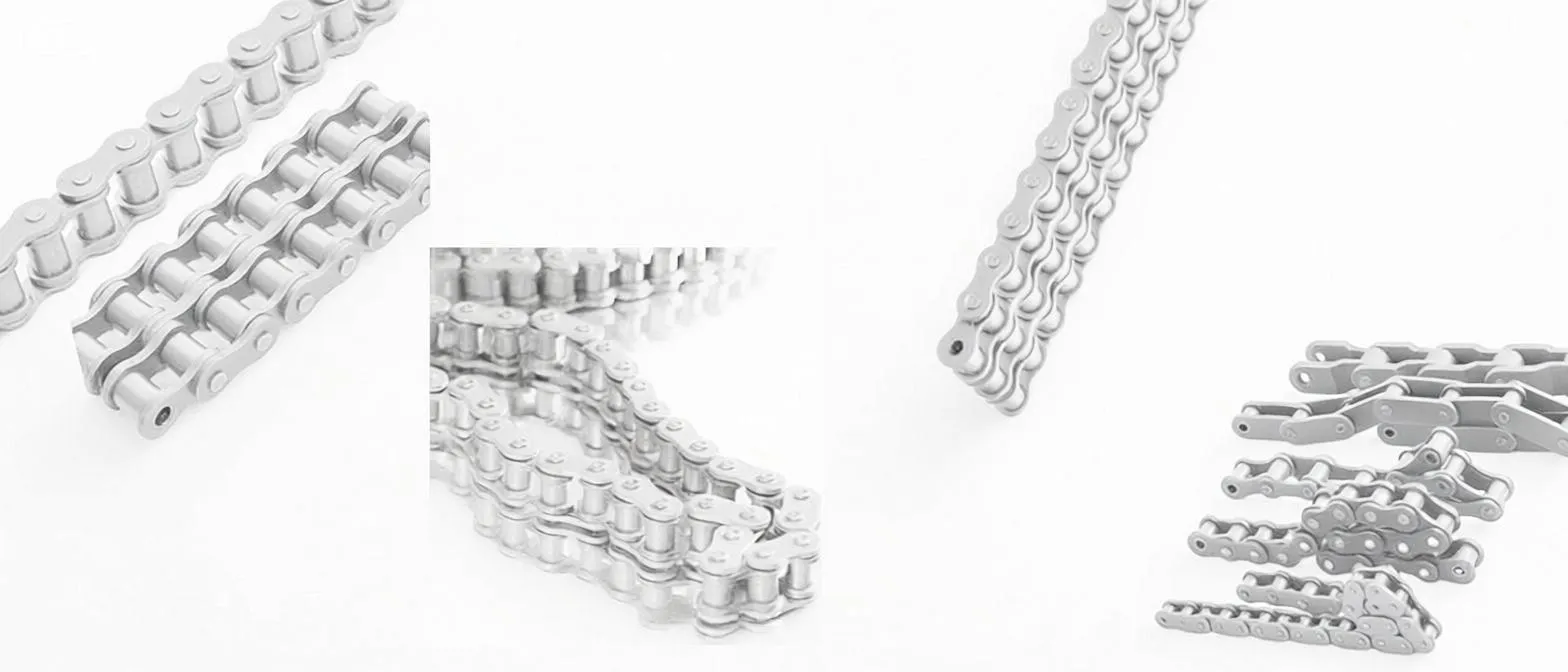
Agricultural Chain Drive System
The roller drive chain transmits torque from the round baler gearbox to the individual compression rollers that produce the bale. Chain wear in a standard alfalfa hay season proceeds more slowly than in stover work, but it is cumulative and, if left unchecked, produces chain elongation that creates cyclic speed variation in the roller system. This speed variation is the mechanical root of the bale-to-bale density inconsistency that Korea and Japan buyers notice on arrival inspection when bales from the same consignment vary noticeably in firmness. Using a matched-specification agricultural chain, checked and re-tensioned at regular intervals during the alfalfa season, is a low-cost maintenance investment that pays for itself in grade consistency across the season’s production.
About Us
Established in 2013, we are an intelligent modern manufacturing enterprise serving the global agriculture and livestock industry. Our product range covers a comprehensive selection of harvesting and forage machinery — from compact light-duty round balers for smallholder operations through heavy-duty commercial models, complemented by single and double-blade mowers, disc rotary mowers, and single and double-side rakes. We hold independent import and export rights and are certified under the ISO 9001 Quality Management System.
Our manufacturing facility operates more than 60 sets of large-scale production equipment across a dedicated production floor, with an annual design capacity of 2,000 units. Close to 100 registered technology patents cover our core engineering innovations across compression chamber design, pickup mechanism engineering, hydraulic control system architecture, and net wrap automation. Our product line is CE-marked and fully documented for import registration in South Korea, Japan, and other key export markets.
We have built long-term distribution relationships across Asia, Europe, Oceania, and the Americas, with after-sales parts supply chains designed to support hay producers through the peak of each cutting season without extended downtime. We welcome enquiries from distributors, dealers, and direct farm buyers in all active export markets, and are happy to provide certification documentation and technical specifications to support import registration processes.
Frequently Asked Questions
Editor: PXY