Round Baler Technology Guide
How Does Moisture Monitoring Technology Work in Round Balers?
A technical reference for hay producers, forage contractors, and livestock farmers seeking better bale quality and storage outcomes
Moisture is the single variable that determines whether a bale of hay or silage becomes a premium, high-nutrition feed product or an expensive pile of mould-damaged material. Get it wrong — bale at too high a moisture content for dry hay, or wrap silage at too low a content — and the consequences range from respiratory disease in livestock to complete spoilage of an entire season’s cutting. For decades, farmers relied on handheld probe meters, guesswork, and decades of experience to judge when a windrow was ready. Moisture monitoring technology integrated directly into round baler machines has changed that equation fundamentally, giving operators real-time data at the point where it matters most: as the crop enters the baling chamber.
This guide explains how these systems work, what they are made of, what the sensor technology behind them involves, and how producers across Korea and the wider Asia-Pacific region can use this knowledge to select a round baler that meets their feed quality targets. Whether you are running a small round baler for a 40 hp tractor on a hillside paddock in Gangwon Province or managing a large-format hay operation on the plains, understanding moisture monitoring will directly affect your bale quality, storage losses, and feeding results.
1. Action Mechanism: How Moisture Is Detected During Baling
The operating principle behind in-baler moisture monitoring is dielectric measurement — specifically, the use of capacitance or radio-frequency impedance sensors to detect the electrical properties of the crop mass as it passes through the feed zone. Water molecules are polar and respond strongly to an applied electric field, so a wet crop produces a measurably different electrical signal than a dry one. By calibrating the sensor output against known moisture reference values for specific crop types — ryegrass, alfalfa, corn stover, rice straw — the system can convert a raw electrical reading into a moisture percentage displayed in real time on the operator’s monitor inside the tractor cab.
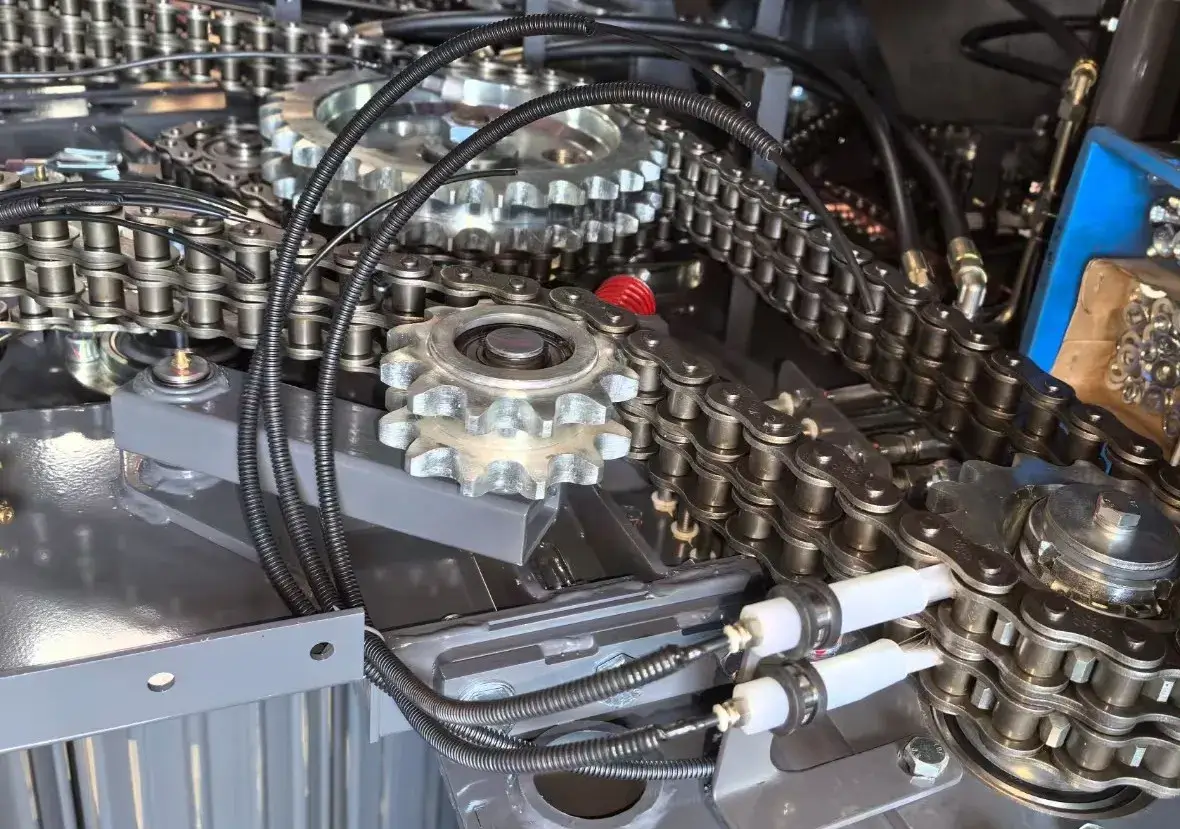
In practice, the sensor assembly is typically mounted in the crop flow path — often on the intake roller assembly or within the feed channel just before the compression rollers begin forming the bale. As the crop mass moves past the sensor face at high speed, multiple readings are taken per second and averaged to compensate for the natural variation within any windrow. The signal is processed by an onboard control unit that applies crop-specific correction factors — because the relationship between dielectric response and actual moisture differs between species, maturity stages, and even cutting intervals — before displaying the result. On more sophisticated systems, the data is also logged against GPS coordinates, allowing producers to build field-level moisture maps over time that improve future cutting decisions.
The integration with the round baler’s density control system is one of the most practically useful aspects. On models where sensor-controlled bale density management is standard — as it is across the 9YG series lineup — the moisture reading can be linked to the density target: if incoming moisture is above the threshold set for the dry hay range (typically around 20–25% wet basis for safe storage), the operator is alerted before forming a bale that will overheat in storage. This immediate feedback loop is what makes in-baler moisture monitoring genuinely useful rather than merely informative.
2. Manufacturing Structure: How Moisture Sensors Are Built Into a Round Baler
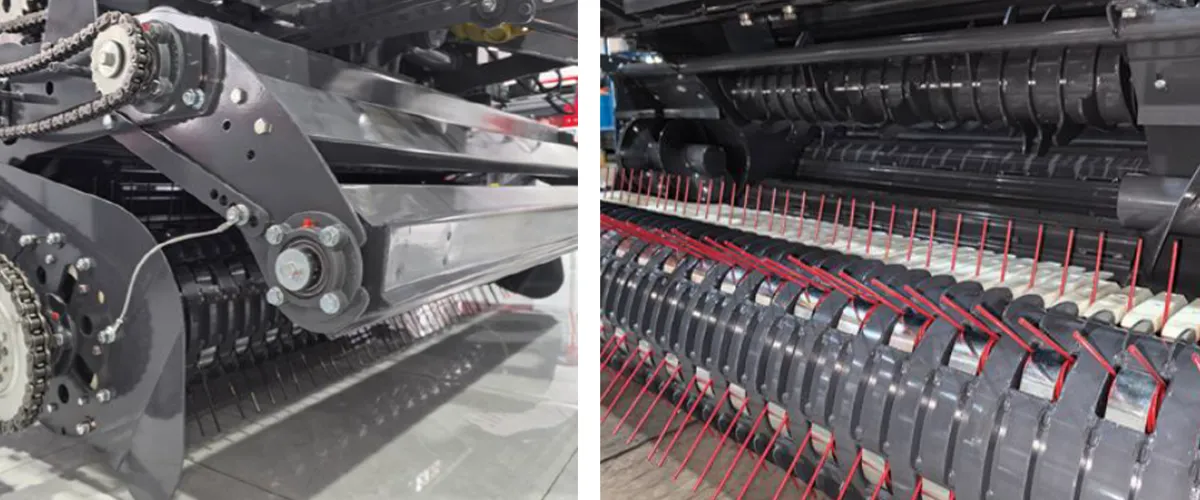
Integrating reliable moisture sensing into a round baler machine is a significant engineering challenge. The sensor must survive the harshest conditions a piece of agricultural equipment faces: continuous abrasive contact with crop material including stones, soil, dust, and crop acids; vibration from the baling process itself; wide operating temperature ranges from early morning frost conditions to mid-summer heat; and washdown with high-pressure water during cleaning. The sensor housing is typically machined from stainless steel or a high-density engineering polymer that resists crop acid and impact damage, with the sensing electrode face positioned flush with the crop contact surface to minimise wear while maintaining consistent contact.
The sensing electrode itself is commonly a stainless steel or gold-plated copper plate, selected for corrosion resistance and stable electrical properties over time. The electrode is isolated from the sensor housing by a high-grade dielectric polymer insert — PTFE or a similar fluoropolymer is common — which maintains the electrical separation between the sensing element and the machine frame that is essential for accurate measurement. The wiring harness connecting the sensor to the control unit runs through sealed conduit protected from crop debris and moisture ingress, with industrial-grade connectors rated to IP67 or IP69K for dust and water resistance.
The control unit — the electronics module that receives the sensor signal, applies calibration algorithms, and drives the display — is housed in a sealed enclosure rated for agricultural environments, typically DIN rail-mounted inside a protected cabinet on the baler frame. The display unit inside the tractor cab connects via the baler’s ISOBUS (ISO 11783) data interface on newer machines, or via a dedicated signal cable on simpler setups. The ISOBUS standard is particularly relevant for Korean-market buyers because it ensures compatibility between the round baler’s monitoring system and modern tractor cab terminals from multiple tractor manufacturers without requiring proprietary adapters.
3. Material System: What the Sensor Technology Is Made Of
The choice of materials throughout a moisture sensing assembly directly determines its accuracy over time and its total service life. Cheaper systems often use brass or uncoated copper electrode plates; while these perform acceptably when new, they oxidise and develop surface deposits that shift the sensor’s baseline calibration over one or two seasons, gradually degrading measurement accuracy without any obvious indication to the operator. Quality-focused designs use electrodes made from grade 316L stainless steel or gold-plated surfaces that resist oxidation and maintain a stable dielectric contact area across thousands of operating hours.
The dielectric isolation material between the electrode and housing plays a crucial and often underappreciated role. PTFE (polytetrafluoroethylene) is the benchmark choice for this application because its dielectric constant is stable across the temperature range experienced during field operation, it is chemically inert to crop acids and cleaning agents, and its surface energy is low enough that crop material does not adhere to it and alter the effective sensing area. Cheaper designs using standard engineering plastics like nylon or acetal show measurable dielectric drift with temperature, introducing a systematic error that must be either corrected by software or accepted as measurement uncertainty.
The structural housing that protects the sensing assembly from impact and abrasion is ideally machined from 304 or 316 stainless steel, though high-density polyamide (PA66-GF35) with an integral UV stabiliser is an acceptable alternative where weight is a consideration. Regardless of material, the critical design requirement is that the sensor face sits flush with the crop contact surface — any protrusion creates a wear point, while any recess allows crop material to accumulate and compress against the sensor face, effectively insulating it from the flowing crop and degrading the reading. The mechanical tolerance on this flush-mounting dimension is typically held to ±0.1 mm in well-engineered assemblies.
4. Types of Moisture Sensing Technology Used in Round Balers
Not all moisture monitoring systems in round baler machines use the same underlying technology. Understanding the differences helps buyers evaluate what a supplier’s system can actually deliver in terms of accuracy, calibration requirements, and long-term reliability. The three principal approaches in commercial use today are capacitance sensing, near-infrared (NIR) optical sensing, and radio-frequency (RF) impedance sensing, each with distinct trade-offs.
| Sensor Type | Operating Principle | Typical Accuracy | Main Advantage | Main Limitation |
|---|---|---|---|---|
| Capacitance | Measures change in dielectric constant of crop between two electrodes | ±1.5–3% moisture | Robust, low cost, no optical components | Affected by crop density variation; requires crop-specific calibration |
| Near-Infrared (NIR) | Measures reflectance at wavelengths where water absorbs strongly (1450, 1940 nm) | ±0.5–1.5% moisture | High accuracy; can measure protein/NDF simultaneously | Optical window requires regular cleaning; higher cost |
| RF Impedance | Measures electrical impedance of crop mass at radio frequency | ±1–2.5% moisture | Good bulk-sampling; less sensitive to surface contamination | Larger sensor footprint; more complex installation |
For the majority of hay and silage baling applications, capacitance sensing remains the most practical choice because its robustness, repairability, and relatively low calibration complexity make it well suited to the realities of commercial farm use. NIR systems are increasingly appearing in premium round baler machine configurations as costs fall, and their ability to simultaneously measure nutritional parameters alongside moisture represents a genuine leap in on-machine intelligence that will likely become standard within the next decade.
5. Target Moisture Ranges by Crop Type and End Use
The value of real-time moisture data from a round baler is only realised if the operator knows what the target range is for the specific crop and end use. Baling at the wrong moisture — even by a few percentage points — can mean the difference between a high-value bale and one that spontaneously heats, generates mycotoxins, or fails to ferment properly. The table below sets out the practical moisture targets that guide decision-making for the main forage crops handled by round balers across Korea and neighbouring agricultural markets.
| Crop | End Use | Baling Moisture Target (wet basis) | Risk Below Target | Risk Above Target |
|---|---|---|---|---|
| Ryegrass / Mixed grass | Dry hay (barn stored) | 14–18% | Leaf shatter loss; brittle stems | Spontaneous heating; mould; dusty hay |
| Ryegrass / Mixed grass | Wrapped bale silage | 35–55% | Poor fermentation; yeast growth | Effluent loss; clostridial fermentation |
| Alfalfa / Lucerne | Dry hay | 12–16% | Severe leaf shatter; protein loss | Mould; heating; carotene loss |
| Rice straw | Dry bale (bedding / coarse feed) | 15–20% | Excessive dust; handling losses | Mould; storage losses; ammonia generation |
| Corn stover | Dry bale or low-moisture silage | 20–30% | Lignin fraction too high; poor intake | Heating; mycotoxin risk if over 35% |
Korean producers baling rice straw in autumn — one of the dominant round baler application scenarios in the country’s major rice-growing regions including Jeollanam-do, Chungcheongnam-do, and the Yeongnam basin — face a narrow window between field drying and the onset of autumn rain events. Real-time moisture monitoring gives these operators a decisive advantage, allowing them to work right up to the edge of the safe baling window rather than building in an arbitrary safety margin that leaves quality and quantity on the table.
6. How Density Sensor Control Connects to Moisture Management
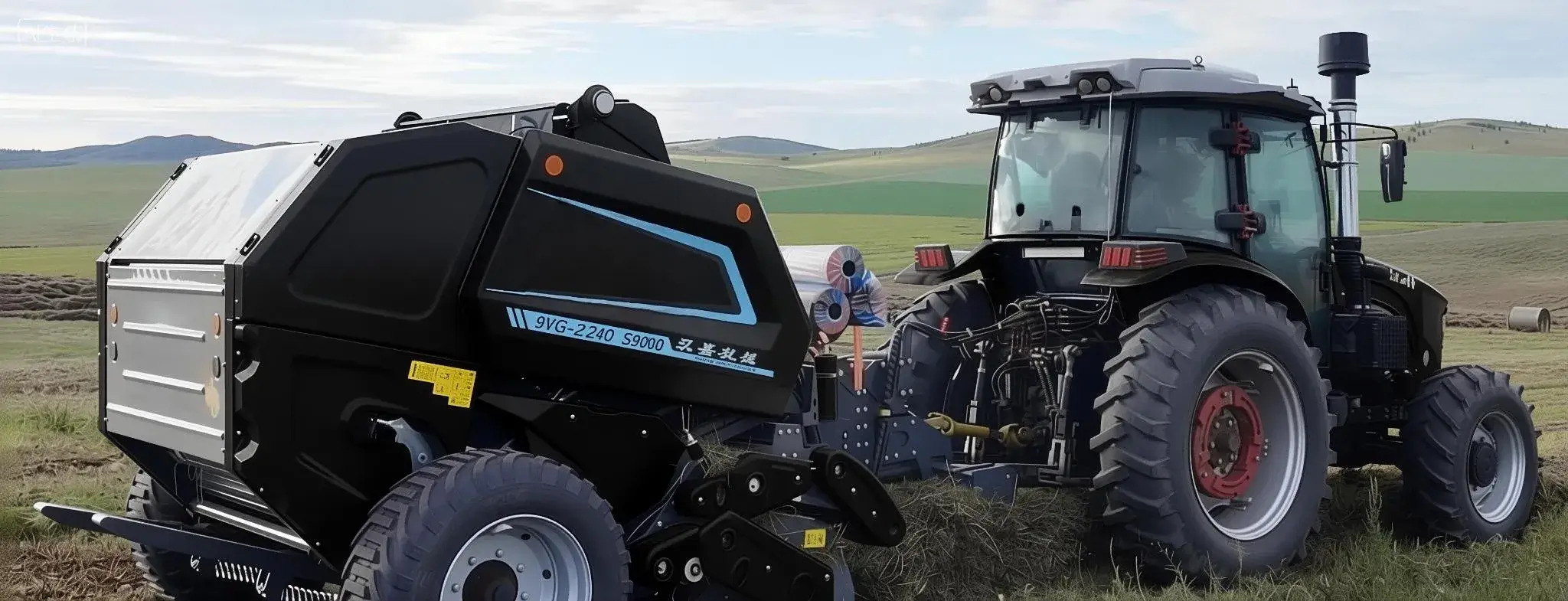
Moisture content and bale density are not independent variables — they interact in ways that significantly affect storage outcomes. A bale formed at high moisture will compress more easily during rolling, producing an apparently firm bale that later softens and distorts as the crop dries and contracts within the net wrap. Conversely, a very dry bale requires more roller pressure to achieve the same density, placing higher demand on the round baler’s drivetrain and gearbox components. The density sensor systems standard across the 9YG round baler range — which use pressure sensors or mechanical deflection transducers to continuously monitor the bale formation pressure — can be integrated with moisture readings to compensate the density target based on crop condition.
On the 9YG-2.24D series, the compression chamber is 1400 mm wide with a diameter of φ1200 mm, served by 18 compression rollers of φ222 mm each. The rated bale density range is 100–200 kg/m³ depending on crop type and moisture. At the lower end of the density range, a wet crop at 40% moisture might produce a bale that appears dense at formation but settles to a significantly lower density after several weeks of anaerobic fermentation in the wrap. The corrected density target setting — informed by the real-time moisture reading — allows the operator to compensate in advance, forming a tighter initial bale that achieves the target post-fermentation density rather than falling short of it. This is a level of operational precision that was simply not achievable with pre-baling moisture checks alone.
The gearbox and drivetrain of the baler also benefit indirectly from moisture-aware density management. Running at unnecessarily high bale pressures in wet conditions increases load cycling on the chain and sprocket assemblies, the PTO shaft, and the twin-axle cross-joint driveline used in the 9YG-2.24D S9000 models. By calibrating the density target to the actual crop condition, the system naturally reduces peak drivetrain loading during high-moisture baling passes, extending the service life of these components between maintenance intervals.
7. Round Baler Models: Sensor-Compatible Specifications
The following round baler models each include sensor-controlled bale density management as standard, providing the hardware foundation on which moisture monitoring systems can be integrated. Specifications are drawn from the current product range.
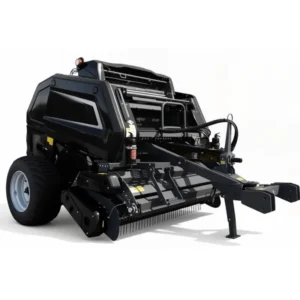
Enfardadeira redonda 9YG-2.24D (S9000 Transcend)
Pickup: 2240 mm | Chamber: φ1200 mm | Power: 55–100 kW | PTO: 720 r/min | Bale density: 100–200 kg/m³ | Output: 40–100 bales/h | Weight: 4570 kg
Sensor-controlled density management standard. Dual-linked gearbox rotates 90° laterally for field manoeuvring. Self-developed dual cross-joint PTO shaft with safety torque limiter protects components under high-moisture load conditions.
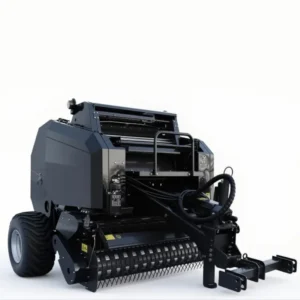
9YG-1.0 Round Baler (Mini)
Pickup: 1900 mm | Chamber: φ1000 mm | Power: 48–80 kW | Bale: Φ1100×1000 mm | Density: 115–200 kg/m³ | Weight: 2640 kg
A mini round baler designed for 40–80 hp tractors. The axial-flow semi-forced feed mechanism with no cam and no guard ring reduces blockages and nearly doubles throughput over conventional designs. Sensor density control standard.
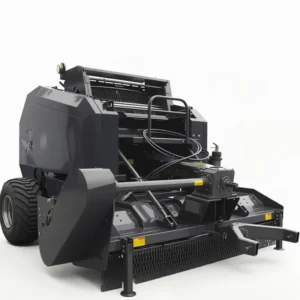
9YG-1.0C Round Baler (Corn Stalk)
Pickup: 2400 mm | Power: ≥69.8 kW | PTO: 540 r/min | Hammer-claw pickup: 20 claws | Bale: Φ1000×1250 mm | Density: 115–200 kg/m³
Interchangeable spring-tine and hammer-claw pickup assemblies. Dual-side 16A heavy-duty chains for higher compression pressure. Sensor density control ensures consistent bale weight across varying corn stover moisture conditions at autumn harvest.
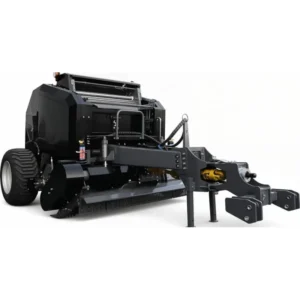
9YG-1.25 Round Baler (Double)
Pickup: 2240 mm | Power: ≥88.2 kW | Bale: 1200×1250 mm | Density: 115–200 kg/m³ | Output: 40–80 bales/h | Weight: 4558 kg
Auger-plus-paddle-roller combined feed system. Interchangeable pickup heads support multi-crop operation across a single season. Sensor density control enables moisture-aware bale pressure adjustment for mixed ryegrass and stalk crop baling.
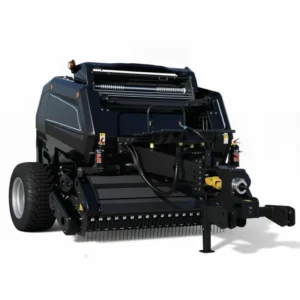
Enfardadeira redonda 9YG-1.25A
Pickup: 2150 mm | PTO: 540–1000 r/min | Power: ≥75 kW | Bale: φ1300×1250 mm | Density: 100–200 kg/m³ | Weight: 4472 kg
Wide PTO speed range (540–1000 r/min) ensures compatibility with older fixed-speed tractor PTOs common on Korean farms. Sensor-controlled density management adapts bale pressure to real crop conditions across varying windrow moisture levels.
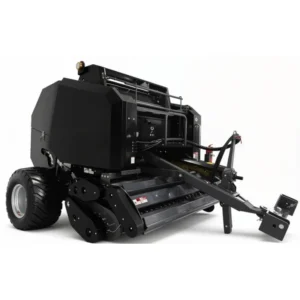
9YG-2.24D Round Baler (Standard)
Pickup: 2240 mm | 18 rollers φ222 mm | Power: 55–100 kW | Bale: φ1300×1400 mm | Density: 100–200 kg/m³ | Weight: 3922 kg
Core 9YG-2.24D platform with axial-flow semi-forced feed mechanism and sensor density control. The net wrap specification of 2000×1.4 m/bale supports consistent wrapping tension across the density range achieved with moisture-aware control.
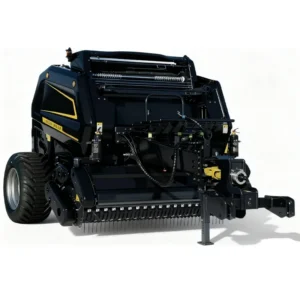
9YG-2.24D Round Baler (Classic)
H-type sleeve hydraulic fittings | Dual-side rear sprocket drive | Buffer hydraulic cylinder | Weight: 4312 kg | Output: 40–100 bales/h
H-type hydraulic connectors allow higher circuit pressure and faster gate cycling. Buffer cylinder on the rear gate dampens closure shock — important for maintaining sensor calibration by reducing vibration-induced signal noise during bale ejection.
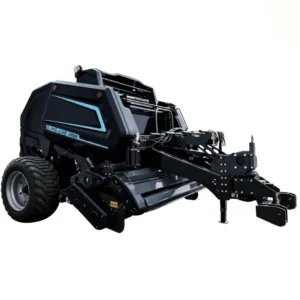
9YG-2.24D Round Baler (Transcend)
Dual 20A heavy chains | Max hitch torque: 1000 Nm | Lateral steer: 100° | Tractor tilt tolerance: 30° | Bale weight: 500–1000 jin
The Transcend’s tilt-adjustable hitch maintains consistent baler-tractor geometry across sloped terrain, which also benefits moisture sensor contact consistency — uneven ground traverse can cause intermittent sensor contact loss in less rigidly mounted designs.
8. Regulatory Context: Agricultural Machinery Sensors, Gearboxes, and Electronics Standards by Region
Moisture monitoring electronics and the gearbox components they interact with in round baler machines are subject to a patchwork of national and regional standards that importers, distributors, and farm buyers need to be aware of. The following overview covers the main regulatory frameworks relevant to buyers and operators in Korea and key export markets.
| Region | Standard / Regulation | Relevance to Sensors and Electronics |
|---|---|---|
| Coréia do Sul | RDA Agricultural Machinery Safety Certification; Radio Waves Act (전파법) administered by MSIT; KS C IEC 61000 series (EMC) | Wireless-enabled sensor modules (Bluetooth, RF) require frequency approval from the Ministry of Science and ICT under the Radio Waves Act. EMC compliance testing per KS C IEC 61000 is expected for electronic control modules sold in the Korean market. Agricultural machinery must also pass RDA safety testing before being listed on approved subsidy purchase lists. |
| European Union | Machinery Directive 2006/42/EC; Radio Equipment Directive (RED) 2014/53/EU; EMC Directive 2014/30/EU; ISO 11783 (ISOBUS) | All electronic sensor modules must carry CE marking under the RED and EMC Directives. ISOBUS compliance under ISO 11783 is effectively mandatory for new round baler machine models sold in Western European markets. Gearbox torque and rated power must be documented in the technical file supporting the CE declaration. |
| United States | FCC Part 15 (unlicensed electronic devices); ASABE S493 (agricultural equipment safety); EPA Tier 4 Final (engine emissions — tractor, not baler) | Sensor modules that emit radio frequency signals must comply with FCC Part 15 for unintentional radiators. ASABE S493 governs safety aspects of the baler’s mechanical systems. Buyers should confirm FCC compliance documentation for any wireless moisture monitoring add-on module before purchase. |
| Japan | Radio Law; Agricultural Machinery Act; JIS B 9700 (Machinery safety); JIS C 61000 (EMC) | Electronic sensor modules with wireless capability require certification under Japan’s Radio Law (TELEC mark). Agricultural machinery electronics are subject to EMC requirements under JIS C 61000. MAFF performance verification is required for new models entering government subsidy programs. |
| Russia / EAU | TR CU 010/2011 (Machinery safety); TR CU 020/2011 (Electromagnetic compatibility); GOST R 52774-2007 | EAC mark required for equipment sold in the Eurasian Economic Union. Electromagnetic compatibility of all onboard electronics must comply with TR CU 020/2011. The technical file must include gearbox rated torque, PTO shaft specification, and sensor calibration documentation. |
| Australia | ACMA Radiocommunications Act 1992; AS/NZS 4024.3 (Machinery safety); RCM marking | Electronic modules that operate in the radio frequency spectrum require RCM (Regulatory Compliance Mark) for the Australian market, administered by ACMA. Equipment sold with wireless sensor capability must demonstrate compliance. Mechanical PTO and gearbox safety requirements align with AS/NZS 4024.3. |
For Korean agricultural buyers purchasing round balers through the national machinery purchase subsidy program (농기계 구입지원), confirming that any electronic monitoring systems on the machine — including density sensors and moisture monitoring modules — have passed RDA certification and appear on the approved equipment documentation is essential before committing to a purchase. This also applies to after-market moisture monitoring kits, which may or may not carry the necessary MSIT radio certification if they include wireless data transmission features.
9. Practical Benefits of Moisture Monitoring for Commercial Baling Operations
The commercial case for moisture monitoring technology in a round baler machine comes down to three interrelated benefits: reduced storage losses, improved feed quality, and lower risk of equipment overload damage. Storage loss reduction is arguably the most financially significant. Studies conducted by agricultural research institutes in Europe and Northeast Asia consistently show that bales stored at moisture levels above the safe threshold lose between 5% and 15% more dry matter during the storage period than correctly-conditioned bales, primarily through aerobic respiration and mould growth. On a mid-sized operation producing 2,000 bales per season, this translates to a substantial quantity of lost feed that was paid for in labour, fuel, and wrapping film but never reaches the feed fence.
Improved feed quality from correctly-conditioned bales affects livestock performance directly. Hay baled at the right moisture retains a higher proportion of the water-soluble carbohydrates and carotenoids present in the standing crop, and silage fermented from a correctly-managed moisture base achieves better lactic acid fermentation depth, lower pH at the end of the fermentation period, and lower risk of clostridial secondary fermentation. These quality differences translate to measurable animal performance metrics: higher daily milk yield in dairy cows, better average daily gain in beef cattle, and lower veterinary intervention rates linked to poor-quality feed causing digestive upsets.
On the equipment side, running a round baler consistently within its designed moisture operating range reduces peak loading on the compression rollers, chains, and gearbox. Wet crop at very high moisture content — above 60% for grass, for example — has a semi-fluid behaviour in the compression chamber that is significantly harder for the rollers to form into a coherent bale, requiring higher pressure and generating more heat in the drivetrain. Real-time moisture monitoring that alerts the operator when crop is too wet to bale effectively prevents these extreme loading events, reducing unplanned downtime and extending the working life of the round baler’s most expensive components.
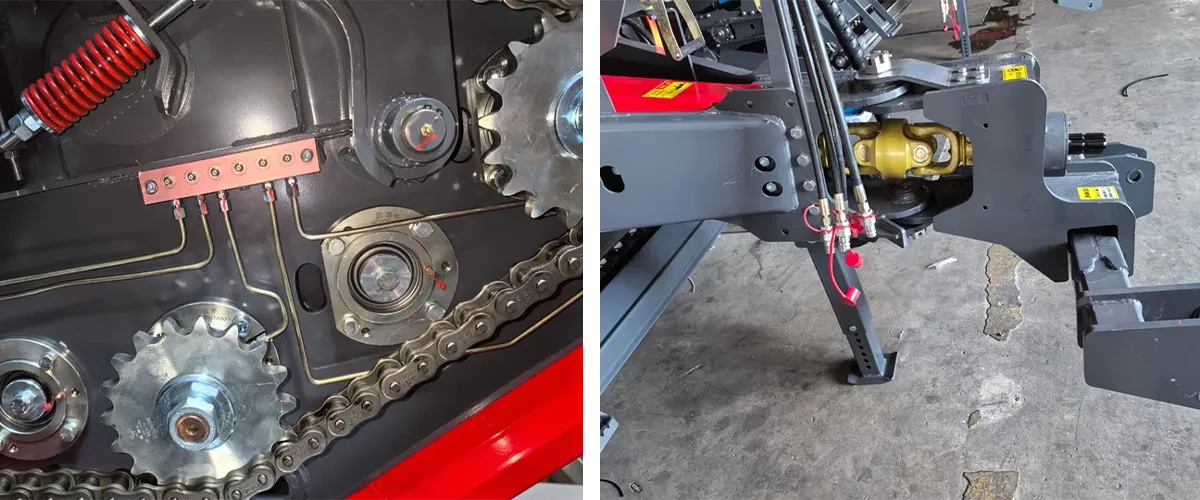
10. Sensor Calibration: Keeping Moisture Readings Accurate Season After Season
A moisture monitoring system is only as reliable as its calibration. The dielectric relationship between crop moisture and sensor output is not universal — it varies with crop species, bulk density, temperature, and even the mineral content of the soil the crop was grown on. When a round baler moisture system ships from the factory, it includes factory-programmed calibration tables for the most common crop types. These work well initially, but drift gradually as the sensor electrodes develop surface deposits, the mechanical clearances between the sensor face and the crop flow path change with wear, and the crops on a specific farm diverge from the generic species used for factory calibration.
Field calibration is the process of correcting the sensor’s output against known reference measurements. The standard method is to take a grab sample from the windrow immediately before baling, weigh it, dry it in an oven at 105°C to constant weight, and calculate the moisture percentage gravimetrically. This value is compared to what the onboard system displayed for the same crop at the same time, and the calibration offset is adjusted to eliminate the error. For operations running diverse crop portfolios across a season — grass, rice straw, corn stover — a separate calibration pass at the beginning of each major crop type is good practice and will maintain accuracy within the ±1.5–2.5% range achievable with well-maintained capacitance systems.
Some higher-specification systems now support automatic recalibration using cloud-connected algorithms that compare the sensor output for each bale against weather station data, field history, and crop growth models to flag when the sensor’s baseline has drifted beyond an acceptable threshold. While this level of automation is not yet standard on round balers in the accessible commercial price range, it represents the direction in which precision agriculture technology is heading, and buyers investing in a new round baler now should consider whether the machine’s electronics architecture is designed for future software updates of this kind.
Frequently Asked Questions
Editor: PXY