Alfalfa / Hay Baling — Export Trade Guide
A structured comparison covering binding material properties, dry matter loss data, international export handling requirements, container loading logistics, and regulatory context — giving livestock feed exporters and alfalfa producers a clear framework for choosing the right bale binding system on their round baler.
Why Binding Material Choice Matters More in Export Channels
For farmers producing alfalfa hay for domestic consumption, the net wrap versus twine decision is primarily a question of storage efficiency and handling convenience. For livestock feed exporters — whether trading to South Korean Hanwoo beef operations, Japanese dairy farms, or Southeast Asian feed compounders — the same decision carries significantly higher stakes. Bales that enter a commercial export chain must survive container loading, ocean freight transit of two to six weeks, port unloading under variable humidity conditions, and in many cases onward land transport before reaching the end buyer. Each of those stages introduces mechanical and environmental stresses that interact directly with the binding material’s structural performance.
A round baler machine that produces consistently shaped, tightly bound bales is the starting point. But the binding material that finishes each bale determines how well that shape and density are maintained through the full logistics sequence. Importers in South Korea — particularly procurement teams for large Hanwoo beef cooperatives and Holstein dairy operations — increasingly specify binding type as part of their purchase requirements, with net wrap preferred in the majority of bulk export contracts for alfalfa hay. Understanding the technical reasons behind this preference, and the operational implications for producers using different round baler models, is the focus of this guide.
Manufacturing Structure: What Net Wrap Is Made Of and How It Works
Material System and Structural Properties
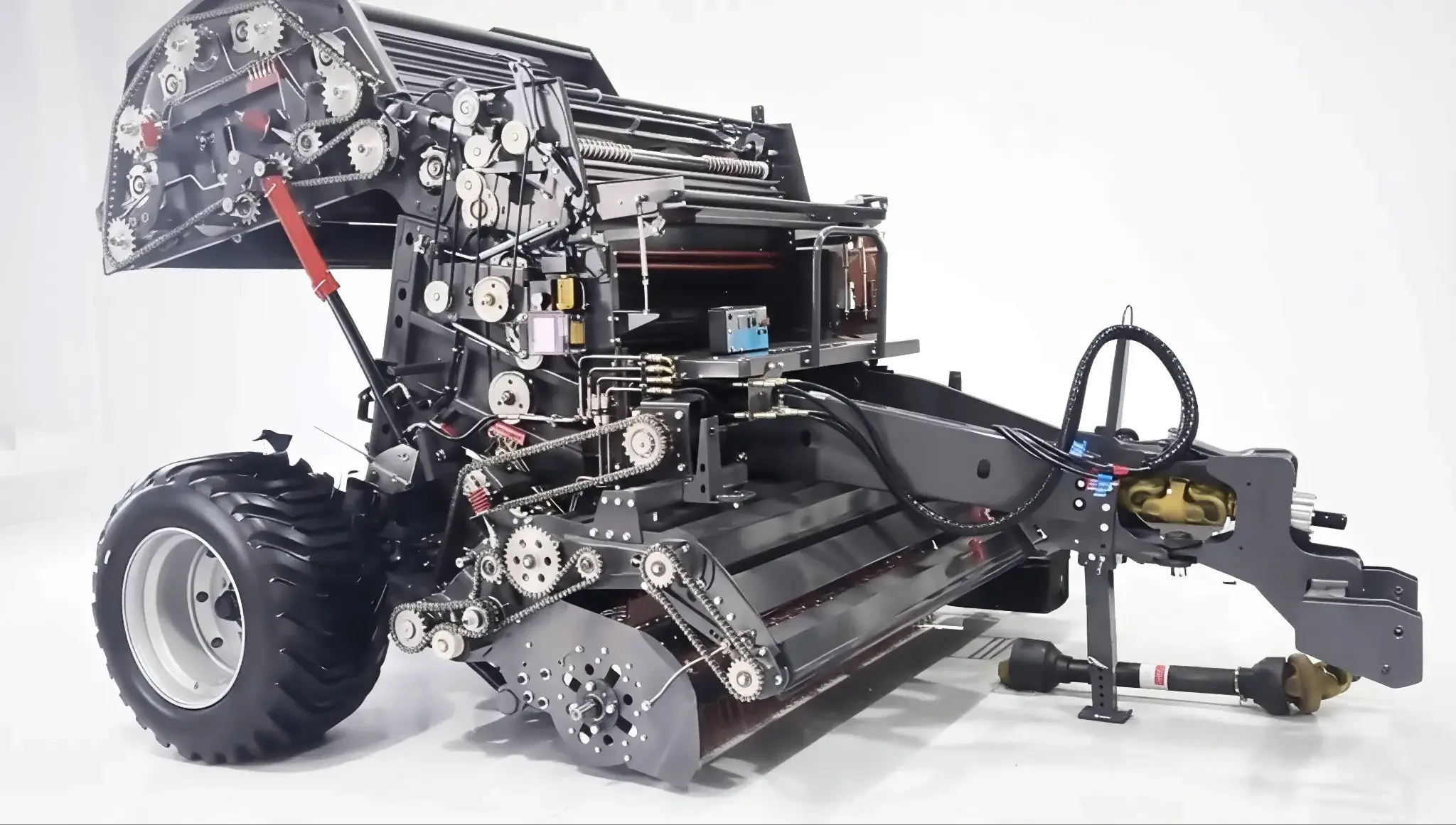
Bale net wrap is a woven polypropylene (PP) mesh produced through a high-speed weaving and extrusion process. The mesh structure consists of interlocked longitudinal and transverse strands, typically with strand spacings calibrated to provide full-surface bale coverage within 2.25 to 2.5 revolutions of the bale in the round baler chamber — a dramatic reduction from the 20 or more revolutions needed to achieve equivalent mechanical coverage with twine. The mesh weight per square metre typically ranges from 22 to 35 g/m², with higher weights providing greater tensile resistance during transport and stack loading events. Net wrap’s polypropylene chemistry provides UV stability over the short to medium storage periods typical of alfalfa export supply chains, while the mesh geometry creates a water-shedding surface that reduces moisture infiltration into the outer layers of the bale during outdoor storage or ocean freight dwell periods.
The structural contribution of net wrap to the bale is fundamentally different from twine’s. Twine applies discrete, localised binding tension at the points where each strand contacts the bale surface — providing a relatively small number of high-tension contact lines that restrain bale circumference expansion. Net wrap, by contrast, distributes binding force across the entire bale surface through the interconnected mesh matrix. This distributed loading means that even partial net wrap tension losses — from a UV-degraded strand or a minor handling nick in the outer layer — do not produce catastrophic bale shape failure, because adjacent mesh cells continue to carry the structural load. For alfalfa bales destined for export, which may be stacked four or five layers high in a container and handled by forklift multiple times across the logistics chain, this distributed structural redundancy is a significant practical advantage over twine’s localised tension approach.
Wrapping Speed and Throughput Impact
The mechanical advantage of net wrap over twine in terms of round baler machine throughput is substantial and directly measurable. Independent university research comparing wrapping times in field conditions found that net wrap required an average of 18 seconds per bale to complete a full binding cycle, compared to 56 seconds for twine — a 68% reduction in binding dwell time per bale. For a commercial alfalfa export operation producing 300 to 500 bales per day during peak harvest windows, this throughput difference represents meaningful gains in daily capacity without requiring additional tractor passes or baler horsepower. More importantly from a leaf retention standpoint, the shorter time the bale remains stationary in the chamber during binding reduces the risk of material redistribution and edge shatter that occurs when the bale rotates slowly during extended twine application cycles.
Manufacturing Structure: Twine — Types, Tension Mechanics, and Limitations
Twine Material Variants and Their Performance Profiles
Bale twine for round baler applications is available in three primary material variants, each with a distinct performance profile relevant to alfalfa export applications. Polypropylene (PP) twine is the most widely used type — it offers good UV resistance, consistent break strength in the 80–120 kgf range depending on grade, and acceptable weather resistance for short-term outdoor storage. Sisal twine, derived from natural Agave fibres, is biodegradable and decomposes naturally at feedout, which eliminates twine ingestion risk for livestock, but it degrades significantly faster under UV exposure and high-humidity conditions typical of containerised ocean freight, making it unsuitable for alfalfa exports with transit times beyond three to four weeks. Polyethylene (PE) twine offers the highest moisture resistance of the three but is less commonly used in round baler applications due to its tendency to slip under the high-tension conditions required to achieve adequate bale density in commercial hay baling.
Twine binding applies tension through a series of parallel strands wound around the bale circumference at fixed intervals determined by the baler’s twine arm traverse speed. The primary structural failure mode for twine-bound bales in export conditions is strand creep under sustained compressive loading — when bales are stacked in a container, the bottom tier carries compressive loads equivalent to four or five bale weights above it, and the twine strands on the bottom surface of the lower-tier bales are subject to this load continuously for the duration of the transit. Over a 21-day ocean transit, this sustained loading causes twine strands to stretch and relax, particularly in the high-temperature hold conditions experienced in tropical shipping lanes, where container internal temperatures can reach 45–55°C during the transit through equatorial waters.
Head-to-Head Comparison: Net Wrap vs Twine Across Export-Critical Parameters
| Parameter | Envoltório de rede | Twine (PP) | Export Relevance |
|---|---|---|---|
| Wrapping cycle time per bale | ~18 seconds | ~56 seconds | Faster baling means more bales before weather window closes |
| DM loss after 12 months outdoor storage | ~5% | ~7% | Lower loss = more saleable tonnes per hectare harvested |
| Bale shape retention in container stacking | Excellent | Moderate | Deformed bales create container loading gaps and weight distribution issues |
| Alfalfa leaf surface retention | High (mesh holds leaf layer) | Lower (open gaps between strands) | Leaf protein fraction is the primary value driver for importer buyers |
| Water-shedding performance | Good (slick mesh surface) | Poor (open surface between strands) | Moisture ingress during port dwell or humid transit affects crude protein |
| Consumable cost per bale | Higher | Lower | Net wrap premium typically offset by DM retention improvement at export scale |
| Storage and handling loss reduction vs twine | Up to 65% less (ASABE data) | Baseline | At export volumes, DM retention translates to significant additional revenue per container |
| Importer preference (Korea, Japan, Middle East) | Strongly preferred | Accepted for lower-grade | Premium importers specify binding type in purchase orders |
| Recyclability and disposal | Complex (mixed PP mesh) | Simpler (single-polymer PP) | Regulatory compliance burden in Korea, EU, Australia favours film/twine single-polymer systems |
Export Logistics: What Happens to Bales Between Field and Feedlot
The path an alfalfa bale travels between the moment it leaves the round baler in an Australian, North American, or Central Asian field and the moment it is opened at a Korean feedlot involves handling events that most domestic producers never encounter or plan for. Understanding this logistics sequence helps explain why the binding material specification carries such weight for export-grade alfalfa relative to feed produced for domestic use.
Bales are transported from the field to a consolidation shed or open-air storage pad. During this transit, bales experience lateral jolting and drop-impact events as they are loaded onto trailers. Net-wrapped bales resist shape deformation from these events due to the full-surface mesh constraint; twine-wrapped bales can develop bulge points between strands when dropped from loading height, creating flat spots that reduce container packing efficiency later in the chain.
Bales are held in export consolidation facilities, sometimes outdoors or in lightly covered structures, for days to weeks while container bookings are arranged. This period is when surface moisture exposure and UV degradation occur. Net wrap’s denser surface sheds rain more effectively than the open strand pattern of twine, reducing the depth of moisture ingress into the outer bale layers that contributes to crude protein dilution and mould development in the outer 5–10 cm of the bale.
Bales are loaded into 20- or 40-foot containers by forklift or specialised hay loader. Each bale is placed under compressive load from the stack above it for the duration of the ocean transit. Shape-retaining net-wrapped bales stack more predictably, minimise void space within the container, and reduce the risk of load shifting that can damage bales or create hazardous container conditions during sea passage.
Transit to South Korea from Australia typically takes 10–18 days; from the US West Coast approximately 14–21 days. During this period, container humidity and temperature fluctuate. South Korean phytosanitary inspection at port of entry includes visual bale assessment — bales showing excessive deformation, visible mould at the surface, or binding failure are subject to additional testing or rejection, both of which impose significant cost and administrative burden on the exporting party.
Protecting the Value: Leaf Fraction, Crude Protein, and What Importers Actually Pay For
Alfalfa hay is traded internationally almost entirely on the basis of its crude protein (CP) content, relative feed value (RFV), and moisture level at point of delivery. Among these parameters, crude protein — which in alfalfa is concentrated overwhelmingly in the leaf fraction — is the single most significant price determinant in Korean and Japanese import markets. Premium alfalfa grades destined for lactating dairy cow rations are typically specified at minimum 18–20% CP on a dry matter basis, and contracts carry significant downgrade penalties for consignments arriving below specification.
The leaf fraction of alfalfa accounts for approximately 65–70% of the total plant protein content but represents only 40–45% of the plant’s total dry weight. This means that any mechanism that causes disproportionate leaf loss — either at baling, during handling, or during storage — reduces crude protein percentage at a rate approximately 1.5 times faster than it reduces total dry weight. A producer who loses 5% more leaf fraction than average through their binding system choice does not deliver a bale that is 5% lower in crude protein; it is closer to 7–8% lower in protein concentration, because the protein-rich fraction is being preferentially lost while the lower-protein stem fraction remains intact. This arithmetic explains why importers in Korea who are paying for specific CP levels scrutinise binding material choice as a quality indicator.
Net wrap’s contribution to leaf retention comes from two mechanisms. First, during the baling process itself, the rapid binding cycle — completing in approximately 18 seconds versus 56 for twine — means fewer bale rotations after the crop has been formed, reducing the centrifugal force-related leaf redistribution that occurs during extended twine application. Second, once the bale is formed, the full-mesh contact of net wrap against the bale’s outer surface retains the leaf-rich outer layer through every subsequent handling event. When the bale is picked up by a grapple loader during container stuffing, for example, the net wrap prevents the outer layer of leaf material from being pushed or scraped off the surface by the grapple tines, a common source of loss with twine-wrapped bales that have a relatively open outer surface structure.
Featured Round Baler: Built for Export-Grade Alfalfa Operations
Recommended for Export-Scale Alfalfa Production
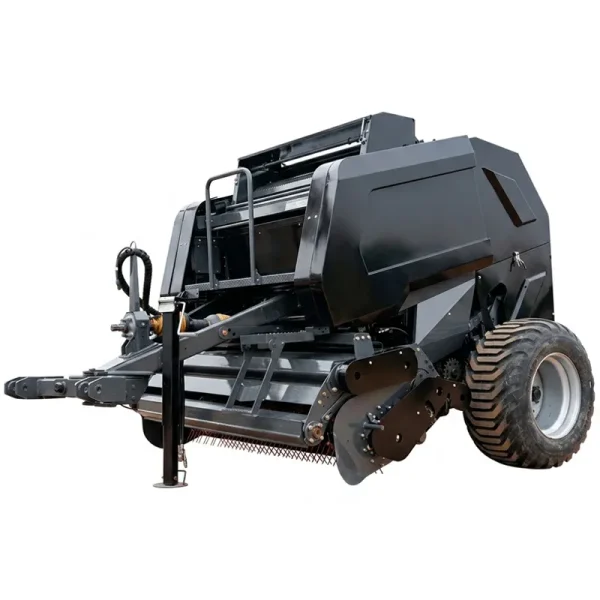
EP Round Baler — 1220 mm Compression (4100×2900×2400 mm)
Engineered for large-scale commercial alfalfa and hay baling operations, this round baler machine produces bales with a 1220 mm compression diameter — a size well suited to the standard container packing configurations used in international hay export. The overall machine dimensions of 4100×2900×2400 mm reflect a full commercial-specification footprint designed for high-throughput operations where the combination of fast net wrap binding cycles and consistent bale geometry is essential for maintaining export quality standards. Net wrap compatibility is a standard feature, allowing the binding speed advantage critical to high-volume export-grade production. For Korean importers specifying binding type in purchase contracts, bales produced by this machine meet the shape and surface consistency requirements expected at port inspection.
Regulatory Framework: Binding Material Rules and Agricultural Plastic Obligations by Market
The choice between net wrap and twine is not purely a technical or commercial decision for export-oriented producers — it is also a regulatory one. Agricultural plastic waste from both binding materials is subject to increasingly strict collection, disposal, and recycling obligations in most of the major markets that import alfalfa hay. Understanding these obligations informs not only what binding material to use but how to communicate compliance status to buyers who are themselves subject to import-market regulations.
Coréia do Sul
Under South Korea’s Act on the Promotion of Saving and Recycling of Resources and the Agricultural Wastes Management Regulations enforced by the Ministry of Environment and Ministry of Agriculture, Food and Rural Affairs (MAFRA), all agricultural plastic waste — including alfalfa bale net wrap and twine received by Korean importers — must be collected and processed through designated waste management channels. Korean livestock operations are increasingly required to document plastic disposal compliance, and this obligation extends to the binding materials arriving with imported hay. Single-polymer PP twine is somewhat easier to classify and process within Korean waste categories than polypropylene mesh net wrap, but both require formal collection rather than open burning or landfill, both of which carry fines under the Waste Management Act. Some Korean importers now request binding material specification documentation from overseas suppliers as part of their import procurement compliance records.
Australia
Australia is one of the world’s largest exporters of alfalfa hay, and its domestic agricultural plastic regulatory framework is increasingly aligned with international recycling obligations. The National Waste Policy Action Plan 2019 and state-level stewardship programmes operate under different timelines, but all major alfalfa-producing states — South Australia, Western Australia, and Victoria — now operate formal agricultural plastic collection programmes. Export documentation for Australian alfalfa hay does not currently require binding material specification, but the Export Control (Plants and Plant Products) Rules 2021 impose phytosanitary standards at port that include visual inspection for contamination — a standard that heavily deteriorated or broken twine strands around a bale can implicate if the twine fragments create surface contamination concerns. Australia’s Export Standards Committee periodically reviews these criteria, and binding material durability has featured in recent review cycles.
United States
The United States, as the largest producer of alfalfa hay for export, has no federal mandate specifically governing binding material type for exported hay, but USDA APHIS phytosanitary certificate requirements for alfalfa hay exports to South Korea and Japan include documentation of treatment, origin, and freedom from specified pests and contaminants. California — which produces a significant proportion of US alfalfa exported to Asia — has state-level agricultural plastic waste obligations under CalRecycle’s organics and farm plastic programmes that require licensed collection of net wrap and twine residues generated at farm level. Under AB 1583 and subsequent amendments, farms generating more than a threshold volume of agricultural plastic annually must document disposal through approved channels. This regulatory obligation does not directly dictate net wrap versus twine choice, but it does require producers in these markets to budget for formal plastic waste handling regardless of binding type chosen.
European Union
EU member states exporting alfalfa dehydrates, pellets, and some baled hay to South Korea and other Asian markets face packaging material obligations under the Packaging and Packaging Waste Regulation and its 2024 revision proposal, which extends extended producer responsibility to agricultural binding materials including net wrap and twine when used in commercial production contexts. In Spain, France, and Germany — the primary EU alfalfa hay producers — separate collection systems for PP net wrap and twine are mandated through agricultural waste management schemes. The EU’s Green Deal target of 65% packaging recyclability by 2030 is creating pressure on agricultural plastic manufacturers to develop higher-recyclability net wrap formulations, and leading producers are already offering certified-recyclable net wrap grades specifically for use in regulated markets. Producers exporting to markets where certification of recyclability is required for import duty exemptions may find that specifying a certified recyclable net wrap grade becomes a commercial necessity rather than a preference by 2026–2027.
Does Binding Choice Apply Equally to Mini and Small Round Balers?
The net wrap versus twine discussion is most prominently framed in terms of commercial-scale operations producing bales for international export. But the same principles apply — with some modifications — to producers using smaller machines such as a mini round baler, small round baler, or compact hay baler suited to tractors in the 40–80 HP range. For a Korean farmer using a small round baler for 40 HP tractor on a mixed Hanwoo beef and forage production property, the binding material question matters because even domestically consumed alfalfa bales benefit from net wrap’s leaf retention advantage and faster binding cycle, both of which translate to better nutritional delivery per tonne of feed produced and higher throughput per working hour in the field.
The specific consideration for mini and small round baler models is that net wrap system complexity — the dispensing arm geometry and film cutting mechanism — must be designed for the smaller bale diameter. Net wrap developed for large commercial round baler machines does not simply scale down proportionally; the wrap overlap pattern at the bale ends is particularly critical in smaller bale diameters where the end-to-working-width ratio is less favourable than in large format bales. When selecting a small hay baler or mini hay baler for alfalfa production — whether for a domestic Korean operation or a smaller export-oriented farm in Australia, South Africa, or Central Asia — confirming that the machine’s net wrap system is designed and calibrated for the specific bale diameter range the machine produces is an important specification step that is sometimes overlooked when buyers focus primarily on chamber pressure and PTO horsepower requirements.
When to Choose Net Wrap and When Twine Is Still Reasonable
Framing the net wrap versus twine decision as a binary choice — always one, never the other — misses the operational nuance that experienced hay producers know well. There are legitimate scenarios in which twine remains a practical choice, and there are conditions under which the additional cost of net wrap is clearly justified by the quality and logistics outcome it delivers. The following framework distils the key decision criteria into practical guidance for both export-scale and domestic alfalfa producers using any round baler in the 9YG or EP range.
| Scenario | Recommended Binding | Key Reasoning |
|---|---|---|
| Alfalfa for container export to Korea, Japan, or Middle East | Envoltório de rede | Importer specification, shape retention in transit, leaf protein protection |
| High-CP premium grade alfalfa, 3rd or 4th cut | Envoltório de rede | Highest leaf:stem ratio — maximum benefit from surface leaf retention |
| Outdoor storage for 6–12 months before sale or use | Envoltório de rede | 5% vs 7% DM loss advantage compounds significantly at scale over time |
| Dry first-cut hay stored indoors with immediate feedout | Twine Acceptable | Short storage, indoor protection, no logistics chain — cost advantage of twine applies |
| Small farm with round hay baler for sale volume under 100 bales/season | Twine Reasonable | Low scale means net wrap throughput advantage is less impactful; cost trade-off shifts |
| Alfalfa bales destined for bulk domestic livestock feed contract | Net Wrap Preferred | Consistent bale quality builds buyer confidence and supports contract renewal |
Compatible System Components for Round Baler Operations
A complete alfalfa baling system capable of delivering export-grade quality depends on more than the baler itself. The drive components that power the machine through heavy, high-moisture first-cut alfalfa and the lighter, faster third-cut material are equally critical to consistent output. The following components are designed for direct compatibility with the 9YG and EP round baler series, providing one-stop supply from a single production network.
Agricultural PTO Shaft
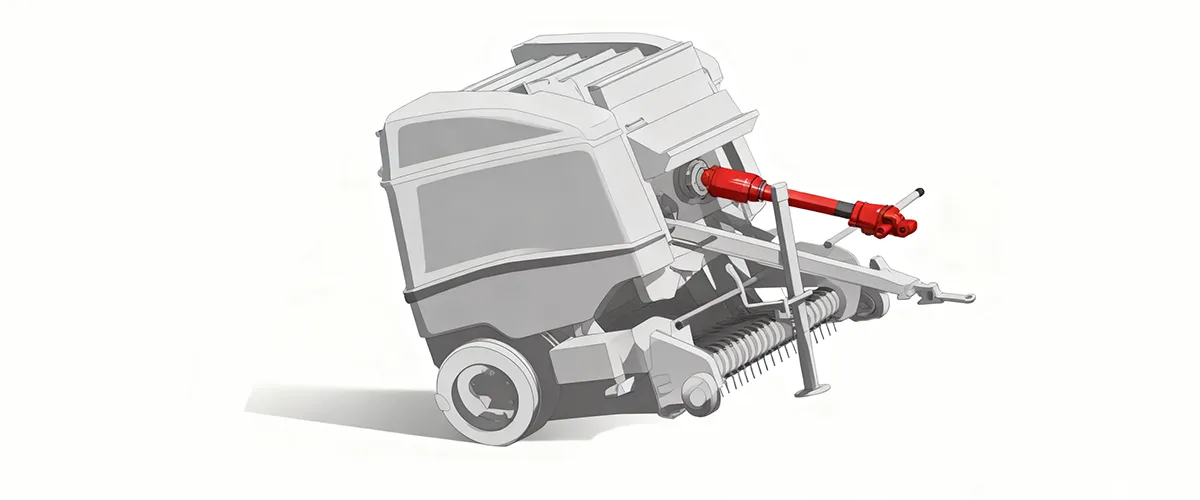
Precision-rated PTO shaft assemblies matched to the input torque and rotational speed specifications of each round baler model in the 9YG and EP range. For alfalfa export operations running extended daily hours during harvest windows, shaft quality directly influences the consistency of pickup reel speed and bale chamber pressure — both of which affect bale density uniformity and therefore the predictability of net wrap application performance across each bale produced. Cross-joint and constant-velocity configurations available to suit the full range of tractor coupling standards common in Korean, Australian, and US markets.
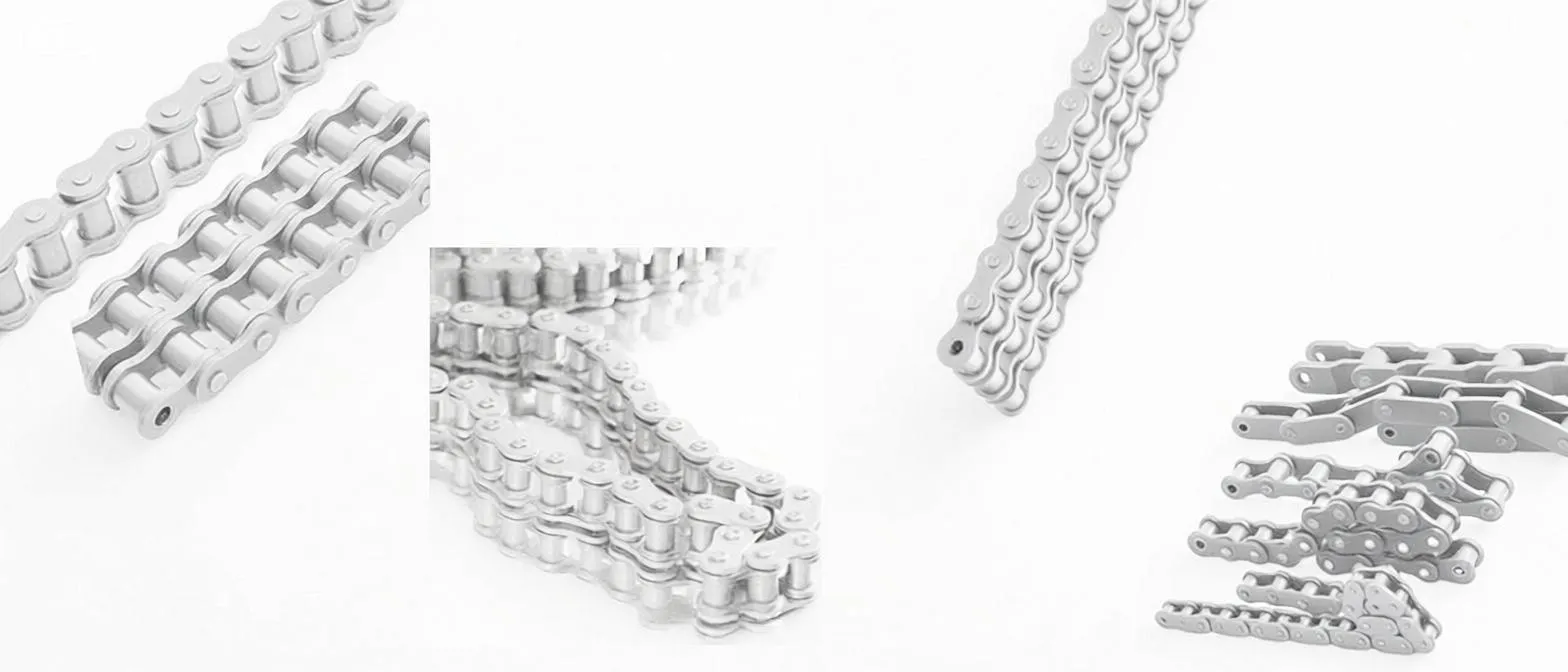
Agricultural Drive Chain
Heavy-duty roller chain for the internal drive systems of the 9YG and EP round baler range, manufactured to ISO 606 and DIN 8187 standard pitches. In alfalfa baling operations — particularly commercial-scale export production running 10 to 14 hours per day during harvest — drive chain elongation from wear is the most common maintenance variable that affects bale quality consistency. An elongated chain allows intermittent slip at drive sprocket teeth, creating brief reductions in roller or belt speed that produce soft density zones in the bale. These zones are precisely where net wrap tension losses concentrate during transport, contributing to bale deformation in the container. Matched replacement chain sets available for all 9YG and EP models, with confirmed dimensional specification for direct replacement.
A Manufacturer Built on Over a Decade of Field Experience
Since our founding in 2013, we have developed into a comprehensive intelligent manufacturing operation serving the agriculture and livestock machinery sector. Our production line covers light and heavy round balers, single and double blade mowers, disc rotary mowers, and side rakes — all manufactured under ISO 9001 Quality Management System certification with independent import and export rights. Operating more than 60 sets of large-scale production equipment with an annual design capacity of 2,000 units, we continuously invest in advanced international production technology to serve alfalfa producers, hay exporters, and livestock feed operators across global markets. Our goal has remained constant since day one: to build world-class agricultural machinery that delivers consistent, measurable performance in the field and through the full supply chain.
Frequently Asked Questions
Ready to Specify a Net Wrap Compatible Round Baler for Alfalfa Export Production?
From compact models for family-scale Korean alfalfa farms to full commercial EP balers for export operations, the right machine is available with factory net wrap compatibility and matched component supply. Contact us to discuss your crop, tractor specification, target bale size, and export market requirements.
Editor: PXY