Biomass & Energy Crop Series
A technical and applied knowledge guide covering how round baler machines are deployed in sugarcane trash collection operations — including mechanical requirements, bale density targets, manufacturing structure, material system durability, and the global regulatory context for biomass energy crop harvesting.
Understanding the Opportunity
1. What Is Sugarcane Trash and Why Does Its Harvesting Matter for Energy Production?
Sugarcane trash refers to the dry leaf material, tops, and stem residues left on the field surface after mechanical harvesting of sugarcane stalks. In conventional harvesting operations, this material is either burned in the field — a practice that releases significant carbon and particulate emissions — or left to decompose in place, which ties up nutrients and can harbor pests. The energy industry, however, increasingly recognizes sugarcane trash as a high-value lignocellulosic biomass feedstock, with dry matter calorific values broadly comparable to wheat straw and rice straw. Collecting and densifying this material into bales using a round baler machine opens a commercial pathway that converts a field waste stream into a marketable solid fuel or biorefinery input, while simultaneously removing a fire hazard from the field and improving trafficability for the next planting season.
The global sugarcane sector produces over 1.9 billion tonnes of stalk per year, generating an estimated 250–350 million tonnes of dry trash annually. Even at moderate collection rates, this represents a biomass resource that is orders of magnitude larger than what most countries currently utilize. Sugarcane-growing nations in Southeast Asia — including Thailand, Vietnam, the Philippines, and Indonesia — have been actively developing policies and infrastructure to capture this residue for power generation and bioethanol production. Korea, while not itself a sugarcane producer, is a significant importer of biomass pellets and an active investor in overseas biomass production projects through its domestic renewable energy certificate framework, making round baler technology for sugarcane trash collection commercially relevant to Korean agricultural machinery buyers and overseas development operators.
This guide explains how a round baler is specifically adapted — or should be selected — for sugarcane trash collection, what the mechanical challenges of this material type present to the machine, and how the engineering choices in the 9YG series round baler lineup address those challenges. It also covers the regulatory frameworks that govern biomass harvesting machinery in the key producing regions.
Material Challenges
2. Why Sugarcane Trash Is One of the Most Demanding Biomass Materials for Round Baler Operation
Sugarcane trash presents a distinctly different mechanical challenge compared to conventional forage crops like ryegrass or wheat straw. The material consists of a mixture of dried leaf blades, leaf sheaths, growing points, and cane tops — with individual pieces ranging from fine, papery leaf material to coarse, fibrous stem sections up to 30–40 mm in diameter. This mixed geometry creates feeding irregularity inside the bale chamber: the fine leaf material tends to fill the chamber volume quickly while the coarser stem sections resist uniform compaction. The result, if the machine is not properly matched to the material, is bales with lower-than-target density, soft cores surrounded by a denser outer shell, and frequent chamber blockages at the throat between the pickup and the bale-forming rollers.
Moisture content adds a further complication. Unlike cereal straw, which is typically collected at 10–15% moisture after field drying, sugarcane trash in tropical and subtropical growing regions may have residual moisture contents of 25–40% at the time of baling — particularly when collected immediately after green harvesting. At these moisture levels, the material is significantly heavier per unit volume than dry straw, and the press rollers must work against a material that is both slippery from moisture and fibrous enough to wrap around roller shafts if the rotation speed or roller surface condition is not maintained within specification. For Korean operators managing overseas sugarcane biomass projects in Southeast Asia, these are the dominant equipment selection criteria.
The silica content of sugarcane leaf material is also notably higher than in most grass crops. Silica is highly abrasive and accelerates wear on pickup tine surfaces, press roller shells, and chain link plates. Machines deployed in sugarcane trash applications typically experience accelerated wear schedules relative to the same equipment operating on hay or ryegrass, and this needs to be factored into maintenance planning and spare round baler parts inventory from the outset of a project deployment.
Manufacturing Structure
3. Frame Engineering and Chamber Design for High-Throughput Biomass Baling
The structural demands of sugarcane trash baling make the manufacturing quality of the round baler frame and chamber more critical than in conventional hay operations. When baling dense, abrasive, high-moisture material at high throughput rates, every structural node in the machine is under elevated cyclic stress. Welded joints between the main frame side panels, the chamber endplates, and the tailgate hinge brackets all experience load cycles that multiply with the number of bales produced per shift. On a commercial sugarcane biomass project running multiple machines simultaneously across large planted areas, this can mean several hundred bale cycles per machine per working day.
The 9YG-2.24D series machines are manufactured using CNC laser-cut structural steel for all primary frame plates and chamber components, with automated welding lines providing the consistent joint penetration depth that is not achievable through manual welding at production scale. The bale chamber on the 9YG-2.24D measures 1,200 mm in diameter and 1,400 mm in width, supported by 18 press rollers each measuring 222 mm in diameter. The dual-side chain drive arrangement distributes the compressive load symmetrically across both chamber side plates, preventing the differential loading that creates premature wear at hinge and tensioner mounting points on single-side-drive designs. This structural balance is particularly important in sugarcane trash applications where the non-uniform material composition creates asymmetric loading patterns inside the bale chamber.
The tailgate buffer cylinder design on the 9YG-2.24D Classic absorbs mechanical shock when the gate opens during bale ejection — a feature that matters in high-cycle biomass operations where the ejection sequence occurs dozens of times per hour. H-type ferrule hydraulic fittings throughout the system provide reliable high-pressure sealing that withstands the thermal cycling inherent to continuous outdoor operation in the hot, humid conditions of Southeast Asian sugarcane-growing regions. The reinforced drawbar connection, which incorporates boxed-section structural steel at the main hitch point, handles the lateral and longitudinal forces that arise when operating over the uneven post-harvest terrain of sugarcane fields.
Material System
4. Abrasion Resistance, Chain Specification, and Surface Treatments for Sugarcane Conditions
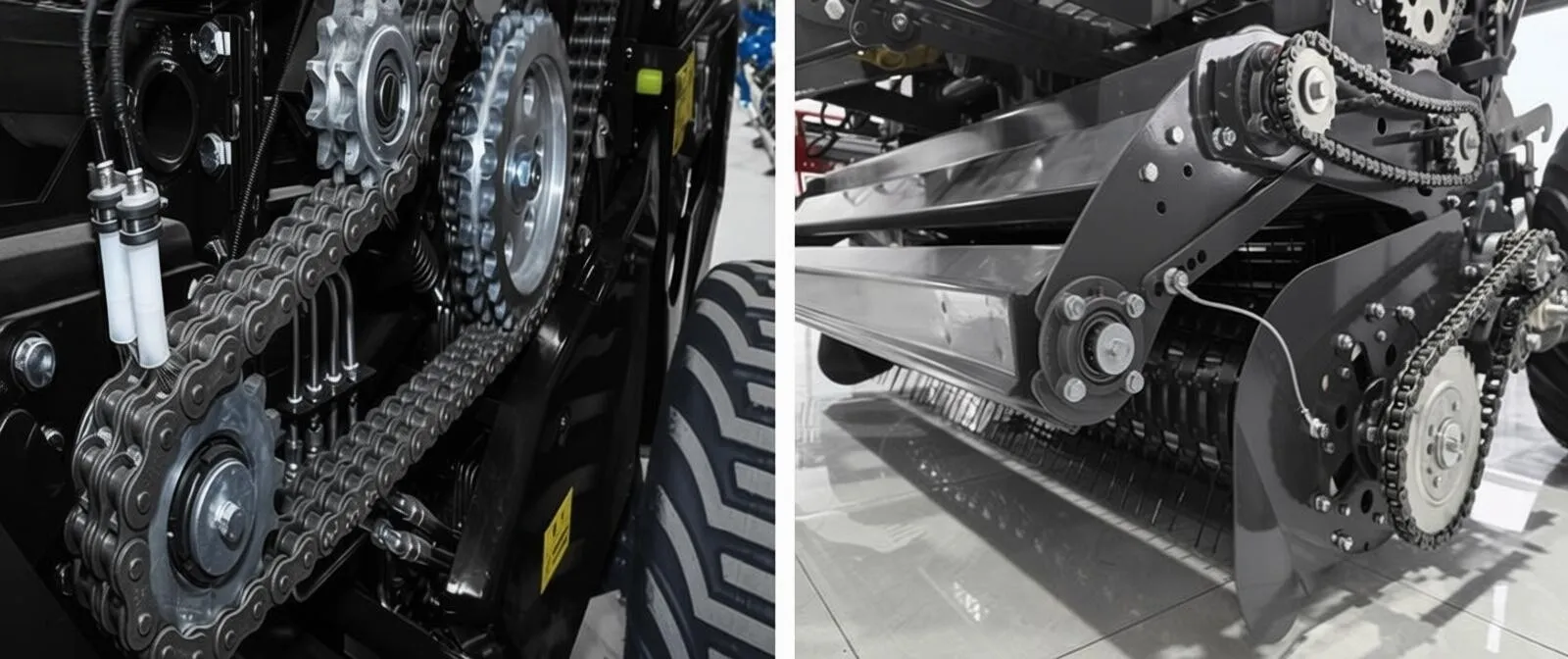
The material choices throughout the 9YG round baler drivetrain, pickup system, and frame coating are designed to handle the abrasive, high-moisture conditions that biomass operations — including sugarcane trash — routinely impose. Understanding what each subsystem is made from helps operators in Southeast Asian and tropical contexts plan their maintenance schedules and spare parts inventories before deployment.
20A Heavy-Duty Roller Chain
The rear chamber drive on the 9YG-2.24D S9000 Transcend uses 20A specification roller chain on both sides, providing a rated dynamic load capacity suitable for the elevated compression forces involved in densifying sugarcane trash to the 100–200 kg/m³ target density range. In sugarcane applications the chain runs in conditions where airborne silica particles from the processed material can infiltrate the chain link clearances and accelerate abrasive wear on roller surfaces and pin-bushing interfaces. The lubrication schedule for chain in sugarcane applications should be shortened to every 6–8 operating hours compared to the standard 8–10 hour interval for conventional hay, and operators should use a penetrating chain lubricant rather than a heavy grease to achieve adequate film coverage at these accelerated intervals.
Pickup Tine Material
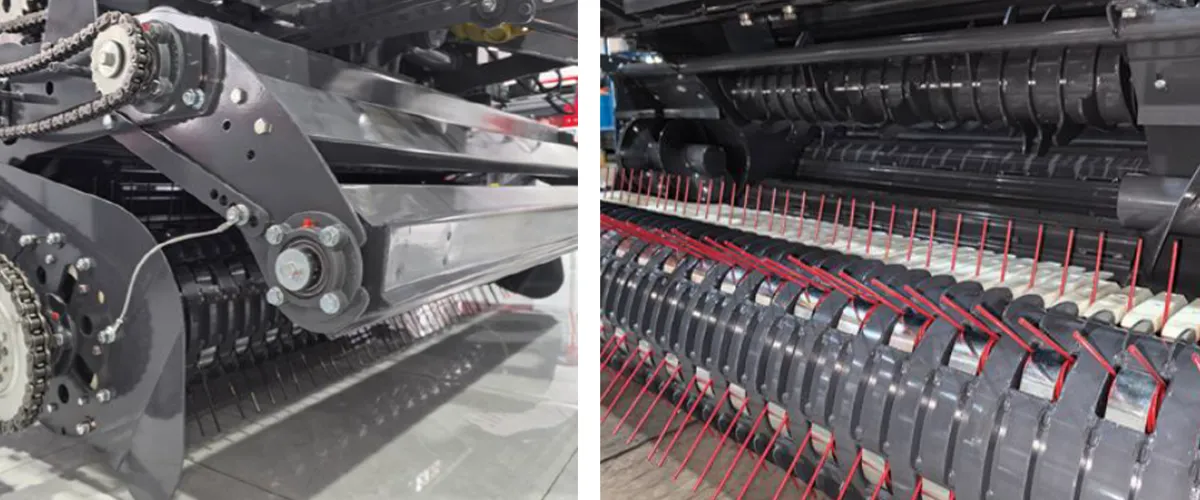
Spring tine fingers on the 9YG pickup system are formed from high-tensile spring steel, which provides a combination of flexibility and fatigue resistance suited to the irregular, mixed-size material profile of sugarcane trash. The 2,240 mm pickup width on the 9YG-2.24D models covers the broad windrow width that typically results from mechanical sugarcane harvesters, which eject their trash streams in a wide, loose blanket rather than the narrow, defined windrow produced by a dedicated mower-conditioner. The flexibility of spring tines also helps the pickup finger profile self-clear when coarser stem material bridges across the pickup width — reducing the frequency of manual clearance interventions that would otherwise slow the harvest operation.
Press Roller Surface and Bearing Sealing
The 18 press rollers in the bale chamber are steel tube construction with machined ends and fitted bearings. In sugarcane trash applications, the bearing seal integrity on these rollers is critical — silica-laden material will infiltrate any open or poorly-sealed bearing housing and cause abrasive failure of the bearing race within a short operating period. Pre-season replacement of roller end bearings with verified sealed specifications, and inspection of roller surface condition for wear ridging that could trap material, should be part of the pre-deployment checklist for any biomass operation in tropical conditions. The dual-side chain drive design keeps rotational resistance balanced across rollers, which prevents individual roller deceleration events that could cause material winding around the roller shaft.
Frame Coating for Tropical Environments
Machines deployed in Southeast Asian sugarcane regions face year-round humidity, frequent rain, and the corrosive effect of fermented organic residue on unprotected steel surfaces. The electrostatic powder coating applied to 9YG series frames after CNC fabrication provides an adhesion-bonded barrier that resists the combination of mechanical abrasion from crop material and chemical attack from field moisture. For sustained deployment in tropical conditions, operators should inspect coating integrity at 200–300 operating hour intervals, spot-treating exposed metal with compatible touch-up primer before surface rust has time to undercut the surrounding intact coating.

Energy Value
5. How Bale Density Determines the Economic Value of Sugarcane Trash as a Fuel Source
In biomass energy applications, bale density is directly linked to transport economics and energy content per load. A round bale of sugarcane trash at 100 kg/m³ density represents substantially lower transport efficiency than a bale at 200 kg/m³, because the same truck payload can carry fewer bales at lower density, increasing the cost-per-tonne-delivered to the power plant or pellet mill. For projects where the sugarcane field is located at distance from the processing facility — which is common in Southeast Asian biomass supply chains — achieving the upper range of the bale density specification is a genuine commercial objective, not merely a technical preference.
The sensor-controlled density management system on the 9YG-2.24D series bales to a consistent target within the 100–200 kg/m³ range. The electronic density sensor monitors the bale’s condition throughout the forming cycle and triggers the wrapping and ejection sequence at the same density point on every cycle, regardless of how the material varies across different parts of the field. In a commercial sugarcane trash supply chain, this consistency is valuable not only for transport economics but also for fuel quality management at the receiving facility — boiler operators and pellet mill technicians work most efficiently when incoming bale material has predictable bulk density and moisture content.
For reference, sugarcane trash baled at 15–20% moisture content and 150 kg/m³ average density produces bales weighing approximately 300–400 kg from a chamber measuring 1,300 mm in diameter and 1,400 mm in width. At a net calorific value of approximately 14–16 MJ/kg for sugarcane leaf trash at that moisture level, each bale represents roughly 4–6 GJ of thermal energy — comparable to about 110–170 liters of diesel fuel equivalent. When scaled to a project producing 10,000 bales per season, the energy value of the collected material is substantial, and the bale density consistency that a well-calibrated round baler machine provides directly determines how much of that theoretical value can be realized in practice.
Indicative Bale Output Data — 9YG-2.24D Series on Sugarcane Trash
| Parameter | Low-End Value | High-End Value | Notes |
|---|---|---|---|
| Densidade do fardo | 100 kg/m³ | 200 kg/m³ | Sensor-controlled; target varies by moisture |
| Bale Diameter × Width | Ø1300 × 1400 mm (9YG-2.24D) | Fixed chamber dimension | |
| Bale Volume | ~1.86 m³ | Calculated from stated bale dimensions | |
| Approx. Bale Mass | ~186 kg | ~372 kg | At stated density range |
| Produtividade | 40 bales/h | 100 bales/h | Field and material conditions dependent |
| Required Tractor Power | 55–100 kW | Matched to PTO 720 r/min | |
| Net Wrap per Bale | 2,000 m roll (1.4 m wide) | Automatic net wrap; roll specification standard | |
Power Transmission
6. The Round Baler Gearbox in Sugarcane Biomass Operations: Load Demands and Design Solutions
The round baler gearbox in a sugarcane trash application faces a load profile that differs meaningfully from conventional hay baling. The combination of high material moisture content, coarse stem pieces, and variable windrow thickness means that the gearbox input torque demand fluctuates more widely and more frequently than in a uniform dry-grass windrow. Torque spikes occur when a cluster of coarse stems enters the feed throat simultaneously, imposing a brief high-resistance load on the pickup-to-chamber transition mechanism. If these spikes exceed the gearbox’s rated torque for long enough, or occur too frequently, they cause accelerated fatigue at gear tooth contact zones and at the input shaft bearing seat.
The 9YG-2.24D S9000 Transcend addresses this through its proprietary dual-coupling gearbox with a notably higher torque capacity than standard class units used in comparable machines. The additional torque reserve provides headroom that prevents the gearbox from operating at the edge of its rated capacity during the torque spikes inherent to sugarcane trash processing. The safety torque shaft incorporated into the PTO driveline acts as a mechanical protection device — absorbing and then releasing sudden overload energy without transmitting it as a destructive shock through the gearbox internals. For project managers deploying round balers in commercial sugarcane biomass operations, this protection mechanism can prevent a gearbox replacement event that would take a machine out of service during the time-limited harvest window.
Gearbox oil management in tropical deployment conditions requires more frequent attention than the standard seasonal replacement schedule. At the operating temperatures common in Southeast Asian field conditions — ambient temperatures of 30–38°C with additional frictional heating from the gearbox itself — multi-grade gear oil can experience viscosity breakdown faster than in temperate European or Korean conditions. Checking gearbox oil condition every 100 operating hours in tropical deployment is prudent, replacing with a fresh charge whenever color darkening or viscosity reduction is observed rather than waiting for the end-of-season service interval.
Model Selection
7. Which Round Baler Model Is Most Appropriate for Sugarcane Trash Collection?
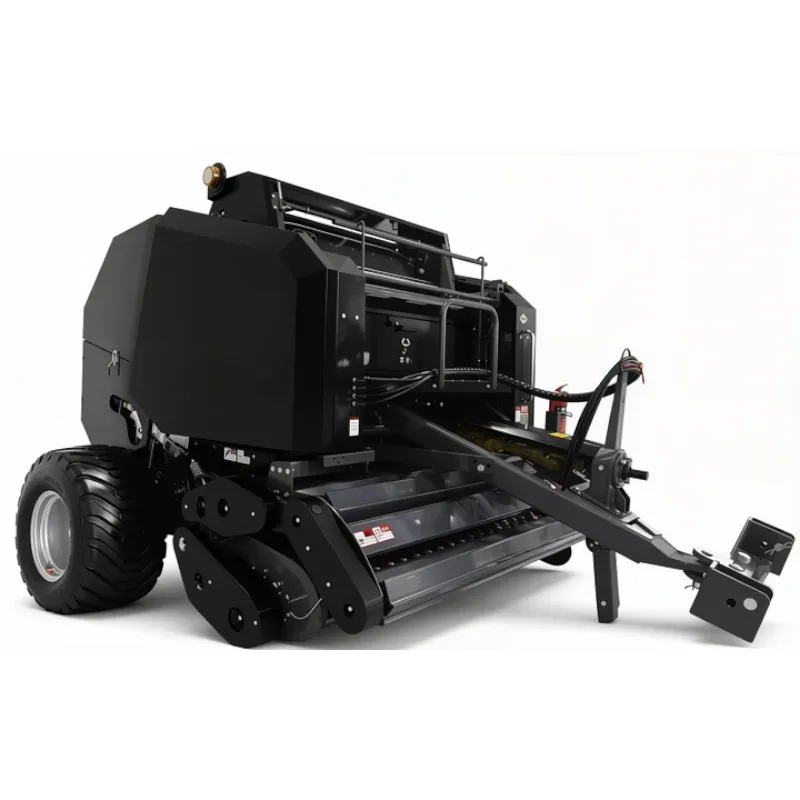
The right model depends on the scale of the collection operation, the available tractor fleet, and the target bale format for downstream logistics. The table below compares the key models relevant to biomass harvesting applications.
| Model | Tractor Power | Bale Dimensions | Best Fit for Sugarcane | Key Feature |
|---|---|---|---|---|
| 9YG-2.24D Transcend | 55–100 kW | Ø1300×1400 mm | Large-scale commercial projects; irregular field shapes | Dual-coupling gearbox; 90° turn; safety torque shaft |
| 9YG-2.24D S9000 | 55–100 kW | Ø1300×1400 mm | High-volume biomass collection; flat large fields | Sensor-controlled density; 40–100 bales/h |
| 9YG-2.24D Classic | 55–100 kW | Ø1300×1400 mm | Commercial projects; buffer cylinder ejection | H-type fittings; 20A dual-side chain; 4,312 kg machine weight |
| 9YG-1.25 | ≥75 kW | Ø1300×1250 mm | Mid-scale projects; smaller tractor fleet | Mid-size bale format; 40–100 bales/h |
| 9YG-1.0C | ≥70 kW | Ø1000×1250 mm | Coarse residue; interchangeable hammer-claw pickup | Hammer-claw for coarse stems; 540 r/min PTO |
Regulatory Frameworks
8. Agricultural Machinery and Biomass Energy Regulations in Key Sugarcane-Growing Regions
Round baler operations for sugarcane biomass collection are subject to both agricultural machinery safety regulations and biomass energy sector standards. The following frameworks are relevant to operators in the major production regions and to Korean investors managing overseas biomass supply projects.
Thailand — Department of Agricultural Extension Machinery Standards
Thailand is Southeast Asia’s largest sugarcane producer. Agricultural machinery used in Thailand’s commercial sugarcane sector, including round balers deployed for trash collection, is subject to machinery safety standards administered by the Department of Agricultural Extension (DoAE). The Thai Agricultural Commodities and Food Act imposes quality requirements on biomass destined for use in certified energy production facilities, and bale density records may be required as part of the feedstock quality documentation for Renewable Energy Certificate (REC) schemes under the Energy Regulatory Commission framework. Imported round balers must carry declaration of conformity with applicable safety standards, and gearbox components must be certified for the operating power range stated on the machine’s data plate.
Republic of Korea — Renewable Energy Certificates (REC) and Biomass Feedstock Standards
Korean energy companies investing in overseas sugarcane biomass supply chains are subject to the Renewable Energy Portfolio Standard (RPS) administered by the Korea Energy Agency (KEA). Biomass feedstock sourced from overseas operations — including sugarcane trash — must meet sustainability and traceability criteria to qualify for REC certification. The baling equipment used in the supply chain may need to produce bales with documented density and moisture content records, which underscores the value of sensor-controlled round baler systems that provide consistent bale data as part of their operational output.
Brazil — MAPA Machinery Regulations and RenovaBio
Brazil operates the world’s largest sugarcane industry, and its RenovaBio biofuel decarbonization policy creates commercial incentives for collecting rather than burning sugarcane trash. The Ministry of Agriculture, Livestock and Food Supply (MAPA) regulates agricultural machinery safety, including PTO shaft guarding, and the National Biosafety Technical Commission oversees biomass feedstock quality for energy applications. Round balers used in Brazilian cane trash operations must comply with ABNT NBR standards for agricultural machinery safety, with specific attention to the guarding of rotating components that present entanglement risks at the pickup and bale ejection zones.
India — Agricultural Machinery Testing and Training Institutes (AMTTI)
India’s sugarcane sector generates substantial volumes of leaf and straw residue, and the government’s National Bioenergy Programme promotes collection of agricultural residues for energy use. Agricultural machinery used commercially in India, including round balers for biomass collection, must have valid performance certification from an approved AMTTI center before being eligible for subsidy under the Sub-Mission on Agricultural Mechanization (SMAM). The gearbox design and PTO shaft interface specifications are specifically reviewed during AMTTI testing as part of the power transmission safety evaluation.
Philippines — Department of Agriculture Machinery Accreditation
In the Philippines, where sugarcane is grown primarily in Negros and Mindanao provinces, the Department of Agriculture’s Bureau of Plant Industry and the Agricultural Machinery Testing and Evaluation Center (AMTEC) jointly oversee machinery accreditation for commercially operated farm equipment. Round balers used in contract biomass harvesting operations need AMTEC accreditation to be eligible for use in subsidized mechanization programs. The Philippine Renewable Energy Act of 2008 (Republic Act 9513) provides fiscal incentives for biomass energy projects, which can include equipment purchase support for verified baling machinery used in the certified biomass supply chain.
EU — Renewable Energy Directive (RED II) and Biomass Sustainability Criteria
European biomass power plants importing sugarcane-based biomass bales must demonstrate compliance with the sustainability and greenhouse gas savings criteria under the EU Renewable Energy Directive (RED II), which sets minimum GHG saving thresholds and land-use change requirements for qualifying biomass. For baling equipment manufacturers supplying to EU-market supply chains, ISO 9001 certification of the manufacturing process provides a documented quality management foundation that supports the traceability requirements of RED II compliance audits. The directive’s provisions will be updated under RED III, which increases the minimum GHG savings threshold and adds forest biomass sustainability criteria.
Product Range
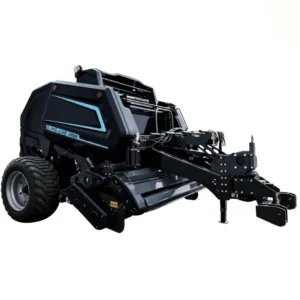
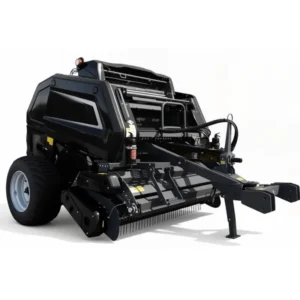
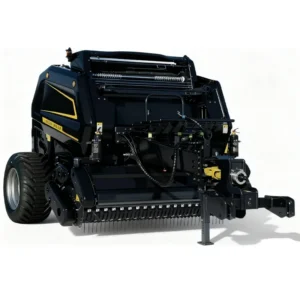
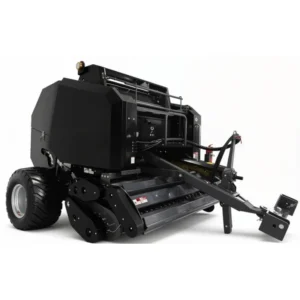
9. Round Baler Models Available for Biomass and Energy Crop Applications
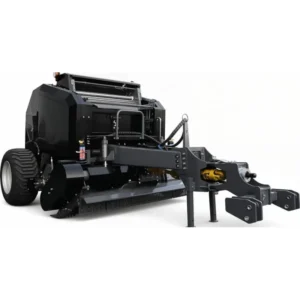
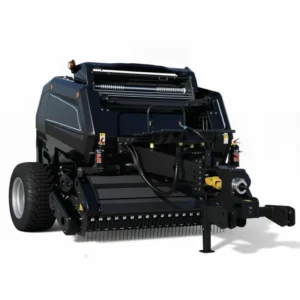
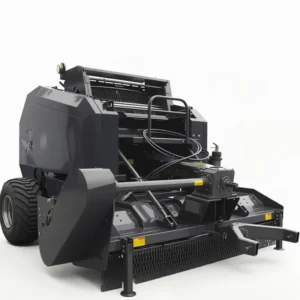
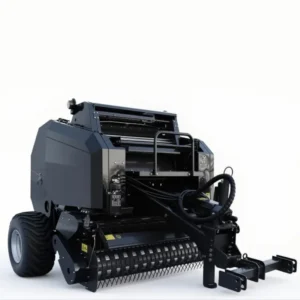
Each model below is suited to different scales and conditions of biomass harvesting operations. All 9YG series machines use sensor-controlled bale density management, net wrap binding, and are built to the ISO 9001 quality standard that supports supply chain traceability documentation.
FAQ
Frequently Asked Questions: Round Balers for Sugarcane Trash and Biomass Energy
Editor: PXY