Efficiency & Productivity
How Crop-Specific Settings on Modern Round Balers Save Setup Time Between Fields
A practical knowledge guide for Korean and global forage producers seeking higher productivity, reduced downtime, and precision baling across mixed-crop operations.
Why Crop-Specific Settings Matter for Round Baler Operations
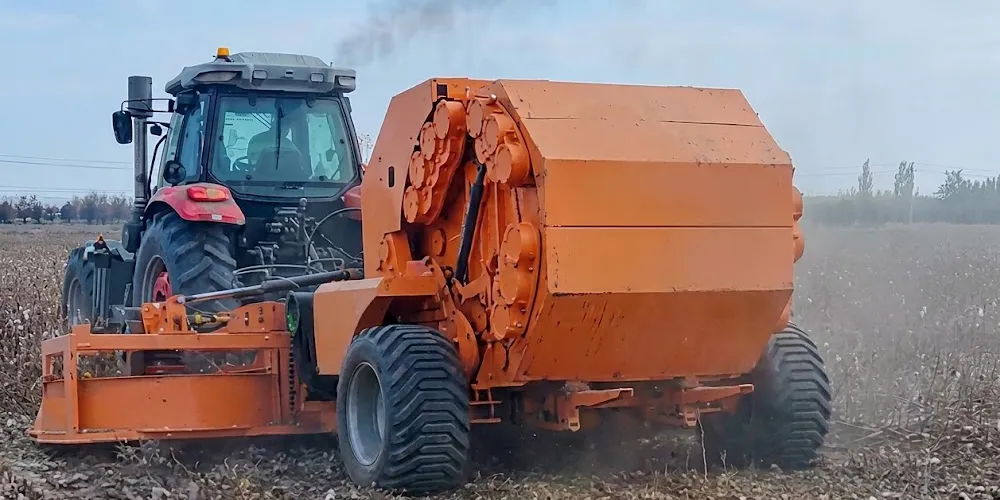
When producers manage multiple crop types — rice straw, corn stalks, alfalfa, oat hay — the time wasted readjusting a round baler between fields adds up to a serious operational cost over a season. A round baler calibrated for dry alfalfa performs very differently against fresh-cut ryegrass or high-moisture silage crop. Density, pickup width, compression chamber pressure, net-wrap tension, and PTO speed all need recalibration when the crop changes. Modern round baler machine designs address this directly through preset profile memory, adjustable compression systems, and variable pickup configurations. Understanding how to configure these round baler settings — and when to apply each one — is the knowledge that separates efficient operations from time-wasting ones.
In South Korea, where rice straw (농림 부산물) management is a legal and environmental obligation under the Clean Air Conservation Act (대기환경보전법), the ability to move quickly from a rice paddock to a hay field without rebuilding round baler settings from scratch is particularly valuable. Korean farmers operating LS Mtron or TYM tractors between paddy harvests and upland forage cuts lose significant time when their small round baler or commercial round hay baler lacks this flexibility. This article lays out the technical and practical knowledge behind crop-specific round baler configuration, covering chamber mechanics, material characteristics, regulatory context, and the field adjustments that actually cut setup time.
Crop Type vs. Baler Setting Reference Table
The table below summarizes the primary adjustments required when moving from one crop type to another on a commercial round baler. These benchmarks apply broadly across variable-chamber drum-roller designs and are a useful starting point for any operator using a round baler machine in mixed-crop Korean or East Asian agricultural operations.
| Crop Type | Moisture Range | Target Density (kg/m³) | Pickup Speed | Net Wrap Tension | PTO RPM |
|---|---|---|---|---|---|
| Dry Alfalfa / Lucerne | 12–18% | 130–180 | Moderate–Fast | High | 540–720 |
| Rice Straw | 16–25% | 100–150 | Moderate | ปานกลาง | 540–720 |
| Corn Stalk / Stover | 20–35% | 100–160 | Slow–Moderate | Medium–High | 540 |
| Fresh Grass / Silage | 55–75% | 150–200 | ช้า | Very High | 540 |
| Oat / Wheat Straw | 10–16% | 100–140 | Fast | ปานกลาง | 720 |
| Soybean Straw | 14–22% | 115–160 | Moderate | ปานกลาง | 540–720 |
Manufacturing Structure | Material System
A round baler’s ability to handle multiple crop types without extended downtime between fields is fundamentally rooted in how it is engineered at the structural level. The compression chamber is the central component of any round baler design. Drum-roller chamber designs — where a ring of rollers forms the bale cavity — allow for a wider range of crop acceptance than fixed-belt systems because roller spacing and tension can be tuned independently. The 18-roller compression chamber found on commercial round baler models handles rice straw, soybean straw, corn stalks, and alfalfa within the same physical envelope by adjusting the spring-loaded pressure applied by the outer rollers.
Frame construction plays an equally important role in round baler durability. The main chassis uses high-strength welded steel sections with cross-bracing designed to handle the lateral stresses that occur when baling heavy, wet silage crops. When a round baler transitions from light dry straw (low torque loading) to fresh silage (very high moisture, high inertia), the main drive shaft, gearbox housing, and tow hitch all experience significantly different load profiles. Round balers built to a structural mass in the 3,900–4,600 kg range carry sufficient rigidity to absorb these transitions without requiring structural recalibration between crop types. The dual-chain rear-chamber drive — a design feature that feeds drive torque from both sides of the bale-forming cavity — distributes compression load symmetrically, which is particularly beneficial when running fibrous rice straw that tends to mat unevenly on one side.
Frame surface treatment matters too for any round baler used in demanding field conditions. Electrostatic powder-coating over zinc-phosphate primer provides corrosion resistance in the high-humidity paddy environments common to Korean autumn operations. The combination of sealed roller bearings and welded (rather than bolted) structural joints reduces round baler field maintenance intervals when transitioning between wet and dry crop phases in the same season.
Pickup System Configuration for Different Crops
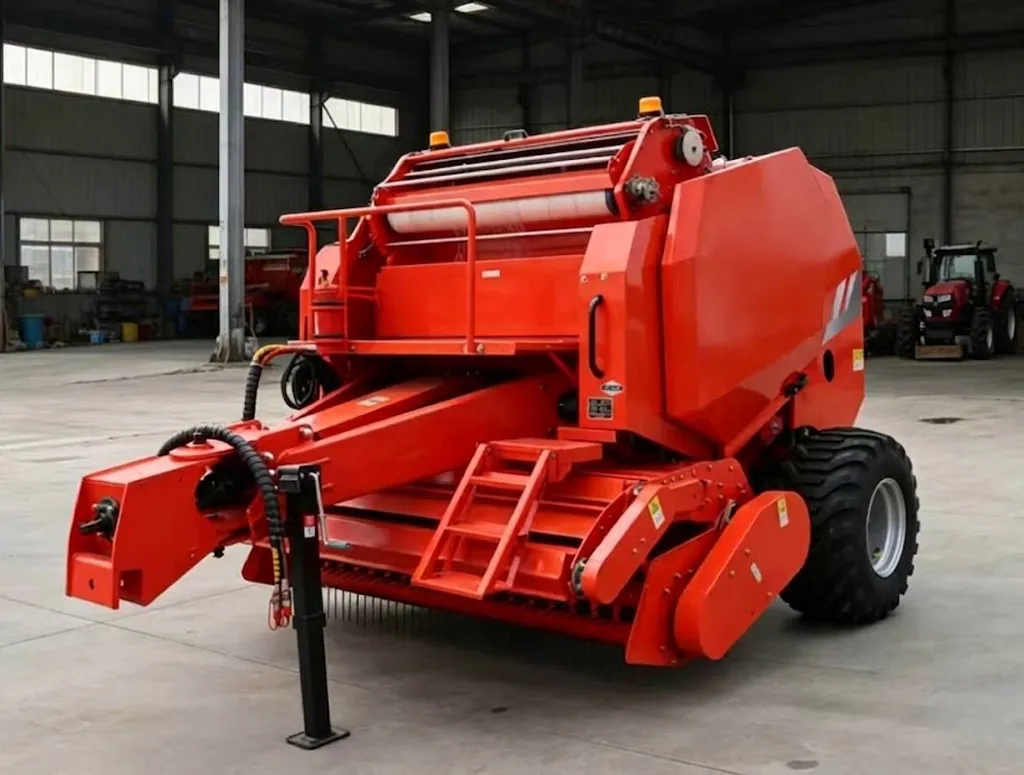
The pickup header is the first point of contact between the crop and the round baler, and its configuration determines how efficiently material flows into the chamber. Standard spring-tooth pickups — the cam-free, cam-track-free design now used on modern commercial round balers — deliver higher crop flow rates with reduced power draw compared to traditional designs. In practical terms, this means less time clearing blockages at the pickup when switching from dense rice straw windrows to thin dry grass. For Korean paddy conditions, a round baler pickup width of 2,150–2,240 mm adequately handles the windrow widths produced by standard 9GQY-series disc mowers.
The feeding roller behind the pickup — a toothed drum or auger system — pre-compresses the crop before it enters the round baler’s main chamber. On high-moisture silage crops, this pre-compression stage is more critical because wet material tends to bridge across the intake throat. Operating the feeding roller at a slightly reduced speed (adjustable via a PTO-ratio sprocket change on mechanical systems, or via the hydraulic speed valve on fully hydraulic intake models) reduces bridging without sacrificing throughput capacity. For dry straw, higher intake speeds reduce the packing time per bale and increase the round baler’s bales-per-hour rate. The Axial Flow Semi-Forced Feeding Mechanism, which routes crop tangentially rather than radially into the roller nest, reduces the probability of blockage across most crop types without requiring hardware changes between fields — this is one of the primary time-saving engineering features in the current generation of round hay balers.
Three Primary Adjustment Parameters That Save Field-to-Field Setup Time
Bale Density Sensor Threshold
Modern round balers use pressure sensors to monitor chamber fill and trigger automatic net-wrapping at a preset density. Adjusting the sensor threshold — rather than physically changing mechanical stops — is the fastest way to recalibrate for a new crop. Rice straw benefits from a lower density threshold (100–130 kg/m³) to preserve structural integrity of the stalk, while alfalfa and silage crops can sustain much higher trigger values (160–200 kg/m³). Many commercial models store multiple density presets that the operator can switch between without tools.
PTO Output Speed Selection
The PTO speed setting affects both the chamber roller speed and the pickup rotor velocity. At 720 r/min, the baler processes dry straw and cereal residues efficiently. Dropping to 540 r/min reduces the mechanical stress on wet silage crops and lowers the risk of bale-shape irregularities caused by over-fast intake at high moisture levels. The speed transition between these two modes requires only a tractor PTO speed lever adjustment — no hardware change — and takes less than thirty seconds. Knowing which speed fits which crop before arriving at the field eliminates the trial-and-error that accounts for most of the wasted time between fields.
Net-Wrap Tension and Wrap Count
Net-wrap tension and the number of wrapping passes determine both bale stability and net consumption. High-moisture silage bales require higher tension and more passes to prevent the bale from slumping after ejection. Dry rice straw and oat straw bales can use lighter tension settings, which reduces net consumption per bale and speeds up the wrapping cycle. Adjusting wrap count — typically a dial or controller parameter rather than a physical adjustment — takes seconds. Operators who pre-program crop-specific wrap settings for the fields they will work that day eliminate this adjustment entirely from their in-field workflow.
Featured Product: EP Round Baler 9YG-2.24D (S9000 Series)
The 9YG-2.24D is the primary commercial round baler in the EP series, designed to handle multiple crop types including rice straw, soybean straw, alfalfa, and corn stalks in a single-season operation without reconfiguration of structural components.
| ความกว้างของรถกระบะ | 2,240 mm |
| เส้นผ่านศูนย์กลางห้องอัด | Φ1,200 mm |
| ความกว้างของห้องอัด | 1,400 mm |
| Number of Rollers | 18 (drum-roller type) |
| ขนาดของก้อนฟาง (เส้นผ่านศูนย์กลาง × ความกว้าง) | Φ1,300 × 1,400 mm |
| ความหนาแน่นของก้อน | 100–200 kg/m³ |
| ผลผลิต | 40–100 bales/h |
| Power Requirement | 55–100 kW (74–134 HP) |
| การควบคุมความหนาแน่นของก้อนฟาง | Sensor-controlled automatic |
| วิธีการผูกมัด | Net-wrap |
| ความเร็วในการทำงาน | 5–35 km/h |
| มวลโครงสร้าง | 3,922 kg |
Round Baler Gearbox and Power Transmission Design
The round baler gearbox is one of the most mechanically stressed components in the entire drivetrain, and its design directly influences how quickly the operator can move from field to field without maintenance stops. Dual-gearbox traction configurations — where twin gearboxes allow 90-degree rotation to either side — reduce the turning radius required when moving from a narrow paddy access road to an open field boundary, which is a common transition in Korean paddy-to-upland farming layouts. This round baler feature cuts the repositioning time between fields more than operators typically expect, particularly on farms with irregular plot shapes.
Heavy-duty round baler gearbox housings (cast iron or thickened steel construction) maintain consistent bearing preload across the temperature and load variations that occur during a long baling day. An operator starting in a cold morning on dry oat straw and finishing a late afternoon run on high-moisture silage will put very different thermal and mechanical loads on the round baler drivetrain. Machines without sufficient thermal capacity in the gearbox housing overheat in these conditions, requiring cooldown stops that, multiplied across a season, account for significant lost productivity. The use of H-type compression fittings on the hydraulic circuit — rather than banjo-bolt connections — reduces the probability of hydraulic leaks during these round baler load transitions, which in turn eliminates another source of mid-day downtime.
Regional Regulations Affecting Round Baler Operations
The regulatory environment in major round baler markets directly shapes which crop types must be baled, what bale specifications are required, and how machines are certified for use. Operators selecting a round baler machine should confirm compliance with local standards before purchase.
South Korea
The Clean Air Conservation Act (대기환경보전법) restricts open burning of rice straw and crop residues in agricultural zones. This regulation effectively mandates mechanical collection — balers are the primary solution. Additionally, the Agricultural Mechanization Promotion Act (농업기계화 촉진법) governs safety certifications required for all imported and domestically produced agricultural machinery, including round balers, operated on Korean soil. Machines must pass NAAS (National Academy of Agricultural Science) inspection or hold equivalent CE certification. The Rural Development Administration (농촌진흥청, RDA) also publishes crop-specific baling guidelines that influence the operating density standards farmers are expected to follow.
European Union (EU)
Agricultural machinery sold in EU markets must conform to Machinery Directive 2006/42/EC, requiring CE marking and a Declaration of Conformity. Round balers are also subject to ISO 8210:2019 (agricultural baling equipment, safety standards) and must meet operator protection standards including guarded PTO shafts and emergency stop accessibility. EU farms claiming CAP (Common Agricultural Policy) subsidies for crop residue management may have specific bale density requirements tied to their agri-environment scheme obligations. The EU’s Farm to Fork Strategy increasingly incentivizes crop residue baling over burning, creating growing demand for capable round hay balers across member states.
China (Export Standards)
Agricultural machinery intended for export from domestic manufacturers must carry ISO 9001 Quality Management System certification and, for markets requiring it, CE certification. The GB/T 23568 series standard governs round baler safety and performance testing at the national level. Export models are validated against international PTO shaft standards (ISO 500:2021), ensuring compatibility with foreign tractor brands including John Deere, New Holland, and regional brands like LS Mtron and TYM. Machines certified under the national agricultural machinery quality inspection system (由农业机械试验鉴定) carry documented performance data that simplifies import approvals in markets like South Korea, Australia, and the EU.
The Between-Field Round Baler Workflow: A Step-by-Step Approach
Reducing between-field setup time is as much about workflow planning as it is about equipment design. Experienced operators in Korean and Japanese forage operations follow a predictable sequence when moving from one crop type to another, and this sequence can be standardized for any farm operation working with a modern round baler. A well-planned round baler workflow cuts the dead time between paddocks from twenty minutes down to under five. Below are the practical steps, in order, that cut round baler setup time at the start of each new field.
Step 1 — Pre-check moisture at the windrow. Before adjusting any baler setting, walk the first 30 meters of the windrow and check residue moisture by hand. This confirms whether you’re transitioning to a drier or wetter crop and what density and PTO targets apply.
Step 2 — Set PTO speed on the tractor. Dial the PTO to the correct speed for the new crop (720 rpm for dry residues, 540 rpm for wet silage). This takes under thirty seconds and has the largest single impact on throughput quality and blockage risk.
Step 3 — Adjust density sensor threshold. On the in-cab controller or baler control panel, update the density target to the correct range for the new crop. For most commercial round balers with electronic density control, this is a single dial or menu selection.
Step 4 — Confirm wrap count and net tension. Update the net-wrap program count for the bale finish you need. High-moisture silage: increase wrap passes. Dry straw: reduce passes to save net. Tension adjustment (on mechanical models) requires opening the net-wrap cover — budget two to three minutes for this step.
Step 5 — Run the first bale slowly and inspect. Enter the new field at reduced forward speed for the first bale. After ejection, inspect bale shape, density, and wrap integrity before resuming full-speed operation. A poorly shaped first bale tells you which setting needs further adjustment without losing multiple bales to the same error.
Compatible Components: Agricultural PTO Shaft for Round Balers
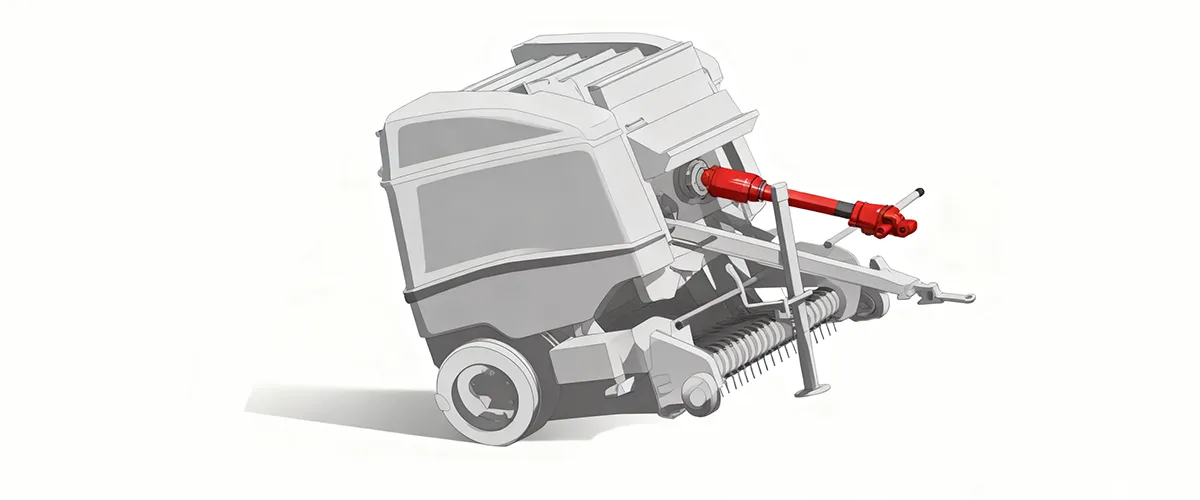
A round baler performs only as well as the full drivetrain connecting it to the tractor. The Agricultural PTO Shaft is a critical link in this round baler system chain. A correctly rated, properly guarded PTO shaft transfers power at the correct torque capacity for the crop being processed, protects the tractor gearbox from shock loads during round baler blockage events, and meets the safety requirements of CE and NAAS certification standards. When transitioning between crop types mid-day, the round baler PTO shaft should be inspected for proper lubrication and joint condition before resuming operations — a dry or worn universal joint introduces vibration that shortens the service life of both the round baler gearbox and the shaft itself.
 System Compatibility & One-Stop Supply
About Us — Over a Decade of Agricultural Machinery Experience
Established in 2013, this is a modern intelligent manufacturing enterprise serving the agriculture and animal husbandry sector. The operation spans the full production chain — from research and development through to manufacturing and global sales — with a core product range covering round balers from compact mini round baler formats through to full-scale commercial round hay baler designs for high-density operations. The ISO 9001 Quality Management System certification underpins all round baler production processes.
Frequently Asked Questions
How do I quickly adjust my round baler settings when switching from rice straw to silage in the same day on a Korean farm?
The fastest transition path is: (1) reduce PTO speed from 720 to 540 rpm, (2) increase the density sensor threshold on the controller from the straw preset (100–130 kg/m³) to the silage preset (160–200 kg/m³), (3) increase net-wrap pass count by one to two additional wraps to contain the higher-moisture bale. These three adjustments take well under five minutes and cover the primary variables. Run the first silage bale at 70% forward speed and inspect the result before resuming normal pace.
Which round baler features are most important for Korean paddy farmers who need to comply with the Clean Air Conservation Act residue baling requirements?
For paddy residue compliance, the critical features are a wide camless pickup (2,150 mm or wider) capable of handling the irregular, partially flattened windrows left after mechanical harvesting, and an Axial Flow feeding mechanism that resists blockage with wet rice straw at moisture levels above 20%. Sensor-controlled density regulation ensures consistent bale weight, which is important for straw recycling programs that purchase bales by weight. Compatibility with LS Mtron and TYM tractor PTO outputs (540 rpm) is also a practical requirement for most Korean farm operations.
What is the correct small round baler setting for high-moisture soybean straw to prevent bale shape problems during autumn harvest in East Asian farming conditions?
Soybean straw at autumn moisture levels (14–22%) benefits from a moderate density setting (115–155 kg/m³) and a medium net-wrap tension. The main bale-shape challenge with soybean straw is uneven windrow distribution causing one side of the bale to fill faster. Reduce forward speed to allow the pickup to self-level the material flow into the chamber. If the bale is consistently cigar-shaped (tapered at one end), this indicates pickup side-loading — check that the windrow is centred on the pickup width and reduce forward speed by 20–30%.
Where can I find a round baler manufacturer that produces both small round baler and commercial hay baler models compatible with the full range of Korean farm tractor brands?
The EP series covers the full range from compact 9YG-1.0 models (suitable for 48–80 kW tractors) to the commercial 9YG-2.24D series (55–100 kW). All models are configured for standard 540 rpm PTO output, which is the universal standard across Korean tractor brands including LS Mtron, TYM, and Dongyang. The full product range is listed at farm-balers.com, with model-specific tractor compatibility guidance available through the product inquiry form on each page.
How does the round baler gearbox design affect the machine’s ability to handle both dry alfalfa and wet silage crops in the same baling season without major servicing?
A dual heavy-duty gearbox design distributes the drivetrain torque across two gearbox housings rather than routing all drive load through a single central case. This halves the peak thermal load per housing when running high-moisture silage (which demands sustained high torque) and significantly reduces the probability of bearing fatigue failure when the machine alternates between light-load dry straw and high-load silage in the same day. For multi-crop seasonal operations, the gearbox oil service interval is the main maintenance touchpoint — most commercial models specify 100–150 hour oil changes, which corresponds roughly to one full baling season in mixed Korean cropping conditions.
Ready to Select the Right Round Baler for Your Operation?
Whether you are managing a single-crop rice straw operation in South Korea or a multi-crop forage farm across several different residue types, our team can help match the right machine and configuration to your specific field conditions, tractor power, and regulatory requirements.
บรรณาธิการ: PXY