Rice Straw Baling | Korea Winter Storage
Korean winters are among the harshest environments for outdoor bale storage in East Asia. Sub-zero temperatures, heavy snowfall, and thaw-freeze cycling place extreme mechanical and chemical demands on round bale net wrap. Choosing the right specification is not optional — it directly determines whether your rice straw investment survives until spring feeding.
Rice straw baling has become a central practice in Korean paddy farming regions — from the Honam plains of Jeolla-do to the wide river lowlands of Gyeonggi-do and Chungcheong-do. Each autumn, millions of bales are produced and left outdoors for months as livestock feed, particularly for Hanwoo cattle. The moment those bales are ejected from the เครื่องอัดก้อนกลม, the net wrap begins its job as the first and often only barrier against the environment.
What happens in a Korean winter is not gentle. January temperatures in inland areas such as Gangwon-do regularly drop below −15°C. Wind chill across open paddy fields accelerates moisture loss from poorly sealed bales and, paradoxically, drives snow penetration into inadequately wrapped ones. Ice formation between wrap layers can physically tear standard agricultural nets that were designed for temperate European or American climates.
This article breaks down everything you need to know about net wrap material systems, layer specifications, mechanical strength requirements, regulatory context, and how your choice of เครื่องอัดก้อนกลม interacts with the quality of the final wrap. Whether you are sourcing net for the first time or upgrading your current specification, the information below is grounded in field conditions specific to the Korean peninsula.

1. Why Winter Storage Is the Critical Period for Korean Rice Straw Bales
The Korean agricultural calendar creates a narrow but intense bale storage window. Rice is typically harvested between late September and mid-November, at which point straw is collected immediately to clear paddy fields before winter ploughing or cover crop sowing. Bales are then expected to remain outdoors in field edges, barn perimeters, or open lots until February or March when livestock feed demand peaks.
During this roughly four-to-five month window, bales face several environmental stresses simultaneously. The first is UV degradation: even in winter, midday solar intensity in southern Korea is sufficient to photo-oxidise polypropylene net filaments, reducing tensile strength over extended exposure. The second is thermal cycling — bales contract and expand as surface temperatures swing between daytime highs around 5–10°C and overnight lows well below freezing. This mechanical fatigue gradually loosens wrap tension, creating air pockets that accelerate aerobic deterioration of the rice straw inside.
Moisture infiltration presents a third challenge. Rice straw, unlike dense alfalfa or grass hay, is naturally hydrophilic — its hollow stem structure absorbs condensation readily. A net wrap that fails to form a continuous moisture barrier allows repeated wetting and drying cycles that promote mould growth, reduce feed value, and create conditions for spontaneous heating in the bale core. By the time visually obvious damage is apparent, nutritional losses may already exceed 30% of dry matter quality.
Snow loading is a final factor often underestimated by farmers selecting net specifications. A single heavy snowfall can deposit 40–80 kg of snow on the top half of a large round bale. This compressive load, if the net cannot redistribute it, creates localised stress points that tear the filament lattice — especially at the bale crown where wrap overlap is typically thinnest.
2. Manufacturing Structure of Agricultural Net Wrap
Net wrap intended for outdoor bale storage is manufactured using a flat-yarn woven or extruded knitted process. The two principal manufacturing approaches — woven tape nets and knitted monofilament nets — differ substantially in how they behave under the cold-climate stresses described above.
Woven tape nets are constructed from flat polypropylene tapes interlaced in a perpendicular grid pattern. The warp (machine direction) tapes carry the longitudinal load during bale ejection from the round baler, while the weft tapes stabilise the transverse dimension and prevent the bale from becoming barrel-shaped during storage. Woven tape nets generally offer higher tensile strength in both directions and maintain their shape better under snow load. For Korean winter conditions, a woven specification with minimum warp tensile strength of 50 N per 25 mm strip and weft tensile strength of 30 N per 25 mm strip is a reasonable baseline.
Knitted monofilament nets are produced by interlocking individual synthetic filaments in a chain-link pattern. They offer excellent elongation properties — the filament lattice stretches slightly to conform to bale shape irregularities rather than creating pressure points. However, individual filament diameter and the knot security at intersections are critical quality variables. In cold conditions below −10°C, knitted nets using recycled or lower-grade polypropylene can embrittle, reducing the energy absorption capacity at each filament junction.
For Korean winter application, premium knitted nets use a bicomponent yarn where the core provides tensile strength and the sheath provides UV stabilisation and cold-temperature flexibility. The mesh aperture — the open area between filaments — is another functional specification. A tighter mesh (smaller aperture, typically 4–6 mm for rice straw) reduces the ability of wind-driven snow or rain to penetrate the bale surface, whereas a coarser mesh saves material cost but increases moisture exposure.
The roll width must be matched to the bale chamber width of the specific round baler model in use. Mismatch between net width and chamber width results in uncovered bale end zones, which are the highest-risk infiltration points in winter storage.
3. Material System: Polymer Selection and UV Stabilisation
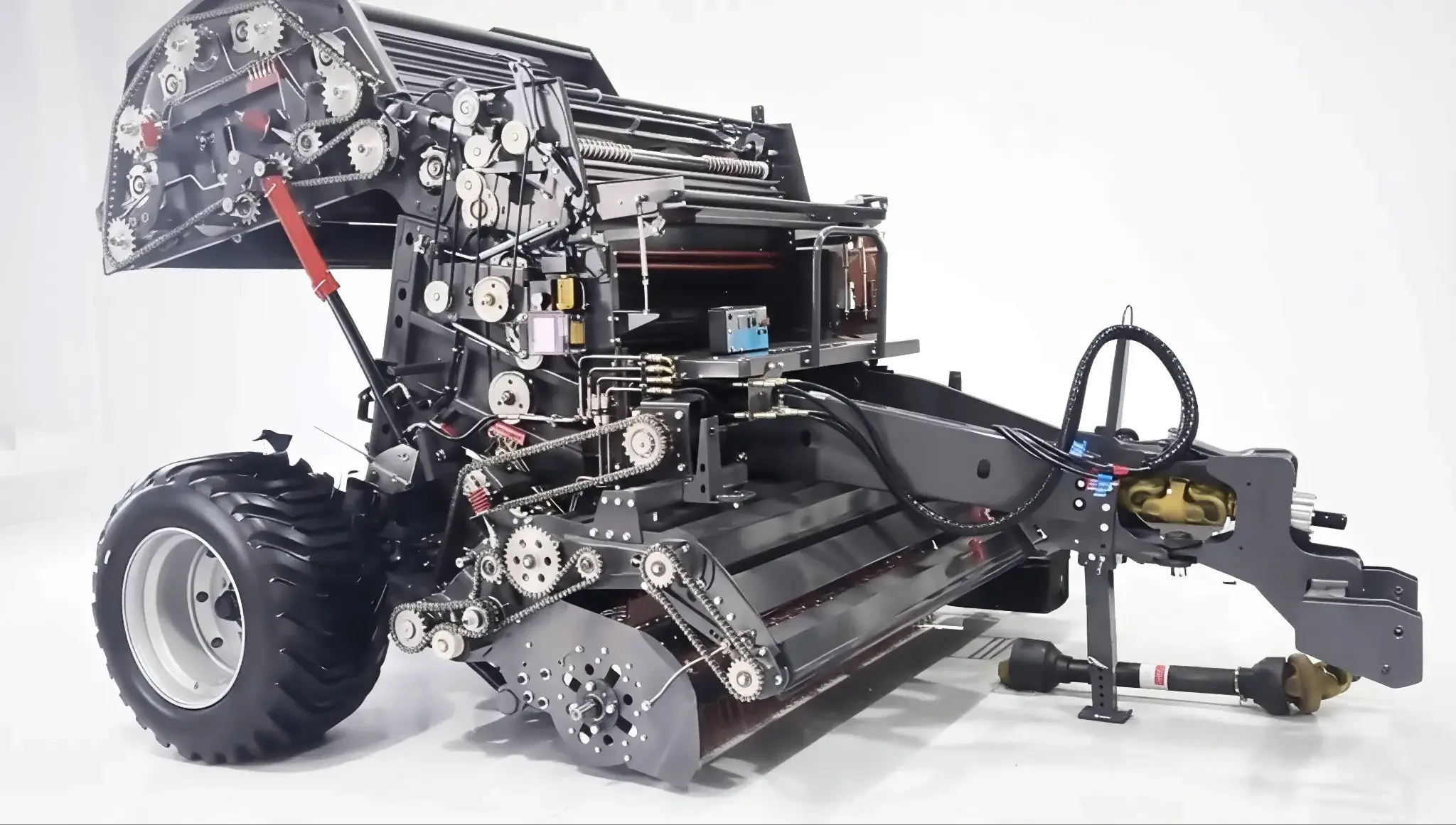
The polymer base of agricultural net wrap is almost universally polypropylene (PP), chosen for its combination of low cost, chemical inertness, and reasonable tensile properties. However, the specific grade of PP and its additive package are what separates winter-grade net from standard summer-field net — and this distinction matters considerably in a Korean context.
Raw PP without additives begins to embrittle at temperatures approaching 0°C and becomes significantly more susceptible to impact fracture below −5°C. For Korean winter storage where bales may sit at ambient temperatures below −15°C during January cold snaps, the net’s polymer must be compounded with a rubber toughening agent or ethylene-propylene copolymer modifier to maintain flexibility. This modification is sometimes identified on product datasheets as “cold impact grade” or “winter-formulated PP.”
UV stabilisation is equally important. Standard Hindered Amine Light Stabiliser (HALS) packages in agricultural PP films are typically rated for 12 or 18 months of outdoor exposure at mid-latitude conditions. For Korea’s winter storage window — November to March — the UV requirement is less intense than a full-year silage application, but the combination of low-temperature UV exposure and physical stress creates a synergistic degradation pathway. A HALS loading of at least 0.5% by polymer weight, combined with a UV absorber such as benzophenone at 0.2–0.3%, provides adequate stabilisation for a five-month Korean winter deployment.
Some premium net wraps incorporate a polyethylene (PE) layer coextruded over the PP lattice, functioning as a low-permeability moisture skin. This bicomponent construction reduces water vapour transmission through the net by 40–60% compared to standard mono-material PP net, which meaningfully extends the dry matter preservation window. The trade-off is a slightly higher material weight per roll — approximately 12–15% heavier — which affects how many metres are wound per roll and thus the frequency of roll changes during baling operations.
Carbon black at 2–2.5% concentration is the most cost-effective UV screen for black or dark-coloured net. White net relying on titanium dioxide (TiO₂) as a UV opacifier requires higher loading rates and is more susceptible to chalking at very low temperatures, which can contaminate feed if net fragments enter the feed chain. For this reason, dark-green or black net wrap is generally preferred for Korean winter outdoor storage.
4. Net Wrap Technical Specification Reference Table for Korean Winter Conditions
| Parameter | Standard Grade | Winter Grade (Korea) | Notes |
|---|---|---|---|
| Base polymer | Virgin PP | Cold-grade PP / PP-EP copolymer | Maintains flexibility to −20°C |
| UV stabiliser (HALS) | 0.2–0.3% | ≥0.5% | 18-month outdoor rating preferred |
| Warp tensile strength | 35–40 N/25 mm | ≥50 N/25 mm | Tested at −10°C per EN ISO 13934-1 |
| Weft tensile strength | 20–25 N/25 mm | ≥30 N/25 mm | Critical for snow load distribution |
| Mesh aperture | 6–10 mm | 4–6 mm | Finer mesh reduces snow/rain penetration |
| Roll width | 1.23 m / 1.25 m | Match baler chamber (1.0 / 1.25 / 1.4 m) | Full coverage to bale edge essential |
| Wrap layers (rice straw) | 1.5–2 passes | 2–3 passes minimum | Korea winter outdoor storage |
| Colour | Green / white | Dark green / black | Carbon black UV screen preferred |
| Minimum service temp. | −5°C | −20°C | Gangwon-do inland valleys can reach −18°C |
5. How Many Wrap Layers Does Korean Winter Storage Require?
The question of wrap layer count is one of the most frequent discussions among Korean rice farmers and agricultural contractors. Standard round baler manufacturers typically recommend 1.5 passes (equivalent to approximately 2.5 wrap layers across the bale circumference) as a baseline for dry straw under covered storage. For outdoor winter conditions in Korea, this baseline should be treated as an absolute minimum and is insufficient for bales expected to remain in the field through January and February.
Field experience from Honam and Yeongnam paddy farming areas consistently points to 2 full passes (approximately 4 wrap layers) as the practical minimum for outdoor Korean winter rice straw storage. At this wrap count, the net forms two effectively independent moisture barriers — the outer wrap being sacrificed to environmental degradation while the inner wrap remains intact. The benefit compounds: each additional layer reduces the rate at which surface moisture migrates inward, and the thermal insulation effect of a denser net canopy fractionally elevates bale surface temperature during radiation-frost nights, reducing condensation cycling.
For farms in higher-elevation regions — specifically the Taebaek mountain belt of Gangwon-do or the highland areas of North Gyeongsang-do — where snow accumulation may persist for eight to twelve weeks, 3 passes or a hybrid approach combining net wrap with a single layer of bale wrap film on the bale crown is worth considering. The added material cost is typically offset by reduced dry matter losses, which in a 500–600 kg rice straw bale can represent several thousand Korean won per bale.
The round baler’s net wrap control system plays a direct role in achieving consistent layer counts. Models equipped with sensor-based density control and electronic net cut timers — such as the 9YG-2.24D series — allow operators to program the exact number of net passes per bale cycle, eliminating the operator-dependent variability that leads to under-wrapped bales in practice. Manual or mechanical net systems on simpler models require trained operator attention to achieve consistent results.
6. Bale Dimensions, Storage Geometry, and Net Wrap Interaction
The physical dimensions of the rice straw bale define the surface area that net must cover and the mechanical forces the wrap must withstand during storage. Korean paddy farms predominantly use mid-size round balers producing bales in the Φ1100×1000 mm to Φ1300×1400 mm range — sizes that optimise trailer load capacity on narrow farm roads while remaining manageable with standard front-loader tractors.
For a standard Φ1300×1400 mm bale (the output of the 9YG-2.24D series at its typical rice straw setting), the net roll requirement per bale is approximately 6–8 metres of 1.4 m-wide net at two wrap passes. The 9YG-2.24D is specified with a standard net roll size of 2000×1.4 m per roll, which covers approximately 250–330 bales per roll depending on wrap pass count — a meaningful consideration for contractors managing operational cost-per-bale economics.
Bale shape also affects how well net wrap performs in outdoor winter storage. A well-formed bale with tight ends and a straight cylindrical profile distributes snow load evenly and sheds rain and snowmelt off the curved sides by gravity. Barrel-shaped bales — where the centre diameter is significantly larger than the edges — concentrate snow load at the crown and create pooling zones at the bale base where moisture accumulates. The 9YG-1.25A’s feeding mechanism (combining auger, tine roller, and drum elements) helps distribute incoming rice straw evenly across the full chamber width of 1250 mm, directly improving end-face density and shape consistency.
Smaller-format bales from the 9YG-1.0 series (Φ1100×1000 mm) have a surface-area-to-volume ratio approximately 25% higher than large-format bales, meaning a larger proportion of the straw mass is within reach of moisture infiltrating through the net. For small-bale outdoor winter storage in Korea, the case for winter-grade net specification is therefore proportionally stronger than for large bales.
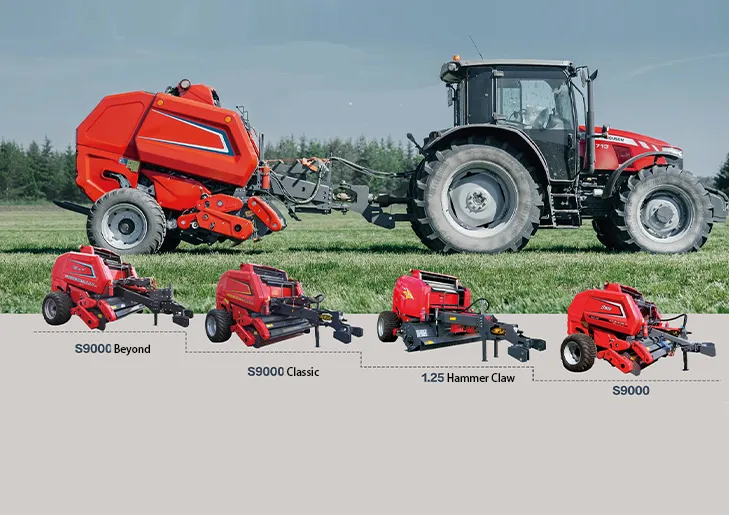
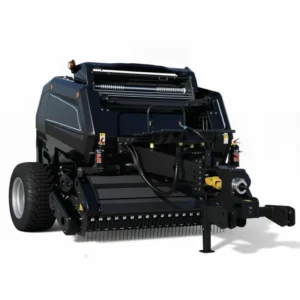
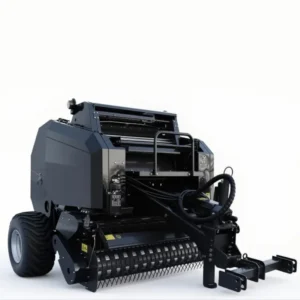
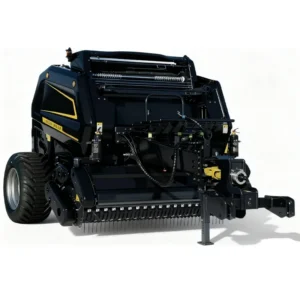
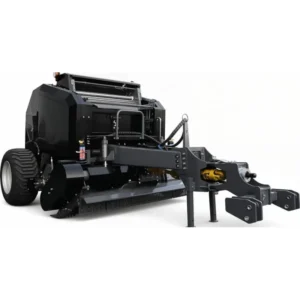
7. Round Baler Models for Korean Rice Straw Applications
Explore our full range of round balers designed for rice straw and multi-crop baling across all farm sizes.
8. Outdoor Storage Site Selection and Bale Orientation in Korean Winter
Even a correctly specified net wrap will underperform if bales are sited and oriented poorly. Ground conditions, drainage, prevailing wind direction, and solar exposure all interact with the net wrap system to determine overall dry matter preservation through winter.
In Korea, the dominant winter wind direction is from the northwest — cold Siberian air masses push down the Korean peninsula and create a persistent northwest-to-southeast wind vector across paddy regions. Bales stored with their flat ends facing northwest experience direct wind-driven snow infiltration at the most vulnerable point of the net wrap, the end face where coverage is typically lightest. Aligning the bale axis with the prevailing wind (so flat ends face north and south rather than northwest) reduces this exposure.
Ground contact is a major issue specific to rice straw bales. Unlike grass hay, rice straw has a relatively high silica content in the outermost stem layer, which creates a degree of natural water resistance. However, bales sitting directly on damp soil or concrete with no air gap beneath develop basal moisture uptake through capillary wicking regardless of net wrap quality. Placing bales on wooden pallets, rubberised mats, or a gravel bed of at least 100 mm provides sufficient ground clearance to prevent direct wicking while also improving air circulation.
Row spacing for large outdoor bale stacks should accommodate the actual bale diameter plus a minimal gap — typically 200–300 mm — to allow bale surfaces to dry after rainfall or snowmelt. Tight row stacking without gaps creates persistent moisture zones between bales that can persist for weeks in the low-evaporation conditions of a Korean winter.
9. Regulatory and Legal Framework: Korea and International Context
The selection of net wrap materials and baling practices in Korea operates within a layered regulatory environment covering agricultural waste, food safety, and machinery safety. Understanding these frameworks is important for commercial farmers and contractors who supply rice straw bales to livestock operations or biomass processors.
Korea: The Waste Management Act (폐기물 관리법, Act No. 19266) governs the disposal of agricultural plastics including used net wrap. Polypropylene bale net and silage film fall within the scope of agricultural plastic waste subject to producer take-back obligations under the Extended Producer Responsibility (EPR) scheme administered by the Korea Environment Corporation (K-eco). Farmers are required to collect used net and deposit it at designated agricultural plastic collection points — loose net left in fields is subject to administrative fines under local ordinances. This regulatory pressure has accelerated the market shift toward higher-specification nets with longer service life, because a net that degrades mid-winter creates both feed quality and plastic waste enforcement problems simultaneously.
The Clean Air Conservation Act (대기환경보전법) is relevant because it effectively bans open burning of rice straw in most Korean municipalities, creating the demand for mechanical baling in the first place. This Act, enforced through Ministry of Environment guidelines, provides significant legislative backing for round baler adoption as an alternative residue management method.
European Union: Under EU Regulation 2019/1009 on fertilising products and related agricultural input standards, net wrap is not directly regulated as a substance but becomes relevant when bale fragments enter composting or anaerobic digestion streams. The EU Circular Economy Action Plan is driving towards net wrap products certified as compostable or bio-based; however, these alternatives are not yet widely available in Korean markets at commercially viable specifications for winter use.
Japan: Japan’s Act on the Promotion of Effective Utilization of Resources and the Agricultural Resource Recycling Act create a framework similar to Korea’s EPR scheme. Japanese net wrap collection and recycling infrastructure is notably more mature than Korea’s and provides a useful reference model for Korean prefecture-level programs. Several Korean agricultural cooperatives (농협) have begun joint procurement and return programs modelled on Japanese examples.
Machinery safety: Round balers operated in Korea for commercial baling services must comply with the Act on Safety Management of Machinery, Equipment, Apparatus, etc. (기계·기구·설비 등 안전관리에 관한 법률). PTO-connected implements including round balers require CE marking or equivalent Korean KC mark certification for commercial use. Agricultural PTO shafts connecting tractors to round balers fall under the scope of KS B 1553 (Agricultural Machinery — Power Take-Off Shafts) and must be guarded to the standard specified therein.
10. Compatible Accessories for Round Baler Operations
Our round balers pair directly with purpose-matched accessories for a fully integrated, one-stop baling system.
Agricultural PTO Shaft for Round Balers
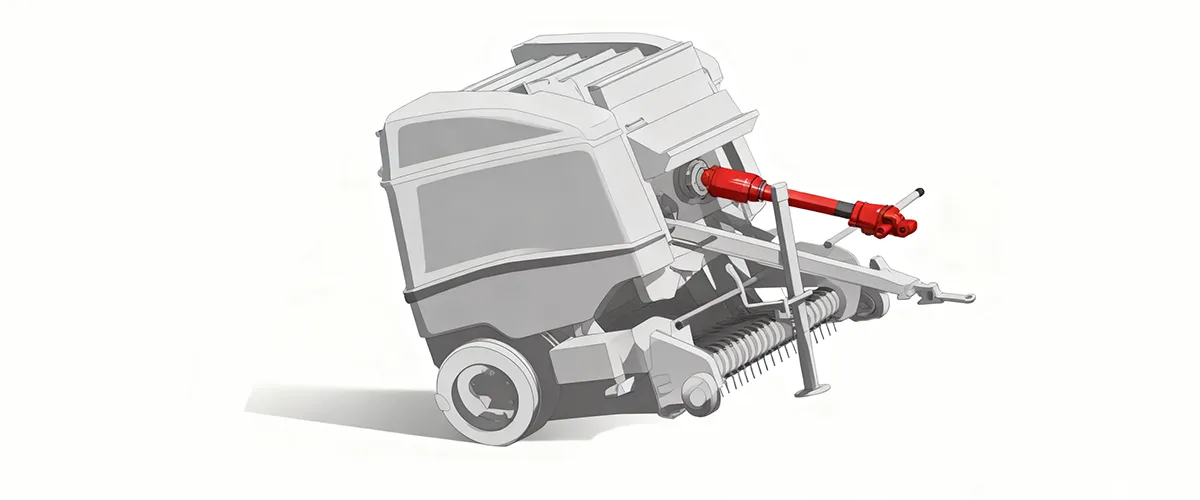
Reliable power transfer between your tractor and round baler is non-negotiable in demanding rice straw conditions. Our EP PTO Shafts for Round Balers are engineered for the precise torque profiles of the 9YG series machines, with overload protection and full guarding compliant with KS B 1553 and CE standards. Whether you are running the compact 9YG-1.0 or the high-capacity 9YG-2.24D, system compatibility is guaranteed across all drive configurations.
Agricultural Chain — Drive System Components
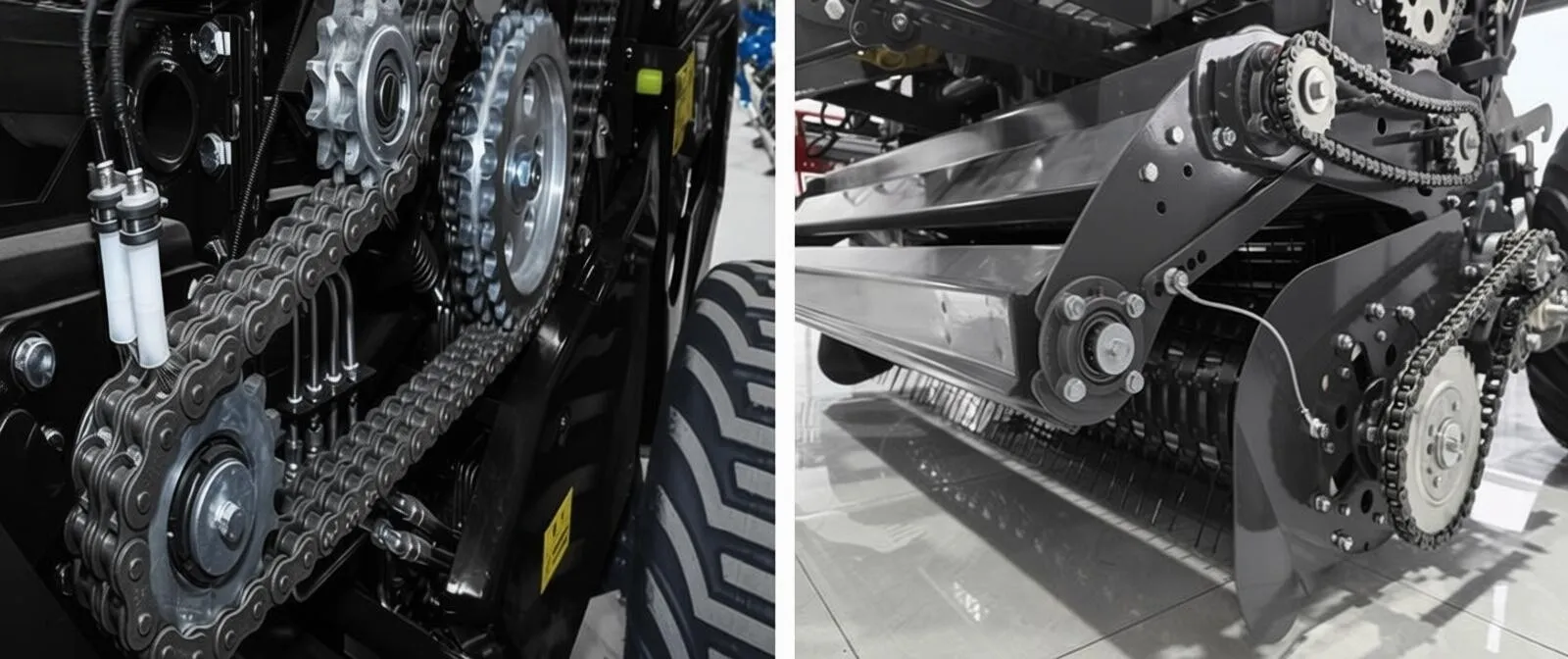
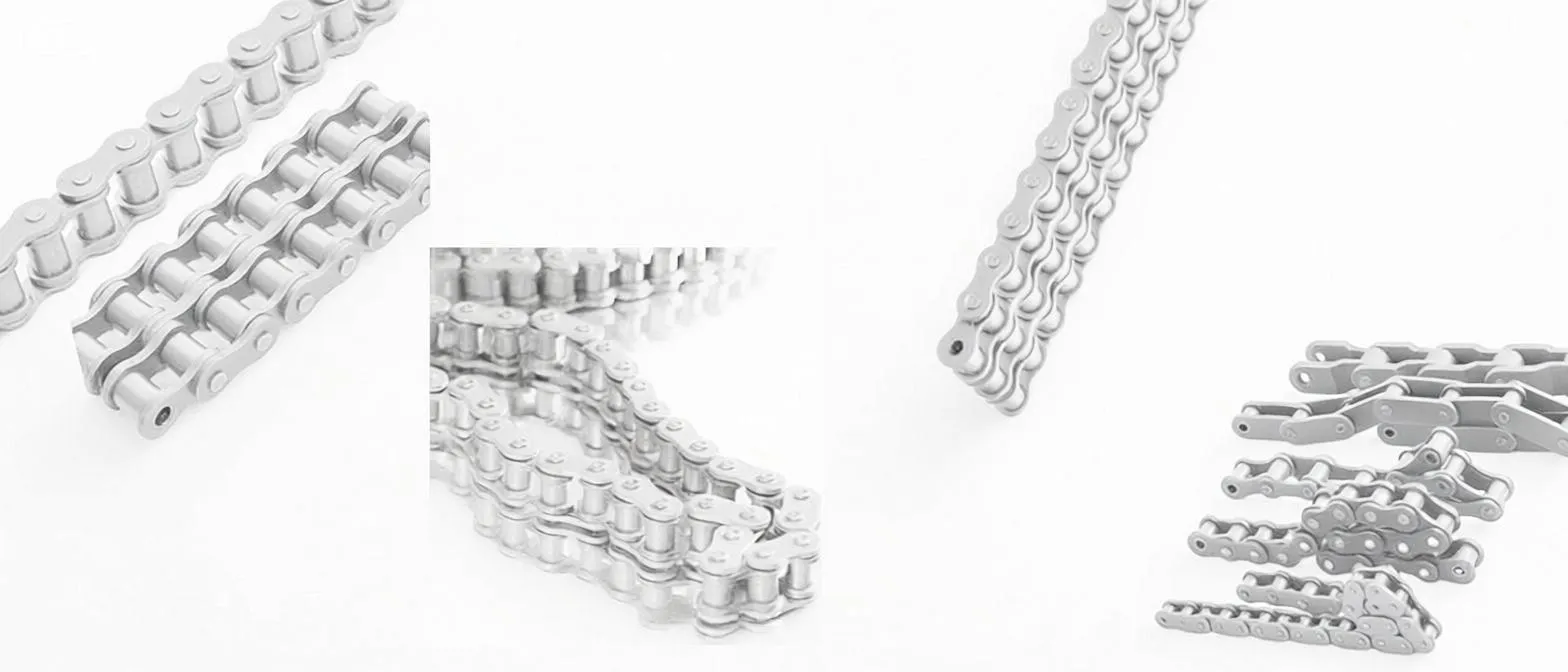
The compression chamber drive chains in our 9YG-2.24D series use 20A heavy-duty agricultural chain on the rear chamber — a specification that directly increases compression pressure and bale density. Higher-density rice straw bales are more resistant to deformation under snow load during Korean winter outdoor storage. Consistent chain tension maintenance through the baling season prevents the density variation between bales that complicates consistent net wrap setting. Our chain components are available through our after-sales supply network as direct replacement parts.
11. Net Wrap Procurement Quality Checklist for Korean Buyers
When evaluating net wrap suppliers for Korean winter rice straw storage, the following minimum documentation and product characteristics should be verified before purchase. Requesting these items from suppliers separates technically capable producers from those offering only price-competitive but climatically unsuitable products.
| # | Check Item | What to Ask For |
|---|---|---|
| 1 | Cold temperature rating | Minimum service temperature certificate; request −20°C or lower for Gangwon use |
| 2 | UV stabiliser loading | Product datasheet showing HALS % by weight ≥0.5% |
| 3 | Tensile strength test | EN ISO 13934-1 or equivalent warp/weft results at −10°C |
| 4 | Roll width accuracy | Confirm ±5 mm width tolerance matches baler chamber spec |
| 5 | Metres per roll declaration | Verify actual metered length vs. nominal; discrepancies affect per-bale cost |
| 6 | Polymer origin | Virgin vs. recycled PP declaration; recycled content increases cold embrittlement risk |
| 7 | EPR registration | Confirm product is registered under Korea’s EPR scheme with K-eco for compliant disposal |
| 8 | Mesh aperture specification | Request aperture measurement ≤6 mm for rice straw outdoor winter application |
Frequently Asked Questions
บรรณาธิการ: PXY