Pasture and Meadow Grass Baling — Operations Guide
A field-level engineering and operations analysis of two competing approaches to pasture harvesting — and when each one earns its place on a livestock farm.
The decision between running a เครื่องอัดก้อนกลม with a separate disc mower-conditioner versus using a combined mower-conditioner-baler system sits at the intersection of capital cost, labour availability, field logistics, and forage quality — and it plays out differently depending on your farm scale, crop type, and weather patterns. There is no single correct answer, which is precisely why this comparison matters.
Both approaches feed the same end goal: getting cut pasture grass or meadow hay into a dense, stable เครื่องอัดก้อนกลม bale before the weather changes, the crop loses nutritive value, or the window for silage fermentation closes. Where they diverge is in how many machine passes are required, how much flexibility the operator retains when conditions shift, and what the total cost of ownership looks like over a 10-year equipment lifecycle — whether the เครื่องอัดก้อนกลม is a standalone unit or integrated into a combined machine.
This guide works through that comparison methodically. It covers the manufacturing structure of each system, the material and engineering differences, the practical workflow implications for a working livestock farm, and the regulatory context that matters for buyers in Korea and other key markets. Along the way, specific เครื่องอัดก้อนกลม models from the EP range are referenced where they illustrate a particular point in the comparison.
Defining the Two Systems: What Each Actually Does
Before comparing them it is worth being precise about what each system consists of, because terminology is used loosely in practice and confusion between the two leads to mismatched purchasing decisions.
The Separate-Operations System
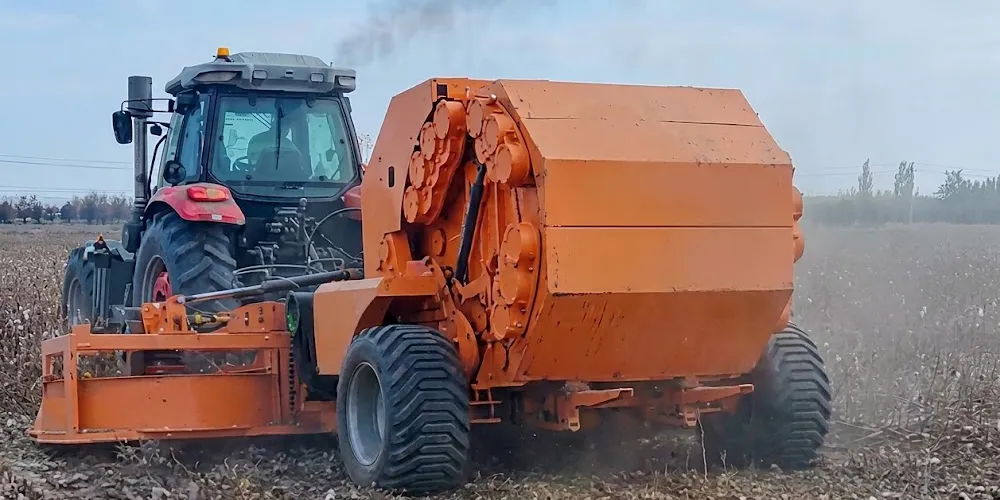
This approach uses two distinct machines in sequence. First, a disc mower or disc mower-conditioner cuts and conditions the crop, leaving it in a swath or wide spread. After a wilting period of one to three days, a rake collects and merges the swaths into windrows, and then the เครื่องอัดก้อนกลม picks up, compresses, and wraps the windrow into a finished round bale before ejecting it.
Each machine is purchased, operated, and maintained independently. The total system may involve three or four machines and require multiple tractor passes over every hectare — but each machine can be optimised for its specific task and replaced or upgraded individually as technology develops or wear occurs.
The Integrated (Mow-Condition-Bale) System
An integrated mower-conditioner-baler combines the cutting, conditioning, and sometimes the immediate baling function into a single pass or a closely coupled operation that allows a very short wilting window. Some designs produce a เครื่องอัดก้อนกลม silage bale within hours of cutting. Others still require overnight wilting but eliminate the separate rake pass by forming a windrow directly from the conditioning discharge.
The attraction is obvious: fewer passes, reduced compaction, and potentially faster turnaround in marginal weather. The trade-off is a more complex machine, a higher single-unit capital cost, and the reality that breakdowns anywhere in the integrated system stop the entire operation, whereas a breakdown in a separate-machine system allows partial operation to continue, and the เครื่องอัดก้อนกลม can keep working on already-cut crop while the mower awaits repair.
In practical terms, most livestock farms up to 200 ha operate separate systems with two to four individual machines — with the เครื่องอัดก้อนกลม as the central harvesting unit, while integrated systems are more commonly found on large arable and livestock enterprises with professional machinery management and workshop resources. The analysis below deals primarily with the separate system — specifically the role and specification of the เครื่องอัดก้อนกลม within it — but draws comparisons throughout to highlight when the integrated alternative might genuinely justify its complexity.
Manufacturing Structure: Round Baler vs Disc Mower-Conditioner
Understanding the mechanical architecture of each machine type clarifies why they behave differently in the field and why comparing them purely on purchase price misses important total-cost factors.
Round Baler Structure
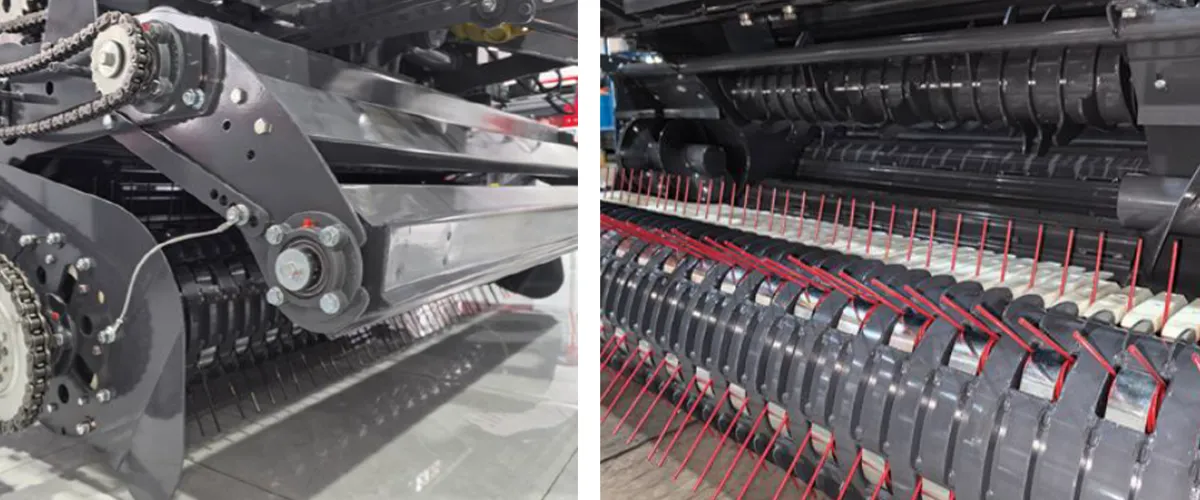
A round baler machine consists of six principal sub-assemblies: the main frame and drawbar, the pickup rotor with spring-tine or cam-tine fingers, the crop intake rotor or auger, the bale-forming chamber (fixed roller or belt type), the wrapping mechanism (twine, net, or film), and the hydraulic tailgate and ejection system. Power arrives via PTO shaft at 540 rpm and is distributed by the round baler gearbox to the pickup and chamber drives, with chain-and-sprocket secondary reduction stages handling the speed differential between machine components.
The mechanical architecture is purpose-designed for one task: forming and wrapping a dense cylindrical bale. Every component in the เครื่องอัดก้อนกลม is sized around the peak torque event of bale completion, when the forming chamber is at full compression. This single-function design makes the เครื่องอัดก้อนกลม mechanically more efficient at its job than a multi-function integrated machine, where compromises are often made to accommodate the cutting and conditioning functions within the same drivetrain and frame.
Disc Mower-Conditioner Structure
A disc mower-conditioner carries two mechanically and kinematically separate systems on a single frame: the disc cutterbar, which runs at high speed (typically 2 800–3 200 rpm at the disc) to achieve clean grass cutting, and the conditioner rolls or tines, which run at a lower speed to crack or abrade the stem cuticle and accelerate moisture loss. Both systems are driven from the same PTO shaft but through separate gearbox stages, which means the driveline engineering is substantially more complex than a single-purpose machine.
The cutterbar itself runs as close to the ground as the pendulum suspension system allows, with individual disc guards and bed sections designed to ride over stones without catastrophic failure. On pasture fields with variable topography — stock pugging, old drainage channels, ridge-and-furrow — this ground-following capability is critical and represents a significant part of the cutterbar’s design and manufacturing cost.
When a disc mower-conditioner breaks down mid-field, the entire cutting and wilting programme stops. If the breakdown coincides with a narrow weather window, the agronomic consequence can be significant. A separate เครื่องอัดก้อนกลม sitting on standby is unaffected by a mower breakdown, which is one of the less-discussed but real advantages of keeping these two functions in separate machines — the เครื่องอัดก้อนกลม continues its work regardless of what happens to the mower.
Material System: Engineering Choices and Their Field Consequences
The materials used in a เครื่องอัดก้อนกลม and a disc mower-conditioner reflect fundamentally different loading regimes and wear environments. Knowing what differentiates quality manufacture from budget substitution helps buyers evaluate machines more honestly than specification sheets alone allow.
| Component | เครื่องอัดฟางทรงกลม | Disc Mower-Conditioner |
|---|---|---|
| Main frame | Q345B or equivalent high-strength structural steel, continuous-weld construction, shot-blasted before painting | Similar structural steel for the main frame, but cutterbar sections use reinforced cast housing and hardened pivot points to resist stone-impact loading |
| Wear components | Spring-steel pickup tines (65Mn or 60Si2Mn), induction-hardened chamber rollers, UHMWPE wrap guides | Hardox 450 or equivalent wear-plate for knife holders and disc bodies, boron-steel blades, conditioner rolls in cast alloy or hardened rubber-wrapped steel |
| Gearbox housing | Ductile iron (QT500), good vibration damping, stable across a wide operating temperature range | Multiple separate gearbox housings (cutterbar gearbox, central distribution gearbox, conditioner drive) — each in ductile iron or aluminium alloy depending on design |
| Surface protection | Two-pack epoxy primer plus polyurethane topcoat; silage acid resistance important for silage baler application | Epoxy primer system on frame; cutterbar bed typically powder-coated or hot-dip galvanised on premium machines for resistance to acidic crop sap and soil abrasion |
| Hydraulic components | Chrome-plated rod cylinders for tailgate; typically 2–4 cylinders; hose routing protected from crop ingestion | More hydraulic circuits — headstock angle adjustment, conditioner gap adjustment, transport locking — requiring higher-specification hose and connector standards |
The material system of a เครื่องอัดก้อนกลม is simpler in aggregate because the machine does not have to manage the high-frequency shock loads and abrasive contact of a disc cutterbar. Pickup tines on a baler experience bending fatigue and abrasion from soil particles in the crop, but this is much less severe than the impact energy a disc mower knife absorbs during ground contact at 3 000 rpm. The consequence is that consumable costs per operating hour are typically lower on a เครื่องอัดก้อนกลม than on a mower-conditioner, though the baler accumulates more total hours across a season if it is also processing the outputs of multiple mower passes.
On the EP range, the use of Q345B-grade steel throughout the primary frame of round balers like the EP-9YG series means fatigue life is well-matched to intensive seasonal use, where the machine may work 200–350 hours in an eight-to-ten week window and then stand idle. That burst-use pattern is harder on paint systems and seals than continuous-use patterns — quality surface protection and sealed bearing housings both justify their additional cost in this operating context.
Workflow Comparison: How Many Passes, How Much Flexibility
The field workflow difference between the two approaches is where the operational reality of the comparison lands. Pass count, compaction risk, and flexibility to respond to weather changes all diverge significantly between the separate-machine and integrated systems.
| Operation Stage | Separate System (Mower + Rake + Round Baler) | Integrated System |
|---|---|---|
| Pass 1 — Cutting | Disc mower or mower-conditioner pass. Leaves crop in wide spread or light swath. | Mower-conditioner-baler pass. Cuts, conditions, and either bales immediately or leaves in windrow for rapid pickup. |
| Wilting period | 1–3 days depending on target moisture, weather, and conditioning effectiveness | 4–24 hours for silage-optimised systems; 1–2 days if targeting hay moisture levels |
| Pass 2 — Raking / Windrowing | Single or twin-rotor rake pass to form windrows of consistent density for the เครื่องอัดก้อนกลม pickup | Often eliminated if the integrated machine forms its own windrow; some systems still require a light rake pass to correct windrow shape |
| Pass 3 — Baling | เครื่องอัดก้อนกลม pass. Machine picks up windrow, forms, wraps, and ejects bale. | Either integrated in Pass 1 or a short additional baling-only pass if the system separates cutting from baling |
| Total tractor passes per ha | 3–4 passes (mowing, raking x1, baling); potentially 2 if mower forms a direct windrow and raking is skipped | 1–2 passes; major reduction in compaction events and soil disturbance |
| Weather flexibility | High — each operation can be timed independently; the เครื่องอัดก้อนกลม can wait while mowing continues | Lower — the machine must complete its full cycle; a weather change mid-operation creates difficult decisions |
| Breakdown resilience | High — mower breakdown does not stop the เครื่องอัดก้อนกลม; baler breakdown does not stop mowing | Low — any breakdown in the integrated unit stops the complete operation |
The compaction point in this comparison is worth pausing on. Soil compaction on grassland accumulates with every tractor pass, and its effects — reduced infiltration, impeded root penetration, lower sward diversity — can persist for years. Research consistently shows that compaction from repeated trafficking is the primary long-term agronomic cost of harvesting on wet or marginal soils. A system that reduces tractor passes from four to two has a real and cumulative benefit to pasture productivity that does not appear in a simple machinery cost comparison.
However, that benefit only materialises if the integrated system can reliably produce bales of the quality required. If the shorter wilting window results in silage that heats or moulds at a higher rate than separate-system hay, the agronomic gain from lower compaction may be offset by losses in feed quality and therefore livestock performance. This is a farm-specific calculation, not a universal answer.
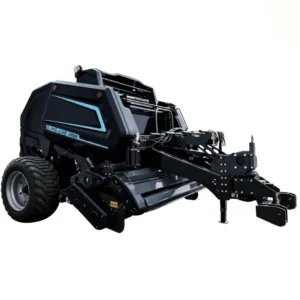
EP Round Baler for Separate-System Pasture Operations
The following models are particularly well-suited to the separate-operations workflow described above — offering the right balance of throughput, bale quality, and tractor compatibility for livestock farms in the 50–300 ha range.
Gearbox and Drivetrain: Engineering Differences That Matter in the Field
เดอะ round baler gearbox is a load-distribution hub that must handle the full tractor PTO output and route it cleanly to multiple baler sub-systems running at different speeds. On a standalone เครื่องอัดก้อนกลม in the separate-system configuration, the gearbox designer can optimise exclusively for the baling torque profile — relatively steady-state operation punctuated by torque spikes at bale completion when chamber pressure peaks.
On a disc mower-conditioner, the gearbox engineering challenge is substantially more difficult. The cutterbar disc gearbox must transmit high-speed torque at 2 800–3 200 rpm to the individual disc assemblies while surviving stone-strike shock loading that can briefly generate forces far exceeding steady-state running torque. This requires gear tooth geometry, case hardening treatments, and oil viscosity specifications that are quite different from a baler gearbox operating at 540 rpm input. When an integrated mower-baler system combines both functions, the gearbox design becomes a genuine engineering compromise — the input shaft cannot simultaneously optimise for cutterbar disc speed and baler PTO speed without a step-down or step-up stage that adds complexity and mechanical loss.
For the separate-system operator, the practical maintenance implication is straightforward: the round baler gearbox oil should be checked and changed at end-of-season or every 100 operating hours, and the pickup and chamber chain tension should be verified every 50 hours during the seasonal working period. The disc mower-conditioner gearboxes — there are typically two to four per machine — each have their own oil specification and change interval that must be tracked independently. This maintenance complexity is often underestimated at the point of purchase and becomes a real cost driver over a 10-year ownership period.
The PTO shaft connecting tractor to baler in the separate system is a simpler and less stressed component than the equivalent connector on an integrated mower-baler, because the เครื่องอัดก้อนกลม operates at lower input shaft speed and with smoother torque delivery. This translates to longer universal joint life, fewer overrun clutch replacements, and more predictable maintenance scheduling. For Korean farms that typically accumulate 150–300 เครื่องอัดก้อนกลม operating hours per year, a correctly specified PTO shaft will last three to five seasons before any joint service is needed.
Forage Quality: Which System Produces Better Feed?
The answer to this question is genuinely context-dependent, and the tendency for equipment salespeople on both sides to claim an absolute advantage for their system is not supported by agronomic evidence. What the research does show is that forage quality from any baling system is determined primarily by crop moisture at baling, wrapping speed after baling for silage applications, and storage conditions — not by the specific machine that formed the bale.
Separate System Advantage
The longer wilting window available in a separate mow-wilt-rake-bale system allows more precise moisture management. For farms targeting dry hay at 15–18% moisture or haylage at 25–35% moisture, the ability to leave the crop in swath for an extra day without disrupting the machine schedule is a meaningful quality advantage. The standalone เครื่องอัดก้อนกลม in a separate system operates when the crop moisture is genuinely correct, not when the machine programme demands it.
Integrated System Advantage
The faster wilting period achievable with an aggressive conditioning system reduces the window during which leaf material — where most of the protein and energy content sits — can be lost to rain, photodegradation, or mechanical shattering. In regions where summer rain is frequent and unpredictable, an integrated system that can progress from standing crop to wrapped bale within 24 hours provides genuine insurance against weather-related quality losses.
The Common Factor
Both systems deliver high-quality forage when the crop is wilted to the correct moisture range before baling, the เครื่องอัดก้อนกลม is set for adequate compression density, and the bale is wrapped or stored promptly. Both systems produce poor-quality feed when moisture management is incorrect or storage is inadequate. Machine type alone does not determine outcome — operator practice and weather management do.
For the majority of Korean livestock farms, which operate mixed swards with first-cut targets in late May to June and second-cut windows in August, the separate-system approach allows better crop moisture monitoring between operations and fits the available tractor fleet more naturally. The integrated system tends to be chosen by larger contract operators who prioritise throughput and reduced labour input over the flexibility that separate machines provide.

Total Cost of Ownership: Looking Beyond the Purchase Price
Any honest cost comparison between these two approaches must look beyond the initial machine purchase to include maintenance, repair, depreciation, fuel, and labour costs for both the เครื่องอัดก้อนกลม and the mowing equipment across a realistic ownership period of eight to twelve years. The integrated system’s higher purchase price is sometimes cited as a decisive disadvantage, but it is only decisive if the annual operating cost profile and the resale value trajectory also favour the separate system — which is not always the case.
| Cost Category | Separate System | Integrated System |
|---|---|---|
| Capital cost | Lower per unit; multiple smaller purchases spread over time | Higher single investment; significant capital commitment at one point |
| Fuel per ha | Higher — more tractor passes per hectare | Lower — fewer passes; meaningful saving on large areas |
| Labour per ha | Higher — each operation may require a separate operator or tractor | Lower — combined operations reduce total man-hours per tonne of forage |
| Maintenance complexity | Lower per machine; simpler to manage and schedule | Higher; integrated units have more service points and interdependent systems |
| Downtime risk | Lower — partial operations can continue during any single machine repair | Higher — complete system downtime on any component failure |
| Round baler parts cost | Moderate — routine items are pickup tines, chain, wrap knives, bearings | Higher — integrated unit combines round baler parts with mower blade and conditioner roll wear costs |
| Resale value | Strong — round balers for sale near me has consistent demand in secondary markets | More variable — integrated units have a narrower buyer pool in secondary markets |
For most Korean livestock farms in the 50–200 ha bracket, the separate system wins on total cost of ownership primarily because of lower downtime risk, better secondary market value for a standalone เครื่องอัดก้อนกลม, and the well-understood round baler parts availability in established distributor networks. The integrated system earns its higher cost on farms above 300 ha where the labour saving and fuel reduction from fewer passes produces a real return at scale, and where workshop facilities can manage the more complex maintenance requirements.
Regulatory Context for Round Baler and Mowing Equipment Across Key Markets
Any comparison between the two system types must include the regulatory environment in the target market, because certification and subsidy-eligibility requirements can affect which configuration is legally and commercially optimal for a given farm.
South Korea (KR)
Both round balers and mower-conditioners imported to South Korea fall under the Agricultural Mechanization Promotion Act and must comply with Rural Development Administration (RDA) safety and performance standards. For subsidy-eligible purchases, the machine model must appear on the RDA approved equipment register, updated annually. Importantly, the subsidy structure is based on individual machine categories — a standalone round baler machine and a standalone disc mower-conditioner may each qualify independently for different subsidy categories, which can make the separate-system approach more advantageous from a subsidy-absorption standpoint than purchasing an integrated unit that may fall into a single higher-cost category with a different subsidy rate. Korean operators should verify current subsidy category placement with the relevant county agricultural extension office before committing to either system configuration.
European Bloc (EU)
Within the EU, both round balers and mower-conditioners as trailed implements are covered by the Machinery Directive 2006/42/EC (and the incoming Machinery Regulation (EU) 2023/1230 from January 2027). Each standalone เครื่องอัดก้อนกลม or mower-conditioner requires its own CE marking and Declaration of Conformity. An integrated mower-baler unit requires a single CE declaration covering the entire integrated machine — which means the manufacturer must conduct a comprehensive risk assessment across all combined functions. For importers, verifying that the CE documentation explicitly covers the integrated functions (not just the mowing or baling component in isolation) is an important due-diligence step. Safety-standard EN ISO 11684 on safety signs and EN ISO 4254 on agricultural machinery safety are both relevant to both system types.
Australia (AU)
In Australia, state Work Health and Safety (WHS) Acts govern agricultural machinery safety. Both system types must be safe by design and accompanied by adequate documentation. The Safe Work Australia guidelines on agricultural machinery risk management apply to both standalone and integrated configurations. For mowing equipment specifically, the Australian Standard AS 4024 on safeguarding of machinery provides guidance on guarding requirements for high-speed cutterbar systems — a particular concern with disc mower-conditioners where open disc assemblies pose significant contact risk if poorly guarded. The เครื่องอัดก้อนกลม in the separate system generally presents lower guarding complexity than a mower-conditioner, though the pickup tine area requires proper guarding in both systems.
North America (US / Canada)
OSHA 29 CFR Part 1928 and the ASABE standards applicable to agricultural machinery cover both mowing and baling equipment in the US and Canada. The ASABE standard S361 on PTO shafts and ASABE S493 on agricultural machinery guarding both apply to either system. For mowing equipment specifically, ASABE S493 references cutterbar guarding requirements that are more stringent than those for baling equipment, reflecting the higher injury risk from high-speed disc cutterbar systems. Operators bringing either configuration into commercial use should ensure the ASABE compliance documentation is available from the manufacturer or importer, as insurance requirements increasingly reference ASABE standards in agricultural equipment claims.
Kazakhstan and EAEU Markets
In Kazakhstan and other Eurasian Economic Community (EAEU) member states, both round balers and mowing equipment are subject to Technical Regulation TR TS 010/2011, which requires EAC certification through an accredited body before distribution. The EAC marking must appear on each machine individually in the separate-system configuration. For integrated units, the EAC assessment covers the combined machine — which may require a more extensive testing programme. Farms in Kazakhstan receiving government mechanisation subsidies must additionally confirm that the specific model and serial number appear on the Ministry of Agriculture approved list, which is updated on an annual cycle. EAEU Common External Tariff rates for round balers (HS 8433.40) and mowing equipment (HS 8433.20) differ, so the tariff calculation for separate vs integrated systems may produce different outcomes at the point of import.
The regulatory comparison across these markets consistently shows that the separate-system configuration — standalone เครื่องอัดก้อนกลม plus standalone mower-conditioner — offers simpler compliance pathways because each machine is assessed independently against well-established single-function standards. The integrated system, while potentially advantageous operationally, requires more careful regulatory due diligence to confirm that the combined-function machine has been assessed as a complete integrated unit rather than as two independently certified machines bolted together.
Decision Framework: Choosing the Right Configuration for Your Farm
Given everything above, how should a Korean livestock farmer or an international buyer in a similar market actually make this decision? The following framework identifies the key questions that determine which configuration fits a given operation.
Farm scale
Below 200 ha: separate system almost always better for capital efficiency and flexibility. Above 300 ha with employed labour: integrated system worth serious evaluation for its throughput and fuel advantages.
Labour availability
One operator, one tractor: separate system with a reliable เครื่องอัดก้อนกลม and a well-maintained mower-conditioner operated in sequence by the same tractor. Two operators or two tractors available simultaneously: separate system offers faster progress per unit time.
Weather patterns
Reliable summer weather with predictable 3–5 day drying windows: separate system. Frequent unpredictable rain events requiring rapid crop processing: integrated system reduces risk but does not eliminate it.
Forage type
Dry hay targeting 15–18% moisture: separate system with longer wilting window. High-DM haylage or rapid-fermentation silage: integrated system cuts time between cutting and anaerobic storage.
Workshop access
Limited in-house workshop capability: separate system; simpler machines with more widely available parts. Good in-house workshop or close dealer: integrated system maintenance is manageable with the right support.
Subsidy eligibility
For Korean farms: check whether the เครื่องอัดก้อนกลม and mower-conditioner each qualify for separate subsidy categories under the current RDA schedule. If yes, the separate-system approach may offer better total subsidy coverage than a single integrated machine in one category.
The conclusion from this framework for most farms in the 50–200 ha range — whether in Korea or in other comparable livestock farming markets — is that the separate-system approach, with a well-specified standalone เครื่องอัดก้อนกลม as its core harvesting unit, and a dedicated disc mower-conditioner is more versatile, more maintainable, and often more cost-effective than an integrated alternative. The integrated system earns its place at scale, with professional labour management and adequate workshop support, but it is not the universal answer that its marketing often implies.
System Accessories: PTO Shaft and Drive Chain for Separate-System Operations
Running a separate เครื่องอัดก้อนกลม and mower-conditioner system means managing two sets of PTO connections and ensuring each machine’s round baler parts are correctly specified and drive components. Getting the specifications right for each machine connection is just as important as the machine choice itself — a mismatched PTO shaft will wear joints prematurely, and an incorrect chain pitch will lose tension rapidly and damage the driven sprockets.
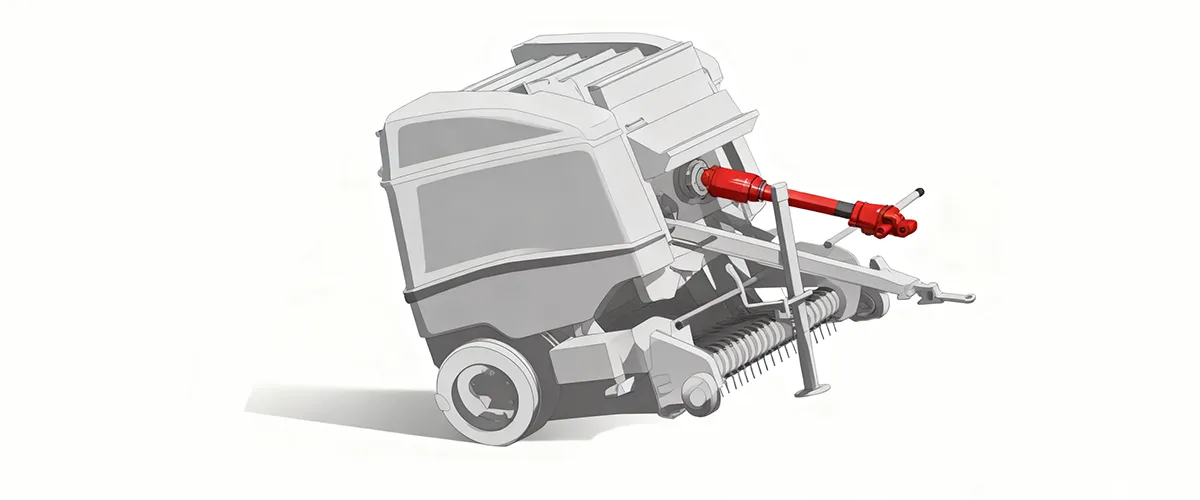
Agricultural PTO Shaft for Round Balers
เดอะ PTO shaft on the เครื่องอัดก้อนกลม side of a separate system must be matched to the baler input shaft profile (typically 1 3/8 inch, 6-spline at 540 rpm), the operating length range through the tractor steering arc, and the peak torque transmitted during bale-completion events. An overrun clutch is essential to prevent shaft wind-up when the tractor throttle is closed mid-cycle. EP-compatible PTO shafts for เครื่องอัดก้อนกลม applications are engineered specifically for the torque envelope and angular deflection range that baling service requires. Shaft guards must comply with CE standard EN ISO 4254-7 for agricultural machinery PTO guarding — a requirement that applies in both Korean and EU export markets and should be verified on any replacement shaft before use.
Agricultural Drive Chain
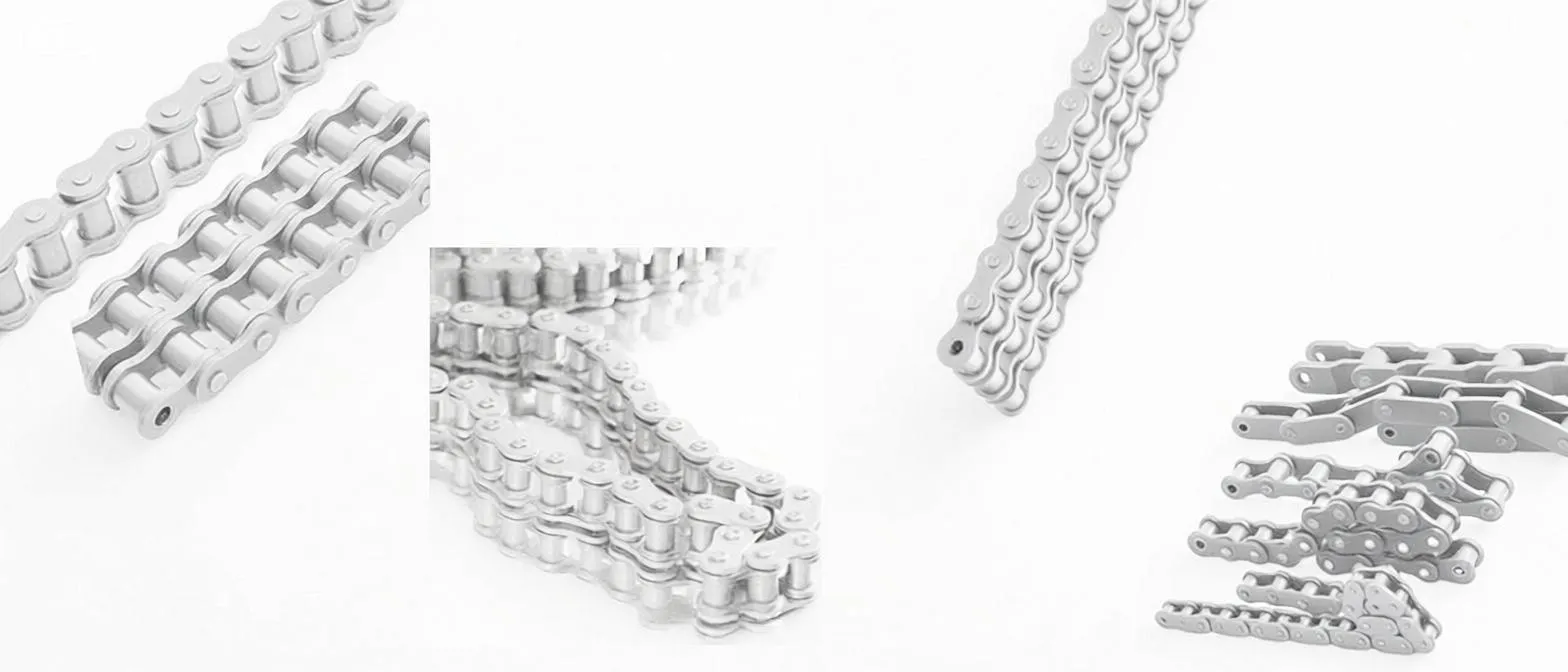
The secondary drive chain inside the เครื่องอัดก้อนกลม distributes power from the main gearbox output to the pickup and chamber components at the correct operational speed for each sub-system. In a separate-system เครื่องอัดก้อนกลม running 200–350 hours per season, the chain must resist fatigue from the repeated tension-relief cycle that occurs at each bale ejection. Heavy-duty agricultural roller chain with case-hardened pins and nickel-plated outer plates provides significantly longer service life in this demanding environment than standard transmission chain of the same pitch. When replacing chain, always replace the matched sprockets at the same time — fitting new chain on worn sprocket teeth accelerates the new chain wear rate by a factor of three or more, negating the cost benefit of replacing only the chain. Keeping a spare joining link and a half-link in the tractor toolkit is minimal insurance against a season-interrupting breakage at a critical moment.
10+ Years of Agricultural Machinery Engineering
Our operation traces its origins to 2013, when a focused team set out to engineer agricultural and livestock harvesting machinery built for the demands of commercial farming rather than optimised for catalogue appeal. Over more than a decade, that foundation has grown into a modern manufacturing enterprise producing the full range of harvesting and baling equipment that a contemporary livestock farm needs — from light and heavy round balers to single and double-blade mowers, disc rotary mowers, and single and double-side rakes.
The manufacturing facility operates more than 60 sets of large-scale production equipment, including CNC laser cutting lines and electrostatic spray finishing systems, within an ISO 9001 Quality Management System that governs every process from material intake to final inspection. We hold independent import and export rights, and our machines operate in climates ranging from Northeast Asia to Central Asia and beyond.
Annual design production capacity stands at 2 000 units, supported by a technical team that provides first-time user training, conducts seasonal follow-up contact with farm operators, and feeds field-performance observations back into ongoing product development. When you are evaluating a เครื่องอัดก้อนกลม model or mowing system configuration for your operation, that accumulated field knowledge is available to help you reach the right specification decision.
Established
2013
Production Equipment
60+ Large-Scale Sets
Annual Capacity
2,000 Units
Quality Standard
ISO 9001 QMS
Explore the Full EP Round Baler Range
Whether you are configuring a new separate-system setup or upgrading a specific component in an existing operation, the EP เครื่องอัดก้อนกลม range covers the spectrum from compact 30-HP-compatible models to high-throughput units suited to larger operations. Detailed specifications and direct enquiry options are available on each product page.
How to Specify the Right Round Baler for Your Mowing Setup
Once the decision is made to run a separate-system operation, the เครื่องอัดก้อนกลม specification must be aligned carefully with the mowing and raking equipment already on the farm. A เครื่องอัดก้อนกลม with a 1.5 m pickup width matched to windrows formed by a 2.2 m cutterbar will produce different results than the same เครื่องอัดก้อนกลม receiving windrows merged from two passes by a single 1.5 m mower. Getting this match right before purchase avoids the uneven bale shapes and reduced throughput that come from a pickup that is either too narrow for the windrow or too wide for the available crop volume.
The key specification parameters to cross-reference between your mowing system and your เครื่องอัดก้อนกลม selection are: pickup working width relative to windrow width; minimum and maximum windrow density that the เครื่องอัดก้อนกลม pickup can handle without bunching or stalling; PTO speed compatibility between tractor and เครื่องอัดก้อนกลม input shaft (540 rpm for most small-to-mid-size balers); and the hydraulic flow requirements of the baler wrap system relative to what the tractor hydraulic circuit can supply.
On farms where a disc mower-conditioner forms a wide, well-conditioned swath that is then raked into a dense merged windrow, a เครื่องอัดก้อนกลม with a reinforced intake rotor and a variable crop density management system will produce more consistent bale density than a basic fixed-intake design. The EP 9YG-2.24D and 2.24D Transcend เครื่องอัดก้อนกลม models both address this requirement through their intake geometry and chamber pressure management, making them well-suited to the output of a productive mowing and raking system operating at full capacity. A เครื่องอัดก้อนกลม that is correctly specified for its windrow input will also experience less pickup blockage, less chain drive stress, and longer bearing life — reducing both downtime events and round baler parts consumption across the season.
Frequently Asked Questions
บรรณาธิการ: PXY