Alfalfa & Hay Baling — Feeding Technology Deep Dive
Multi-cut alfalfa is one of the most variable crops a yuvarlak balya makinesi encounters across a season. The same paddock can yield a dense, wet windrow at first cut and a brittle, dust-dry swath by the fourth cut in late summer. Understanding how axial-flow feeding technology manages this variation — and why it outperforms conventional pickup systems across the full moisture range — is the starting point for choosing the right machine and setting it correctly through every cut.
The Moisture Problem in Multi-Cut Alfalfa Baling
Alfalfa cut multiple times per year does not behave like a single-cut hay crop. Each cut has a different plant structure at the point of harvest — different stem diameter, different leaf-to-stem ratio, different cellular water content — and the relationship between moisture content and the physical handling characteristics of the crop changes significantly across the cutting calendar. First-cut alfalfa, harvested in spring from a plant that has rebuilt its root carbohydrate reserves, tends to produce heavy, leafy windrows with high water content in the stems. By the third or fourth cut in late summer, the same variety on the same paddock is producing shorter, thinner stems with a much drier structure after wilting, and the leaf fraction is closer to being shatter-prone than pliable. A yuvarlak balya makinesi feeding system designed to handle only one point on this spectrum will deliver inconsistent results across the season.
Conventional cam-track pickup systems — the dominant design in older-generation balers and many entry-level current models — work acceptably when alfalfa moisture and windrow density fall within a fairly narrow range. Outside that range, blockages at the pickup-to-chamber transition point become more frequent, and the operator is forced to manage forward speed as a compensating variable rather than maintaining consistent throughput. Axial-flow feeding changes this dynamic by actively directing material from the moment it leaves the pickup tines, using auger flights and tine rollers to consolidate and accelerate the crop stream before it reaches the bale chamber. The result is a system that is inherently more tolerant of moisture variation because it does not rely on the crop’s own structural stiffness to self-feed into the chamber.
How Axial-Flow Feeding Works: The Three-Stage Mechanism
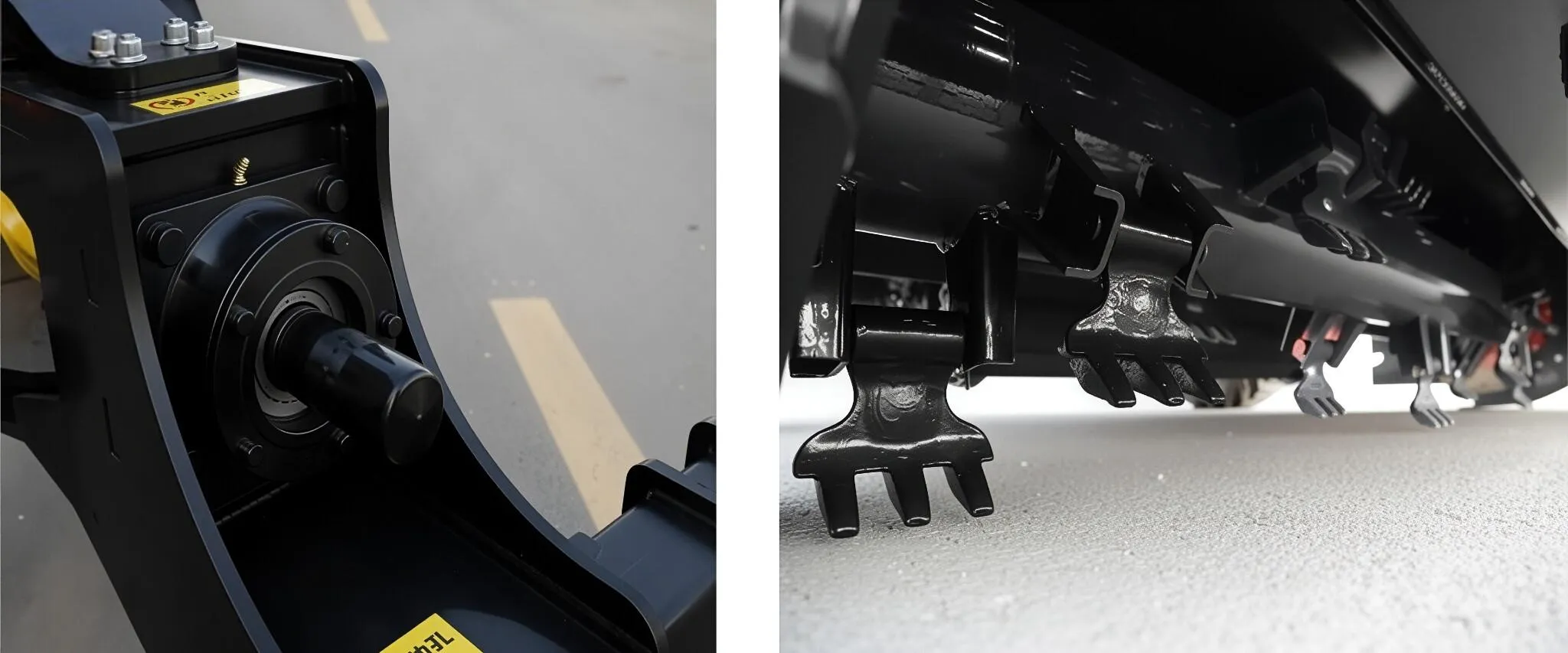
The axial-flow semi-forced feeding system used in the 9YG-2.24D series and other commercial round baler models in the EP range operates in three sequential stages that work together to create a consistent material stream entering the bale chamber, regardless of what the incoming crop conditions present at the pickup.
Stage one is the pickup assembly itself. The no-cam pickup design used in axial-flow balers removes the cam track and guard ring that are the primary blockage points in conventional tine-pickup systems. The tines operate through a spring-loaded return mechanism that accommodates irregular material volume without stalling. This matters most when baling first-cut alfalfa at 50–60% moisture, where windrow density is high and the crop is heavy, compressible, and prone to forming mats that exceed the intake capacity of a fixed cam-track system. The no-cam design does not have a fixed intake threshold in the same way — the tines accommodate volume variation within the mechanical range of the spring loading, which is substantially wider than the range a cam track tolerates before blockage.
Stage two is the auger consolidation step. After the tines lift the crop from the windrow, auger flights running perpendicular to the machine’s direction of travel gather the material from the full pickup width and compress it into the central feed zone directly in front of the chamber entrance. This lateral consolidation is critical for multi-cut alfalfa because windrow width varies significantly between cuts — first-cut windrows from a wide disc mower may exceed the pickup width, while late-season cuts from a narrower mowing pass produce narrower, sparser windrows that need consolidation from a wider collection footprint before they can fill the bale chamber uniformly. The auger maintains this consolidation function across both conditions without operator adjustment.
Stage three is the tine roller and drum metering sequence. The tine rollers take the consolidated material from the auger and accelerate it into the lower chamber entrance, distributing it across the full width of the roller array to initiate even bale core formation. The drum acts as a metering gate, controlling the rate at which material is handed off into the bale chamber. This metering function is especially important in late-cut dry alfalfa, where the low bulk density of the brittle material means the chamber would otherwise fill unevenly if the feed rate were not controlled independently of the pickup speed.
| Axial-Flow Stage | Function | Benefit at High Moisture (50–65%) | Benefit at Low Moisture (30–45%) |
|---|---|---|---|
| 1 — No-cam pickup | Tine collection without fixed cam limit | Handles heavy, wet mats without blockage | Lifts sparse brittle crop without tine tip breakage |
| 2 — Auger consolidation | Lateral gathering into central feed zone | Prevents overloading of one side of the chamber | Gathers narrow, sparse late-season windrows effectively |
| 3 — Tine roller + drum | Accelerates and meters crop into chamber | Pushes high-density wet crop into chamber without stalling | Controls feed rate for low bulk density dry alfalfa |
Manufacturing Structure of the Axial-Flow Feeding System
The manufacturing structure of the axial-flow feeding assembly is more complex than a conventional cam-track pickup precisely because it performs more mechanical work on the incoming material. Each of the three stages involves independently-driven components that must maintain correct relative speeds, clearances, and force relationships across the full range of operating conditions. Manufacturing quality at the component level — how accurately the tine roller shaft is supported, how precisely the auger flight pitch is formed, how concentrically the drum is mounted — determines whether the system performs to specification in multi-cut alfalfa conditions or whether it introduces the variability it was designed to eliminate.
The 9YG-2.24D round baler, with its 2.24-metre pickup width, uses an 18-roller compression chamber where each of the 222 mm diameter rollers is driven through a reinforced chain transmission system. The rollers are surface-profiled to grip crop material at the entry point into the bale core formation zone, and the specific profile geometry is chosen to work across both the wet and dry ends of the alfalfa moisture spectrum. In wet conditions, the profile needs to grip without causing the roller surface to act as a squeegee that forces plant juice toward the chamber edges; in dry conditions, the same profile needs to grip without shearing the brittle leaf blades that carry most of the crop’s nutritional value. Getting this right requires a roller profile that is maintained — not worn smooth — across the full service interval, which is why roller material specification in alfalfa-duty machines is a more demanding engineering question than it first appears.
The auger shaft is mounted in sealed flanged bearings at both ends of the pickup housing, allowing the auger to maintain its lateral clearance to the housing side panels across the full range of thermal expansion and contraction encountered in field use — from cold morning startup in spring to heated midday operation in late summer. This clearance is not adjustable in the field because it is set at manufacturing by the fit of the flanged bearing in its machined housing bore. The quality of this fit determines whether fine alfalfa dust and plant juice can migrate into the bearing at the seal face, which is the primary failure mode for auger bearings in alfalfa-duty balers operating across multiple cuts per year.
| Component | Specification (9YG-2.24D) | Manufacturing Quality Requirement | Alfalfa Multi-Cut Relevance |
|---|---|---|---|
| Pickup width | 2.24 m (9YG-2.24D) | Tine tip concentricity within 2 mm over full width | Wide pickup handles variable windrow widths across cuts |
| Compression rollers | 18 rollers, 222 mm dia. | Surface profile maintained >20,000 bales without smoothing | Consistent grip in wet first-cut and dry late-cut conditions |
| Auger shaft bearing | Sealed flanged, both ends | Housing bore machined to H7 fit tolerance | Prevents dust and juice ingress across multi-season use |
| Tine roller drive | Reinforced chain transmission | ANSI B29.1 Class A pitch accuracy | Smooth acceleration at both high and low material density |
| Machine mass (9YG-2.24D) | 3,922 kg | Frame rigidity at rear gate pivot — auto MIG full penetration welds | Structural stability for multi-season four-cut programmes |
| PTO input | 540 RPM, 1-3/8” Z6 spline | Gearbox rated >500 Nm continuous, IP65 sealed | Sustained torque output across all moisture conditions and cuts |
Material System: Engineered for the Full Alfalfa Moisture Spectrum
The material system of an axial-flow round baler must satisfy two sets of requirements that pull in partially opposite directions. For high-moisture baling — first and second cut at 50–65% moisture — the materials need to resist corrosion, chemical attack from plant juice, and the fatigue loading that comes from processing heavy, wet material at high throughput rates. For low-moisture late-cut baling — third and fourth cut at 30–40% moisture — the same materials need to resist abrasion from the silica-rich dry leaf and stem tissue, maintain surface finish on grip-critical components like the compression rollers, and exclude the fine alfalfa dust that penetrates every poorly-sealed joint in a machine operating in dry conditions.
The compression roller alloy in the 9YG-2.24D and EP commercial series is a high-carbon formulation that achieves surface hardness in the 58–62 HRC range after carburising and quenching, while retaining a tougher core at 30–35 HRC. This dual-hardness profile matters across the alfalfa moisture range in a specific way: the hard surface resists the silica abrasion of dry late-cut conditions without losing its grip profile, while the tough core absorbs the transient load spikes that occur when a thick wet windrow slug enters the chamber faster than the chamber pressure can resist it. A purely hard roller would chip under the latter condition; a purely soft roller would abrade flat under the former. The layered hardness profile addresses both.
The round baler gearbox housing material — GGG50 ductile iron — is chosen for dimensional stability across the temperature range encountered in multi-cut alfalfa seasons, from cold morning startups at 5–10°C in early spring to midday operating temperatures in excess of 40°C in late summer. Ductile iron maintains its dimensional form more consistently than cast aluminium across this range, which means the matched-pair line-bored bearing housings retain their concentricity and the gear mesh geometry remains within specification throughout the season. The IP65 seal rating on the gearbox housing ensures that the fine alfalfa dust generated in late-cut dry conditions does not contaminate the ISO VG 220 EP gear oil, whose extreme-pressure additive package is the last line of defence for the gear flanks during the peak torque events that accompany high-throughput baling.
| Component | Material / Treatment | High Moisture Cut (50–65%) Performance | Low Moisture Cut (30–45%) Performance |
|---|---|---|---|
| Compression rollers | 20CrMnTi, 58–62 HRC surface / 30–35 HRC core | Tough core absorbs wet-slug shock load spikes | Hard surface resists silica abrasion; profile maintained |
| Output shafts | 42CrMo4, quench & temper, h6 precision ground | Fatigue resistance under sustained high torque in wet crop | Fretting corrosion resistance at bearing fits in dusty conditions |
| Gearbox housing | GGG50 ductile iron, CNC-machined, IP65 sealed | Resists plant juice contact at external seal face | IP65 excludes fine alfalfa dust from gear oil |
| Pickup tines | Spring steel, heat-treated | Flex-recovers after stone strike in wet spring fields | Low tip force prevents leaf shatter in dry late-cut |
| Roller bearings | 6208-2RS sealed deep-groove, L10 >10,000 hr | Double seal excludes plant juice at high-pressure baling | Sealed against fine dust penetration in dry cutting phases |
| Lip seals | FKM fluoroelastomer, spring-loaded dual lip | Resists mildly acidic plant juice at shaft exit points | High-temperature performance in late summer operation |
| Frame paint system | Electrostatic powder coat | Protects against morning condensation and irrigation splash | UV-stable surface for extended summer field operation |
Moisture-Specific Feeding Behaviour: First Cut to Fourth Cut
The practical difference between axial-flow and conventional pickup becomes most visible when comparing performance across cuts rather than within a single cut. A conventional pickup system that works acceptably on second-cut alfalfa at 45% moisture will often struggle with first-cut material at 58% moisture in the same season — not because the machine is defective but because its design was calibrated for a narrower moisture window. The axial-flow system’s active management of the crop stream in all three feeding stages allows it to adapt to each cut’s material character without operator recalibration beyond the hydraulic chamber pressure setting adjustment.
First-cut alfalfa at 55–65% moisture is the most demanding feeding condition. The crop is physiologically young, with high cellular water content, thick stem walls, and a leafy canopy that creates a dense, cohesive windrow. The primary failure mode for conventional pickups in this condition is auger overload — the windrow arrives at the pickup faster than the auger can consolidate it toward the chamber entrance, causing a buildup that stalls the tine rotation and forces the operator to reverse and clear. The axial-flow system avoids this because the no-cam pickup accommodates the volume surge and the auger is sized to process the full pickup width at the maximum windrow density expected from a well-managed irrigated alfalfa first cut. The 9YG-2.24D’s 2.24-metre pickup width can absorb a first-cut windrow from a 5.0-metre mowing pass without consolidation issues because the auger flight pitch is calculated for this maximum input width.
Third and fourth cut alfalfa at 30–40% moisture presents the opposite challenge. The crop is short, the stems are thin and brittle, the leaves are dry enough to shatter at leaf-blade attachment points if the pickup tine tip velocity is too high, and the windrow may be sparse compared to first-cut volumes. Conventional cam-track pickups at these moisture levels tend to cause excessive leaf shatter because the cam imposes a fixed tine arc that does not vary with material density — the tines travel at the same speed and arc whether the windrow is thick or thin, and in thin dry windrows the tine-to-crop impact force per unit weight of material is much higher than in thick wet windrows. The no-cam axial-flow pickup’s spring-loaded tine return reduces this impact force in thin dry windrows by allowing the tine tip to decelerate slightly as it contacts the lightweight material before fully extending. This is not a programmed function — it is an inherent property of the spring-loaded mechanism that produces a gentler crop contact under light load conditions, which is exactly what dry alfalfa leaves need.
OPERATIONAL INSIGHT
Field comparisons between axial-flow and conventional cam-track round baler machines in four-cut alfalfa operations show the largest performance gap at the moisture extremes — first-cut wet baling above 55% moisture and fourth-cut dry baling below 35%. In the mid-range (40–50% moisture), the performance differential narrows significantly. This is why operators who only bale one or two cuts per year from the same paddock often do not notice the limitation of their conventional pickup until they attempt to extend their cutting programme into wetter spring or drier late-summer conditions.
Bale Density Consistency Across Moisture Levels: What Axial-Flow Delivers
One of the least-discussed advantages of axial-flow feeding in multi-cut alfalfa is its effect on bale density consistency across the season, not just within a single baling session. A round baler machine that delivers 200 kg/m³ in second-cut conditions but drops to 155 kg/m³ in fourth-cut conditions because its feeding system cannot maintain the material pressure needed to load the chamber at low bulk density is producing a batch of wrapped silage bales that will ferment at different rates, open at different temperatures, and deliver different effective feed values at feedout — even though all the bales were notionally produced from the same paddock and management system. This season-long density inconsistency is one of the more commercially significant quality problems in multi-cut silage programmes, and it is one that a well-designed axial-flow system addresses at the mechanical level rather than requiring the operator to compensate through management.
The tine roller and drum metering stage of the axial-flow system creates a consistent material entry velocity into the bale chamber regardless of the bulk density of the incoming crop. In high-bulk-density wet alfalfa, the drum slows the entry rate to prevent the chamber from overfilling before the compression rollers have built sufficient core density. In low-bulk-density dry alfalfa, the drum maintains the entry rate at a level that keeps material actively rotating in the chamber even when the windrow volume is insufficient to sustain rotation by inertia alone. This active maintenance of bale core rotation is the specific mechanism through which density consistency is preserved across the moisture range, and it is a function that a passive gravity-feed system cannot replicate.
| Cut | Typical Moisture at Baling | Windrow Character | Primary Feeding Challenge | Axial-Flow Response |
|---|---|---|---|---|
| 1st cut (spring) | 50–65% | Heavy, dense, cohesive; wide windrow | Pickup overload; auger stall | No-cam tines accommodate volume surge; auger sized for full width |
| 2nd cut (early summer) | 42–55% | Moderate density; good uniformity | Mid-range — both systems manage adequately | Consistent density with no speed adjustment needed |
| 3rd cut (mid-summer) | 35–48% | Lighter volume; thinner stems | Reduced chamber fill rate; leaf shatter beginning | Drum metering maintains core rotation; lighter tine contact |
| 4th cut (late summer) | 28–40% | Brittle, short, sparse; narrow windrow | Leaf shatter; under-density at normal forward speed | Spring tine reduces shatter; auger gathers narrow windrow effectively |

Featured Round Baler: 9YG-2.24D with Axial-Flow Semi-Forced Feeding
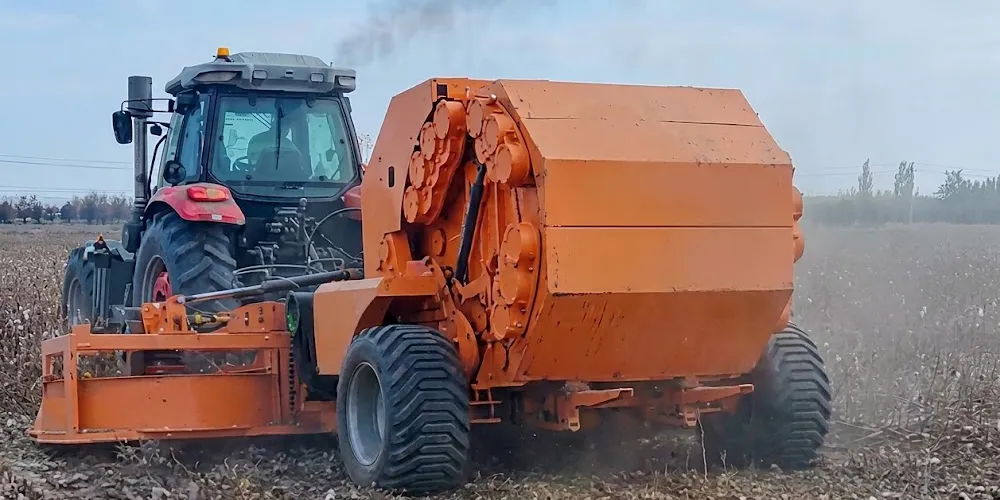
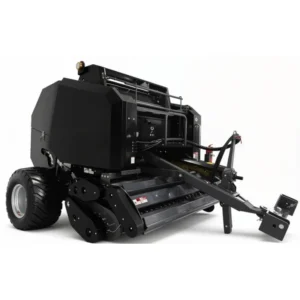
The 9YG-2.24D is the primary commercial-scale round baler model that implements the full three-stage axial-flow semi-forced feeding system described throughout this article. Its 2.24-metre no-cam pickup, combined with the 18-roller 222 mm diameter compression chamber and the Auger + Tine Roller + Drum feeding sequence, makes it the reference configuration for multi-cut alfalfa operations that need consistent performance across all four moisture conditions encountered in a full-season programme. The machine’s 3,922 kg working mass and 4100 mm working length position it as a commercial-duty unit suited to tractors from 80 HP upward, with a maximum road transport speed of 35 km/h. Its IP65-sealed gearbox and FKM fluoroelastomer shaft seals are specified for the multi-season operational environment of intensive alfalfa production.
The Round Baler Gearbox in Multi-Moisture Alfalfa: Torque Demand Variation Across Cuts
The round baler gearbox handles a fundamentally different torque demand profile in multi-cut alfalfa compared to single-material baling. In first-cut wet baling, the gearbox faces sustained high torque as the heavy, dense material requires significant compression force to build the initial bale core. The moisture content acts as a lubricant within the crop mass, which can allow the bale core to slip on the rollers if the compression force is too low — but increases the feedstock weight and therefore the mechanical energy required to rotate the forming bale, which loads the gearbox more heavily than dry material of the same diameter. In late-cut dry baling, the torque demand is lower on average but more episodic — the main load events are the sudden engagement of a concentrated patch of dry material in the windrow, which arrives as a brief spike rather than a sustained load. The gearbox must handle both profiles across the same season.
The gearbox specification used in the 9YG-2.24D and EP commercial series — rated for continuous torque above 500 Nm at 540 RPM PTO input — provides adequate headroom for both the sustained high-torque profile of first-cut wet baling and the episodic spike profile of late-cut dry baling. The torsional damper element in the inter-stage coupling (in dual-coupled models) absorbs the sudden load changes between the feeder and compression circuits, reducing the shock transmission that would otherwise propagate through the chain drive to the compression roller bearings. The IP65 housing seal prevents fine alfalfa dust from contaminating the ISO VG 220 EP gear oil across all four seasonal cutting phases.
Regulatory Framework: Standards Governing Round Baler Gearboxes and Drivelines for Alfalfa Operations
Round balers used in commercial alfalfa silage and hay production are subject to national and regional standards covering driveline safety, machinery type approval, and silage hygiene where the product enters registered dairy or livestock feed supply chains. The following frameworks cover the primary markets for multi-cut irrigated alfalfa production.
| Region | Key Standard or Regulation | Relevance to Axial-Flow Baler Gearbox and Driveline |
|---|---|---|
| South Korea | Agricultural Mechanization Promotion Act; KS B ISO 11684 (PTO guarding); NAAS performance evaluation; MAFRA Livestock Products Sanitary Control Act | NAAS evaluation required for MAFRA subsidy eligibility. PTO driveline guarding must comply with KS B ISO 11684. Axial-flow balers producing alfalfa silage for commercial dairy supply must meet MAFRA fermentation quality indicators, linking machine density performance to feed safety compliance. |
| European Union | EU Machinery Directive 2006/42/EC; EN ISO 4254-7 (baling equipment safety); EC No. 183/2005 (feed hygiene regulation) | CE marking mandatory. Gearbox and driveline guarding must comply with EN ISO 11684. Feed hygiene regulation EC 183/2005 requires HACCP-based documentation for commercial alfalfa silage. In Germany and Netherlands, GMP+ certification for silage includes documentation of bale density records as part of process traceability. |
| United States | ASABE S206.5 (PTO shaft safety guarding); OSHA 29 CFR 1928.57; FDA FSMA 21 CFR Part 507 (animal food preventive controls) | PTO master shield must cover driveline to within 25 mm of tractor housing. Commercial alfalfa silage operations may fall under FSMA Part 507 if producing for sale to third-party livestock operations. Documented bale density and fermentation records are recommended under FSMA hazard analysis requirements. |
| Japan | Agricultural Machinery Act; Feed Safety Law (Act No. 35, 1953 as amended); JIS B 7001 series; NARO type certification | Type certification via NARO required for subsidised procurement. Feed Safety Law governs mycotoxin and fermentation quality standards in alfalfa silage for dairy. Gear lubricants must comply with JIS K 2219 for agricultural machinery in commercial use. |
| Australia | AS/NZS ISO 11684 (PTO guarding); Safe Work Australia Mobile Plant Code; state farm equipment safety acts | PTO safety compliance required in all commercial machinery. South Australia and Western Australia have formal farm machinery safety inspection schemes covering commercial balers. Irrigated alfalfa contractors moving machinery between properties subject to biosecurity cleaning requirements under the Biosecurity Act 2015. |
| Canada | CSA Z96 series (PTO guarding); Feeds Act and Regulations SOR/83-593; Alberta Farm Safety legislation | PTO master shield to CSA Z96 standard. Feeds Act minimum quality standards apply to commercial alfalfa silage for sale. Alberta and Saskatchewan agricultural safety acts require commercial machinery operators to hold documented compliance for driveline guarding. |
| Brazil | ABNT NBR 15827; MAPA registration; NR-12 machinery safety; Mato Grosso and Goiás state agricultural regulations | All imported balers require MAPA registration and NR-12 compliance for PTO and driveline guarding in commercial operations. Large irrigated alfalfa producers in Mato Grosso and Goiás face growing ESG documentation requirements that include machinery safety and feed quality records as part of export certification for beef and dairy supply chains. |
Driveline Components Verified for Axial-Flow Round Balers in Multi-Cut Alfalfa
The axial-flow feeding system’s performance is directly dependent on the quality and compatibility of the driveline components that deliver power from the tractor to the baler mechanism. Sourcing these components from a verified supply chain removes the compatibility uncertainty that arises when the baler specification and the driveline component specification diverge — a particular risk in multi-cut alfalfa operations where the accumulated seasonal hours bring both the baler and its driveline components closer to their wear limits within the same season.
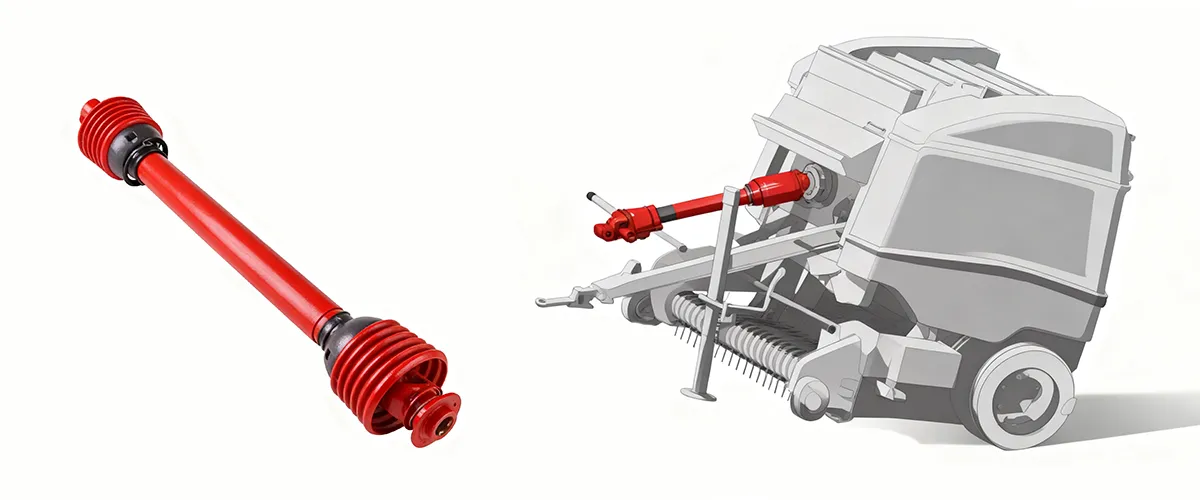
Agricultural PTO Shaft for Round Balers
The EP-PTO shaft series, with 1-3/8-inch Z6 spline interface and 540 RPM compatibility, connects directly to the 9YG-2.24D gearbox input. Its adjustable length of 600–1200 mm accommodates different tractor-to-baler hitch distances across varying tractor fleet configurations. Continuous torque rating above 500 Nm matches the sustained high-torque demand of first-cut wet alfalfa baling without requiring the operator to restrict forward speed. The articulated universal joint delivers smooth torque transfer through all headland steering angles without the torsional pulsing that can momentarily disrupt the axial-flow feeder’s rhythm at the moment of row re-entry. A 20% fuel efficiency advantage over oversized legacy shafts is a practical economy across the 300–500 PTO hours accumulated in a four-cut multi-season alfalfa programme. The full-service worm gear reducer series is available in the same supply chain for non-standard drive configurations.
Agricultural Chain for Axial-Flow Baler Drive
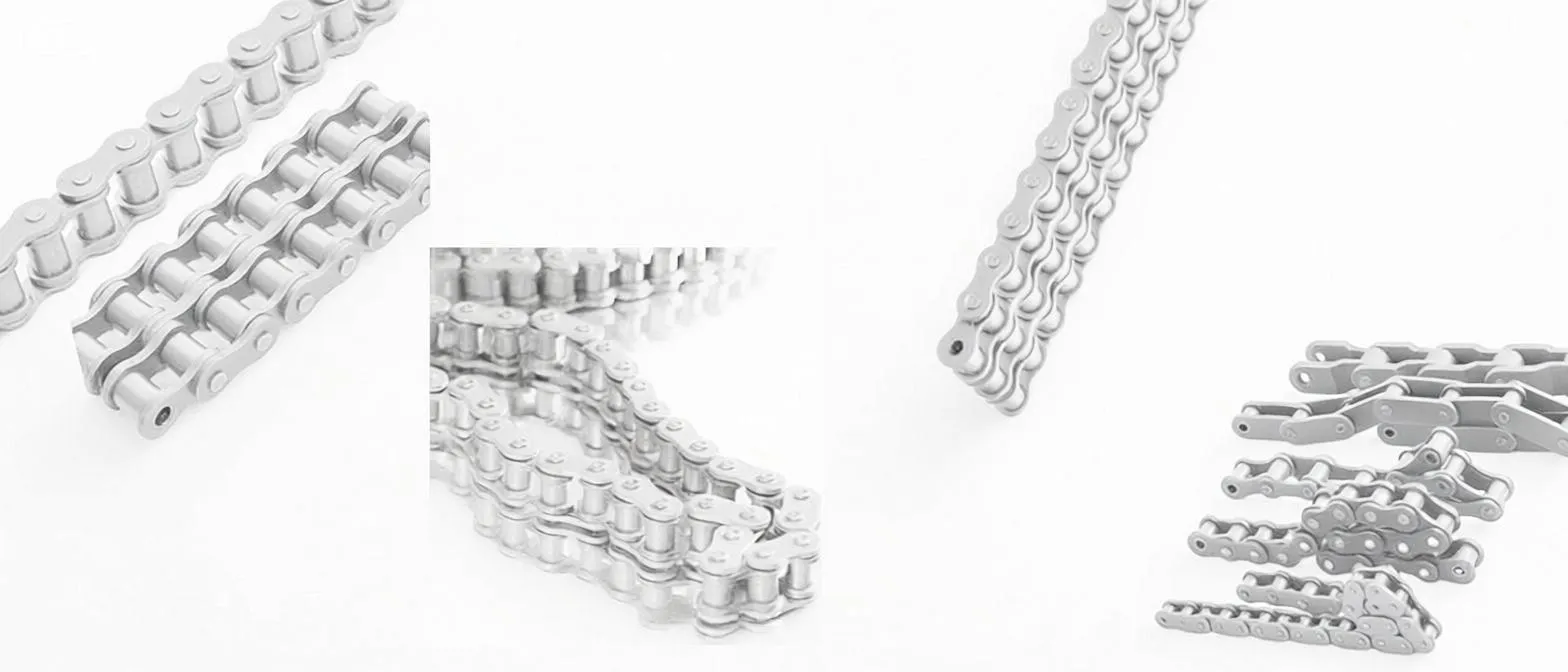
The drive chain in an axial-flow baler carries the transmission load from the gearbox output to the compression roller array and the tine roller stage simultaneously — a dual-circuit demand that requires the chain to maintain pitch accuracy across a wider range of instantaneous load levels than a single-stage drive system. The agricultural chain specified for the EP round baler series is manufactured to ANSI B29.1 Class A pitch accuracy, which keeps dynamic load variation per chain engagement cycle at the minimum achievable level. In multi-cut alfalfa where the transition between first-cut wet and fourth-cut dry baling creates very different chain tension profiles within the same season, Class A pitch accuracy prevents the gradual sprocket flank wear that accumulates when a loose-pitch chain engages unevenly across the tooth face. A heavy-series option provides 40% greater pin and roller cross-section for operations where the chain accumulates 400-plus seasonal hours under sustained high-tension first-cut conditions.
Maintenance Schedule for Axial-Flow Balers Across the Multi-Cut Alfalfa Season
Maintaining the axial-flow system’s performance across four cuts requires a service schedule that accounts for the different wear drivers active in each part of the season. First-cut wet conditions are hardest on seals, bearings in the pickup assembly, and auger shaft ends. Late-cut dry conditions are hardest on chain, sprockets, and the fine alfalfa dust exclusion capability of all sealed joints. A service schedule that addresses only one of these environments will leave the machine inadequately maintained for the other.
Before Each Cut — Pre-Season Check
Inspect pickup tines for bend deformation or tip wear from the previous cut. Check auger shaft seals for weeping — juice from the preceding cut may have migrated past the seal face during storage. Verify gearbox oil level and condition; if discoloured or viscosity has changed, change before beginning the new cut. Confirm IP65 housing seal is intact on both gearbox units.
Every 50 Operating Hours
Grease all eight auger end bearing points. Check chain elongation using a pin count over 25 links — replace at 3% elongation. Inspect drum bearing seals for fine alfalfa dust accumulation, which is the main dust infiltration point in dry late-cut conditions. Verify net wrap tension mechanism and replace worn wrap guides — inconsistent wrapping causes bale surface density problems that undermine the axial-flow system’s density achievement.
Every 500 Hours or End of Season
Full gearbox oil change in both primary and auxiliary gearbox units using ISO VG 220 EP-rated gear oil. Replace all lip seals regardless of appearance — FKM fluoroelastomer seals that have been through a full season of wet and dry cycling should be treated as a planned replacement item rather than a conditional one. Check compression roller surface profile using a straight edge across the roller face — any curvature indicates uneven wear that will produce density variation in the next season.
About Our Agricultural Machinery Operation
Established in 2013, our manufacturing enterprise has built a decade-plus track record in the agricultural and animal husbandry machinery sector. The product portfolio spans light and heavy round balers, single and double blade mowers, disc rotary mowers, and single and double side rakes, all produced under ISO 9001 Quality Management System certification with independent import and export rights. The production facility operates more than 60 sets of large-scale equipment, including CNC laser cutting systems, automatic MIG welding lines, and electrostatic powder-coating production lines, with an annual design capacity of 2,000 units. Close to 100 registered patents support the product range, covering innovations in axial-flow feeding design, gearbox sealing systems, and frame fatigue management for high-cycle commercial baling applications. Our engineering and commercial teams maintain direct market engagement with buyers, dealers, and agricultural cooperatives across South Korea, Japan, Australia, Netherlands, Brazil, and other key alfalfa-producing markets, providing OEM and ODM configuration support for buyers with specific regional or regulatory requirements.
Frequently Asked Questions
Q1. How does an axial-flow round baler handle first-cut alfalfa at high moisture without blockages in Korean irrigated farm conditions?
Q2. What moisture level is too wet or too dry to bale alfalfa with a standard round baler machine and what adjustments help?
Q3. Which round baler model is best for four-cut alfalfa on a Korean dairy farm where moisture varies significantly between cuts?
Q4. How does the round baler gearbox need to be serviced differently when baling alfalfa at different moisture levels across multiple cuts?
Q5. What round baler parts wear out fastest when baling alfalfa across four moisture-variable cuts and how should I budget for replacement?
Q6. How does axial-flow feeding affect leaf retention in dry alfalfa compared to conventional cam-track round baler pickups?
Q7. What tractor horsepower is needed to run an axial-flow round baler efficiently through all four alfalfa cuts on a Korean farm?
Q8. When should I increase hydraulic chamber pressure on my round baler when baling late-cut dry alfalfa to maintain bale density?
Editör: PXY