A technical deep-dive into the pressure sensing, wrapping sequence, and material systems that keep high-moisture Korean rice straw bales intact from paddy field to storage yard — and why the sequence timing matters more than most operators realize.
Ask any Korean rice farmer who has transported baled straw over a provincial road in late October what the most frustrating field problem looks like, and the answer comes quickly: a round bale that arrived at the yard as a shapeless pile of straw instead of the dense cylinder it was when it left the paddy. Bale collapse during transport is not a rare edge case. It is a predictable outcome when the net wrapping sequence is applied too early, too loosely, or without accurate reading of the internal bale density at the moment of wrapping. The damage is not just aesthetic — a collapsed bale loses structural integrity, allows moisture ingress, sheds straw material during handling, and creates safety risks during mechanical loading and unloading.
The round baler models in this range solve this problem through an electronic pressure sensor system that monitors chamber compression in real time and triggers the net wrap mechanism only when the bale core has reached a set density threshold. This article explains how that system works mechanically, why the material properties of rice straw make sensor triggering especially important, what the net wrap film specifications contribute to transport stability, and how the full round baler system — from pickup through ejection — supports bale integrity across the compressed autumn Korean harvest calendar. If you are evaluating a round baler for rice paddy field use in Korea and bale quality during transport is a concern, this is the technical explanation you need.
1. Why Rice Straw Creates Unique Bale Integrity Risks
Rice straw is structurally different from grass hay or cereal wheat straw in ways that directly affect bale stability. Korean japonica rice varieties — the dominant type across the peninsula’s paddy plains — produce straw with a relatively high silica content in the outer stem layer and hollow internodal sections. When compressed, this material does not interlock the way long grass fibres do. Instead, the straw segments tend to align parallel to the baling direction, creating a bale with strong radial compression resistance but weak axial cohesion. Put simply: the bale holds together under the force applied by the compression rollers, but once that external force is removed, the natural spring-back tendency of hollow straw segments works against bale density.
This spring-back effect is amplified by moisture content. Korean rice straw at harvest typically carries 20–40% moisture depending on weather in the days following the combine pass. Wet straw is heavier and more resilient to compression than dry straw — it requires more roller force to reach equivalent density, and it releases more stored elastic energy when the chamber opens. If the net wrap has not been applied tightly enough, or if the bale was wrapped before it reached sufficient internal density, the spring-back force can rupture the wrap or simply push the wrapped layers outward until the bale slumps during transport vibration. This is the mechanical reason why sensor triggering at a precise density threshold matters: the sensor determines whether the bale has been compressed enough to reduce spring-back to a level that the net wrap can contain.
A secondary rice-straw-specific risk is uneven windrow density. Korean combine harvesters deposit straw in swaths that vary in thickness depending on field topography, lodging patterns, and crop yield variation. A round baler moving through a thin section of windrow followed by a dense section may build a bale with an asymmetric internal density distribution — denser on one side than the other. When the chamber opens and the uneven bale is set down on transport, the denser side settles lower, which can cause the bale to rock or roll on a flatbed trailer. Sensor systems that track density uniformity — rather than just peak pressure — reduce this risk by identifying when the bale core is building evenly before triggering the wrap cycle.
2. How the Sensor-Triggered Density System Works
The round baler models in this range use an electronic sensor system — described in manufacturer documentation as “sensor-controlled bale density control” — to monitor compression chamber conditions and manage the net wrap initiation point. The physical arrangement works as follows: pressure sensors are mounted at defined points in the variable chamber that read the reactive force being applied by the compression rollers against the forming bale. As the bale grows in diameter and density, this reactive force increases. The sensor monitors the rate of pressure increase and the absolute pressure level, comparing both against a pre-set target value entered by the operator at the start of the field session.
When the monitored pressure reaches the target threshold — indicating the bale has achieved the required density for that straw type and moisture condition — the control system triggers the net wrap initiator mechanism. On the standard models, this triggers an indicator that prompts the operator to engage the wrap; on the S9000 Beyond variant, the sequence can be configured to initiate wrapping automatically without operator input. The automatic mode is particularly useful in Korean paddy field conditions where operators may be managing multiple tasks simultaneously — monitoring crop rows, headland approach, and tractor engine load — and benefit from removing the wrap-trigger decision from the active cognitive load of the session.
It is worth clarifying what the sensor system does not do: it does not control the tension or speed of the net wrap mechanism itself. Once triggered, the net wrap drive runs at its mechanically fixed speed and applies the programmed number of wrap layers. The sensor’s function is solely to determine when that sequence starts. The accuracy of this trigger point is therefore the most critical variable in the system — a sensor that triggers 10–15% below target density produces a bale that will be undersized in structural resistance despite appearing visually complete. This is why sensor calibration should be verified at the start of each season and after any impact event that may have shifted the sensor mounting position.

3. Manufacturing Structure: Chamber, Rollers & Compression Architecture
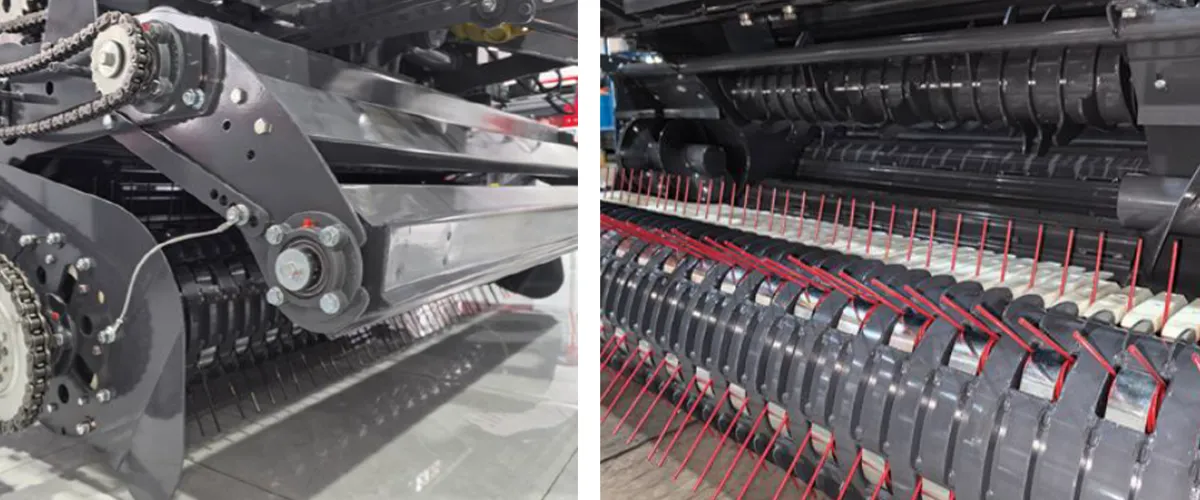
Understanding how sensor-triggered wrapping prevents bale collapse starts with understanding the compression chamber architecture that builds the bale in the first place. The 9YG-2.24D series uses a variable chamber design built around 18 drum-type compression rollers, each with a diameter of 222mm, arranged in a geometry that creates consistent radial pressure across the full 1400mm bale width. This roller arrangement is the physical mechanism that determines bale density — the sensor system reads the output of this compression process, not a separate measurement system.
The 1400mm chamber width is matched to the 2240mm pickup width through the axial-flow semi-forced feeding mechanism, which distributes incoming straw material evenly across the full chamber width before it enters the roller zone. Uneven lateral distribution in the chamber — more material on the left than the right, for example — creates density gradients that the sensor system may interpret as adequate average pressure even when some zones of the bale are significantly under-compressed. The even-distribution function of the axial-flow feeder is therefore a prerequisite for the sensor system to perform correctly. Without even material distribution, sensor-triggered wrapping cannot fully prevent bale collapse because the trigger point is calculated on an average pressure that masks local under-density zones.
The rear chamber of the 9YG-2.24D Classic variant incorporates a hydraulic damping cylinder on the chamber door mechanism. This damper has a direct effect on bale integrity: when the chamber opens after wrapping, the damped opening motion allows the wrapped bale to maintain its shape during the initial decompression rather than experiencing a sudden pressure release that can strain the freshly applied net wrap. Slow, controlled chamber opening is a structural protection step that is easy to overlook when evaluating baler specifications, but its effect on transport survival of the bale is measurable.
On the smaller 9YG-1.0 platform (1900mm pickup, 1000mm chamber, 16 rollers), the compression architecture is proportionally scaled. The sensor system operates identically, but the target density thresholds should be adjusted for the smaller bale volume — the same pressure reading in a 1000mm chamber corresponds to a different mass of compressed straw than in the 1400mm chamber.
4. Material Systems: Net Wrap Specification & Film Properties
The net wrap material is the final structural layer that holds a compressed rice straw bale together from the moment the chamber opens until the bale reaches its destination. Its performance under transport conditions — vibration, bale-to-bale contact, UV exposure, rain, and mechanical handling — determines whether the bale arrives intact. The round baler range uses net wrap rolls specified in the product documentation as 2000m rolls with 1.4m width on the 9YG-2.24D series and 2000m × 1.0m rolls on the 9YG-1.0 series. These width specifications are sized to match the chamber width of each platform, ensuring full lateral coverage of the bale face during each wrap revolution.
Net wrap for rice straw baling in Korean conditions needs to meet several specific material requirements. The primary structural requirement is tensile strength: the net must resist the spring-back force of the compressed straw without stretching beyond its elastic limit. Standard agricultural net wrap with a tensile strength in the range of 2.5–4.0 kN/m in the machine direction is typically adequate for rice straw at 20–30% moisture, but operators baling high-moisture straw (35%+) in early October Korean conditions may benefit from heavier-grade nets toward the higher end of this range. The net material is typically HDPE (high-density polyethylene) monofilament, which resists UV degradation for the outdoor storage periods common in Korean rice straw management.
The second critical property is elongation at break. A net wrap with very low elongation — below 10% in the machine direction — can tear during the initial wrapping cycle if the bale is still actively spring-backing against the wrapped layers while they are being tensioned. A modest elongation allowance (12–18%) permits the net to absorb the dynamic forces during the first seconds after chamber opening without tearing. Most HDPE net wraps used in agricultural baling sit within this range by design, but operators purchasing replacement net wrap should verify these specifications rather than assuming all agricultural net wrap is equivalent.
The number of wrap layers applied by the round baler is controlled by the operator setting on the baler control system. Standard practice for Korean rice straw at moderate moisture is two to three overlapping wrap layers. In high-moisture conditions or for bales that will be transported long distances over rough roads — common in mountainous Korean agricultural regions — three to four layers are advisable. Each additional layer adds holding strength but also adds net material cost, so operators typically calibrate to the minimum layer count that achieves transport stability for their specific route and storage conditions.
5. The Wrapping Sequence: Timing, Tension & Layer Count
The net wrap sequence begins the moment the sensor system signals that target density has been reached. In the following 5–10 seconds, before the chamber door begins to open, the net wrap mechanism feeds the leading edge of the net into the bale contact zone. The rotating bale draws the net in, and the first wrap layer begins forming under the full compression pressure of the closed chamber. This is intentional — wrapping under compression means the first layer is applied while the bale is still at its maximum held density, before any spring-back has occurred. This first layer is the most structurally important: it locks the outer surface of the bale in place and provides the anchor tension that subsequent layers build on.
After the programmed number of wraps completes, the cutting mechanism severs the net at a consistent point relative to the bale face. The cutting system on the 9YG-2.24D series is hydraulically actuated, which provides faster and more reliable cutting than spring-loaded mechanical cutters that can stick in cold autumn conditions — a practical issue in northern Korean provinces like Gangwon-do where October field temperatures can drop below 5°C during morning baling sessions. A clean cut is necessary because a trailing net edge that fails to sever properly will wrap around drive components during chamber opening, creating both a mechanical hazard and bale quality problems.
Following the cut, the chamber door opens in the damped hydraulic sequence described earlier, and the bale exits onto the ground. On firm paddy soil, the bale rolls a short distance before settling. On soft post-harvest soil, it may settle immediately. In both cases, the net wrap must hold the bale geometry during this initial ground contact, which represents the first transport stress event. Operators should allow 15–30 seconds before attempting to pick up a freshly ejected bale with a loader, as this interval allows the net tension to redistribute across the bale surface and the internal straw settlement to stabilize.
6. Round Baler Gearbox: Transmission Stability During the Wrap Cycle
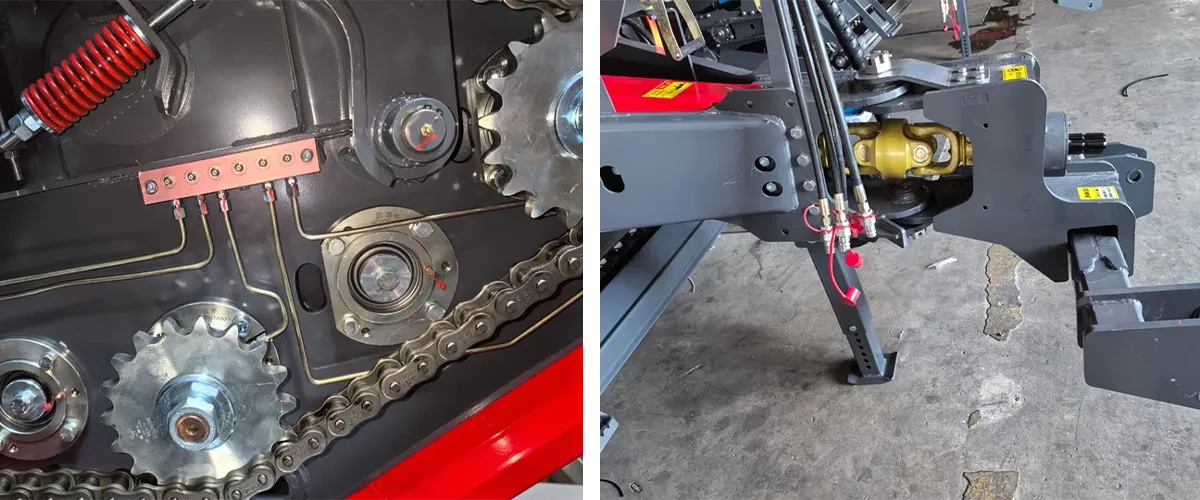
The wrap cycle places a specific, momentary load pattern on the round baler gearbox that differs from the continuous compression load during bale formation. During wrapping, the chamber rollers continue rotating to maintain bale surface speed, while simultaneously the net wrap drive mechanism activates. This brief multi-load event can create PTO speed fluctuation that, if significant enough, affects net wrap tension consistency in the first wrap layer — the most structurally critical one.
The round baler gearbox on the standard 9YG-2.24D platform is specified at 720 r/min PTO input and is dimensioned with a transmission torque capacity above the combined peak demand of the roller drive and the net wrap mechanism running simultaneously. This over-specification relative to minimum requirements is a deliberate design choice: by ensuring the gearbox operates well below its torque limit even during peak simultaneous load events, the design avoids the PTO slowdown that would otherwise cause the first wrap layer to be applied at lower-than-designed tension.
The 9YG-2.24D S9000 Beyond variant uses a dual-coupled gearbox assembly that also provides the 90-degree lateral rotation functionality for tight headland turns. During the wrap cycle specifically, the dual-coupled design maintains PTO shaft geometry within safe operating angles even if the tractor is positioned at an offset angle during the wrap sequence — a practical advantage on paddy fields where the headland boundary may require the operator to be angled rather than perfectly aligned when the wrap trigger fires. The 9YG-1.25A variant supports a broader PTO speed range of 540–1000 r/min, which accommodates older Korean tractor models running legacy 540 RPM PTO outputs that might otherwise cause under-speed issues during the wrap cycle.
7. Hydraulic System: Chamber Opening Without Bale Distortion
The hydraulic system governing the rear chamber opening sequence is the final mechanical step before the bale becomes a free-standing object subject to gravity and transport forces. On the 9YG-2.24D Classic and Beyond variants, the chamber operates through H-type compression fitting hydraulic connections that sustain higher working pressure than push-connect fittings, enabling faster and more responsive actuator control. The rear chamber opening cylinder on the Classic variant includes a hydraulic damper that limits the maximum opening speed to a controlled rate — the exact rate is set during factory calibration and should not be adjusted in the field without technical guidance.
Why does chamber opening speed matter for bale transport integrity? When the chamber opens rapidly without damping, the bale experiences a sudden shift from external compression to zero external support in a fraction of a second. The radial spring-back force in the straw causes the bale diameter to expand outward faster than the newly applied net wrap can accommodate through its elastic deformation. This rapid expansion event can cause the net to slip relative to the bale surface, losing the pre-tension that was established during wrapping under compression. Once net slip occurs, the wrap layers can no longer provide the designed holding force, and the bale is structurally compromised before it has even left the machine.
The hydraulic damper prevents this by decelerating the chamber opening over approximately 1.5–2.5 seconds. During this interval, the bale spring-back is gradual enough for the net wrap to absorb the radial expansion through its designed elongation without slipping. By the time the chamber is fully open, the bale has settled to its stable expanded diameter and the net wrap is under a steady-state tension that it can maintain through subsequent handling. Operators who have retrofitted high-speed hydraulic valves to speed up their bale ejection cycle often find that bale quality during transport declines — this is the mechanism responsible.
8. Transport Load Physics: What Causes Collapse & What Prevents It
A round rice straw bale on a trailer is subject to four primary mechanical forces during transport: static compressive load from stacking (if bales are stacked two or more high), dynamic vibrational loading from road surface roughness, inertial forces during braking and cornering, and cyclic relaxation-compression as the trailer flexes over uneven surfaces. For a bale to survive all four without collapsing or significantly deforming, it needs sufficient internal bale density — achieved by the compression roller system and confirmed by the sensor trigger — and sufficient surface restraint from the net wrap.
Internal bale density is the primary variable. A well-compressed rice straw bale in the 150–180 kg/m³ range has enough internal friction between straw segments to resist deformation under the vibrational loads typical of Korean provincial roads. A bale compressed to only 100 kg/m³ — which is at the lower end of the specified density range — has significantly less internal friction and will deform progressively under vibration even if the net wrap is intact. The sensor trigger threshold should therefore be set at a density target appropriate for the intended transport route: operators transporting bales over smooth highway surfaces may tolerate the lower end of the density range, while those transporting over mountain roads in areas like Gangwon-do or northern Gyeongbuk should set targets toward the higher end.
Surface restraint from the net wrap is a secondary but essential variable. The wrap holds the bale geometry during the initial deformation events that occur at the start of transport. A well-wrapped bale that loses density during transit because the net fails will then deform rapidly; a bale that was correctly wrapped and compressed will resist the initial deformation and remain stable for the full transport duration. The two variables are interdependent — neither alone is sufficient, and the sensor-triggered wrapping system addresses both by ensuring the wrap is applied at the correct density and in the correct sequence relative to the compression state of the bale.
9. Bale Density & Net Wrap Performance: Comparison by Model and Condition
The table below summarizes how sensor-triggered net wrap performance varies across the round baler range under Korean rice straw conditions. All density figures and net wrap specifications are taken from verified product documentation.
| Model | Alma Genişliği | Chamber Width | Roller Count | Density Range (kg/m³) | Net Wrap Roll | Density Control | Tractor Power (kW) |
|---|---|---|---|---|---|---|---|
| 9YG-2.24D S9000 Beyond | 2240 mm | 1400 mm | 18 | 100–200 | 2000 × 1.4 m/bale | Sensor (auto-trigger capable) | 55–100 |
| 9YG-2.24D S9000 Classic | 2240 mm | 1400 mm | 18 | 100–200 | 2000 × 1.4 m/bale | Sensor (operator-triggered) | 55–100 |
| 9YG-2.24D Standard | 2240 mm | 1400 mm | 18 | 100–200 | 2000 × 1.4 m/bale | Sensor | 55–100 |
| 9YG-2.24D Transcend | 2240 mm | 1400 mm | 18 | 100–200 | 2000 × 1.4 m/bale | Sensor | 55–100 |
| 9YG-1.25 Yuvarlak Balya Makinesi | 2240 mm | 1250 mm | 18 | 115–200 | 2000 × 1.25 m/bale | Sensor | ≥88.2 |
| 9YG-1.25A Yuvarlak Balya Makinesi | 2150 mm | 1250 mm | 18 | 100–200 | 2000 × 1.25 m/bale | Sensor | ≥75 |
| 9YG-1.0 Round Baler | 1900 mm | 1000 mm | 16 | 115–200 | 2000 × 1.0 m/bale | Sensor | 48–80 |
| 9YG-1.0C Yuvarlak Balya Makinesi | 2400 mm (hammer-claw) | 1250 mm | 16 | 115–200 | 2000 × 1.25 m/bale | Sensor | ≥69.8 |
10. Korean & International Regulatory Framework
Agricultural machinery and the bale transport practices associated with it fall within several layers of Korean regulation, with parallel standards in major export and reference markets. Compliance with these frameworks affects both the machinery procurement decision and the operational practices operators must observe.
South Korea
Agricultural Mechanization Promotion Act (농업기계화촉진법): This Ministry of Agriculture, Food and Rural Affairs (MAFRA) legislation governs the approval of agricultural machinery for subsidy eligibility. Round balers must pass type-approval examination through the Korea Agricultural Machinery Inspection Center to qualify for purchase subsidy programs, which currently cover 30–50% of machine cost depending on province and budget year. Electronic density control systems — including sensor-triggered wrapping — are evaluated as part of the machine’s operational specification during type-approval testing.
Clean Air Conservation Act (대기환경보전법): Open burning of rice straw is restricted under Article 38-2 and provincial implementing notices, typically effective October through March in most mainland provinces. This regulation makes mechanical baling the primary compliant alternative to burning, creating a direct regulatory incentive for round baler adoption throughout the Korean rice growing regions of Jeolla, Chungcheong, Gyeonggi, and Gyeongsang provinces.
Road Traffic Act (도로교통법) — Agricultural Vehicle Provisions: Korean road law governs the transport of agricultural loads including baled straw. Bale loads that exceed legal dimensions or that are inadequately secured are subject to enforcement action. Bales that collapse during transport may pose hazards to following traffic and expose the operator to liability. Well-constructed bales with adequate net wrap density resist collapse and thereby support legal load security compliance.
KS Standards for Agricultural Machinery Safety: Korean Industrial Standards (KS) B 5110 and related standards govern guarding, operator protection, and emergency stop provisions for tractor-operated machinery sold in Korea. These standards apply to all machinery sold through Korean commercial channels and are referenced by the Korea Agricultural Machinery Inspection Center during type-approval evaluation.
European Union
Machinery Regulation EU 2023/1230 (replacing Machinery Directive 2006/42/EC): Requires CE marking for agricultural machinery placed on the EU market, including conformity assessment against harmonized EN standards. EN ISO 4254-1 (general agricultural machinery safety) and EN ISO 11684 (safety signs and markings) are the primary standards applicable to round balers. CE compliance is referenced by Korean importers as a benchmark for quality and safety assurance. ISO 9001 quality management system certification held by the manufacturer provides an internationally recognized quality framework alongside CE conformity.
Japan
Japan’s Agricultural Machinery Safety Regulation and associated JIS B standards govern safety and performance requirements for baling machinery in the Japanese market. PTO shaft guarding and emergency stop provisions under Japanese standards are stricter than Korean minimum requirements in several respects. Machines meeting Japanese standards generally provide a higher safety baseline for operators, and the round baler range’s design approach — particularly its PTO shaft guarding and hydraulic system — is consistent with these elevated requirements.
ISO International Standards
ISO 4254-1:2013 (Agricultural machinery — Safety — General requirements) and ISO 11684 series (Safety signs) provide the technical baseline referenced in multiple national standards. The round baler range is manufactured under ISO 9001 quality management certification, which establishes the process framework for consistent product quality across the manufacturing cycle. For agricultural gearbox components specifically, ISO 6336 (gear strength calculation) and DIN 3990 are the reference standards for gear tooth load capacity — both are applicable to the round baler gearbox design and are cited in supplier qualification documentation for the transmission components used in the drivetrain.
11. Compatible Round Baler Models with Sensor Density Control
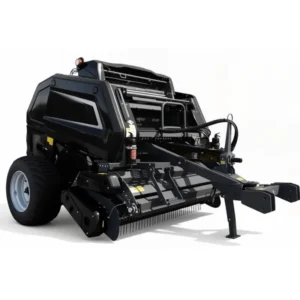
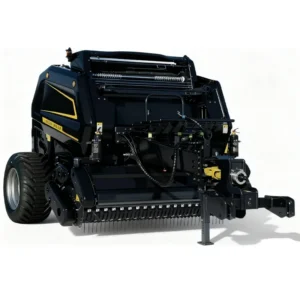
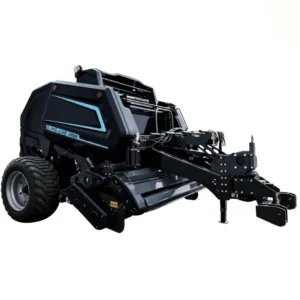
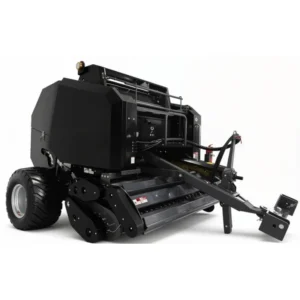
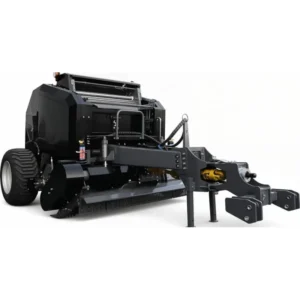
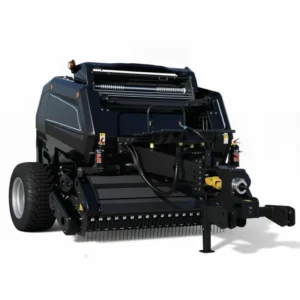
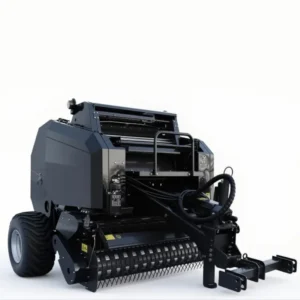
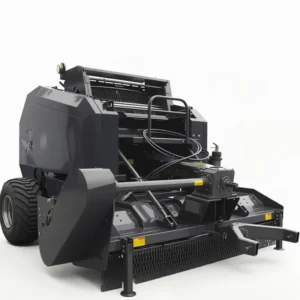
All round baler models in this range include sensor-controlled bale density as a standard feature. The appropriate model for your operation depends on your tractor horsepower, typical field size, paddy plot geometry, and required bale output dimensions. Product links and images below are drawn directly from the farm-balers.com product range.
12. Related Equipment: Agricultural PTO Shaft & Agricultural Chain
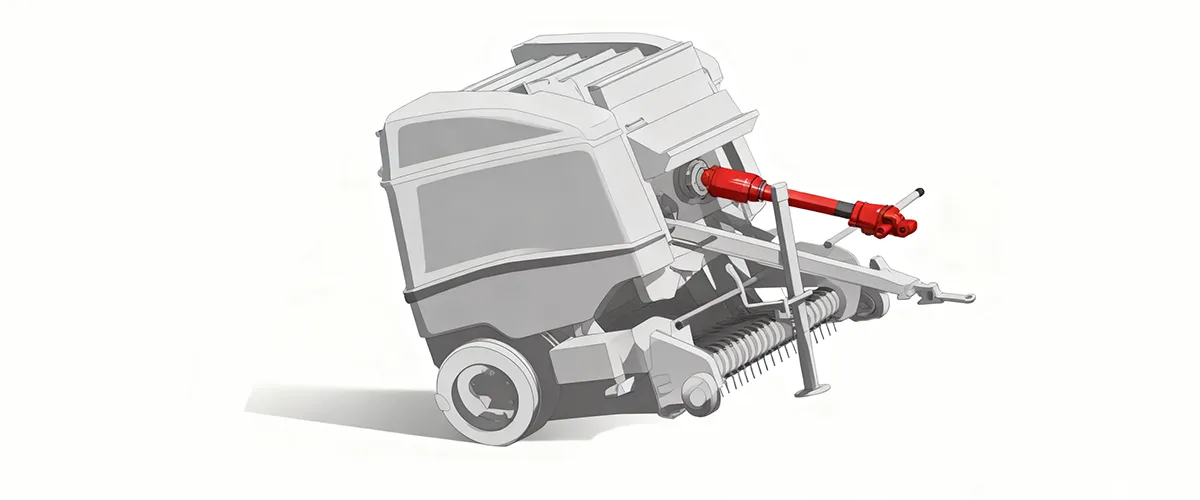
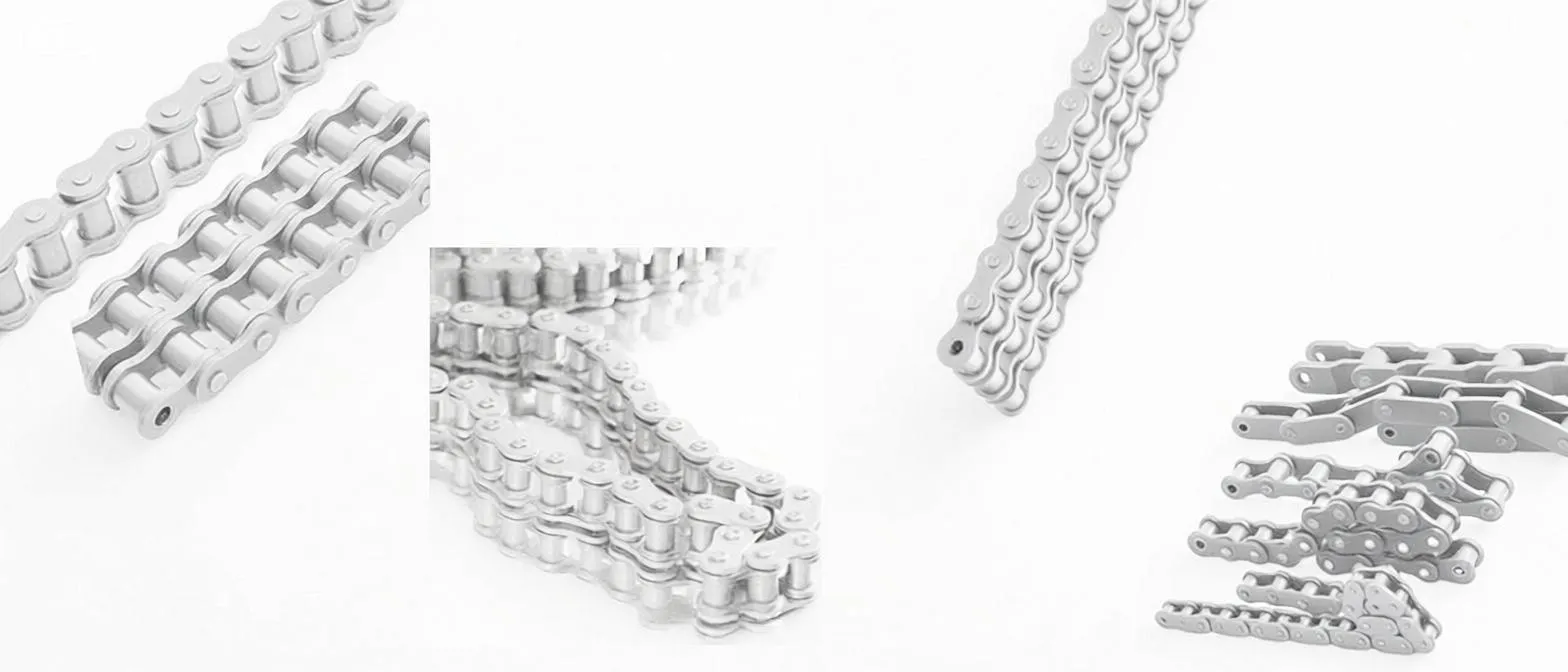
The sensor-triggered net wrap system depends on consistent PTO shaft power delivery from the tractor to the baler for both the main roller drive and the net wrap mechanism. Worn or incorrectly sized PTO shaft components introduce speed fluctuation that compromises net wrap tension at the critical first-layer stage. The drivetrain also relies on agricultural chain components throughout the roller drive system — chain stretch or link wear directly affects the uniformity of compression roller speed, which in turn affects the consistency of the density reading that the sensor system relies on to trigger wrapping at the correct moment.
FAQ: Sensor Net Wrap, Bale Collapse & Round Baler Selection for Korean Rice Straw
Editör: PXY