Livestock Forage Management Series
A practical knowledge guide on how round baler machines fit into the forage production cycle for sheep and goat operations — covering bale sizing, crop compatibility, manufacturing structure, material durability, and regulatory context for Korean and Asian livestock farmers.
Why Forage Management Starts with the Right Equipment
1. What Is a Round Baler and How Does It Serve Small Ruminant Farms?
A round baler is a tractor-towed machine that picks up cut and dried forage from windrows, compresses it into cylindrical bales, wraps those bales in net material or twine to maintain their form, and deposits them in the field for collection. In sheep and goat operations, where forage quality is directly tied to animal health, reproductive performance, and feed conversion efficiency, the choice of baling equipment shapes outcomes that extend well beyond the harvest field. The ability to produce uniform, dense, well-sealed bales at scale — and to do so during the narrow weather windows available between cutting and rain — makes the round baler machine a central tool in the modern small ruminant forage calendar.
Sheep and goats have different digestive characteristics from cattle. They are selective feeders with relatively higher sensitivity to feed dust, mold, and inconsistent dry matter content. A round hay baler that produces bales with uneven density — whether due to mechanical issues, incorrect PTO speed, or a poorly matched pickup system — tends to increase feed refusal and wastage, both of which translate directly into higher feeding costs per animal. The relationship between bale quality and animal nutrition is therefore not an abstract technical consideration but a daily practical one for anyone running a sheep or goat enterprise at commercial scale. For Korean livestock farmers managing Corriedale sheep, Jeju black goat herds, or imported meat goat breeds, the standard of forage storage begins on the day of harvest.
This guide walks through the key technical aspects of round baler selection and operation specifically in the context of sheep and goat forage management — covering bale dimensions, crop compatibility, manufacturing structure, material system, and how these factors interact with the scale and operating conditions common in Korean and broader Asian livestock farming environments.
Crop Compatibility
2. Which Forage Crops Do Sheep and Goat Farms Typically Bale, and What Does That Demand of the Machine?
The forage crops used in sheep and goat nutrition programs vary by region and season, but in Korea and much of temperate Asia the primary materials handled by a round baler on a small ruminant farm include Italian ryegrass, orchard grass, tall fescue, mixed hay, Chinese milk vetch, and occasionally rice straw used as bedding or emergency feed supplementation. Each of these crops presents different mechanical demands on the pickup, feeding, and compression systems of the baler, and understanding these differences helps livestock farmers select and operate their equipment more effectively.
Italian ryegrass and orchard grass — both widely grown in Korea for high-quality sheep and goat hay — are fine-stemmed, relatively uniform in stem diameter, and respond well to the spring-tine pickup design used across the 9YG series round balers. The 2,240 mm pickup width on the 9YG-2.24D family covers a wide swath per pass, which matters on the rectangular paddock layouts common in Korean upland forage production areas. The spring-tine fingers lift fine grass cleanly from the windrow without excessive leaf shatter, preserving the high-value protein fraction in the bale material.
Rice straw, which Korean sheep and goat farmers often use as supplementary bedding or low-quality roughage during winter feed shortages, is more brittle and irregular than grass hay. The 9YG-1.0C model addresses this directly with its interchangeable pickup system — operators can switch between the standard spring-tine arrangement and a hammer-claw pickup specifically designed for dealing with tougher, coarser stem material. This flexibility makes it practical to use a single machine across multiple material types across the farming year, reducing both equipment investment and storage requirements.
Bale Sizing for Small Ruminants
3. How Bale Dimensions Affect Feeding Logistics on Sheep and Goat Farms
One of the most practical considerations for sheep and goat operations selecting a round baler is bale size. Cattle operations can comfortably manage full-size round bales weighing 400–600 kg, but sheep and goat enterprises — particularly those with smaller herd sizes or limited mechanical handling equipment — benefit from smaller bale formats that can be moved, positioned at feeding stations, or rolled into field feeders without requiring a front-end loader on the tractor at every feeding event. The ability to match bale weight to the daily or weekly feed requirement of a specific pen or paddock group reduces feed wastage significantly, since partially consumed large bales left exposed to weather deteriorate faster than purpose-sized smaller ones.
The 9YG-1.0 round baler produces bales measuring 1,100 mm in diameter and 1,000 mm in width — a format that is substantially more manageable on a sheep or goat property than the full 1,300 mm diameter bales produced by the 9YG-2.24D range. At the 115–200 kg/m³ density rating of the 9YG-1.0, a completed bale weighs roughly 200–400 jin depending on crop moisture and compaction — light enough that two people can reposition it without machinery, or that a small tractor can move several at a time on a simple bale spike attachment. For Korean sheep farms with modest infrastructure, this weight class removes one of the main bottlenecks in the daily feeding routine.
For larger Korean goat operations — commercial dairy goat farms or meat goat enterprises with herds exceeding 200 animals — the 9YG-1.25 series models produce bales of 1,300 mm diameter and 1,250 mm width. This is a useful mid-size format: large enough to feed a substantial mob for several days without frequent replenishment, yet not so heavy that handling becomes impractical without purpose-built bale equipment. The 9YG-1.25 series also uses a wider pickup of 2,240 mm, which improves field efficiency when harvesting the long forage windrows typical of Korean upland grass production paddocks.
| Model | Bale Diameter | Bale Width | Density Range | Suitable For |
|---|---|---|---|---|
| 9YG-1.0 | 1,100 mm | 1,000 mm | 115–200 kg/m³ | Small sheep/goat flocks; limited handling equipment |
| 9YG-1.0C | 1,000 mm | 1,250 mm | 115–200 kg/m³ | Mixed straw and hay; interchangeable pickup |
| 9YG-1.25 / 9YG-1.25A | 1,300 mm | 1,250 mm | 100–200 kg/m³ | Mid-size goat/sheep operations; efficient field harvest |
| 9YG-2.24D series | 1,300 mm | 1,400 mm | 100–200 kg/m³ | Large farms; contractor service; silage and hay |
Manufacturing Structure
4. How Round Balers Are Built: Frame, Chamber, and Feed System Design
Understanding how a round baler is structurally designed helps livestock farmers evaluate whether a given machine will hold up through the physical demands of a full forage season — and whether its internal geometry suits the bale dimensions and density requirements of their feeding program. The 9YG series machines are manufactured using CNC laser-cut structural steel plates throughout the main frame and chamber, with automated welding providing consistent joint quality at the high-stress nodes around the tailgate hinges, chain tensioner mounts, and pickup rotor brackets.
Bale Chamber Frame
The bale chamber is the core structural component of any round baler. On the 9YG-2.24D series, the chamber measures 1,200 mm in diameter and 1,400 mm in width, supported by 18 press rollers each measuring 222 mm in diameter. The press roller arrangement is driven by dual-side roller chain on both sides of the chamber frame, which distributes the compressive load symmetrically and prevents the differential side wear that can develop in single-side-drive designs. For sheep and goat farm applications, where the baler may be operated by a single person who also manages the livestock, structural reliability and low downtime are more important than outright capacity — and this chamber design delivers both.
Pickup and Feed System
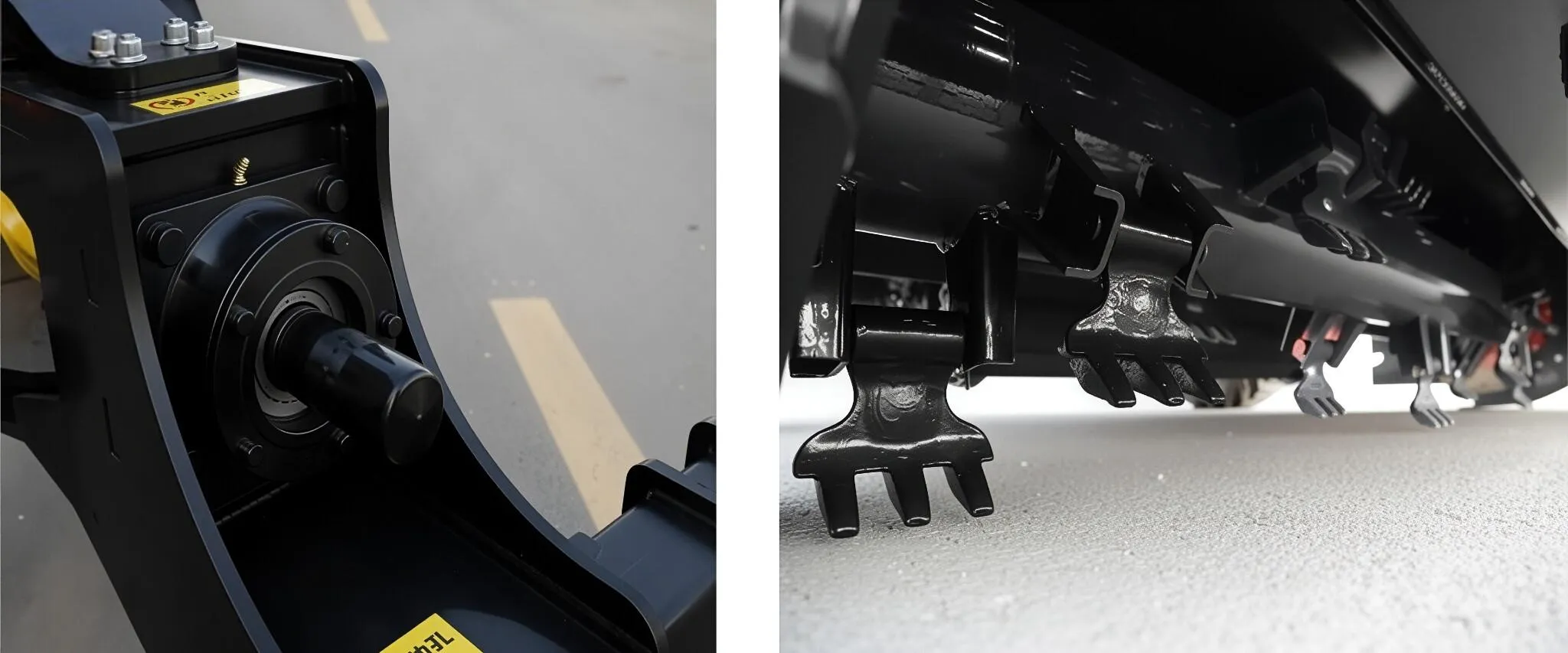
The pickup assembly on the 9YG-2.24D series uses a 2,240 mm wide spring-tine rotor to lift windrows cleanly from the field surface. Behind the pickup, the axial-flow semi-forced feeding mechanism — an in-house designed system distinct from the cam-follower pickups used on older machine formats — channels crop material continuously into the bale chamber without the periodic blockages that can occur when a buildup of wet or tangled material bridges across a conventional cam-and-guard pickup housing. The absence of cam mechanisms also reduces the number of wear items in the pickup assembly, which is a practical maintenance benefit for smaller livestock operations without dedicated mechanic staff.
Tailgate and Ejection System
The hydraulic tailgate system on the 9YG-2.24D Classic incorporates buffer cylinders that absorb the mechanical shock when the gate swings open during bale ejection. On a sheep or goat farm where the baler may be ejecting bales onto relatively flat paddock surfaces, this controlled opening sequence ensures the bale rolls clear of the gate path without rebounding back into the chamber entrance. H-type ferrule hydraulic fittings throughout the system provide higher burst-pressure tolerance than conventional threaded fittings, translating to faster and more reliable gate actuation through a full day of field operation.
Material System
5. Chains, Tines, Rollers, and Coatings: The Materials That Determine Long-Term Reliability
The material choices in a round baler’s drivetrain, pickup system, and frame coating determine how the machine holds up through multiple harvesting seasons — and through the variable conditions that Korean sheep and goat farms typically face, from the humid heat of summer ryegrass harvest to the dry, dusty straw collection of the post-harvest autumn period.
Drive Chain Specification
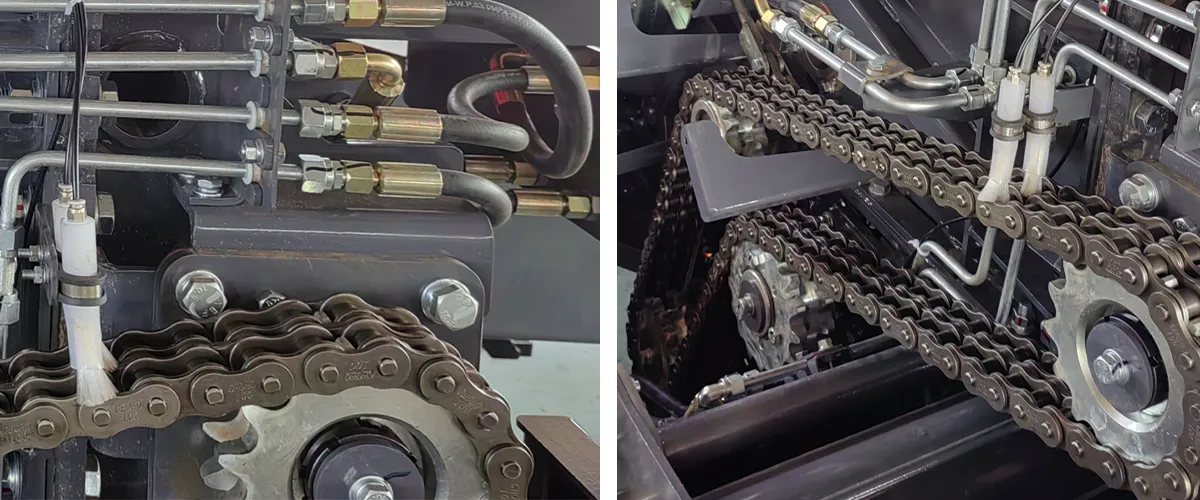
Large-format models like the 9YG-2.24D S9000 Transcend use 20A heavy-duty roller chain on both sides of the rear chamber drive. The dual-side arrangement keeps tension loads balanced, avoiding the asymmetric elongation that causes misalignment in single-side chain systems. For the smaller 9YG-1.0C, 16A chain is used in a front-and-rear dual chamber layout scaled to the machine’s lower tractor power requirement of 70 kW minimum. Chains should be lubricated every 8–10 operating hours; for sheep farm operations that may only bale for several days each year, inspecting for elongation and re-tensioning before each season is a key pre-season maintenance step.
Spring Tine Pickup Fingers
Spring tine fingers on the 9YG pickup system are formed from high-tensile spring steel, which provides the combination of flexibility and fatigue resistance needed for the rapid reciprocating engagement cycle at rated PTO speed. For fine-stemmed crops like Italian ryegrass — the dominant forage type on premium Korean sheep farms — spring tines are clearly superior to rigid or hammer-type pickups because they flex and return cleanly without causing excessive stem breakage or leaf shatter. Leaf shatter directly reduces the protein and energy value of the finished bale; on a sheep property where feed quality drives lambing percentages and growth rates, this material choice at the pickup has real nutritional downstream significance.
Frame Surface Treatment
After CNC fabrication, the structural frame and chamber components receive an electrostatic powder coating or wet paint finish over a prepared surface. Korea’s summer baling season occurs during the highest humidity period of the year, when untreated or poorly finished steel surfaces can develop surface rust within days of a wet cutting-and-baling cycle. A consistent, adhesion-tested coating keeps the structural steel from starting the corrosion cycle that eventually compromises frame integrity at the joints and hinge points. For machines stored between seasons — which is normal for sheep farms that may harvest hay only twice per year — the coating quality directly determines how much surface preparation is needed before the next use.
Press Roller Tube Material
The 18 press rollers in the bale chamber of the 9YG-2.24D series are fabricated from structural steel tube with machined journal ends and precision-fitted bearings. Roller surface condition directly affects bale shape: rollers with worn or pitted surfaces create inconsistent friction against the forming bale, leading to surface irregularities that allow air pockets to develop inside the bale — a serious concern for silage bales used on sheep farms, where air infiltration promotes aerobic spoilage and mold growth. Periodic roller inspection and bearing replacement are therefore not purely mechanical maintenance items but feed safety considerations on a livestock property.
Hay vs Silage
6. Should Sheep and Goat Farms Produce Hay Bales or Silage Bales?
The decision between baling for dry hay storage versus baling for silage wrapped in stretch film is one of the most consequential forage management choices a sheep or goat farmer makes each season. Both products can be produced with the same round baler machine, but they have different bale density requirements, different handling logistics, and different nutritional characteristics that interact with small ruminant digestion in distinct ways.
Dry hay for sheep and goats should ideally be harvested at 15–18% moisture content, compressed to a density that prevents internal settling during storage but does not over-compact fine-stemmed material to the point of stem breakage. The sensor-controlled density management system on the 9YG series allows operators to set a target bale density within the 100–200 kg/m³ range, and the machine will trigger ejection at the same density point each time — producing a consistent batch regardless of windrow variability across the field. This consistency matters particularly on sheep farms where bale weight is used to calculate feed allocation per animal group, since inconsistent bale weights make feeding management calculations unreliable.
Silage bales for sheep and goats — particularly popular in Korean farms that grow Italian ryegrass for first-cut silage in May — require higher moisture content at baling (typically 50–65%), which increases the compressive load on the bale chamber and places greater demands on the chain drive and roller system. After ejection, these bales are individually wrapped in silage stretch film to create the anaerobic environment needed for lactic acid fermentation. The round baler’s role in this process is to produce geometrically consistent bales that the silage wrapper can seal without leaving gaps at the ends — a task that depends on the machine producing a truly cylindrical, uniformly dense bale on every cycle.
Regulatory Frameworks
7. Machinery Safety Standards and Agricultural Regulations Relevant to Round Baler Use
Sheep and goat farm operators considering round baler purchase — whether in Korea, Japan, Australia, or other export markets — need to be aware of the machinery safety, gearbox design, and livestock feed safety regulations that apply to baling operations in their jurisdiction.
Republic of Korea — Act on Promotion of Agricultural Mechanization
Round balers sold in Korea for subsidized agricultural use must appear on the Rural Development Administration (RDA) approved machinery registry. The RDA type-approval process evaluates bale quality performance, safety guard design, and gearbox output specifications. Sheep and goat farmers intending to access the national agricultural machinery purchase subsidy (농기계 구입 보조 지원) must ensure their chosen machine is on the current approved list. Machines with non-standard gearbox modifications or aftermarket PTO shaft components not tested at the time of certification are ineligible for subsidy claims.
ISO 4254-7 — Agricultural Machinery Safety for Balers
ISO 4254-7 is the international standard that specifically addresses safety requirements for baling machines — including round balers — covering guarding of rotating components, tailgate locking mechanisms, labeling requirements for crush and entanglement hazard zones, and emergency stop provisions. On a sheep or goat farm where family members or casual labor may be assisting during baling, the presence of ISO 4254-7 compliant guarding is not just a regulatory formality but a genuine daily safety consideration. Buyers in Korea and Japan frequently reference this standard when comparing suppliers.
Japan — Labor Standards Act and Agricultural Machinery Guidelines
In Japan, where imported round balers are used by sheep and goat farms in Hokkaido and other livestock regions, the Ministry of Health, Labour and Welfare enforces machinery safety requirements under the Labor Standards Act. Agricultural machinery imported for commercial use must be accompanied by Japanese-language operation manuals, and the employer is legally responsible for ensuring operators have been trained in the specific hazard zones of the machine — particularly the PTO shaft zone and bale ejection area. Japanese livestock cooperative purchasing schemes also require that machinery meets the Japan Agricultural Standards (JAS) relevant to feed and forage quality outcomes.
Australia — Work Health and Safety Regulations
Australia’s sheep and goat farming sector — the world’s largest by merino wool and goat fiber production volume — is subject to state-administered Work Health and Safety regulations that classify round baler operation as a high-risk activity. Safe Work Australia’s guidance notes on agricultural machinery identify baler entanglement, tailgate crush injuries, and tractor PTO entanglement as priority hazard categories. Round balers operating on Australian sheep properties must have current guarding in place, and the gearbox and chain drive systems must be maintained to manufacturer specification to prevent unexpected mechanical failure during operation.
New Zealand — Health and Safety at Work Act 2015
New Zealand’s sheep and goat sector, among the most export-intensive in the world, is governed by the Health and Safety at Work Act 2015 administered by WorkSafe NZ. Round baler operators on New Zealand farms are classified as “workers” under the Act regardless of whether they are employees or owner-operators, and the Person Conducting a Business or Undertaking (PCBU) has a primary duty to provide plant and equipment that is without risks to health and safety. Imported round balers must have all guarding intact and gearbox servicing records maintained to demonstrate due diligence in the event of a machinery incident investigation.
EU — Machinery Directive 2006/42/EC and CE Marking
European sheep and goat farms purchasing round balers require CE-marked machinery that has undergone conformity assessment under the EU Machinery Directive 2006/42/EC. This assessment covers the gearbox design, chain drive guarding, tailgate crush prevention, and the adequacy of the operator manual. The Directive will be replaced by the EU Machinery Regulation (EU) 2023/1230, which takes full effect in 2027 with additional cybersecurity and remote monitoring requirements for machinery with electronic control systems — relevant for round balers with sensor-based density management, as used on the 9YG series.
Gearbox Design
8. Why the Round Baler Gearbox Matters Especially on Smaller Livestock Farms
Sheep and goat farmers frequently operate round balers under conditions that stress the gearbox differently from the flat, open paddock conditions for which many machines are originally tested. Korean upland forage areas often have irregular terrain — short slopes, stone-cleared but still undulating paddock surfaces, and irregular field boundary shapes that require more frequent headland turns than the large flat paddocks of grain-farming regions. Every headland turn places a lateral angular load on the PTO driveshaft and gearbox input, and on conventional single-joint driveshaft designs, this produces brief speed fluctuations that propagate through the entire drivetrain.
The dual-coupling gearbox design on the 9YG-2.24D S9000 Transcend addresses this directly. Its capacity to rotate up to 90 degrees relative to the drawbar eliminates the speed variation that a standard single-joint shaft would introduce during tight turns. For a sheep farmer working a 3-hectare paddock with five turning headlands per run, this translates to smoother gearbox operation through what might be several hundred turns in a single baling day. Over multiple seasons, the difference in gearbox wear between a machine that experiences smooth input through turns versus one that takes repeated shock loads on each turn becomes measurable in bearing service intervals.
For operators of the smaller 9YG-1.0 model — the most appropriate round baler for small flocks of sheep or goats on modest farms — gearbox maintenance is straightforward. The machine’s lower power requirement of 48–80 kW means the gearbox operates with a larger safety margin relative to its rated capacity under normal conditions, extending service intervals and reducing the probability of unexpected in-season failures. The gearbox oil should still be inspected every 50 operating hours and replaced at the end of the baling season — a task that takes less than 30 minutes and is among the most cost-effective preventive maintenance steps a livestock farmer can perform.
Seasonal Planning
9. A Practical Round Baling Calendar for Korean Sheep and Goat Farms
Timing the baling operation correctly is as important as equipment selection. The following schedule reflects the typical forage production cycle for Korean sheep and goat farms in the temperate peninsula climate.
| Period | Crop / Activity | Recommended Baling Approach | Suggested Model |
|---|---|---|---|
| April–May | Italian ryegrass (first cut); Chinese milk vetch | High-moisture silage baling; wrap within 2 hours of baling | 9YG-1.25 or 9YG-2.24D |
| June–July | Orchard grass (first dry cut); tall fescue | Dry hay baling at 15–18% moisture; stack under cover | 9YG-1.25A or 9YG-1.0 |
| August–September | Second cut ryegrass; mixed grass | Dry hay or silage depending on weather forecast | 9YG-1.25 or 9YG-1.0C |
| October–November | Rice straw collection; corn stover residue | Dry baling for bedding/roughage; reduce forward speed | 9YG-1.0C (hammer-claw) or 9YG-1.0 |
Product Range
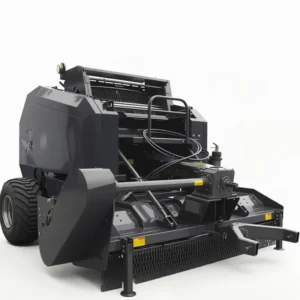
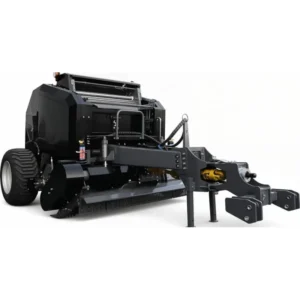
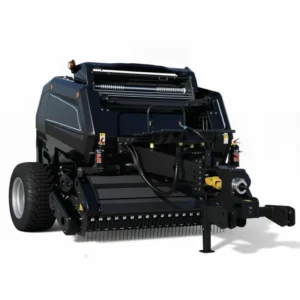
10. Round Baler Models for Sheep and Goat Farm Applications
The models below span the range from compact small ruminant-appropriate units to full-size commercial machines. Each links to its dedicated product page with complete specification data.
About the Manufacturer
11. Engineered for Livestock Farm Conditions, Certified for Quality
The 9YG round baler range is manufactured in a purpose-built facility spanning over 32,000 m², with production capacity of 2,000 units per year on the round baler line alone. CNC laser-cut frames, automated welding, electrostatic coating systems, and an in-house testing program support the consistent quality that livestock farmers depend on season after season. The facility holds ISO 9001 quality management certification and national high-technology enterprise status, with close to 100 registered utility patents covering the gearbox design, pickup system, and feeding mechanism innovations described in this guide.
Products are successfully operated in Mongolia’s harsh steppe climate, the Russian Far East, Belarus, and Kazakhstan — environments that place demanding conditions on structural materials and hydraulic systems. This export track record provides Korean sheep and goat farmers with confidence that the machines are not only designed for agricultural use but proven in conditions at least as demanding as those encountered in Korean highland forage production areas.
2,000+
Units/Year
~100
Patents
ISO 9001
Certified
6+
Export Markets
FAQ
Frequently Asked Questions: Round Balers for Sheep and Goat Farms
ایڈیٹر: PXY