Maintenance & Operation
A practical maintenance knowledge guide for Korean and global forage producers who want to reduce costly unplanned stoppages across the full round baler operating season.
Why Round Baler Breakdowns Follow Predictable Patterns
Most round baler failures are not random. They follow patterns that experienced operators recognise across seasons and machine models — patterns linked to specific components, operating conditions, and maintenance gaps that accumulate over time. A pickup tooth failure mid-harvest, a hydraulic line that starts seeping after two seasons of door cycling, a net-wrap tension spring that loses calibration through summer heat and daily flex — none of these are truly sudden events. Each carries warning signs that, when identified early, can be addressed with a ten-minute inspection rather than a multi-hour field repair during peak baling.
Korean rice straw operations, where the baling window after paddy harvest is tight and weather pressure is high, leave little tolerance for mid-season machine failure. The same applies to commercial forage contractors in Australia, Eastern Europe, and across East Asia working with alfalfa, oat straw, and silage crops on punishing schedules. Understanding the most common machine failure modes — and the structural and maintenance factors that determine whether they occur — gives operators the framework to build a prevention programme rather than a reactive repair programme. This article covers the primary breakdown categories, the engineering features that reduce their probability, and the inspection and servicing steps that keep the equipment running at designed productivity across a full season.
Most Common Round Baler Failure Points by Frequency
The following table ranks the most frequently reported round baler breakdown categories in commercial forage operations, alongside their primary cause and the maintenance interval that governs prevention. These rankings reflect patterns across drum-roller type round balers used in Asian and Australasian operations.
| Rank | Failure Point | Primary Cause | Prevention Interval | Downtime Risk |
|---|---|---|---|---|
| 1 | Pickup tooth breakage | Rock or debris impact | Daily visual inspection | High |
| 2 | Net-wrap system jam or mistracking | Tension spring fatigue / debris in path | Per-roll check when loading | High |
| 3 | Chain stretch or link failure | Inadequate lubrication / overloading | 50-hour tension check | High |
| 4 | Hydraulic line seep or fitting leak | Pressure cycling fatigue / connection type | Season-start and mid-season check | Trung bình |
| 5 | Roller bearing wear | Contamination / missed greasing (open bearings) | 100-hour or seasonal inspection | Trung bình |
| 6 | PTO shaft universal joint wear | Dry grease / exceeding angle limits | 10-hour greasing, 100-hour inspection | Trung bình |
| 7 | Gearbox oil degradation | Extended service intervals | 100–150-hour oil change | Low–Medium |
| 8 | Frame fastener loosening | Vibration / door impact cycling | Season-start torque check | Thấp |
Manufacturing Structure | Material System
The frequency and severity of breakdowns on a round baler is not solely determined by operator practice — it is substantially shaped at the design and manufacturing stage. A machine built with heavy-section welded steel framing, sealed compression roller bearings, and H-type hydraulic fittings will accumulate failures at a meaningfully lower rate than a design that cuts weight or cost in those same areas. Understanding these design-level differences helps operators evaluate which machine is most likely to minimise unplanned downtime before they commit to a purchase.
The compression chamber on a drum-roller round baler contains 16 to 18 steel rollers, each supported at both ends by bearing assemblies. On commercial-grade machines, these bearings are sealed deep-groove ball bearings that require no external grease supply — they are pre-packed at the factory and protected against ingress by double-lip seals. On lower-grade machines, open bearings with external grease nipples are used instead. While this appears to offer flexibility, the reality is that open bearings in a round baler environment are exposed to dust, chaff, and moisture that bypasses the greasing interval and causes accelerated wear. The sealed bearing system found on quality commercial round baler designs eliminates an entire failure category by removing the contamination pathway entirely.
Frame construction quality directly affects another common failure mode — fastener loosening under vibration. A frame welded with full-penetration joints at stress-concentration points (hitch attachment, rear door hinges, tow bar cross-members) resists the cyclic flexing that works fasteners loose over a season of heavy use. In contrast, machines with partial-penetration welds or bolted sub-assemblies at primary load points require more frequent torque checking to maintain structural integrity. The electrostatic powder-coat surface treatment on quality round baler machines provides corrosion protection across the season — particularly important in Korean paddy operations where morning dew and irrigation field residues create persistent moisture exposure on all exposed steel surfaces.
The Three Most Disruptive Round Baler Failure Modes — and Their Prevention
Of all the failure categories that affect round baler operations, three account for the majority of full-day stoppages in commercial Korean and Asian forage baling. Each is preventable with structured inspection and maintenance discipline applied consistently across the season.
Pickup System Blockage and Tooth Loss
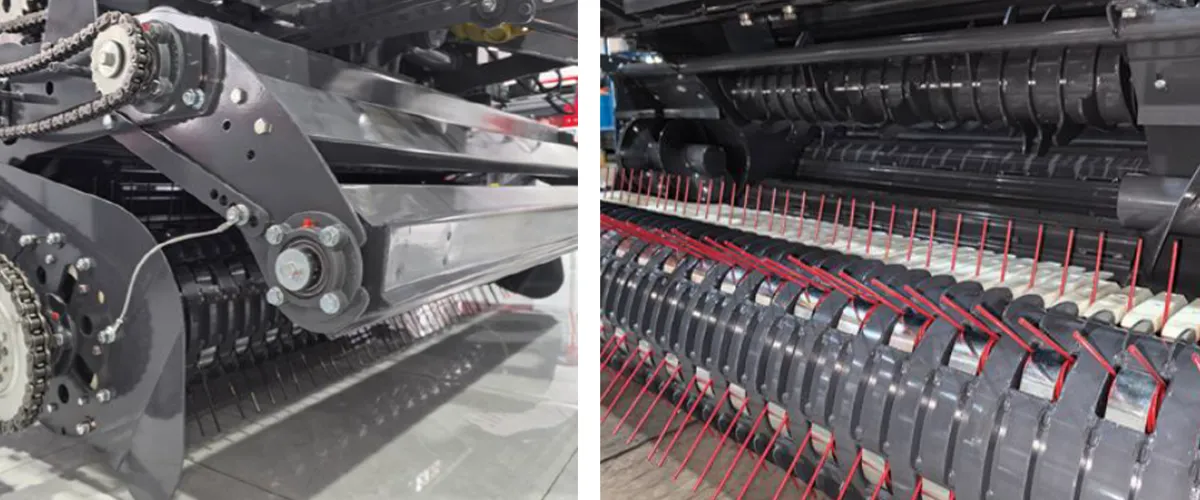
Pickup tooth loss from rock or debris impact is the single most common cause of in-field stoppages across all round baler models. The spring-tooth pickup design used on modern commercial machines is deliberately made to deflect on hard impact rather than transferring the full load to the rotor shaft — this protects the drive components at the cost of the tooth itself. The prevention strategy is twofold: walk the windrow ahead of the round baler in fields with known stone risk, and carry a full set of spare teeth and mounting bolts in the tractor cab at all times. A tooth replacement in the field takes under five minutes; discovering the missing tooth only after bale shape degrades means the rotor has been running unbalanced, accelerating bearing wear on the affected side of the pickup shaft.
Net-Wrap System Failure and Misfeed
Net-wrap failures account for a large share of bales that must be ejected unfinished and re-baled, wasting both time and net material. The two most common net-wrap issues are tension spring fatigue — where the spring that maintains consistent net tension against the feed rollers loses calibration over the season — and misfeed caused by chaff accumulation in the net path or a roll loaded off-centre. The prevention routine is straightforward: clean the net path thoroughly at every roll change, inspect the tension spring for cracks or set (permanent deformation), and confirm the new roll is seated squarely on both end flanges before resuming. On machines with electronic net-count systems, verify the counter reading against the actual roll at the start of each day to catch a sensor fault before it causes a mid-bale wrap failure at a critical moment.
Chain Drive Stretch and Link Failure
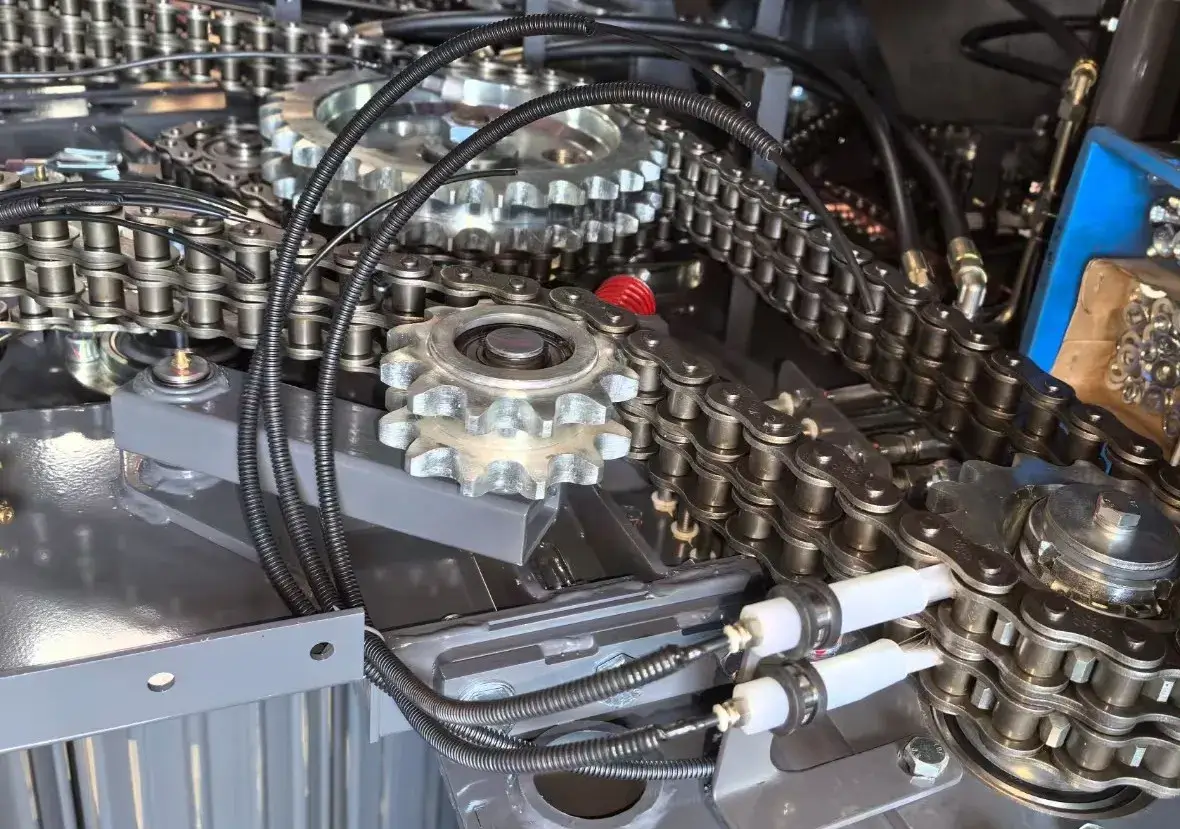
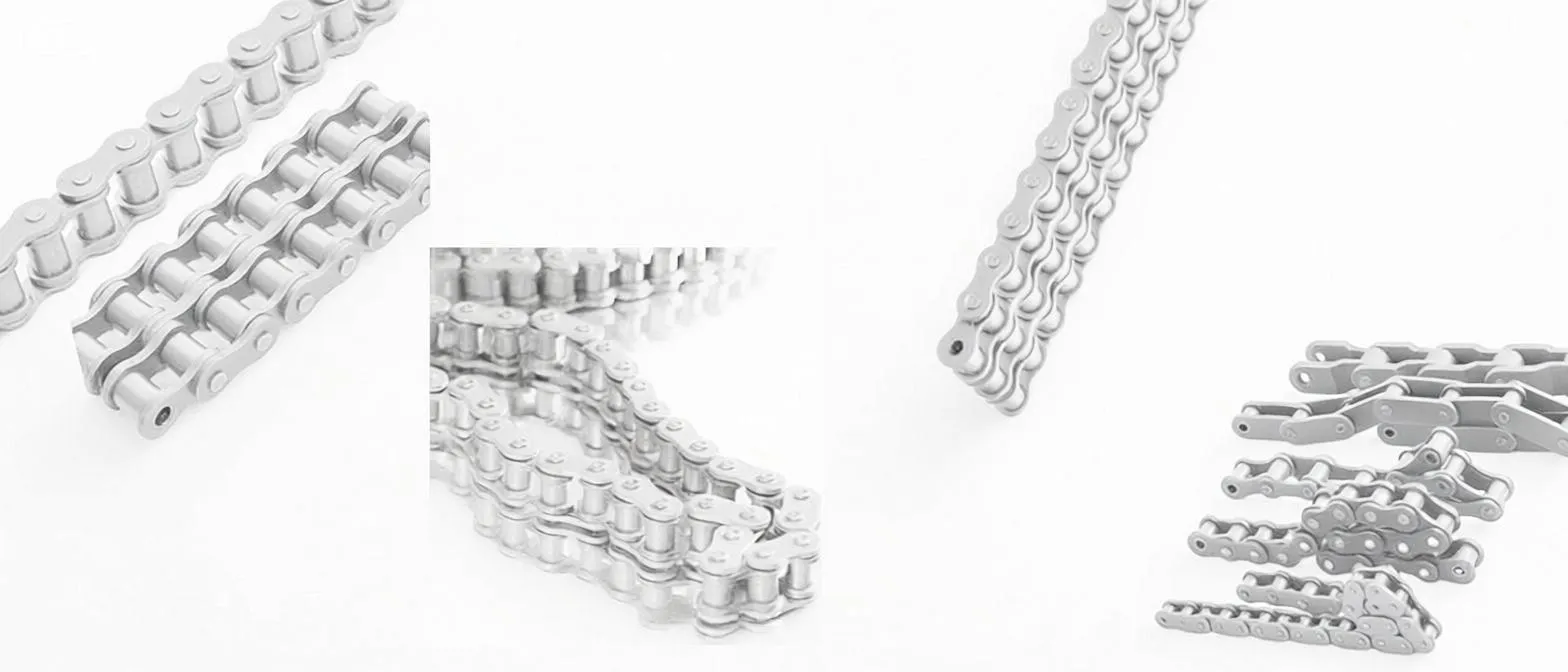
The chain drives connecting the PTO input through the gearbox to the compression rollers and pickup rotor accumulate wear at a rate determined by load, lubrication, and chain grade. Standard agricultural round baler chain running dry will reach the 3% elongation replacement threshold in less than half the time of the same chain running well lubricated. In Korean autumn conditions — often dusty in the morning and damp from morning dew or irrigation residue by mid-afternoon — chain lubrication is a daily job, not a weekly one. The 20A heavy chain used in the rear chamber of commercial-grade round balers has significantly greater fatigue strength than standard 12A chain, and the additional cost is repaid in extended service life within a single high-volume season. Inspect chain tension at the specified points every 50 hours and replace any chain showing kinking, cracked plates, or stiff links immediately rather than running it to failure.
Featured: EP Round Baler 9YG-1.25A — Reliability-Focused Mid-Range Model
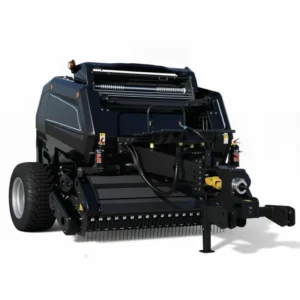
The 9YG-1.25A is a traction-type commercial round baler built around the reliability features that directly reduce the breakdown patterns covered in this article — sealed bearings, auto net-wrap, sensor-controlled density, and a PTO-speed range that supports both dry and wet crop operations. It is well-suited to Korean mixed-crop operations running rice straw, soybean residues, and pasture grass within the same season.
| Chiều rộng xe bán tải | 2,150 mm |
| Đường kính buồng nén | Φ1,200 mm |
| Chiều rộng buồng nén | 1,250 mm |
| Roller Count | 18 (drum-roller) |
| Kích thước kiện (Đường kính × Chiều rộng) | Φ1,300 × 1,250 mm |
| Mật độ kiện | 100–200 kg/m³ |
| Năng suất | 40–100 bales/h |
| Power Requirement | ≥75 kW |
| PTO Output Speed Range | 540–1,000 r/min |
| Phương pháp liên kết | Net-wrap (2,000 × 1.25 m/bale) |
| Khối lượng kết cấu | 4,472 kg |
| Kích thước khi làm việc (Dài × Rộng × Cao) | 4,400 × 2,850 × 2,400 mm |
Round Baler Gearbox and PTO Shaft Maintenance: What Gets Overlooked
The round baler gearbox is one of the most expensive single components on the machine, and it is also one of the most consistently neglected in terms of routine maintenance. Gearbox oil in a drum-roller round baler operating at 720 r/min PTO input speed over a full harvest season accumulates heat, metal particles from normal gear and bearing wear, and water ingress from condensation cycles. Gear oil that exceeds its service life loses both its viscosity stability and its load-carrying additive package, which allows metal-to-metal contact on gear tooth flanks under peak load — the beginning of a failure path that ends in gearbox housing replacement rather than an oil change. The scheduled change interval for most commercial round baler gearboxes is 100–150 operating hours, which in a typical Korean autumn season corresponds to one change per season for a moderately utilised machine, or two changes for a high-volume contractor running extended daily shifts.
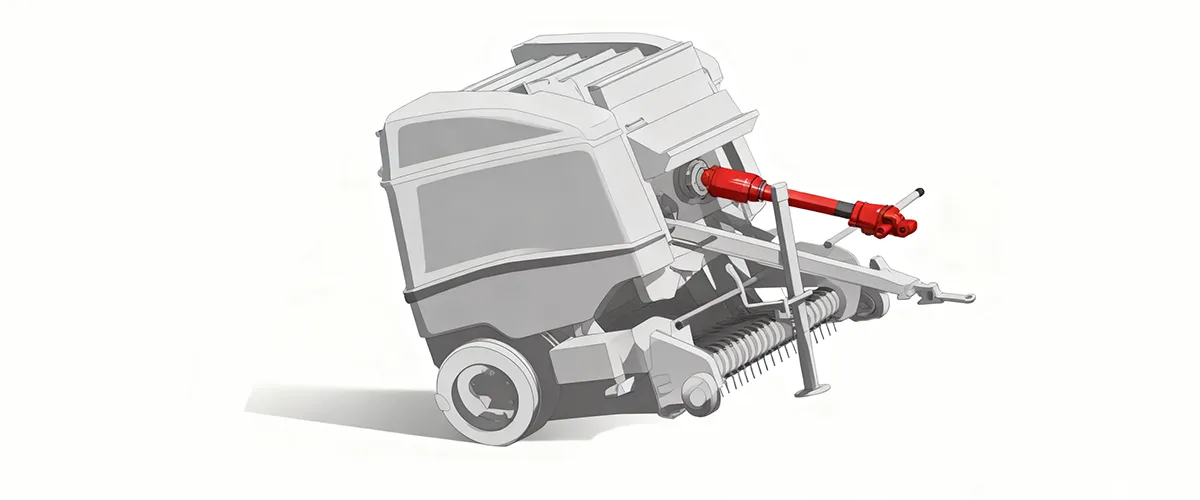
The PTO shaft assembly is the second most overlooked maintenance point. The universal joint crosses require greasing every 8–10 operating hours — a short interval that surprises operators accustomed to modern tractor driveline components. In baler operation, the PTO shaft runs through a range of angles as the machine tracks terrain, corners in fields, and is hitched and unhitched daily. Each angle change applies a cyclic load to the cross needle bearings. A dry cross bearing under this cycling will show failure within a season; a well-greased one will last several. Carry grease and a grease gun as standard on the tractor whenever baling is underway, and build the 10-hour greasing stop into the working day schedule rather than treating it as optional.
Seasonal Maintenance Schedule for Round Baler Operations
A structured seasonal maintenance approach divides inspection and servicing tasks across three phases — pre-season, in-season, and post-season storage. Each phase addresses specific failure risks while minimising the time spent on maintenance relative to the protection it provides. The following schedule is calibrated for commercial round baler operations in Korean and East Asian conditions.
Pre-Season (before first use each year). Full visual inspection of all chains for stretch, kinking, and cracked side plates. Gearbox oil change if the machine has been stored with previous-season oil. Confirm PTO shaft universal joints are greased and slide shaft is not seized. Inspect net-wrap tension springs for set (permanent deformation) and replace any that have lost noticeable spring force. Torque check all frame fasteners, hitch bolts, and rear door hinge pins. Test density sensor calibration by manually cycling the chamber to the preset trigger point and confirming the controller responds correctly. Verify hydraulic cylinder rod seals are dry and the rear door buffer cylinder retracts fully.
Daily In-Season (before each operating shift). Walk the round baler and visually check pickup teeth count — any missing teeth should be replaced before beginning. Clean chaff and debris from the net-wrap path, the sensor proximity area, and the rear door seal contact surface. Check hydraulic fluid level in the tractor and confirm no weeping from any round baler hydraulic line connection. Verify PTO shaft guard is present and undamaged before connecting to the tractor.
Every 50 Operating Hours. Check all chain tension measurements against the specified deflection in the operator manual. Lubricate all grease points identified in the manual (any that are not sealed bearings). Inspect pickup finger bar for bent fingers or misaligned cam-free rotor position. Check roller compression spring tension if applicable to the model. Review net-wrap counter accuracy against physical roll measurement.
Every 100–150 Operating Hours. Change gearbox oil. Inspect all roller bearing housing end caps for contamination ingress — any sign of discolouration or grease contamination on sealed bearings indicates the seal has been compromised. Replace PTO shaft cross kits if any play is detectable by hand. Inspect hydraulic H-type fittings for sealing surface condition and replace sealing rings as a precaution at this interval.
Post-Season Storage. Thoroughly clean all crop material from inside the compression chamber, net-wrap system, and pickup rotor — damp material left in the round baler over winter accelerates corrosion and provides habitat for rodents that damage wiring and rubber seals. Apply a light coat of corrosion inhibitor to unpainted steel surfaces on the pickup bar. Store with the rear door slightly open to allow any moisture to escape the chamber. Leave a note or tag on the machine confirming which maintenance items were completed and which are due at the start of the next season.
Regulatory Requirements for Round Baler Safety and Maintenance
Agricultural machinery maintenance obligations are not purely operational — they intersect with safety legislation, certification requirements, and in some markets, subsidy eligibility conditions. Operators in Korea, the EU, and Australia should be aware of the specific frameworks that apply to round baler maintenance and safety compliance.
Hàn Quốc
The Agricultural Mechanization Promotion Act mandates that agricultural machinery including round balers must pass periodic safety inspection to maintain registration and subsidy eligibility. The Rural Development Administration sets maintenance and safety standards that apply to all registered farm machinery. PTO shaft guarding is specifically regulated — uncovered or damaged PTO shafts are a citation risk during rural safety inspections. Operators who fail to maintain round baler equipment to registered specification may lose access to mechanisation subsidy programmes, which are a material component of the return on investment for commercial-scale baling operations.
European Union
Machinery Directive 2006/42/EC requires that all agricultural machinery be maintained in the condition consistent with its CE certification. This includes keeping PTO shaft guards intact (EN ISO 4254-1) and ensuring hydraulic circuits are maintained to prevent environmental contamination from fluid leaks — a specific obligation under EU environmental liability rules. Round baler operators participating in CAP agri-environment schemes may face compliance checks that include machine condition assessments. ISO 8210:2019 establishes the safety requirements for round balers and provides the baseline against which machine condition should be maintained across the operating life.
Australia
State-level work health and safety legislation in Australia (model WHS laws) places maintenance obligations on the PCBU operating agricultural machinery. Round baler PTO shafts must carry full guarding per AS 4024 (guarding of machinery), and hydraulic systems must be maintained to prevent leak-related slip and fire hazards. WorkSafe Australia guidance on agricultural machinery specifically references baler maintenance as a routine risk-management obligation. Operators who suffer a workplace incident involving an inadequately maintained round baler machine face both legal liability and insurance implications under these frameworks.
Sourcing Round Baler Parts Before the Season Starts
One of the most reliable ways to avoid in-season downtime is to pre-stock the high-wear consumable parts before the baling season opens. Pickup teeth, net-wrap tension spring kits, chain connector links, and PTO shaft cross kits are small in value individually but their absence at a critical moment costs many times their purchase price in lost productivity. Operators with access to matched spare parts from the round baler manufacturer can source these as a matched set, confident in fitment and quality. For Korean operators, the logistical challenge of sourcing correct-specification round baler parts during autumn harvest — when demand spikes and shipping times extend — makes pre-season stocking a straightforward economics decision rather than a discretionary one. Explore the full range of round baler models and their associated round baler parts programmes at farm-balers.com/products/.
Compatible Accessories: Agricultural PTO Shaft
As detailed in this article, the PTO shaft is one of the most maintenance-sensitive components in the round baler drivetrain. A correctly specified, properly guarded agricultural PTO shaft that matches the torque rating of the round baler model eliminates the over-stress failure mode that occurs when an undersized shaft is used on a commercial-capacity machine. Matched PTO shaft assemblies for EP round balers are available with integrated torque limiter options for high-blockage-risk crops such as wet silage and dense rice straw, providing the drivetrain protection that prevents gearbox damage cascading from a pickup blockage event.
10+ Years of Agricultural Machinery Engineering
Operating since 2013, this manufacturing enterprise has built its reputation on producing agricultural harvesting machinery that holds up in demanding commercial conditions. The product range covers the full spectrum of round baler capacity — from entry-level small round baler models designed for compact tractor operations through to heavy commercial machines for high-volume forage contractors. ISO 9001 Quality Management System certification applies across the full production process, from raw material selection through to finished machine inspection before despatch.
The facility operates more than 60 sets of production equipment including CNC laser cutting lines, robotic welding cells, and automated powder-coating systems. Annual designed production capacity stands at 2,000 round baler units, with high-demand commercial models held in inventory for fast delivery to Korean, Australian, Russian, and European market customers. The product programme also covers single and double-blade mowers, disc rotary mowers, and side rakes — providing the complete upstream harvesting complement for operations that bale their own cut forage from paddock to storage.
Frequently Asked Questions
What are the most common round baler breakdowns that Korean rice straw contractors should watch for during the autumn harvest window?
In Korean autumn conditions, the highest-frequency failures are pickup tooth loss from small stones mixed into paddy residue windrows, chain drive wear from the combination of dry dust and morning dew that bypasses lubrication films, and net-wrap misfeed caused by chaff accumulation in the wrapping path. Daily inspection of pickup teeth and the net-wrap channel, combined with consistent chain lubrication at every operating shift, prevents most of these events before they interrupt the baling schedule.
How often should the round baler gearbox oil be changed in a commercial South Korean forage contracting operation running multiple crop types across the full season?
The standard change interval for round baler gearbox oil is 100–150 operating hours. For a Korean contractor running two crop types — rice straw in autumn and pasture grass in spring — this typically means one oil change per crop cycle, or twice per year. Operations running extended daily shifts in high-dust conditions should lean toward the 100-hour end of this range. Using gear oil that meets the viscosity grade specified in the manufacturer’s manual is more important than brand — the viscosity grade is set to match the gear geometry and operating temperatures of that specific gearbox design.
Which round baler parts should an Australian commercial hay contractor pre-stock before the seasonal harvest begins to avoid mid-season supply delays?
The highest-priority pre-season stock items for a commercial round baler operation are: a full set of spare pickup teeth plus mounting hardware, one or two PTO shaft cross kits, a net-wrap tension spring set, chain connecting links for all drive chain sizes on the machine, and a set of roller bearing end-cap seals. These items are inexpensive individually and the cost of stocking them is trivial compared to the cost of waiting for delivery during peak harvest. Most round baler manufacturers can supply these as a bundled pre-season kit matched to the specific model.
What maintenance steps should I take before storing my small round baler after the season ends to prevent deterioration over the winter period?
Post-season storage preparation should include: removing all crop residue from inside the compression chamber, pickup rotor, and net-wrap path — damp material causes corrosion and attracts rodents that damage wiring and seals; applying corrosion inhibitor to the pickup bar and other unpainted steel surfaces; leaving the rear door slightly ajar so moisture cannot pool inside the chamber; changing the gearbox oil so the machine is stored with clean oil rather than contaminated end-of-season oil; and tagging the machine with a note recording which maintenance items were completed and what is due at pre-season startup.
How does round baler gearbox design affect long-term maintenance costs for high-volume forage baling operations in Korea and East Asia?
The gearbox design determines maintenance cost in two ways. First, a heavier housing with adequate wall thickness maintains bearing pre-load across the operating temperature range of a full day’s baling, which extends bearing service life beyond what a thin-wall casting can achieve. Second, the oil sealing system — particularly the input shaft seal and the side shaft seals — determines how quickly external contamination reaches the gear oil. A gearbox with multi-lip shaft seals and a pressure-equalising breather maintains oil quality significantly longer than one with single-lip seals and no breather, which draws contaminants in as it cools at the end of each shift. In a high-volume Korean or East Asian operation, this design difference translates directly to fewer gearbox replacements over the machine’s working life.
Biên tập viên: PXY