Vineyard Management & Cover Crop Series
Round Balers in Vineyard Floor Management:
Collecting Cover Crop Residue
A practical knowledge guide exploring how round baler technology supports sustainable vineyard floor management by collecting and recycling inter-row cover crop biomass — and which machine features matter most for the specific constraints of vineyard environments.
1. Cover Crops in Vineyards and the Challenge of Residue Removal
Cover cropping between vineyard rows has shifted from a niche practice to a mainstream soil management strategy across the world’s leading wine regions over the past two decades. The reasons are well-documented: inter-row cover crops reduce soil erosion on sloped vineyard sites, improve soil organic matter content over time, fix atmospheric nitrogen when legumes are included in the mix, suppress perennial weed competition, and — perhaps most importantly for grape quality — moderate vine vigor by competing for available water and nitrogen during the growing season. The last of these effects, vigor moderation, is especially relevant in high-rainfall wine regions of East Asia, including Korea’s Gyeongbuk, Gyeongnam, and Chungbuk wine districts, where high summer rainfall tends to over-stimulate vine growth at the expense of fruit quality and cluster density.
Managing the cover crop at the appropriate stage of the growing season creates a residue management challenge that vineyard operators must solve every year. In many operations, the cut cover crop material is simply left on the soil surface as a mulch layer. This approach has merit in dry climates and seasons — the mulch conserves moisture and adds organic matter as it decomposes. However, in wetter environments or during high-disease-pressure years, a thick biomass layer on the vineyard floor can maintain excessive humidity at bunch level, reducing air circulation around the developing grape clusters and increasing the risk of Botrytis cinerea (grey mould) infection. In these situations, removing the cut cover crop biomass from the vineyard floor is not just a preference — it is a disease management imperative.
The round baler machine offers a practical solution. By collecting, compressing, and binding the cut cover crop residue into bales that can be removed from the vineyard, the operator clears the floor for better airflow, reduces disease pressure, and generates a secondary product — baled biomass — that can be composted, used as livestock bedding, or returned to the vineyard as targeted organic matter amendment in a different application. Understanding which round baler configurations work in vineyard environments, and which operational and engineering factors determine whether the exercise is practical or frustrating, is the subject of this guide.
2. Vineyard-Specific Challenges for Round Baler Operations
Vineyard floor management with a round baler machine presents a different operational environment from open-field haymaking or straw collection. Several specific constraints shape which machine configurations are practical and which are not. The most fundamental of these is row spacing. Most commercial vineyards are planted with inter-row widths of 2.0–3.0 meters, with some high-density planting systems as narrow as 1.5 m. The total machine width — including tractor and baler — must fit within this constraint while still having enough clearance to prevent vine trunk or trellis wire contact during operation.
The second constraint is headland turning. Vineyard rows are typically 100–300 meters long, with tight turning areas at each end constrained by the presence of endposts, anchor systems, and often an access road or drainage channel immediately behind the vine rows. A round baler that requires a wide turning arc, or that cannot articulate its driveshaft through a tight turn without disengaging PTO, creates significant operational disruption at each row end — multiplied by the number of rows in the vineyard block. Machines with compact overall dimensions and flexible PTO driveshaft articulation deliver measurably better net working rates in vineyard conditions than machines designed for open-field work without regard for tight turning.
The third constraint is material characteristics. Vineyard cover crops are typically mixed-species swards seeded specifically for their performance in this environment — common species include annual ryegrass, crimson clover, phacelia, vetch, mustard, and cereal rye. At the time of cutting, these crops may contain a high proportion of broad-leaved species with high moisture content and variable stem density. This is a less abrasive material than cereal straw and less wet than silage grass, but it can be prone to wrapping on the rotor shaft of feed mechanisms not designed to handle fine, leafy material. A feed system with smooth material flow and minimal snagging points is therefore preferable to one optimized purely for high-density grass windrows.
A fourth consideration in vineyard applications is the constraint on tractor size. Many vineyard tractors are narrow-profile specialty machines in the 40–75 kW range, chosen specifically for their ability to work between vines. A round baler designed for open-field work with 75–100 kW tractors may be technically too wide or require more PTO power than the vineyard tractor can provide. Compact and mini round baler options that are engineered for smaller tractors offer a practical solution here — provided they can still achieve the bale density and throughput rate needed to justify the investment.

3. Manufacturing Structure: What the Vineyard Round Baler Needs Inside
The internal engineering of a round baler machine intended for vineyard cover crop work must balance several competing requirements: it must handle mixed-species, variable-moisture cover crop material without blockages; it must produce bales of consistent density from the first bale of the season to the last; and it must tolerate the repeated tight-turn and start-stop cycles that vineyard row management imposes. These requirements place specific demands on the machine’s feed system, compression roller arrangement, drive train, and control systems that are somewhat different from those of a machine optimized purely for open-field grass silage or dry straw baling.
The compression chamber in the 9YG series uses 18 cylindrical rollers of φ222 mm diameter arranged in a geometric arc. For vineyard cover crop material — which is typically less dense than silage grass and more varied in stem structure than dry straw — the progressive variable-chamber compression design is well-suited because it allows the baling cycle to begin with low resistance and build gradually as material accumulates. This prevents the sudden high-load events that can stall less sophisticated machines when dense wads of mixed legume and cereal cover crop enter the chamber inlet simultaneously. The sensor-controlled density trigger means each bale is cut and ejected at a consistent diameter regardless of how variable the windrow density was during formation.
The hydraulic tailgate system in the 9YG series uses H-type compression fittings on all hydraulic connections, which provide higher working pressure capacity and better resistance to the vibration-induced loosening that affects lower-grade fittings in rough-terrain operation. The buffer cylinder in the tailgate closing circuit cushions the final closing movement, preventing the shock load on the latch mechanism that would otherwise accumulate into frame fatigue damage over thousands of baling cycles across multiple vineyard seasons. In vineyard applications where the machine may be working on sloped terrain — common in terraced wine regions — hydraulic reliability is not just a convenience but a safety concern, as an unexpected tailgate failure on a slope creates a hazardous bale ejection situation.
Frame construction follows the established approach: laser-cut S355 structural steel, robot-welded for consistency, with reinforcing gussets at the highest-stress locations. For vineyard work, the pickup header mounting brackets deserve particular attention — vineyard floor surfaces often have compacted ruts, embedded stones from surface-applied vineyard amendments, and variable ground firmness that imposes lateral shock loads on the pickup as it follows the ground contour. Sturdy pickup bracket construction reduces the risk of progressive bracket cracking that can develop unnoticed through a season and only becomes apparent when the pickup header misaligns enough to affect crop recovery.
Structural Specifications Relevant to Vineyard Cover Crop Operation
| Tính năng | Vineyard Requirement | 9YG Series Specification |
|---|---|---|
| Compression chamber | Variable density tolerance for mixed cover crops | Variable-chamber, 18 rollers φ222 mm |
| Feed mechanism | Anti-wrap, handles leafy and fine-stemmed species | Axial-flow semi-forced, camless design |
| Density sensor | Consistent triggering on variable windrow density | Electronic sensor, cab ECU alert |
| Tailgate hydraulics | Reliable on slopes, shock-protected closing | H-type fittings, buffer cylinder |
| PTO driveshaft | Tight turning without PTO disengagement | Dual-joint (Transcend), ±90° lateral, ±30° vertical |
| Net-wrap dispenser | Clean cut on mixed legume-grass cover crop | Automatic, hardened knife, 2,000 × 1.4 m/bale |
| Pickup header | Clean recovery of flat cover crop windrows | Spring-tine, 2,240 mm width (standard models) |
| Overall frame | Fatigue resistance for high-cycle vineyard use | S355 structural steel, laser-cut, robot-welded |
4. Material System: Corrosion, Tannin Exposure, and Longevity in Vineyard Environments
Vineyard environments present a subtly different corrosion challenge compared to standard agricultural field work. The combination of organic acids from decomposing plant material, applied fungicides and other vineyard chemicals, and the generally higher soil acidity typical of wine-growing regions creates a more chemically aggressive environment for machine surfaces than open arable or pasture fields. Round balers working regularly in vineyard inter-rows accumulate organic residue on all internal and external surfaces — residue that, in wet autumn conditions, remains damp for extended periods and accelerates surface corrosion on unprotected steel.
Frame steelwork protection for vineyard-application machines should use at minimum a two-stage paint system: epoxy primer over shot-blasted steel, followed by polyurethane topcoat. This combination provides substantially better resistance to the mild acid environment and repeated moisture cycling of vineyard work than single-coat alkyd paint systems. Operators who store their baler outdoors between campaigns should apply a light oil coat to all bare-metal surfaces after the final clean-down of the season, particularly on chain components, hydraulic cylinder rods, and pickup tine holders that may not be fully protected by the standard paint system.
Drive chain materials follow the same general principles as for other agricultural applications, but the emphasis in vineyard work is more on flexibility and quiet operation than on sheer load capacity. Cover crop biomass is lighter and less resistant than silage grass, so the chain load in vineyard baling is typically lower than in dairy silage applications. The 20A heavy-duty chain used in the 9YG series compression circuit provides generous capacity margin in this context, translating to longer service life and lower chain elongation rate per operating hour than lighter-gauge alternatives would deliver under the same conditions.
The binding material used on vineyard cover crop bales deserves specific consideration. Net wrap is the preferred binding for most vineyard applications because it holds bales together firmly during the move from vineyard floor to storage or compost area, resists moisture penetration better than twine-bound bales, and is easier to remove cleanly when the bale is eventually broken down for composting or used as livestock bedding. Polypropylene twine is a lower-cost alternative that remains popular among vineyard operators who are primarily producing bales for on-farm composting rather than sale, and for which tight moisture sealing is not a priority. The net-wrap knife assembly in the 9YG series uses a hardened steel blade matched to a counter-blade, designed to cut cleanly through the polypropylene or HDPE net material without requiring frequent resharpening.
5. Round Baler Models Suited to Vineyard Cover Crop Applications
The range below spans from compact mini round baler machines compatible with narrow-track vineyard tractors through to full-size high-output models for larger wine estates and vineyard contractors. Each maintains the core variable-chamber compression, sensor density control, and automatic net wrap that make them suitable for the mixed, variable-density cover crop material typical of commercial vineyard inter-rows.
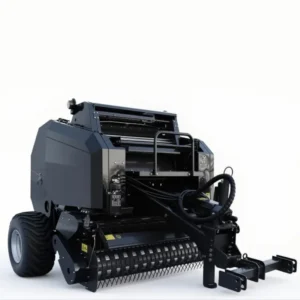
9YG-1.0 Round Baler (Mini Round Baler)
48–80 kW · Bale φ1,100×1,000 mm · 2,640 kg · 16 rollers · Small round baler for 40 hp tractor class · 40–100 bales/h
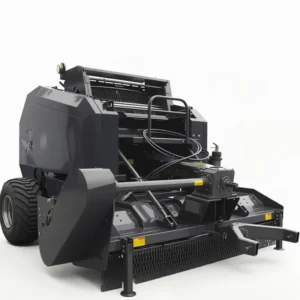
Máy ép kiện tròn 9YG-1.0C
Hammer-claw or spring-tine pickup · ≥69.8 kW · Bale φ1,000×1,250 mm · 3,198 kg · 16 rollers · Auto net wrap
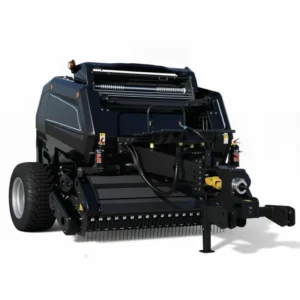
Máy ép kiện tròn 9YG-1.25A
540–1,000 r/min PTO · Density 100–200 kg/m³ · Net 2,000×1.25 m · 4,472 kg · ≥75 kW · 40–100 bales/h
6. Model Selection Guide for Vineyard Cover Crop Applications
Selecting the right round baler for vineyard floor management requires balancing bale size against tractor power, machine weight against row width clearance, and output rate against the total area to be managed. The table below provides a direct comparison of the range across the criteria most relevant to vineyard-scale operations.
| Model | Bale Size (mm) | Min. Power (kW) | Machine Wt. (kg) | Output (bales/h) | Vineyard Fit |
|---|---|---|---|---|---|
| 9YG-1.0 (Mini) | φ1,100×1,000 | 48 | 2,640 | 40–100 | Small vineyard, narrow-track tractor |
| 9YG-1.0C | φ1,000×1,250 | 70 | 3,198 | 40–80 | Mixed cover crop + stover option |
| 9YG-1.25A | φ1,300×1,250 | 75 | 4,472 | 40–100 | Medium estate, 75 kW tractor |
| 9YG-1.25 (Double) | 1,200×1,250 | 88 | 4,558 | 40–80 | Multi-crop estate, interchangeable pickup |
| 9YG-2.24D | φ1,300×1,400 | 55 | 3,922 | 40–100 | Large estate or contractor, wide rows |
| 9YG-2.24D Transcend | φ1,300×1,400 | 55 | 4,570 | 40–100 | Contractor, terraced/irregular vineyard |

7. Round Baler Gearbox: Managing PTO Drive in Terraced and Sloped Vineyard Conditions
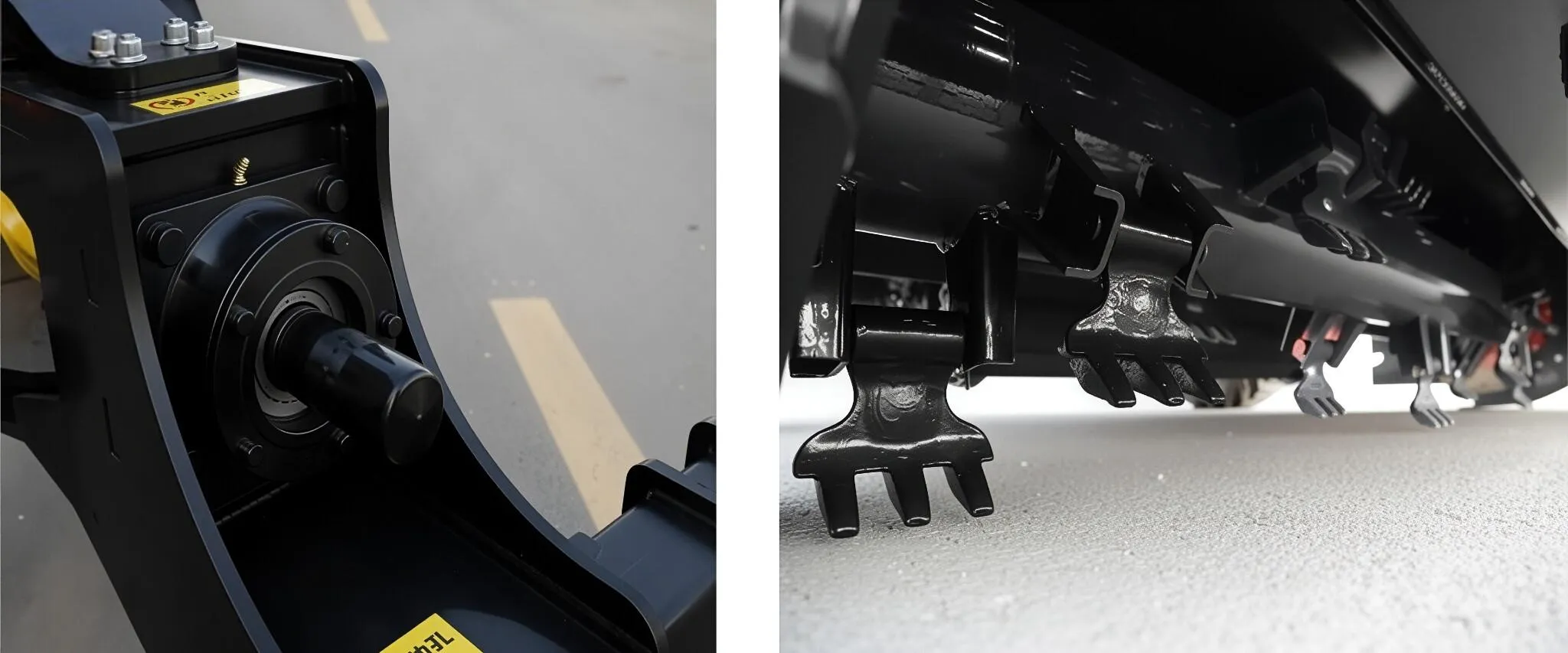
The round baler gearbox and PTO driveshaft arrangement is a critical factor in vineyard applications precisely because vineyard terrain is rarely flat. Many of Korea’s commercial wine-growing areas — including Yeongcheon in Gyeongbuk and the hill-slope sites of Chungbuk — have vineyard blocks on gradients of 5–20 degrees. Some terraced vineyards in the region have individual terraces as narrow as 4–6 meters wide, with steep risers between them. Working a round baler machine on such terrain demands driveshaft designs that can tolerate angular misalignment between tractor and machine without mechanical stress or power loss.
The conventional single-joint Cardan driveshaft used in many entry-level balers has an angular operating limit of approximately 25 degrees from the machine axis. Exceeding this limit — as happens on steep side-slopes or during tight headland turns — causes vibration, uneven torque transmission, and rapid bearing wear at the PTO input shaft. In the worst cases, a driveshaft binding at excessive angle can cause an abrupt power interruption that stalls the compression chamber and requires the operator to stop, reverse, and clear the blockage — a frequent interruption on steep or irregular vineyard sites.
The dual-joint gearbox in the 9YG-2.24D Transcend model resolves this specifically. The twin cross-joint driveshaft maintains smooth power delivery at lateral angles up to 90 degrees from center and vertical angles up to 30 degrees — far beyond the operating envelope of conventional single-joint designs. In terraced vineyard conditions, this means the operator can complete the turn at each row end without disengaging PTO, maintaining compression chamber rotation throughout and restarting the baling cycle the moment the pickup enters the new row. The practical effect is a significant reduction in non-productive time per row and a corresponding improvement in net output per operating hour.
Gearbox lubrication in vineyard applications follows standard agricultural practice: ISO VG 150 GL-4 or GL-5 gear oil, changed at 200–250 operating hour intervals, with level checks at each pre-operation inspection. What is specific to vineyard environments is the heightened risk of fungicide and pesticide contamination of the gearbox oil through the breather or filler cap if the machine is parked within the spray track during vineyard chemical applications. Operators who use the same tractor for vine spraying and baling should ensure the gearbox breather is physically protected during spray operations and the surrounding area is cleaned before any filler cap is opened for oil checks.
8. Cover Crop Species and Their Baling Characteristics
Not all vineyard cover crops behave identically when fed through a round baler machine. The mix of species seeded in the inter-row and their growth stage at cutting time both affect how smoothly the material feeds through the machine, how dense the resulting bales are, and what binding system is most appropriate. Understanding these species-specific characteristics helps vineyard managers time their cutting and baling operations for the best combination of agronomic outcome and mechanical efficiency.
Fast-establishing, dense sward that bales well at moderate moisture. Bale well at heading stage; if allowed to mature and dry before baling, produces clean compact bales suitable for livestock feed. Very common in Korean vineyard systems.
Nitrogen-fixing legume with soft, leafy biomass. Bales well when wilted slightly before baling; fresh clover at full moisture tends toward loose, difficult-to-form bales with high shrinkage on drying. Best baled in a mix rather than pure stand.
Produces high biomass before grain stage; at cutting in late spring, stems are erect and stiff enough to feed through pickups cleanly. Dense bales, good for composting. Can be abrasive to pickup tines at full maturity if left to dry on the vine row floor.
Fast-growing, fine-stemmed broad-leaved species. When cut at early flower stage, it collapses rapidly and tends to mat into flat clumps rather than forming a fluffy windrow. A feed mechanism with good anti-wrap characteristics handles phacelia better than conventional designs.
A popular mixed cover crop in Korean vineyards combining nitrogen-fixing vetch with the structural support of oat stems. The combination bales well at the end of flowering stage, producing dense bales with mixed fine and coarse structure. Net wrap is preferred over twine for clean binding on this mix.
9. Why Korean Viticulture Benefits from Round Baler-Assisted Floor Management
Korea’s commercial wine industry has grown substantially since the early 2000s, with Campbells Early and Muscat Bailey A remaining dominant varieties but increasing interest in Vinifera varieties including Chardonnay, Cabernet Sauvignon, and Merlot among progressive producers in the Gyeongbuk and Chungbuk regions. The high-rainfall, high-humidity Korean summer climate creates persistent disease pressure — particularly Botrytis cinerea and powdery mildew — that makes vineyard floor management far more agronomically significant than it might be in drier wine climates.
In Korean vineyard conditions, a thick biomass layer on the inter-row floor after cover crop cutting creates a microclimate at bunch level that combines high humidity, restricted airflow, and a substrate for soil-splash inoculum. Removing this biomass by baling rather than leaving it as mulch reduces these disease risk factors meaningfully, particularly for bunch-bearing zones in the lower trellis wire position common in Korean training systems. Vineyard operations that adopted cover crop baling as part of their disease management protocol in Korean pilot studies reported reduced fungicide application frequency and lower Botrytis incidence at harvest compared with sites that left cut material in the row.
The secondary value of the baled biomass is also relevant to Korean vineyard economics. Baled cover crop from a 5-hectare vineyard block might produce 30–60 bales of mixed grass-legume material per cut. This biomass can be composted on-farm and returned as high-quality organic fertilizer, avoiding the cost of purchased compost or manure. Alternatively, bales can be sold to neighboring livestock operations as supplementary fodder — particularly useful in Korean wine regions like Yeongcheon that have both viticulture and beef cattle operations in proximity. Either outcome transforms a floor management cost into a resource recovery that partially offsets the operating expenses of the baling campaign.
10. Regulatory Compliance for Round Baler Gearboxes and Vineyard Agricultural Machinery
Agricultural machinery including round baler machines used in vineyard environments is subject to the same national and regional safety and certification requirements as other PTO-driven farm equipment. In regions where vineyards are increasingly mechanized and labor regulations around machine guarding are strictly enforced, compliance documentation is a practical purchasing consideration, not just a legal formality.
Hàn Quốc
In South Korea, all agricultural machinery sold commercially must comply with the Act on the Promotion of Agricultural Mechanization (농업기계화 촉진법). Equipment used in wine grape production qualifies under the same framework as other horticultural machinery for the government purchase subsidy program administered by the Ministry of Agriculture, Food and Rural Affairs (농림축산식품부 — MAFRA), provided it has passed performance evaluation through the National Institute of Agricultural Sciences (농촌진흥청). The Industrial Safety and Health Act (산업안전보건법) requires point-of-operation guarding on all PTO-driven implements, covering both the driveshaft and the machine intake zone. This regulation applies to any machine operated by employed vineyard labor, and non-compliant guarding is a liability risk for vineyard owners using hired seasonal workers for baling campaigns.
European Union (Wine Regions)
Agricultural machinery used in EU wine-producing regions must carry CE marking under Machinery Directive 2006/42/EC and comply with harmonized standards EN ISO 4254-7 (harvesting machinery safety) and EN 12965 (PTO drive shafts with universal joints). In viticulture-specific machinery applications, additional guidance from EN 13525 (forestry machinery — mulchers) and regional pesticide spray regulations may also apply when combined equipment is used. Gearbox lubricant standards in EU wine country increasingly reference biodegradable hydraulic and gear oils near sensitive ecological areas — particularly in organic and biodynamic wine production zones where synthetic lubricant contamination of vineyard soil is incompatible with certification requirements.
United States (Wine-Growing States)
In California, Oregon, and Washington State — the primary US wine-growing regions — agricultural equipment safety is governed by Cal/OSHA and equivalent state-level occupational safety regulations, which follow or exceed federal OSHA 29 CFR Part 1928 requirements for PTO guarding on agricultural equipment. ASABE S318 and EP455 define the applicable industry standards. California’s unique pesticide use regulations (California Code of Regulations, Title 3) additionally govern when and how vineyard equipment can operate in proximity to chemical applications, which affects the timing of baling campaigns relative to spray schedules.
Australia and New Zealand
In Australian and New Zealand wine regions, vineyard machinery safety falls under harmonized Work Health and Safety (WHS) legislation, with specific reference to AS 1152 (guarding of farm machinery) and AS 4024.1 (safety of machinery). Gearbox lubricant oil standards reference ISO 6743-6, and New Zealand’s WorkSafe NZ conducts periodic enforcement reviews of PTO guarding compliance in the horticultural sector following documented incidents involving PTO-driven vineyard machinery.
Russia and Eastern Europe
In Russian and EEU member state wine-producing regions — including the Krasnodar Krai wine region of Russia and Moldovan viticulture — agricultural machinery must comply with TR EAEU 010/2011 technical regulations and carry EAC conformity marking. Gearbox oil specifications reference GOST 23652 gear oil standards, and import documentation for round baler machines must include conformity declaration and technical documentation in Russian where required by customs clearance procedures.
11. Maintaining the Round Baler Through Multiple Vineyard Campaigns
Vineyard cover crop baling typically occurs two to three times per year — a spring cut of the overwintered cover crop, potentially a summer re-growth cut in wetter years, and sometimes an autumn green manure crop cut in early winter. Each campaign places a distinct but relatively moderate load on the machine compared with continuous grass silage or high-intensity straw work. However, the cumulative effect of these campaigns across five to ten years represents a significant total cycle count on the tailgate, binding mechanism, pickup, and drive chain — components that deteriorate progressively rather than failing suddenly.
After each vineyard baling campaign, a brief post-use inspection should check for vine wire or trellis staples that may have been picked up and incorporated into the machine during operation. These metal objects can cause serious damage to compression rollers, net-wrap knives, and feeder components if not detected and removed promptly. Running a hand along each compression roller surface during the post-campaign inspection will detect embedded metal fragments before they cause secondary damage. All crop residue should be removed from the compression chamber, chain guides, and bearing housing areas using compressed air or a brush — leaving decomposing organic material in these areas over the winter leads to corrosion and insect nesting that can damage seals and electrical connections.
The round baler parts with the highest replacement frequency in vineyard applications are net-wrap knife blades (annual replacement is reasonable for machines doing two to three campaigns per year), pickup tines (inspect after each campaign, replace any showing tip deformation or cracking), and hydraulic tailgate cylinder seals (inspect every two seasons, replace at the first sign of weeping). Maintaining a small stock of these items ensures that the machine can be returned to service quickly at the start of each campaign without waiting for parts supply — particularly important during the narrow spring cutting window when Korean vineyard managers have limited flexibility around timing.
Frequently Asked Questions
Biên tập viên: PXY