Wheat Straw Baling Technical Series
A detailed technical comparison of spring-tooth and hammer-claw pickup systems on round balers used for wheat straw collection — covering mechanical operating principles, field loss mechanisms, manufacturing structure, material durability, Korean and international regulatory context, and how to select the right system for your operation.
Why Pickup Design Is the Key Variable in Wheat Straw Recovery
1. What Is the Pickup System on a Round Baler and Why Does It Matter for Wheat Straw Collection?
The pickup system on a round baler machine is the assembly that lifts cut and windrowed crop material from the field surface and feeds it into the bale chamber. It sits at the front of the machine, directly behind the tractor, and consists of a rotating reel fitted with either spring-tooth fingers or hammer-claw tines that engage the windrow material as the baler moves forward. The pickup is the first mechanical contact point in the entire baling process — and it is also where the majority of field losses occur. Material that is not cleanly lifted from the windrow and fed into the bale chamber in that initial engagement is lost: left behind on the field surface where it contributes no value and may need to be managed separately before tillage or planting operations begin.
For wheat straw specifically, this pickup efficiency question carries real economic weight. Korea produces substantial volumes of wheat straw annually across its grain farming regions, and the straw recovered from the wheat harvest has value both as livestock bedding and roughage and as a soil amendment material. Korean farmers and agricultural contractors baling wheat straw face the same technical choice that their counterparts in Pakistan, India, Central Asia, and the major wheat-producing regions of Europe and North America must address: which pickup configuration captures the most straw from the field with the fewest field losses? The answer is more nuanced than a simple preference for one type over the other — it depends on windrow characteristics, field surface condition, operating speed, and the specific material state of the straw at the time of baling.
This guide provides a structured technical comparison between spring-tooth and hammer-claw pickup systems, explains the loss mechanisms associated with each, and places the comparison in the context of the 9YG round baler series — which offers both pickup types through the interchangeable design available on the 9YG-1.25 and 9YG-1.0C models. It also covers the manufacturing and material considerations that affect pickup performance over multiple seasons, and the regulatory context for wheat straw baling machinery in Korea and internationally.
Mechanical Action
2. How Spring-tooth and Hammer-claw Pickups Work: Operating Principles Compared
Understanding how each pickup type physically engages with a wheat straw windrow is the starting point for evaluating their relative performance in field loss reduction. The two systems differ fundamentally in their tine geometry, motion profile, and engagement mechanism — differences that produce distinct performance characteristics under different operating conditions.
Spring-tooth Pickup
A spring-tooth pickup uses curved, high-tensile spring steel fingers mounted on a rotating reel bar. As the reel rotates, the tines sweep upward and rearward through the windrow, lifting material and carrying it over the top of the reel into the feed throat. The key mechanical characteristic is flexibility: each tine deflects on contact with solid resistance — a stone, a clump of compacted straw, or a soil crust — and then springs back to its original position. This deflection-and-recovery cycle prevents fracture and allows the tine to continue working after the obstruction has passed.
For wheat straw lying in a clean, well-formed windrow at 8–15% moisture content, spring-tooth fingers engage the stems gently and lift them without fragmentation. The tine tip sweeps under the straw layer and lifts it smoothly into the feed path. At correct operating height — with tine tips clearing the soil surface by 15–25 mm — spring-tooth pickups deliver consistently low field losses on well-formed straw windrows across a range of operating speeds from 5 to 12 km/h.
Hammer-claw Pickup
A hammer-claw pickup uses rigid or semi-rigid curved tines — shaped like a hammer head or claw profile — mounted in a fixed arrangement on the rotating reel bar. The claw profile is designed specifically to engage coarse, tangled, or standing crop material that spring tines may deflect past without capturing. The rigidity of the claw allows it to penetrate into a dense, matted windrow and pull the material upward rather than relying on the sweep-and-lift motion that spring tines use.
For wheat straw specifically, the hammer-claw design is most beneficial when the straw is: highly tangled and matted after lying on wet ground; partially compacted by combine traffic or subsequent rainfall before baling; or when the combine has deposited the straw in a very dense, flat windrow that spring tines fail to penetrate completely from below. The claw’s rigid engagement forces its way into the windrow layer from the top, grabbing and tearing the material upward into the feed throat. The 9YG-1.25 series allows interchangeable use of both pickup types — switching between them based on field-specific straw condition.
Field Loss Analysis
3. Where Field Losses Occur and How Each Pickup Type Addresses Them
Field losses during wheat straw pickup occur through several distinct mechanisms, and each mechanism responds differently to spring-tooth versus hammer-claw pickup design. Understanding these mechanisms allows operators to identify which pickup type addresses their specific loss problem rather than assuming one design is universally superior.
| Loss Mechanism | Cause | Spring-tooth Performance | Hammer-claw Performance | Better Option |
|---|---|---|---|---|
| Surface skimming — tines pass over thin windrow layer | Low windrow profile; wide spreading by combine | Moderate — may miss lowest layer of straw lying flat | Better — claw penetrates and grabs from low profile | Hammer-claw |
| Windrow compaction — straw matted by rain or traffic | Post-harvest rain; combine tyre passing over windrow | Poor — tines deflect off compacted mat surface | Good — rigid claw forces through compacted layer | Hammer-claw |
| Stem fragmentation — short straw pieces fall between tines | Over-speed operation; brittle straw at low moisture | Low — gentle tine sweep minimizes fragmentation | Higher — rigid impact on brittle straw creates short pieces | Spring-tooth |
| Wind-displaced material — lightweight straw blown away after pickup | High forward speed creating turbulence at pickup | Moderate — can occur at speeds above 12 km/h | Moderate — similar aerodynamic behavior above threshold speed | Speed management (both) |
| Standing straw engagement — combine chaffer discharge left as short stubble | Straw not fully laid in windrow; standing at various angles | Poor — tines miss angled or standing stems | Good — claw design grabs at multiple angles of approach | Hammer-claw |
| Soil contamination — tines scoop soil into windrow | Tines set too low; operation on wet or soft ground | Low risk — spring action lifts up before deep contact | Higher risk — rigid claw can cut into soft soil surface | Spring-tooth |
The table above illustrates a fundamental insight: neither pickup type universally outperforms the other in field loss reduction for wheat straw. The hammer-claw is superior for penetrating compacted or matted windrows and capturing low-profile material, while the spring-tooth is better for clean, well-formed windrows where stem fragmentation and soil contamination are the primary concerns. The interchangeable pickup system on the 9YG-1.25 series — which allows operators to switch between spring-tooth and hammer-claw configurations without changing machines — is the practical solution for operations that encounter both conditions across a season or across different fields.
Manufacturing Structure
4. How the Pickup Reel, Feed Throat, and Chamber Are Built to Handle Wheat Straw at Scale
The pickup system does not operate in isolation — its effectiveness is determined partly by how the feed throat and bale chamber are designed to receive and process the material that the pickup delivers. A high-efficiency pickup paired with a poorly-designed feed throat will still generate high field losses through material jam-backs at the throat, where incoming straw is prevented from flowing cleanly into the chamber and spills back onto the field surface. Understanding the full structural chain from pickup to bale chamber helps operators evaluate their equipment more completely.
Pickup Reel Frame Construction
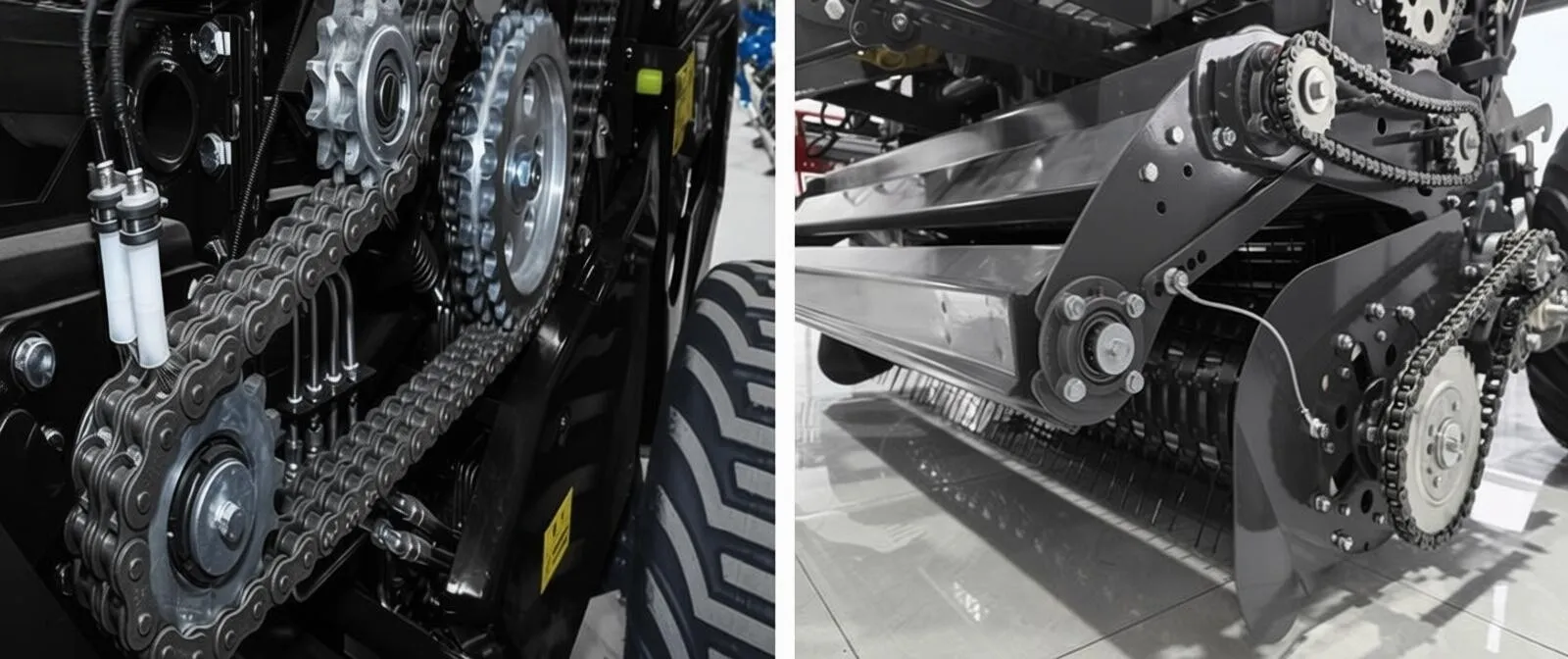
The pickup reel on the 9YG series is supported by a fabricated steel frame with precision-bore bearing housings at each end. The reel tube is sized for the torsional load applied by the tine engagement forces, which is higher for hammer-claw tines than for spring-tooth tines because the rigid claw transfers more of the windrow resistance directly to the reel shaft rather than absorbing it in tine deflection. CNC laser-cut reel end flanges maintain tine spacing geometry precisely across the full reel width, ensuring that the pickup pattern is uniform from one end to the other — a structural precision that directly affects how evenly the windrow is lifted across the full pickup width of 2,240 mm on the 9YG-2.24D series.
Axial-Flow Semi-Forced Feeding Mechanism
The axial-flow semi-forced feeding mechanism is the proprietary component on 9YG series machines that bridges between the pickup reel and the bale chamber. It creates a continuous, guided flow path that channels material from the pickup toward the chamber entrance without the recirculation zones that develop in cam-and-guard designs. For wheat straw — which tends to align its stems longitudinally in the windrow — this axial flow path maintains stem orientation through the feed throat, reducing the tendency for stems to bridge across the throat opening that causes blockage events when material arrives transversely. The absence of cam mechanisms also removes a common wear and failure point that would otherwise affect field efficiency after multiple seasons of wheat straw baling.
Bale Chamber and Press Roller Array
The bale chamber on the 9YG-2.24D series has a 1,200 mm diameter and 1,400 mm width, supported by 18 press rollers each measuring 222 mm in diameter. For wheat straw applications, the press roller diameter and surface condition determine how effectively the straw is compressed without excessive fragmentation. A larger roller diameter creates a more gradual compression curve per revolution of the forming bale, which is gentler on dry wheat straw than the sharper compression nip angle of smaller rollers. The dual-side chain drive maintains symmetric roller speed across both sides of the chamber, ensuring that the bale core develops evenly regardless of windrow variation from one pass to the next.
Material System
5. Tine Steel, Chain Specification, and Coating Systems for Wheat Straw Pickup Durability
The material system of the pickup assembly — tine steel grade, mounting hardware, reel bearing specification, and the frame coating protecting against wheat straw’s abrasive silica content — determines how many seasons the pickup system delivers consistent performance before wear-related losses begin to develop. For wheat straw specifically, the silica content of the stems creates mild but persistent abrasion on any metal surface in contact with the crop, and this accumulated wear affects tine tip geometry over time in ways that change the effective engagement depth and pickup pattern.
High-Tensile Spring Steel Tines
Spring-tooth tines on the 9YG series are manufactured from high-tensile spring steel with a hardened tip profile. The hardening extends the abrasion life of the tine tip, which is the surface most directly in contact with the wheat straw and the soil surface during normal operation. Tine tip wear in wheat straw is typically slower than in sugarcane or corn stover applications because wheat straw is less abrasive per unit mass than those crops — but wear is still measurable across a full season, and tip wear that increases the contact radius at the tip degrades the pickup’s ability to cleanly separate the straw layer from the soil surface, increasing field losses at the bottom of the windrow.
Hammer-claw Alloy and Impact Resistance
Hammer-claw tines on the 9YG-1.0C and the interchangeable configurations on the 9YG-1.25 series are made from high-strength alloy steel with sufficient hardness to resist the impact loads that occur when the claw contacts compacted straw mats or embedded soil aggregates. Unlike spring tines which absorb this energy through deflection, the hammer-claw must resist it through material strength. The alloy specification must balance hardness — which provides wear resistance — against toughness, which prevents brittle fracture when the claw impacts a larger-than-expected obstruction. The 9YG series uses a specification that has been validated through operation in corn stover and rice straw applications where impact loads are higher than in wheat straw, providing a comfortable safety margin for wheat straw use.
Chain Drive Specification
The pickup reel drive chain on the 9YG series is sized to the operating load of each model. For the 9YG-2.24D, the full 2,240 mm pickup width and dual-side chamber drive use 20A specification roller chain, providing the rated dynamic load capacity for continuous operation at the rated PTO speed of 720 r/min. In wheat straw applications, the chain load on the pickup drive is generally lower than in corn stover or sugarcane applications — wheat straw offers less resistance per unit mass — but the chain should still be lubricated at the standard 8–10 hour interval to prevent the rust and corrosion that develops rapidly when straw moisture from early morning baling sessions condenses on chain surfaces and is not displaced by fresh lubricant.
Electrostatic Frame Coating
Wheat straw baling in Korea occurs primarily in June–July following the winter wheat harvest, during a period of moderate humidity and occasional rain showers. The pickup reel frame and main structural chassis receive electrostatic powder coating over CNC-fabricated components, providing a corrosion-resistant surface that withstands both the humidity of the baling season and the extended storage period between wheat straw and rice straw or forage baling operations. For machines stored between seasonal applications, the coating prevents the undercut corrosion at frame joints that develops when bare steel is exposed to the condensation cycles of a temperate storage environment.
Decision Guide
6. Which Pickup Should You Choose for Your Wheat Straw Operation?
The choice between spring-tooth and hammer-claw pickup for wheat straw baling is ultimately a field-condition decision rather than a permanent equipment commitment — which is precisely why the interchangeable design available on the 9YG-1.25 series is valuable for Korean operators who encounter a range of straw conditions across their farm or contracting area. The following decision guide summarizes the key factors that should drive the selection on any given day or field:
Use Spring-tooth When:
The wheat straw windrow was formed in dry conditions and lies in a clean, well-shaped row with consistent height; the straw moisture content is 8–15% and stems are brittle enough to fragment under excessive mechanical impact; the field surface is firm and free from embedded stones or compacted soil that could cause tine fracture on a rigid pickup; the operator is experienced and maintains consistent forward speed in the 5–12 km/h range suited to spring-tooth pickup efficiency; bale quality for animal feed or high-value bedding is a priority and maximum feed value preservation is important.
Use Hammer-claw When:
The wheat straw has been subjected to rainfall between cutting and baling, leaving the windrow partially compacted or matted to the field surface; the combine deposited the straw in a wide, flat spread rather than a neat windrow, leaving thin layers difficult for spring tines to engage; the field has areas of standing stubble residue that spring tines pass over without capturing; the straw is tangled around volunteer crop growth or weed material that makes the windrow dense and irregular; or the previous season’s straw was mulched and the current season’s windrow lies on top of partially decomposed residue that springs tines pull through rather than lift from.
Power Transmission
7. How the Round Baler Gearbox Supports Pickup Performance in Wheat Straw Conditions
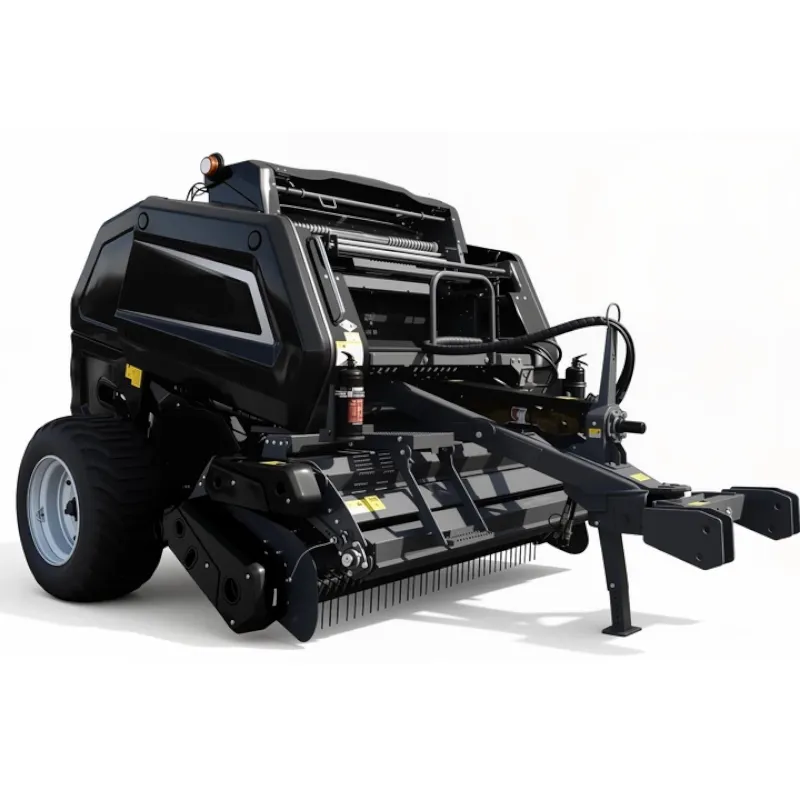
The round baler gearbox provides the mechanical foundation for both the pickup reel and the bale chamber press rollers. In wheat straw applications, the gearbox load profile is relatively stable compared to sugarcane or corn stover, because wheat straw has lower bulk density and lower resistance to compaction per unit mass than those coarser crops. However, the interaction between gearbox output speed and pickup reel speed directly determines the effective pickup rate per unit area — and maintaining consistent PTO speed at the 720 r/min specification for the 9YG-2.24D series is important for keeping the pickup reel surface velocity within the range where it engages the windrow cleanly without skimming over the top of the material.
The 9YG-1.25A is notable for its tolerance of PTO inputs across a range from 540 to 1000 r/min. This flexibility is valuable for Korean wheat straw operations where the available tractor may have a different nominal PTO speed from the 720 r/min standard. It also tolerates the throttle variability that can occur when the tractor engine lug during dense windrow sections — a condition that on other machines would cause the pickup reel to slow, reducing engagement rate and temporarily increasing field losses until the engine recovers speed. For Korean agricultural contractors baling wheat straw across multiple farms with different tractor models in the fleet, this input speed flexibility removes a source of inter-farm performance variation.
On the 9YG-2.24D S9000 Transcend, the dual-coupling gearbox that can rotate up to 90 degrees relative to the drawbar maintains consistent PTO transmission to all working components — including the pickup reel — throughout tight headland turns in small wheat fields. Korean wheat-producing regions include many small, irregular paddocks with short run lengths, and the headland turn efficiency of the machine directly determines how much of each pass is spent in productive baling versus maneuvering. The consistent pickup speed through turns that the dual-coupling gearbox provides reduces the uneven pickup engagement that occurs on conventional driveshaft designs when the shaft bends sharply during a turn.
Regulatory Context
8. Wheat Straw Baling Regulations, Machinery Standards, and Gearbox Safety Frameworks
Wheat straw baling operations — whether for livestock feed, bedding, soil amendment, or biomass — are subject to agricultural machinery safety regulations and, in some jurisdictions, waste-management or crop residue burning restrictions that create legal incentives for baling. The following frameworks are relevant to operators in Korea and in other major wheat-producing regions.
Republic of Korea — Crop Residue Burning Restrictions and RDA Machinery Certification
Korea’s Ministry of Environment has progressively tightened restrictions on open burning of crop residues including wheat straw, under the Clean Air Conservation Act and local government enforcement. In many Korean agricultural regions, burning of crop residues after harvest is now prohibited during designated periods, creating a direct legal incentive for baling as the alternative disposal and use pathway. Round balers used commercially for wheat straw collection must hold RDA type approval to be eligible for agricultural machinery purchase subsidies under the national support program. The RDA certification evaluates both safety guarding and performance criteria for pickup systems.
ISO 4254-7 — Baling Machine Safety Standard
ISO 4254-7 provides the international safety benchmark for baling machines, covering the guarding of the pickup reel, bale chamber, chain drives, and ejection zone. For Korean operators comparing round baler suppliers for wheat straw applications, ISO 4254-7 compliance documentation is one of the standard technical references in procurement decisions, particularly for machines purchased under agricultural mechanization subsidy programs that require certified equipment. The standard is consistent with KS (Korean Industrial Standard) machinery safety requirements administered by the Korea Agency for Technology and Standards.
European Union — CAP Crop Residue Management and Machinery Directive
In the EU, wheat straw management is increasingly linked to cross-compliance requirements under the Common Agricultural Policy (CAP). Farmers receiving CAP direct payments must demonstrate compliance with GAEC (Good Agricultural and Environmental Conditions) standards, which in many member states require that crop residues be managed to avoid soil erosion and nutrient loss — conditions that baling addresses by removing material for off-field use or controlled application. Round baler machinery operating in EU markets must carry CE marking under the EU Machinery Directive 2006/42/EC, including the pickup safety guarding provisions directly relevant to the spring-tooth and hammer-claw configurations discussed in this guide.
India — National Crop Residue Management Scheme and RABI Straw Policy
India operates one of the world’s largest wheat straw baling programs under the Crop Residue Management (CRM) scheme, administered by the Ministry of Agriculture and Farmers Welfare, which subsidizes round baler purchase for farmers in Punjab, Haryana, and Uttar Pradesh to reduce open burning of wheat and paddy straw. Under this scheme, eligible machinery — including round balers with spring-tooth and hammer-claw pickups — must carry AMTTI (Agricultural Machinery Training and Testing Institutes) certification demonstrating performance standards for field loss measurement and bale quality. The scheme has driven significant adoption of compact round balers in the 40–70 kW tractor class that directly parallels the 9YG-1.0 and 9YG-1.25 model range.
Pakistan — Punjab Crop Residue Management Act
Pakistan’s Punjab Province, the country’s largest wheat producer, enacted the Punjab Crop Residue (Open Burning) Act to restrict field burning of wheat straw. The law requires farmers to either incorporate residue through tillage or remove it from the field — a requirement that has created strong demand for round baler machines in the region. Agricultural machinery used in compliance with this Act must meet safety standards administered by the Pakistan Agricultural Research Council (PARC) and the Punjab Agriculture Department. This regulatory pressure has made Punjab one of the most rapidly expanding markets for round balers in South Asia.
ASABE Standards — S210 and Agricultural Machinery Pickup Safety
The American Society of Agricultural and Biological Engineers (ASABE) standard S210 covers guarding requirements for agricultural field machinery, including the pickup reel zone on round balers. This standard is referenced by North American round baler manufacturers and is used as a quality benchmark by Korean importers evaluating equipment from multiple supplier origins. ASABE S210 specifies minimum clearance requirements for the pickup guard bar — the structural element that limits operator access to the rotating tine zone — and is relevant to both spring-tooth and hammer-claw configurations, since both create entanglement hazards at the pickup reel regardless of tine type.
Product Range
9. Round Baler Models for Wheat Straw Baling — With and Without Interchangeable Pickup
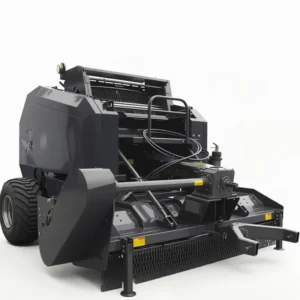
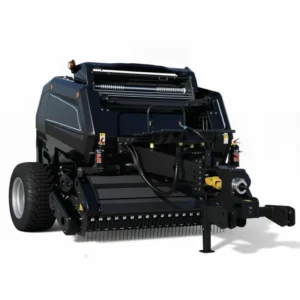
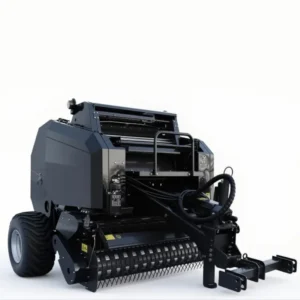
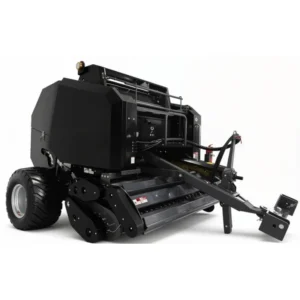
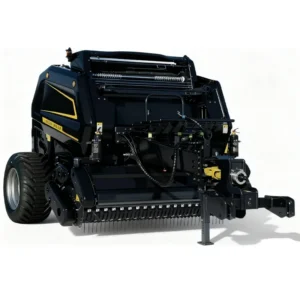
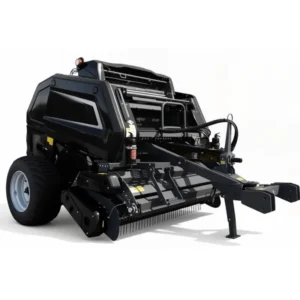
The models below span the range from compact small-farm wheat straw balers through to full-size commercial round balers for high-volume straw operations. The 9YG-1.25 and 9YG-1.0C models offer the interchangeable spring-tooth / hammer-claw pickup capability described throughout this guide.
FAQ
Frequently Asked Questions: Spring-tooth vs Hammer-claw Pickup for Wheat Straw Baling
Biên tập viên: PXY