Alfalfa / Hay Baling — Arid Conditions Setup Guide
A practical setup guide covering PTO speed calibration, pickup float adjustment, forward speed strategy, windrow width management, and chamber pressure settings — the complete configuration sequence for baling dry third-cut alfalfa with minimal leaf shatter in arid or semi-arid growing regions.
Why Third-Cut Alfalfa in Arid Regions Is the Hardest Baling Scenario to Get Right
Among all alfalfa cuts through a growing season, the third cut presents the combination of conditions most likely to produce significant leaf loss during round baling — and the problem becomes even more pronounced in arid or irrigation-fed growing regions. By the time third-cut alfalfa has been cut, conditioned, and raked into a windrow in midsummer arid conditions, the drying process is so rapid that moisture in the leaf fraction can drop from 65% at cutting to below 12% within 18–24 hours — depending on air temperature, relative humidity, and solar radiation levels. At that point, alfalfa leaves become extremely brittle. The petiolule — the short stalk connecting each leaf to the stem — snaps under the slightest mechanical impact, and a round baler machine operating at settings appropriate for heavier, moister first-cut material will shake loose 20–30% of the leaf fraction from a third-cut windrow before a single bale is even formed.
This matters agronomically and economically in equal measure. Alfalfa leaves account for approximately 65–70% of the plant’s total crude protein content despite representing less than half its dry weight. Every percentage point of leaf loss at baling reduces the nutritional value of the hay disproportionately compared to the weight loss it represents. For Korean dairy and Hanwoo beef operators sourcing alfalfa domestically or through import programmes, consistently high leaf content is the primary driver of feed value that justifies alfalfa’s premium over grass hays. Producers who master the round baler setup sequence for low-leaf-loss baling of dry third-cut alfalfa deliver a consistently superior product — and this guide provides that sequence step by step, from pre-field checks through binding material selection.
Understanding the Arid Condition Drying Dynamic
Arid and semi-arid alfalfa production — including the irrigated flatland regions in Central Asia, the dry interior provinces of Korea during dry summer periods, and the major export-producing regions of Australia and the US West — share a common characteristic: atmospheric conditions that can drop alfalfa moisture from ideal baling range to dangerously brittle levels within a single morning. When ambient relative humidity drops below 30–35% and air temperature climbs above 35°C — conditions typical of midsummer in Korea’s Gyeonggi or South Chungcheong provinces during drought episodes, and common throughout the US Southwest and Central Asia — a properly conditioned and spread alfalfa windrow can lose 1–2% moisture per hour during the peak drying window.
The implication for round baler setup is that the moisture window within which baling is agronomically safe narrows dramatically. In humid-climate hay production, a producer may have a six to eight hour baling window at acceptable moisture above 15%. In arid conditions, the same window can collapse to two to three hours — or in extreme conditions, to just the early morning period when residual overnight humidity keeps the crop at an acceptable moisture level. Operators in Arizona and similar US regions have developed the practice of starting baling operations between 3 and 5 a.m. to catch the optimal 15% moisture window before it closes. The same discipline applies to any arid-region alfalfa programme, including Korean producers using well-drained upland fields during dry spell periods, and producers in Australia’s Riverina and South Australian alfalfa zones during their peak summer cutting season.
Before setting up the round baler at all, therefore, the first requirement in an arid-condition third-cut programme is a reliable moisture measurement protocol. A hand-held near-infrared moisture sensor or a calibrated electrical resistance probe placed in the mid-windrow at multiple points across the field provides a field-wide moisture map in under 15 minutes. The target baling range is 15–20% moisture — the window where leaf flexibility is adequate to survive pickup mechanical contact without catastrophic shatter, and where bale density in the storage phase is manageable without significant fermentation risk in non-silage bales. Below 12% is a discard condition — delay further by watering if possible, or accept that the bale will be high in leaf loss regardless of how the baler is set up.
Manufacturing Structure: Pre-Field Machine Preparation for Dry Alfalfa
Tine Inspection and Population Check
The pickup assembly is the first point of mechanical contact between the round baler and the dry alfalfa windrow, and its condition at the start of a third-cut arid-conditions run directly sets the ceiling for achievable leaf retention. Pickup tines should be inspected before each cutting period — not just at season start — because the cumulative wear from two earlier cuts, plus any rock or stubble impact damage from dry field conditions, can leave the tine population in a state that amplifies leaf loss without any visible indication from the operator’s seat. A tine that has been bent 10–15 mm from its specification profile does not look dramatically wrong to a casual glance, but it contacts the windrow at a slightly different angle than its neighbours, applying a concentrated impact rather than a smooth lift — and in dry third-cut alfalfa, that concentrated impact detaches leaf material at a measurably higher rate.
The specific check is straightforward: with the machine on a flat surface and the PTO disengaged, manually rotate the pickup reel and observe each tine’s tip position relative to the guard strip at the point of closest approach. Tips that deviate more than 8–10 mm from the mean position of their neighbours should be replaced before starting. A complete tine population — no gaps — ensures even windrow lift across the full pickup width, preventing the over-loading of adjacent tines that must compensate for missing positions. For a round hay baler operating in dry alfalfa, a complete, uniform tine population at correct spring tension is the single most cost-effective leaf retention investment available before the field run begins.
Pickup Float Setting
The pickup float — the degree to which the assembly can rise and fall independently of the main baler frame — should be set to its lightest spring tension setting for dry third-cut alfalfa in arid conditions. In moister crop conditions, a firmer float helps maintain consistent windrow contact on uneven ground. In dry conditions, excess downward spring pressure forces tine tips through the windrow base and into the stubble surface below — creating violent ground-contact impact events that generate a cloud of leaf fragments with each stubble strike. A light float setting allows the pickup to ride over minor surface undulations without forcing tines through the windrow base, and in the flat, irrigated-paddy adjacent fields or well-graded arid pastures where third-cut alfalfa is often grown, the ground is smooth enough that light float provides adequate windrow contact without compromising consistency.
Guard and Shield Inspection
Pickup guards — the fixed fingers that strip and guide crop from the rotating tine bars into the intake throat — must be confirmed straight, correctly positioned, and free of corrosion or deformation before a dry alfalfa run. A bent guard creates localised airflow turbulence at the tine-bar-to-throat transition that is amplified in dry, low-density crop conditions compared to moist, heavy materials. In third-cut alfalfa where the windrow is light and airy, this turbulence can lift and scatter leaf fragments rather than channelling them forward into the feeder system. Straightening or replacing damaged guards is a 15-minute task at the workshop that pays dividends in leaf retention across the full baling run.
Material System: PTO Speed Calibration for Dry Alfalfa
The single setup parameter that experienced alfalfa operators consistently identify as the most impactful for leaf loss reduction in dry conditions is PTO speed — and specifically, reducing it below the 540 RPM nominal rated speed that round balers are designed around. The mechanical reason is straightforward: at 540 RPM, the pickup reel tine tips move at a fixed velocity relative to the machine’s forward progress. In dry, light third-cut alfalfa, this tip velocity — calibrated for adequate windrow lift in heavier conditions — creates impact energy at the tine-to-windrow contact point that exceeds what fragile dry leaf attachments can absorb without shattering.
Experienced baler operators working dry alfalfa in arid conditions — including those in Arizona, Nevada, and Central Asian irrigated zones — commonly reduce PTO speed to 450–500 RPM for dry third-cut material. At 480 RPM, the pickup reel tip speed is approximately 11% lower than at 540 RPM. This reduction does not meaningfully affect bale density in light windrow conditions because the critical factor for density in dry alfalfa is chamber pressure setting and dwell time — not pickup speed. The reduction does, however, lower the kinetic impact energy at each tine-windrow contact event, which in brittle-moisture alfalfa translates to measurably less leaf-attachment fracture per unit length of windrow processed.
There is an important qualification: reducing PTO speed below 450 RPM begins to compromise the pickup’s ability to lift and convey material reliably, and in dense sections of even a third-cut windrow, can cause slugging at the intake throat. The practical working range for dry third-cut alfalfa in arid conditions is 460–510 RPM — low enough to meaningfully reduce tine impact energy, high enough to maintain reliable material flow into the chamber without blockage events that would themselves create additional leaf disturbance through the surge-and-clear cycle.
| Alfalfa Condition | Recommended PTO RPM | Max Forward Speed | Primary Risk if Exceeded |
|---|---|---|---|
| First cut, 50–65% moisture, heavy windrow | 530–540 RPM | 8–12 km/h | Intake blockage from heavy material surge |
| Second cut, 30–45% moisture, moderate windrow | 500–530 RPM | 6–10 km/h | Moderate leaf loss at lower moisture end |
| Third cut, 15–22% moisture, light arid windrow | 460–500 RPM | 4–7 km/h | Heavy leaf shatter; crude protein loss; dusty field trail |
| Third/fourth cut, below 12% moisture, arid peak | Delay baling | Delay baling | 25%+ leaf loss unavoidable regardless of settings |
| Any cut, above 25% moisture, humid conditions | 510–540 RPM | 6–10 km/h | Fermentation in bale; density loss at high moisture |
Forward Speed, Windrow Width, and Chamber Fill Strategy
In dry third-cut alfalfa, forward speed management is the second most critical setup variable after PTO speed — and the two interact in a way that determines the effective tine-tip-to-crop-velocity ratio that governs leaf disturbance. At a fixed PTO speed of 480 RPM, reducing forward speed from 10 km/h to 5 km/h doubles the effective tine-tip-to-ground-speed ratio, meaning the tines lift material more smoothly relative to the crop’s own forward motion — which is the mechanical condition that minimises impact at individual tine-leaf contact events.
The practical target for forward speed in dry third-cut alfalfa baling with a round hay baler is 4 to 7 km/h, adjusted within this range based on windrow density. The governing principle is to keep the bale chamber feeding consistently — neither starved of material (which causes the forming bale to over-rotate on roller surfaces without accumulating new material, creating more surface abrasion per unit of bale growth) nor flooded with material (which causes slugging at the intake throat and produces a surge-and-clear cycle that scatters leaf material backward from the intake opening). The ideal operating state is one where the chamber is continuously and evenly fed at a rate that keeps the forming bale adding approximately 2–3 cm of diameter per minute of chamber time in light dry alfalfa conditions.
Windrow width management directly supports this strategy. A windrow that matches the full width of the pickup assembly — ideally equal to or slightly wider than the pickup width — allows the tines to operate across their full designed capacity, spreading the material flow evenly rather than concentrating it through a narrow central zone. Narrow windrows formed by over-aggressive raking — common on arid farms where producers rake aggressively to protect the windrow from dust contamination — force the pickup’s central tines to do most of the work while outer tines run free, creating uneven loading at the intake throat and the associated surge patterns that increase leaf disturbance. If windrows are narrow due to field or raking constraints, reducing forward speed further — to 3–5 km/h — partially compensates by reducing the intermittent feed rate into the chamber that narrow windrows produce at higher speeds.
Chamber Pressure Setting for Light Dry Alfalfa
A round baler machine’s chamber pressure setting — whether controlled by belt tension in a variable-chamber design or by the fixed cage geometry in a roller-type chamber — determines how much back-pressure the forming bale exerts against incoming material at the intake throat. In variable-chamber designs with hydraulic belt tensioners, the pressure setting directly governs the resistance the expanding bale must overcome as it grows toward its target diameter, which in turn affects how hard the material is pushed back against the intake during the critical first half of bale formation.
For dry third-cut alfalfa in arid conditions, reducing chamber pressure below the midpoint of the machine’s adjustment range achieves two benefits simultaneously. First, it reduces the back-pressure at the intake that can cause incoming dry alfalfa to momentarily stall and receive multiple rapid tine impacts in the transition zone — the pattern that produces the highest concentration of leaf fracture events. Second, a lower initial chamber pressure allows the bale core to form more gradually and with less centripetal resistance, reducing the abrasive contact between the forming bale’s outer surface and the chamber walls or rollers during the initial 60–70 cm of diameter growth.
The trade-off is that lower chamber pressure settings produce bales of somewhat lower maximum density. For alfalfa destined for domestic Korean livestock feedout or short-transit export, a final bale density in the 120–160 kg/m³ range is entirely acceptable — the bales hold their shape adequately for normal handling and storage, and the density reduction from a lower pressure setting is modest compared to the leaf retention improvement it produces. For export alfalfa requiring 160–200 kg/m³ minimum density for container loading efficiency, the pressure setting should be brought back up to at least the midpoint after the first bale has been examined — balancing the export density requirement against the leaf loss penalty of high pressure in dry conditions is a judgement call that changes with each field and each cutting.
Featured Round Baler: Suited to Multi-Cut Alfalfa Across Variable Conditions
Recommended for Arid-Region Multi-Cut Alfalfa
9YG-2.24D 圆捆打捆机 (S9000)
The 9YG-2.24D features an 18-roller compression chamber producing bale densities between 100 and 200 kg/m³ — the range covering both the lighter density targets appropriate for low-pressure dry alfalfa setup and the higher density requirements of export-grade production. Its 2.24 m pickup width with axial-flow intake system supports even material distribution across the full working width, reducing the surge patterns at the intake throat that cause disproportionate leaf loss in dry, light third-cut windrows. The PTO system is rated for full 540 RPM nominal operation and performs stably when operated in the 460–510 RPM range recommended for arid dry-alfalfa conditions. For Korean alfalfa producers and international operators seeking a round baler machine that transitions cleanly between first-cut heavy baling and low-leaf-loss third-cut arid setup, this model covers the full operating envelope within a single machine configuration.
Timing Strategy: Working the Early Morning Moisture Window in Arid Conditions
No baler setup adjustment compensates fully for baling below the critical moisture threshold. In arid-region third-cut alfalfa programmes, the most effective leaf retention strategy is temporal — shifting the baling window to the overnight and early morning period when residual atmospheric humidity allows the alfalfa leaf surface to re-absorb 1–3 percentage points of moisture. This re-absorption does not reverse the full drying process, but it is sufficient to restore just enough petiolule flexibility to reduce tine-impact shatter rates significantly compared to the same crop baled in the afternoon at the same PTO and forward speed settings.
In practice, this means starting round baler operations between 2 and 5 a.m. in high-summer arid conditions — matching the strategy reported by experienced US alfalfa operators in Arizona and Texas, where this practice is standard for any premium-grade alfalfa programme. For Korean producers operating in dry mid-summer conditions during extended high-pressure weather systems — which can maintain relative humidity below 35% for days at a time — the same 2–5 a.m. window applies. A simple humidity gauge placed in the windrow the previous evening and checked via a remote reader before heading to the field allows the decision to start or delay to be made without requiring a physical field inspection in the dark.
The moisture gradient within the windrow adds another dimension: the top surface of a raked windrow dries faster than the interior and base, so a windrow that reads 20% at mid-depth may have a surface moisture of 12–14% that the pickup tines contact first. For this reason, moisture probing should be done at the outer surface of the windrow — not by sampling from the interior — to get the most relevant reading for tine-impact leaf loss risk. A 15% surface reading is the practical go/no-go threshold for arid-condition third-cut baling; below this, either delay operations until atmospheric humidity rises or accept that leaf loss will be substantial regardless of equipment setup.

Binding Material: Net Wrap vs Twine for Dry Third-Cut Arid Alfalfa
Once the bale has been formed in the chamber, the binding material choice determines how much of the leaf-rich outer bale layer is retained through ejection, field transport, and storage. In dry third-cut arid alfalfa — where the outer bale layer is particularly loosely consolidated due to the low moisture and light windrow density conditions — the gap between net wrap and twine performance is at its widest. The leaf-rich outer cylinder of a dry alfalfa bale has little inherent cohesion: the dry material has not bonded to itself through the moisture-driven compression processes that help wet or silage-grade material self-adhere during baling. When twine-wrapped dry alfalfa bales are lifted, transported, or stacked, this loose outer layer sheds freely through the open spaces between twine strands.
Net wrap’s full-mesh contact with the bale’s outer surface — achieved in approximately 18 seconds of wrapping time per bale — provides the structural envelope that holds this loose outer layer in place through handling. The mesh contacts the full bale surface rather than applying tension at discrete strand lines, meaning even the loosely consolidated leaf material between and beneath the outermost stem layers is captured and held. For dry third-cut arid alfalfa specifically, using net wrap with a minimum of two revolutions (typical net wrap application covers 2.25–2.5 revolutions for adequate overlap) is the binding recommendation regardless of what the baler manual specifies as a default — because the default settings are developed for average-moisture conditions and do not specifically account for the extreme brittleness of arid dry-alfalfa outer layers.
An additional consideration specific to arid storage conditions: bales stored outdoors in arid regions are often subject to high UV radiation and temperature cycling between day and night that degrades stretch film faster than in humid environments. If bales require secondary stretch film wrapping for silage-type conservation — which is uncommon for dry alfalfa but sometimes used for high-moisture third cuts in unusually wet years — specify a film with 24-month UV stabilisation rather than the standard 18-month product, and inspect stored bales monthly for UV-related film degradation around the upper half of each bale where solar radiation is most concentrated.
Complete Setup Checklist: Round Baler Configuration for Dry Third-Cut Alfalfa
Inspect and fully populate all pickup tines. Check for bent or missing tines and replace any deviating more than 8 mm from profile. Confirm pickup guards are straight and correctly positioned. Set pickup float to lightest spring tension setting. Verify all roller surfaces show adequate rib profile depth. Confirm drive chain tension within manufacturer specification.
Probe windrow surface moisture at 5–8 locations across the field. Target 15–20% surface moisture before starting. Schedule baling for the 2–5 a.m. window if afternoon moisture reading is below 15%. Recheck moisture every 90 minutes during the baling run as conditions change through the morning.
Set PTO speed to 460–500 RPM before engaging the pickup. Set initial forward speed to 4–5 km/h. Observe first bale formation and adjust forward speed upward if chamber is feeding consistently without slugging. Do not exceed 7 km/h in dry third-cut conditions regardless of windrow density.
Set chamber pressure to the lower third of the adjustment range for the first bale. Cross-section the first bale after ejection (grapple a cut section from the end face) to check core formation and density. Increase pressure slightly if density appears insufficient for the intended use. Do not return to full pressure unless density specification requires it.
Use net wrap — not twine — for all dry third-cut alfalfa in arid conditions. Confirm net wrap application completes 2.25–2.5 revolutions per bale. Move bales to storage within 2 hours of ejection to reduce further UV exposure to the dry outer layer. Inspect the first 10 bales for dust trail behind the machine — visible dust means leaf loss is occurring and settings need further adjustment.
Regulatory and Compliance Context for Round Baler Operations
Round baler setup and operation in alfalfa hay production is subject to national and regional regulatory frameworks that govern equipment safety, gearbox specifications, and agricultural plastic waste management. Understanding these frameworks helps producers in Korea and other markets ensure their equipment and operation are compliant before entering the field.
韩国
The Agricultural Mechanisation Promotion Act governs round baler eligibility for government subsidy under MAFRA programmes, requiring Rural Development Administration (RDA) performance evaluation and registration for machines intended for subsidised purchase. For arid-season alfalfa operations, operators should note that Korean workplace safety standards under the Occupational Safety and Health Act (산업안전보건법) require documented operator training for PTO-driven machinery, including procedures for safe PTO speed changes during field operation. When reducing PTO speed to 460–500 RPM for dry alfalfa setup — engaging the tractor’s engine RPM reduction rather than the PTO engagement mechanism — operators should follow the tractor manufacturer’s recommended sequence to avoid drivetrain stress during the speed transition.
European Union
EU Machinery Directive 2006/42/EC (transitioning to Machinery Regulation EU 2023/1230 from 2027) requires CE marking on round balers sold in EU markets, with specific guarding requirements for PTO shaft connections and rotating pickup components. For round baler gearbox specifications, EN ISO 11684 provides the safety label requirements applicable to gear-driven components in the drive train. European alfalfa producers using round balers in dry southern European growing regions — including Spain’s Castile-La Mancha zone, France’s Rhone corridor, and Italian Po Valley — operate under EU Common Agricultural Policy (CAP) cross-compliance requirements that penalise practices increasing particulate emission during field operations, which technically encompasses visible dust generation from excessive pickup speed in dry crop conditions.
Australia and New Zealand
Australian Safe Work regulations require that any PTO speed adjustment during field operation — including the recommended reduction to 460–500 RPM for dry alfalfa — follows documented safe operating procedures, particularly regarding operator position relative to rotating shafts during adjustment. WorkSafe guidelines in Western Australia and South Australia — the primary alfalfa states — specify that engine speed reduction for PTO adjustment must be performed from the operator’s seat only, not from outside the cab. In New Zealand, the Health and Safety at Work Act (HSWA 2015) and the Agricultural Machinery Standards (NZS 5433) apply to round baler PTO drive systems, including gearbox oil specification and shaft guard maintenance requirements relevant to the drive components involved in PTO speed adjustment during alfalfa baling.
United States
ASABE Standard S358.3 defines the performance testing parameters for agricultural round balers in the US market, including PTO input speed tolerances and bale density measurement protocols. OSHA 29 CFR 1928 establishes federal safety requirements for PTO-driven agricultural equipment, with specific relevance to the change of operating speed during field use. In California, Arizona, Nevada, and other major arid-region alfalfa states, the California Air Resources Board (CARB) and state EPA equivalents have rules on particulate matter emissions from agricultural operations. Visible dust generation from dry alfalfa baling operations — particularly from pickup systems operating at excessive speed for the crop’s moisture level — can trigger compliance obligations under local air quality regulations in areas subject to PM2.5 non-attainment status, an increasingly common designation in Central Valley and desert-adjacent growing regions.
Compatible Components for Consistent Round Baler Setup and Performance
Achieving the precise PTO speed, pickup velocity, and chamber drive consistency that low-leaf-loss dry alfalfa baling requires depends on the quality and specification-accuracy of the drive components connecting the tractor to the baler. The following components are designed for compatibility with the 9YG and EP round baler series and provide one-stop supply for the complete drive system.
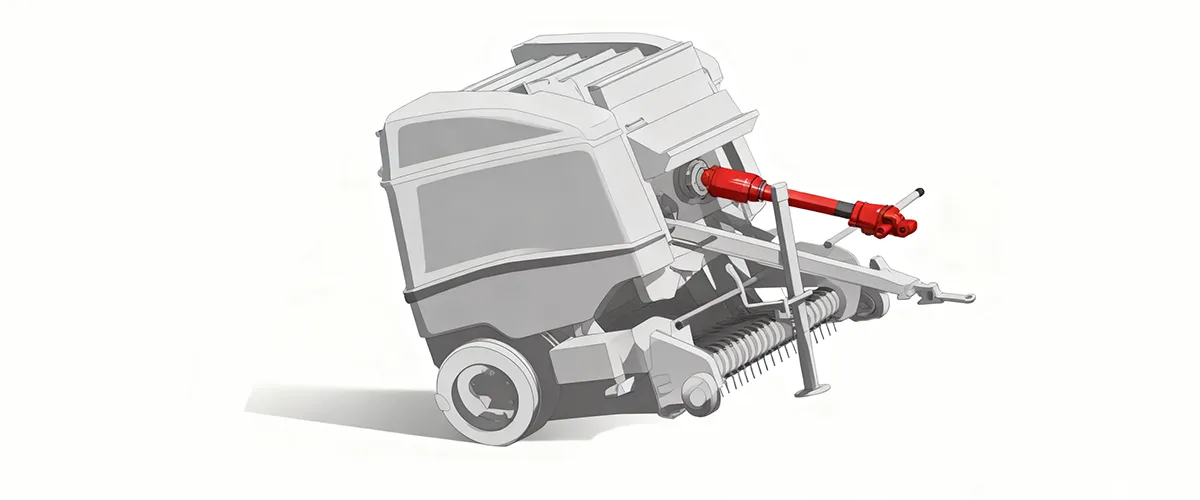
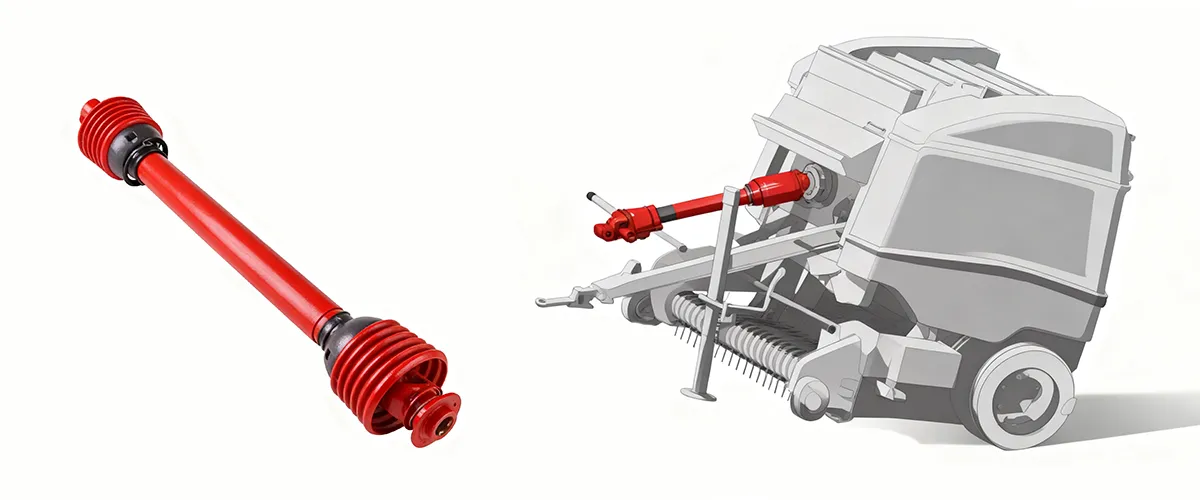
Agricultural PTO Shaft
When operating a round baler at reduced PTO speed — as recommended for dry third-cut alfalfa — any torsional backlash in the connecting shaft introduces speed ripple that partially negates the smooth low-speed operation the setup is designed to achieve. Well-maintained cross-joint assemblies and correctly balanced shaft yokes are prerequisites for stable 460–500 RPM operation without vibration. EP PTO shaft assemblies for the 9YG and EP round baler range are matched to each model’s input torque rating and designed for stable operation across the full RPM range from reduced-speed dry alfalfa settings to full rated speed in heavy first-cut conditions — supporting one-stop system supply without compatibility uncertainty.
Agricultural Drive Chain
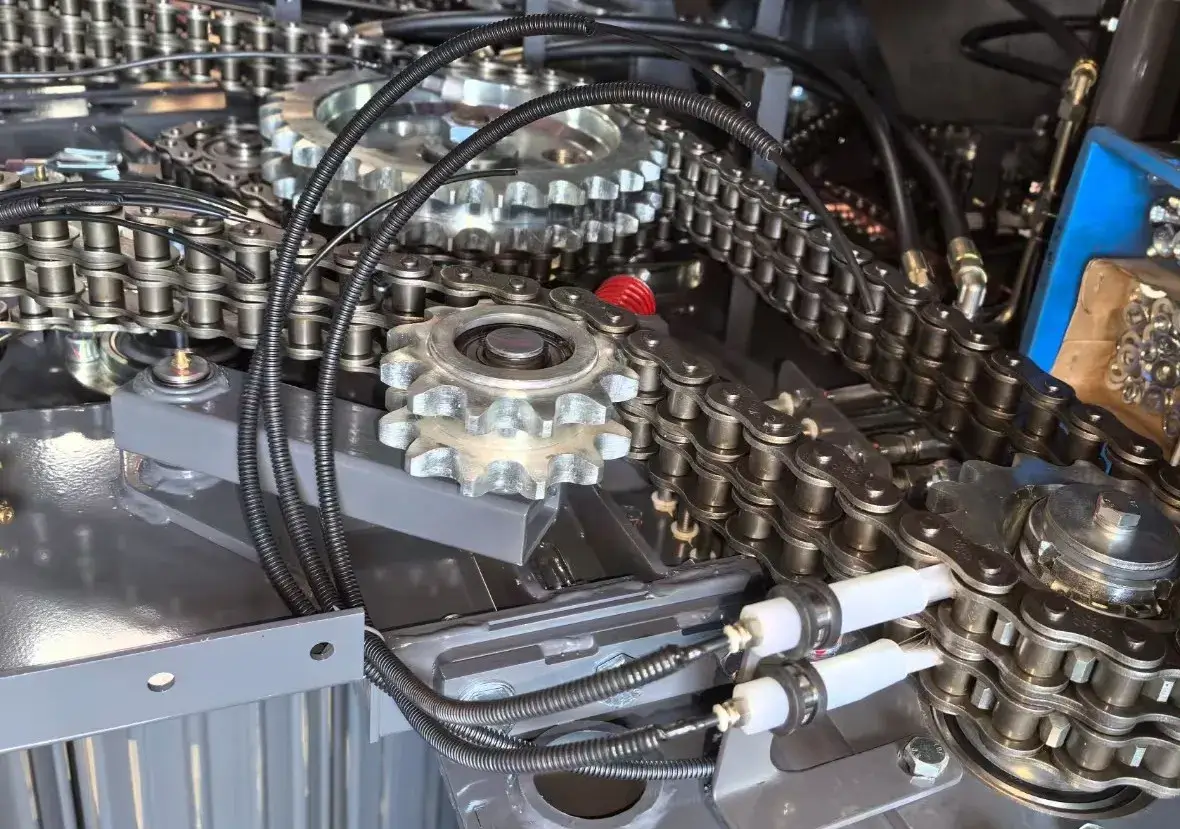
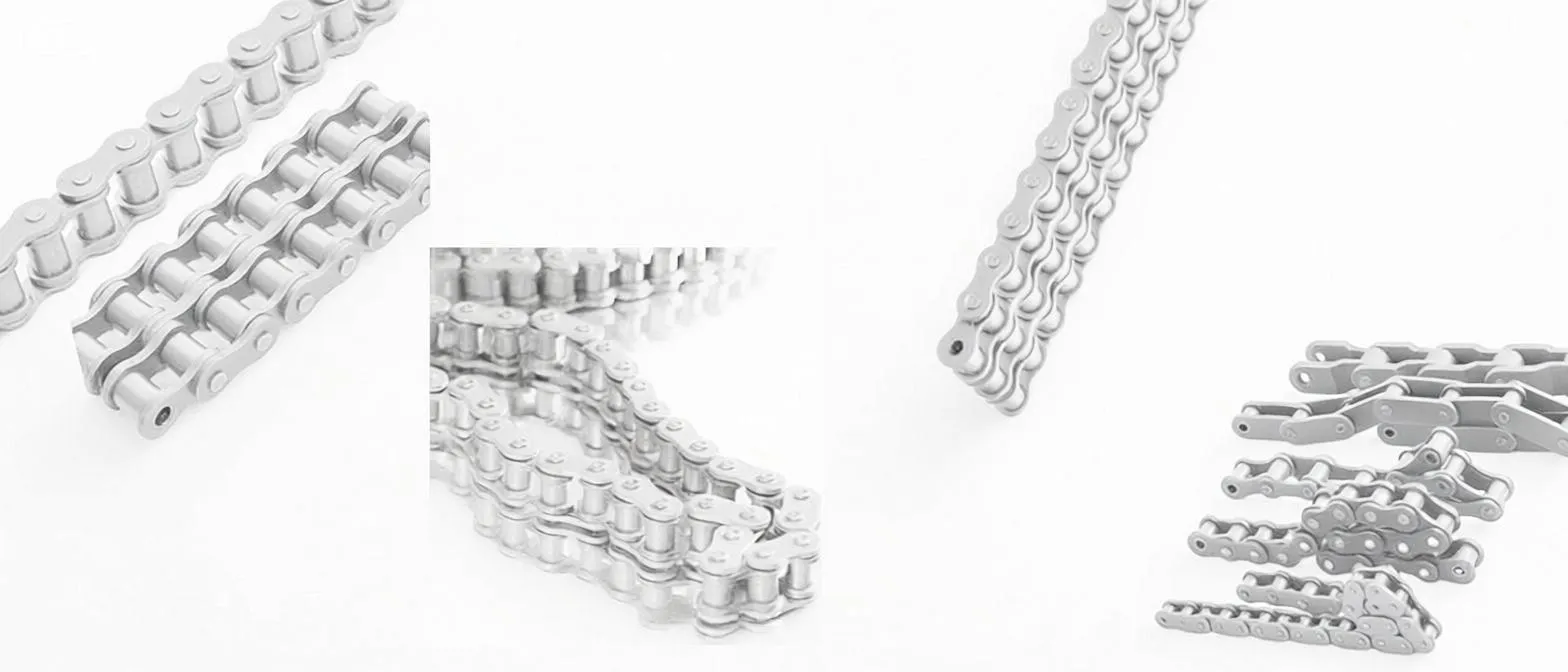
The compression chamber roller drive chain operates under peak torque loading during the density phase of each bale cycle — and for dry alfalfa at lower chamber pressure settings, the torque profile through this phase is different from full-pressure heavy-crop baling. Chains with insufficient tensile reserve for peak bale compression loads can momentarily slip at sprocket teeth during the density phase, creating the brief roller speed reductions that produce density voids in the finished bale. Matched replacement chain sets for all 9YG and EP models are available with confirmed ISO 606 pitch specifications, maintaining the drive consistency that correct PTO speed and chamber pressure setup depends on to deliver the leaf retention outcome in dry third-cut alfalfa conditions.
A Decade of Round Baler Development Across Global Alfalfa Markets
Since 2013, we have built our enterprise into a comprehensive intelligent manufacturing operation spanning the agriculture and livestock machinery sector. Our product range covers light and heavy round balers, single and double blade mowers, disc rotary mowers, and side rakes — all produced under ISO 9001 quality certification with independent import and export licensing. Over 60 sets of large-scale production equipment and an annual design capacity of 2,000 machines support our ability to deliver consistent engineering quality across the 9YG and EP round baler lines, including the configurations most suited to the demanding low-leaf-loss requirements of arid-region alfalfa programmes. Our goal from the beginning has been a straightforward one: build equipment that performs predictably in the conditions where farmers actually operate.
Frequently Asked Questions
Get the Right Round Baler Configuration for Your Arid Alfalfa Programme
Whether you are setting up for a new third-cut dry alfalfa season on a Korean farm, scaling up an export programme, or sourcing round baler parts for an existing machine, reach out with your tractor HP, field conditions, and target bale specification for a direct configuration recommendation.
编辑:PXY