1. The Arid-Zone Baling Challenge: Why Low Yield Changes the Economics
Baling low-yield forage crops in arid environments is one of the most challenging round baler machine applications because the fundamental profitability equation works against the operator. Where a high-yield ryegrass paddock in a humid farming region might produce 8–12 bales per hectare, a dryland native pasture or sparse cereal stubble paddock in an arid zone may yield only 1–3 bales per hectare. The fuel consumed per bale is correspondingly higher because the same tractor operating hours are spread across fewer completed bale cycles. The round baler machine itself costs the same to purchase and finance regardless of whether it is operating in a high-yield paddock or a sparse dryland field, so every underutilised hour of machine capacity has a fixed cost attached to it that the lower per-hectare yield must still absorb.
For Korean farmers operating in the dry interior regions of Gyeongbuk and Gangwon provinces — where summer droughts can cut native grass and cereal cover crop yields by 50–70% compared to average years — and for the pastoral farmers of Mongolia, Kazakhstan, and Australia’s dryland zones who represent significant round baler markets, the economic challenge is the same: how to make baling viable when the yield per pass is too low to justify the machine running at less than efficient capacity. The answer lies in selecting a round baler machine that can operate economically at a wide range of bale formation rates, particularly one whose feed mechanism handles the irregular, low-volume crop streams that sparse windrows produce without generating the blockage stoppages that further erode operating efficiency.
Arid-zone baling also introduces mechanical challenges that humid-region farmers rarely encounter. Extreme ambient temperatures — regularly exceeding 35 degrees C in Korean summer dryland conditions and reaching 45 degrees C in Central Asian and Australian dryland operations — accelerate oil degradation in the round baler gearbox, reduce hydraulic fluid viscosity, and cause thermal expansion in steel components that can affect bearing clearances and chain tension. Fine, wind-blown soil particles in arid conditions infiltrate round baler bearing seals faster than in humid environments, particularly during sparse windrow operations where the pickup reel is clearing material from a wide path with relatively few crop fibers to act as a natural dust barrier between the tine tips and the soil surface.

2. Crop Types Encountered in Arid and Semi-Arid Baling Conditions
The round baler machine application in arid regions covers a broader and more varied range of crop types than humid-region hay baling, because dryland farmers must work with whatever the season has produced — from relatively dense cereal crop residues in better years to sparse native grass cover in poor seasons. Understanding the physical characteristics of each crop type encountered in arid baling helps operators configure the round baler correctly and set realistic throughput expectations for each field and season.
| Crop / Material | Typical Arid-Zone Yield | Key Baling Challenge | Round Baler Model Match |
|---|---|---|---|
| Native steppe grass (Mongolia, Kazakhstan) | 0.8–2.5 t DM/ha | Sparse windrows, brittle stems, soil contamination | 9YG-1.25A, 9YG-2.24D Standard |
| Cereal straw — dryland wheat, barley | 1.5–3.0 t/ha | Brittle breakage at pickup, silica abrasion, dust | 9YG-1.0, 9YG-1.25A, 9YG-2.24D |
| Sorghum stubble (Korean semi-arid zones) | 2.0–4.0 t/ha | Coarse stems, variable moisture, soil incorporation | 9YG-1.25, 9YG-2.24D series |
| Millet and forage sorghum hay | 2.5–5.0 t DM/ha | Fine-stemmed but low in poor-rainfall years | 9YG-1.0, 9YG-1.25A |
| Native shrub and grass mix (arid Australia) | 0.5–1.5 t/ha | Extreme sparseness, woody elements, stones | 9YG-1.0 (float mode) |
| Corn stover — dryland varieties | 3.0–6.0 t/ha | High silica, variable stand density, soil pickup | 9YG-1.0C, 9YG-1.25 Double |
For Korean farmers in the semi-arid inland zones of Gyeongbuk, Gangwon, and North Chungcheong — where summer droughts periodically reduce forage grass yields to 30–50% of average — the most important characteristic of the round baler they select is the ability to handle a wide range of windrow densities within a single season, from the dense windrows produced in good years to the very sparse coverage that drought years deliver. A round baler machine whose feed mechanism performs reliably at both extremes — without blockages at high volume or bale formation failures at low volume — is the defining feature of an economically viable dryland baling investment.
3. How the Round Baler Adapts Its Action Mode for Sparse Crop Conditions
Operating a round baler machine in arid, low-yield conditions requires an understanding of how the machine’s action changes when the crop stream entering the compression chamber is thin, irregular, or interrupted. In a standard hay operation, the machine receives a reasonably consistent volume of material that keeps the bale chamber occupied throughout the baling cycle. In a dryland or drought-affected operation, the incoming crop stream may be patchy and intermittent — with sections of near-empty windrow alternating with occasional dense accumulations wherever wind or slope has concentrated scattered crop material.
3.1 Slow Bale Formation Management
When a round baler operates in sparse crop conditions, the time required to form a complete bale at target diameter increases substantially compared to normal operating conditions. In a dense ryegrass windrow, bale formation time might be 45–90 seconds at moderate tractor speed. In a sparse dryland windrow at 1–2 tonnes per hectare yield, the same bale diameter may take 5–15 minutes of tractor operation to accumulate, depending on ground speed and windrow density. During this extended formation time, the bale core must maintain its structural integrity without unwinding or settling, which places a premium on the round baler’s ability to apply progressive, consistent compression pressure throughout the formation cycle rather than only at the end of the filling phase. The sensor-controlled density management on all 9YG round baler models monitors bale diameter continuously and maintains the hydraulic compression back-pressure at the operator-set target throughout the bale formation cycle, regardless of how slowly or intermittently the bale is growing.
3.2 Skip-Row and Wide-Swath Operation
In arid conditions where forage is extremely sparse, round baler operators often use a wide-swath or skip-row approach — raking multiple windrows together before baling to create a combined windrow dense enough to fill the bale chamber within a reasonable time. The 9YG series pickup widths of 1900–2240 mm are well suited to picking up raked double or triple windrows in this way, and the hydraulic float capability of the pickup assembly allows the tines to follow the uneven surface profile of a raked combined windrow without digging into the soil surface where the windrow is sparse and the tine tips could engage with loose soil rather than crop material. This soil-exclusion capability is particularly important in arid conditions where soil contamination reduces bale quality and introduces abrasive grit that accelerates internal component wear.
3.3 Tractor Speed Management in Low-Yield Fields
Managing tractor speed in arid low-yield baling requires a different approach from humid-region hay operations. Rather than maintaining a steady working speed determined by windrow density, dryland operators typically increase tractor speed as much as possible over sparse windrow sections — to keep the tractor’s engine and hydraulic system at efficient operating temperature despite the light pickup load — and then slow significantly when approaching any windrow accumulation zone to prevent a sudden surge of material from overwhelming the feed mechanism. The round baler machine’s axial-flow semi-forced feed mechanism handles these load variations more gracefully than a cam-guided conventional design because the absence of a fixed constriction point means the mechanism does not create a partial blockage during the sudden transitions from near-empty to full-load intake that dryland conditions routinely produce.
4. Pickup System Design for Low-Volume and Brittle Dryland Forage
The pickup system on a round baler working in arid, low-yield conditions must meet two contradictory demands simultaneously: it must be sensitive enough to lift thin, lightweight, brittle dry forage material off a hardpan or gravelly soil surface without losing material to the ground, while being robust enough to withstand the abrasive contact with the dry, grit-laden soil surface that inevitable occurs when the pickup tracks across areas where forage coverage has dropped to near zero. These contradictory demands make the spring-tine pickup design — with its combination of flexibility for soil surface following and mechanical compliance for material lifting — the appropriate choice for arid operations across the full range of dryland forage types.
In arid conditions, the tine tip height setting is one of the most consequential operating adjustments available to the round baler operator. Set too high, the tines skip over the lightweight, brittle dry forage that lies nearly flat against the hard, dry soil surface. Set too low, the tines drag through the soil surface on the inevitable sections where forage coverage has thinned to near-zero, incorporating soil and stones into the crop stream. The hydraulic float function on 9YG series round baler models is the solution to this paradox: the float mode allows the pickup to ride at the lowest effective height in areas where crop is present while automatically rising over harder surface features like stone patches, irrigation furrow edges, and soil cracks that would otherwise cause tine tip damage. Operating with the float set to a lighter spring tension in arid conditions — compared to the heavier tension used in dense, high-yield windrows — allows the pickup to respond to the smaller variations in terrain resistance that a dry, hard soil surface presents.
The 9YG-1.25 Double variant’s interchangeable pickup feature — allowing the operator to switch between the standard spring-tine configuration and the hammer-claw configuration — offers a specific advantage in arid regions where the crop roster varies seasonally. In spring and early summer, when dryland grass and cereal stubble are collected with the spring-tine pickup, the configuration serves those materials well. In autumn, when standing corn stover or sorghum stubble must be collected on the same farm, the hammer-claw configuration can be fitted to allow direct collection without a prior cutting and windrowing pass — saving the cost of an additional field operation that is particularly difficult to justify economically on a low-yield field where margins are already thin.
5. Manufacturing Structure Built for Extreme Temperature and Dust Environments
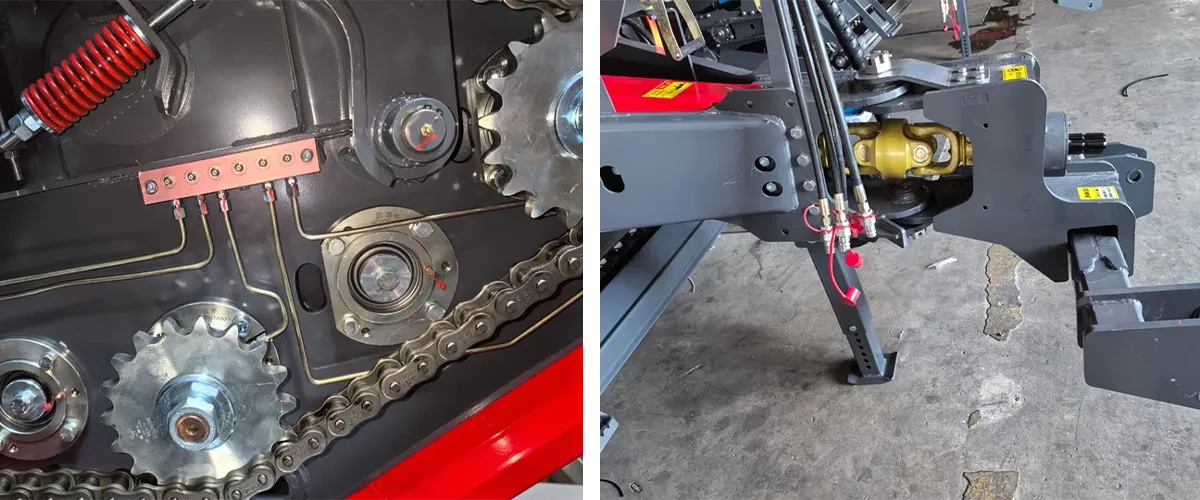
A round baler machine deployed in arid-zone conditions faces a structural operating environment that differs significantly from the temperate, humid conditions assumed in most standard agricultural machinery design specifications. Ambient temperatures that regularly exceed 35–40 degrees C during working hours cause thermal expansion in steel components and accelerate the oxidation of paint surfaces, hydraulic hose rubber compounds, and bearing lubricants. The repeated daily temperature cycling — from cool pre-dawn conditions when the machine sits overnight to mid-afternoon peak operating temperatures — creates cyclic thermal stress in welded joints, particularly where components of different wall thickness are welded together and therefore expand and contract at different rates. Over many seasons of daily thermal cycling, these stress differences can initiate fatigue cracks at weld toes on under-designed machines.
The chassis frame of the 9YG series — CNC laser-cut from high-strength structural steel plate with full-penetration MIG welds at all primary load paths — is designed to handle these cyclic stresses across its full service life. The post-weld precision machining of the compression roller mounting bores ensures that geometric accuracy is maintained even after the thermal distortion that the welding process introduces, which is particularly important in arid conditions where the temperature differentials that affect component dimensions during operation are larger than in cooler climates. A round baler chassis that loses geometric accuracy through thermal cycling will produce increasingly inconsistent bale shapes as seasons accumulate — a defect that is both a quality problem for the end-user and a precursor to accelerated wear as out-of-round bales impose uneven loads on the compression rollers and their bearings.
The rear gate assembly is the structural element most affected by arid-zone dust. Fine particles that penetrate the gate hinge pivot pins and spherical bearing races can cause abrasive wear that degrades the precision gate alignment needed for consistent bale ejection over time. The hardened-steel pivot pins running in sealed spherical bearing races on the 9YG series gate hinges provide a physical barrier between the external dust environment and the precision bearing surfaces, maintaining the gate’s geometric accuracy across the high cycle rates that arid commercial baling operations demand. The cushion cylinder on S9000 Classic and Transcend models reduces the shock loading transmitted to these hinge components at each gate closing event, limiting the cyclic contact stress that would otherwise accelerate bearing race wear in the abrasive dust environment.
Chassis Frame
CNC laser-cut structural steel. Full-penetration MIG welds. Designed for daily thermal cycling from pre-dawn cool to 40 degrees C operating heat across a full dryland season.
Gate Hinge System
Hardened pins, sealed spherical bearings, gusseted flanges. Dust-sealed bearing races resist fine arid-zone soil particle ingress that degrades precision alignment over time.
Electrostatic Paint System
Multi-coat electrostatic paint applied in controlled conditions resists UV degradation, sand abrasion, and the salt-laced dust present in many arid pastoral regions.
Dual Gearbox Tongue
90-degree lateral rotation for tight turns on irregular dryland headlands. Rigid drawbar connection limits PTO angle stress on corrugated arid-zone tracks and terraces.
6. Material Systems That Endure Abrasive Dry-Crop and Sandy Soil Conditions
The material environment inside an arid-zone round baler is among the most abrasive in agricultural machinery service. Dry cereal straw and native grass from arid conditions has silica content in the range of 3–8% of dry matter, and the sandy or loamy soils that inevitably enter the crop stream at the pickup reel in sparse coverage areas add another layer of fine abrasive particles. In a single operating day of arid-zone baling, the internal surfaces of the bale chamber may contact tonnes of this silica-laden material — an abrasive loading that significantly exceeds what the same machine would experience in a single day of humid-region grass hay baling on a clean, well-grassed surface.
The compression rollers are the highest wear-priority components in this environment. Induction-hardened or hard-chrome-plated roller surfaces in the 55–62 HRC hardness range resist the combined abrasive action of silica-rich dry crop and fine soil particles significantly better than untreated or soft-surface rollers. In practical arid-zone service, a properly hardened roller set can maintain dimensional accuracy for 4–7 years of two-season dryland use, compared to 1–2 years for unhardened alternatives. Given the high cost of accessing spare parts and service technicians in remote arid regions — a common constraint for Central Asian, Mongolian, and Australian outback operations — the longer roller service life provided by superior material specification is an economic advantage that compounds across the machine’s working life and reduces the total cost of ownership substantially relative to the initial premium.
Spring tines in dryland service experience a specific wear mechanism not encountered in humid-region hay work: the hard, dry soil surface that tines drag across in sparse windrow sections is significantly harder than the moist, yielding soil in a well-grassed humid paddock. Every tine drag event on a hard dryland surface imposes a bending load on the tine root several times higher than the equivalent event on soft soil. Heat-treated 65Mn tines with correct hardness balance between tip surface wear resistance and root fatigue toughness handle this accelerated loading more consistently than lower-specification tine materials. The zinc-phosphate or equivalent surface coating on arid-zone tines serves primarily a UV and atmospheric corrosion protection function rather than the moisture corrosion function it serves in humid regions, but the protection is equally important for maintaining the tine surface integrity that prevents crack initiation at surface defects.
| Component | Material / Treatment | Arid-Zone Relevance | Typical Service Life |
|---|---|---|---|
| Compression rollers | Induction-hardened or chrome plated, 55–62 HRC | Resists combined silica crop and soil abrasion | 4–7 years dryland service |
| Spring tines | 65Mn heat-treated, zinc-phosphate / UV coating | Hard soil bending fatigue and UV protection | 2–3 seasons dryland |
| Roller bearing labyrinth seals | Re-greaseable labyrinth design | Fine arid dust penetrates faster — short service intervals critical | Inspect every 80 h in arid service |
| Hydraulic hoses | SAE 100R2AT, UV-resistant outer sheath | UV degradation and heat accelerate rubber oxidation in arid field storage | 4-year replacement cycle (arid) |
| Drive chain (20A heavy) | Hardened alloy steel, sealed rollers | Dry dust environment desiccates chain lubricant faster than humid service | More frequent lubrication in dust |
7. Round Baler Gearbox Performance in Hot, Dusty Operating Environments
The round baler gearbox in arid, hot operating conditions faces two failure mode risks that are largely absent from temperate-region service: thermal overheating of the gear oil, and contamination of the oil by fine dust particles that penetrate the gearbox vent system or input shaft seal. Both risks are manageable with appropriate oil specification, seal inspection, and service intervals — but they require a more proactive approach to gearbox maintenance than the standard hay-service schedule typically involves. Understanding why these risks exist in hot, dusty environments helps round baler operators in Korean semi-arid regions, Central Asian steppe operations, and Australian dryland zones manage their gearboxes effectively.
Gear oil in the round baler gearbox operates at elevated temperatures in hot ambient conditions because the starting oil temperature is already high before the machine begins work — in the mid-morning of a 38-degree-C dryland day, the gearbox may already be at 35–40 degrees C before the first PTO engagement, compared to a starting temperature of 5–10 degrees C on a spring morning in a temperate region. The combination of elevated starting temperature and the heat generated by gear mesh friction during operation means that peak oil temperatures in arid-zone gearboxes can reach 20–30 degrees C higher than in equivalent temperate service. At these elevated temperatures, the rate of oxidation of the gear oil base stock and additive package is exponentially higher than at normal operating temperatures — halving the effective oil change interval compared to the manufacturer’s standard recommendation. For arid-zone operations, an oil change interval of 100–150 operating hours or at the end of each season (whichever is shorter) is a more appropriate schedule than the standard annual or 200-hour recommendation for temperate conditions.
The safety torque shaft fitted to the Transcend variant of the 9YG-2.24D round baler protects the gearbox from the sudden peak torque events that arid-zone operations generate when the pickup encounters unexpected windrow density concentrations after long sections of near-empty coverage. In sparse dryland conditions, the machine may travel 50–100 metres with minimal pickup load and then encounter a windrow pile where wind or slope has accumulated considerable material — a sudden density change that creates a torque spike that would be transmitted directly to the gearbox without the torque limiter’s protection. This gearbox protection is particularly valuable in remote arid operations where a gearbox failure mid-season may mean days of downtime waiting for a service technician or parts delivery rather than the same-day resolution that would be achievable closer to an agricultural service centre.
8. Bale Density Management: Getting Value From Low-Yield Windrows
In arid-zone baling, managing the bale density correctly is not just a quality question — it is directly linked to the economic viability of the baling operation. A round bale of dryland native grass or cereal straw that is too loosely formed will contain less dry-matter per bale, reducing the revenue per bale and increasing the transport cost per tonne of material moved to the storage or consumption point. For operations in remote arid regions where bale transport is a significant cost component, the difference between a 100 kg/m3 bale and a 150 kg/m3 bale of the same external dimensions represents a 50% difference in the transport-cost-per-tonne — a difference that can determine whether the baling operation covers its costs or operates at a loss.
The sensor-controlled hydraulic density management system on all 9YG round baler models is particularly valuable in arid-zone operations because it maintains the operator-set density target even during the slow, intermittent bale formation that sparse windrows produce. In a conventional mechanically pre-tensioned round baler, the effective compression force applied to a slowly growing bale depends on the bale’s current diameter — and with a partially formed bale that grows fitfully due to sparse crop intake, the tension can be poorly matched to the actual bale state at any given moment. The sensor system on 9YG models avoids this by measuring actual bale diameter and adjusting compression pressure continuously, ensuring that even a bale formed over 10–15 minutes of slow crop accumulation receives consistent, correct compression from its first layer to its final layer.
For dryland operations where bales must be stored outdoors for extended periods before consumption or sale — sometimes 6–12 months in pastoral grazing operations on the Mongolian steppe or the dryland zones of Korea’s eastern coast — the outer bale surface quality created by the density management system matters as much as the overall density. A consistently dense outer layer, formed by the rollers applying their full compression force during the final 10–15% of bale diameter growth, creates a smooth, tight surface that net wrapping can grip evenly. This smooth net-gripped outer surface is the bale’s primary defence against UV radiation, wind abrasion, and the driving rain events that even arid regions experience occasionally during winter months.
9. Round Baler Operational Economics in Low-Yield Dryland Conditions
The financial case for owning a round baler in an arid-zone or dryland farming context rests on a different logic than in high-yield humid farming. Rather than focusing on the direct substitution of contractor baling costs — which may not even be available in remote dryland areas — the dryland round baler owner’s argument centres on access and timing: the ability to bale whatever the season produces, when the season produces it, at a per-bale cost that is low enough to justify the operation even in poor-yield years. In a region where a good year delivers 3 bales per hectare and a poor year delivers only 1 bale per hectare, the round baler must be profitable at both yield levels to be a worthwhile investment for the farm or cooperative.
| Economic Factor | High-Yield Humid Farm | Low-Yield Arid Farm | Arid Advantage |
|---|---|---|---|
| Bale formation time | 45–120 sec / bale | 5–20 min / bale | No other baling option in remote areas |
| Machine availability | Contractors available | Often no contractor within reach | Own round baler is only viable option |
| Timing flexibility | Moderate contractor schedule | Critical — sparse dry crop degrades fast | Own machine guarantees optimal window |
| Maintenance access | Parts same-day from dealer | Days from nearest dealer | Machine reliability is premium priority |
| Per-bale operating cost | Low (high bale-per-hour rate) | Higher but often no alternative | Minimised by fuel-efficient compact models |
For Korean farmers in arid interior regions and for the pastoral operations of Central Asia and Australia, the round baler machine that makes the most economic sense is not necessarily the highest-throughput model — it is the model whose fuel consumption per bale in sparse-windrow conditions is lowest, whose reliability in remote locations is highest, and whose maintenance requirements can be handled by the operator without specialist tools or dealer proximity. The 9YG-1.0 and 9YG-1.25A models, with their compact dimensions, lighter tractor power requirements, and the same proprietary anti-blockage feed mechanism as the larger models, represent exactly this combination of characteristics for dryland farm-scale operations.
10. Round Baler Product Range for Arid-Zone Operations
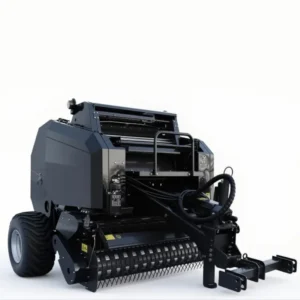
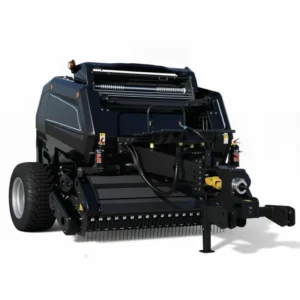
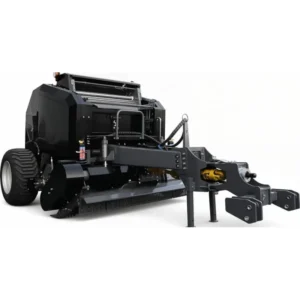
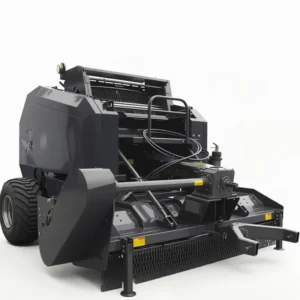
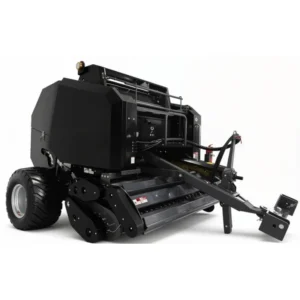
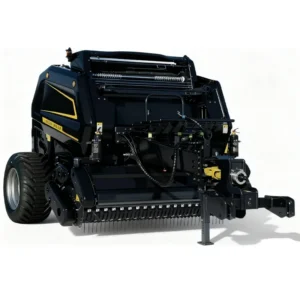
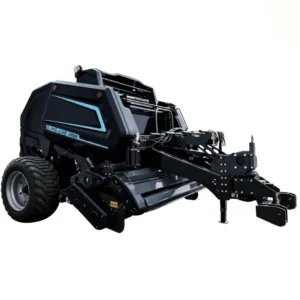
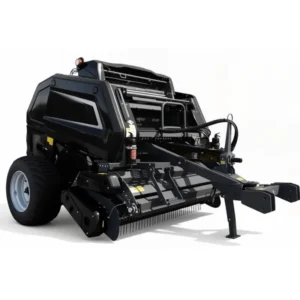
The following round baler machine models span the range from entry-level compact balers suited to small Korean dryland farms and fuel-economy-sensitive pastoral operations through to full-size commercial round balers for large-scale dryland arid cooperatives and contractors.
11. Regulations Governing Round Balers and Gearboxes in Arid-Region Markets
Round baler machines operating in the arid-zone markets of Korea, Central Asia, Mongolia, and Australia are subject to the same safety and certification requirements as machines operating in humid farming regions — but the enforcement context and the practical relevance of specific requirements differ by market. Understanding the regulatory environment in each key arid-zone market helps farmers and importers confirm compliance before purchase and ensure that subsidy eligibility is not compromised by using a non-certified model.
Korea — Dryland and Semi-Arid Zone Requirements
In South Korea, all round baler machines must comply with the Act on the Promotion of Agricultural Mechanisation (농업기계화 촉진법) and must hold a valid Agricultural Machinery Performance Test Certificate to qualify for MAFRA purchase subsidies. This requirement applies equally to round balers used in the semi-arid dryland zones of Gyeongbuk and Gangwon as to machines used in irrigated or high-rainfall farming areas. The round baler gearbox must demonstrate rated torque capacity under the certification test conditions, and PTO driveline guards must be intact and functional. Korean agricultural safety guidance from the Rural Development Administration (RDA) additionally requires that machinery operating in hot, dusty conditions be shut down and allowed to cool before any inspection or maintenance work near moving parts — a precaution relevant to the high operating temperatures typical of dryland summer baling conditions in Korea’s interior zones.
Mongolia and Central Asian Markets
Mongolia, Kazakhstan, Uzbekistan, and Kyrgyzstan — all significant markets for round baler machines used in extensive dryland steppe hay operations — require imported agricultural machinery to carry the EAC (Eurasian Conformity) mark under Technical Regulation TR CU 010/2011 on the safety of machinery and equipment. The round baler gearbox must be type-tested and documented in the EAC Declaration of Conformity, and the PTO driveline must comply with specified guarding standards. Mongolia’s own Law on Agricultural Mechanisation requires that imported agricultural equipment meet Mongolian national standards for agricultural implements (MNS series), which in practice are aligned with the EAC framework. For arid pastoral operations in these countries — where a round baler machine may need to operate for 14–16 hours per day during the short hay season — the thermal endurance of the gearbox oil is a particularly important compliance consideration that relates to the TR CU oil quality specifications for agricultural machinery transmissions.
Australia
Australia does not have a nationally mandated certification programme for agricultural machinery equivalent to the Korean performance test system, but the Work Health and Safety Act 2011 (federal) and equivalent state-level OHS Acts require that agricultural machinery including round balers be used in a manner that does not create unreasonable risk to operators or bystanders. For arid-zone round baler operations in Queensland, Western Australia, and South Australia — where ambient temperatures and dust loads are the highest in Australia’s agricultural regions — employers and farm owners have a duty to maintain machinery in safe working condition, including functional PTO guards, adequate hydraulic fluid levels, and gearboxes containing oil that meets the manufacturer’s specification for operating temperature range. The Australian standard AS 2067 covers the safety of agricultural machinery broadly, and the ASABE S430 standard is referenced for PTO driveline safety requirements by major equipment insurers.
European Union — Dryland Regions
EU Machinery Directive 2006/42/EC (transitioning to EU Machinery Regulation 2023/1230 from January 2027) applies in EU member states with significant dryland farming areas including Spain, Greece, Bulgaria, and Romania. CE marking requirements, EN 1553 gearbox safety standards, and EN ISO 4413 hydraulic system requirements apply uniformly regardless of the aridity of the operating environment. In Spain and Greece, where summer temperatures in dryland farming regions regularly exceed 35 degrees C, the gearbox oil specification is particularly important: the standard EN ISO 4413 requirement for maintaining adequate oil viscosity at maximum operating temperature aligns with the need for high-viscosity-index gear oils that maintain adequate film thickness at the elevated temperatures of hot dryland operation.
| Region | Round Baler Standard | Arid-Zone Gearbox Note |
|---|---|---|
| Korea | Agricultural Mechanisation Act / KS B ISO 4413 | Hot-season gearbox oil interval: 100–150 h recommended |
| Mongolia / CIS | TR CU 010/2011 / EAC mark / MNS standards | Type-tested transmission oil spec for high-temp steppe service |
| Australia | WHS Act 2011 / ASABE S430 / AS 2067 | OHS duty of care covers gearbox oil spec in extreme heat |
| EU (dryland Spain, Greece) | Machinery Directive 2006/42/EC / EN 1553 | EN ISO 4413 oil viscosity requirements at max temperature |
| International | ISO 4413:2010 / ISO 11684 | High-temp hydraulic fluid viscosity and contamination control |
12. Maintenance Strategy for Round Balers in Extreme Dust and Heat Environments
Maintaining a round baler machine in an arid, hot operating environment requires a maintenance strategy that is more proactive and more frequent than the standard schedule designed for temperate-region hay service. The compounding effects of high ambient temperature on oil degradation, of fine dry dust on bearing seal penetration, and of low crop density on extended bale formation times all create conditions that accelerate wear and reduce component service life relative to normal operating conditions. A maintenance programme that does not account for these environmental intensifiers will find the round baler requiring major component replacement earlier than the manufacturer’s nominal service life suggests, undermining the economic case for the machine in an already cost-sensitive dryland operation.
Bearing maintenance is the single most important ongoing activity for an arid-zone round baler. Fine, windblown soil particles in arid regions have a mean particle diameter of 5–50 micrometres — small enough to penetrate the labyrinth paths of re-greaseable bearing seals over time. Once fine particles are present inside the bearing race, they act as a lapping compound that progressively removes surface material from the bearing rolling elements and races, reducing clearance, generating heat, and eventually causing rapid bearing failure from smearing and seizure. Shortening the re-greasing interval for all roller bearings to every 80–100 operating hours (compared to the standard 120–150 hours for temperate service) flushes fine particles from the bearing labyrinth before they can accumulate to damaging concentrations. Using a high-quality grease with NLGI Grade 2 consistency and a high dropping point (above 200 degrees C) ensures the grease maintains its protective film even at the elevated bearing temperatures of arid summer service.
Chain drive maintenance in dusty conditions requires more frequent lubrication than in clean environments, because the dust that coats chain links and sprocket teeth in arid operation is an efficient desiccant that absorbs the chain lubricant and carries it away from the contact surfaces. Applying chain lubricant at the end of each working day — while the chain is warm from operation and the lubricant flows easily into the link joints — is a 10-minute routine that extends chain service life in dusty conditions by a factor of 2–3 compared to the standard weekly lubrication interval. Hydraulic hose inspection should be performed at least monthly in arid conditions, focusing on the hose outer sheath for UV cracking and at the ferrule ends for the mechanical fatigue cracking that heat-accelerated rubber brittleness makes more likely to initiate earlier in hot environments.
Arid-Zone Round Baler Maintenance Schedule (Intensified)
Daily (after each operating session)
- Apply chain lubricant while chain is warm
- Blow compressed air through bale chamber
- Check tine tips for bending and wear
- Visually inspect hydraulic hoses for weeping
- Check hydraulic fluid level (heat causes consumption)
Every 80–100 Hours (arid interval)
- Re-grease all roller bearing labyrinth points
- Check gearbox oil temperature after operation
- Inspect roller surfaces for abrasion depth
- Check all hydraulic hose ferrule ends
- Verify gate cushion cylinder response time
- Inspect PTO driveline guard for heat distortion
Frequently Asked Questions
Q1. Which round baler model is best suited for low-yield dryland cereal straw baling in the semi-arid interior zones of Gyeongbuk and Gangwon provinces Korea? +
Q2. How does the round baler sensor density system help Korean arid-zone farmers get maximum bale weight from sparse low-yield windrows? +
Q3. How does the round baler gearbox hold up in the extreme heat and dust conditions of Mongolian steppe summer baling operations? +
Q4. Where can Korean dryland farmers and Central Asian pastoral operators get a supplier quote for round baler machines suited to low-yield sparse crop conditions? +
Q5. What round baler parts should Korean dryland and steppe operators carry as on-site spares to handle remote arid-zone field repairs without waiting days for parts delivery? +
Q6. How does the round baler application for sparse native grass baling in Korean semi-arid zones compare economically to purchasing commercial hay and what is the payback period? +
Q7. What is the correct pickup float height setting for a round baler operating in sparse windrows on a hard dryland soil surface in Korean dry summer conditions? +
編輯:PXY