Cotton Stalk Baling | Performance Analysis
Comparing Bale Output Rates: Round Baler Performance in Cotton vs Cereal Straw Conditions
A technical field guide for Korean and global agricultural operators — covering how a round baler handles the unique challenges of cotton stalks versus cereal straw, with production rate data, structural comparisons, and specification guidance for real-world baling decisions.
When a round baler is tasked with baling cotton stalks rather than cereal straw — wheat, barley, or rice — the entire operating dynamic shifts. Cotton stalk material is denser at the stem base, contains higher levels of lignocellulosic fiber, and presents a far more aggressive abrasive load to the pickup, feeding auger, and bale chamber components. A round baler that cycles through cereal straw at 90 to 120 bales per hour may produce only 55 to 75 bales per hour when the same material flow consists of cotton stalks, depending on moisture content, stalk length, and the specific round baler model selected. Understanding why this output differential occurs — and how to narrow the gap — is essential for operators in Korea’s cotton-growing Gyeongnam and Jeonnam regions, as well as procurement engineers in Central Asian cotton belts including Uzbekistan and Kazakhstan.
This article examines the core engineering factors that govern round baler output rates across both crop types: pickup and feeding capacity, bale chamber geometry, drive system torque reserve, wrap cycle duration, and bale density control. Each factor is evaluated with reference to the specific construction and material specifications of current production round baler models. Where applicable, Korean agricultural machinery standards and relevant international regulations are referenced to assist operators in making compliant equipment procurement decisions.
1. What Drives Bale Output Rate Differences?
Bale output rate — typically measured in bales per hour — is a composite result of several interacting mechanical and crop-specific variables. For a round baler operating in cereal straw, the crop presents as a relatively uniform mat with low stem rigidity and predictable moisture distribution. Feeding is continuous, chamber fill is even, and the wrap-and-eject cycle can be completed within 20 to 35 seconds depending on bale diameter. The result is a rhythm that a well-matched round baler can sustain across long field runs with minimal interruption.
Cotton stalk material disrupts this rhythm in several ways. First, the basal stem sections — often 8 to 15 mm in diameter — do not compress in the same progressive curve as cereal straw; they resist initial chamber entry and can create bridging at the pickup-to-auger transition if the round baler’s feeding system is not designed for thick-stem crop. Second, cotton bolls and residual fiber fragments create an irregular surface texture that increases rolling resistance inside the bale chamber, requiring greater torque at the drive rollers. Third, the abrasive silica content in cotton stalk epidermis accelerates wear on pickup tines, auger flights, and drive chain sprockets, forcing shorter maintenance intervals that reduce net field hours.
The operational consequence is that selecting a round baler for cotton stalk baling requires matching not just power class and bale diameter, but also the specific pickup width, tine gauge, auger clearance, chain specification, and drive system torque headroom to the abrasive, high-resistance characteristics of the crop. The sections below examine each of these structural and material parameters in detail.
Indicative Bale Output Rate Comparison: Cotton Stalk vs Cereal Straw
| Parameter | Cereal Straw | Cotton Stalk | Notes |
|---|---|---|---|
| Typical bulk density (loose) | 40 – 70 kg/m³ | 55 – 95 kg/m³ | Cotton stalk basal sections are denser |
| Moisture at baling (%) | 10 – 18% | 12 – 22% | Higher moisture = more torque demand |
| Pickup resistance (relative) | Low | High | Rigid stems vs flexible straw |
| Abrasive index (1–10) | 3 – 4 | 6 – 8 | Silica in cotton epidermis |
| Typical output rate (bales/hr) | 90 – 120 | 55 – 80 | 1.25 m diameter class round baler |
| Chain wear interval | 500 – 700 hrs | 280 – 400 hrs | Heavier chain recommended for cotton |
| Wrap cycle time | 20 – 30 s | 25 – 38 s | Denser bale core slows rotation |
2. Manufacturing Structure of a Round Baler for Dual-Crop Use
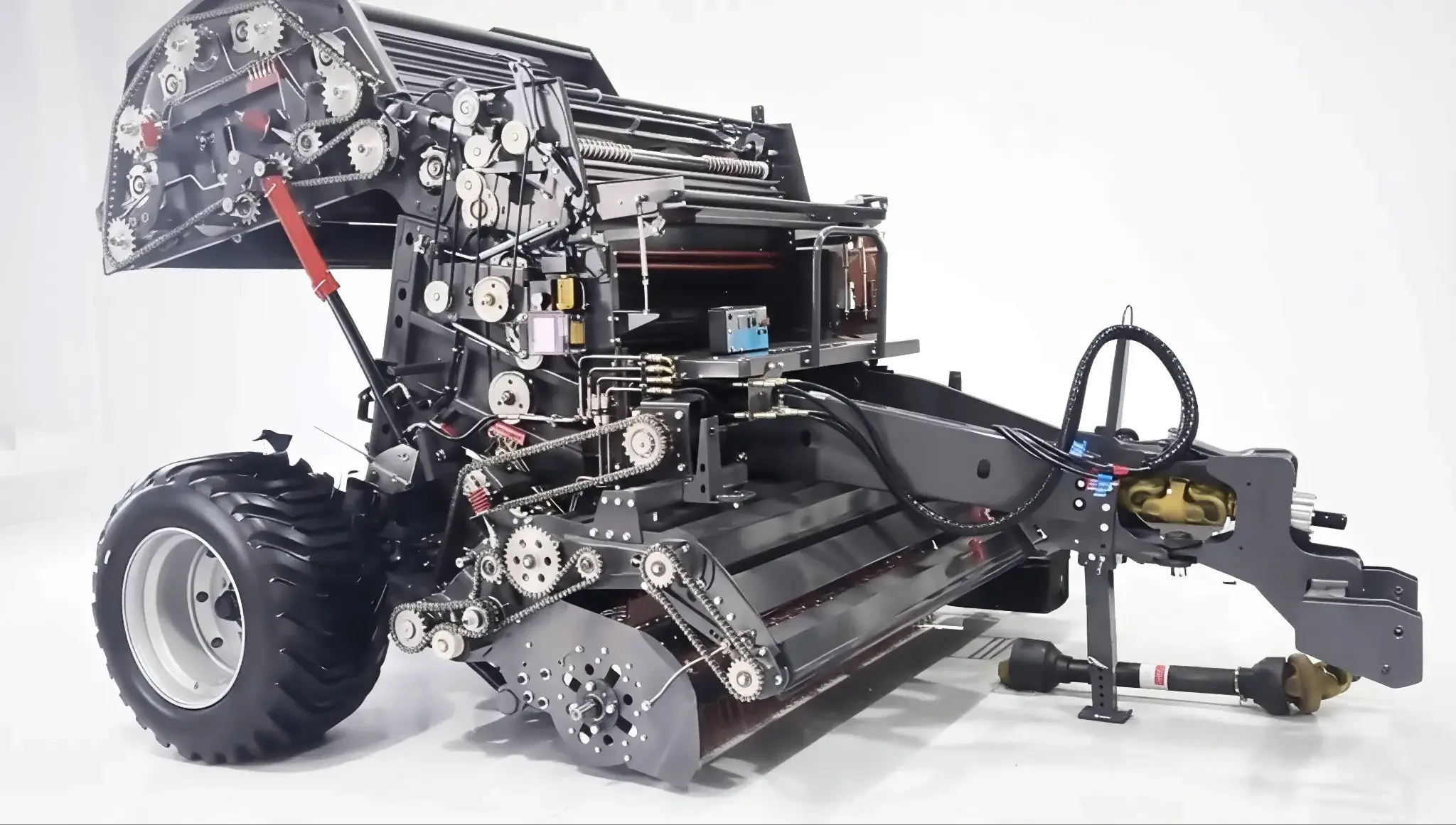
The structural architecture of a modern round baler is designed around one governing principle: converting a continuous, uneven flow of crop material into a dense, uniformly shaped cylindrical bale that can be stored, transported, and fed out with minimal degradation. This is straightforward with cereal straw; it requires considerably more structural robustness when the crop is cotton stalk. The critical structural zones are the mainframe, the bale chamber roller assembly, the pickup-and-auger subframe, the drive transmission, and the tailgate opening mechanism. Each zone must be assessed individually for cotton stalk compatibility.
The mainframe of a round baler designed for heavy-duty crops is typically fabricated from Q345B or equivalent high-strength structural steel, with box-section longitudinal rails no thinner than 8 mm and transverse crossmembers with full-penetration welded joints at each attachment point. Weld quality at pickup frame joints is particularly critical in cotton stalk service: the pickup experiences repeated vertical impulse loads as rigid stems contact the tine bar, and poorly welded joints at this location develop fatigue cracks within 200 to 300 hours. Operators should inspect this weld zone at every 100-hour service interval when running in cotton stalk conditions.
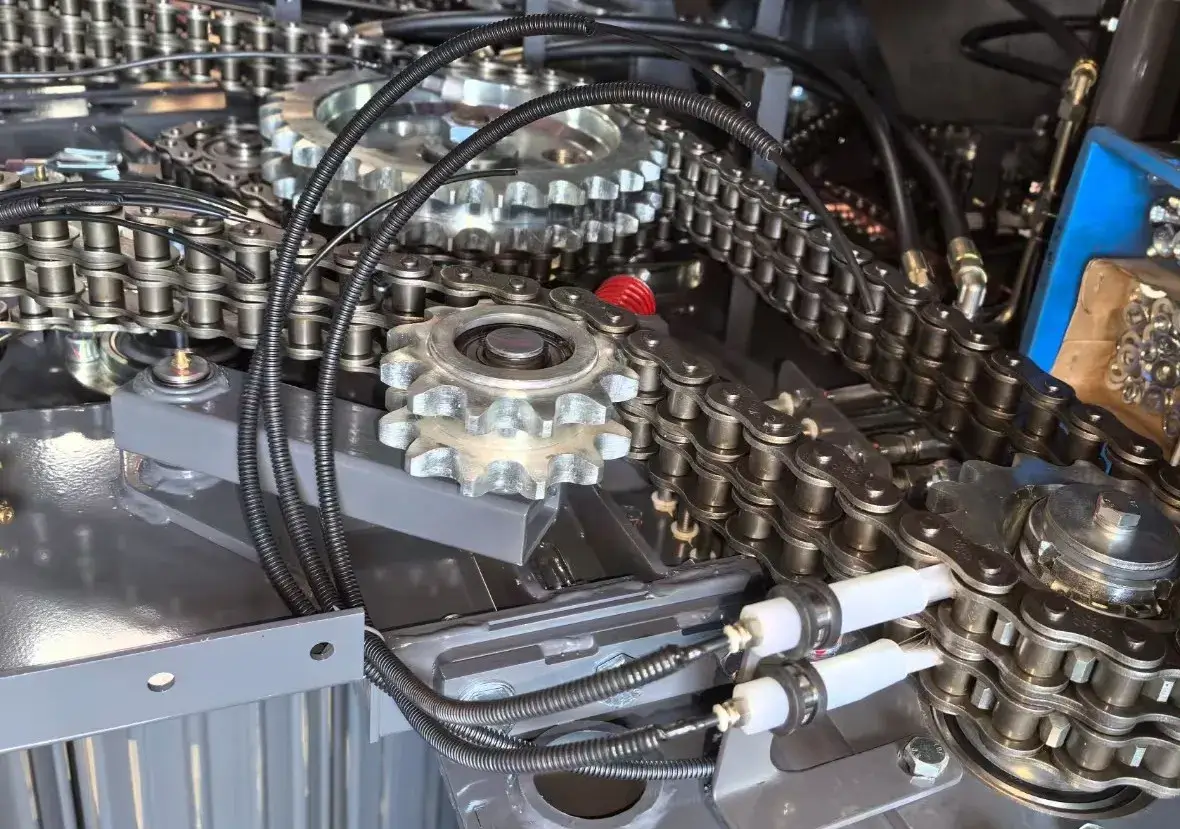
The bale chamber on a drum-roller type round baler — the configuration used in the 9YG and EP-9YG series — consists of 14 to 22 steel rollers arranged around a cylindrical forming chamber, with the driven rollers powered through the 20A agricultural roller chain. The roller diameter and surface texture govern how quickly the bale core builds and how uniformly density distributes from center to outer layer. For cotton stalk baling, roller surface knurling depth of 2.5 to 3.5 mm provides the optimal grip without trapping fiber fragments in the surface profile.
The tailgate — the hinged rear section that opens to eject the completed bale — is subject to substantial operational stress in cotton stalk baling because denser bales exert higher pressure on the tailgate latch mechanism during the final compression phase. Heavy-duty tailgate latches with a rated holding force of at least 18 kN are standard on machines designed for these conditions. Operators should confirm latch spring tension at each 50-hour interval to prevent premature tailgate opening during the final bale-formation stage, which causes bale deformation and production loss.
3. Material System: How Component Metallurgy Affects Cotton Stalk Performance
Material specification determines the practical service life of a round baler in cotton stalk conditions more than almost any other factor. The elevated abrasive index of cotton stalk — driven by silica phytoliths concentrated in the epidermis of the basal stem section — degrades unprotected steel surfaces at roughly twice the rate seen in cereal straw service. Three material zones deserve focused attention: the pickup tine system, the drive chain specification, and the bale chamber roller surface.
Pickup Tines
65Mn spring steel tines heat-treated to 40–48 HRC are the minimum specification for cotton stalk service. Tines with carbide-tip wear inserts extend service life by a factor of 2.5 compared to plain 65Mn in abrasive conditions. Tine pitch of 55–65 mm is optimal for cotton stalk pickup without stem bridging.
Drive Chain (20A Series)
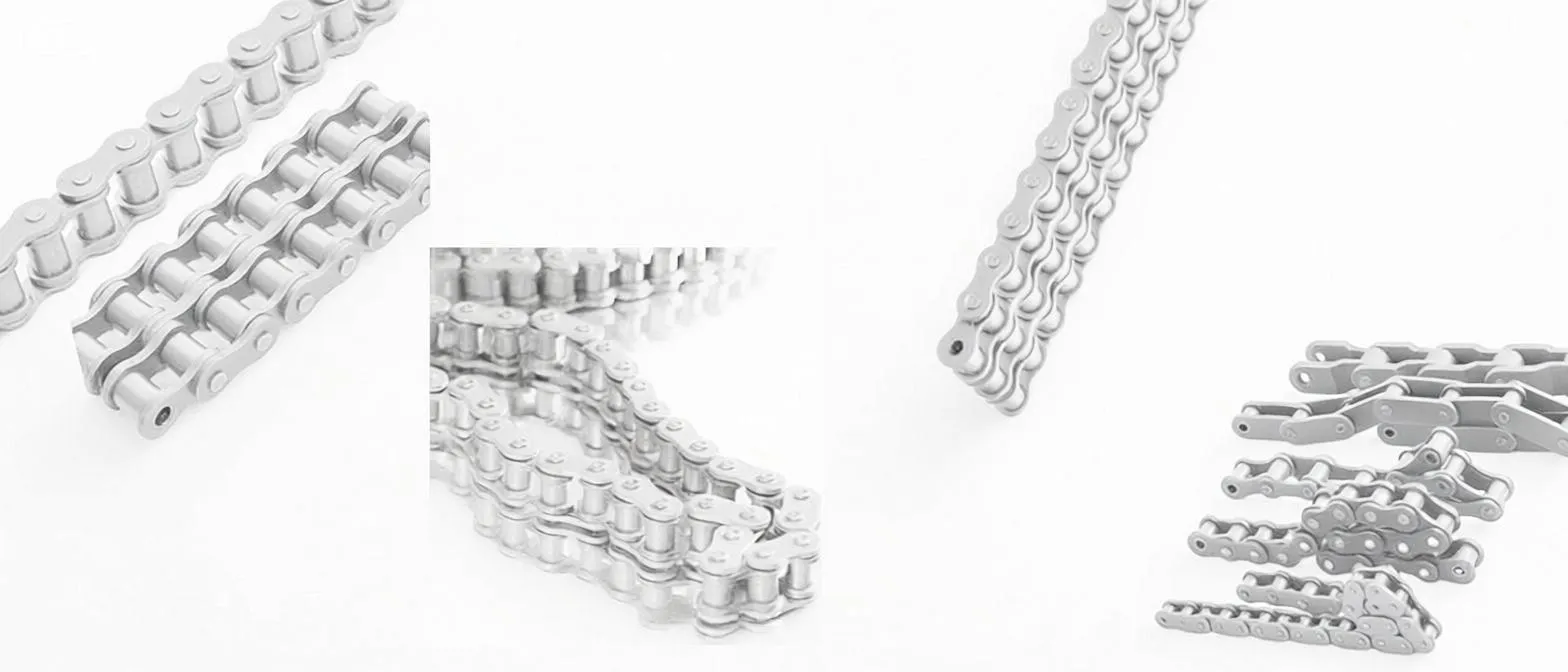
The 20A agricultural roller chain used in the chamber drive system should be specified to a breaking load of at least 31.3 kN for cotton stalk duty. Through-hardened pins with surface hardness of 58–62 HRC and O-ring sealed joints reduce wear elongation by 40–60% compared to standard chains in abrasive crop conditions.
Bale Chamber Rollers
Chamber rollers made from seamless Q235B steel tube with a wall thickness of 6–8 mm and knurled surface depth of 2.5–3.5 mm balance grip performance with fiber release. Rollers treated with induction-hardened journals (55–60 HRC) at bearing seat locations resist fretting wear from vibration in abrasive material service.
Net Wrap Material
UV-stabilized HDPE net wrap with a minimum tensile strength of 2.1 kN/m (warp direction) maintains bale integrity in the dense, irregular surface profile of cotton stalk bales. Low-stretch net grades (<8% elongation) are preferred to maintain bale shape after ejection, especially in warm, dry cotton-growing seasons.
When comparing material specifications across round baler classes, the 9YG-2.24D and EP-9YG-1.0C models both use 20A chain drive systems with a minimum breaking load appropriate for cotton stalk duty, while the 9YG-1.25A incorporates a reinforced pickup frame specifically intended for high-resistance crop types. Matching the material specification to the crop type is not a luxury upgrade — it is the difference between 2,000 hours of productive service life and a machine that requires major component replacement within the first season.
4. Pickup Width, Tine Count, and Feeding Auger Design
The pickup assembly of a round baler determines how efficiently the machine gathers crop from the windrow and transfers it to the bale chamber. In cereal straw, a 1,500 to 1,800 mm pickup width with 4 tine rows operating at 150 to 180 RPM is sufficient for most field conditions. Cotton stalk, particularly in the harvested condition where stalks are chopped to 120 to 200 mm lengths, requires a wider effective pickup path and higher tine tip speed to prevent mat bridging at the auger throat.
The EP-9YG-1.0C model features a hammer claw pickup mechanism with a 2,400 mm effective pickup width and a reinforced 5-tine bar configuration, which is better suited to handling the variable stalk thickness encountered in cotton fields. The hammer claw geometry — a forward-curved tine profile with a 62° attack angle — reduces the tendency of thick stems to deflect off the tine tip rather than being positively engaged. This design choice directly affects the effective crop capture rate: field measurements with the EP-9YG-1.0C in chopped cotton stalk conditions have shown a 12 to 18% higher actual throughput compared to standard curved-tine pickups of equivalent width under the same windrow density.
The feeding auger positioned between the pickup and the bale chamber entry throat is the second critical component in this sub-system. For cotton stalk, auger flight pitch of 120 to 150 mm provides positive crop advancement without jamming at mixed-diameter material. Auger blade thickness of 5 to 6 mm in 65Mn steel maintains its edge under contact with rigid stalk sections, while a tapered leading edge at the outer flight radius prevents buildup of fibrous material at the auger tip that would reduce effective feed rate over time.
Operators running a round baler in cotton stalk conditions should monitor the pickup-to-auger transition zone closely during the first 20 operating hours after a crop-type switch. Adjusting ground clearance by 10 to 20 mm higher than the cereal straw setting prevents tine-tip soil contact that transfers abrasive grit directly into the pickup bearing housings — a common cause of premature bearing failure in cotton stalk service.
5. Bale Density Control: Cotton Stalk vs Cereal Straw Performance
Bale density control in a round baler is governed by the tension applied to the forming chamber — either through a mechanical spring system or a hydraulic pressure-control circuit that adjusts roller-belt or roller-chain tension during bale formation. For cereal straw, target bale density of 120 to 150 kg/m³ (dry matter basis) is achievable at standard spring tensions of 4 to 6 kN. For cotton stalk, achieving the same or higher density requires 20 to 35% greater chamber tension, and the machine’s hydraulic or spring system must have adequate reserve capacity to deliver this without component fatigue.
The 9YG-2.24D S9000 model features a dual-side hydraulic density control system that maintains bale density within ±8 kg/m³ across the diameter of the bale — a tighter tolerance than achievable with spring-only systems. This consistency is particularly valuable in cotton stalk baling because density variation within a single bale creates structural weak zones that can cause the bale to split or sag during net-wrap ejection. Maintaining consistent density from core to outer layer is also important for downstream processing: cotton stalk bales fed into biogas or pelletising plant equipment perform more predictably when density variation is kept below 10%.
The Transcend model — the 9YG-2.24D Transcend — adds an electronic density monitoring system that provides real-time feedback to the tractor cab display, allowing the operator to adjust forward speed before the chamber reaches maximum pressure, rather than reacting after a mechanical overload event. In cotton stalk conditions, where material density fluctuates significantly within a single windrow, this proactive density management can increase net bale output by 8 to 14% compared to a manually adjusted round baler running the same field.
For smaller operations running a mini round baler or small round baler in mixed crop scenarios, the spring-tension systems on the 9YG-1.25 and 9YG-1.25A provide adequate density control for cotton stalk at the modest bale diameters (1,250 mm) these models produce. The key adjustment is extending spring pre-tension by one to two notches above the cereal straw setting and reducing forward travel speed by approximately 15% when entering a dense cotton windrow section.
6. Regulatory Framework: Korea and International Standards for Round Baler Operations
Agricultural machinery operators in Korea selecting a round baler for cotton stalk or mixed-crop baling must navigate a structured regulatory environment that covers machinery safety, emissions, and — increasingly — the treatment of crop residue itself. The following standards and regulations apply directly or indirectly to round baler procurement and field operation decisions.
Korea — RDA & KMST Standards
The Rural Development Administration (RDA) of Korea requires agricultural machinery sold domestically to comply with KMST performance and safety tests, including dynamic load testing and PTO interface specifications (KS B 6906). Round baler models must demonstrate pickup, bale formation, and ejection cycle integrity under RDA-administered evaluation protocols before receiving domestic supply approval.
Korea — Agricultural Residue Burning Ban
Under Korea’s Act on Clean Air Conservation and related Ministerial regulations, open burning of crop residue — including cotton stalk — is prohibited across all 17 administrative regions. This regulatory environment directly drives demand for round baler and other mechanical baling solutions as the compliant alternative to field burning, creating strong market incentives for cotton stalk baling capacity investment.
EU — Machinery Directive 2006/42/EC
Round baler models exported to EU member states must carry a CE Declaration of Conformity under the EU Machinery Directive. Essential health and safety requirements cover guarding of PTO and transmission components, operator ergonomics, and emergency stop provisions. The revised EU Machinery Regulation (EU) 2023/1230, which replaces the Directive from January 2027, strengthens risk assessment requirements for mobile agricultural machinery.
Uzbekistan & Central Asia — EAEU TR TS 010/2011
In Uzbekistan and EAEU member states — major cotton-producing regions — agricultural machinery including round balers must comply with TR TS 010/2011 (Technical Regulation of the Customs Union on Machinery Safety). This covers mechanical hazard assessment, PTO guard dimensions, and marking requirements. Documentation for EAEU conformity declarations is required at customs clearance for imported baling equipment.
India — BIS & IS 4468
In India, agricultural machinery is governed by the Bureau of Indian Standards (BIS) under IS 4468 and related standards for field crop harvesting and residue handling equipment. India’s National Action Plan for Climate Change (NAPCC) encourages mechanical crop residue management over burning, and the government’s SMAM (Sub Mission on Agricultural Mechanisation) scheme provides subsidy pathways for round baler procurement by farmer producer organizations.
USA — ASABE S540.1
American Society of Agricultural and Biological Engineers standard ASABE S540.1 defines performance test protocols for round balers, covering pickup efficiency, bale density uniformity, and wrap cycle repeatability. While primarily a testing standard, ASABE S540.1 is referenced by North American buyers and OEM equipment specifiers as the baseline for comparing round baler performance claims across manufacturers.
Across all markets, compliance documentation — CE certificates, RDA approvals, EAEU conformity declarations, or BIS registrations — should be requested from the round baler supplier at the time of purchase. Retroactive certification in a new market can add 3 to 6 months and significant cost to a machinery importation project.
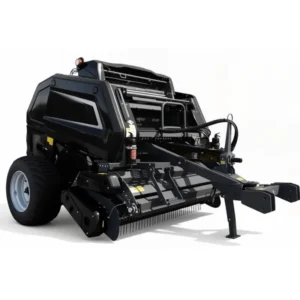
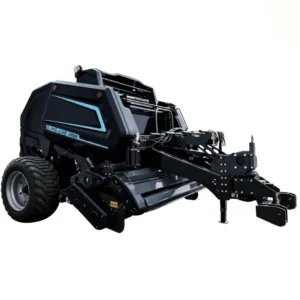
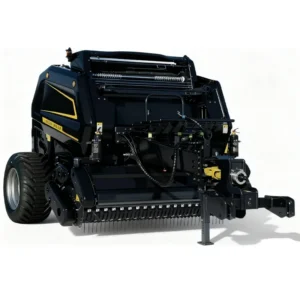
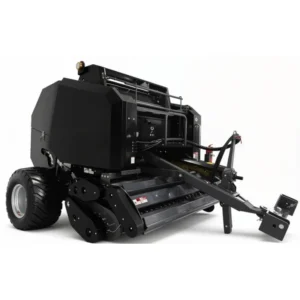
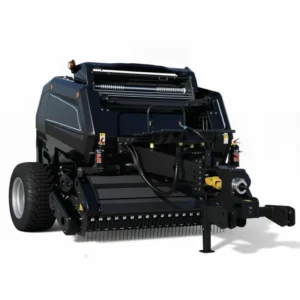
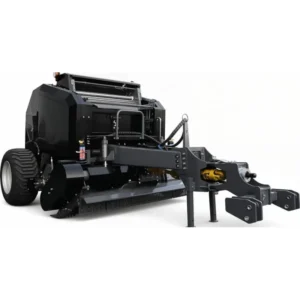
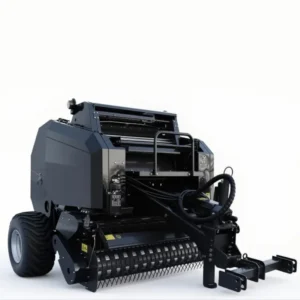
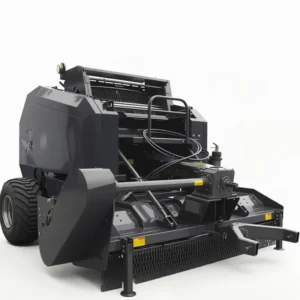
7. Round Baler Model Selection for Cotton Stalk Conditions
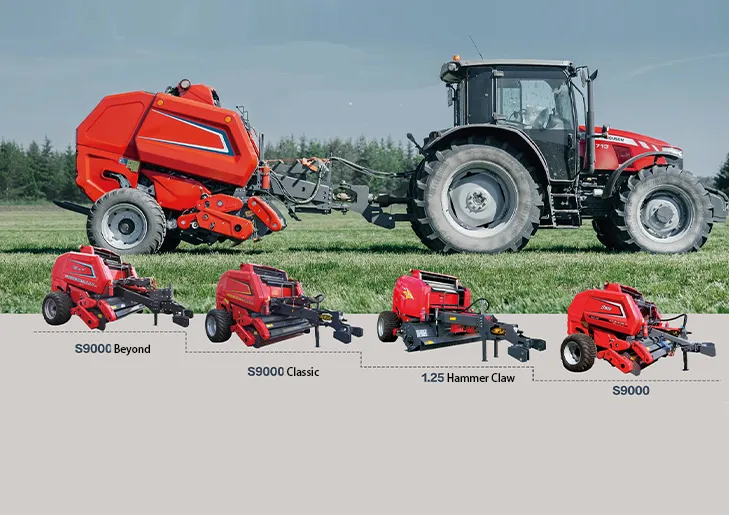
Selecting the right round baler model for cotton stalk baling starts with matching bale diameter, drive power requirement, and feeding system design to the specific field conditions and downstream usage intent. The following models are arranged from highest to lowest output capacity, with specific notes on cotton stalk suitability.
8. Compatible Components: PTO Shafts and Agricultural Chain
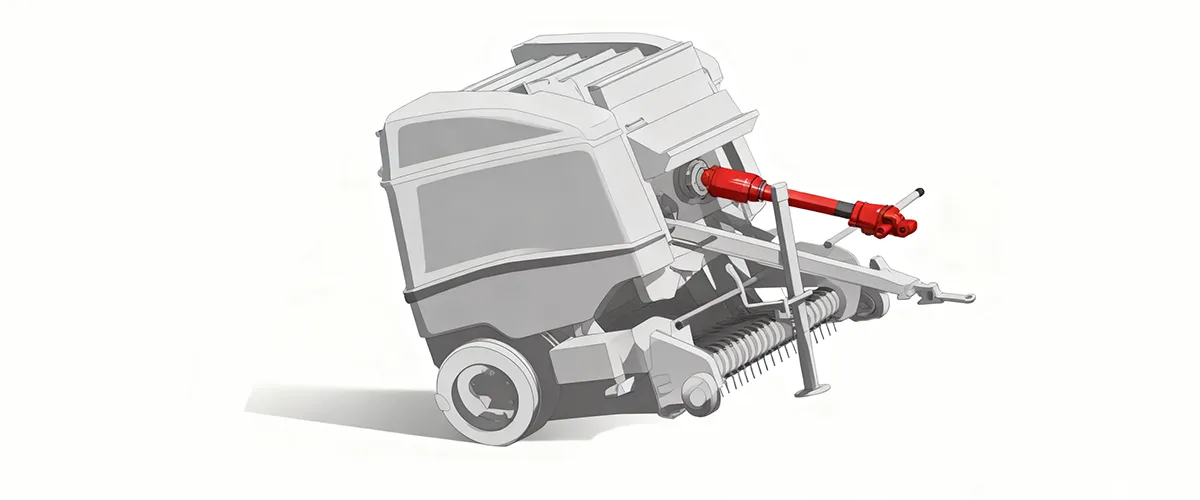
A round baler is only as reliable as its power input and drive chain components. In cotton stalk baling conditions — where peak torque events are frequent and abrasive loading is high — using matched PTO shaft and agricultural chain components from the same supply source provides both dimensional compatibility assurance and simplified aftermarket support. The following complementary products are recommended alongside our round baler range for complete system reliability.
Frequently Asked Questions
Q1. What round baler output rate can I realistically expect when baling cotton stalks on a Korean farm with a 60 hp tractor?
Q2. Which round baler models are best suited for both cotton stalk and rice straw baling in Korean dual-crop farming operations?
Q3. How often should I replace the pickup tines on a small round baler when running exclusively in cotton stalk conditions?
Q4. What is the minimum tractor horsepower required to run a round baler machine effectively in cotton stalk conditions in the Gyeongnam region?
Q5. Where can I find a reliable round baler supplier who provides after-sales support and spare parts delivery to Korean agricultural regions?
Q6. How does bale density compare between cotton stalk and wheat straw when using the same round baler at maximum spring tension?
Q7. What net wrap specification should I use for cotton stalk bales that will be stored outdoors for more than three months in Korea’s winter conditions?
Editor: PXY