Farm Advantage Series
A field-level guide to the role of the round baler in closing the residue loop on diversified farming operations — covering structural mechanics, material flow, agronomic outcomes, and the regulatory landscape shaping sustainable harvest practices.
Mixed farms — operations combining arable cropping with livestock enterprises on the same land base — generate significant volumes of post-harvest crop residue that conventional management either burns, incorporates, or leaves to decompose in the field. Each of those approaches carries a cost: burning releases particulate matter and nitrogen oxides; deep incorporation disrupts soil structure and can increase nitrogen leaching; surface decomposition is slow and can carry over weed seed and fungal inoculant into the following season. The round baler offers a fourth path that converts residue into a recoverable resource — one that can be fed, bedded, composted, or sold — while simultaneously cleaning the field surface in a single mechanical pass. This material loop is not a recent innovation, but the machinery available to execute it has changed substantially, and the agronomic case for residue baling on mixed farms has strengthened as input costs for purchased bedding, feed supplements, and organic matter have risen.
This article examines the mechanical, structural, and agronomic factors that make a modern round baler machine an effective tool for residue management on mixed Korean farms and comparable diversified operations globally. It addresses the specific residue types that balers handle well, the structural features that determine performance across those materials, and the policy environment in Korea, the EU, Australia, and Japan that shapes how residue management decisions are made and documented.
Crop Residue Types on Mixed Farms and Round Baler Suitability
Mixed farms in Korea and comparable temperate agricultural regions generate four primary residue streams that are candidates for round baler collection: rice straw, maize stover, soybean straw, and wheat straw. Each presents a different challenge to the pickup system, the feed mechanism, and the bale chamber, and selecting a machine with the right configuration for the residue mix on a specific farm is the starting point for an effective residue management program. Rice straw is the most common residue type across Korean paddy-field operations — it lies flat after combine harvesting, mats quickly under wheel traffic, and has a relatively high silica content that accelerates tine tip wear compared to cereal straw from drier growing environments. Maize stover presents the opposite structural challenge: it is bulky, stands partially upright if the combine leaves long stubble, and requires either a hammer-claw pickup conversion or pre-wilting before conventional spring-tine collection is effective.
Soybean straw is the most mechanically demanding of the four: it is brittle, short-stemmed, and prone to shattering during aggressive pickup, which reduces collection efficiency and leaves leaf fraction — the highest-protein part of the residue — on the ground. A slower ground speed with reduced pickup aggressiveness, achievable by selecting a model with variable PTO speed range such as 540–1,000 r/min, allows the operator to dial down the pickup rotor velocity for soybean straw without changing field speed. Wheat straw behaves most like conventional forage in the pickup and chamber — it is uniform in stem length, has consistent moisture at harvest, and densifies well in the bale chamber without the bridging or wrapping tendency of the other residue types.
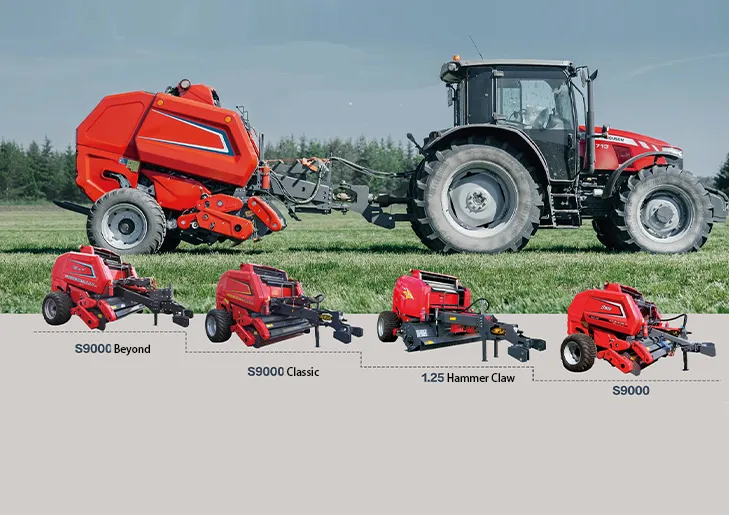
For a mixed farm running multiple residue types across a single season, a round baler with a broad PTO speed range, an adjustable pickup height, and — where maize stover is included — the option to convert the pickup assembly between spring-tine and hammer-claw configuration gives the most operational flexibility without requiring separate machines for each residue stream. This convertibility feature is found on models such as the EP 9YG-1.0C, which can switch between elastic-tooth and hammer-claw pickups to handle standing maize stalk collection without the pre-raking step that single-configuration machines require.
Manufacturing Structure: Pickup, Feed, and Chamber Design for Residue Applications
The structural choices in a round baler designed for residue applications differ in emphasis from those of a dedicated forage baler, though the overall machine architecture is similar. Residue baling places disproportionate stress on the pickup tine attachment points and the feed intake throat, because dry residue at 10–18% moisture is stiffer than fresh-cut forage and enters the chamber in less uniform, often more compacted mats. Tine socket welds must be capable of absorbing the impact loads generated when the pickup rotor encounters a compressed mat of rice straw that has been run over by a combine header — a common field condition in Korean paddy-field harvesting sequences. Multi-pass MIG welding with post-weld stress relief at the socket root is the manufacturing standard for machines intended for heavy residue work.
The bale chamber on a roller-type machine accumulates residue differently from forage. Dry straw has lower inherent friction between individual stems than fresh grass, which means the crop mass slides more readily across the roller surfaces during the initial bale core formation phase. Roller surface treatment — either a knurled or ribbed surface pattern machined or welded onto the roller cylinder — increases the coefficient of friction between the roller and the crop, helping the core initiate rotation more quickly even at low fill volumes. Without this surface treatment, dry straw baling produces a disproportionate number of incomplete or undersized bale cores early in the chamber fill cycle, which wastes operator time and increases fuel consumption per tonne of residue baled.
The feed intake auger or rotor on machines designed for residue work is typically wider-pitch than its forage-optimized counterpart, to avoid the compaction of dry material at the auger root that causes the blockages known as “slugging” in residue baling operations. The EP 9YG-1.0 series uses an axial-flow semi-forced feed mechanism without a cam-follower pickup guard — a design that increases intake volume per revolution and reduces the contact points where dry brittle residue can fracture and block. This mechanism was originally developed for the crop type variability common in mixed-farm operations and has demonstrated measurably lower slug frequency than cam-based pickup designs in dry straw conditions across independent field evaluations.
Multi-pass MIG welding with stress relief at socket root; essential for the impact loads from dry, matted residue mats encountered in paddy-field harvest sequences; individually replaceable tine system.
Knurled or ribbed roller cylinder surfaces increase friction with dry straw crop mass; ensures rapid bale core initiation even at low chamber fill volumes; reduces undersize bale frequency in straw applications.
Wide-pitch auger and cam-free pickup guard reduce slug frequency in dry brittle materials; higher intake volume per rotor revolution sustains field speed in residue baling without chamber overload.
Material Systems | Steel Selection, Wear Protection & Corrosion Management
Residue baling is harder on structural steel components than forage baling because the abrasive silica content of cereal straw accelerates wear on pickup tine tips, ground slides, and the lower face of the crop deflector. The tine material specification for residue-optimized machines leans toward 65Mn spring steel heat-treated to a surface hardness of HRC 44–50 rather than the HRC 42–45 range suitable for forage tine work. This additional surface hardness extends tip life in high-silica rice straw from approximately 300 hours to 400–500 hours under comparable field conditions, which is a meaningful maintenance interval improvement given that tip replacement is the highest-frequency consumable cost in residue baling operations.
The frame and chamber structure of a round baler machine used for residue work should carry a corrosion protection specification suited to the high-humidity environments common in Korean paddy-field post-harvest operations, where the machine works in fields still holding significant surface moisture from irrigation draw-down. A minimum specification of zinc phosphate conversion coating beneath an electrostatic powder topcoat provides adequate protection across a typical 10–15 year machine working life in Korean conditions. Machines with only a single-layer paint system over bare steel — sometimes found on lower-cost imported equipment — begin showing rust bleed at frame joints and pickup mounting points within two to three seasons of Korean paddy-field work, which accelerates structural fatigue at weld toes and increases the risk of frame cracking under the dynamic loads of residue collection.
The hydraulic cylinder used on the rear chamber door — which opens to eject the completed bale and closes under hydraulic pressure — is a component whose seal specification matters more in dusty residue environments than in forage work. Dust and silica particles from rice straw and wheat straw settle into the cylinder rod groove during bale ejection, and if the wiper seal does not have a sufficient lip geometry to exclude this contamination, cylinder rod scoring occurs within one to two seasons, causing hydraulic fluid bypass and erratic chamber door behavior. Machines specified with H-type push-connect hydraulic fittings and dust-excluding wiper seals on chamber door cylinders show significantly better hydraulic system longevity in dry residue applications than those using standard O-ring face seal connections without additional dust exclusion.
Agronomic Benefits of Residue Baling on Mixed Farms
The decision to bale crop residue rather than incorporate or burn it has agronomic consequences that extend well beyond the immediate harvesting season. On mixed farms where livestock manure is available as a soil amendment, removing cereal straw from the field and using it as livestock bedding creates a nutrient-cycling loop: the straw absorbs urine and feces during the bedding period, increasing its nitrogen content substantially before being composted and returned to arable fields. This straw-manure compost system has been documented as reducing synthetic nitrogen application requirements by 20–40 kg N/ha on fields receiving regular compost applications over a five-year period — a saving that is relevant in the Korean policy context, where the 2022 revision to the Act on Control of Livestock and Fish Feed imposes nitrogen input limits on fields within designated livestock manure management zones near water protection areas.
Residue removal by round baler also has measurable effects on the following crop’s establishment quality. Heavy residue loads left on the surface — either as a loose mat or as partially incorporated fragments — create a physical barrier to seed-soil contact during the following planting operation, particularly in no-till and minimum-tillage systems that have become more common on Korean upland farms since the 2018 expansion of the MAFRA direct payment scheme for conservation tillage practitioners. Baling the residue in autumn before winter wheat or barley establishment removes this barrier without requiring additional tillage passes, preserving the soil structure benefits of conservation tillage while eliminating the residue interference that is its primary agronomic compromise.
For mixed farms running beef or dairy enterprises, the economic case for residue baling is straightforward: winter bedding and roughage feed supplements sourced from on-farm residue replace purchased straw or imported roughage, with current Korean domestic straw market pricing making self-baled residue consistently cost-competitive with purchased bedding straw even after accounting for baling operation fuel and labour costs. The capital investment in a small round baler capable of handling the residue volume from a 30–60 ha mixed grain operation is typically recovered within three to five seasons when the bedding and feed value of baled residue is calculated against the cost of alternatives.
Straw used as livestock bedding gains nitrogen from manure absorption; straw-manure compost returned to fields reduces synthetic N requirements by 20–40 kg N/ha over multi-year rotation cycles.
Residue baling removes surface crop mass without tillage, maintaining soil structure for minimum-till and no-till systems while eliminating the physical barrier to seed-soil contact that heavy residue loads create.
Self-baled residue replaces purchased straw bedding and roughage feed; capital recovery within three to five seasons on a 30–60 ha mixed operation when valued against commercial straw market rates.
Featured Product: EP 9YG-1.0C Round Baler
Dual-pickup configuration — spring-tine for straw and forage, hammer-claw conversion for standing maize stover — making it the most operationally flexible model for mixed-residue farming.
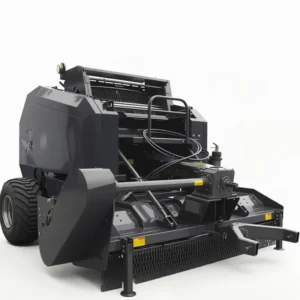
| Pickup Width | 2,400 mm |
| Pickup Type | Hammer-claw (convertible from spring-tine) |
| Chamber Diameter | φ1,000 mm |
| Chamber Width | 1,250 mm |
| Compression Rollers | 16 rollers, φ222 mm |
| Wrap System | Automatic net wrap |
| Bale Size (Ø × W) | φ1,000 mm × 1,250 mm |
| Bale Density | 115–200 kg/m³ (sensor-controlled) |
| PTO Speed | 540 r/min |
| Required Power | ≥69.8 kW / 95 hp |
| Hammer Claws | 20 units |
Round Baler Gearbox Design for Multi-Residue Operations
The round baler gearbox on a machine used for multi-residue applications carries a more variable load profile than one used exclusively for forage baling at steady field speeds. Mixed-farm residue work involves frequent transitions between crop types and density levels within a single operating day, and the gearbox must tolerate the transient torque spikes that occur when the machine crosses a compressed residue mat at field speed without the operator slowing down in time. A multi-stage bevel-and-spur gearbox housed in cast iron, rated for input torques substantially above the tractor PTO’s maximum deliverable torque, provides the safety margin needed for this operating profile without requiring the operator to adopt a cautious field speed strategy that reduces daily throughput.
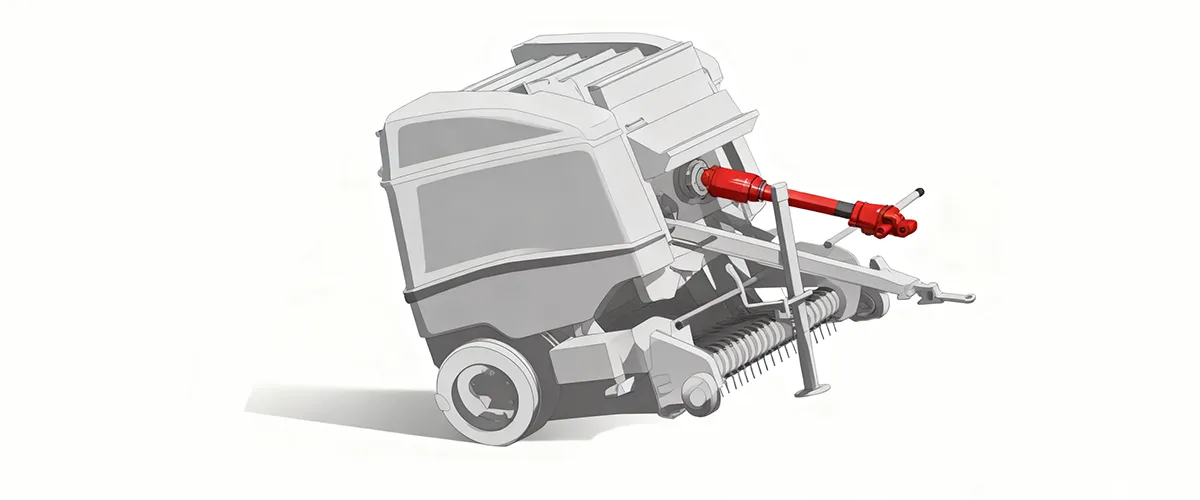
The dual-linked gearbox design used on the 9YG-2.24D series resolves a practical constraint specific to mixed-farm operations: when a single machine must work across multiple field types in a day — including narrow paddy-field plots, irregular upland parcels, and larger open fields — the ability to make tight headland turns without cutting PTO power reduces transition time and operator effort. The dual-linked arrangement allows 90-degree left and right pivot relative to the tow hitch, eliminating the driveshaft bending stress that causes premature universal-joint failure on conventional single-driveshaft layouts when tractors and balers negotiate tight corners at speed. For mixed-farm operators who work across a range of field geometries in a single residue season, this design detail has tangible service life and daily throughput implications.
Rated above tractor PTO maximum torque delivery; absorbs transient spikes from compressed residue mats without requiring operator speed management; durable under the variable load profile of multi-residue operations.
90-degree left-right pivot relative to tow hitch; eliminates driveshaft bending on tight headlands; no PTO cut required during turns; practical benefit across the varied field geometries of mixed Korean farms.
Browse our full range of round balers for sale — configured for multi-residue mixed-farm applications across Korean and international operations.
System-Compatible Agricultural Drive Components
Our round balers are engineered for direct compatibility with matched drive system components, supporting complete single-source supply for mixed-farm operations.
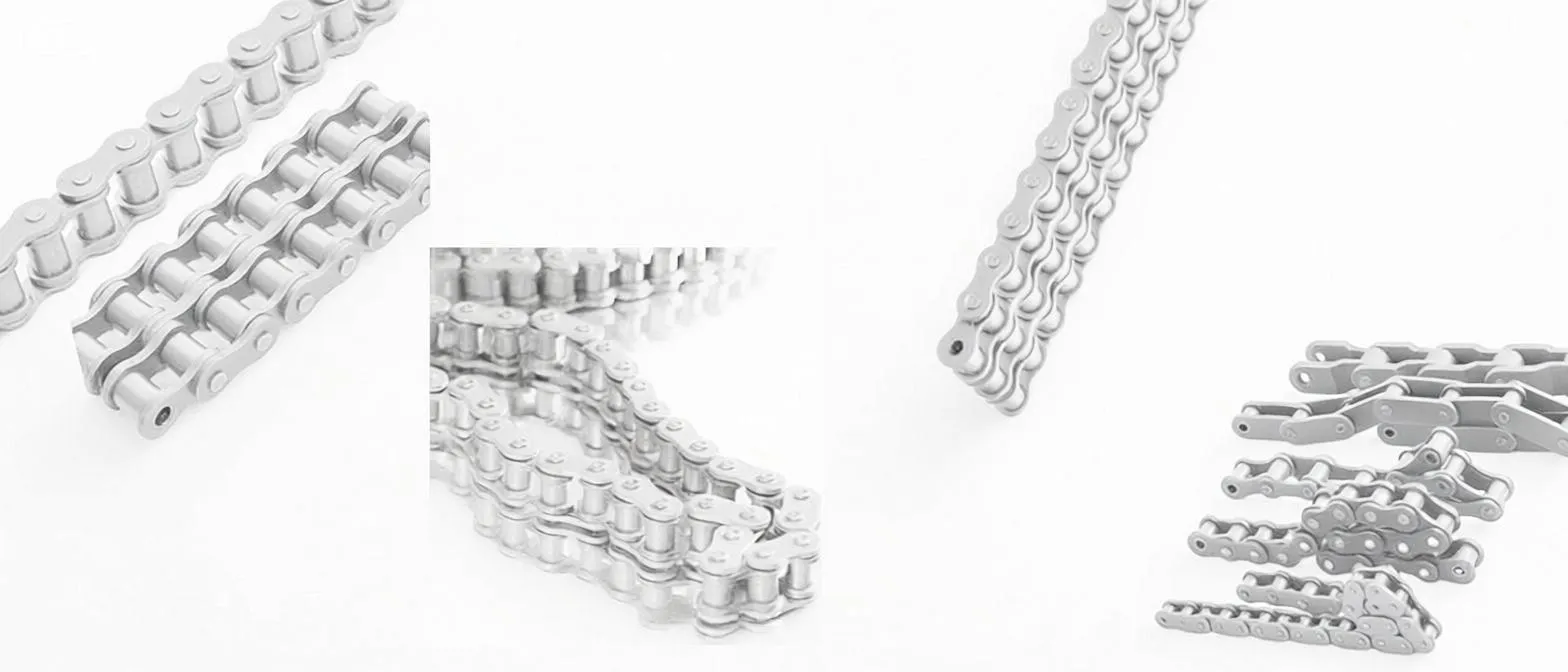 Round Baler Parts & Agricultural Chain
Agricultural Machinery Experience Spanning Over Ten Years
In operation since 2013, our manufacturing focus covers the full spectrum of agricultural harvesting machinery for farming and animal husbandry operations — from light and compact round balers suited to smaller mixed-farm plots through to heavy-capacity machines for large-scale pastoral enterprises. The product range includes single and double-blade mowers, disc rotary mowers, single and double-side rakes, and the complete round baler series — all produced under an ISO 9001-certified quality management system with independent import and export licensing.
With more than 60 large-scale production equipment units and an annual output capacity of 2,000 machines, we maintain the production consistency needed to supply mixed-farm operators across Korean, Australian, European, and other international markets with machines that are built to the same specification as those evaluated at design testing — not simplified versions produced to meet a lower export price point.
Our approach to product development is shaped by feedback from operators working across diverse farm types, including the mixed grain-and-livestock operations that are the target application for this article. The residue management challenges that Korean paddy farmers face — burning restrictions, conservation tillage policy, multi-residue crop sequences — are directly reflected in the pickup convertibility, PTO speed range, and chamber geometry choices that define our round baler configurations.
Frequently Asked Questions
How can Korean paddy farmers legally manage rice straw residue after the open burning restrictions in Gyeonggi and Chungnam provinces? +
What round baler configuration works best for a Korean mixed farm running rice, maize, and soybean across a 40–60 hectare operation? +
Where do round baler parts like tines and pickup drive chains wear fastest when baling dry rice straw residue on Korean farms? +
When is the best time for Korean mixed-farm operators to bale rice straw residue after combine harvesting to get the highest feed and bedding quality? +
Editor: PXY