Round Baler 2240mm Pickup Width vs 1900mm:
Which Performs Better in Rice Paddy Fields?
A detailed technical comparison of wide-body and compact round baler configurations for Korean rice straw harvesting — covering structural design, material systems, field performance, regulatory compliance, and real-world productivity data.
Every autumn across South Korea’s rice-growing plains — from the flat Honam region to the narrow terraced paddies of Gyeongnam — farmers face a narrow window to clear rice straw before winter frosts arrive and the next cropping cycle begins. The choice of round baler, and specifically its pickup width, has a measurable effect on how quickly that window can be closed. Two configurations dominate the current market: machines built around a 2240mm pickup width, such as the 9YG-2.24D series, and smaller-format machines with a 1900mm pickup width, represented by the 9YG-1.0 series.
This article works through the meaningful differences between these two classes — not just specifications on paper, but what those numbers translate to when the machine is running in a rain-softened paddy or on a sloped upland field in Jeolla Province. We cover structural construction, material selection, round baler gearbox design, hydraulic systems, regulatory implications under Korean law, and the practical trade-offs each configuration demands. If you are trying to decide which round baler to source or quote for Korean operations, this guide is built for that decision.
1. Why Pickup Width Matters in Rice Paddy Fields
Rice straw in Korean paddy fields does not behave like grass hay or wheat straw in open European fields. After a combine harvester passes, the straw is deposited in irregular, wide swaths that follow the combine’s cutterbar — typically 2.0m to 2.4m wide when combining at full width. A narrow-format round baler with a 1900mm pickup cannot span the full deposited swath in a single pass, which means either the operator must run a rake or tedder over the field first (adding cost and time), or accept that the machine will miss crop on each pass, leaving straw in the field. In Korea, where straw burning is heavily restricted under air quality regulations, incomplete collection is both a productivity problem and a legal exposure.
A 2240mm pickup width can, in most practical scenarios, recover the full width of a standard combine swath in a single pass. This eliminates the raking stage in most field conditions, directly reducing the per-bale cost and the total hours required to clear the paddock. The difference sounds incremental — 340mm — but across a 5-hectare paddy block with multiple passes, it translates to a measurably different throughput. Operators running the wider machine consistently report field clearance rates that are 25–40% faster on comparable terrain when no prior raking is required. That time saving is especially significant in Korea’s compressed autumn harvest calendar, where consecutive rice-field tasks must be completed before the first freezes typically arriving in November across the central and northern provinces.
That said, the 1900mm format has a genuine role. Smaller family farms in Korea — particularly in mountainous regions like Gangwon-do and southern Gyeongnam where individual paddy plots may be under 0.5 hectares — work with smaller tractors in the 48–80 kW range. The 9YG-1.0 was designed for exactly this segment. It pairs with tractors as small as 48 kW, keeps machine weight at 2,640 kg (compared to 3,922–4,570 kg for the larger series), and can maneuver in the tighter headlands common on small-plot paddy layouts. Understanding which category your operation sits in is the first filter for this decision.
2. Manufacturing Structure: Frame, Chamber & Roller Architecture
The structural architecture of a round baler determines not only its capacity but its durability under the repetitive stress of full-season operation. Both the 2240mm and 1900mm platforms use a welded steel mainframe with a traction-type hitch system, but they diverge significantly in chamber dimensions and compression roller count.
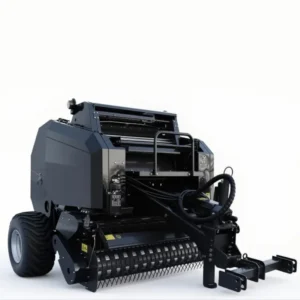
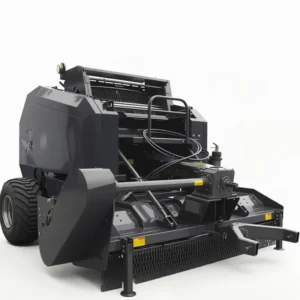
The 2240mm series (9YG-2.24D) uses a compression chamber measuring 1400mm wide and 1200mm in diameter, fitted with 18 drum-type compression rollers, each 222mm in diameter. This configuration produces bales with finished dimensions of 1300mm diameter × 1400mm width — a format well suited to the Korean livestock feed supply chain, where bale uniformity matters for storage and transport logistics. The mainframe on the larger S9000 variant (9YG-2.24D S9000 Beyond) incorporates a proprietary dual cross-joint drive shaft system with a safety torque-limiting shaft that protects all drivetrain components during field shock loads — a feature directly relevant to Korean paddies where concealed drainage pipes and soil ridges can cause sudden tractor-baler misalignment events.
The 1900mm series (9YG-1.0) operates with a narrower chamber — 1000mm wide and 1000mm in diameter — equipped with 16 compression rollers. Bale output is correspondingly smaller: 1100mm diameter × 1000mm width. This produces lighter bales (200–400 kg per bale) that are easier to handle on small farms without a front loader or bale transport equipment. The chamber diameter of 1000mm also means the bale core begins forming sooner during the rolling cycle, which can improve throughput on thin, short-straw crops but can lead to density inconsistency in long, tangled rice straw if feed rate is not carefully managed.
An important structural note: the 9YG-2.24D line across all variants uses an axial-flow semi-forced feeding mechanism without cam tracks or protective ring guards on the pickup. This proprietary design — developed and patented in-house — reduces drive resistance compared to conventional cam-track pickups, increases feed volume per rotation, and significantly cuts the probability of straw blockage. In Korean monsoon conditions, where residual moisture in harvested rice straw regularly exceeds 25–35%, blockage resistance is not an abstract specification — it is the difference between a productive day and repeated field stoppages.

3. Material Systems: Steel Grade, Surface Treatment & Chain Specifications
Material selection in round baler construction is not marketing language — it directly determines maintenance intervals and operational lifespan. The two platform sizes use different chain specifications that reflect their intended workload levels, and understanding these choices helps operators anticipate long-term cost of ownership.
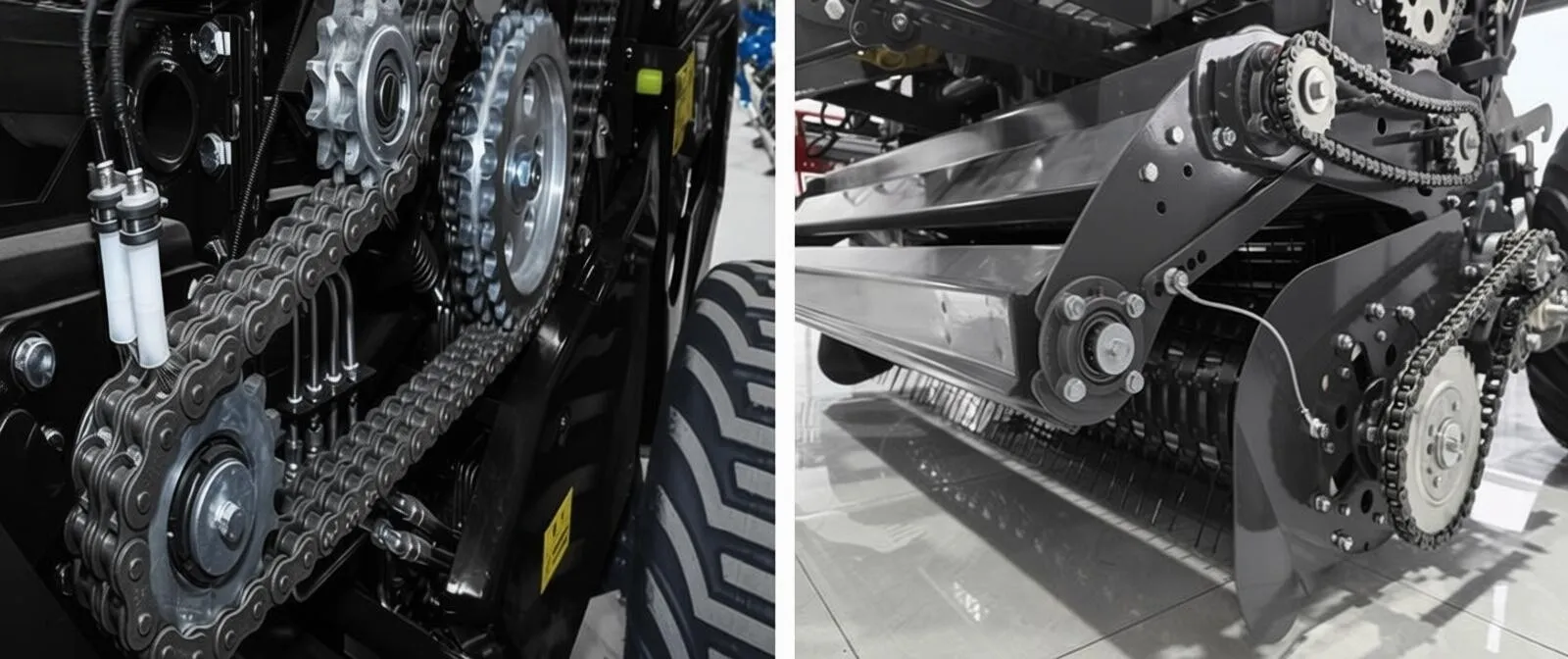
The 9YG-2.24D S9000 Classic and S9000 Beyond variants both use dual-sided 20A heavy-duty chains throughout the rear chamber. The 20A designation refers to the chain pitch (25.4mm per link) and the heavy-duty classification indicates a reinforced pin and plate construction compared to standard agricultural chain. This chain specification is chosen to handle the higher compressive forces generated in a 1400mm-wide chamber pressing bales to densities of 100–200 kg/m³ under high moisture conditions. Korean rice straw at 30% moisture is substantially heavier and more resistant to compression than dry straw — the chain tension required to maintain proper bale density without slippage rises accordingly.
The 9YG-1.0C variant (the hammer-claw version of the smaller-format machine) uses dual-sided 16A heavy-duty chains in both the front and rear chambers. The 16A chain runs at a narrower pitch and is correctly sized for the lower compressive forces in a 1000mm-wide chamber. Both chain grades are sourced from verified domestic industrial chain manufacturers and are sized with the understanding that chain replacement will be a routine maintenance event — the machines are designed for chain serviceability rather than attempting to extend intervals beyond practical limits.
Frame steel on both platforms is processed through CNC laser cutting for primary structural components and automatic welding lines for major assembly joins. Surface finishing uses electrostatic spray coating rather than conventional brush or dip painting, which provides more consistent film thickness over the complex geometry of a baler frame and better adhesion durability across the temperature cycling conditions of Korean field use — hot summer field work followed by cold-storage periods. All zinc-plated hardware on fastened joints uses marine-grade zinc thickness to handle the elevated soil moisture and chemical exposure common in rice paddy environments where field water, clay residue, and organic matter combine to accelerate corrosion on uncoated surfaces.
4. Round Baler Gearbox: Transmission Design Compared
The round baler gearbox is one of the highest-stress components in the entire drivetrain. It must transfer tractor PTO torque to the pickup, feedroll, and chamber drive systems while surviving shock loads caused by sudden material ingestion, field obstacles, and rapid directional changes during headland turns. The two platform sizes handle this differently, and the approach chosen for the larger format is arguably the more significant engineering departure.
The 9YG-2.24D S9000 Beyond features a dual-coupled gearbox system that is rigidly connected to the tow hitch frame. This design allows the dual gearbox assembly to rotate 90 degrees left or right relative to the tractor’s centerline during tight turns, which solves a persistent problem with traction-type round balers on small Korean paddies: conventional single-gearbox machines require the operator to disengage PTO drive before executing tight headland turns because the drive shaft angle exceeds safe operating limits. With the dual gearbox permitting 90-degree rotation and the tractor’s lateral tilt tolerance of up to 30 degrees, the operator can maintain PTO engagement through the turn cycle, eliminating the stop-disengage-turn-reengage sequence that costs significant time across a multi-pass day.
The round baler gearbox on the standard 9YG-2.24D (without the S9000 dual-coupled arrangement) uses a single heavy-duty gearbox with increased torque capacity compared to the 9YG-1.0’s transmission. Both platforms operate at a standard PTO input speed of 720 r/min, which is compatible with the most common tractor PTO configurations in Korean agricultural use. The 9YG-1.25A variant supports a wider PTO speed range of 540–1000 r/min, offering compatibility with older Korean tractor models still running 540 RPM PTO outputs.
All round baler gearbox units across the product range are lubricated with ISO VG 220 gear oil appropriate for the seasonal temperature ranges encountered in Korean agricultural use, with service intervals defined in the operator manual. Gearbox housing on the higher-end variants uses heat-treated ductile iron casting for the housing and case-hardened steel gears, providing the wear resistance needed for multi-season operation without mid-season oil contamination from seal failures.
5. Hydraulic System & Density Control
Both platform sizes use hydraulic systems for chamber opening, bale ejection, and density sensing, but the implementation differs in ways that affect daily workflow in Korean paddy conditions. The 9YG-2.24D Classic and Beyond variants use H-type compression fitting hydraulic connectors throughout. This fitting type handles higher pressure differentials than the standard push-to-connect fittings found on entry-level balers, which translates to faster chamber opening and closing speeds — a practical advantage when the operator is trying to maximize bales-per-hour on a short autumn day.
Critically, the rear chamber on the larger format incorporates a hydraulic damping cylinder on the chamber closure mechanism. This damper absorbs the mechanical shock of the chamber closing after bale ejection, which prevents the frame stress concentration that leads to crack formation in the chamber hinge area over thousands of open-close cycles. In a high-productivity Korean rice straw season where a single operator might complete 60–80 bale cycles per day, eliminating this fatigue stress is a meaningful long-term reliability factor.
Bale density control on both platforms uses an electronic sensor system rather than purely mechanical spring tension. The sensor monitors chamber pressure and signals the operator — or on the S9000 Beyond, automatically initiates the wrapping sequence — when target density is reached. This removes operator judgment from the density decision, producing more consistent bale weights across a full working day even as operator fatigue accumulates in the afternoon hours. For Korean livestock operations where bale weight consistency affects both nutritional planning and transport logistics, this matters more than it might in purely bedding or biomass applications.
6. Pickup Mechanism: Spring-Tooth Design & Hammer-Claw Interchangeability
The standard pickup on both platforms uses a spring-tooth (弹齿式) configuration, which is the appropriate choice for windrowed rice straw — a material that has already been cut, deposited, and partially dried. Spring-tooth pickups are gentle on the tine-to-crop contact, which limits seed and soil contamination in the bale and reduces the stone-strike impact damage that hammer-claw designs experience on the rocky upland paddies of regions like Gangwon-do.
However, the 9YG-1.25 and 9YG-1.0C models offer a notable feature: the ability to interchange the spring-tooth pickup with a hammer-claw (锤爪式) pickup for direct collection of standing corn stalks. This interchangeability means a farm operation running both rice straw baling in October and corn stover collection in late September can use the same machine for both tasks by swapping the pickup head — eliminating the need to maintain two separate machines. The 9YG-1.0C’s hammer-claw configuration carries 20 claw units, while the 9YG-1.25 version runs 18 claws. The 9YG-2.24D platform does not currently offer factory hammer-claw interchange, as its primary design mandate is high-throughput collection of deposited windrowed material at scale.
For the specific application of rice paddy straw collection in Korea, the spring-tooth configuration is recommended on both platforms. Korean rice straw tends to be deposited in clean, well-separated windrows by modern combine harvesters, and the spring-tooth pickup handles this material efficiently without the added mechanical complexity and higher power demand of hammer-claw configurations.
7. Side-by-Side Specification Comparison
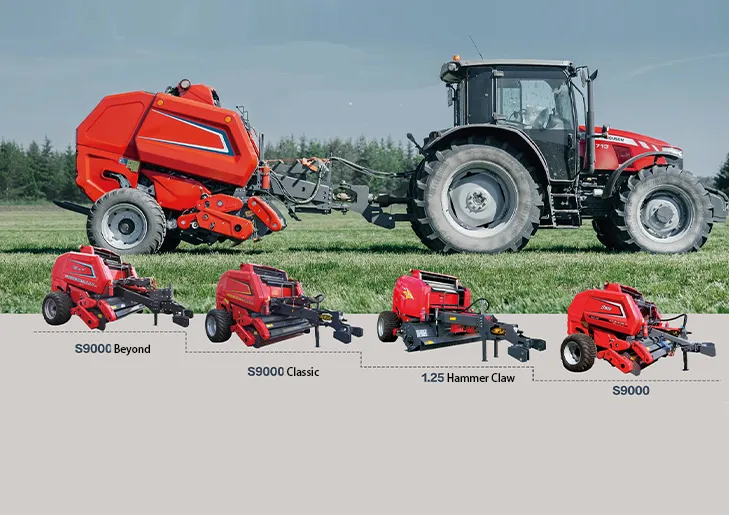
The table below draws directly from the verified product specifications for the 9YG-2.24D (standard variant) and the 9YG-1.0 as published and confirmed in manufacturer documentation. These are the two models that most cleanly represent the 2240mm and 1900mm pickup width classes for Korean rice paddy field deployment.
| Specification | 9YG-2.24D (2240mm Pickup) |
9YG-1.0 (1900mm Pickup) |
|---|---|---|
| Pickup Width | 2240 mm | 1900 mm |
| Pickup Type | Spring-tooth | Spring-tooth |
| Feed Mechanism | Tine roller + drum | Tine roller + drum |
| Compression Chamber Type | Drum-type roller | Drum-type roller |
| Chamber Width | 1400 mm | 1000 mm |
| Chamber Diameter | Ø1200 mm | Ø1000 mm |
| Roller Count | 18 rollers | 16 rollers |
| Roller Diameter | Ø222 mm | Ø222 mm |
| Bale Size (D × W) | Ø1300 × 1400 mm | Ø1100 × 1000 mm |
| Bale Density | 100–200 kg/m³ | 115–200 kg/m³ |
| Wrapping Method | Net wrap | Net wrap |
| Net Roll Spec | 2000 × 1.4m / bale | 2000 × 1.0m / bale |
| Required Tractor Power | 55–100 kW | 48–80 kW |
| PTO Speed | 720 r/min | 720 r/min |
| Structural Mass | 3922 kg | 2640 kg |
| Productivity | 40–100 bales/hr | 40–100 bales/hr |
| Operating Speed | 5–35 km/h | 5–20 km/h |
| Wheel Track | 2600 mm | 2045 mm |
| Working Dimensions (L×W×H) | 4110 × 3010 × 2450 mm | 3750 × 2300 × 2020 mm |
| Best Fit | Large paddies, contractors | Small plots, limited horsepower |
8. Field Performance in Korean Paddy Conditions
Korean rice paddy fields present a specific combination of challenges: relatively soft post-harvest soil, variable windrow widths depending on the combine brand and cutting width, high residual moisture in the straw (especially in regions receiving autumn rains from typhoon remnants), and constrained field geometry with narrow headlands between paddy blocks. Both machine formats must navigate these factors, and their performance characteristics diverge in predictable ways.
The 9YG-2.24D’s wider 2240mm pickup captures more material per linear meter of travel. In a standard Korean paddy where combine cutting width runs 2.1–2.4 meters, the 2240mm pickup spans the full windrow in a single pass. The high-capacity axial-flow feeding system prevents the windrow bunching that occurs when a narrow machine overloads its center feed section by attempting to collect from a wider-than-designed windrow. On large continuous paddy plains — such as those found in Jeolla Province or the Gimje basin — the wider machine allows the operator to run at higher forward speeds (up to 35 km/h maximum, practical field speeds 8–15 km/h depending on windrow density) without compromising bale formation consistency.
The 9YG-1.0’s 1900mm pickup is effective on smaller Korean plots where the combine may have used a narrower cutting width, or where the field geometry requires more frequent headland turns that penalize a heavier machine. Its lower weight of 2,640 kg reduces tire sinkage on soft post-harvest paddy soil, which is a relevant factor in wet-autumn conditions. The lower maximum operating speed of 20 km/h reflects the smaller machine’s feed system capacity rather than a mechanical limitation — operators working at appropriate field speeds on small plots find the throughput adequate for single-farm operations.
Key Performance Differences at a Glance
| Field Scenario | 2240mm Advantage | 1900mm Advantage |
|---|---|---|
| Large flat paddy plains (Jeolla, Kimje) | ✔ Full swath coverage | — |
| Narrow terraced plots (Gangwon, S. Gyeongnam) | — | ✔ Tighter maneuverability |
| High-moisture straw (post-typhoon) | ✔ Axial-flow blockage resistance | Moderate |
| Soft post-harvest soil | Higher ground pressure | ✔ Lower machine weight |
| Contractor operations (>50 ha/season) | ✔ Higher throughput | — |
| Small family farm (<5 ha/season) | Oversized | ✔ Right-sized, lower cost |
| Corn stover dual-use | Spring-tooth only | ✔ Hammer-claw interchange (1.0C) |
9. Soil Compaction & Environmental Considerations in Korean Paddies
Soil compaction in rice paddy fields is a frequently overlooked cost factor in baling operations. Korean rice paddies — particularly those cultivated under continuous rice monoculture — develop a hard plow-pan layer 15–25 cm below the surface, and tractor-implement combinations that concentrate ground pressure above 80 kPa during passes over moist post-harvest soil can deepen this layer and create drainage problems that affect the next planting season’s germination uniformity.
The 9YG-2.24D at 3,922 kg (and up to 4,570 kg for the S9000 variants) operates on a wheel track of 2,600 mm. When paired with a 55–80 kW tractor in a common Korean paddy configuration, the combined machine weight distributes across the tractor’s four wheels and the baler’s two wheels. The baler’s 2,600mm wheel track is intentionally wider than minimum to spread the load across a wider soil contact area, and pairing with flotation-style agricultural tires further reduces contact pressure. Farm managers should verify their specific tractor-baler combination against the post-harvest soil bearing capacity of their paddies — particularly for early-autumn baling when soil moisture is highest.
The 9YG-1.0’s narrower 2,045mm wheel track and 2,640 kg machine weight produce lower ground pressure, making it more suitable for operations where post-harvest soil conditions are consistently wet or where the paddy structure is known to be sensitive. This does not automatically make the lighter machine “better” for compaction management — a poorly balanced tractor pulling a light baler at high speeds can still cause rutting on saturated soil — but it provides more flexibility in timing the baling operation relative to soil drainage.
From an environmental standpoint, both round baler configurations directly support South Korea’s rice straw management policy, which seeks to eliminate field burning as a method of clearing straw. Baling and removing straw converts a pollution source into a usable product — livestock bedding, cattle roughage, mushroom cultivation substrate, or biomass fuel — and aligns the operator’s activity with government incentive programs for agricultural residue utilization.

10. Korean & International Regulatory Framework
Agricultural machinery operating in South Korea is subject to a layered regulatory environment that touches machine safety standards, emission controls, agricultural subsidy eligibility, and environmental compliance. Buyers sourcing round balers for Korean operations should verify compliance with the following regulatory areas:
South Korea — Primary Regulations
Agricultural Mechanization Promotion Act (농업기계화촉진법): Administered by the Ministry of Agriculture, Food and Rural Affairs (MAFRA), this act governs the approval of agricultural machinery models for subsidy eligibility under the Agricultural Machinery Support Program (농기계 구입 보조 사업). Machines must pass a type-approval examination (시험 성적서) conducted by the Korea Agricultural Machinery Inspection Center (농기계 검사소) to qualify for subsidy support. Subsidy rates for eligible round balers typically range from 30–50% of machine purchase value depending on province and year, making type approval a commercially significant certification.
Clean Air Conservation Act (대기환경보전법): Article 38-2 and related ministerial notices restrict open burning of agricultural residues, including rice straw, during designated restricted periods (typically late October through March in most provinces). Violations carry administrative penalties. This regulation directly creates demand for mechanical straw baling as the compliant alternative to burning, and buyers sourcing a round baler for Korean operations should document the machine’s intended use for regulatory interaction purposes.
Agricultural Machinery Safety Standards (농업기계 안전기준): National Technical Standard (KS) B 5110 and related KS standards govern PTO shaft guarding requirements, operator protection zones, and emergency stop provisions for tractor-mounted and traction-type farm machinery. All machines sold into the Korean market through formal channels are expected to comply with these standards. Buyers importing directly should verify compliance documentation before customs clearance.
Soil and Groundwater Conservation Act: While not directly targeted at baling machinery, this legislation governs land use practices that affect soil structure in agricultural zones. Operations that cause demonstrable soil degradation through compaction may face restrictions in environmentally sensitive paddy areas, making the soil compaction characteristics of the chosen round baler a regulatory consideration in addition to a productive one.
European Union — Reference Standards
The EU’s Machinery Directive 2006/42/EC (currently transitioning to Machinery Regulation EU 2023/1230) sets essential health and safety requirements for agricultural machinery placed on the EU market, including CE marking requirements. While not binding in Korea, CE certification is increasingly referenced by Korean importers as a proxy quality and safety benchmark. Machines carrying CE marks have undergone third-party conformity assessment against harmonized EN standards including EN ISO 11684 (safety signs), EN ISO 4254-1 (agricultural machinery general safety), and EN ISO 4254-7 (specific to combine harvesters and related equipment).
Japan — Reference (Relevant to Regional Trade)
Japan’s Agricultural Machinery Safety Regulation and JIS B 9605 series standards govern baler safety in the Japanese market, which is referenced by some Korean buyers who also operate in or source from Japan. PTO guarding requirements under Japanese standards are stricter than Korean minimums in some respects, so machines compliant with Japanese standards generally exceed Korean safety minima.
International — ISO Standards
ISO 9001 quality management certification — held by the manufacturer of this round baler range — provides an internationally recognized framework for consistent manufacturing quality. ISO 4254-1:2013 (Agricultural machinery — Safety — Part 1: General requirements) applies globally and provides the technical basis against which machine designers evaluate guarding, stability, and operator protection. Machines built to ISO 4254-1 compliance provide a higher baseline of operator safety assurance than machines built only to domestic standards.
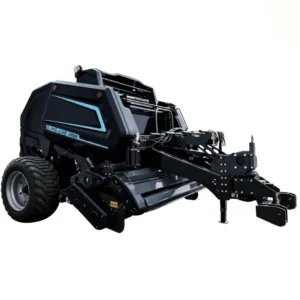
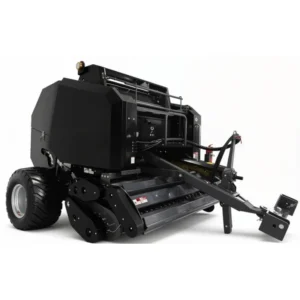
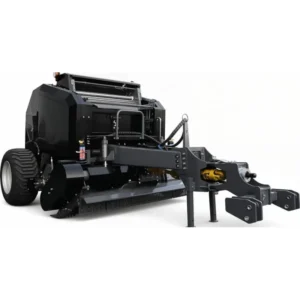
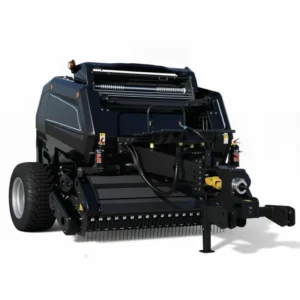
11. Product Range: 2240mm Series Round Baler Models
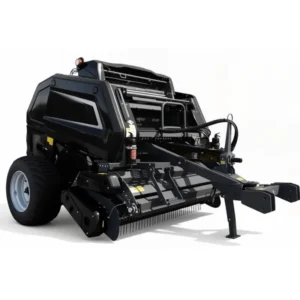
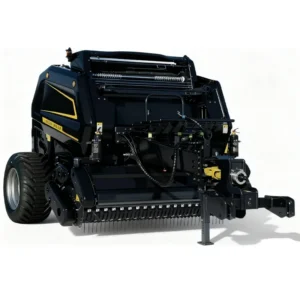
The 2240mm pickup width platform is available across several build variants, each suited to different operating contexts. The core shared specifications — 1400mm chamber width, 18 rollers, 1300×1400mm bale output, sensor density control — are consistent across the series. What differs is the drivetrain architecture, hitch design, and structural mass. Below are the main variants available through the farm-balers.com product range.
12. About This Round Baler Range
The round baler series presented on this page is manufactured at a dedicated facility with a total floor area exceeding 32,000 square meters, equipped with CNC laser cutting machines, automatic welding lines, and electrostatic coating production lines. The manufacturing facility holds ISO 9001 quality management system certification and has been recognized as a National High-Tech Enterprise — a designation that reflects the independently developed intellectual property behind key machine systems including the axial-flow feeding mechanism and the dual-coupled gearbox design on S9000 Beyond variants.
Annual production capacity for the round baler line stands at 2,000 units, with a parallel production line for mower-raker equipment at equivalent capacity. The product range has been recognized at international agricultural machinery exhibitions, receiving Best Innovation awards at the 12th Jiangsu International Agricultural Machinery Exhibition (AGMA China 2023). Quality and integrity certifications include AAA Credit Enterprise status and 3.15 Honest Brand recognition, with over 100 utility model patents across the full product portfolio.
Export experience covers markets across Russia, Mongolia, Kazakhstan, and Belarus through direct participation in bilateral trade fairs and established distributor relationships. For Korean buyers and importers, inquiries regarding type-approval documentation, technical specifications for customs clearance, or supply chain terms are welcomed through the contact channels available on the website.
13. Frequently Asked Questions
Editor: PXY