Wheat Straw Baling Productivity & Engineering
A detailed knowledge guide exploring the engineering principles, machine design choices, operational factors, and maintenance practices that allow modern round baler technology to sustain high-output wheat straw collection across Korean and global cereal-growing regions.
1. The 40–100 Bales Per Hour Figure: What It Actually Means in the Wheat Straw Field
A round baler machine rated at 40–100 bales per hour sounds impressive on a specification sheet, but the range between 40 and 100 represents a 2.5-fold difference in productive capacity — the difference between collecting wheat straw from a 200-hectare farm in two days or five. Understanding what determines where a specific machine, in a specific field, on a specific day, actually falls within this range is the practical knowledge that separates productive wheat straw baling operations from ones that consistently underperform their equipment’s potential.
The 40 bales per hour figure represents achievable output under moderately challenging conditions: a smaller bale size, moderately thin windrows, fields with frequent headland turns, or a machine operating in less-than-ideal setup. The 100 bales per hour figure represents peak output under near-ideal conditions: large fields with long runs, thick well-formed windrows, optimal forward travel speed, fast bale ejection cycles, and a machine set up and maintained precisely for the conditions. Most real-world wheat straw baling operations fall between these extremes, averaging perhaps 55–75 bales per hour across a full day’s operation when headland time, occasional blockages, and windrow variation are factored into the total.
For Korean wheat and barley straw collection — which typically takes place in June and July following the grain harvest, under time pressure from the following crop planting schedule — productivity within this range has direct economic significance. Straw that is not collected within the narrow post-harvest window before land preparation begins is lost to incorporation or burning. A machine that consistently achieves 70 rather than 45 bales per hour not only completes the job faster but captures more of the available straw resource before it is lost to field operations. This guide examines every engineering and operational factor that determines where in the 40–100 range a given round baler performs on wheat straw — and what can be done to push performance toward the upper end.
2. The Five Variables That Determine Wheat Straw Baling Throughput
Bale output per hour in wheat straw operations is not a single machine parameter — it is the product of five interacting variables, each of which can independently raise or lower the effective throughput rate. Understanding these variables gives operators a structured framework for diagnosing underperformance and making targeted improvements rather than simply accepting suboptimal output as an inherent limitation of the equipment.
The time from when the previous bale is ejected and the tailgate closes to when the next bale is complete and ready for ejection. At 100 bales per hour, each cycle averages 36 seconds — including bale formation, net-wrap binding, tailgate opening, bale ejection, and tailgate closing. Machines with faster hydraulic tailgate cycles and sensor-triggered automatic binding complete each cycle more quickly than machines requiring manual intervention.
Higher forward speed means the pickup sweeps more windrow material per unit time, filling the chamber faster and reducing formation time per bale. However, speed must be matched to windrow density — too fast on a thin windrow produces undersized bales or gaps in bale formation; too slow on a thick windrow means the machine is not using its full capacity. Optimal forward speed on wheat straw windrows is typically 8–18 km/h depending on windrow weight per linear metre.
Windrow weight per linear metre determines how far the machine must travel to accumulate enough material for one complete bale. A heavy, dense windrow from a high-yield wheat field fills the chamber faster per meter of travel, producing more bales per kilometre. Consistent windrow weight enables consistent forward speed; irregular windrows create variable loading that disrupts the operator’s ability to maintain the optimal speed regime.
Every minute spent on headland turns, blockage clearing, net roll changes, tractor refuelling, or operator breaks is a minute not producing bales. In a field with 200 m row lengths, headland time accounts for perhaps 8–12% of total operating time. In a field with 50 m row lengths, it can exceed 25%. Machines with faster headland turning capability — enabled by flexible PTO driveshaft systems — reduce headland time per bale produced.
Smaller target bale diameter means less material per bale and therefore more bales per unit of crop collected — and more bales per hour, though each bale contains less dry matter. Larger target diameter means fewer but heavier bales per hour. Operating at 1,100 mm rather than 1,300 mm target diameter increases the headline bale count per hour significantly but reduces the dry matter per bale handled in transport and storage.
3. Manufacturing Structure: Engineering High-Throughput Wheat Straw Capability
The mechanical design features that most directly enable high-throughput wheat straw baling are concentrated in three areas: the pickup and feed system, the hydraulic tailgate cycle, and the PTO driveshaft articulation capability. Each of these determines how quickly a machine can complete successive bale cycles on wheat straw in real field conditions, and machines with superior design in these three areas consistently outperform equivalent machines that lack them — on the same crop, in the same field, on the same day.
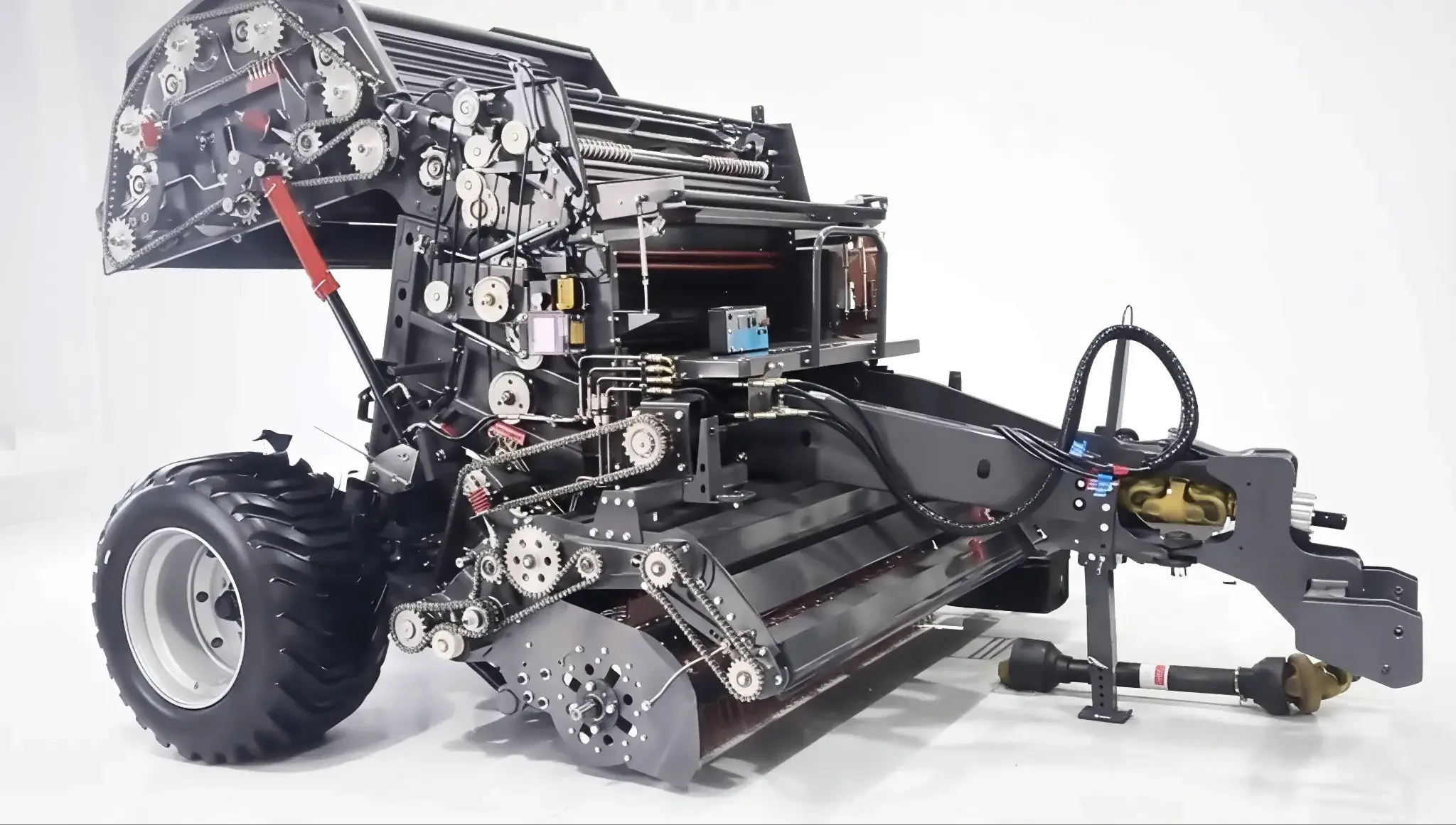
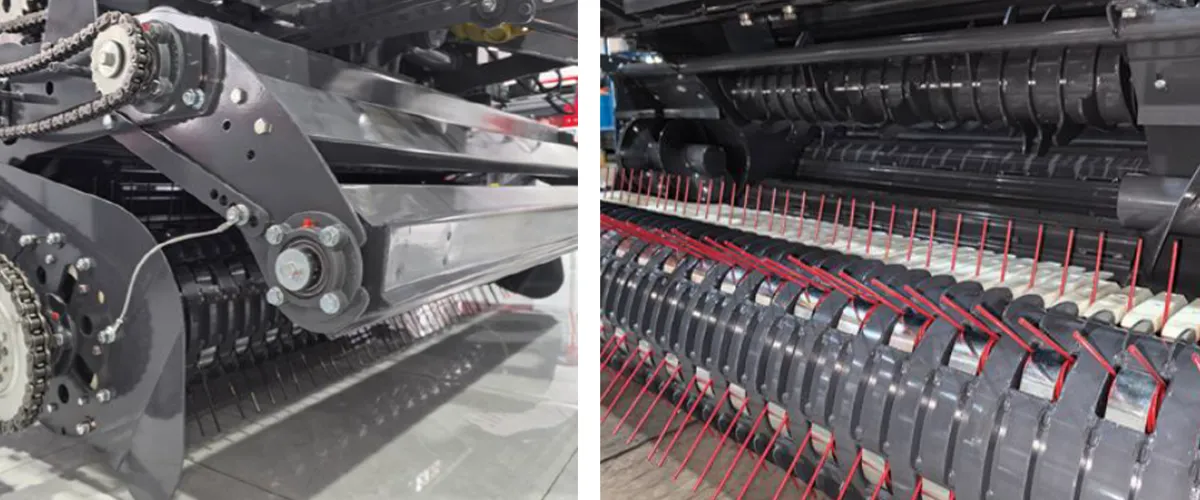
The pickup header and feed mechanism determine how cleanly and how quickly material enters and fills the compression chamber. In wheat straw, which arrives as a dry, low-density material with relatively long stem length, the two failure modes that reduce throughput are partial blockages at the feed inlet (which require the operator to stop, reverse, and clear before resuming) and uneven lateral distribution (which produces bales that are heavier on one side, requiring under-filling to prevent jams at the tailgate). The axial-flow semi-forced feed mechanism in the 9YG series addresses both failure modes. Its camless design has fewer projecting surfaces where long wheat straw stems can catch and wrap — the primary cause of feed blockages in this crop. Its lateral distribution function guides material across the full chamber width before compression begins, producing bales that are cylindrically uniform and eject cleanly on every cycle.
The hydraulic tailgate cycle speed is the most direct mechanical limiter of peak bale output. A tailgate that takes 15 seconds from fully open to fully closed and locked adds 15 seconds to every bale cycle. At 100 bales per hour target (36 seconds per cycle), those 15 seconds represent 42% of the available cycle time spent just on tailgate movement. The H-type compression fittings used in the 9YG series hydraulic circuit allow higher working pressure than push-fit alternatives, enabling faster tailgate movement. The buffer cylinder in the closing circuit — while primarily protecting the latch mechanism from shock load — is sized to allow fast closing without damaging impact at the end of travel. In practice, the 9YG tailgate completes its open-eject-close sequence in a shorter time than machines with slower hydraulic circuits, directly improving peak bale output rate.
The PTO driveshaft articulation system determines how much productive capacity is lost to headland turning. A conventional single-joint PTO shaft requires the tractor to slow significantly or stop to complete a turn within its angular limit — in fields with frequent turns, this adds 5–10 seconds to each headland maneuver. The dual-joint gearbox in the 9YG-2.24D Transcend model maintains continuous power transmission through turns up to 90 degrees laterally and 30 degrees vertically, allowing the operator to complete headland turns at normal operating speed without PTO interruption. In a field with 200 rows requiring 200 headland turns per day, saving 7 seconds per turn recovers 23 minutes of productive baling time per day — which at 70 bales per hour equates to approximately 27 additional bales per day without any other change in operation.
Key Specifications for Wheat Straw High-Throughput Operation
| Component | Throughput Impact | 9YG Series Feature |
|---|---|---|
| Feed mechanism | Blockage frequency and time lost per blockage | Axial-flow semi-forced, camless design, proprietary |
| Hydraulic tailgate speed | Seconds per bale cycle at ejection stage | H-type fittings, buffer cylinder, fast-cycle design |
| PTO driveshaft articulation | Seconds lost per headland turn × number of turns per day | Dual-joint (Transcend), ±90° lateral, ±30° vertical |
| Density sensor and ECU | Consistency of bale ejection timing; eliminates manual monitoring | Electronic sensor, ECU-linked automatic trigger |
| Compression rollers | Bale formation speed and density consistency | 18 rollers φ222 mm, case-hardened surface |
| Drive chain | Sustained full-speed operation; reduces slowdown from elongation | Dual-side 20A heavy-duty chain, rear compression circuit |
| Pickup header | Clean windrow recovery without ground contact interruption | Spring-tine, 2,240 mm width, adjustable clearance |
| Net-wrap cycle | Binding time per bale; cleanliness of cut | Automatic, 1–2 revolution wrap, hardened knife |
4. Material System: What Keeps a High-Output Wheat Straw Baler Running
Achieving and sustaining 40–100 bales per hour across a full day’s wheat straw collection requires not just the right machine design but the right material specification for every wear-contact component. Wheat straw at typical post-harvest Korean conditions — 10–15% moisture, significant silica content, standing or windrowed in the summer heat — creates a specific material environment that determines how quickly components wear, how frequently maintenance is required, and how reliably the machine performs across a full campaign of several days or weeks.
Wheat straw silica content (3–7% by dry weight, lower than rice straw’s 10–15% but still substantially abrasive) governs the wear rate of all metal surfaces that contact moving straw. Pickup tine tip geometry gradually rounds as silica particles erode the steel — initially this is invisible but progressively reduces the tine’s ability to lift flat-lying straw cleanly, increasing the proportion of straw left behind on the field. Case-hardened or spring-steel tine material with higher surface hardness resists this erosion longer than standard mild steel, maintaining clean pickup performance further into the season before replacement is needed.
Compression roller surface condition directly determines the consistency of bale density and shape at high throughput rates. Rollers that have developed surface grooves from silica wear produce bales with irregular surface texture, variable diameter, and density gradients across the cross-section — all symptoms of roller wear that accumulate gradually and are easy to overlook until they become severe. Hard-chrome or case-hardened roller surfaces in the 9YG series maintain their geometric accuracy for significantly longer service intervals than un-treated rollers under the same wheat straw workload, preserving bale quality and shape consistency at the upper end of the throughput range where small inconsistencies in compression geometry have a disproportionate effect on finished bale uniformity.
The 20A heavy-duty roller chain used in the 9YG series rear compression circuit handles the sustained high-speed operation of 40–100 bales per hour wheat straw baling without the elongation rate that lighter 16A chain develops under the same conditions. At 100 bales per hour, the compression chain completes approximately 3.5–5 million link articulation cycles over a 500-hour wheat straw campaign — a very high mechanical cycle count by any measure. Chain that maintains adequate pitch accuracy through this cycle count (the 20A specification’s advantage over lighter alternatives) ensures consistent chain-to-sprocket mesh geometry and prevents the sprocket tooth wear acceleration that occurs when elongated chain begins to ride the tooth tips rather than engaging in the valley.
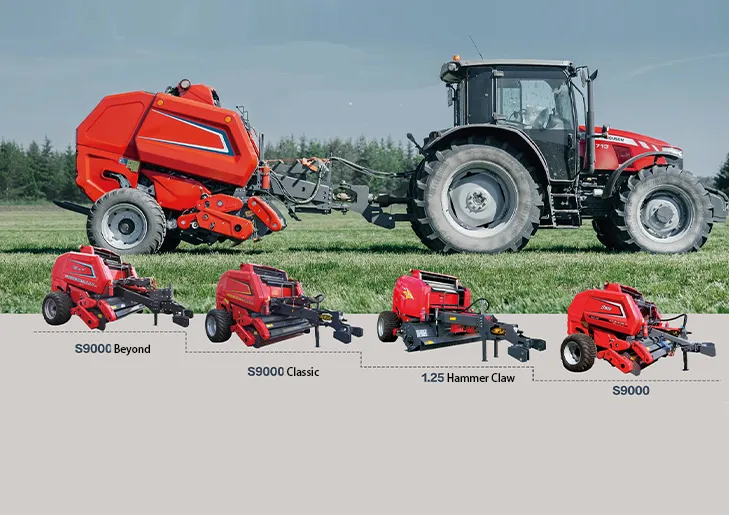
5. Round Baler Models for High-Productivity Wheat Straw Collection
The models below are each capable of reaching the 40–100 bales per hour throughput range under appropriate wheat straw conditions. Their variable-chamber compression, sensor-controlled bale density management, and efficient hydraulic systems enable the rapid bale cycle times that sustained high throughput requires.
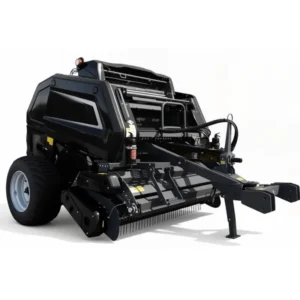
Empacadora de balas redondas 9YG-2.24D (S9000)
φ1,300×1,400 mm · 18 rollers · 55–100 kW · 4,262 kg · 40–100 bales/h · Sensor density · Auto net wrap
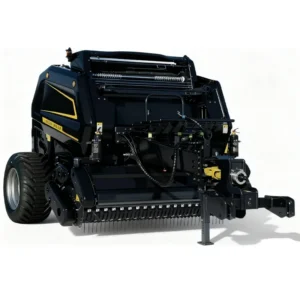
Empacadora de balas redondas 9YG-2.24D (S9000 Classic)
4,312 kg · Dual-side 20A heavy chain · H-type hydraulic · Buffer tailgate · 55–100 kW · 40–100 bales/h
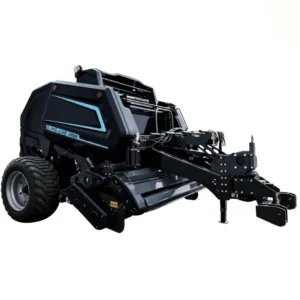
9YG-2.24D Round Baler (Transcend)
Dual-joint gearbox ±90° · 4,570 kg · Safety torque driveshaft · 720 r/min PTO · 5–35 km/h · 40–100 bales/h
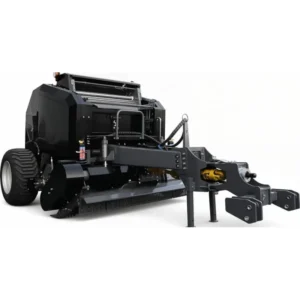
9YG-1.25 Round Baler (Double)
Interchangeable pickup · ≥88.2 kW · 4,558 kg · 1,200×1,250 mm · 40–80 bales/h · Auto net wrap
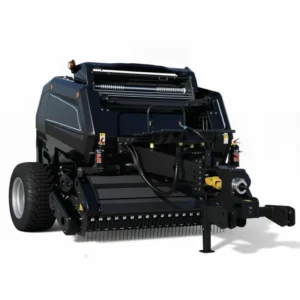
Empacadora redonda 9YG-1.25A
540–1,000 r/min PTO range · Density 100–200 kg/m³ · Net 2,000×1.25 m · 4,472 kg · ≥75 kW · 40–100 bales/h
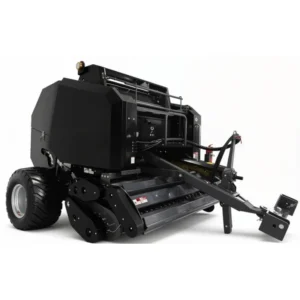
Empacadora de balas redondas 9YG-2.24D
Axial-flow semi-forced camless feed · 3,922 kg · 55–100 kW · φ1,300×1,400 mm · 40–100 bales/h
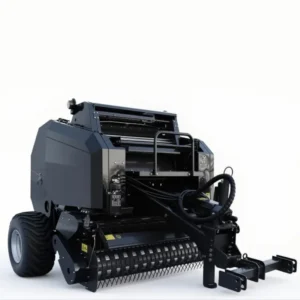
9YG-1.0 Round Baler (Mini Round Baler)
Small round baler for 40 hp tractor · 48–80 kW · Bale φ1,100×1,000 mm · 2,640 kg · 16 rollers · 40–100 bales/h
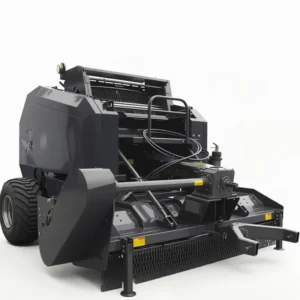
Empacadora de balas redondas 9YG-1.0C
Hammer-claw pickup · Dual-side 16A heavy chain · ≥69.8 kW · Bale φ1,000×1,250 mm · 3,198 kg · 40–80 bales/h
6. Round Baler Gearbox: The Power Management Core of High-Throughput Straw Operation
The round baler gearbox in a wheat straw application carries a different load signature than in silage or even alfalfa baling. Wheat straw at 10–15% moisture creates relatively low sustained compression load per bale — the material is lighter and less resistant than wet silage grass — but the higher cycle count at 40–100 bales per hour means the gearbox completes more complete power transmission cycles per operating hour than in lower-throughput applications. The cumulative fatigue load on gears, bearings, and housing fasteners over a 400-hour wheat straw campaign at high throughput is therefore comparable to or greater than a 200-hour silage season despite the lower load per cycle.
The gearbox oil must maintain adequate viscosity throughout the operating temperature range achieved during sustained high-output straw baling. In Korean June-July wheat harvest conditions — ambient temperatures of 28–35°C, with the baler running 10–12 hours per day under direct sunlight — gearbox housing temperatures can reach 50–65°C during peak operation. ISO VG 150 GL-4 gear oil maintains adequate film thickness at these temperatures for standard agricultural gearboxes, but operators should check gearbox oil temperature at each shift break by hand-touch on the housing and investigate immediately if the housing is uncomfortably hot to sustained contact — this indicates either oil level is low, the breather is blocked by straw dust, or the oil has degraded below specification viscosity and needs immediate replacement.
The dual-joint gearbox in the 9YG-2.24D Transcend model provides both the headland-turning efficiency benefit described earlier and a secondary benefit specific to Korean wheat fields: many Korean wheat-growing areas in the grain belts of South Chungcheong (Chungnam), North Gyeongsang (Gyeongbuk), and Jeolla provinces have field shapes constrained by irrigation channels, terrace structures, and road networks that create irregular field boundaries. These boundaries force the tractor-baler combination through turns at angles that exceed the safe operating envelope of conventional single-joint driveshafts. The dual-joint design’s tolerance of these extreme angles prevents the driveshaft binding and uneven torque transmission that would otherwise limit operating speed and increase maintenance requirements on these constrained sites.
The safety torque driveshaft fitted as standard on the 9YG-2.24D Transcend — which incorporates a torque-limiting device designed to protect the entire driveline from sudden overloads — is particularly relevant in post-harvest Korean wheat fields. Combine harvester operation frequently pushes stones, wire, irrigation pipe fragments, and other debris into the straw windrow during grain collection. These objects create sudden severe overload events at the pickup and feed system when the baler’s spring-tine header contacts them. The safety torque driveshaft absorbs the initial energy of this event before it propagates to the gearbox housing and internal gears, limiting damage to a recoverable overload event rather than a broken gear tooth or fractured housing that requires extended repair time during the limited straw collection window.
7. Operational Practices That Push Throughput Toward 100 Bales Per Hour
The mechanical ceiling of 40–100 bales per hour is defined by the machine’s engineering. Where an operator actually performs within that ceiling is determined by operational discipline — the combination of setup choices, driving technique, maintenance practices, and field management decisions that together determine net productive output. The following practices, consistently applied, move performance toward the upper end of the range in wheat straw baling conditions.
| Practice Area | What to Do | Throughput Impact |
|---|---|---|
| Forward speed management | Calibrate forward speed to windrow weight — faster on thin windrows, slower on thick patches to avoid feed system overloading | Reduces blockage frequency; maintains optimal chamber fill rate |
| Field approach pattern | Plan travel route to minimize headland turns — work in long runs before sweeping back, use wide field entrances where possible | Reduces non-productive headland time by up to 20% on irregular fields |
| Bale density setting | Set target density for the end-use requirement, not maximum possible — overfilling bales lengthens the bale cycle and increases tailgate force | Reduces cycle time by 3–8 seconds per bale at lower density setting |
| Net-wrap revolution count | Use minimum adequate wraps (usually 1.5–2 revolutions for wheat straw) — extra wraps add 2–4 seconds per bale and consume net faster | Saves 2–4 seconds per cycle; reduces net consumable cost per tonne |
| Proactive debris scanning | Walk the next row before baling it when debris from combine operation is suspected — removes large objects before they reach the pickup | Eliminates major blockage events (5–15 min downtime each) |
| Daily chain lubrication | Lubricate all drive circuits before each shift — straw dust depletes lubricant faster than grass operations | Prevents minor chain stiffness that slows compression roller speed |
| Net roll pre-loading | Pre-load a replacement net roll in the cab before the current roll is exhausted — eliminates 5–10 minute roll-change downtime mid-operation | Saves one 5–10 minute interruption per net roll change |
8. Korean Wheat Straw Baling: Timing, Markets, and Machine Selection
Korean wheat and barley production, concentrated in the southern grain belt of South Chungcheong, North and South Jeolla, and parts of Gyeongbuk, creates a post-harvest straw resource that is both time-sensitive and commercially valuable if collected efficiently. Wheat harvest in Korea typically runs from late May to early July depending on region and variety, with barley preceding wheat by two to four weeks. The straw collection window after combine harvest is narrow — typically 7–14 days — because land preparation for the following crop (usually summer vegetables, rice, or soybean in double-cropping systems) must begin promptly to maintain the planting calendar.
Within this window, the round baler machine’s throughput rate directly determines how much straw is recovered. A farm with 30 hectares of wheat yielding 4 tonnes of straw per hectare has 120 tonnes of straw to collect. At 60 bales per hour averaging 200 kg each, a single machine completes this in approximately 10 hours — one full day. At 35 bales per hour (underperforming), the same collection requires 17 hours across two days, during which rain, soil preparation pressure, or straw quality deterioration may intervene. This calculation makes throughput optimization directly relevant to farm profitability in Korean double-cropping systems where every day counts.
The domestic Korean market for baled wheat straw includes livestock bedding and supplementary roughage for beef cattle operations (a consistent year-round market in Korea’s beef-producing regions), mushroom substrate supply for commercial oyster mushroom producers, and increasingly biomass energy supply to certified facilities under Korea’s Renewable Portfolio Standard program. For straw producers serving premium mushroom substrate markets, bale quality — density consistency, moisture content, cleanliness — matters as much as throughput rate. For livestock bedding supply, volume is the primary value driver, and throughput rate is the dominant machine selection criterion.
9. Regulatory and Compliance Context for Round Baler Operations
Corea del Sur
Round baler machines used for wheat straw collection in Korea must comply with the Act on the Promotion of Agricultural Mechanization (농업기계화 촉진법). Government purchase subsidy eligibility requires performance evaluation through the National Institute of Agricultural Sciences (농촌진흥청), with approved machines listed in the MAFRA (농림축산식품부) subsidy catalog. The Industrial Safety and Health Act (산업안전보건법) mandates PTO shaft guarding and safe operating procedures for all employed agricultural workers, which applies to contracted straw collection operations. Environmental regulations restricting field burning of cereal straw under the Clean Air Conservation Act (대기환경보전법) are progressively increasing the incentive for straw collection as an alternative to burning, directly driving demand for capable round baler machines in Korean cereal farming areas.
European Union
Round balers operating in EU cereal-producing regions — France, Germany, Poland, UK — must carry CE marking under Machinery Directive 2006/42/EC, with harmonized standards EN ISO 4254-7 and EN 12965 applicable to harvesting machinery and PTO drive shafts. EU CAP (Common Agricultural Policy) cross-compliance requirements under GAEC (Good Agricultural and Environmental Condition) standards generally prohibit straw burning, creating a regulatory mandate for straw collection that directly supports demand for high-throughput round baler machines in EU cereal areas. Gearbox oil specifications in EU markets reference ISO VG 150 GL-4 or DIN 51517-3 CLP gear oils.
Russia and Kazakhstan
In Russia and Kazakhstan — major wheat producers with significant straw baling capacity — agricultural machinery must comply with TR EAEU 010/2011 technical regulations and carry EAC conformity marking. The vast scale of individual wheat blocks in Kazakh steppe agriculture (often 500–2,000 hectares per field block) makes throughput rate the absolute primary machine selection criterion — machines that achieve 90–100 bales per hour on long-run open steppe fields deliver dramatically better economics per hectare serviced than those reaching only 50–60 bales per hour. Gearbox oil specifications reference GOST 23652 gear oil standards.
Australia
Australian wheat straw baling, particularly in the large cereal zones of Western Australia, South Australia, and Victoria, operates under harmonized WHS (Work Health and Safety) legislation with AS 1152 guarding requirements for farm machinery. The operational scale of Australian wheat farming — with individual paddocks of 50–200+ hectares — means that round baler throughput optimization delivers very large productivity dividends per machine, and machines capable of consistently achieving 70–100 bales per hour are significantly preferred over lower-output alternatives in commercial straw contracting operations. Gearbox lubricant specifications follow ISO 6743-6 classification.
10. Maintenance for Sustained High-Throughput Wheat Straw Performance
Sustaining 70–100 bales per hour across a multi-day wheat straw campaign requires a maintenance discipline that keeps all the throughput-critical components operating at full specification throughout the campaign. The most common reason that a machine that achieves 80 bales per hour on day one of straw collection is producing only 55 on day three is not a machine failure — it is the cumulative effect of small performance degradations that each individually seem insignificant but together reduce cycle efficiency significantly: slightly dulled pickup tines that leave more straw behind, slightly elongated chain that slows the compression roller, slightly sticky net-wrap knife that adds two seconds to every binding cycle.
Daily pre-operation inspection for wheat straw baling should include: chain lubrication on all circuits (the most impactful single daily step on throughput); visual inspection of pickup tines for any bends exceeding 10 degrees from the operating plane; net-wrap knife edge condition assessment (run a thumb carefully along the edge — it should feel sharp enough to catch on skin); hydraulic fluid level visual check; and a 60-second visual inspection of the compression chamber interior for any lodged debris from the previous day’s operation. None of these checks individually takes more than two minutes, and together they prevent the gradual performance decline that turns a 90-bales-per-hour machine into a 60-bales-per-hour machine over the course of three days of intensive straw collection.
Mid-campaign maintenance (after 50–100 hours of straw operation, or at the halfway point of a large straw campaign) should include chain tension check and adjustment, gearbox oil level verification, and a quick roller surface inspection by hand (run a gloved hand along each accessible roller surface — if you can feel grooves wider than 1 mm, the roller is beginning to affect bale quality). Post-campaign end-of-season service should document pickup tine count (all present and within plane), compression roller surface condition against manufacturer’s wear limit dimensions, chain elongation percentage, and tailgate latch wear. Ordering replacement round baler parts for any items approaching their limit during this post-campaign inspection and fitting them in the off-season ensures the machine is at full specification when the next cereal harvest arrives.
Frequently Asked Questions
Editor: PXY