Corn Stover Baling | Biogas Supply Chain | Round Baler Technical Guide
Corn Stover Baling for Biogas Plants: What Bale Density, Size and Net Wrap Do Operators Need?
A specification-focused guide for corn stover producers, agricultural cooperatives, and biogas plant procurement teams in South Korea and Northeast Asia — covering the exact bale density, diameter, width, and net wrap requirements that biogas plant intake systems impose on upstream round baler machine operators, and how to configure the 9YG series to meet those requirements reliably.
Biogas Bale Spec
Korea / Northeast Asia
1. Why Biogas Plant Requirements Change Everything About Corn Stover Baling
When a Korean livestock farm or agricultural cooperative bales corn stover for their own use — bedding, compost, or on-farm feed — they can produce bales at whatever density and size their equipment produces under field conditions, and adjustments are made pragmatically. When that same operation enters a supply contract with a biogas plant, the situation changes substantially. Biogas plants operate with automated bale intake and shredding systems that are calibrated to specific bale dimensions, density ranges, and surface properties. A bale that is 50 mm too wide to enter the automated intake conveyor, or 15 kg/m³ too light to activate the density sensor that triggers the plant’s payment grade calculation, is a problem that the farmer bears — either through rejected loads, downgraded payment, or an unannounced contract renegotiation that reduces the supply rate per bale.
This guide exists because the gap between standard round baler operation and the bale specifications that Korean biogas plants actually require is not well documented in the agricultural machinery literature. Biogas plant engineering teams specify their intake systems around bale characteristics; round baler machine operators often configure their machines around what seems to work in the field without understanding the specific numbers their buyer needs. Closing that information gap — giving baler operators the exact density, diameter, width, and net wrap specifications that determine biogas plant intake acceptance — is the primary purpose of this article. The product specifications referenced throughout come from the 9YG series round baler range, which covers the bale size and density combinations most relevant to Korean and Northeast Asian biogas supply chains.

2. What Biogas Plants Actually Need: Density, Size, and Net Wrap Specification
Korean biogas plants that accept corn stover as a feedstock can be divided into two broad categories based on their intake system design: shredder-type plants that actively break bales before the digester, and whole-bale-feed systems where the bale enters a pre-digestion chamber intact and degrades progressively. Each type has different requirements for the bale that arrives at the gate, and understanding which type your supply contract counterpart operates is the first determination a stover producer should make before configuring their round baler machine.
Shredder-type biogas plants — the more common configuration in Korea’s agricultural biogas sector — process bales through a horizontal shredder before the material enters the anaerobic digester. These plants typically specify bale diameter between 1,000 mm and 1,300 mm, bale width between 1,000 mm and 1,400 mm, and bale density between 130 and 180 kg/m³. Bales outside this density range create operational issues: bales below 130 kg/m³ are too light and airy for the shredder to engage effectively, producing uneven material feed into the digester; bales above 180 kg/m³ are often too compacted for the shredder blades to penetrate efficiently, increasing shredder power consumption and blade wear. The critical practical point is that these specifications are not general guidelines — they are the limits within which the plant’s automated handling system was engineered to operate.
Most Korean biogas plant conveyors and intake systems are designed for bales of Ø1,000–Ø1,300 mm diameter. Check your supply contract for the specific upper and lower diameter tolerance — typically ±50 mm from the specified diameter is the standard acceptance band.
Biogas plant conveyor width is the limiting dimension for bale width. Most Korean agricultural biogas plants calibrated to round bales accept widths from 1,000 mm to 1,400 mm. Confirm the specific plant’s conveyor channel width before committing to a baler width specification — returning bale width after signing the contract is difficult.
Target density range for Korean biogas plant corn stover bales is typically 130–180 kg/m³. Below 130 kg/m³, shredder engagement is inconsistent. Above 180 kg/m³, shredder power demand spikes and the gate-to-digester cycle time increases, creating backlog in high-volume supply operations.
Biogas plants specify maximum moisture content at delivery — typically below 25%, often below 20% for corn stover feedstock. Higher moisture reduces methane yield per tonne and increases transport cost per unit of energy value. Baling at the correct moisture and protecting bales with net wrap are the producer’s tools for meeting this specification.
3. Net Wrap Specification for Biogas Supply: Why the Wrap Matters More Than Farmers Often Realize
The net wrap on a corn stover bale is not merely a mechanical binding — for biogas supply chain purposes, it is a quality preservation and handling interface. Korean biogas plants that operate under supply contracts with weekly or bi-weekly collection schedules often require bales to be stored outdoors for 5–21 days between production and collection. During this storage period, the net wrap’s ability to shed rain, limit moisture absorption, and maintain bale structural integrity directly affects whether the bale arrives at the plant within its specified moisture and density parameters. A bale produced at 18% moisture that re-absorbs rain during outdoor storage may arrive at the plant at 28% moisture — outside the specified maximum — triggering rejection or a moisture-penalty payment deduction.
The net wrap specification relevant to biogas supply is therefore two-dimensional: the net must provide adequate weatherproofing during storage, and it must be a type that the biogas plant’s automated handling system can work with — or that can be removed efficiently at intake. Most Korean biogas plants can process bales with standard polypropylene net wrap intact — the shredder handles the net as part of the material stream. However, some digester configurations prefer that net wrap is removed at intake to prevent net fiber from disrupting the anaerobic process, and a small number of Korean biogas plants specify that incoming bales must be presented without net wrap (requiring the collection logistics team to remove wrap at the gate). Confirming this protocol at contract negotiation avoids expensive mismatches between the field wrapping practice and the plant’s intake procedure. The 9YG series round balers use automatic net wrapping as standard, with net specifications of 2,000 m per bale at widths from 1.0 m to 1.4 m depending on model — providing flexibility to match bale width to plant conveyor specifications while maintaining the wrapping density (number of revolutions) that produces adequate surface coverage for outdoor storage.
4. Manufacturing Structure: How Baler Design Enables Consistent Biogas Bale Specifications
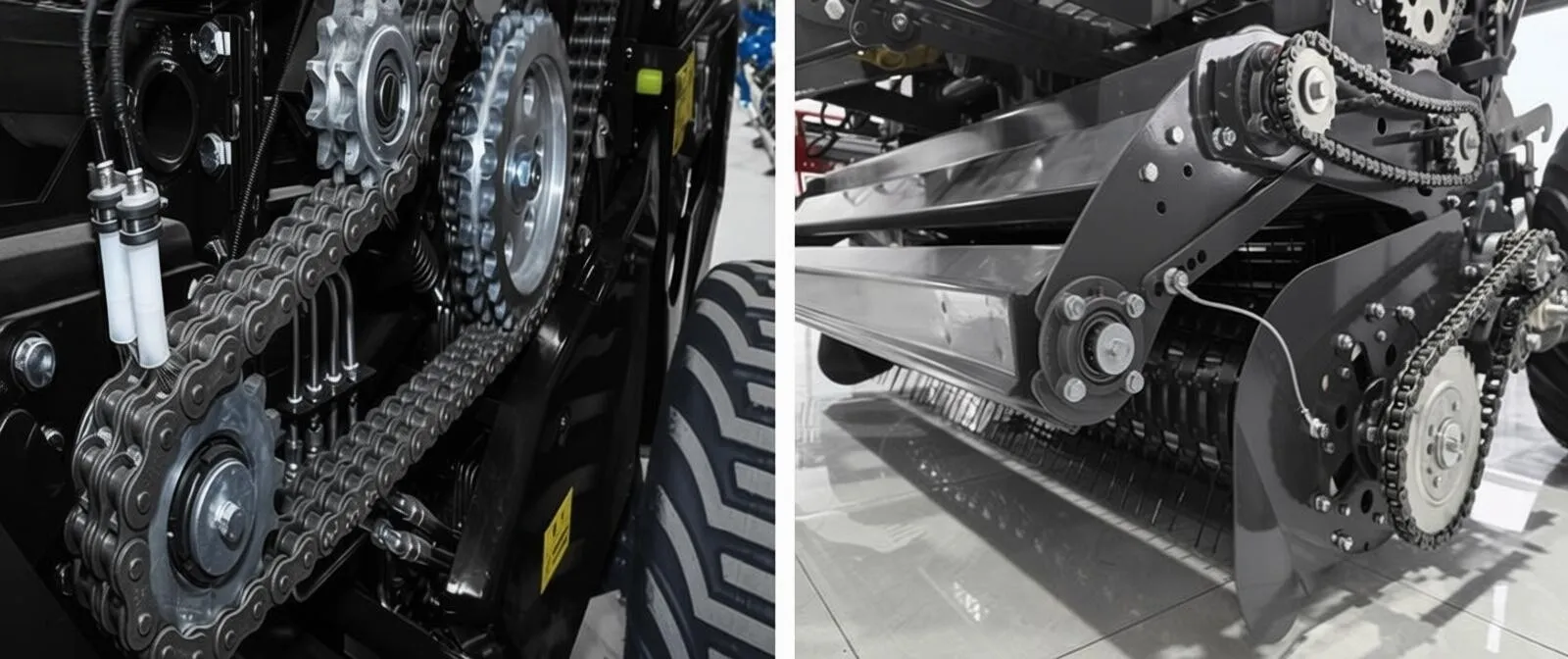
Meeting a biogas plant’s bale specification reliably — across varying stover moisture, windrow density, and daily weather conditions — requires a round baler machine whose structural design actively controls the bale formation process rather than merely permitting it to happen. The 9YG series achieves this control through a combination of sensor-controlled bale density monitoring, fixed-chamber roller array design, and automatic net wrapping — three structural features that together determine whether the bales produced will consistently fall within the 130–180 kg/m³ density range and the dimensional tolerances that Korean biogas plants specify.
Sensor-Controlled Bale Density Monitoring
The sensor-controlled density monitoring system — standard across all 9YG series models — is the primary tool for meeting biogas plant density specifications. The system continuously monitors bale diameter as the bale grows inside the compression chamber and triggers the net wrapping sequence when the bale reaches the preset target diameter. For biogas plant supply, this system is configured differently than for hay or livestock bedding supply: the operator sets the target diameter to produce the specific bale size required by the plant’s intake specifications, and the system’s consistency across the session ensures that every bale in a delivery load falls within the plant’s acceptance tolerance. In practice, the sensor system’s diameter accuracy determines how tightly the operator can control the density-diameter relationship that produces bales within the biogas plant’s window. Well-calibrated sensor systems on the 9YG range maintain bale diameter to within ±20–30 mm of the target setting — consistent enough to keep bales within the standard ±50 mm tolerance most Korean biogas plants use for acceptance.
Fixed Compression Chamber and Roller Array
The fixed-chamber design of the 9YG series compression chambers — as opposed to variable-chamber designs used in some European machines — provides inherent bale width consistency because the chamber width is a fixed mechanical dimension, not a variable controlled by spring tension. All 9YG models produce bales at the chamber width: 1,000 mm for the 9YG-1.0, 1,250 mm for the 9YG-1.25 series, and 1,400 mm for the 9YG-2.24D series. This width consistency is important for biogas plant supply because a fixed-chamber machine produces bales at the same width across the entire season — a variable-chamber machine’s bale width can drift as the chamber spring tension changes with crop density variation, producing inconsistent widths that periodically fall outside the biogas plant’s conveyor acceptance range. The 18-roller compression array (Ø222 mm each, spiral groove surface) ensures even circumferential compression across the bale that maintains uniform density from core to surface — another biogas quality parameter that automated plant intake weighing systems assess when calculating the payment grade.
Automatic Net Wrapping System
The automatic net wrapping system on 9YG series models uses a positive-cut knife mechanism to ensure clean, consistent net separation between bales. For biogas supply where bales are produced in runs of 40–100+ per day, net wrap consistency across the entire production run matters — a partial wrap failure produces a loose surface that not only allows moisture penetration but causes bale shape deformation during stacking that can change the bale’s dimensional profile by the time it arrives at the plant. The 2,000 m net roll specification (at 1.0, 1.25, or 1.4 m width depending on model) allows operators to calculate net consumption per bale and plan net roll inventory for the season without mid-season supply interruptions. For biogas supply programs where net type matters — some plants specify polyethylene over polypropylene for digester compatibility — confirm the plant’s preference before purchasing consumables for the season.
Round Baler Gearbox and Drivetrain Consistency
The round baler gearbox on machines used in continuous biogas supply programs runs more hours per season than in typical farm use — biogas supply contracts often specify weekly delivery volumes that require the baler to operate 5–8 days per week during the harvest window. At this utilization rate, gearbox oil condition and bearing wear rate become meaningful parameters rather than theoretical concerns. The 9YG-2.24D S9000 series’ 1,000 Nm rated gearbox with QT450 nodular cast iron housing provides adequate rated torque headroom and thermal stability for extended daily operating sessions. The safety torque limiter on this model provides automatic protection against the density consistency disruptions that occur when a large stover clump causes a chamber stall mid-bale — without the limiter, a stall event forces the operator to eject the partially formed bale, producing an undersize bale that falls outside the biogas plant’s minimum density specification and must be rejected or stored separately.
5. Material System: Component Specifications That Support Biogas Supply Consistency
For biogas plant supply programs, the material quality of baler components translates directly into bale specification consistency — and bale specification consistency translates into supply contract performance. A baler with worn compression rollers produces bales with irregular density profiles because the worn roller surface cannot maintain uniform grip across the full bale diameter, leading to low-density zones at the bale equator. A sensor system with a drifted calibration produces bales that are systematically smaller or larger than the target diameter. The following table covers the material specifications most directly relevant to maintaining consistent biogas bale quality across a full supply season.
6. Which Round Baler Model Matches Which Biogas Plant Bale Specification?
Selecting the right round baler model for a biogas supply program requires matching the machine’s bale width and achievable density range to the biogas plant’s intake specification. The following table maps the 9YG series models to typical Korean biogas plant bale acceptance categories. Note that bale diameter is controlled by the sensor target setting, so all models can produce bales at various diameters within their mechanical range — the fixed variable is bale width, which is determined by the chamber width of each model.
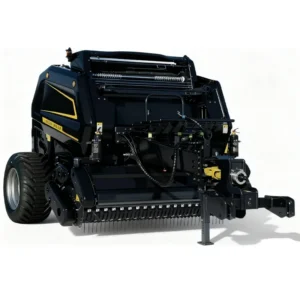
7. Round Baler Models for Corn Stover Biogas Supply Programs
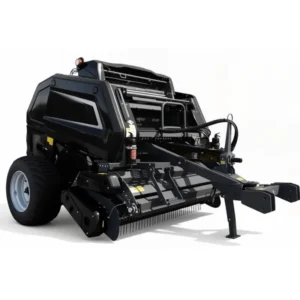
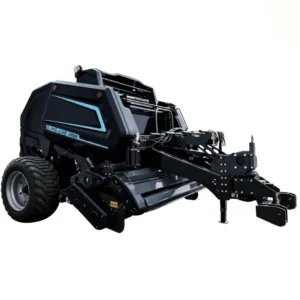
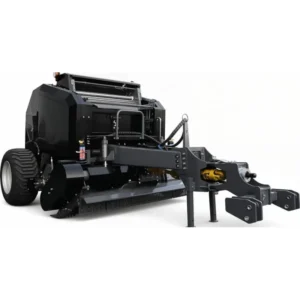
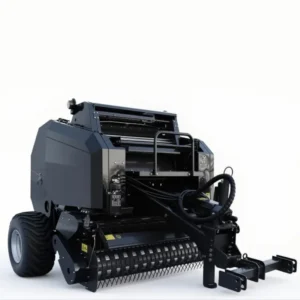
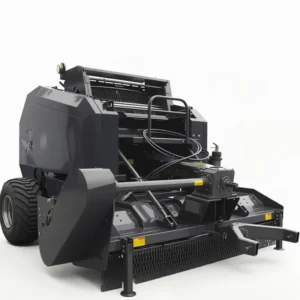
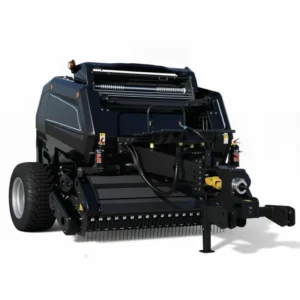
All 9YG series models feature sensor-controlled bale density monitoring, automatic net wrapping, and fixed-chamber construction for consistent biogas plant bale specification compliance.
8. Regulatory Framework: Korean Biogas Policy and International Agricultural Machinery Standards
The Korean biogas sector operates within a regulatory framework that simultaneously drives demand for corn stover feedstock and imposes quality requirements on how that feedstock is supplied. Understanding the key policy instruments is essential for corn stover producers who want to build durable supply relationships with Korean biogas plants rather than episodic spot sales at non-optimal rates.
South Korea — RPS, Clean Air Act, and Agricultural Machinery Financing
South Korea’s Renewable Portfolio Standard (RPS, 신재생에너지 공급의무화제도) requires power generators above a specified installed capacity to source a percentage of generation from renewable energy, including agricultural biomass. Corn stover bales supplied to biogas plants that feed power generation systems qualify as agricultural biomass under the RPS framework, provided that the feedstock is certified through the designated certification body and meets the quality specifications that the plant’s RPS registration requires. This certification chain flows from the field through the bale — meaning the bale specification must meet both the plant’s technical intake requirements and the quality documentation standards of the RPS certifying body. The Clean Air Conservation Act (대기환경보전법) simultaneously prohibits open burning of corn stover as a disposal method, creating the compliance driver that moves producers toward mechanical collection and baling in the first place. The Rural Development Administration (RDA) equipment financing program (농기계 구입자금 융자, 1.5–2.0% per annum) provides subsidized financing for certified baling machinery, reducing the effective capital cost of acquiring a round baler machine for biogas supply programs. Machinery must meet Korean Agricultural Machinery Safety Standards under KS B 6007 to qualify for this financing.
European Union — Biomass Sustainability and CE Marking
In EU member states with significant corn stover biogas supply chains — Germany, Austria, the Netherlands, France — the Renewable Energy Directive (RED II / RED III) imposes sustainability criteria on biomass used for biogas production, including greenhouse gas saving thresholds and land-use change provisions. The round baler machine used in EU biogas supply programs must carry CE marking under Machinery Directive 2006/42/EC, with gearbox compliance under EN 703 (crop harvest machinery safety) and PTO shaft guarding under EN 12965. The EU biogas sector specifies bale characteristics through supply contract standards rather than through regulatory prescription, but the Renewable Energy Directive’s sustainability documentation requirements for biomass supply chains effectively require bale quality records (density, moisture, batch traceability) that incentivize sensor-controlled baler operation over unmonitored field practice.
Japan — Agricultural Biomass Policy
Japan’s biomass energy policy under the Feed-in Tariff (FIT) and Feed-in Premium (FIP) system supports agricultural biogas from crop residues including corn stover. Corn stover baling for biogas supply in Hokkaido — Japan’s primary corn-growing region — follows a well-established supply chain model where agricultural cooperatives collect stover on behalf of member farmers and deliver to biogas plant facilities. The round baler gearbox and drivetrain must comply with the Labour Safety and Health Act (労働安全衛生法) safety requirements for agricultural machinery. MAFF-registered machines with verified performance data have better access to national-level agricultural biomass support programs under the Agri-Innovation framework.
9. Pre-Season Checklist: Configuring Your Round Baler for Biogas Bale Specification
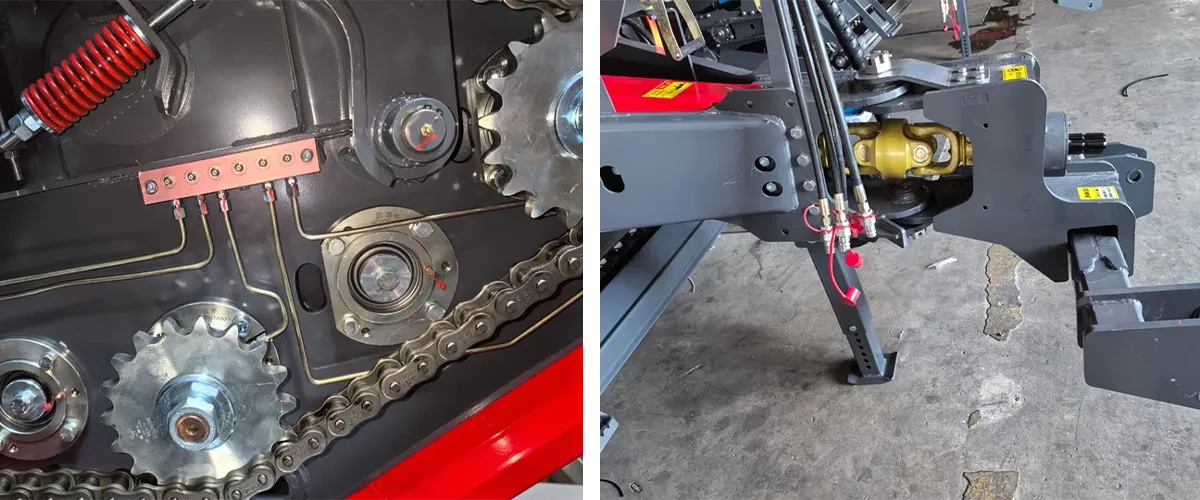
Before the corn stover harvest season begins, operators supplying biogas plants should run through the following configuration and verification steps to ensure that their round baler machine will produce bales within specification consistently across the full supply period. These steps take 2–4 hours at season start and can prevent the supply contract performance issues — rejected loads, grade downgrades, delivery penalties — that undermine the economics of biogas supply programs.
10. Compatible Drive Components: Agricultural PTO Shaft and Drive Chain
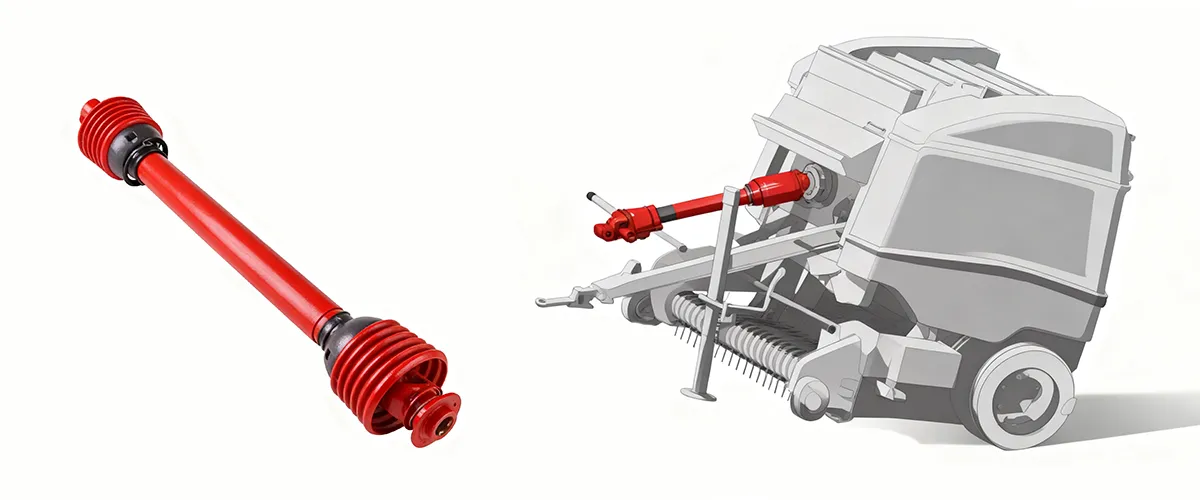
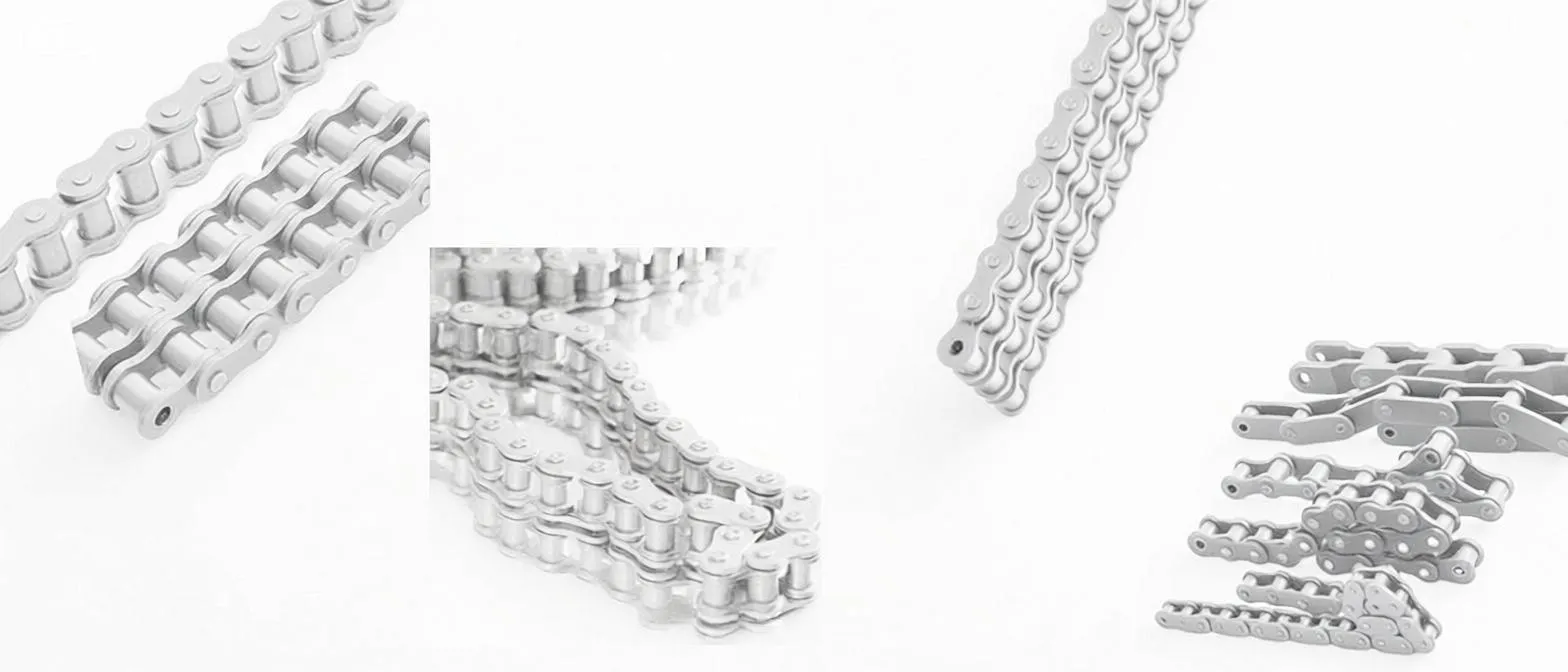
For biogas supply programs where the round baler machine operates extended daily hours across a compressed seasonal window, specifying a purpose-rated Agricultural PTO Shaft for round balers alongside the baler itself ensures that the connecting drivetrain matches the baler’s rated continuous torque rather than a lower hay-application rating. Agricultural chain in 16A (feeder) and 20A (rear chamber) factory specification maintains the compression timing calibration that the density sensor was set against — substituting lighter chain creates the chain elongation drift that causes systematic density undershoot in the middle of the supply season.
Continuous-torque rated PTO shafts for biogas supply program operating hours. Overrunning clutch option for stover cyclic loading protection.
Factory-specification 16A and 20A roller chain for 9YG series balers. Critical for maintaining density calibration across the full biogas supply season — chain elongation from lighter-grade substitutes produces systematic density undershoot that triggers plant grade downgrades at mid-season inspection. Available as complete season kits per model.
Frequently Asked Questions
संपादक: पीएक्सवाई